



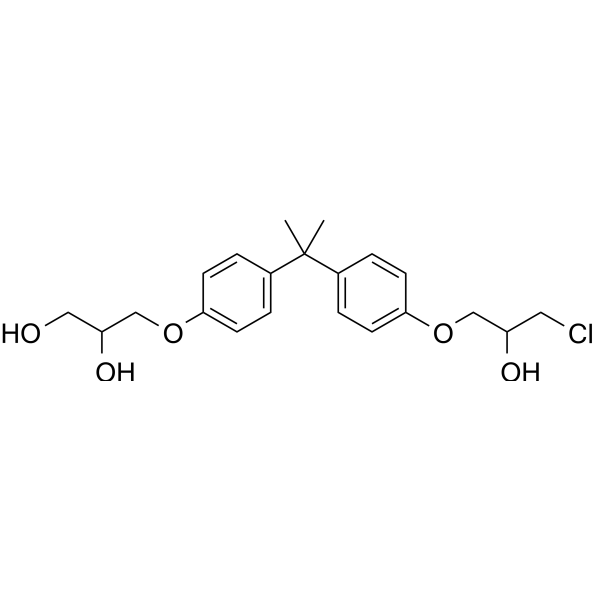
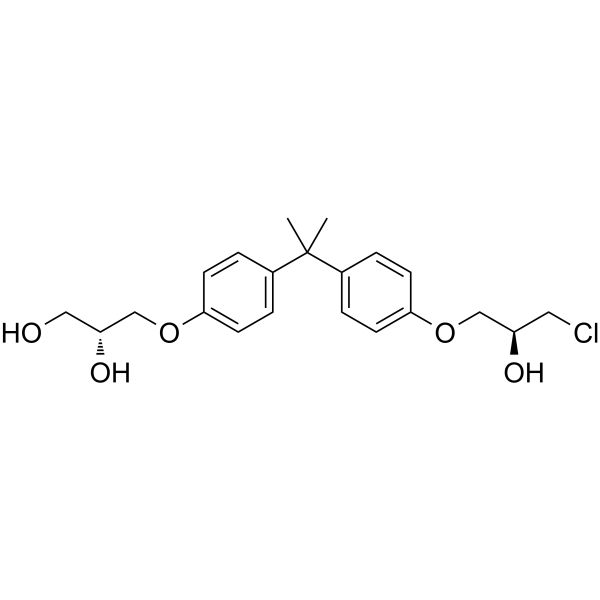
EPI-001

Based on 1 Customer Validation
EPI-001, a selective inhibitor of Androgen Receptor (AR), targets transactivation unit 5 (Tau-5) of the AR. EPI-001 can inhibit transactivation of the AR amino-terminal domain (NTD), with an IC50 of ~6 μM. EPI-001 is also a selective modulator of PPARγ. EPI-001 is active against castration-resistant prostate cancer.
Nur für Forschungszwecke. Wir verkaufen nicht an Patienten.
- Reinheit : 99.34%
- CAS. Nr.: 227947-06-0
- Formel: C21H27ClO5
- Molecular Weight:394.89
-
Speicherung:Powder -20°C, 3 years , 4°C, 2 years ; In solvent -80°C, 6 months , -20°C, 1 month

To place orders, for customer services and technical support, please contact: MedChemExpress USA
Tel: 609-228-6898 E-mail: [email protected] [email protected]


-
 Biologische Aktivität
-
Chemical Information
-
Lösungsmittel & Löslichkeit
- Protokoll
- Reinheit & Dokumentation
- Verweise
-
 Help & FAQs


-
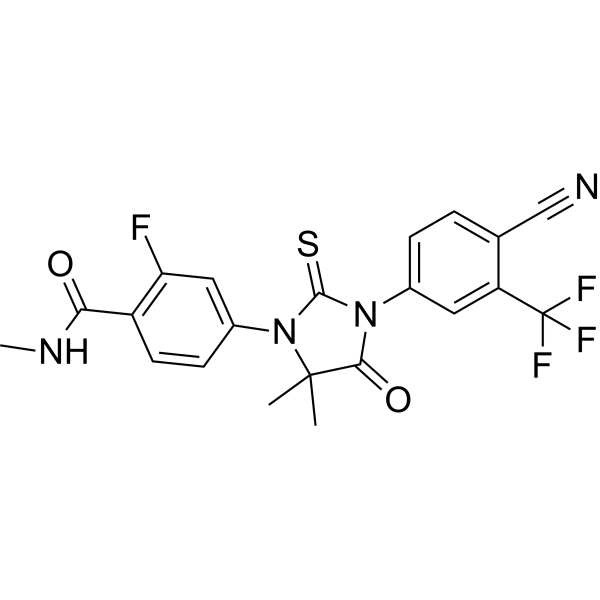
HY-70002
EnzalutamideAndrogen Receptor Antagonist -
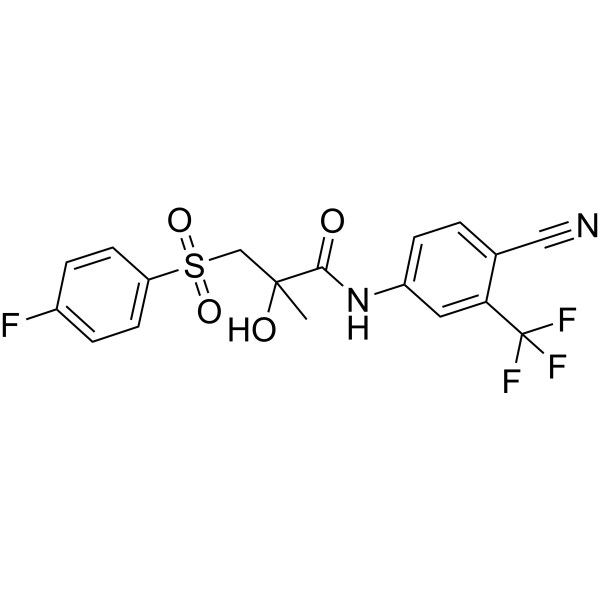
HY-14249
BicalutamideAndrogen Receptor Inhibitor -
HY-109070
RalanitenAR-NTD Antagonist -
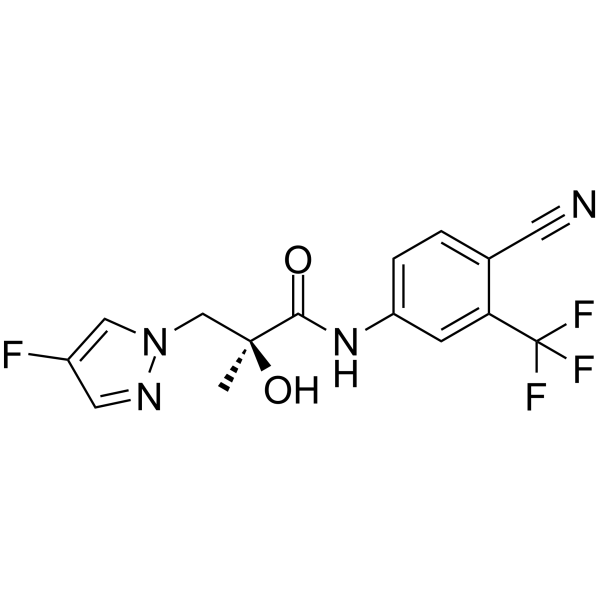
HY-136242
UT-34Androgen Receptor Antagonist/Degrader -
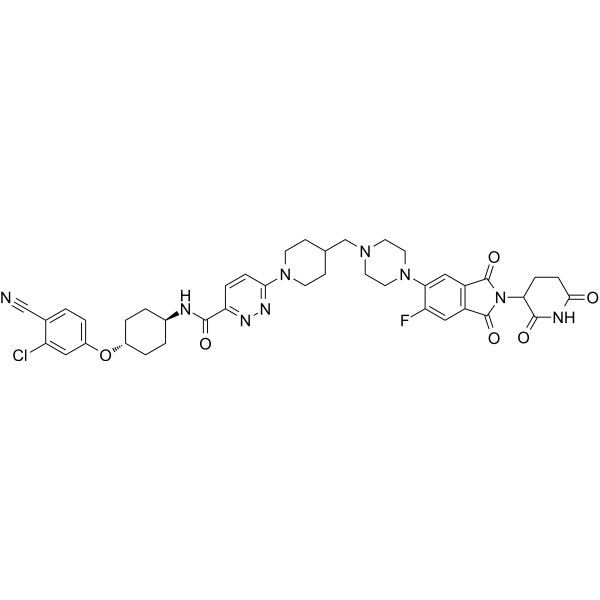
HY-138641
BavdegalutamideAR PROTAC Degrader -
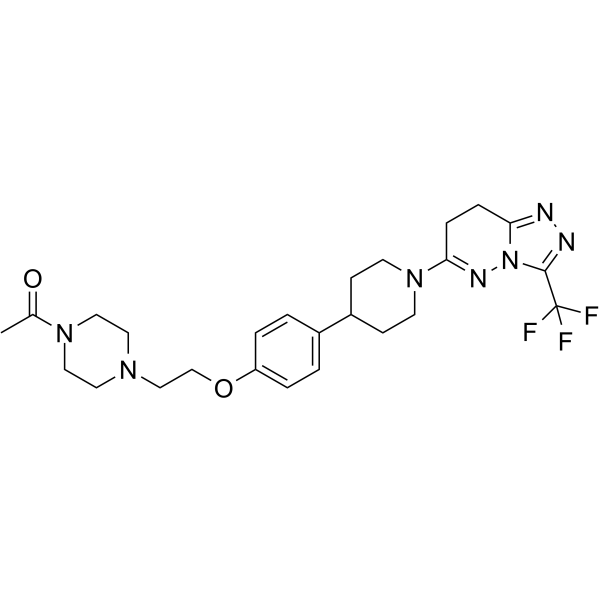
HY-16079
AZD3514AR Inhibitor -
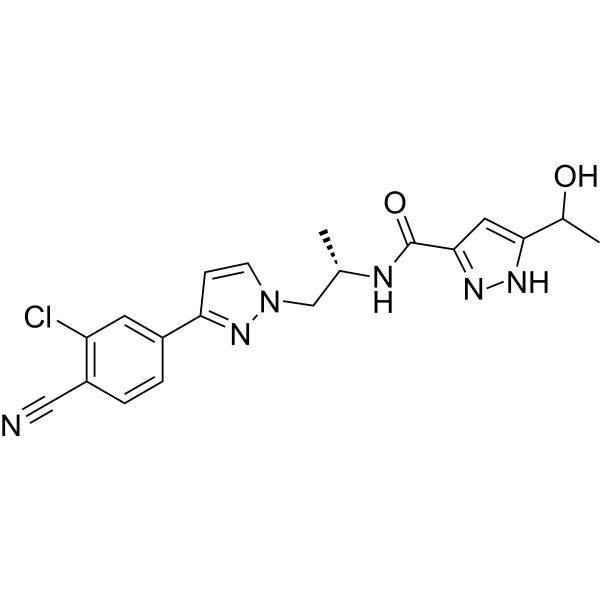
HY-16985
DarolutamideAndrogen Receptor Antagonist -
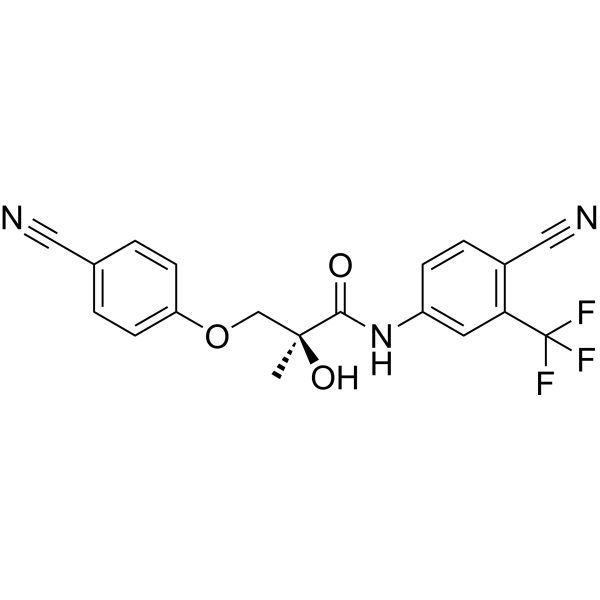
HY-13273
OstarineSARMs -
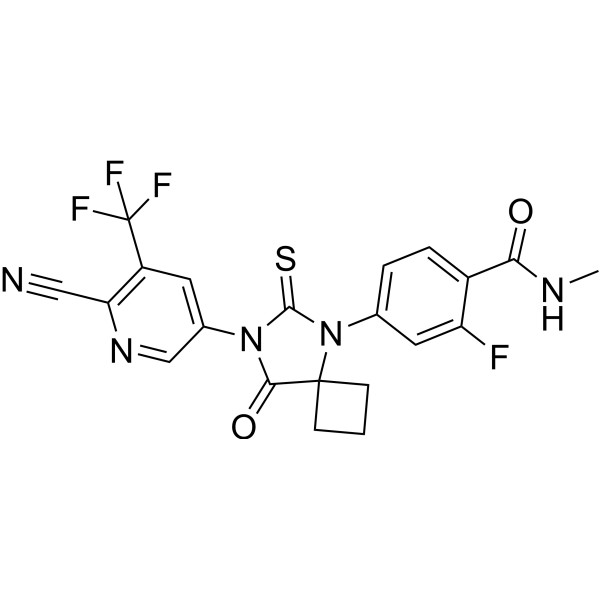
HY-16060
ApalutamideAR Antagonist -
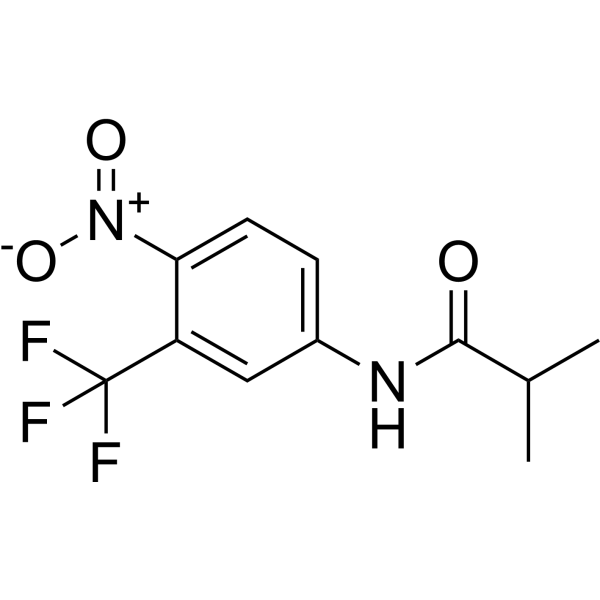
HY-B0022
FlutamideAntiandrogen Agent -

HY-70002R
Enzalutamide (Standard)Androgen Receptor Antagonist -
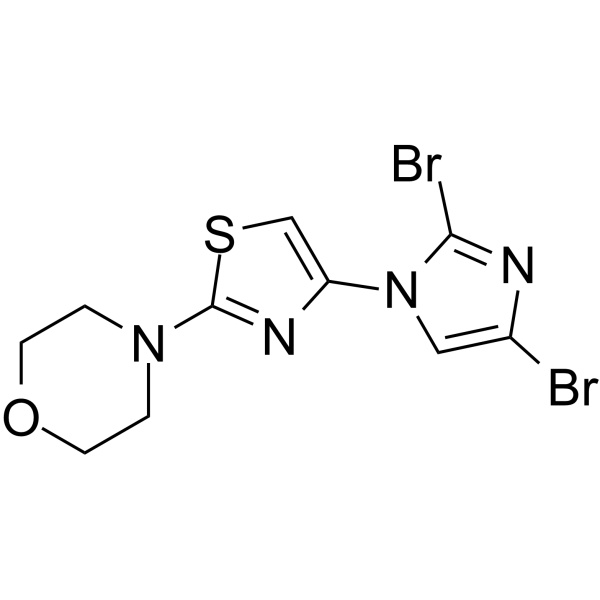
HY-116501
VPC-14449AR-DBD Inhibitor


Biologische Aktivität
Beschreibung
IC50 & Target
IC50: 6 μM (AR NTD)[1]
In Vitro
EPI-001 (5-100 μM; 7 d) inhibits PCa/CRPC cell growth in a dose-dependent manner[2].
?
EPI-001 (50 μM) inhibits endogenous AR mRNA and protein expression in PCa and CRPC cell lines[2].
?
EPI-001 (50 μM) inhibits transcriptional activity of both AR TAU1 and TAU5[2].
MedChemExpress (MCE) has not independently confirmed the accuracy of these methods. They are for reference only. Further protocols information, click here.
-
Cell Line:PCa, CRPC, PC-3, DU 145, and T47D cell lines
-
Concentration:0, 5, 10, 25, 50, 100 μM
-
Incubation Time:7 days
-
Result:Inhibited growth of LNCaP cells at low concentrations.
Inhibited growth of AR-negative PC-3 and DU 145 cell lines as well as the T47D breast carcinoma cell line.
-
Cell Line:LNCaP, VCaP LAPC4, C4-2,22Rv1, and CWR-R1 cells
-
Concentration:50 μM
-
Incubation Time:8-16 hours
-
Result:Decreased expression of full-length AR protein to varying degrees.
In Vivo
? EPI-00 (50 mg/kg; i.v.) blocks the androgen-axis and inhibits androgen-dependent tumor growth[1].
MedChemExpress (MCE) has not independently confirmed the accuracy of these methods. They are for reference only.
-
Animal Model:Male NOD-SCID mice (6-8 weeks) bearing LNCaP[1]
-
Dosage:20 mg/kg
-
Administration:I.v. every 5 days for 25 days
-
Result:Reduced tumors from 100.3±1.72 mm3 to 73.03±29.6 mm3 within 2 weeks.
Did not cause general toxicity indicated by no change in animal behavior or body weight.


Chemical Information
-
CAS. Nr. 227947-06-0
-
Appearance Solid
-
Molecular Weight 394.89
-
Formel C21H27ClO5
-
Color White to off-white
-
SMILES
OCC(O)COC1=CC=C(C(C)(C2=CC=C(OCC(O)CCl)C=C2)C)C=C1
-
Versand
Room temperature in continental US; may vary elsewhere.
-
Speicherung
Powder -20°C 3 years 4°C 2 years In solvent -80°C 6 months -20°C 1 month


Lösungsmittel & Löslichkeit
In Vitro:
DMSO : 33.33 mg/mL (84.40 mM; Need ultrasonic; Hygroscopic DMSO has a significant impact on the solubility of product, please use newly opened DMSO)
Please refer to the solubility information to select the appropriate solvent. Once prepared, please aliquot and store the solution to prevent product inactivation from repeated freeze-thaw cycles.
Storage method and period of stock solution: -80°C, 6 months; -20°C, 1 month. When stored at -80°C, please use it within 6 months. When stored at -20°C, please use it within 1 month.
Please refer to the solubility information to select the appropriate solvent. Once prepared, please aliquot and store the solution to prevent product inactivation from repeated freeze-thaw cycles.
Storage method and period of stock solution: -80°C, 6 months; -20°C, 1 month. When stored at -80°C, please use it within 6 months. When stored at -20°C, please use it within 1 month.
Konzentration (Stammlösung) × Volumen (Stammlösung) = Konzentration (Ziellösung) × Volumen (Ziellösung)
In Vivo:
Select the appropriate dissolution method based on your experimental animal and administration route.
- For the following dissolution methods, please ensure to first prepare a clear stock solution using an In Vitro approach and then sequentially add co-solvents:
- To ensure reliable experimental results, the clarified stock solution can be appropriately stored based on storage conditions. As for the working solution for In Vivo experiments, it is recommended to prepare freshly and use it on the same day.
- The percentages shown for the solvents indicate their volumetric ratio in the final prepared solution. If precipitation or phase separation occurs during preparation, heat and/or sonication can be used to aid dissolution.
Add each solvent one by one: 10% DMSO 40% PEG300 5% Tween-80 45% Saline
Solubility: ≥ 2.5 mg/mL (6.33 mM); Clear solution
This protocol yields a clear solution of ≥ 2.5 mg/mL (saturation unknown).
Taking 1 mL working solution as an example, add 100 μL DMSO stock solution (25.0 mg/mL) to 400 μL PEG300, and mix evenly; then add 50 μL Tween-80 and mix evenly; then add 450 μL Saline to adjust the volume to 1 mL.
Preparation of Saline: Dissolve 0.9 g sodium chloride in ddH₂O and dilute to 100 mL to obtain a clear Saline solution.
Add each solvent one by one: 10% DMSO 90% (20% SBE-β-CD in Saline)
Solubility: ≥ 2.5 mg/mL (6.33 mM); Clear solution
This protocol yields a clear solution of ≥ 2.5 mg/mL (saturation unknown).
Taking 1 mL working solution as an example, add 100 μL DMSO stock solution (25.0 mg/mL) to 900 μL 20% SBE-β-CD in Saline, and mix evenly.
Preparation of 20% SBE-β-CD in Saline (4°C, storage for one week): 2 g SBE-β-CD powder is dissolved in 10 mL Saline, completely dissolve until clear.
In Vivo Dissolution Calculator
Please enter the basic information of animal experiments:
-
-
-
-
Recommended: Prepare an additional quantity of animals to account for potential losses during experiments.
Please enter your animal formula composition:
-
%DMSO +
Recommended: Keep the proportion of DMSO in working solution below 2% if your animal is weak.
-
%+
-
+%Tween-80 + +
-
%Saline +
The co-solvents required include: DMSO, . All of co-solvents are available by MedChemExpress (MCE). , Tween 80. All of co-solvents are available by MedChemExpress (MCE).
Working solution concentration: 0.22 mg/mL
Method for preparing stock solution: mg drug dissolved in μL DMSO. Stock solution concentration: mg/mL.
1. Take μL DMSO stock solution;
2. Add μL .
μL , mix evenly;
3. Then add μL Tween 80, mix evenly;
4. Then add μL
Please ensure that the stock solution in the first step is dissolved to a clear state, and add co-solvents in sequence. You can use ultrasonic heating (ultrasonic cleaner, recommended frequency 20-40 kHz), vortexing, etc. to assist dissolution.

Protokoll
-
Research Protocol for Endocrine Diseases
Endocrine diseases often arise from disrupted hormone production, hormone signaling, or target-tissue responsiveness; for diabetes-focused endocrine disease models, insulin signaling regulates glucose uptake, hepatic glucose output, lipid metabolism, and β-cell compensation. Type 2 diabetes develops through interacting defects in insulin resistance, β-cell dysfunction, adipose inflammation, hepatic glucose overproduction, altered incretin signaling, and ectopic lipid metabolism. A major unresolved question is whether endocrine dysfunction is driven primarily by target-tissue insulin resistance, intrinsic β-cell failure, immune/inflammatory stress, or combined multi-organ failure that differs by disease stage.


Reinheit & Dokumentation
-
Data Sheet (272 KB)
-
SDS (393 KB)
- English - EN (393 KB)
- Français - FR (393 KB)
- Deutsch - DE (393 KB)
- Norwegian - NO (393 KB)
- Español - ES (393 KB)
- Swedish - SV (393 KB)
- Italian - IT (393 KB)
- Korean - KR (393 KB)
- Portuguese - PT (393 KB)
-
Handling Instructions (2659 KB)
Verweise
[1]. Andersen RJ, et, al. Regression of castrate-recurrent prostate cancer by a small-molecule inhibitor of the amino-terminus domain of the androgen receptor. Cancer Cell. 2010 Jun 15; 17(6): 535-46. [Content Brief]
[2]. Brand LJ, et, al. EPI-001 is a selective peroxisome proliferator-activated receptor-gamma modulator with inhibitory effects on androgen receptor expression and activity in prostate cancer. Oncotarget. 2015 Feb 28; 6(6): 3811-24. [Content Brief]
[3]. Mol ED, et, al. EPI-001, A Compound Active against Castration-Resistant Prostate Cancer, Targets Transactivation Unit 5 of the Androgen Receptor. ACS Chem Biol. 2016 Sep 16;11(9):2499-505. [Content Brief]


Complete Stock Solution Preparation Table
Please refer to the solubility information to select the appropriate solvent. Once prepared, please aliquot and store the solution to prevent product inactivation from repeated freeze-thaw cycles.
Storage method and period of stock solution: -80°C, 6 months; -20°C, 1 month. When stored at -80°C, please use it within 6 months. When stored at -20°C, please use it within 1 month.
| Optional Solvent | Concentration Solvent Mass | 1 mg | 5 mg | 10 mg | 25 mg |
|---|---|---|---|---|---|
| DMSO | 1 mM | 2.5324 mL | 12.6618 mL | 25.3235 mL | 63.3088 mL |
| 5 mM | 0.5065 mL | 2.5324 mL | 5.0647 mL | 12.6618 mL | |
| 10 mM | 0.2532 mL | 1.2662 mL | 2.5324 mL | 6.3309 mL | |
| 15 mM | 0.1688 mL | 0.8441 mL | 1.6882 mL | 4.2206 mL | |
| 20 mM | 0.1266 mL | 0.6331 mL | 1.2662 mL | 3.1654 mL | |
| 25 mM | 0.1013 mL | 0.5065 mL | 1.0129 mL | 2.5324 mL | |
| 30 mM | 0.0844 mL | 0.4221 mL | 0.8441 mL | 2.1103 mL | |
| 40 mM | 0.0633 mL | 0.3165 mL | 0.6331 mL | 1.5827 mL | |
| 50 mM | 0.0506 mL | 0.2532 mL | 0.5065 mL | 1.2662 mL | |
| 60 mM | 0.0422 mL | 0.2110 mL | 0.4221 mL | 1.0551 mL | |
| 80 mM | 0.0317 mL | 0.1583 mL | 0.3165 mL | 0.7914 mL |


EPI-001 Related Classifications
HY-100348 Related Classifications
 Powered by Bioz