



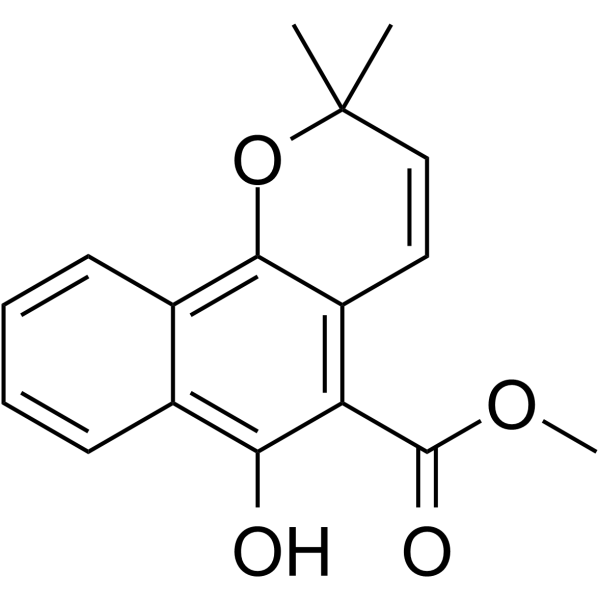
Mollugin
Based on 3 publication(s) in Google Scholar
Mollugin is an orally active and potent NF-κB inhibitor. Mollugin induces S-phase arrest of HepG2 cells, and increased intracellular reactive oxygen species (ROS) levels. Mollugin induces DNA damage in HepG2 cells, as well as an increase in the expression of p-H2AX. Mollugin shows anti-cancer effect by inhibiting TNF-α-induced NF-κB activation. Mollugin enhances the osteogenic action of BMP-2 (bone morphogenetic protein 2) via the p38-Smad signaling pathway.
For research use only. We do not sell to patients.
- Purity : 99.79%
- CAS No.: 55481-88-4
- Formula: C17H16O4
- Molecular Weight:284.31
-
Storage:
4°C, protect from light
* In solvent : -80°C, 6 months; -20°C, 1 month (protect from light)

To place orders, for customer services and technical support, please contact: MedChemExpress USA
Tel: 609-228-6898 E-mail: [email protected] [email protected]


-
 Biological Activity
-
Chemical Information
-
Solvent & Solubility
- Protocols
- Purity & Documentation
- References
-
 Help & FAQs


-

HY-Y0320
Dimethyl sulfoxide, meets analytical specification of Ch.P.Aprotic Solvent -
HY-N0615
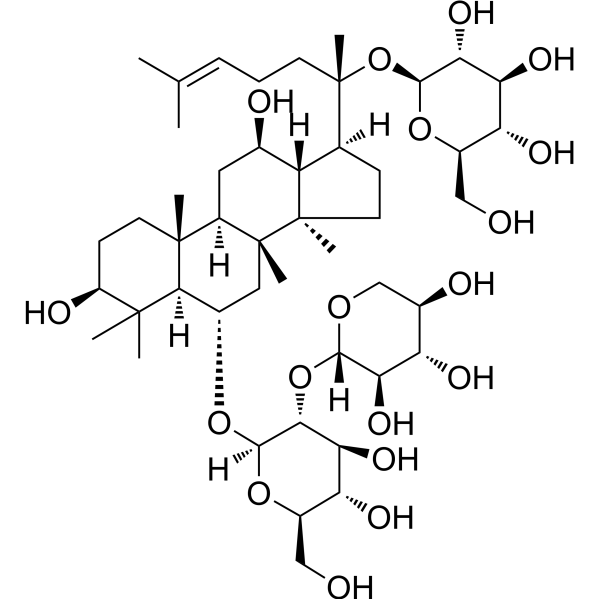
Notoginsenoside R1Apoptosis Inhibitor -
HY-N0890
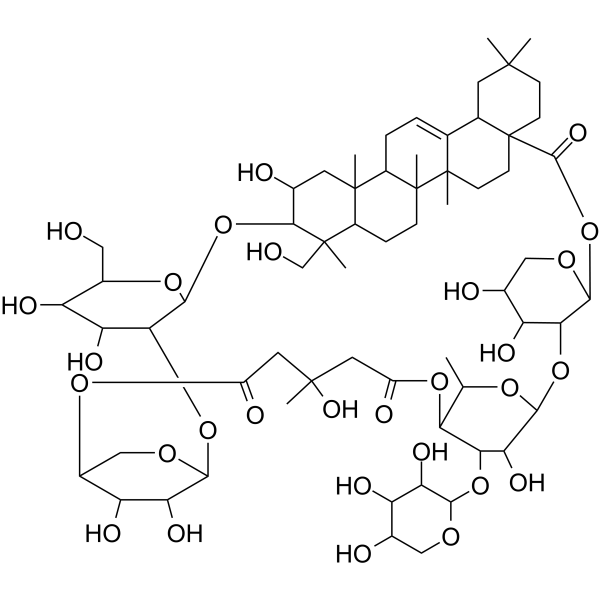
Tubeimoside IAnticancer Agent -
HY-N0571
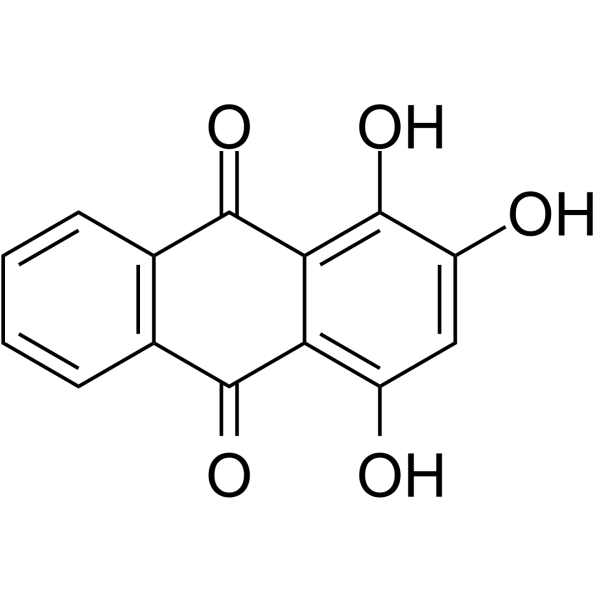
PurpurinAntidepressant-like Drug -

HY-N0316R
Mollugin (Standard)Anti-cancer Agent -
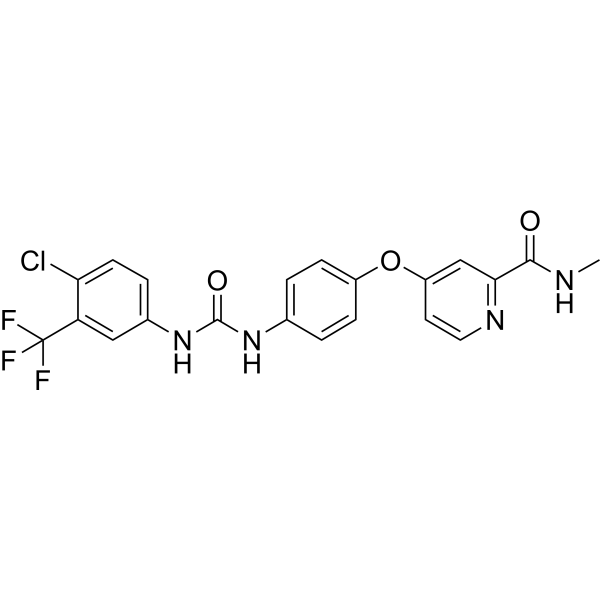
HY-10201
SorafenibMultikinase Inhibitor -
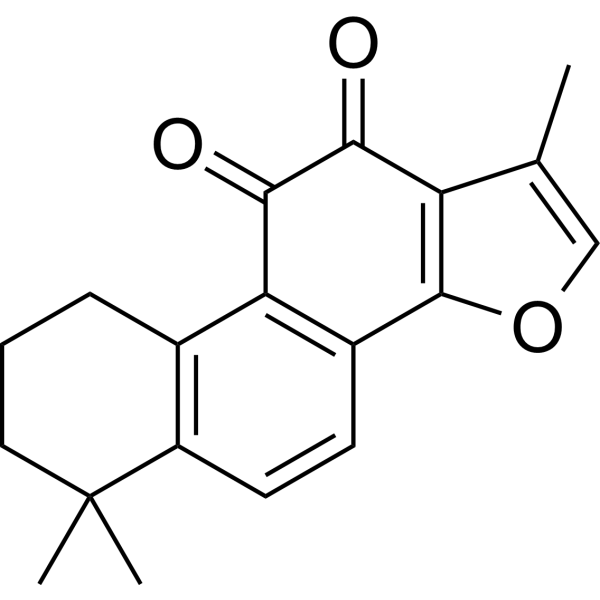
HY-N0135
Tanshinone IIAVEGFR Inhibitor -
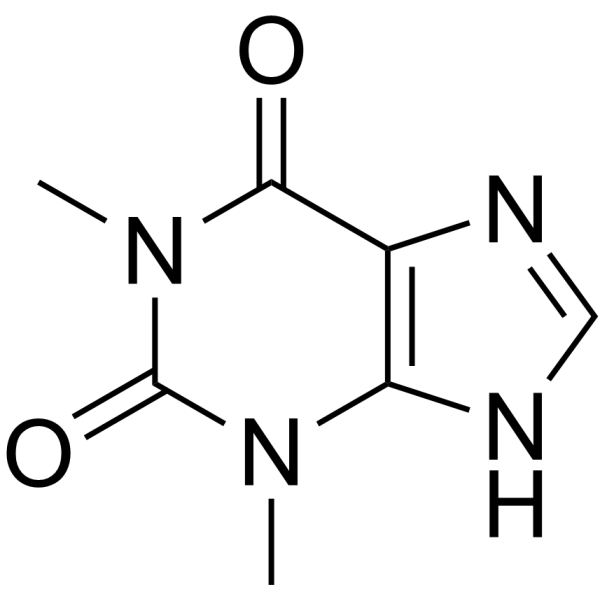
HY-B0809
TheophyllinePDE Inhibitor -
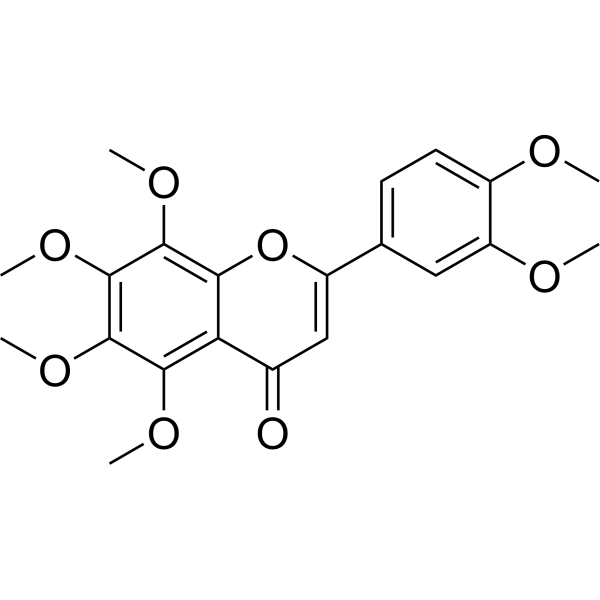
HY-N0155
NobiletinROR Agonist -
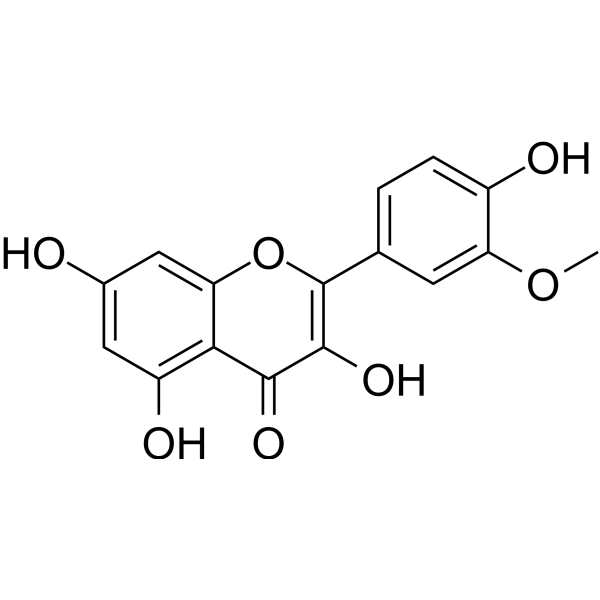
HY-N0776
IsorhamnetinEndogenous Metabolite -
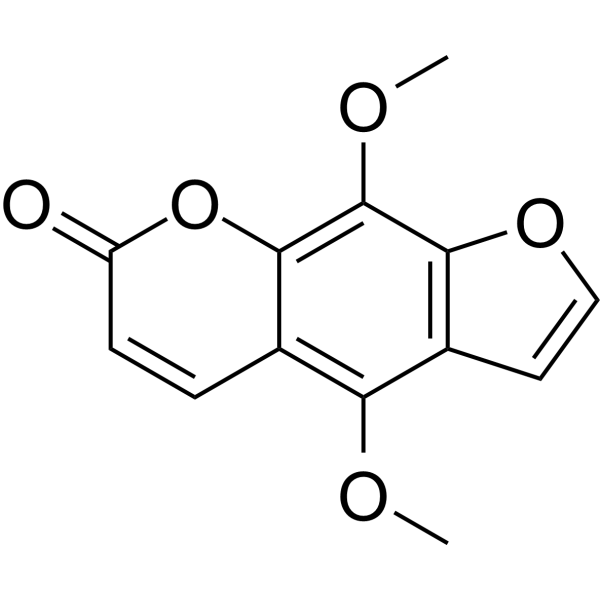
HY-N0769
IsopimpinellinParasite Inhibitor -
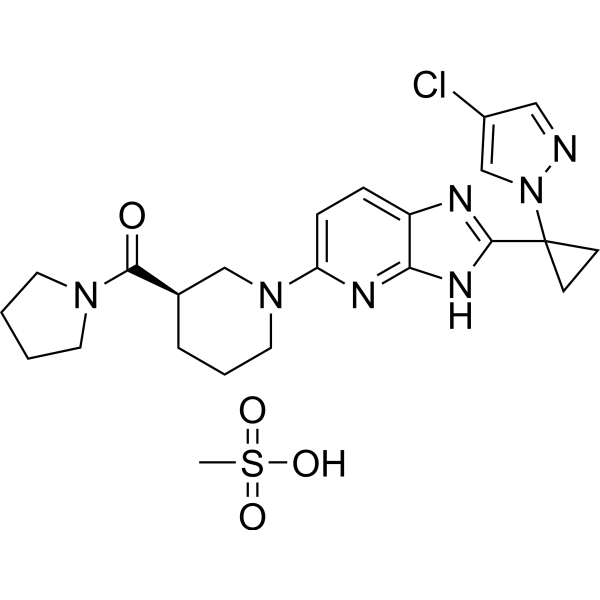
HY-108341A
PF-06424439 methanesulfonateDGAT2 Inhibitor
Publications Citing Use of MedChemExpress (MCE) Mollugin
MoreAll VEGFR Isoforms
More

Biological Activity
Description
Cellular Effect
|
Cell Line

|
Type | Value | Description | References |
|---|---|---|---|---|
| Hep 3B2 | IC50 |
2 μg/mL
Compound: 2
|
Antiviral activity against Hepatitis B virus infected in human Hep3B cells assessed as suppression of viral surface antigen secretion after 48 hrs by enzyme immunoassay
Antiviral activity against Hepatitis B virus infected in human Hep3B cells assessed as suppression of viral surface antigen secretion after 48 hrs by enzyme immunoassay
|
[PMID: 8882438] |
In Vitro
Mollugin (0-80 μM, 24 h) inhibits the expression of an NF-κB reporter gene induced by TNF-α in a dose-dependent manner[1].
Mollugin (0-80 μM, 12 h) inhibits the proliferation of HeLa cells[1].
Mollugin (0-80 μM, 12 h) inhibits TNF-α-induced phosphorylation and nuclear translocation of p65, phosphorylation and degradation of IκBα, and IKK phosphorylation, and inhibits the TNF-α-induced mRNA expression of Cyclin D1, c-Myc, and VEGF[1].
Mollugin (0-80 μM, 12 h) enhances TNF-α-induced apoptosis[1].
MedChemExpress (MCE) has not independently confirmed the accuracy of these methods. They are for reference only.
-
Cell Line:HeLa, Hep3B, and HEK293 cells
-
Concentration:0, 10, 20, 40, and 80 μM
-
Incubation Time:24 h
-
Result:Significantly inhibited NF-κB reporter gene expression in a dose-dependent manner, did not display significant cellular toxicity in HeLa, Hep3B, and HEK293 cells.
-
Cell Line:HeLa cells
-
Concentration:0, 20, 40, and 80 μM
-
Incubation Time:12 h
-
Result:Inhibited the proliferation of HeLa cells.
-
Cell Line:HeLa cells
-
Concentration:0, 10, 20, 40, and 80 μM
-
Incubation Time:12 h
-
Result:Slightly affected the caspase-3 activation, potentiated the effect of TNF-α-induced PARP cleavage, and enhanced the apoptotic effects of TNF-α.
-
Cell Line:HeLa cells
-
Concentration:0, 10, 20, 40, and 80 μM
-
Incubation Time:12 h
-
Result:Significantly inhibited the TNF-α-induced p65 phosphorylation and block TNF-α-induced nuclear translocation of p65 in a dose-dependent manner, completely inhibited degradation of IκBα at 80 μM, and abolished the TNF-α-induced IKK phosphorylation at 80 μM. Inhibited the TNF-α-induced mRNA expression of Cyclin D1, c-Myc, and VEGF at 80 μM.
In Vivo
MedChemExpress (MCE) has not independently confirmed the accuracy of these methods. They are for reference only.
-
Animal Model:BALB/c female athymic nude mice (six-week-old, subcutaneously injected with 0.2 mL HeLa cells)[1]
-
Dosage:0, 25 and 75 mg/kg
-
Administration:Orally, three times per week for 36 days
-
Result:Suppressed tumor growth, whereas the body weight did not change. Significantly reduced the protein expression of p-p65 and COX-2 in the tumors.


Chemical Information
-
CAS No. 55481-88-4
-
Appearance Solid
-
Molecular Weight 284.31
-
Formula C17H16O4
-
Color Light yellow to yellow
-
SMILES
O=C(C1=C(C=CC(C)(C)O2)C2=C3C=CC=CC3=C1O)OC
-
Structure Classification
-
Initial Source
-
Shipping
Room temperature in continental US; may vary elsewhere.
-
Storage
4°C, protect from light
* In solvent : -80°C, 6 months; -20°C, 1 month (protect from light)


Publications (3)
-
Journal Impact Factor
-
Most Recent
-
Phytomedicine
Mollugin induces ferroptosis through dysregulation of iron homeostasis and redox balance in non-small cell lung cancer. [Abstract]2026 Jul 25:157:158316. PMID: 42241811 -
J Bioenerg Biomembr
Mollugin attenuates oxygen-glucose deprivation/reperfusion-induced brain microvascular endothelial cell death and permeability through activation of BDNF/TrkB-modulated Akt pathway. [Abstract]2025 May 30. PMID: 40445497 -


Solvent & Solubility
In Vitro:
DMSO : 33.33 mg/mL (117.23 mM; Need ultrasonic; Hygroscopic DMSO has a significant impact on the solubility of product, please use newly opened DMSO)
Please refer to the solubility information to select the appropriate solvent. Once prepared, please aliquot and store the solution to prevent product inactivation from repeated freeze-thaw cycles.
Storage method and period of stock solution: -80°C, 6 months; -20°C, 1 month (protect from light). When stored at -80°C, please use it within 6 months. When stored at -20°C, please use it within 1 month.
Please refer to the solubility information to select the appropriate solvent. Once prepared, please aliquot and store the solution to prevent product inactivation from repeated freeze-thaw cycles.
Storage method and period of stock solution: -80°C, 6 months; -20°C, 1 month (protect from light). When stored at -80°C, please use it within 6 months. When stored at -20°C, please use it within 1 month.
Concentration (start) × Volume (start) = Concentration (final) × Volume (final)
In Vivo:
Select the appropriate dissolution method based on your experimental animal and administration route.
- For the following dissolution methods, please ensure to first prepare a clear stock solution using an In Vitro approach and then sequentially add co-solvents:
- To ensure reliable experimental results, the clarified stock solution can be appropriately stored based on storage conditions. As for the working solution for In Vivo experiments, it is recommended to prepare freshly and use it on the same day.
- The percentages shown for the solvents indicate their volumetric ratio in the final prepared solution. If precipitation or phase separation occurs during preparation, heat and/or sonication can be used to aid dissolution.
Add each solvent one by one: 10% DMSO 40% PEG300 5% Tween-80 45% Saline
Solubility: ≥ 2.5 mg/mL (8.79 mM); Clear solution
This protocol yields a clear solution of ≥ 2.5 mg/mL (saturation unknown).
Taking 1 mL working solution as an example, add 100 μL DMSO stock solution (25.0 mg/mL) to 400 μL PEG300, and mix evenly; then add 50 μL Tween-80 and mix evenly; then add 450 μL Saline to adjust the volume to 1 mL.
Preparation of Saline: Dissolve 0.9 g sodium chloride in ddH₂O and dilute to 100 mL to obtain a clear Saline solution.
In Vivo Dissolution Calculator
Please enter the basic information of animal experiments:
-
-
-
-
Recommended: Prepare an additional quantity of animals to account for potential losses during experiments.
Please enter your animal formula composition:
-
%DMSO +
Recommended: Keep the proportion of DMSO in working solution below 2% if your animal is weak.
-
%+
-
+%Tween-80 + +
-
%Saline +
The co-solvents required include: DMSO, . All of co-solvents are available by MedChemExpress (MCE). , Tween 80. All of co-solvents are available by MedChemExpress (MCE).
Working solution concentration: 0.22 mg/mL
Method for preparing stock solution: mg drug dissolved in μL DMSO. Stock solution concentration: mg/mL. * In solvent : -80°C, 6 months; -20°C, 1 month (protect from light)
1. Take μL DMSO stock solution;
2. Add μL .
μL , mix evenly;
3. Then add μL Tween 80, mix evenly;
4. Then add μL
Please ensure that the stock solution in the first step is dissolved to a clear state, and add co-solvents in sequence. You can use ultrasonic heating (ultrasonic cleaner, recommended frequency 20-40 kHz), vortexing, etc. to assist dissolution.


Purity & Documentation
-
Data Sheet (285 KB)
-
SDS (393 KB)
- English - EN (393 KB)
- Français - FR (393 KB)
- Deutsch - DE (393 KB)
- Norwegian - NO (393 KB)
- Español - ES (393 KB)
- Swedish - SV (393 KB)
- Italian - IT (393 KB)
- Korean - KR (393 KB)
- Portuguese - PT (393 KB)
-
Handling Instructions (2659 KB)
References
[1]. Wang Z, et al. Mollugin Has an Anti-Cancer Therapeutic Effect by Inhibiting TNF-α-Induced NF-κB Activation. Int J Mol Sci. 2017 Jul 26;18(8). [Content Brief]
[2]. Moon SH, et al. Mollugin enhances the osteogenic action of BMP-2 via the p38-Smad signaling pathway. Arch Pharm Res. 2017 Nov;40(11):1328-1335. [Content Brief]
[3]. Ke XG, Xiong YY, Yu B, et al. Mollugin induced oxidative DNA damage via up-regulating ROS that caused cell cycle arrest in hepatoma cells. Chem Biol Interact. 2022;353:109805. [Content Brief]


Complete Stock Solution Preparation Table
Please refer to the solubility information to select the appropriate solvent. Once prepared, please aliquot and store the solution to prevent product inactivation from repeated freeze-thaw cycles.
Storage method and period of stock solution: -80°C, 6 months; -20°C, 1 month (protect from light). When stored at -80°C, please use it within 6 months. When stored at -20°C, please use it within 1 month.
| Optional Solvent | Concentration Solvent Mass | 1 mg | 5 mg | 10 mg | 25 mg |
|---|---|---|---|---|---|
| DMSO | 1 mM | 3.5173 mL | 17.5864 mL | 35.1729 mL | 87.9322 mL |
| 5 mM | 0.7035 mL | 3.5173 mL | 7.0346 mL | 17.5864 mL | |
| 10 mM | 0.3517 mL | 1.7586 mL | 3.5173 mL | 8.7932 mL | |
| 15 mM | 0.2345 mL | 1.1724 mL | 2.3449 mL | 5.8621 mL | |
| 20 mM | 0.1759 mL | 0.8793 mL | 1.7586 mL | 4.3966 mL | |
| 25 mM | 0.1407 mL | 0.7035 mL | 1.4069 mL | 3.5173 mL | |
| 30 mM | 0.1172 mL | 0.5862 mL | 1.1724 mL | 2.9311 mL | |
| 40 mM | 0.0879 mL | 0.4397 mL | 0.8793 mL | 2.1983 mL | |
| 50 mM | 0.0703 mL | 0.3517 mL | 0.7035 mL | 1.7586 mL | |
| 60 mM | 0.0586 mL | 0.2931 mL | 0.5862 mL | 1.4655 mL | |
| 80 mM | 0.0440 mL | 0.2198 mL | 0.4397 mL | 1.0992 mL | |
| 100 mM | 0.0352 mL | 0.1759 mL | 0.3517 mL | 0.8793 mL |


Mollugin Related Classifications
HY-N0316 Related Classifications
 Powered by Bioz