



EAD1
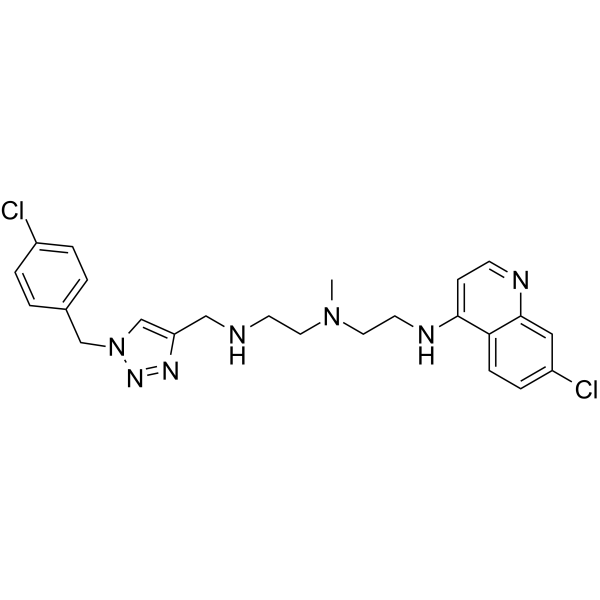
EAD1 is a Chloroquine (HY-17589A) analog with anticancer activity. EAD1 blocks autophagy, leading to the intracellular accumulation of autophagosome-related proteins LC3-II and p62. EAD1 induces cancer cell apoptosis and inhibits cancer cell proliferation. EAD1 can be used in the research of lung cancer and pancreatic cancer.
Nos produits utilisent uniquement pour la recherche. Nous ne vendons pas aux patients.
- CAS No.: 1644388-26-0
- Formule: C24H27Cl2N7
- Masse moléculaire:484.42
-
Stockage:
Please store the product under the recommended conditions in the Certificate of Analysis.

To place orders, for customer services and technical support, please contact: MedChemExpress USA
Tel: 609-228-6898 E-mail: [email protected] [email protected]


-
 Activité biologique
-
Chemical Information
- Protocole
- Pureté et documentation
- Références
-
 Help & FAQs


-
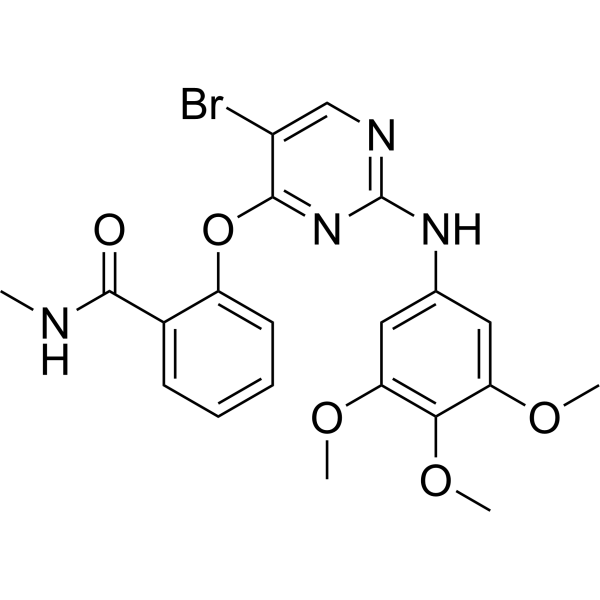
HY-16966
SBI-0206965ULK1/AMPK Inhibitor -
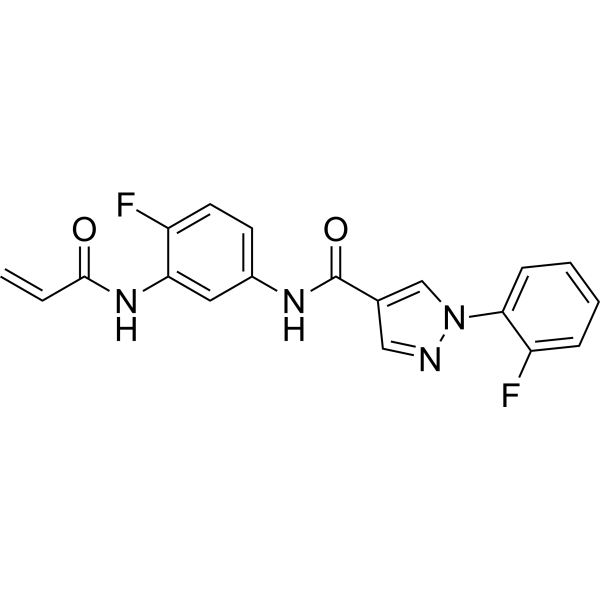
HY-128892
EN6Autophagy Activator -
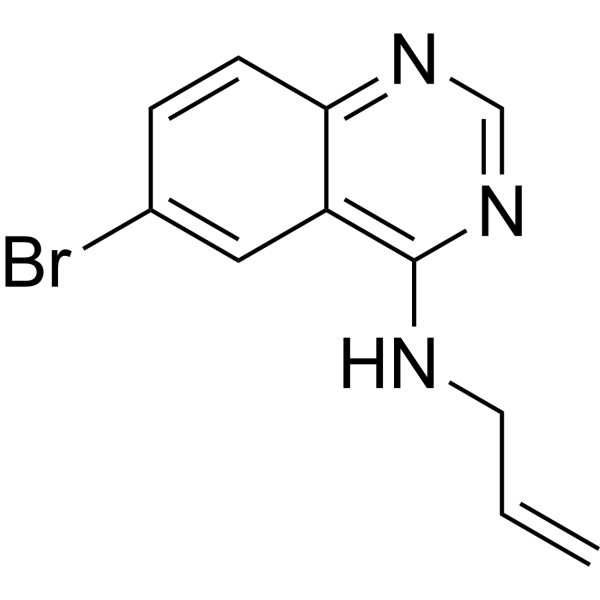
HY-100200
SMER28Autophagy Positive Regulator -
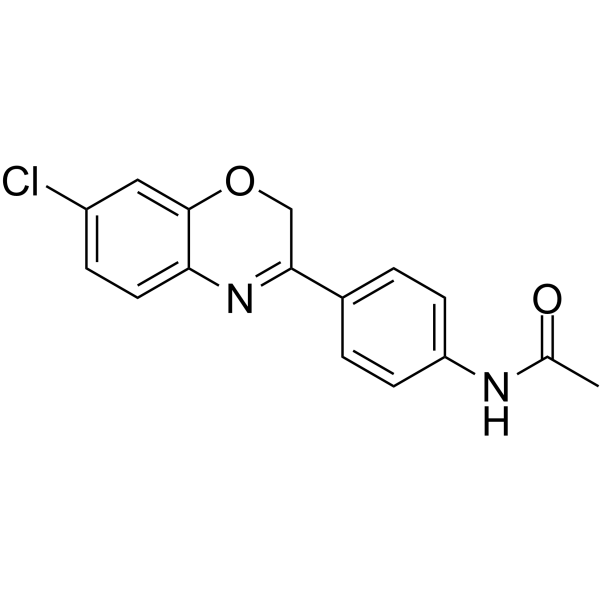
HY-112483
QX77CMA activator -
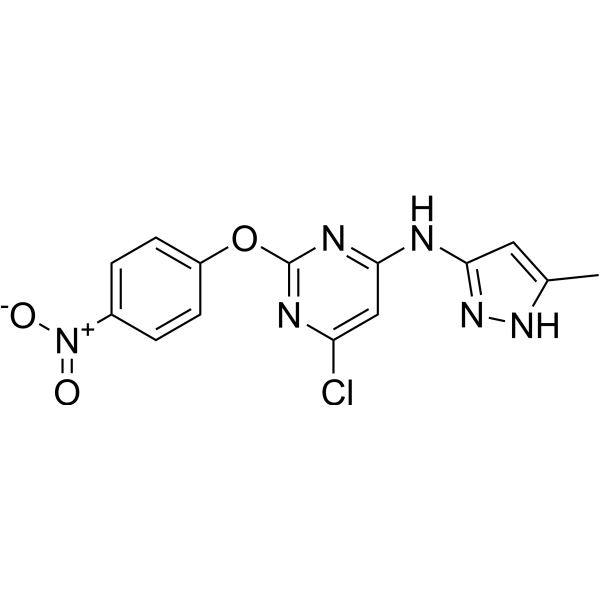
HY-101920
AutophinibVPS34 Inhibitor -
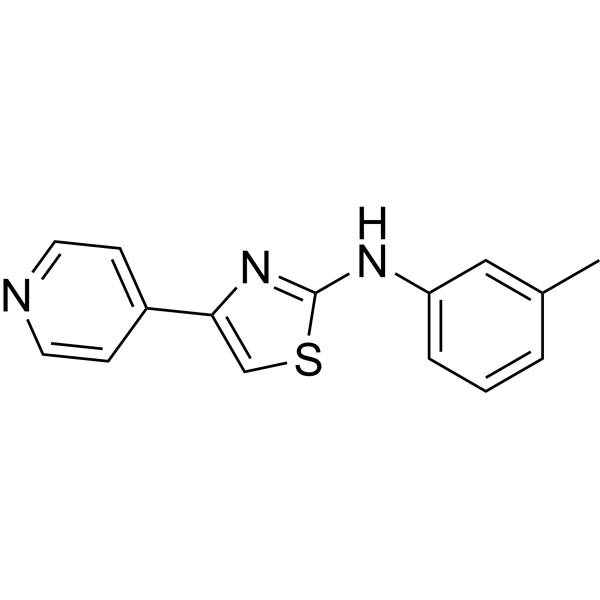
HY-100746
STF-62247Autophagy Inducer -
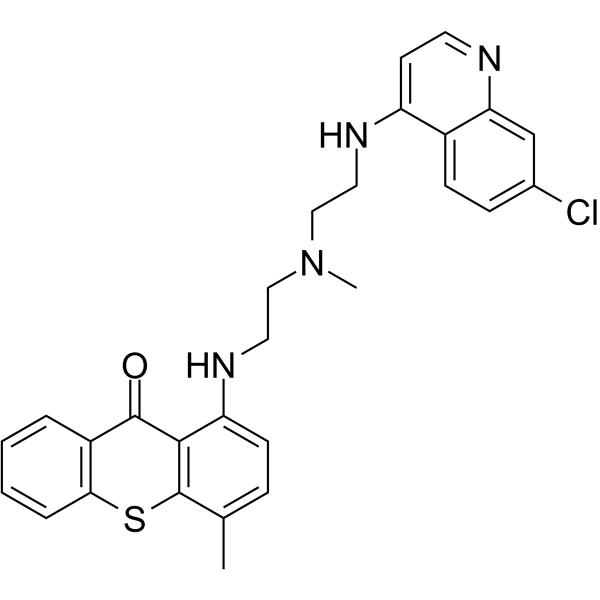
HY-103706
ROC-325Autophagy Inhibitor -
HY-122650
PHY34Autophagy Inhibitor -

HY-100200R
SMER28 (Standard)Autophagy Positive Regulator -

HY-101920R
Autophinib (Standard)Reference Standard -

HY-103706R
ROC-325 (Standard)Reference Standard -
HY-12855
Lys01Autophagy Inhibitor


Activité biologique
Description
Cellular Effect
|
Cell Line

|
Type | Value | Description | References |
|---|---|---|---|---|
| BXPC-3 | IC50 |
5.8 μM
Compound: 3h, EAD1
|
Antiproliferative activity against human BxPC3 cells after 72 hrs by SRB method
Antiproliferative activity against human BxPC3 cells after 72 hrs by SRB method
|
[PMID: 25699157] |
| HCC827 | IC50 |
7.6 μM
Compound: 3h, EAD1
|
Antiproliferative activity against human HCC827 cells after 72 hrs by SRB method
Antiproliferative activity against human HCC827 cells after 72 hrs by SRB method
|
[PMID: 25699157] |
| NCI-H460 | IC50 |
11 μM
Compound: 3h, EAD1
|
Antiproliferative activity against human H460 cells after 72 hrs by SRB method
Antiproliferative activity against human H460 cells after 72 hrs by SRB method
|
[PMID: 25699157] |
In Vitro
EAD1 (compound 3h) potently inhibits the proliferation of H460, HCC827 and BxPC3 cancer cells at 72 h, with IC50 values of 11 μM, 7.6 μM and 5.8 μM, respectively[1].
EAD1 (6.5-100 μM; 24 h) potently inhibits colony formation of H460 non-small cell lung cancer cells[1].
EAD1 (5-75 μM; 24 h) induces concentration-dependent apoptosis in H460 non-small cell lung cancer (NSCLC) cells[1].
EAD1 (25-50 μM; 6 h) enhances the expression of punctate LC3 in H3122 non-small cell lung cancer cells[1].
EAD1 (1-25 μM, 10 μM; 2-72 h, 24 h) induces concentration- and time-dependent accumulation of autophagy-related proteins LC3-II and p62 in H460 non-small cell lung cancer (NSCLC) cells[1].
MedChemExpress (MCE) has not independently confirmed the accuracy of these methods. They are for reference only.
-
Cell Line:H460 human NSCLC cells
-
Concentration:6.5, 13, 25, 50, 100 μM
-
Incubation Time:24 h
-
Result:Inhibited colony formation of H460 non-small cell lung cancer cells.
-
Cell Line:H460 human NSCLC cells
-
Concentration:5, 25, 50, 75 μM
-
Incubation Time:24 h
-
Result:Induced apoptosis in H460 cells in a concentration-dependent manner.
-
Cell Line:H460 human NSCLC cells
-
Concentration:1, 2.5, 5, 10, 25 μM (24 h incubation); 10 μM (time-course incubation)
-
Incubation Time:2, 4, 6, 24, 48, 72 h (10 μM concentration); 24 h (1-25 μM concentration)
-
Result:Caused concentration- and time-dependent increases in autophagosome-bound LC3-II levels.
Showed larger increase in LC3-II levels at each tested concentration compared to HCQ.
Made the effect of 25 μM HCQ on LC3-II approximately equal to that of 5 μM EAD1.
Caused concentration-dependent accumulation of p62 (an autophagy substrate), with more potent activity than HCQ.
- Annexin V plus membrane-impermeant dye apoptosis staining
- BrdU Incorporation Assay
- Somatic Cell Culture
- CFSE Dye Dilution Proliferation Assay
- Dye-dilution cell tracking and proliferation staining
- CCK-8/WST-8 Cell Proliferation Assay
- Protocol for Cell Cycle
- Cell Counting-Based Growth Curve Assay
- Colony Formation (Clonogenic) Assay
- Cell Viability Determination by MTT Colorimetric Assay
- EdU Incorporation Assay (Click Chemistry-Based DNA Synthesis Measurement)
- Detection of Apoptosis
- TUNEL staining for apoptotic DNA fragmentation
- Ki-67 Immunostaining Proliferation Assay
- PCNA Immunodetection Proliferation Assay
- Protocol for Cell Counting and Cell Density Analysis
- Autophagy
- Apoptosis Solutions
- Lysosome and acidic-vesicle live-cell staining
- MTT Cell Proliferation Assay
- Macroautophagy Solutions


Chemical Information
-
CAS No. 1644388-26-0
-
Masse moléculaire 484.42
-
Formule C24H27Cl2N7
-
SMILES
CN(CCNCC1=CN(CC2=CC=C(Cl)C=C2)N=N1)CCNC3=CC=NC4=CC(Cl)=CC=C34
-
Livraison
Room temperature in continental US; may vary elsewhere.
-
Stockage
Please store the product under the recommended conditions in the Certificate of Analysis.


Pureté et documentation
Références

Calculators
Concentration (start) × Volume (start) = Concentration (final) × Volume (final)


EAD1 Related Classifications
HY-123056 Related Classifications
 Powered by Bioz