



α-Amylase
Based on 2 publication(s) in Google Scholar
α-Amylase is a hydrolase enzyme that catalyses the hydrolysis of internal α-1, 4-glycosidic linkages in starch to yield products like glucose and maltose.
Para uso exclusivo en investigación. No vendemos a pacientes.
- No. CAS: 9000-90-2
-
Almacenamiento:
Please store the product under the recommended conditions in the Certificate of Analysis.

To place orders, for customer services and technical support, please contact: MedChemExpress USA
Tel: 609-228-6898 E-mail: [email protected] [email protected]


-
 Actividad biológica
-
Chemical Information
-
Solvente y solubilidad
- Pureza y Documentación
- Referencias
-
 Help & FAQs


-
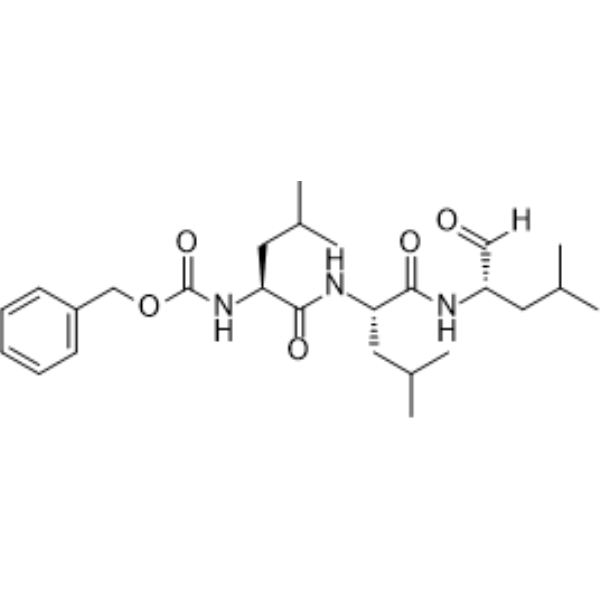
HY-13259
MG-132
-
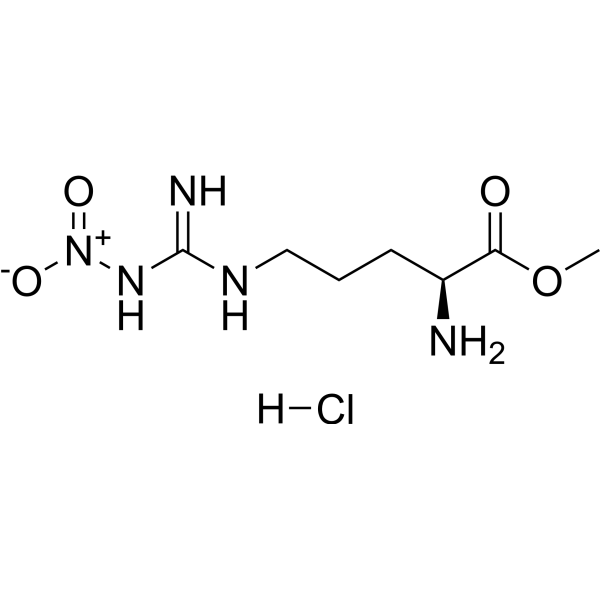
HY-18729A
L-NAME hydrochloride
-
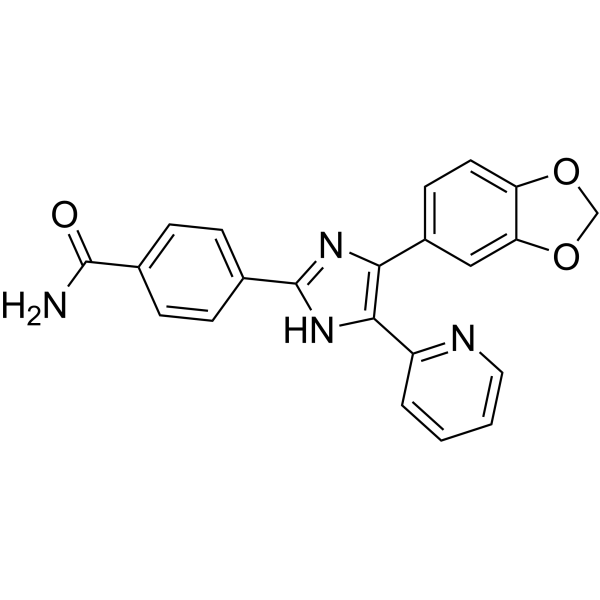
HY-10431
SB-431542
-
HY-114158
Pronase E (Activity ≥ 7000 U/g)
-
HY-17394
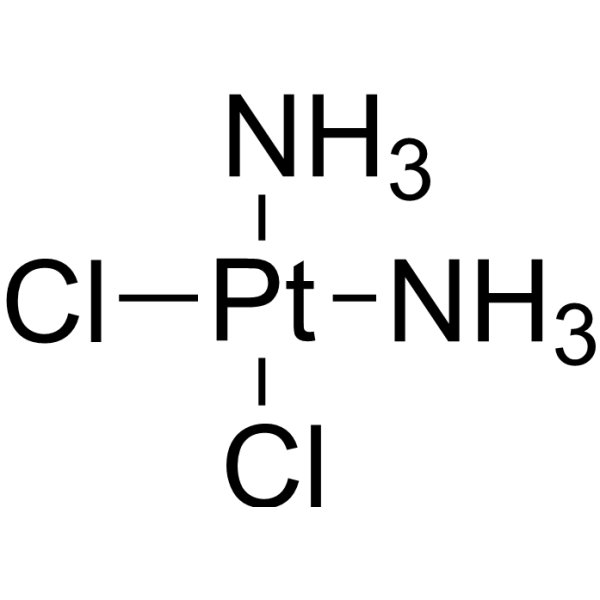
Cisplatin
-
HY-15142
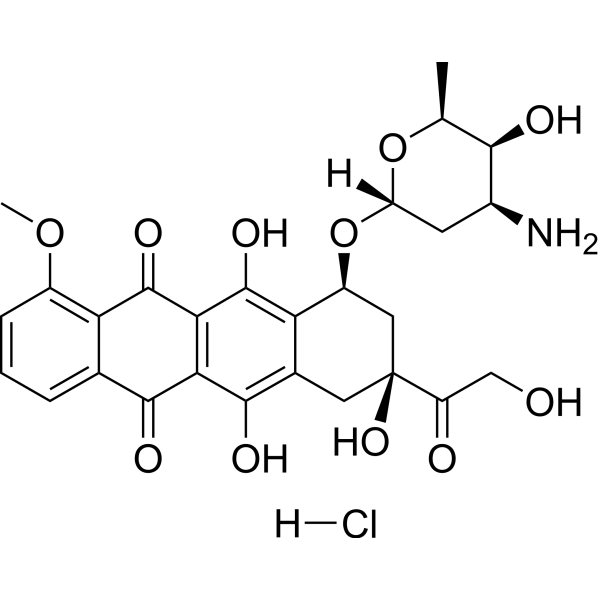
Doxorubicin hydrochloride
-
HY-129047
Trypsin
-
HY-P1635
Pepsin
-

HY-B2193A
α-Amylase, Human Saliva
-

HY-B2193C
α-Amylase, Porcine Pancreatic
-
HY-P3173
Pullulanase
-

HY-B2193B
α-Amylase, Human Pancreas
Publications Citing Use of MedChemExpress (MCE) α-Amylase
More

Actividad biológica
α-Amylase is produced by several bacteria, fungi and genetically modified species of microbes. α-Amylase is a calcium metalloenzyme i.e. it depends on the presence of a metal co factor for its activity. α-Amylase has become an enzyme of crucial importance due to its starch hydrolysis activity and the activities that can be carried out owing to the hydrolysis. One such activity is the production of glucose and fructose syrup from starch. α-Amylase catalyses the first step in this process. Previously, starch was hydrolyzed into glucose by acid hydrolysis. α-Amylase can be isolated from plants, animals or microorganisms. The enzyme has been isolated from barley and rice plants. It has been found that cassava mash waste water is a source of α-Amylase which is active in wide range of pH and temperature[1].
MedChemExpress (MCE) has not independently confirmed the accuracy of these methods. They are for reference only.
| NCT Number | Sponsor | Condition | Start Date |
Phase

|
|---|---|---|---|---|
| NCT01329991 | Plexxikon| | 2011-05 | PHASE1 |


Chemical Information
-
No. CAS 9000-90-2
-
Appearance Solid
-
Color White to light yellow
-
SMILES
[a-Amylase]
-
Initial Source
Aeromonas hydrophila
-
Envío
Room temperature in continental US; may vary elsewhere.
-
Almacenamiento
Please store the product under the recommended conditions in the Certificate of Analysis.


Publications (2)
-
Journal Impact Factor
-
Most Recent
-
J Extracell Biol
Mechanistic insight into human milk extracellular vesicle-intestinal barrier interactions. [Abstract]2025 Jan 9;4(1):e70032. PMID: 39790178 -


Solvente y solubilidad
DMSO : < 1 mg/mL (insoluble or slightly soluble)
For the following dissolution methods, please prepare the working solution directly:
It is recommended to prepare fresh solutions and use them promptly within a short period of time.
The percentages shown for the solvents indicate their volumetric ratio in the final prepared solution. If precipitation or phase separation occurs during preparation, heat and/or sonication can be used to aid dissolution.
Add each solvent one by one: PBS
Solubility: 0.2 mg/mL; null solution; Need ultrasonic and warming


Pureza y Documentación
-
Ficha de datos (271 KB)
-
SDS (419 KB)
- English - EN (419 KB)
- Français - FR (419 KB)
- Deutsch - DE (419 KB)
- Norwegian - NO (419 KB)
- Español - ES (419 KB)
- Swedish - SV (419 KB)
- Italian - IT (419 KB)
- Korean - KR (419 KB)
- Portuguese - PT (419 KB)
-
Instrucciones de manejo (2659 KB)
Referencias

Calculators
Concentration (start) × Volume (start) = Concentration (final) × Volume (final)


α-Amylase Related Classifications
HY-B2193 Related Classifications
 Powered by Bioz