



Pepsin
Based on 4 publication(s) in Google Scholar
Pepsin is the major pig and human gastric proteases, it is a pepsin-like minor gastric proteolytic enzymes. Pepsin contributes to proteolysis of food proteins in the vertebrate stomach.
For research use only. We do not sell to patients.
- CAS No.: 9001-75-6
-
Storage:
Please store the product under the recommended conditions in the Certificate of Analysis.

To place orders, for customer services and technical support, please contact: MedChemExpress USA
Tel: 609-228-6898 E-mail: [email protected] [email protected]


-
 Biological Activity
-
Chemical Information
-
Solvent & Solubility
- Purity & Documentation
- References
-
 Help & FAQs


-

HY-129047
TrypsinSerine Protease -
HY-108910
ChymotrypsinSerine Protease -

HY-B2118
PancreatinPancreatic Digestive Enzymes -

HY-P1645
PapainPapain -
HY-108717
Proteinase KSerine Protease -
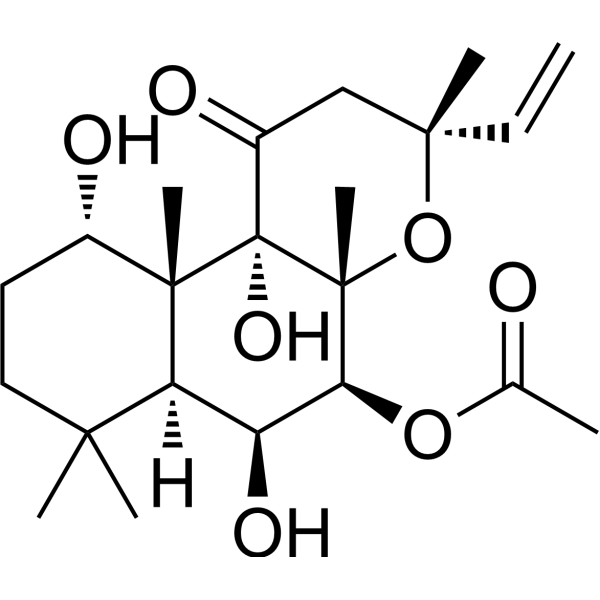
HY-15371
ForskolinAdenylate Cyclase Activator -
HY-E70198
Pepsin (MS Grade)Gastric Protease -

HY-129047E
Trypsin, porcine pancreas (Cell culture grade)Serine Protease -

HY-129047C
TPCK-treated TrypsinBiochemical Assay Reagent -
HY-13259
MG-132Proteasome Inhibitor -
HY-B0579
Cyclosporin ACalcineurin Inhibitor -
HY-B0627
MetforminAntihyperglycemic Agent
Publications Citing Use of MedChemExpress (MCE) Pepsin
MoreAll Endogenous Metabolite Isoforms
More

Biological Activity
Description
In Vitro
Optimal pH: 1.0-3.0.
Activators: Hydrochloric acid (HCl), trifluoroacetic acid (TFA).
Inactivators: pH greater than 6.0.
Usage Notes:
1. Resuspend Pepsin in double-distilled water (pH 5.5 or lower) to a final concentration of 1mg/mL. Store reconstituted Pepsin at 4 °C for up to 1 month.
2. Specificity for cleavage at Phe and Leu is best at pH 1.0 and decreased above pH 2.0. Pepsin irreversibly inactivates above pH 6.0.
MedChemExpress (MCE) has not independently confirmed the accuracy of these methods. They are for reference only. .
Clinical Trial
| NCT Number | Sponsor | Condition | Start Date |
Phase

|
|---|---|---|---|---|
| NCT01329991 | Plexxikon| | 2011-05 | PHASE1 |
EC Number
3.4.23.1
Enzyme Activity
>3000 U/mg soild
Unit Definition
One unit is defined as the amount of enzyme that catalyzes the hydrolysis of hemoglobin to produce 1 μmol of tyrosine per minute at 37℃, pH 2.


Chemical Information
-
CAS No. 9001-75-6
-
Appearance Solid
-
Color White to light yellow
-
SMILES
[Pepsin]
-
Synonyms
EC 3.4.23.1
-
Shipping
Room temperature in continental US; may vary elsewhere.
-
Storage
Please store the product under the recommended conditions in the Certificate of Analysis.


Publications (4)
-
Journal Impact Factor
-
Most Recent
-
Transl Neurodegener
Bacteroides coprocola protects dopaminergic neurons in rotenone-induced Parkinson's disease mouse model by modulating gut microbiota dysbiosis and inhibiting the NLRP3 signaling pathway. [Abstract]2026 Feb 28;15(1):7. PMID: 41761283 -
Autophagy
2025 Dec;21(12):3142-3164. PMID: 41037659 -
-


Solvent & Solubility
In Vitro:
0.01 M HCl : ≥ 2 mg/mL
* "≥" means soluble, but saturation unknown.


Purity & Documentation
-
Data Sheet (271 KB)
-
SDS (558 KB)
- English - EN (558 KB)
- Français - FR (558 KB)
- Deutsch - DE (558 KB)
- Norwegian - NO (558 KB)
- Español - ES (558 KB)
- Swedish - SV (558 KB)
- Italian - IT (558 KB)
- Korean - KR (558 KB)
- Portuguese - PT (558 KB)
-
Handling Instructions (2659 KB)
References

Calculators
Concentration (start) × Volume (start) = Concentration (final) × Volume (final)


Pepsin Related Classifications
HY-P1635 Related Classifications
 Powered by Bioz