



GW406108X
Based on 1 publication(s) in Google Scholar
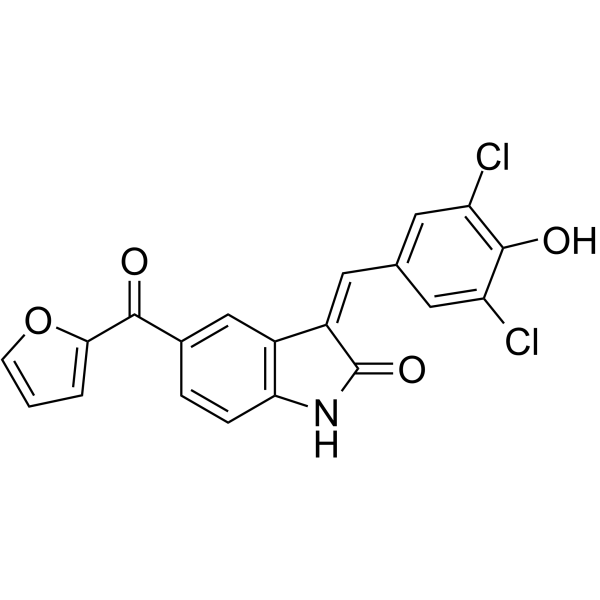
GW406108X is a specific Kif15 (Kinesin-12) inhibitor with an IC50 of 0.82 uM in ATPase assays. GW406108X, a potent autophagy inhibitor, shows ATP competitive inhibition against ULK1 with a pIC50 of 6.37 (427 nM). GW406108X inhibits ULK1 kinase activity and blocks autophagic flux, without affecting the upstream signaling kinases mTORC1 and AMPK.
For research use only. We do not sell to patients.
- Purity : 98.0%
- CAS No.: 1644443-92-4
- Formula: C20H11Cl2NO4
- Molecular Weight:400.21
-
Storage:Powder -20°C, 3 years , 4°C, 2 years ; In solvent -80°C, 6 months , -20°C, 1 month

To place orders, for customer services and technical support, please contact: MedChemExpress USA
Tel: 609-228-6898 E-mail: [email protected] [email protected]


-
 Biological Activity
-
Chemical Information
-
Solvent & Solubility
- Protocols
- Purity & Documentation
- References
-
 Help & FAQs


-
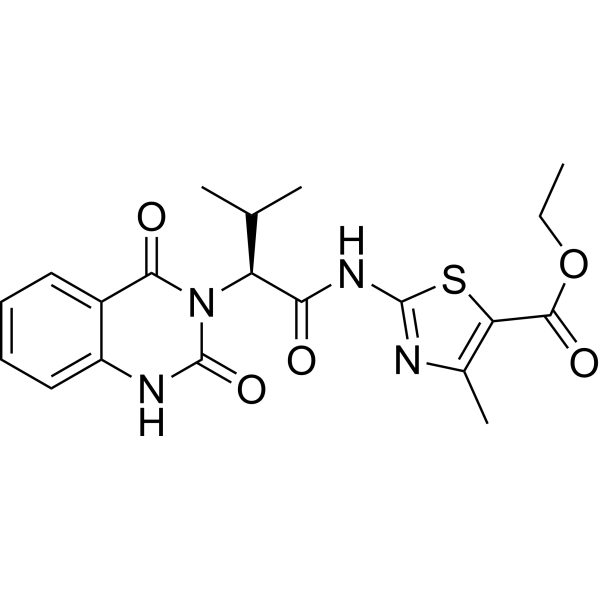
HY-15948
Kif15-IN-1Kinesin Inhibitor -
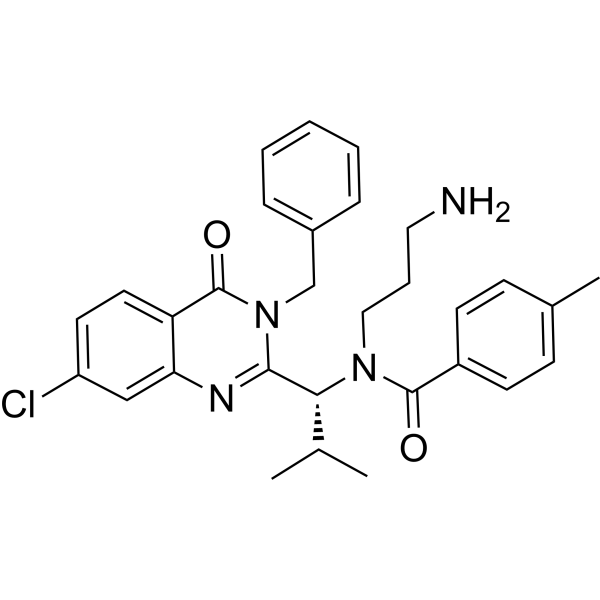
HY-50759
IspinesibKSP Inhibitor -
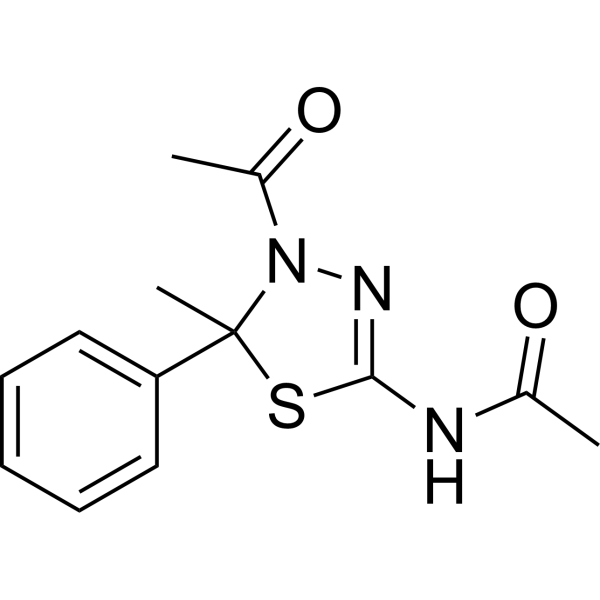
HY-19966
K858 (Racemic)Apoptosis Inducer -
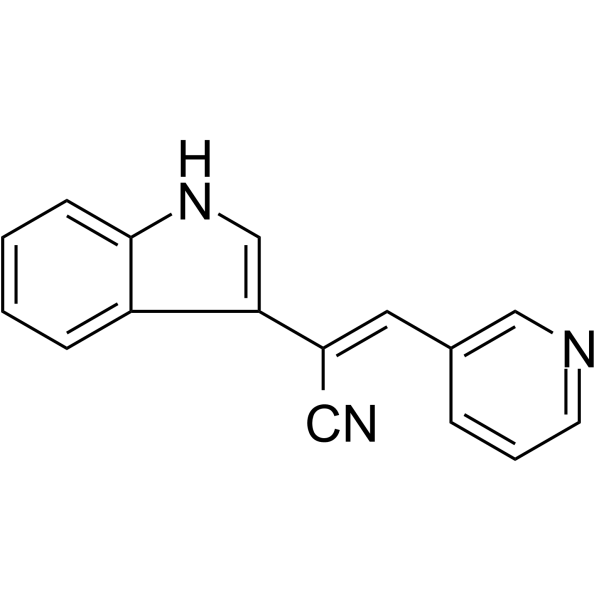
HY-101298
PaprotrainMKLP-2 Inhibitor -
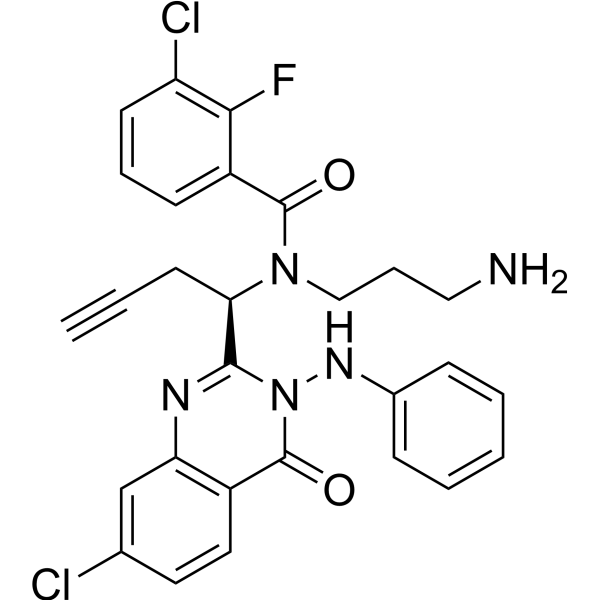
HY-16062
ARQ 621Eg5 Inhibitor -
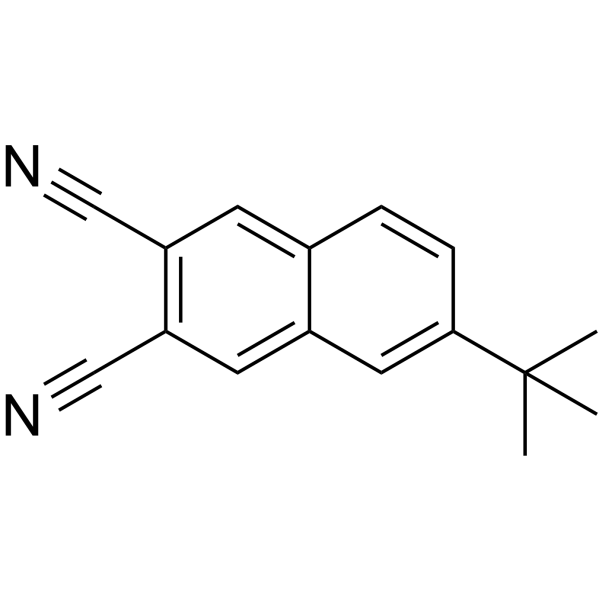
HY-110208
BRD9876 -

HY-50759R
Ispinesib (Standard)KSP Inhibitor -
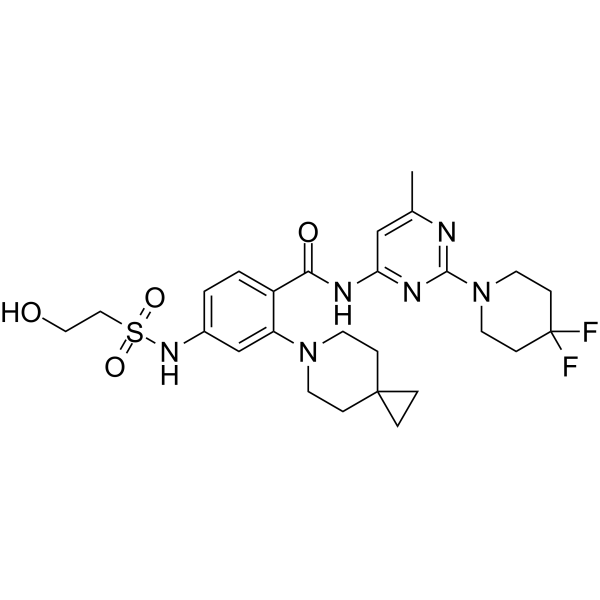
HY-132840
SovilnesibKIF18A Inhibitor -
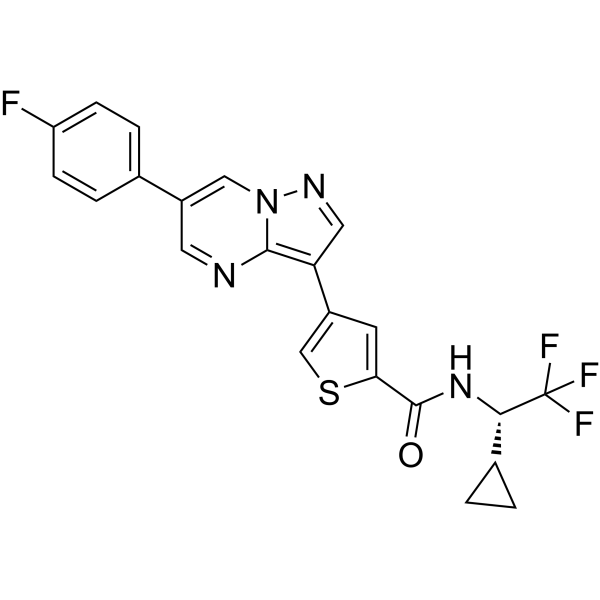
HY-114490
ULK-101ULK1 Inhibitor -
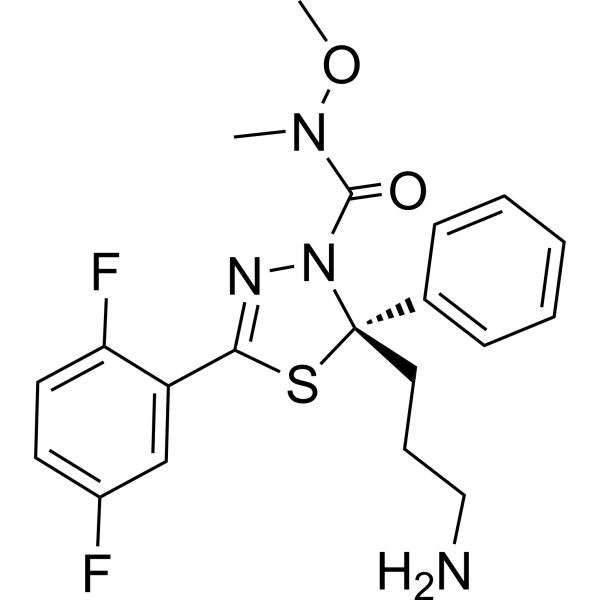
HY-15187
FilanesibKSP Inhibitor -
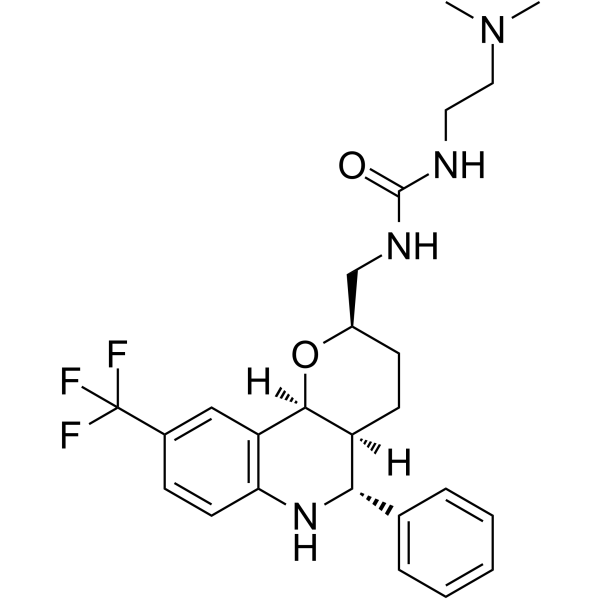
HY-15000
EMD534085Kinesin Inhibitor -
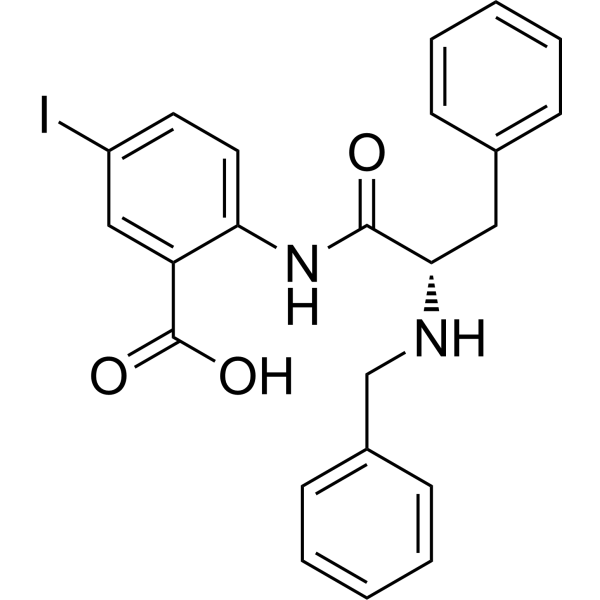
HY-15857
CW-069HSET Inhibitor
Publications Citing Use of MedChemExpress (MCE) GW406108X
MoreAll Kinesin Isoforms
More

Biological Activity
Description
Cellular Effect
|
Cell Line

|
Type | Value | Description | References |
|---|---|---|---|---|
| HeLa | IC50 |
0.75 μM
Compound: GW-406108X; GW108X
|
Inhibition of recombinant His6-tagged Kif15 (N700 residues) (unknown origin) expressed in HeLa cells assessed as reduction in Alexa-594 labelled microtubule gliding measured every 2 secs for 20 secs by epifluorescence microscopic analysis
Inhibition of recombinant His6-tagged Kif15 (N700 residues) (unknown origin) expressed in HeLa cells assessed as reduction in Alexa-594 labelled microtubule gliding measured every 2 secs for 20 secs by epifluorescence microscopic analysis
|
[PMID: 30528696] |
| HeLa | IC50 |
0.82 μM
Compound: GW-406108X; GW108X
|
Inhibition of recombinant His6-tagged Kif15 ATPase activity (N420 residues) (unknown origin) expressed in HeLa cells using microtubule as substrate preincubated for 15 mins followed by ATP addition and measured after 20 mins by ADP-Glo luminescence assay
Inhibition of recombinant His6-tagged Kif15 ATPase activity (N420 residues) (unknown origin) expressed in HeLa cells using microtubule as substrate preincubated for 15 mins followed by ATP addition and measured after 20 mins by ADP-Glo luminescence assay
|
[PMID: 30528696] |
In Vitro
GW406108X acts upon ULK1 and autophagy without affecting mTOR or AMPK activity as shown by monitoring ULK1 pS758 (mTOR site) or pS556 (AMPK site) levels. GW406108X inhibits VPS34 and AMPK with pIC50 of 6.34 (457 nM) and 6.38 (417 nM), respectively. In the presence of 5 μΜ GW406108X, the starvation-induced increase in ATG13 phosphorylation is significantly reduced[1].
GW406108X inhibits Kif15-N420 ATPase activity by 76%[2].
MedChemExpress (MCE) has not independently confirmed the accuracy of these methods. They are for reference only.


Chemical Information
-
CAS No. 1644443-92-4
-
Appearance Solid
-
Molecular Weight 400.21
-
Formula C20H11Cl2NO4
-
Color Light yellow to yellow
-
SMILES
O=C1NC2=C(C=C(C(C3=CC=CO3)=O)C=C2)/C1=C/C4=CC(Cl)=C(O)C(Cl)=C4
-
Synonyms
GW108X
-
Shipping
Room temperature in continental US; may vary elsewhere.
-
Storage
Powder -20°C 3 years 4°C 2 years In solvent -80°C 6 months -20°C 1 month


Publications (1)
-
Journal Impact Factor
-
Most Recent
-
Biochem Biophys Res Commun
2023 May 7:655:110-117. PMID: 36934586


Solvent & Solubility
In Vitro:
DMSO : 50 mg/mL (124.93 mM; Need ultrasonic; Hygroscopic DMSO has a significant impact on the solubility of product, please use newly opened DMSO)
Please refer to the solubility information to select the appropriate solvent. Once prepared, please aliquot and store the solution to prevent product inactivation from repeated freeze-thaw cycles.
Storage method and period of stock solution: -80°C, 6 months; -20°C, 1 month. When stored at -80°C, please use it within 6 months. When stored at -20°C, please use it within 1 month.
Please refer to the solubility information to select the appropriate solvent. Once prepared, please aliquot and store the solution to prevent product inactivation from repeated freeze-thaw cycles.
Storage method and period of stock solution: -80°C, 6 months; -20°C, 1 month. When stored at -80°C, please use it within 6 months. When stored at -20°C, please use it within 1 month.
Concentration (start) × Volume (start) = Concentration (final) × Volume (final)
In Vivo:
Select the appropriate dissolution method based on your experimental animal and administration route.
- For the following dissolution methods, please ensure to first prepare a clear stock solution using an In Vitro approach and then sequentially add co-solvents:
- To ensure reliable experimental results, the clarified stock solution can be appropriately stored based on storage conditions. As for the working solution for In Vivo experiments, it is recommended to prepare freshly and use it on the same day.
- The percentages shown for the solvents indicate their volumetric ratio in the final prepared solution. If precipitation or phase separation occurs during preparation, heat and/or sonication can be used to aid dissolution.
Add each solvent one by one: 10% DMSO 40% PEG300 5% Tween-80 45% Saline
Solubility: 2.08 mg/mL (5.20 mM); Suspended solution; Need ultrasonic
This protocol yields a suspended solution of 2.08 mg/mL. Suspended solution can be used for oral and intraperitoneal injection.
Taking 1 mL working solution as an example, add 100 μL DMSO stock solution (20.8 mg/mL) to 400 μL PEG300, and mix evenly; then add 50 μL Tween-80 and mix evenly; then add 450 μL Saline to adjust the volume to 1 mL.
Preparation of Saline: Dissolve 0.9 g sodium chloride in ddH₂O and dilute to 100 mL to obtain a clear Saline solution.
In Vivo Dissolution Calculator
Please enter the basic information of animal experiments:
-
-
-
-
Recommended: Prepare an additional quantity of animals to account for potential losses during experiments.
Please enter your animal formula composition:
-
%DMSO +
Recommended: Keep the proportion of DMSO in working solution below 2% if your animal is weak.
-
%+
-
+%Tween-80 + +
-
%Saline +
The co-solvents required include: DMSO, . All of co-solvents are available by MedChemExpress (MCE). , Tween 80. All of co-solvents are available by MedChemExpress (MCE).
Working solution concentration: 0.22 mg/mL
Method for preparing stock solution: mg drug dissolved in μL DMSO. Stock solution concentration: mg/mL.
1. Take μL DMSO stock solution;
2. Add μL .
μL , mix evenly;
3. Then add μL Tween 80, mix evenly;
4. Then add μL
Please ensure that the stock solution in the first step is dissolved to a clear state, and add co-solvents in sequence. You can use ultrasonic heating (ultrasonic cleaner, recommended frequency 20-40 kHz), vortexing, etc. to assist dissolution.


Purity & Documentation
-
Data Sheet (275 KB)
-
SDS (252 KB)
- English - EN (252 KB)
- Français - FR (252 KB)
- Deutsch - DE (252 KB)
- Norwegian - NO (252 KB)
- Español - ES (252 KB)
- Swedish - SV (252 KB)
- Italian - IT (252 KB)
- Korean - KR (252 KB)
- Portuguese - PT (252 KB)
-
Handling Instructions (2659 KB)
References
[1]. Zachari M, et al. The identification and characterisation of autophagy inhibitors from the published kinase inhibitor sets. Biochem J. 2020;477(4):801-814. [Content Brief]
[2]. Dumas ME, et al. Dual inhibition of Kif15 by oxindole and quinazolinedione chemical probes. Bioorg Med Chem Lett. 2019;29(2):148-154. [Content Brief]


Complete Stock Solution Preparation Table
Please refer to the solubility information to select the appropriate solvent. Once prepared, please aliquot and store the solution to prevent product inactivation from repeated freeze-thaw cycles.
Storage method and period of stock solution: -80°C, 6 months; -20°C, 1 month. When stored at -80°C, please use it within 6 months. When stored at -20°C, please use it within 1 month.
| Optional Solvent | Concentration Solvent Mass | 1 mg | 5 mg | 10 mg | 25 mg |
|---|---|---|---|---|---|
| DMSO | 1 mM | 2.4987 mL | 12.4934 mL | 24.9869 mL | 62.4672 mL |
| 5 mM | 0.4997 mL | 2.4987 mL | 4.9974 mL | 12.4934 mL | |
| 10 mM | 0.2499 mL | 1.2493 mL | 2.4987 mL | 6.2467 mL | |
| 15 mM | 0.1666 mL | 0.8329 mL | 1.6658 mL | 4.1645 mL | |
| 20 mM | 0.1249 mL | 0.6247 mL | 1.2493 mL | 3.1234 mL | |
| 25 mM | 0.0999 mL | 0.4997 mL | 0.9995 mL | 2.4987 mL | |
| 30 mM | 0.0833 mL | 0.4164 mL | 0.8329 mL | 2.0822 mL | |
| 40 mM | 0.0625 mL | 0.3123 mL | 0.6247 mL | 1.5617 mL | |
| 50 mM | 0.0500 mL | 0.2499 mL | 0.4997 mL | 1.2493 mL | |
| 60 mM | 0.0416 mL | 0.2082 mL | 0.4164 mL | 1.0411 mL | |
| 80 mM | 0.0312 mL | 0.1562 mL | 0.3123 mL | 0.7808 mL | |
| 100 mM | 0.0250 mL | 0.1249 mL | 0.2499 mL | 0.6247 mL |


GW406108X Related Classifications
HY-115570 Related Classifications
 Powered by Bioz