



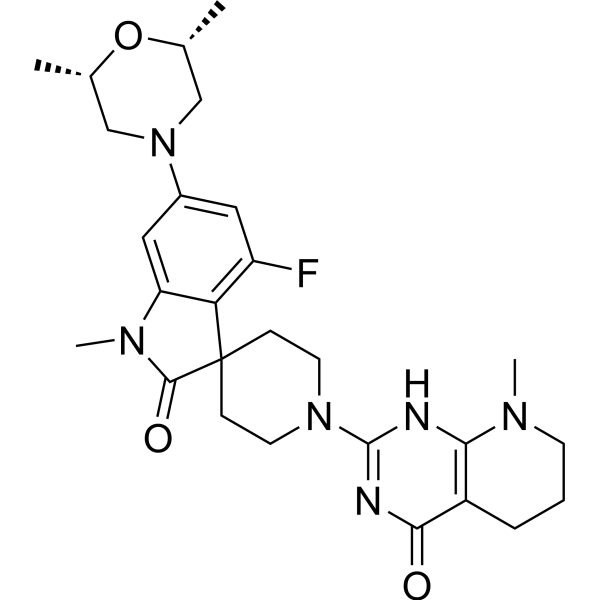
RK-582

Based on 1 Customer Validation
RK-582 is a tankyrase inhibitor, antitumor agent, and orally bioavailable growth inhibitor, with an IC50 of 36.1 nM against human tankyrase-1 and an IC50 of 39.2 nM against human tankyrase-2. In APC-mutated colorectal cancer cells, the sensitivity to RK-582 correlates with the level of active β-catenin, while drug resistance associates with PIK3CA mutation. RK-582 can be used for the research of colorectal cancer.
商品は「研究用試薬」です。人や動物の医療用・臨床診断用・食品用の製品ではありません。
研究用途以外に使用した場合、当社は一切の責任を負いかねます。
- 純度: 98.05%
- CAS 番号: 2171388-28-4
- 分子式: C27H35FN6O3
- 分子量:510.60
-
保管条件:Powder -20°C, 3 years , 4°C, 2 years ; In solvent -80°C, 6 months , -20°C, 1 month

To place orders, for customer services and technical support, please contact: MedChemExpress USA
Tel: 609-228-6898 E-mail: [email protected] [email protected]


-
 生物活性
生物活性
-
化学情報
-
溶剤 & 溶解度
- 純度とドキュメンテーション
- 参考文献
-
 Help & FAQs




生物活性
製品説明
IC50 & Target
IC50: 36.1 nM (TNKS1/PARP5A), 18.168 nM (PARP1)[1]
Cellular Effect
|
Cell Line

|
Type | Value | Description | References |
|---|---|---|---|---|
| COLO 320 | GI50 |
230 nM
Compound: 35; RK-582
|
Antiproliferative activity against human COLO 320 assessed as growth inhibition measured after 24 hrs
Antiproliferative activity against human COLO 320 assessed as growth inhibition measured after 24 hrs
|
[PMID: 33822624] |
| COLO 320DM | GI50 |
0.035 μM
Compound: 41g; RK-582
|
Antiproliferative activity against human COLO320DM cells assessed inhibition of cell growth measured after 5 days by MTT assay
Antiproliferative activity against human COLO320DM cells assessed inhibition of cell growth measured after 5 days by MTT assay
|
[PMID: 32202790] |
| COLO 320DM | GI50 |
0.23 μM
Compound: 41g; RK-582
|
Antiproliferative activity against human COLO320DM cells assessed as inhibition of cell growth measured after 4 days by CellTiter-Glo assay
Antiproliferative activity against human COLO320DM cells assessed as inhibition of cell growth measured after 4 days by CellTiter-Glo assay
|
[PMID: 32202790] |
| HEK293 | IC50 |
0.3 nM
Compound: 41g; RK-582
|
Inhibition of TNKS/TNKS2 (unknown origin) expressed in HEK293 cells assessed as reduction in Wnt-signaling measured after 24 hrs by TCF-luciferase reporter gene assay
Inhibition of TNKS/TNKS2 (unknown origin) expressed in HEK293 cells assessed as reduction in Wnt-signaling measured after 24 hrs by TCF-luciferase reporter gene assay
|
[PMID: 32202790] |
| RKO | GI50 |
>10 μM
Compound: 41g; RK-582
|
Antiproliferative activity against human RKO cells assessed inhibition of cell growth measured after 5 days by MTT assay
Antiproliferative activity against human RKO cells assessed inhibition of cell growth measured after 5 days by MTT assay
|
[PMID: 32202790] |
| Sf9 | IC50 |
1240 nM
Compound: 41g; RK-582
|
Inhibition of human recombinant N-terminal GST-tagged PARP2 (2 to 583 residues) expressed in baculovirus infected Sf9 cells assessed as reduction in auto-PARylation using histone as substrate measured after 45 mins in presence of biotinylated-NAD+ by ELIS
Inhibition of human recombinant N-terminal GST-tagged PARP2 (2 to 583 residues) expressed in baculovirus infected Sf9 cells assessed as reduction in auto-PARylation using histone as substrate measured after 45 mins in presence of biotinylated-NAD+ by ELIS
|
[PMID: 32202790] |
体外実験
RK-582 (0.001-1 μM; 5 days) exhibits high or intermediate sensitivity in short APC-mutated CRC PDCs, while long APC-mutated CRC PDCs show variable sensitivity; RK-582 sensitivity negatively correlates with active β-catenin levels in both overall and long APC-type CRC PDCs[1].
RK-582 (0.3 μM; 24 h) induces AXIN2 accumulation and reduces active β-catenin levels in short APC-mutated CRC PDCs, but does not alter active β-catenin in resistant long APC-mutated CRC PDCs[1].
RK-582 (0.3 μM; 24 h) induces AXIN1 accumulation without altering active β-catenin in APC-wild type CRC PDCs JC-11 and JC-494; at 3 μM, 24 h, it modulates MYC and E2F-related cell cycle regulators in these cells[1].
RK-582 (0.001-10 μM; 5 days for proliferation assay; 3 μM, 48 h for WB) anti-proliferative effect on APC-wild type CRC PDC JC-11 is partially dependent on p21 induction, as siRNA-mediated p21 knockdown reduces RK-582's growth inhibitory activity[1].
RK-582 (range; 10 min pre-incubation, 45 min reaction) potently inhibits human tankyrase-1 and tankyrase-2 catalytic activity, with ~504-fold selectivity over PARP1, ~34-fold selectivity over PARP2, and ~223-fold selectivity over PARP10[2].
RK-582 (range) potently inhibits Wnt/β-catenin signaling in HEK293 and DLD-1 cells, with stronger activity in HEK293 cells[2].
RK-582 (range; 4 days) potently inhibits the growth of COLO-320DM human colorectal cancer cells with a half-maximal growth inhibition concentration of 0.23 μM[2].
RK-582 (range; 5 days) potently inhibits the proliferation of β-catenin-dependent COLO-320DM colorectal cancer cells (GI50 = 0.035 μM) but does not affect β-catenin-independent RKO cells[2].
RK-582 (0.1 μM; 16 h) modulates Wnt/β-catenin signaling in COLO-320DM cells by stabilizing AXIN2, reducing active β-catenin, and preventing tankyrase degradation[2].
RK-582 (1 mM; 7 days soaking) binds to human TNKS2 via multiple specific interactions within the nicotinamide binding pocket, with the 2,6-dimethylmorpholine group oriented toward the cytosolic space[2].
MedChemExpress (MCE) has not independently confirmed the accuracy of these methods. They are for reference only.
-
Cell Line:colorectal cancer (CRC) patient-derived cells (PDCs): expanded cohort of 26 APC-mutated cells, combined cohort of 42 APC-mutated cells, 16 short APC PDCs, 26 long APC PDCs (16 sensitive/intermediate, 10 resistant)
-
Concentration:0.001-1 μM; 1 μM
-
Incubation Time:5 days
-
Result:Exhibited high or intermediate sensitivity in all 16 short APC PDCs. Showed variable sensitivity in long APC PDCs, with 16 samples sensitive/intermediate and 10 samples resistant. Showed a strong positive correlation with sensitivity to G007-LK (Pearson’s correlation score R = 0.85) at 1 μM for 5 days. Negatively correlated with active β-catenin levels (Pearson’s correlation score R = -0.42) in the combined cohort of 42 APC-mutated PDCs, and R = -0.43 in long APC-type PDCs.
-
Cell Line:short APC (JC-21, JC-73) and long APC resistant (JC-63) CRC PDCs
-
Concentration:0.3 μM
-
Incubation Time:24 h
-
Result:Caused AXIN2 protein accumulation and decreased levels of active β-catenin in short APC PDCs JC-21 and JC-73. Had no effect on active β-catenin levels in resistant long APC PDC JC-63.
-
Cell Line:APC-wild type CRC PDCs (JC-11, JC-494)
-
Concentration:0.3 μM; 3 μM
-
Incubation Time:24 h
-
Result:Induced accumulation of AXIN1 (but not AXIN2) and did not significantly reduce active β-catenin levels in JC-11 and JC-494 cells. Reduced MYC protein levels, reduced phosphorylated RB (Ser807/811) and cyclin D1 levels, and upregulated p21 protein levels in JC-11 cells. Did not alter MYC levels in JC-494 cells.
-
Cell Line:Human colorectal cancer COLO-320DM cells, human colorectal cancer RKO cells
-
Concentration:Range (to determine GI50 values)
-
Incubation Time:5 days
-
Result:Demonstrated a GI50 of 0.035 μM in COLO-320DM cells and showed no growth inhibition (GI50 >10 μM) in β-catenin-independent RKO cells.
-
Cell Line:Human colorectal cancer COLO-320DM cells
-
Concentration:0.1 μM
-
Incubation Time:16 h
-
Result:Induced a 7.78-fold upregulation of AXIN2 protein levels and reduced active β-catenin protein levels to 0.39 relative to DMSO control. Upregulated tankyrase protein levels.
Parmacokinetics
体内実験
RK-582 (20 mg/kg; i.p.; per study schedule) shows no antitumor efficacy in resistant long APC mutant HCT-15 colorectal cancer xenografts in female BALB/c-nu/nu mice, even with confirmed on-target tankyrase inhibition[1].
RK-582 (10-20 mg/kg; i.p.; twice daily; 5-day on/2-day off, 2 weeks) administered intraperitoneally achieves 68.8% and 71.1% tumor growth inhibition, respectively, in a COLO-320DM xenograft model without inducing observable toxicity[2].
RK-582 (10-20 mg/kg; p.o.; twice daily; 5-day on/2-day off, 2 weeks) administered orally achieves 52.3% and 52.0% tumor growth inhibition, respectively, in a COLO-320DM xenograft model without inducing observable toxicity, and modulates Wnt/β-catenin pathway biomarkers in tumor tissues[2].
MedChemExpress (MCE) has not independently confirmed the accuracy of these methods. They are for reference only.
-
Animal Model:NOD.CB17-Prkdcscid/J (6-week-old female, subcutaneous xenograft of COLO-320DM cells)[1]
-
Dosage:5 mg/kg; 20 mg/kg
-
Administration:i.p.; per study schedule
-
Result:Exhibited dose-dependent antitumor effects under tolerable dosing. Sufficiently inhibited tankyrase enzymes in tumors, as shown by AXIN2 accumulation.
-
Animal Model:BALB/c-nu/nu (5-week-old female, subcutaneous xenograft of HCT-15 cells)[1]
-
Dosage:20 mg/kg
-
Administration:i.p.; per study schedule
-
Result:Did not exhibit antitumor effects under tolerable dosing. Sufficiently inhibited tankyrase enzymes in tumors via AXIN2 accumulation.
-
Animal Model:NOD.CB17-Prkdcscid/J (female, 6-week-old, subcutaneous xenograft with COLO-320DM cells)[2]
-
Dosage:10 mg/kg; 20 mg/kg
-
Administration:i.p.; twice daily; 5-day on/2-day off, 2 weeks
-
Result:Achieved 68.8% tumor growth inhibition at 10 mg/kg twice daily.
Achieved 71.1% tumor growth inhibition at 20 mg/kg twice daily.
Elevated cytosolic AXIN2 levels in tumor tissues.
Showed no reduction in active β-catenin and total β-catenin levels in nuclear extracts compared to controls.
Caused no meaningful weight loss or unusual behaviors in treated mice.
-
Animal Model:NOD.CB17-Prkdcscid/J (female, 6-week-old, subcutaneous xenograft with COLO-320DM cells)[2]
-
Dosage:10 mg/kg; 20 mg/kg
-
Administration:p.o.; twice daily; 5-day on/2-day off, 2 weeks
-
Result:Achieved 52.3% tumor growth inhibition at 10 mg/kg twice daily.
Achieved 52.0% tumor growth inhibition at 20 mg/kg twice daily.
Elevated cytosolic AXIN2 levels in tumor tissues.
Reduced active β-catenin and total β-catenin levels in nuclear extracts compared to controls.
Reached plasma concentration of 10.1 μmol/L at 4-hour time point on day 12 in 10 mg/kg twice daily group.
Reached plasma concentration of 23.3 μmol/L at 4-hour time point on day 12 in 20 mg/kg twice daily group.
Caused no meaningful weight loss or unusual behaviors in treated mice.


化学情報
-
CAS 番号 2171388-28-4
-
性状 Solid
-
分子量 510.60
-
分子式 C27H35FN6O3
-
Color White to off-white
-
SMILES
O=C(N1C)C2(CCN(C(NC3=C4CCCN3C)=NC4=O)CC2)C(C1=CC(N(C[C@@H]5C)C[C@H](O5)C)=C6)=C6F
-
輸送条件
Room temperature in continental US; may vary elsewhere.
-
保管条件
Powder -20°C 3 years 4°C 2 years In solvent -80°C 6 months -20°C 1 month


溶剤 & 溶解度
体外:
DMSO : 25 mg/mL (48.96 mM; ultrasonic and warming and heat to 60°C; Hygroscopic DMSO has a significant impact on the solubility of product, please use newly opened DMSO)
Please refer to the solubility information to select the appropriate solvent. Once prepared, please aliquot and store the solution to prevent product inactivation from repeated freeze-thaw cycles.
Storage method and period of stock solution: -80°C, 6 months; -20°C, 1 month. When stored at -80°C, please use it within 6 months. When stored at -20°C, please use it within 1 month.
Please refer to the solubility information to select the appropriate solvent. Once prepared, please aliquot and store the solution to prevent product inactivation from repeated freeze-thaw cycles.
Storage method and period of stock solution: -80°C, 6 months; -20°C, 1 month. When stored at -80°C, please use it within 6 months. When stored at -20°C, please use it within 1 month.
濃度 (開始) × 体積 (開始) = 濃度 (終了) × 体積 (終了)
体内:
Select the appropriate dissolution method based on your experimental animal and administration route.
- For the following dissolution methods, please ensure to first prepare a clear stock solution using an In Vitro approach and then sequentially add co-solvents:
- To ensure reliable experimental results, the clarified stock solution can be appropriately stored based on storage conditions. As for the working solution for In Vivo experiments, it is recommended to prepare freshly and use it on the same day.
- The percentages shown for the solvents indicate their volumetric ratio in the final prepared solution. If precipitation or phase separation occurs during preparation, heat and/or sonication can be used to aid dissolution.
Add each solvent one by one: 10% DMSO 40% PEG300 5% Tween-80 45% Saline
Solubility: ≥ 2.5 mg/mL (4.90 mM); Clear solution
This protocol yields a clear solution of ≥ 2.5 mg/mL (saturation unknown).
Taking 1 mL working solution as an example, add 100 μL DMSO stock solution (25.0 mg/mL) to 400 μL PEG300, and mix evenly; then add 50 μL Tween-80 and mix evenly; then add 450 μL Saline to adjust the volume to 1 mL.
Preparation of Saline: Dissolve 0.9 g sodium chloride in ddH₂O and dilute to 100 mL to obtain a clear Saline solution.
In Vivo Dissolution Calculator
Please enter the basic information of animal experiments:
-
-
-
-
Recommended: Prepare an additional quantity of animals to account for potential losses during experiments.
Please enter your animal formula composition:
-
%DMSO +
Recommended: Keep the proportion of DMSO in working solution below 2% if your animal is weak.
-
%+
-
+%Tween-80 + +
-
%Saline +
The co-solvents required include: DMSO, . All of co-solvents are available by MedChemExpress (MCE). , Tween 80. All of co-solvents are available by MedChemExpress (MCE).
Working solution concentration: 0.22 mg/mL
Method for preparing stock solution: mg drug dissolved in μL DMSO. Stock solution concentration: mg/mL.
1. Take μL DMSO stock solution;
2. Add μL .
μL , mix evenly;
3. Then add μL Tween 80, mix evenly;
4. Then add μL
Please ensure that the stock solution in the first step is dissolved to a clear state, and add co-solvents in sequence. You can use ultrasonic heating (ultrasonic cleaner, recommended frequency 20-40 kHz), vortexing, etc. to assist dissolution.


純度とドキュメンテーション
-
データシート (289 KB)
-
SDS (251 KB)
- English - EN (251 KB)
- Français - FR (251 KB)
- Deutsch - DE (251 KB)
- Norwegian - NO (251 KB)
- Español - ES (251 KB)
- Swedish - SV (251 KB)
- Italian - IT (251 KB)
- Korean - KR (251 KB)
- Portuguese - PT (251 KB)
-
取扱説明書 (2659 KB)
参考文献
[1]. Chen M, et al. APC/PIK3CA mutations and β-catenin status predict tankyrase inhibitor sensitivity of patient-derived colorectal cancer cells. Br J Cancer. 2024;130(1):151-162. [Content Brief]
[2]. Shirai F, et al. Design and Discovery of an Orally Efficacious Spiroindolinone-Based Tankyrase Inhibitor for the Treatment of Colon Cancer. J Med Chem. 2020;63(8):4183-4204. [Content Brief]


Complete Stock Solution Preparation Table
Please refer to the solubility information to select the appropriate solvent. Once prepared, please aliquot and store the solution to prevent product inactivation from repeated freeze-thaw cycles.
Storage method and period of stock solution: -80°C, 6 months; -20°C, 1 month. When stored at -80°C, please use it within 6 months. When stored at -20°C, please use it within 1 month.
| Optional Solvent | Concentration Solvent Mass | 1 mg | 5 mg | 10 mg | 25 mg |
|---|---|---|---|---|---|
| DMSO | 1 mM | 1.9585 mL | 9.7924 mL | 19.5848 mL | 48.9620 mL |
| 5 mM | 0.3917 mL | 1.9585 mL | 3.9170 mL | 9.7924 mL | |
| 10 mM | 0.1958 mL | 0.9792 mL | 1.9585 mL | 4.8962 mL | |
| 15 mM | 0.1306 mL | 0.6528 mL | 1.3057 mL | 3.2641 mL | |
| 20 mM | 0.0979 mL | 0.4896 mL | 0.9792 mL | 2.4481 mL | |
| 25 mM | 0.0783 mL | 0.3917 mL | 0.7834 mL | 1.9585 mL | |
| 30 mM | 0.0653 mL | 0.3264 mL | 0.6528 mL | 1.6321 mL | |
| 40 mM | 0.0490 mL | 0.2448 mL | 0.4896 mL | 1.2241 mL |


RK-582 関連分類
HY-137849 関連分類
 Powered by Bioz