



UVI 3003
Based on 10 publication(s) in Google Scholar
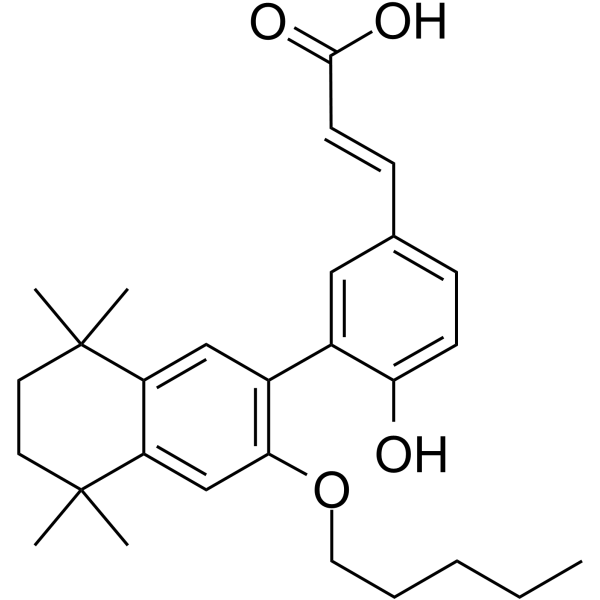
UVI 3003 is a highly selective antagonist of retinoid X receptor (RXR), and inhibits xenopus and human RXRα in Cos7 cells, with IC50s of 0.22 and 0.24 μM, respectively.
연구목적의 판매만을 진행합니다. 환자를 대상으로 한 판매는 하지 않습니다.
- Purity : 99.66%
- CAS No.: 847239-17-2
- 화학식: C28H36O4
- 분자량:436.58
-
보관:Powder -20°C, 3 years , 4°C, 2 years ; In solvent -80°C, 2 years , -20°C, 1 year

To place orders, for customer services and technical support, please contact: MedChemExpress USA
Tel: 609-228-6898 E-mail: [email protected] [email protected]


-
 Biological Activity
-
Chemical Information
-
용액&용해도
- 순도&문서
- References
-
 Help & FAQs


-
HY-108521
HX531RXR Antagonist -
HY-14171
BexaroteneRXR Agonist -
HY-U00449
AGN 193109RAR Antagonist -
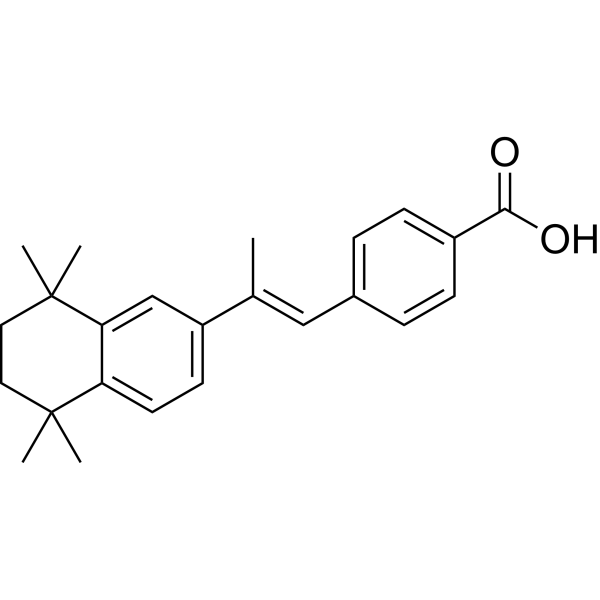
HY-15682
TTNPBApoptosis Inducer -
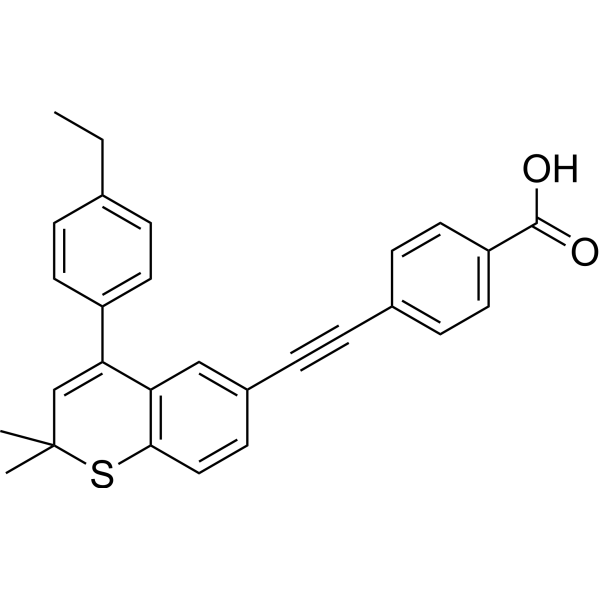
HY-16681
AGN 194310pan-RAR Antagonist -
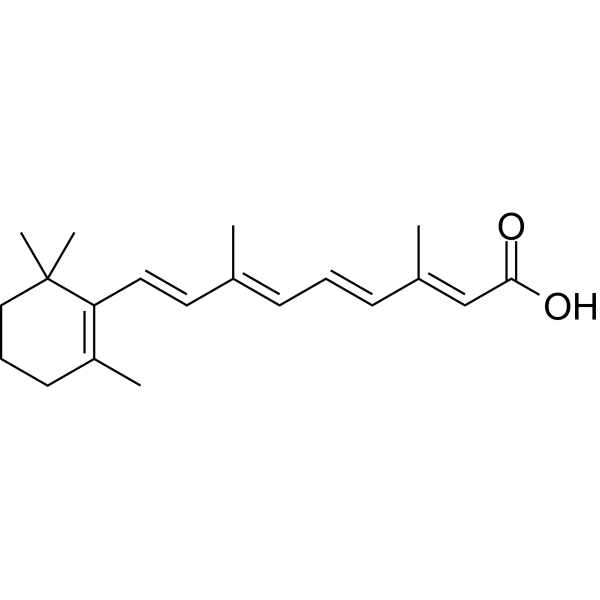
HY-14649
Retinoic acidRAR Agonist -
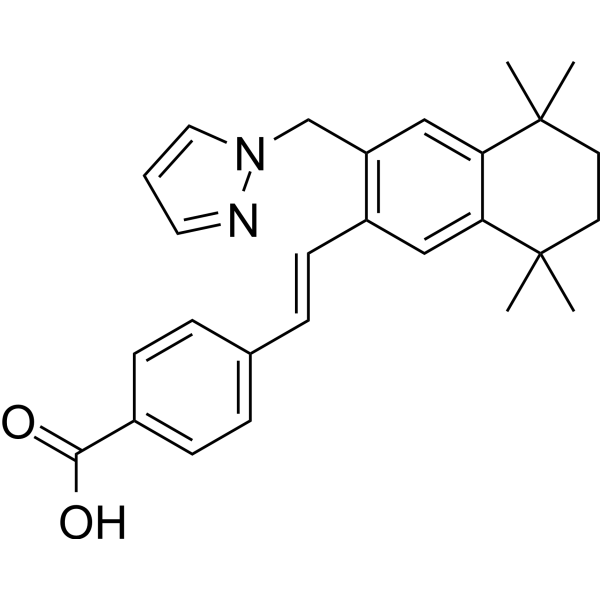
HY-14799
PalovaroteneRARγ Agonist -
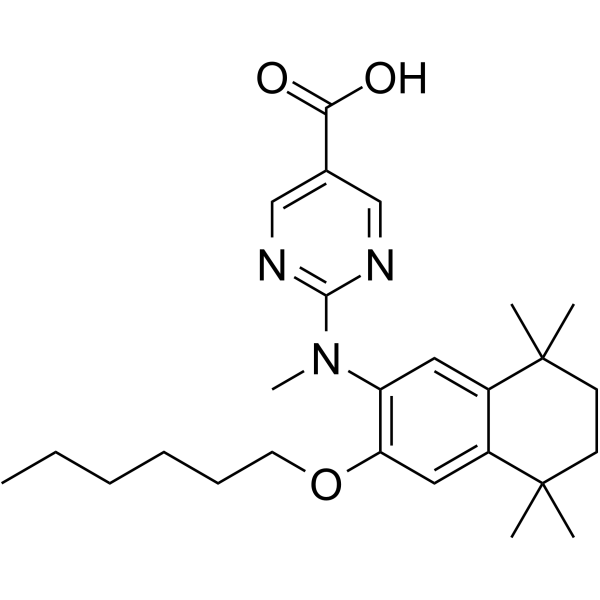
HY-108522
PA452RXR Antagonist -
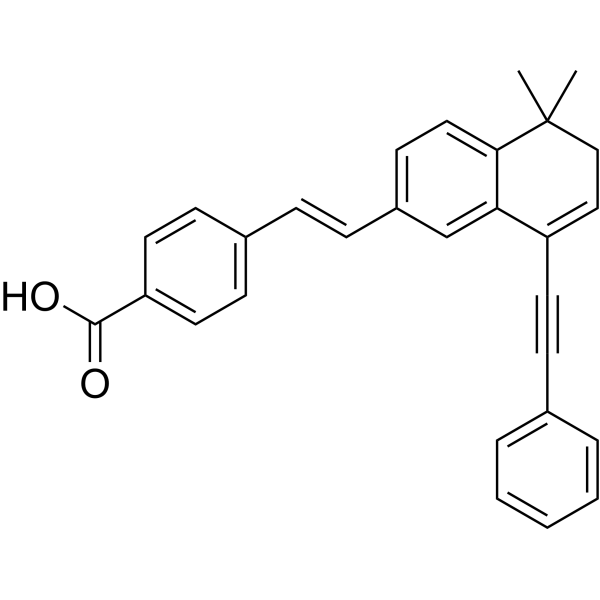
HY-108529
BMS493Inverse RAR Inhibitor -
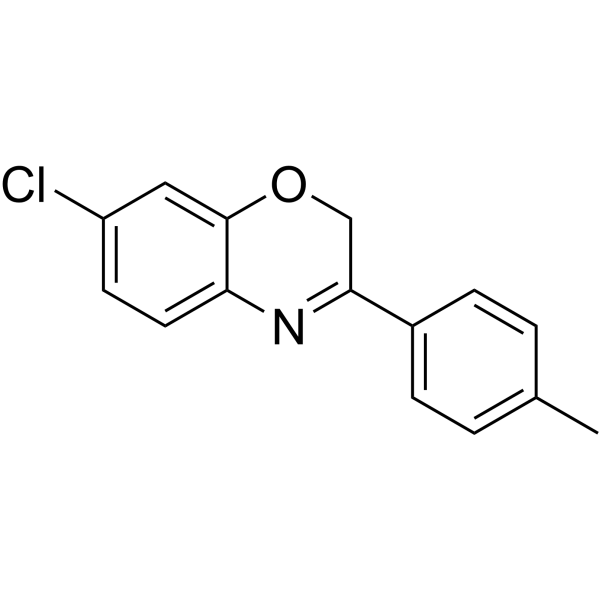
HY-101106
AR7RARA/RARα Antagonist -
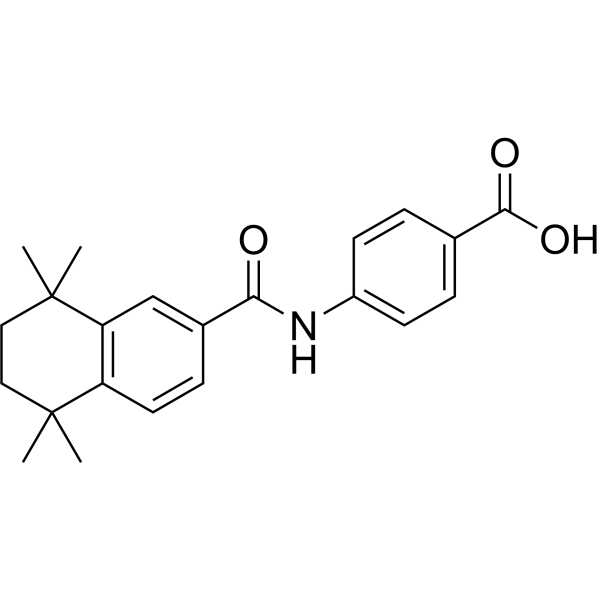
HY-10475
AM580RARα Agonist -
HY-15128
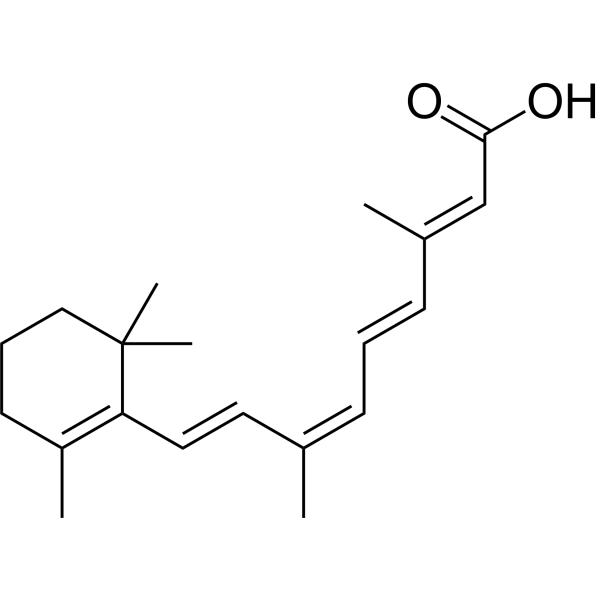
9-cis-Retinoic acidRAR/RXR Agonist
Publications Citing Use of MedChemExpress (MCE) UVI 3003
More- Cell Res. 2022 Jun;32(6):513-529. [Abstract]
- Int J Biol Macromol. 2022 Apr 15:204:144-153. [Abstract]
- Phytother Res. 2026 May;40(5):2844-2861. [Abstract]
- Ecotoxicol Environ Saf. 2025 Dec:308:119482. [Abstract]
- Mar Drugs. 2025 Sep 21;23(9):368. [Abstract]
- Eur J Pharmacol. 2024 Jul 15:975:176642. [Abstract]
- FEBS J. 2024 Oct;291(20):4581-4601. [Abstract]
- J Steroid Biochem Mol Biol. 2023 Feb:226:106219. [Abstract]
- Cell Press Blue. 2026 Apr 22.
- bioRxiv. 2024 Nov 4:2024.10.08.617155. [Abstract]
 Customer Validation & Images

-
Cell Proliferation/Viability Assay

-
Others

-
RT-PCR


Biological Activity
제품 설명
IC50 & Target
IC50: 0.22 μM (Xenopus RXRα, in Cos7 cells), 0.24 μM (Human RXRα, in Cos7 cells)[1]
In Vitro
UVI3003 inhibits the activity of xenopus and human RXRα, with IC50s of 0.22 and 0.24 μM, respectively. UVI3003 fully activates xPPARγ with an EC50 of 12.6 μM, and is almost completely inactive on hPPARγ and mPPARγ[1]. UVI 3003 (10 μM) does not change the proliferation rate of extraocular muscles (EOM)-derived or LEG-derived EECD34 cells. UVI 3003 causes a 65.4% difference in EECD34 cell fusion and desmin expression[2].
MedChemExpress (MCE) has not independently confirmed the accuracy of these methods. They are for reference only.


Chemical Information
-
CAS No. 847239-17-2
-
Appearance Solid
-
분자량 436.58
-
화학식 C28H36O4
-
Color White to off-white
-
SMILES
CCCCCOC1=C(C2=CC(/C=C/C(O)=O)=CC=C2O)C=C3C(C(C)(CCC3(C)C)C)=C1
-
선적
Room temperature in continental US; may vary elsewhere.
-
보관
Powder -20°C 3 years 4°C 2 years In solvent -80°C 2 years -20°C 1 year


Publications (10)
-
Journal Impact Factor
-
Most Recent
-
Cell Res
Derivation of totipotent-like stem cells with blastocyst-like structure forming potential. [Abstract]2022 Jun;32(6):513-529. PMID: 35508506
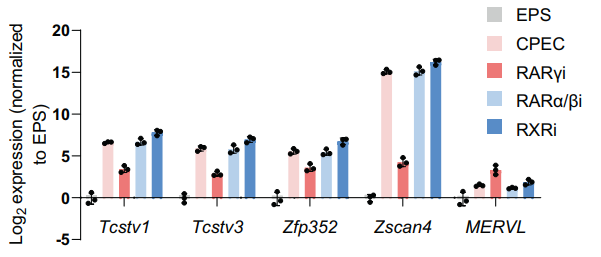
UVI 3003 purchased from MedChemExpress. Usage Cited in: Cell Res. 2022 Jun;32(6):513-529. [Abstract]
RXRi (UVI 3003: 1 μM). qPCR analysis was used to analyze the effect of inhibition of the RAR signaling pathway on the induction of TPS cell pluripotency.
-
Int J Biol Macromol
Environmental adaptation in fish induced changes in the regulatory region of fatty acid elongase gene, elovl5, involved in long-chain polyunsaturated fatty acid biosynthesis. [Abstract]2022 Apr 15:204:144-153. PMID: 35120941 -
Phytother Res
Pogostone Suppresses Microglial NLRP3 Inflammasome Activation-Promoted Remyelination Through RXRγ Regulation of Mitophagy. [Abstract]2026 May;40(5):2844-2861. PMID: 41801318 -
Ecotoxicol Environ Saf
Asiaticoside ameliorates pyrimethanil-induced autophagy-dependent liver injury by suppressing CRHR1. [Abstract]2025 Dec:308:119482. PMID: 41338089 -
Mar Drugs
Synthesis and Biological Evaluation of Marine-Inspired Benzothiazole Derivatives as Retinoid X Receptor-α Antagonists with Anti-Cancer Activities. [Abstract]2025 Sep 21;23(9):368. PMID: 41003337
UVI 3003 purchased from MedChemExpress. Usage Cited in: Mar Drugs. 2025 Sep 21;23(9):368. [Abstract]
The RXRα transcriptional inhibitory activity of 21 benzothiazole derivatives.
-
Eur J Pharmacol
A network pharmacology-based method to explore the therapeutic effect of honokiol on diabetes with comorbid depression in mice. [Abstract]2024 Jul 15:975:176642. PMID: 38754538 -
FEBS J
GDH1 exacerbates renal fibrosis by inhibiting the transcriptional activity of peroxisome proliferator-activated receptor gamma. [Abstract]2024 Oct;291(20):4581-4601. PMID: 39136063
UVI 3003 purchased from MedChemExpress. Usage Cited in: FEBS J. 2024 Oct;291(20):4581-4601. [Abstract]
Transcriptional activity of PPARγ in R162-treated TKPTS with or without UVI 3003.
-
J Steroid Biochem Mol Biol
Rxrs and their partner receptor genes inducing masculinization plausibly mediated by endocrine disruption in Paralichthys olivaceus. [Abstract]2023 Feb:226:106219. PMID: 36356854 -
-
bioRxiv
2024 Nov 4:2024.10.08.617155. PMID: 39415993


용액&용해도
In Vitro:
DMSO : 100 mg/mL (229.05 mM; Need ultrasonic; Hygroscopic DMSO has a significant impact on the solubility of product, please use newly opened DMSO)
Please refer to the solubility information to select the appropriate solvent. Once prepared, please aliquot and store the solution to prevent product inactivation from repeated freeze-thaw cycles.
Storage method and period of stock solution: -80°C, 2 years; -20°C, 1 year. When stored at -80°C, please use it within 2 years. When stored at -20°C, please use it within 1 year.
Please refer to the solubility information to select the appropriate solvent. Once prepared, please aliquot and store the solution to prevent product inactivation from repeated freeze-thaw cycles.
Storage method and period of stock solution: -80°C, 2 years; -20°C, 1 year. When stored at -80°C, please use it within 2 years. When stored at -20°C, please use it within 1 year.
Concentration (start) × Volume (start) = Concentration (final) × Volume (final)
In Vivo:
Select the appropriate dissolution method based on your experimental animal and administration route.
- For the following dissolution methods, please ensure to first prepare a clear stock solution using an In Vitro approach and then sequentially add co-solvents:
- To ensure reliable experimental results, the clarified stock solution can be appropriately stored based on storage conditions. As for the working solution for In Vivo experiments, it is recommended to prepare freshly and use it on the same day.
- The percentages shown for the solvents indicate their volumetric ratio in the final prepared solution. If precipitation or phase separation occurs during preparation, heat and/or sonication can be used to aid dissolution.
Add each solvent one by one: 10% DMSO 40% PEG300 5% Tween-80 45% Saline
Solubility: ≥ 2.5 mg/mL (5.73 mM); Clear solution
This protocol yields a clear solution of ≥ 2.5 mg/mL (saturation unknown).
Taking 1 mL working solution as an example, add 100 μL DMSO stock solution (25.0 mg/mL) to 400 μL PEG300, and mix evenly; then add 50 μL Tween-80 and mix evenly; then add 450 μL Saline to adjust the volume to 1 mL.
Preparation of Saline: Dissolve 0.9 g sodium chloride in ddH₂O and dilute to 100 mL to obtain a clear Saline solution.
In Vivo Dissolution Calculator
Please enter the basic information of animal experiments:
-
-
-
-
Recommended: Prepare an additional quantity of animals to account for potential losses during experiments.
Please enter your animal formula composition:
-
%DMSO +
Recommended: Keep the proportion of DMSO in working solution below 2% if your animal is weak.
-
%+
-
+%Tween-80 + +
-
%Saline +
The co-solvents required include: DMSO, . All of co-solvents are available by MedChemExpress (MCE). , Tween 80. All of co-solvents are available by MedChemExpress (MCE).
Working solution concentration: 0.22 mg/mL
Method for preparing stock solution: mg drug dissolved in μL DMSO. Stock solution concentration: mg/mL.
1. Take μL DMSO stock solution;
2. Add μL .
μL , mix evenly;
3. Then add μL Tween 80, mix evenly;
4. Then add μL
Please ensure that the stock solution in the first step is dissolved to a clear state, and add co-solvents in sequence. You can use ultrasonic heating (ultrasonic cleaner, recommended frequency 20-40 kHz), vortexing, etc. to assist dissolution.


순도&문서
-
Data Sheet (280 KB)
-
SDS (396 KB)
- English - EN (396 KB)
- Français - FR (396 KB)
- Deutsch - DE (396 KB)
- Norwegian - NO (396 KB)
- Español - ES (396 KB)
- Swedish - SV (396 KB)
- Italian - IT (396 KB)
- Korean - KR (396 KB)
- Portuguese - PT (396 KB)
-
Handling Instructions (2659 KB)
References
[1]. Zhu J, et al. The unexpected teratogenicity of RXR antagonist UVI3003 via activation of PPARγ in Xenopus tropicalis. Toxicol Appl Pharmacol. 2017 Jan 1;314:91-97. [Content Brief]
[2]. Hebert SL, et al. Effects of retinoic acid signaling on extraocular muscle myogenic precursor cells in vitro. Exp Cell Res. 2017 Dec 1;361(1):101-111. [Content Brief]


Complete Stock Solution Preparation Table
Please refer to the solubility information to select the appropriate solvent. Once prepared, please aliquot and store the solution to prevent product inactivation from repeated freeze-thaw cycles.
Storage method and period of stock solution: -80°C, 2 years; -20°C, 1 year. When stored at -80°C, please use it within 2 years. When stored at -20°C, please use it within 1 year.
| Optional Solvent | Concentration Solvent Mass | 1 mg | 5 mg | 10 mg | 25 mg |
|---|---|---|---|---|---|
| DMSO | 1 mM | 2.2905 mL | 11.4527 mL | 22.9053 mL | 57.2633 mL |
| 5 mM | 0.4581 mL | 2.2905 mL | 4.5811 mL | 11.4527 mL | |
| 10 mM | 0.2291 mL | 1.1453 mL | 2.2905 mL | 5.7263 mL | |
| 15 mM | 0.1527 mL | 0.7635 mL | 1.5270 mL | 3.8176 mL | |
| 20 mM | 0.1145 mL | 0.5726 mL | 1.1453 mL | 2.8632 mL | |
| 25 mM | 0.0916 mL | 0.4581 mL | 0.9162 mL | 2.2905 mL | |
| 30 mM | 0.0764 mL | 0.3818 mL | 0.7635 mL | 1.9088 mL | |
| 40 mM | 0.0573 mL | 0.2863 mL | 0.5726 mL | 1.4316 mL | |
| 50 mM | 0.0458 mL | 0.2291 mL | 0.4581 mL | 1.1453 mL | |
| 60 mM | 0.0382 mL | 0.1909 mL | 0.3818 mL | 0.9544 mL | |
| 80 mM | 0.0286 mL | 0.1432 mL | 0.2863 mL | 0.7158 mL | |
| 100 mM | 0.0229 mL | 0.1145 mL | 0.2291 mL | 0.5726 mL |


UVI 3003 Related Classifications
HY-107500 Related Classifications
 Powered by Bioz