



PA452
Based on 1 publication(s) in Google Scholar
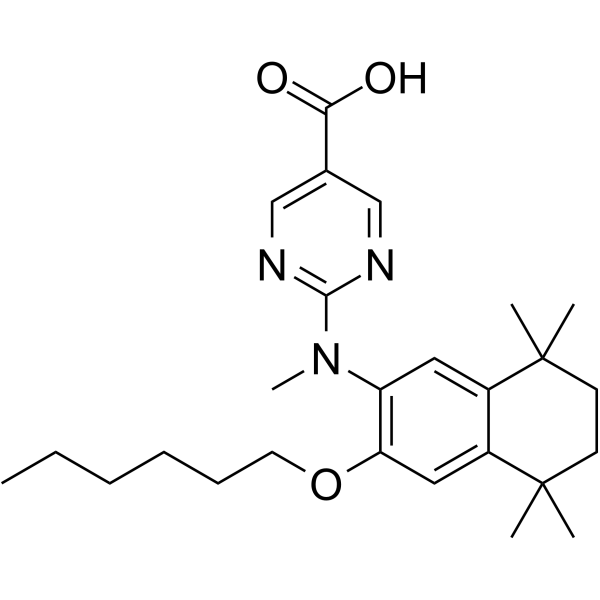
PA452, retinoic X receptor (RXR) specific antagonist, inhibits the effect of Retinoic acid (RA) on Th1/Th2 development.
For research use only. We do not sell to patients.
- Purity : 98.48%
- CAS No.: 457657-34-0
- Formula: C26H37N3O3
- Molecular Weight:439.59
-
Storage:Powder -20°C, 3 years , 4°C, 2 years ; In solvent -80°C, 6 months , -20°C, 1 month

To place orders, for customer services and technical support, please contact: MedChemExpress USA
Tel: 609-228-6898 E-mail: [email protected] [email protected]


-
 Biological Activity
-
Chemical Information
-
Solvent & Solubility
- Protocols
- Purity & Documentation
- References
-
 Help & FAQs


-
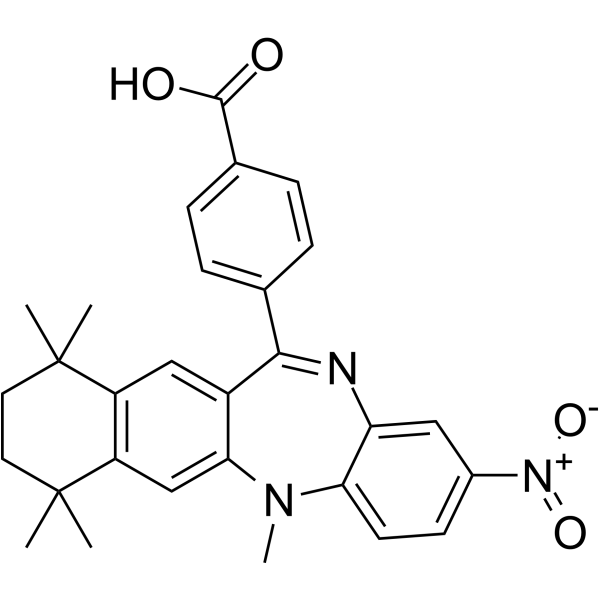
HY-108521
HX531RXR Antagonist -
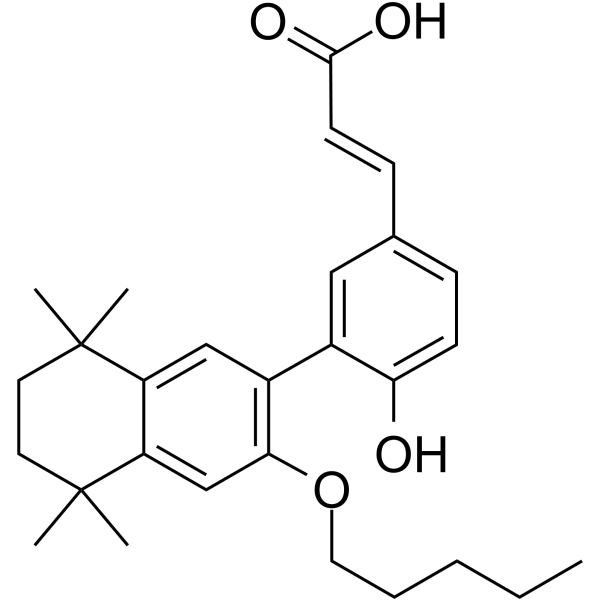
HY-107500
UVI 3003RXR Inhibitor -
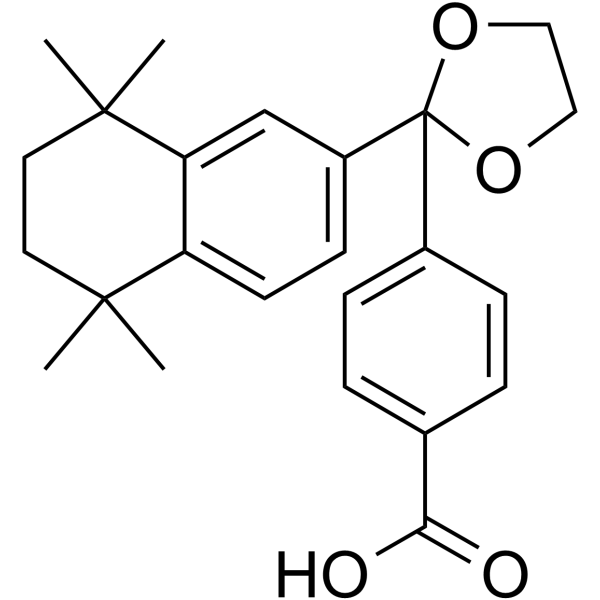
HY-107413
SR11237RXR Activator -
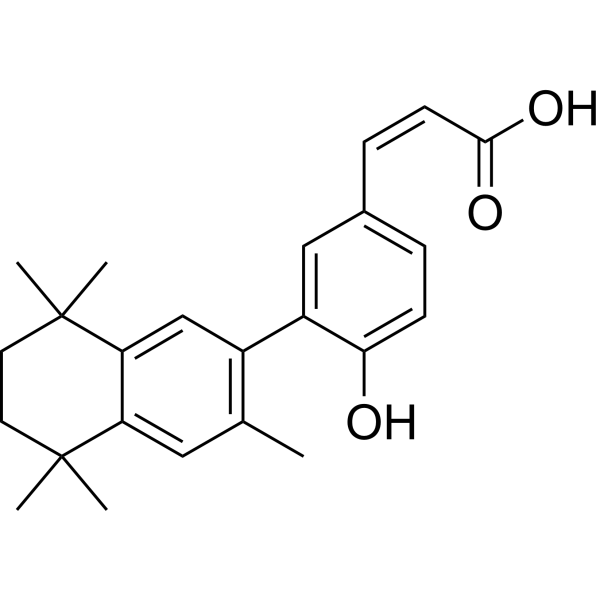
HY-107399
CD3254RXR Agonist -
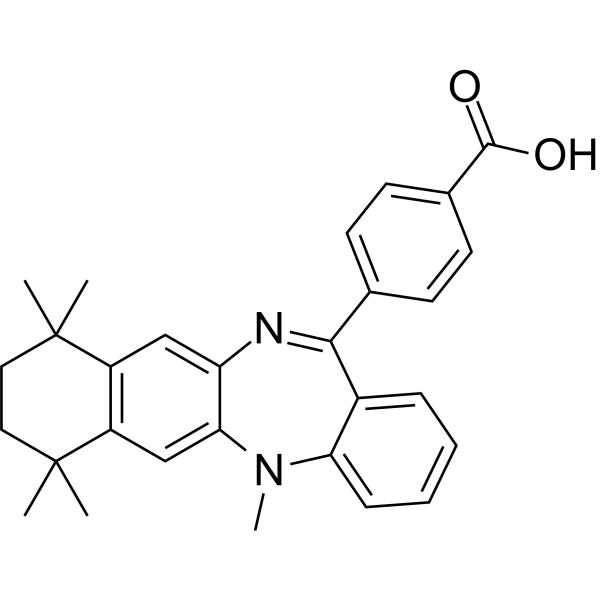
HY-107436
LE135RARβ/RARα Antagonist -
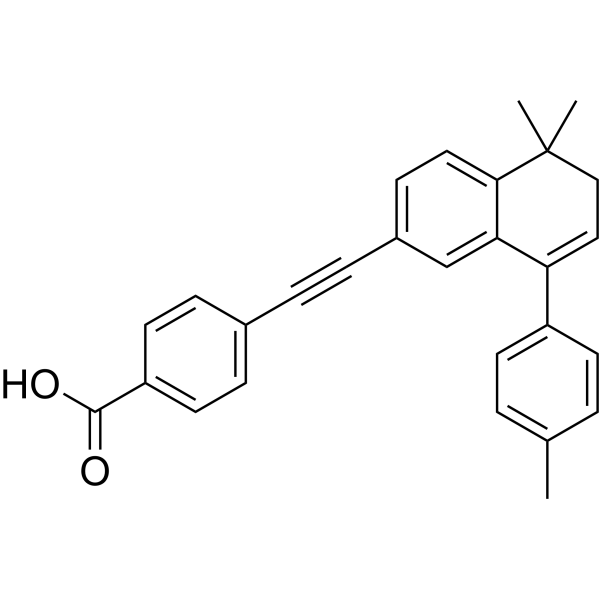
HY-U00449
AGN 193109RAR Antagonist -
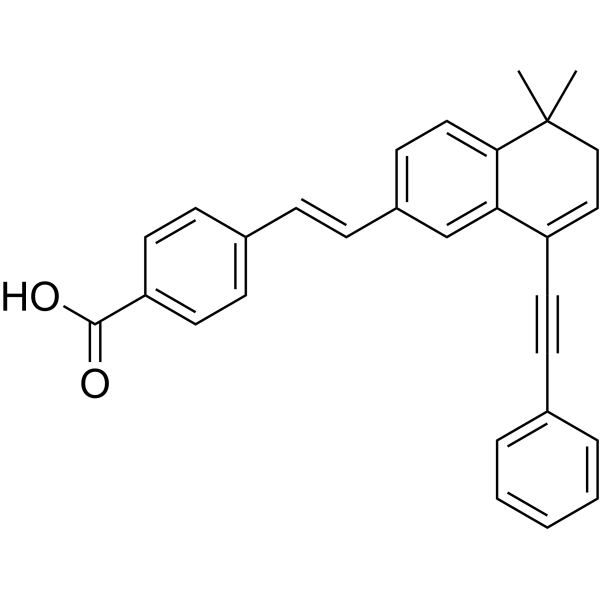
HY-108529
BMS493Inverse RAR Inhibitor -
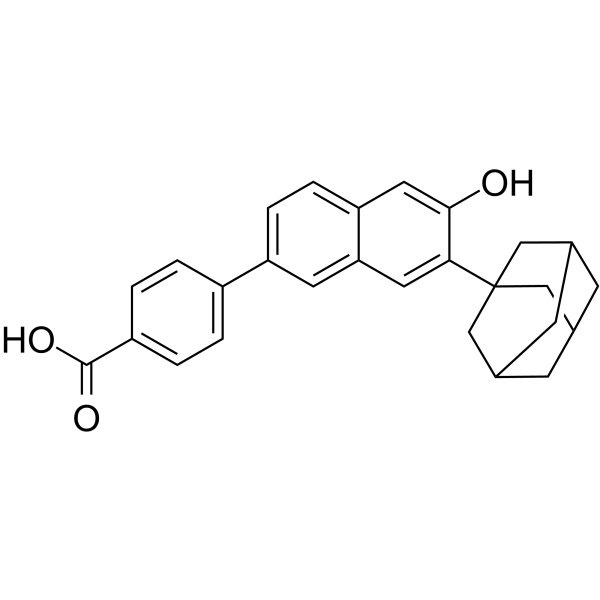
HY-108527
CD1530RARγ Agonist -
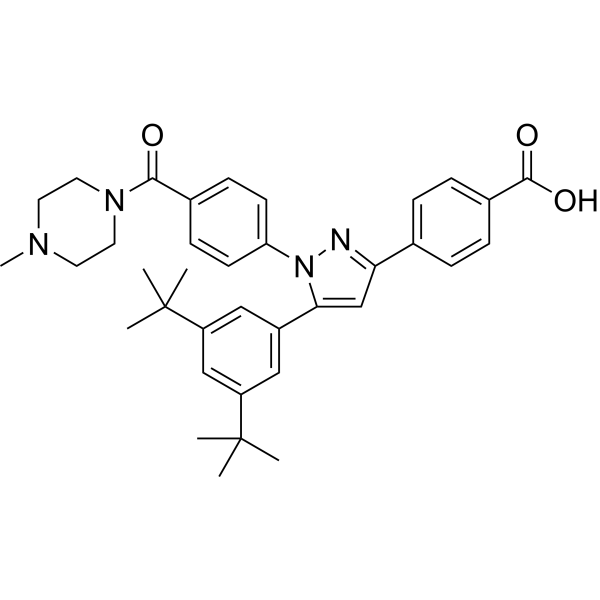
HY-107765
LY2955303RARγ Antagonist -
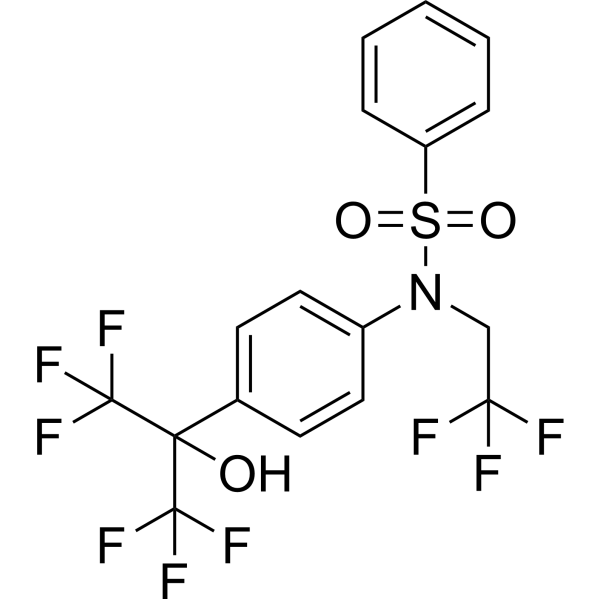
HY-10626
T0901317LXR Agonist -
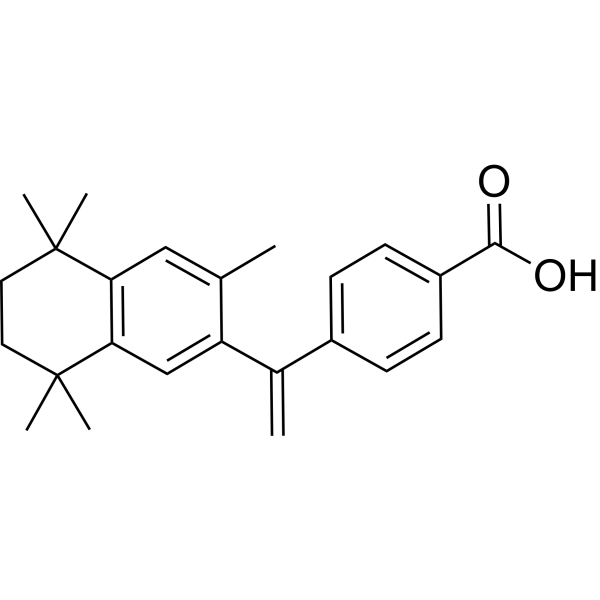
HY-14171
BexaroteneRXR Agonist -
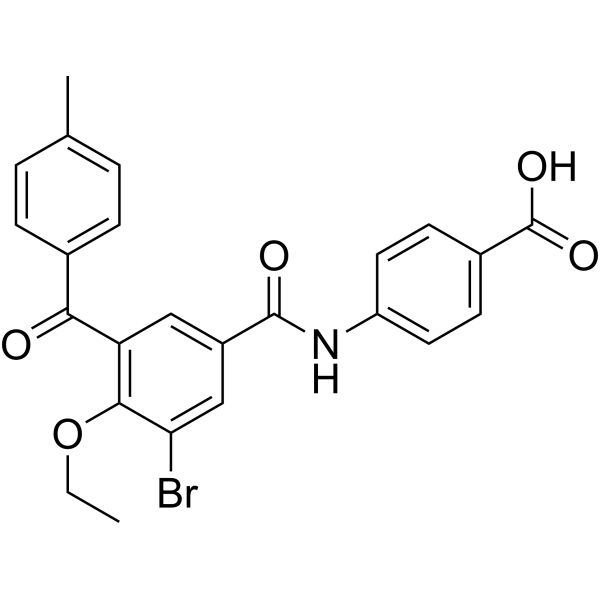
HY-16682
AGN 196996RAR/RXR Antagonist
Publications Citing Use of MedChemExpress (MCE) PA452
More

Biological Activity
Description
In Vitro


Chemical Information
-
CAS No. 457657-34-0
-
Appearance Solid
-
Molecular Weight 439.59
-
Formula C26H37N3O3
-
Color White to yellow
-
SMILES
O=C(C1=CN=C(N(C2=C(OCCCCCC)C=C3C(C)(C)CCC(C)(C)C3=C2)C)N=C1)O
-
Shipping
Room temperature in continental US; may vary elsewhere.
-
Storage
Powder -20°C 3 years 4°C 2 years In solvent -80°C 6 months -20°C 1 month


Publications (1)
-
Journal Impact Factor
-
Most Recent
-
Oxid Med Cell Longev
2021 Feb 10:2021:8253742. PMID: 33628383


Solvent & Solubility
In Vitro:
DMSO : 40 mg/mL (90.99 mM; Need ultrasonic and warming; Hygroscopic DMSO has a significant impact on the solubility of product, please use newly opened DMSO)
Ethanol : 4.4 mg/mL (10.01 mM; Need ultrasonic and warming)
Please refer to the solubility information to select the appropriate solvent. Once prepared, please aliquot and store the solution to prevent product inactivation from repeated freeze-thaw cycles.
Storage method and period of stock solution: -80°C, 6 months; -20°C, 1 month. When stored at -80°C, please use it within 6 months. When stored at -20°C, please use it within 1 month.
Please refer to the solubility information to select the appropriate solvent. Once prepared, please aliquot and store the solution to prevent product inactivation from repeated freeze-thaw cycles.
Storage method and period of stock solution: -80°C, 6 months; -20°C, 1 month. When stored at -80°C, please use it within 6 months. When stored at -20°C, please use it within 1 month.
Concentration (start) × Volume (start) = Concentration (final) × Volume (final)
In Vivo:
Select the appropriate dissolution method based on your experimental animal and administration route.
- For the following dissolution methods, please ensure to first prepare a clear stock solution using an In Vitro approach and then sequentially add co-solvents:
- To ensure reliable experimental results, the clarified stock solution can be appropriately stored based on storage conditions. As for the working solution for In Vivo experiments, it is recommended to prepare freshly and use it on the same day.
- The percentages shown for the solvents indicate their volumetric ratio in the final prepared solution. If precipitation or phase separation occurs during preparation, heat and/or sonication can be used to aid dissolution.
Add each solvent one by one: 10% DMSO 40% PEG300 5% Tween-80 45% Saline
Solubility: ≥ 2.5 mg/mL (5.69 mM); Clear solution
This protocol yields a clear solution of ≥ 2.5 mg/mL (saturation unknown).
Taking 1 mL working solution as an example, add 100 μL DMSO stock solution (25.0 mg/mL) to 400 μL PEG300, and mix evenly; then add 50 μL Tween-80 and mix evenly; then add 450 μL Saline to adjust the volume to 1 mL.
Preparation of Saline: Dissolve 0.9 g sodium chloride in ddH₂O and dilute to 100 mL to obtain a clear Saline solution.
In Vivo Dissolution Calculator
Please enter the basic information of animal experiments:
-
-
-
-
Recommended: Prepare an additional quantity of animals to account for potential losses during experiments.
Please enter your animal formula composition:
-
%DMSO +
Recommended: Keep the proportion of DMSO in working solution below 2% if your animal is weak.
-
%+
-
+%Tween-80 + +
-
%Saline +
The co-solvents required include: DMSO, . All of co-solvents are available by MedChemExpress (MCE). , Tween 80. All of co-solvents are available by MedChemExpress (MCE).
Working solution concentration: 0.22 mg/mL
Method for preparing stock solution: mg drug dissolved in μL DMSO. Stock solution concentration: mg/mL.
1. Take μL DMSO stock solution;
2. Add μL .
μL , mix evenly;
3. Then add μL Tween 80, mix evenly;
4. Then add μL
Please ensure that the stock solution in the first step is dissolved to a clear state, and add co-solvents in sequence. You can use ultrasonic heating (ultrasonic cleaner, recommended frequency 20-40 kHz), vortexing, etc. to assist dissolution.


Purity & Documentation
-
Data Sheet (275 KB)
-
SDS (251 KB)
- English - EN (251 KB)
- Français - FR (251 KB)
- Deutsch - DE (251 KB)
- Norwegian - NO (251 KB)
- Español - ES (251 KB)
- Swedish - SV (251 KB)
- Italian - IT (251 KB)
- Korean - KR (251 KB)
- Portuguese - PT (251 KB)
-
Handling Instructions (2659 KB)
References
[1]. Iwata M, et al. Retinoic acids exert direct effects on T cells to suppress Th1 development and enhance Th2 development via retinoic acid receptors. Int Immunol. 2003 Aug;15(8):1017-25. [Content Brief]
[2]. Varley CL, et al. Activation of peroxisome proliferator-activated receptor-gamma reverses squamous metaplasia and induces transitional differentiation in normal human urothelial cells. Am J Pathol. 2004 May;164(5):1789-98. [Content Brief]


Complete Stock Solution Preparation Table
Please refer to the solubility information to select the appropriate solvent. Once prepared, please aliquot and store the solution to prevent product inactivation from repeated freeze-thaw cycles.
Storage method and period of stock solution: -80°C, 6 months; -20°C, 1 month. When stored at -80°C, please use it within 6 months. When stored at -20°C, please use it within 1 month.
| Optional Solvent | Concentration Solvent Mass | 1 mg | 5 mg | 10 mg | 25 mg |
|---|---|---|---|---|---|
| Ethanol / DMSO | 1 mM | 2.2748 mL | 11.3742 mL | 22.7485 mL | 56.8712 mL |
| 5 mM | 0.4550 mL | 2.2748 mL | 4.5497 mL | 11.3742 mL | |
| 10 mM | 0.2275 mL | 1.1374 mL | 2.2748 mL | 5.6871 mL | |
| DMSO | 15 mM | 0.1517 mL | 0.7583 mL | 1.5166 mL | 3.7914 mL |
| 20 mM | 0.1137 mL | 0.5687 mL | 1.1374 mL | 2.8436 mL | |
| 25 mM | 0.0910 mL | 0.4550 mL | 0.9099 mL | 2.2748 mL | |
| 30 mM | 0.0758 mL | 0.3791 mL | 0.7583 mL | 1.8957 mL | |
| 40 mM | 0.0569 mL | 0.2844 mL | 0.5687 mL | 1.4218 mL | |
| 50 mM | 0.0455 mL | 0.2275 mL | 0.4550 mL | 1.1374 mL | |
| 60 mM | 0.0379 mL | 0.1896 mL | 0.3791 mL | 0.9479 mL | |
| 80 mM | 0.0284 mL | 0.1422 mL | 0.2844 mL | 0.7109 mL |


PA452 Related Classifications
HY-108522 Related Classifications
 Powered by Bioz