127 Results for "

inflammatory component

" in MedChemExpress (MCE) Product Catalog:
Products (127)

127 Results for "inflammatory component" in MCE Product Catalog:

Cat. No.: HY-N17138
CAS No.: 1621347-17-8
threo-1-(4-Hydroxyphenyl)-1-methoxy-2,3-propanediol is an aromatic propanediol phenolic derivative containing methoxy and hydroxyl groups. It can be naturally extracted from the dried aerial parts of Abies delavayi Franch. var. delavayi (Cangshan fir) from Dali, Yunnan, China. This source plant produces anti-inflammatory and anti-tumor active components .
Cat. No.: HY-N17727
CAS No.: 331433-08-0
Divaricatol is an orally ative chromone natural product and an active component in Saposhnikovia divaricata. Divaricatol reduces the release of pro-inflammatory cytokines and restores immune homeostasis by stably binding to 5KIR (a target of the TNF/IL-17 pathway). Divaricatol exerts analgesic effects in mouse models. Divaricatol can be used in the research of pain, diarrhea-predominant irritable bowel syndrome (IBS-D) and qi deficiency syndrome .
Cat. No.: HY-W011849R
CAS No.: 1464-44-4
Phenyl β-D-glucopyranoside (Standard) is the analytical standard of Phenyl β-D-glucopyranoside (HY-W011849). This product is intended for research and analytical applications. Phenyl β-D-glucopyranoside is a component isolated from Phellodendron amurense, which has anti-inflammatory and anti-tumor activities. Phenyl β-D-glucopyranoside inhibits nitric oxide (NO) production, and the expression of iNOS and COX-2. Phenyl β-D-glucopyranoside also inhibits the nuclear translocation of NF-κB. Phenyl β-D-glucopyranoside inhibits the expression of pro-inflammatory cytokines and related genes .
Cat. No.: HY-N2362R
CAS No.: 302-72-7
Synonyms: DL-2-Aminopropionic acid (Standard)
Cucurbitacin IIb (Standard) is the analytical standard of Cucurbitacin IIb. This product is intended for research and analytical applications. Cucurbitacin IIb is an active component isolated from Hemsleya amabilis, induces apoptosis with anti-inflammatory activity. Cucurbitacin IIb inhibits phosphorylation of STAT3, JNK and Erk1/2, enhances the phosphorylation of IκB and NF-κB (p65), blocks nuclear translocation of NF-κB (p65) and decreases mRNA levels of IκBα and TNF-α .
Cat. No.: HY-172832
(±)7(8)-DiHDTE is a metabolite of Docosapentaenoic acid (22n-3) (HY-113159). Docosapentaenoic acid (22n-3) is a component of phospholipids. Docosapentaenoic acid 22n-3 has inhibitory activity against α-amylase and α-glucosidase with IC50s of 17 and 22 μg/mL, respectively. Docosapentaenoic acid 22n-3 increases cell vitality. Docosapentaenoic acid 22n-3 has a weak anti-inflammatory effect .
Cat. No.: HY-N0272R
CAS No.: 39432-56-9
Eleutheroside E (Standard) is the analytical standard of Eleutheroside E. This product is intended for research and analytical applications. Eleutheroside E is an important component of Eleutheroside and has antioxidant, anti-fatigue, anti-inflammatory, antibacterial, immunomodulatory and cardioprotective effects. Eleutheroside E may inhibit the MAPK signaling pathway, thereby inhibiting H/R-induced NF-κB activation and oxidative stress, reducing metabolic reprogramming, and protecting myocardium from ischemia-reperfusion (I/R) injury. Eleutheroside E also counteracts the effects of high altitude hypobaric hypoxia (HAHI) by inhibiting inflammation and pyroptosis .
Cat. No.: HY-N0320
CAS No.: 142998-47-8
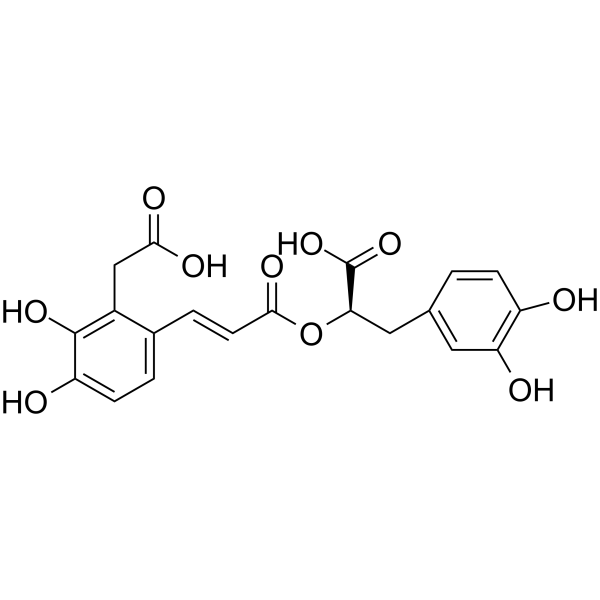
Salvianolic acid D is a depside. Salvianolic acid D can be isolated from Salvia miltiorrhiza (Danshen). Salvianolic acid D promotes the expression of Bcl-2, and inhibits the expressions of Bax, Cleaved caspase-3 and -9. Salvianolic acid D reduces the expression levels of TLR4, MyD88 and TRAF6 proteins both in vitro and in vivo, and significantly inhibits the nuclear translocation of NF-κB. Salvianolic acid D inhibits the cytoplasmic translocation of HMGB1. Salvianolic acid D suppresses inflammatory responses and alleviates cerebral ischemia-reperfusion injury. Salvianolic acid D serves as a potential antiplatelet active component .
Cat. No.: HY-N6612R
CAS No.: 6556-12-3
D-Glucuronic acid (Standard) is the analytical standard of D-Glucuronic acid. This product is intended for research and analytical applications. D-Glucuronic acid is a major component of many anti-inflammatory proteoglycans, which can promote embryonic development and inhibit cell aggregation. After being metabolized into ethyl glucuronide (HY-113093), D-Glucuronic acid activates Toll-like receptor 4 (TLR4), causing pain. D-Glucuronic acid and its derivative glucurono-lactone can serve as liver detoxifiers for human health prevention, and its derivatives also possess anti-tumor activity .
Cat. No.: HY-Y0790R
CAS No.: 122-03-2
Synonyms: p-Isopropylbenzaldehyde (Standard)
Cuminaldehyde Standard is the analytical standard of Cuminaldehyde. This product is intended for research and analytical applications. Cuminaldehyde is the main component of Cuminum cyminum and has multiple biological activities, including anti-inflammatory, anti-cancer, anti-diabetic, anti-injury, anti-neuropathy and antibacterial effects. Cuminaldehyde is an inhibitor of aldose reductase (IC50= 0.00085 mg/mL) and α-glucosidase (IC50=0.5 mg/mL). Cuminaldehyde also inhibits the fibrillation of α-synuclein and prevents its aggregation Cuminaldehyde can induce apoptosis in colon adenocarcinoma cells by targeting topoisomerase I and II. In addition, Cuminaldehyde also exerts anti-inflammatory activity by inhibiting lipoxygenase. Cuminaldehyde has a strong inhibitory effect on the growth of Aspergillus flavus and the biosynthesis of aflatoxin B1 (AFB1). Cuminaldehyde can exert anti-injury and anti-neuropathy effects by participating in opioid receptors, L-arginine/NO/cGMP pathways and anti-inflammatory effects. Cuminaldehyde has potential application value in the research of neurodegenerative diseases, cancer, diabetes and neuropathic pain diseases .
Cat. No.: HY-L174
265 compounds

Macrophages are effector cells of the innate immune system, engulfing bacteria and secreting pro-inflammatory and antibacterial mediators. They are an important component of the first line defense against pathogens and tumor cells. In addition, macrophages play an important role in eliminating damaged cells through programmed cell death. Like all immune cells, macrophages originate from pluripotent hematopoietic stem cells in the bone marrow. Macrophages play key functions in many physiological processes beyond homeostasis and innate immunity, including metabolic function, cell debris clearance, tissue repair, and remodeling. In order to fulfill their different functional roles, macrophages can polarize into a series of phenotypes, including classic (pro inflammatory, M1) and alternative (anti-inflammatory, healing promoting, M2) activation states, as well as a wide range of regulatory phenotypes and subtypes. Macrophages exist in all vertebrate tissues and have a dual function in host protection and tissue damage, maintaining a good balance.

MCE designs a unique collection of 265 macrophage related compounds. It is a good tool to be used for research on Inflammation, cancer and other diseases.

Cat. No.: HY-N0500
CAS No.: 130567-83-8
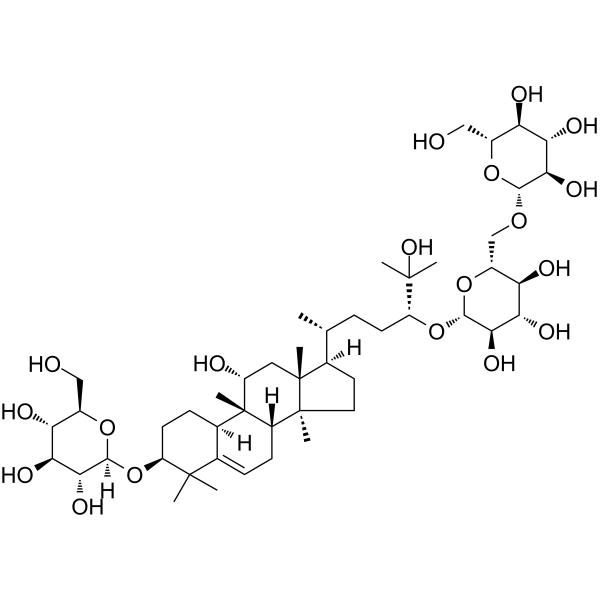
Mogroside III is a triterpenoid glycoside. Mogroside III exhibits maltase inhibitory effect with an IC50 value of 1.6 mM. Mogroside III enhances oocyte developmental potential by promoting autophagy in cumulus cells. Mogroside III, as the active ingredient of the low-polarity glycoside component (L-SGgly), L-SGgly can increase serum GLP-1 levels, improve insulin resistance, and reduce IL-6 levels, and has hypoglycemic, lipid-regulating and anti-inflammatory effects. Mogroside III can be used for the studies of type 2 diabetes mellitus (T2DM) and assisted reproductive technology .
Cat. No.: HY-N5060S
CAS No.: 1335401-40-5
Synonyms: 4-Allylanisole-d4
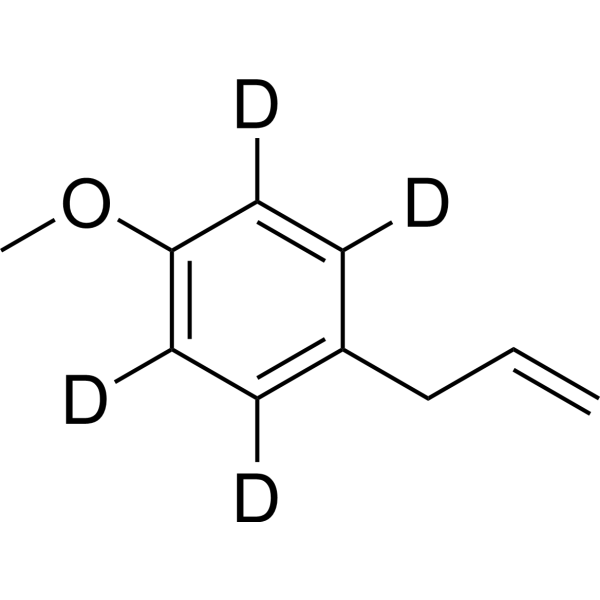
Estragole-d4 is deuterated labeled Estragole (HY-N5060). Estragole (4-Allylanisole) is a relatively nontoxic volatile terpenoid ether and major component of the essential oil from many plants. Estragole significantly triggers Apoptosis, suppresses LPS-induced intracellular ROS production. Estragole activats Nrf-2 and regulates NF-κB. Estragole has anti-toxoplasma, anti-inflammatory, anti-edema, antioxidant and immunomodulatory properties. Estragole blocks DRG neuron excitability. Estragole has improves gastric ulcer activity [10] .
Cat. No.: HY-W010037R
CAS No.: 121-00-6
Target:  

Reference Standards COX

Domaines de recherche:  

Inflammation/Immunology

2-(tert-Butyl)-4-methoxyphenol (Standard) is the analytical standard of 2-(tert-Butyl)-4-methoxyphenol. This product is intended for research and analytical applications. 2-tert-Butyl-4-methoxyphenol is a major component of Butylhydroxyanisole (BHA) (HY-B1066). 2-tert-Butyl-4-methoxyphenol is an antioxidant agent, that inhibits expression of Cox2 and Tnfa genes upon stimulation with Lipopolysaccharides (HY-D1056). 2-tert-Butyl-4-methoxyphenol exhibits anti-inflammatory activity, combined with 2,6-di-tert-butyl-4-methylphenol (BHT) .
Cat. No.: HY-N0695R
CAS No.: 58546-55-7
Synonyms: Gomisin-B (Standard); Wuweizi ester-B (Standard); Schisantherin-B (Standard)
Schisantherin B (Gomisin-B) (Standard) is the analytical standard of Schisantherin B. This product is intended for research and analytical applications. Schisantherin B is a lignan compound and one of the active components of Schisandra chinensis. Schisantherin B activates the PI3K/AKT signaling pathway, restores the activity of GSK3β, and reduces the hyperphosphorylation of tau protein in hippocampal and cerebral cortical tissues. Schisantherin B upregulates the level of GLT-1, decreases the expression of pro-inflammatory cytokines TNF-α/IL-1β/IL-6, upregulates the expression of IL-10, and inhibits cell apoptosis. Schisantherin B is applicable to the research of spinal cord injury, Alzheimer's disease and depression.
Cat. No.: HY-N15936
CAS No.: 2936622-21-6
a15:0-i15:0 PE is a diacyl phosphatidylethanolamine with two branched chains. a15:0-i15:0 PE is a non-canonical TLR2-TLR1 heterodimer agonist and has immunogenic activity. a15:0-i15:0 PE activates T cells and DC signaling and shows anti-inflammatory activity. a15:0-i15:0 PE induces TNFα and IL-6 production. a15:0-i15:0 PE is a the major component (approximately 50%) of A. muciniphila’s lipid membrane .
Cat. No.: HY-W241255
CAS No.: 27473-62-7
2-Aminoindan-2-carboxylic acid is a conformationally restricted Phenylalanine analog and molecular building block. 2-Aminoindan-2-carboxylic acid constitutes a component of allosteric LFA-1 antagonists targeting the LFA-1/ICAM-1 interaction. 2-Aminoindan-2-carboxylic acid serves as a molecular building block for various biologically active peptides, including μ-receptor-selective opioid analogs, activated protein C inhibitors, and histone deacetylase inhibitors. 2-Aminoindan-2-carboxylic acid can be used in the research of autoimmune diseases, inflammatory diseases, opioid receptor-related diseases, antidiuresis-related diseases, and cancers .
Cat. No.: HY-N2125
CAS No.: 174972-80-6
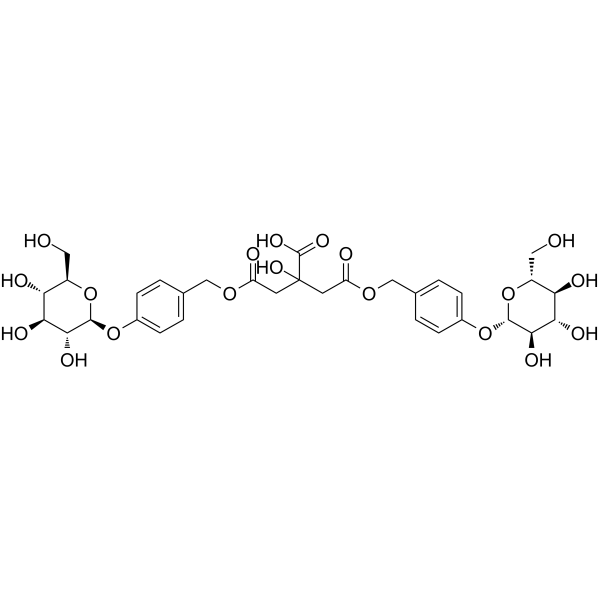
Parishin C is a brain-penetrant major bioactive component found in Gastrodia elata Blume. Parishin C is a 5-HT1A receptor agonist with an EC50 of 34 nM. Parishin C has antipsychotic and neuroprotective effects. Parishin C protects against Aβ-induced long-term potentiation damage and NMDA receptor current impairment. Parishin C reduces oxidative stress, pro-inflammatory cytokine levels, caspase activity, brain water content, and cerebral infarct volume; increases antioxidant enzyme activity and BDNF levels; improves nerve function and histopathological brain damage. Parishin C attenuates phencyclidine-induced immobility time increases, sociability deficits, and visual recognition memory impairment. Parishin C can be used for the research of ischemic stroke, Alzheimer's disease, and schizophrenia-like psychosis .
Cat. No.: HY-N2515R
CAS No.: 494753-69-4
Ginsenoside Rk1 (Standard) is the analytical standard of Ginsenoside Rk1. This product is intended for research and analytical applications. Ginsenoside Rk1 is a unique component created by processing the ginseng plant (mainly Sung Ginseng, SG) at high temperatures . Ginsenoside Rk1 has anti-inflammatory effect, suppresses the activation of Jak2/Stat3 signaling pathway and NF-κB . Ginsenoside Rk1 has anti-tumor effect, antiplatelet aggregation activities, anti-insulin resistance, nephroprotective effect, antimicrobial effect, cognitive function enhancement, lipid accumulation reduction and prevents osteoporosis . Ginsenoside Rk1 induces cell apoptosis by triggering intracellular reactive oxygen species (ROS) generation and blocking PI3K/Akt pathway .
Cat. No.: HY-L243
91 compounds

Quinone compounds are a significant class of natural products featuring a conjugated quinone structure, widely distributed in plants, fungi, and microorganisms. Based on their core structures, they can be primarily categorized into benzoquinones, naphthoquinones, phenanthrenequinones, and anthraquinones, among others. This structural diversity endows quinone compounds with a broad spectrum of pharmacological activities, making them key components in traditional Chinese medicine (such as rhubarb, Lithospermum erythrorhizon, and Salvia miltiorrhiza). Modern research has confirmed that their activities encompass anti-tumor, anti-inflammatory, antibacterial, antiviral, antiplatelet aggregation, and neuroprotective effects, among others, establishing them as an important source for drug development.

MCE designs a unique collection of 91 quinones that all come from natural products. MCE Quinones Library is a useful tool for drug discovery that can be used for high throughput screening (HTS) and high content screening (HCS).

Cat. No.: HY-L194
1,265 compounds

Heat-clearing and detoxification is a specific treatment method in the research of traditional Chinese medicine (TCM), which is clinically used to treat infectious diseases with remarkable effect. Over the past decades, the research of heat-clearing and detoxification treatment has been one of the most active fields of combining traditional Chinese and western medicines, and has made remarkable achievements. Nowadays, the application field of heat-clearing and detoxification traditional Chinese medicine is not only limited to antibacterial and antiviral, but also has made progress in the research fields of anti-inflammatory reaction, anti-endotoxin, anti-peroxidative damage, anti-inflammatory cytokines, enhancement of immune function, protection of cellular organelles, and maintenance of calcium homeostasis. In addition to this, clearing heat and removing toxins has also made significant research progress in non-infectious diseases, for example, in tumors, cardiovascular diseases, renal diseases, blood diseases, geriatrics, and diabetes, all of which have shown good curative effect.

MCE can supply 1,265 monomer component from more than a hundred sources of heat-clearing and detoxification TCM, which can be used in TCM studies, drug development and mechanism-based studies.

