Search Result
Results for "
βAR
" in MedChemExpress (MCE) Product Catalog:
13
Isotope-Labeled Compounds
| Cat. No. |
Product Name |
Target |
Research Areas |
Chemical Structure |
-
- HY-B0573
-
|
|
Adrenergic Receptor
Bacterial
|
Cardiovascular Disease
Infection
Neurological Disease
Metabolic Disease
Cancer
|
|
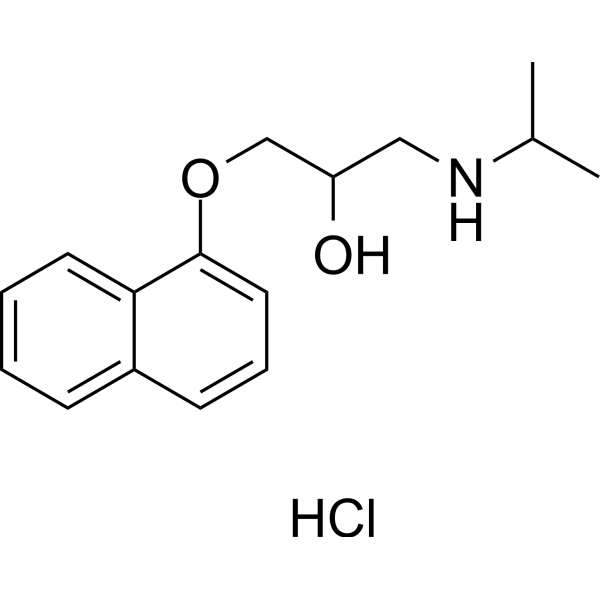
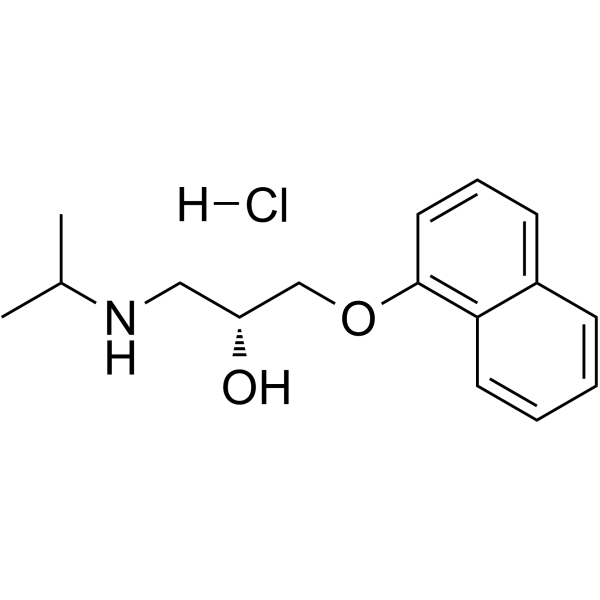
Propranolol hydrochloride is a nonselective and BBB-permeableβ-adrenergic receptor (βAR) antagonist, has high affinity for the β1AR and β2AR with Ki values of 1.8 nM and 0.8 nM, respectively. Propranolol hydrochloride inhibits [ 3H]-DHA binding to rat brain membrane preparation with an IC50 of 12 nM. Propranolol hydrochloride is used for study of hypertension, pheochromocytoma, myocardial infarction, cardiac arrhythmias, angina pectoris, and hypertrophic cardiomyopathy .
|
-
-
- HY-B0573B
-
|
|
Adrenergic Receptor
Bacterial
|
Cardiovascular Disease
Infection
Neurological Disease
Metabolic Disease
Cancer
|
|
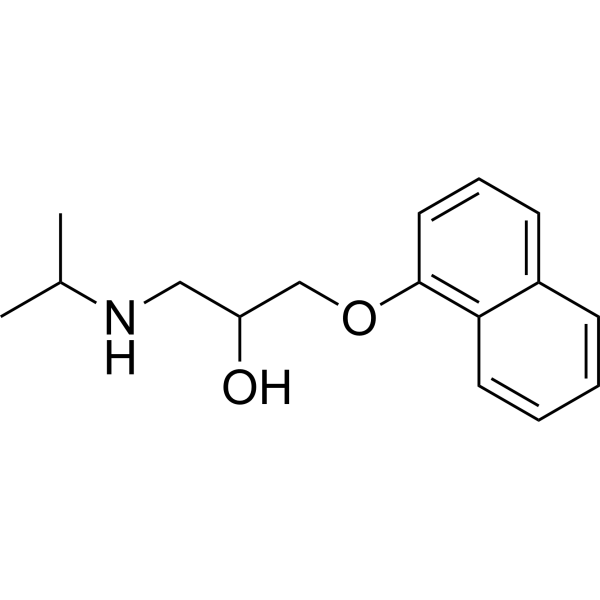
Propranolol is a nonselective and BBB-permeable β-adrenergic receptor (βAR) antagonist, has high affinity for the β1AR and β2AR with Ki values of 1.8 nM and 0.8 nM, respectively . Propranolol inhibits [ 3H]-DHA binding to rat brain membrane preparation with an IC50 of 12 nM . Propranolol is used for the study of hypertension, pheochromocytoma, myocardial infarction, cardiac arrhythmias, angina pectoris, and hypertrophic cardiomyopathy .
|
-
-
- HY-A0295
-
-
-
- HY-123012
-
|
LY-488756
|
Adrenergic Receptor
|
Others
|
|
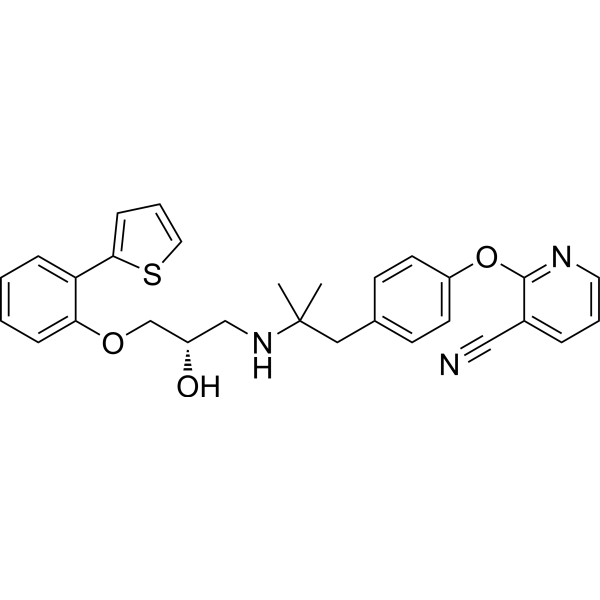
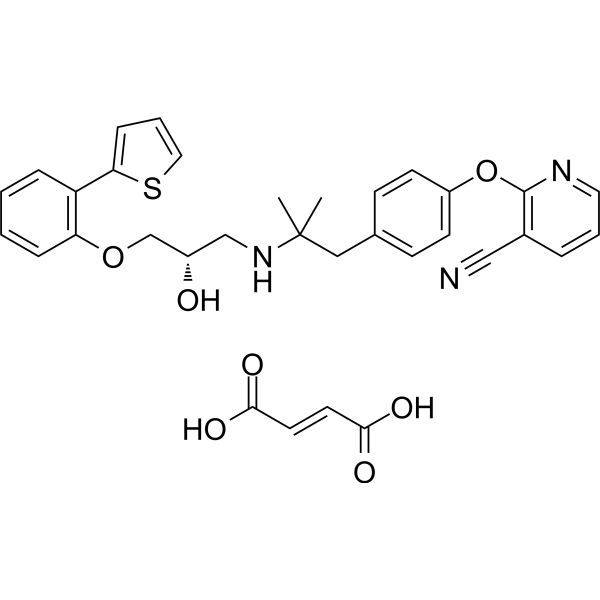
Lubabegron is a potent modulator of β-adrenergic receptor (β-AR). Lubabegron demonstrates antagonistic behavior at the β1 and β 2 receptor subtypes and agonistic behavior at the β 3 receptor subtype in cattle. Lubabegron reduces NH3 gas emissions from an animal or its waste. Lubabegron is available as an animal supplement .
|
-
-
- HY-B1486
-
|
Ba 39089
|
Adrenergic Receptor
|
Cardiovascular Disease
|
|
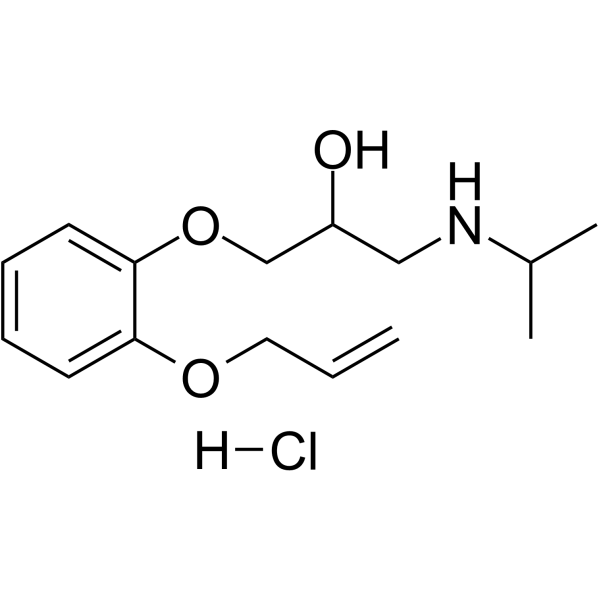
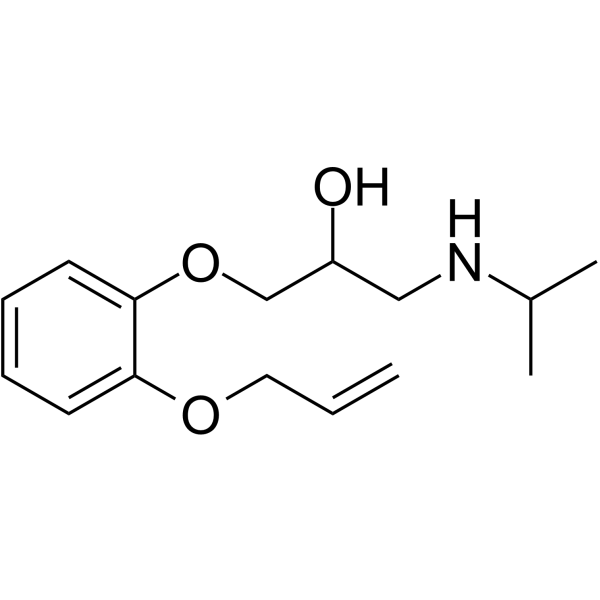
Oxprenolol hydrochloride (Ba 39089) is an orally bioavailable β-adrenergic receptor (β-AR) antagonist with a Ki of 7.10 nM in a radioligand binding assay using rat heart muscle .
|
-
-
- HY-B1421
-
|
LY031537
|
Adrenergic Receptor
Trace Amine-associated Receptor (TAAR)
|
Metabolic Disease
|
|
Ractopamine hydrochloride (LY031537) is a potent and orally active β-adrenergic receptor (βAR) agonist with Kd value of ~25 nM for pig β1AR and β2AR. Ractopamine hydrochloride also is a mTAAR1 agonist with an EC50 of 16 μM. Ractopamine hydrochloride promotes muscle mass development, limits fat deposition, reduces feed consumption, increases total cellular protein synthesis, and improves growth rate and feed efficiency in finishing swine. Ractopamine hydrochloride can be used for researching to increase lean tissue growth and improve production efficiency in pigs .
|
-
-
- HY-B0573S1
-
|
|
Adrenergic Receptor
|
Neurological Disease
Endocrinology
|
|
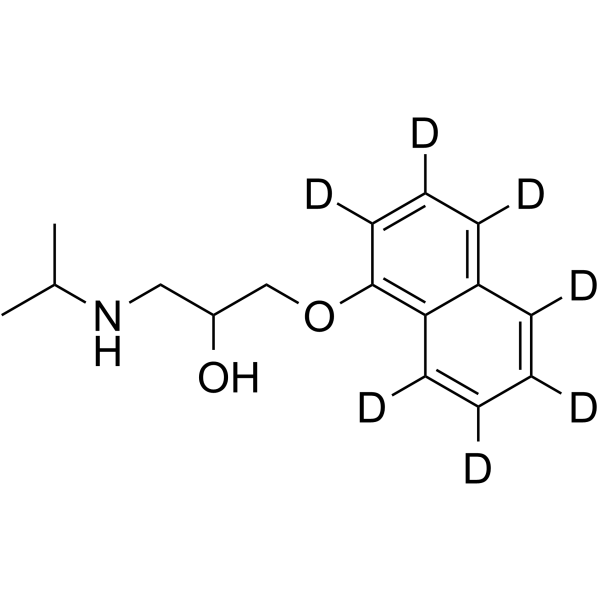
Propranolol-d7 (ring-d7) is the deuterium labeled Propranolol hydrochloride. Propranolol hydrochloride is a nonselective β-adrenergic receptor (βAR) antagonist, has high affinity for the β1AR and β2AR with Ki values of 1.8 nM and 0.8 nM, respectively . Propranolol hydrochloride inhibits [3H]-DHA binding to rat brain membrane preparation with an IC50 of 12 nM . Propranolol hydrochloride is used for study of hypertension, pheochromocytoma, myocardial infarction, cardiac arrhythmias, angina pectoris, and hypertrophic cardiomyopathy .
|
-
-
- HY-B0573BS
-
|
|
Adrenergic Receptor
|
Cardiovascular Disease
Neurological Disease
Endocrinology
|
|
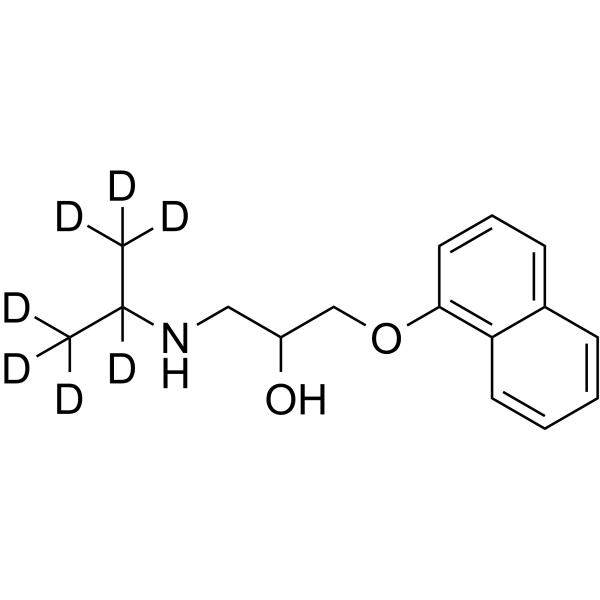
Propranolol-d7 is the deuterium labeled Propranolol. Propranolol is a nonselective β-adrenergic receptor (βAR) antagonist, has high affinity for the β1AR and β2AR with Ki values of 1.8 nM and 0.8 nM, respectively . Propranolol inhibits [3H]-DHA binding to rat brain membrane preparation with an IC50 of 12 nM . Propranolol is used for the study of hypertension, pheochromocytoma, myocardial infarction, cardiac arrhythmias, angina pectoris, and hypertrophic cardiomyopathy .
|
-
-
- HY-B0573S
-
|
|
Adrenergic Receptor
|
Cardiovascular Disease
Neurological Disease
Endocrinology
|
|
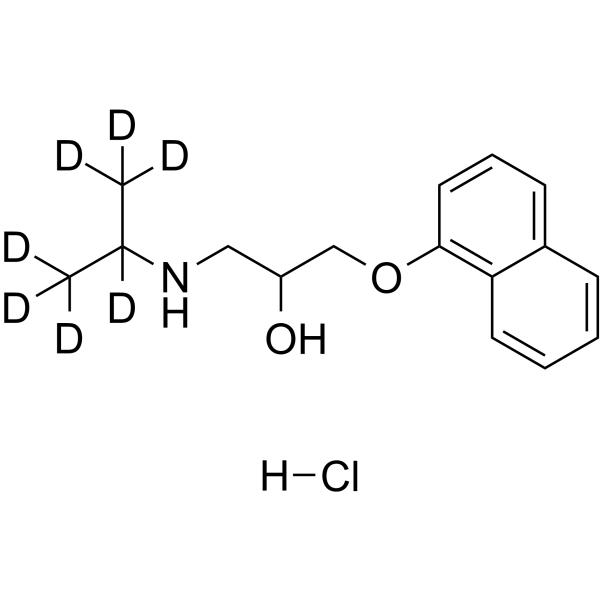
Propranolol-d7 (hydrochloride) is a deuterium labeled Propranolol hydrochloride. Propranolol hydrochloride is a nonselective β-adrenergic receptor (βAR) antagonist, has high affinity for the β1AR and β2AR with Ki values of 1.8 nM and 0.8 nM, respectively . Propranolol hydrochloride inhibits [3H]-DHA binding to rat brain membrane preparation with an IC50 of 12 nM . Propranolol hydrochloride is used for the study of hypertension, pheochromocytoma, myocardial infarction, cardiac arrhythmias, angina pectoris, and hypertrophic cardiomyopathy .
|
-
-
- HY-B0573R
-
|
|
Reference Standards
Adrenergic Receptor
Bacterial
|
Neurological Disease
Endocrinology
Cancer
|
|
Propranolol (hydrochloride) (Standard) is the analytical standard of Propranolol (hydrochloride). This product is intended for research and analytical applications. Propranolol hydrochloride is a nonselective β-adrenergic receptor (βAR) antagonist, has high affinity for the β1AR and β2AR with Ki values of 1.8 nM and 0.8 nM, respectively . Propranolol hydrochloride inhibits [ 3H]-DHA binding to rat brain membrane preparation with an IC50 of 12 nM . Propranolol hydrochloride is used for study of hypertension, pheochromocytoma, myocardial infarction, cardiac arrhythmias, angina pectoris, and hypertrophic cardiomyopathy .
|
-
-
- HY-101393A
-
|
(±)-CGP 12177 hydrochloride
|
Adrenergic Receptor
|
Cardiovascular Disease
Metabolic Disease
|
|
CGP 12177 ((±)-CGP 12177) hydrochloride is a β-Adrenergic receptor (β-AR) ligand. CGP 12177 hydrochloride is a β3-AR (Ki = 88 nM) agonist with β1/β2-AR (Ki = 0.9 nM for β1; Ki = 4 nM for β2) antagonist action. CGP 12177 hydrochloride exhibits partial agonist properties for α1-AR in rat pulmonary artery. CGP 12177 hydrochloride regulates the expression of ucp and leptin genes in NMRI mice adipose tissues. CGP 12177 hydrochloride can be used for cardiovascular and metabolic disease research [1][2][3][4].
|
-
-
- HY-B1486AS
-
-
-
- HY-123012A
-
|
LY-591281; LY-488756 fumarate
|
Androgen Receptor
|
Others
|
|
Lubabegron fumarate is a potent modulator of β-adrenergic receptor (β-AR). Lubabegron fumarate demonstrates antagonistic behavior at the β1 and β 2 receptor subtypes and agonistic behavior at the β 3 receptor subtype in cattle. Lubabegron fumarate reduces NH3 gas emissions from an animal or its waste. Lubabegron fumarate is available as an animal supplement .
|
-
-
- HY-Z7733
-
|
Desmethylcarvedilol; BM-14242
|
Calcium Channel
|
Metabolic Disease
|
|
O-Desmethylcarvedilol (Desmethylcarvedilol) is an active metabolite of the non-selective β-adrenergic receptor (β-AR) antagonist Carvedilol (HY-B0006). O-Desmethylcarvedilol inhibits store-overload-induced calcium release in HEK293 cells expressing the ryanodine receptor 2 (RyR2) R4496C (RyR2 R4496C) mutation (IC50 = 7.62 µM). O-Desmethylcarvedilol reduces increases in heart rate and prevents decreases in diastolic blood pressure induced by Isoproterenol (HY-B0468) in conscious rabbits (ED50s = 32 and 5 µg/kg, respectively) .
|
-
-
- HY-B1486A
-
|
Ba 39089 free base
|
Adrenergic Receptor
|
Cardiovascular Disease
|
|
Oxprenolol (Ba 39089 free base) is an orally bioavailable β-adrenergic receptor (β-AR) antagonist with a Ki of 7.10 nM in a radioligand binding assay using rat heart muscle .
|
-
-
- HY-B1486S
-
|
Ba 39089-d7
|
Adrenergic Receptor
|
Cardiovascular Disease
|
|
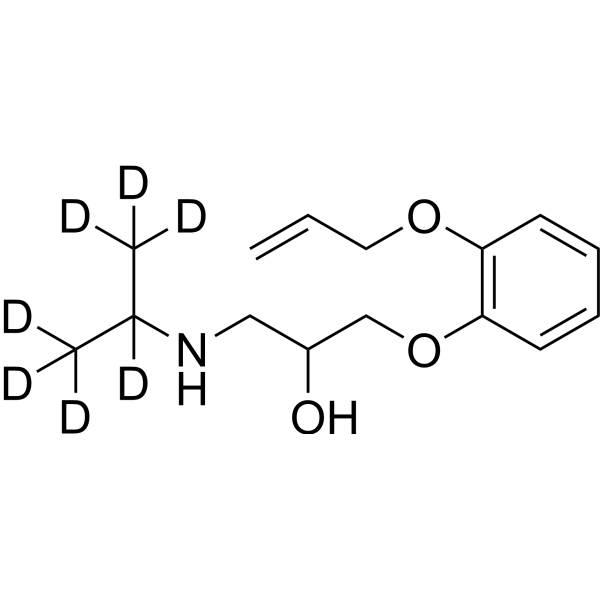
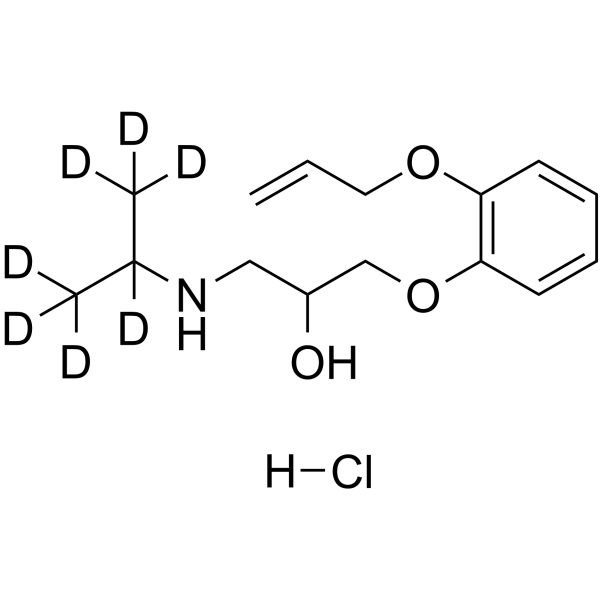
Oxprenolol-d7 (hydrochloride) is the deuterium labeled Oxprenolol hydrochloride. Oxprenolol hydrochloride (Ba 39089) is an orally bioavailable β-adrenergic receptor (β-AR) antagonist with a Ki of 7.10 nM in a radioligand binding assay using rat heart muscle .
|
-
-
- HY-B1421S
-
|
LY031537-d6
|
Isotope-Labeled Compounds
Adrenergic Receptor
|
Metabolic Disease
|
|
Ractopamine-d6 (LY031537-d6) hydrochloride is the deuterium labeled Ractopamine hydrochloride (HY-B1421). Ractopamine (LY031537) hydrochloride is a potent β-adrenergic receptor (βAR) agonist with Kd values of ~25 nM for pig β1AR and β2AR. Ractopamine hydrochloride is linked to protein metabolism. Ractopamine hydrochloride can be used for researching to increase lean tissue growth and improve production efficiency in pigs .
|
-
-
- HY-101393
-
|
(±)-CGP 12177
|
Adrenergic Receptor
|
Cardiovascular Disease
Metabolic Disease
|
|
CGP 12177 ((±)-CGP 12177) is a β-Adrenergic receptor (β-AR) ligand. CGP 12177 is a β3-AR (Ki = 88 nM) agonist with β1/β2-AR (Ki = 0.9 nM for β1; Ki = 4 nM for β2) antagonist action. CGP 12177 exhibits partial agonist properties for α1-AR in rat pulmonary artery. CGP 12177 regulates the expression of ucp and leptin genes in NMRI mice adipose tissues. CGP 12177 can be used for cardiovascular and metabolic disease research .
|
-
-
- HY-163363
-
|
|
Adrenergic Receptor
|
Cancer
|
|
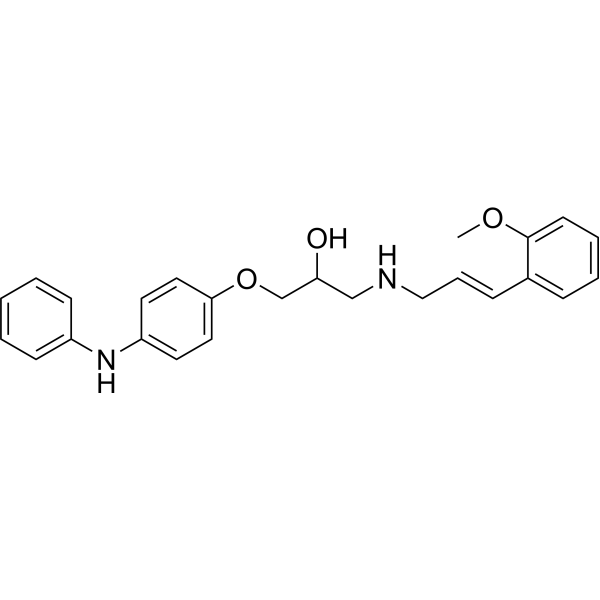
β-AR antagonist 2 (compound 43) is an antagonist of β-AR (IC50: 0.17 μM). β-AR-IN-1 inhibits the growth of mouse A549 xenograft tumors and shows cardioprotective efficacy against DOX-induced HF in C57 mice .
|
-
-
- HY-178319
-
-
-
- HY-W008226R
-
|
2,4,6-trihydroxyacetophenone (Standard); 1-(2,4,6-Trihydroxyphenyl)ethanone (Standard)
|
Reference Standards
Cytochrome P450
Bacterial
Antibiotic
|
Infection
Metabolic Disease
|
|
Oxprenolol (hydrochloride) (Standard) is the analytical standard of Oxprenolol (hydrochloride). This product is intended for research and analytical applications. Oxprenolol hydrochloride (Ba 39089) is an orally bioavailable β-adrenergic receptor (β-AR) antagonist with a Ki of 7.10 nM in a radioligand binding assay using rat heart muscle .
|
-
-
- HY-B1486R
-
|
Ba 39089 (Standard)
|
Reference Standards
Adrenergic Receptor
|
Cardiovascular Disease
|
|
Oxprenolol (hydrochloride) (Standard) is the analytical standard of Oxprenolol (hydrochloride). This product is intended for research and analytical applications. Oxprenolol hydrochloride (Ba 39089) is an orally bioavailable β-adrenergic receptor (β-AR) antagonist with a Ki of 7.10 nM in a radioligand binding assay using rat heart muscle .
|
-
-
- HY-106684
-
|
|
Adrenergic Receptor
|
Cardiovascular Disease
|
|
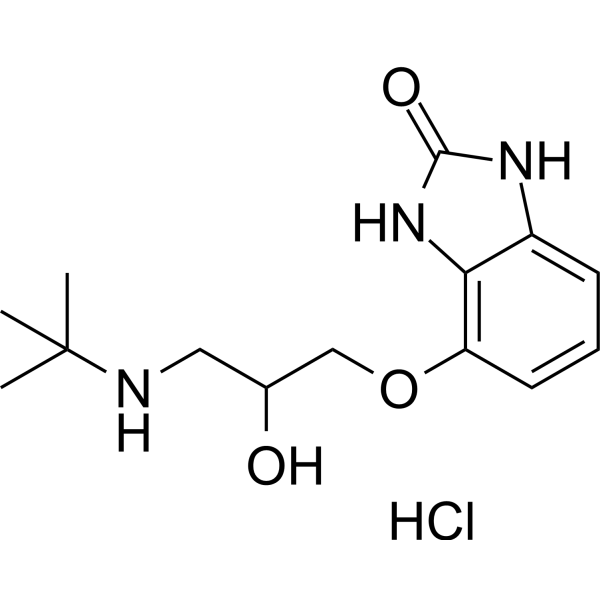
Ridazolol is a β-adrenergic receptor (βAR) antagonist. Ridazolol exhibits a high degree of selectivity for β-1 adrenergic receptor (β1AR) and possesses moderate intrinsic sympathomimetic activity (ISA). Ridazolol can competitively antagonize the relaxation effects induced by isoproterenol. Ridazolol is utilized in the research of cardiovascular diseases .
|
-
-
- HY-113781
-
|
LY031537 free base
|
Adrenergic Receptor
Trace Amine-associated Receptor (TAAR)
|
Metabolic Disease
|
|
Ractopamine (LY031537 free base) is a potent and orally active β-adrenergic receptor (βAR) agonist with Kd value of ~25 nM for pig β1AR and β2AR. Ractopamine also is a mTAAR1 agonist with an EC50 of 16 μM. Ractopamine promotes muscle mass development, limits fat deposition, reduces feed consumption, increases total cellular protein synthesis, and improves growth rate and feed efficiency in finishing swine. Ractopamine can be used for researching to increase lean tissue growth and improve production efficiency in pigs .
|
-
-
- HY-W751275
-
|
|
Isotope-Labeled Compounds
Adrenergic Receptor
Trace Amine-associated Receptor (TAAR)
|
Metabolic Disease
|
|
Ractopamine- 13C2 is the 13C-labeled Ractopamine (HY-113781). Ractopamine (LY031537 free base) is a potent and orally active β-adrenergic receptor (βAR) agonist with Kd value of ~25 nM for pig β1AR and β2AR. Ractopamine also is a mTAAR1 agonist with an EC50 of 16 μM. Ractopamine promotes muscle mass development, limits fat deposition, reduces feed consumption, increases total cellular protein synthesis, and improves growth rate and feed efficiency in finishing swine. Ractopamine can be used for researching to increase lean tissue growth and improve production efficiency in pigs .
|
-
-
- HY-W751276
-
|
|
Isotope-Labeled Compounds
Adrenergic Receptor
Trace Amine-associated Receptor (TAAR)
|
Metabolic Disease
|
|
Ractopamine- 13C6 is the 13C-labeled Ractopamine (HY-113781). Ractopamine (LY031537 free base) is a potent and orally active β-adrenergic receptor (βAR) agonist with Kd value of ~25 nM for pig β1AR and β2AR. Ractopamine also is a mTAAR1 agonist with an EC50 of 16 μM. Ractopamine promotes muscle mass development, limits fat deposition, reduces feed consumption, increases total cellular protein synthesis, and improves growth rate and feed efficiency in finishing swine. Ractopamine can be used for researching to increase lean tissue growth and improve production efficiency in pigs .
|
-
-
- HY-166478S
-
|
Desmethylcarvedilol-d5; BM-14242-d5
|
Isotope-Labeled Compounds
Calcium Channel
|
Metabolic Disease
|
|
O-Desmethyl carvedilol-d5 (Desmethylcarvedilol-d5) is deuterium labeled O-Desmethylcarvedilol. O-Desmethylcarvedilol (Desmethylcarvedilol) is an active metabolite of the non-selective β-adrenergic receptor (β-AR) antagonist Carvedilol (HY-B0006). O-Desmethylcarvedilol inhibits store-overload-induced calcium release in HEK293 cells expressing the ryanodine receptor 2 (RyR2) R4496C (RyR2 R4496C) mutation (IC50 = 7.62 μM). O-Desmethylcarvedilol reduces increases in heart rate and prevents decreases in diastolic blood pressure induced by Isoproterenol (HY-B0468) in conscious rabbits (ED50s = 32 and 5 μg/kg, respectively) .
|
-
-
- HY-106684A
-
|
|
Adrenergic Receptor
|
Cardiovascular Disease
|
|
Ridazolol hydrochloride is a β-adrenergic receptor (βAR) antagonist. Ridazolol hydrochloride exhibits a high degree of selectivity for β-1 adrenergic receptor (β1AR) and possesses moderate intrinsic sympathomimetic activity (ISA). Ridazolol hydrochloride can competitively antagonize the relaxation effects induced by isoproterenol. Ridazolol hydrochloride is utilized in the research of cardiovascular diseases .
|
-
-
- HY-113781S
-
|
LY031537 free base-d6
|
Isotope-Labeled Compounds
Adrenergic Receptor
Trace Amine-associated Receptor (TAAR)
|
Metabolic Disease
|
|
Ractopamine-d6 is the deuterium labeled Ractopamine (HY-113781). Ractopamine (LY031537) hydrochloride is a potent β-adrenergic receptor (βAR) agonist with Kd values of ~25 nM for pig β1AR and β2AR. Ractopamine hydrochloride is linked to protein metabolism. Ractopamine hydrochloride can be used for researching to increase lean tissue growth and improve production efficiency in pigs .
|
-
-
- HY-B1421S1
-
|
LY031537-d9
|
Isotope-Labeled Compounds
Adrenergic Receptor
|
Metabolic Disease
|
|
Ractopamine-d9 (LY031537-d9) hydrochloride is the deuterium labeled Ractopamine hydrochloride (HY-B1421). Ractopamine (LY031537) hydrochloride is a potent β-adrenergic receptor (βAR) agonist with Kd values of ~25 nM for pig β1AR and β2AR. Ractopamine hydrochloride is linked to protein metabolism. Ractopamine hydrochloride can be used for researching to increase lean tissue growth and improve production efficiency in pigs .
|
-
-
- HY-B1421S3
-
|
LY031537-d5
|
Isotope-Labeled Compounds
Adrenergic Receptor
|
Metabolic Disease
|
|
Ractopamine-d5 (LY031537-d5) hydrochloride is the deuterium labeled Ractopamine hydrochloride (HY-B1421). Ractopamine (LY031537) hydrochloride is a potent β-adrenergic receptor (βAR) agonist with Kd values of ~25 nM for pig β1AR and β2AR. Ractopamine hydrochloride is linked to protein metabolism. Ractopamine hydrochloride can be used for researching to increase lean tissue growth and improve production efficiency in pigs .
|
-
-
- HY-W192276
-
|
N-Desisopropylpropranolol
|
Drug Metabolite
Adrenergic Receptor
|
Cardiovascular Disease
Neurological Disease
Endocrinology
Cancer
|
|
(±)-Desisopropylpropranolol (N-Desisopropylpropranolol) is a metabolite of Propranolol (HY-B0573B). Propranolol is a nonselective β-adrenergic receptor (βAR) antagonist, has high affinity for the β1AR and β2AR with Kis of 1.8 nM and 0.8 nM, respectively. Propranolol inhibits [ 3H]-DHA binding to rat brain membrane preparation with an IC50 of 12 nM. Propranolol is used for the study of hypertension, pheochromocytoma, myocardial infarction, cardiac arrhythmias, angina pectoris, and hypertrophic cardiomyopathy .
|
-
-
- HY-B1421S2
-
|
LY031537-d3
|
Isotope-Labeled Compounds
Adrenergic Receptor
Trace Amine-associated Receptor (TAAR)
|
Metabolic Disease
|
|
Ractopamine-d3 (LY031537-d3) hydrochloride is the deuterium labeled Ractopamine hydrochloride (HY-B1421). Ractopamine hydrochloride (LY031537) is a potent and orally active β-adrenergic receptor (βAR) agonist with Kd value of ~25 nM for pig β1AR and β2AR. Ractopamine hydrochloride also is a mTAAR1 agonist with an EC50 of 16 μM. Ractopamine hydrochloride promotes muscle mass development, limits fat deposition, reduces feed consumption, increases total cellular protein synthesis, and improves growth rate and feed efficiency in finishing swine. Ractopamine hydrochloride can be used for researching to increase lean tissue growth and improve production efficiency in pigs .
|
-
| Cat. No. |
Product Name |
Category |
Target |
Chemical Structure |
| Cat. No. |
Product Name |
Chemical Structure |
-
- HY-B0573S1
-
|
|
|
Propranolol-d7 (ring-d7) is the deuterium labeled Propranolol hydrochloride. Propranolol hydrochloride is a nonselective β-adrenergic receptor (βAR) antagonist, has high affinity for the β1AR and β2AR with Ki values of 1.8 nM and 0.8 nM, respectively . Propranolol hydrochloride inhibits [3H]-DHA binding to rat brain membrane preparation with an IC50 of 12 nM . Propranolol hydrochloride is used for study of hypertension, pheochromocytoma, myocardial infarction, cardiac arrhythmias, angina pectoris, and hypertrophic cardiomyopathy .
|
-
-
- HY-B0573BS
-
|
|
|
Propranolol-d7 is the deuterium labeled Propranolol. Propranolol is a nonselective β-adrenergic receptor (βAR) antagonist, has high affinity for the β1AR and β2AR with Ki values of 1.8 nM and 0.8 nM, respectively . Propranolol inhibits [3H]-DHA binding to rat brain membrane preparation with an IC50 of 12 nM . Propranolol is used for the study of hypertension, pheochromocytoma, myocardial infarction, cardiac arrhythmias, angina pectoris, and hypertrophic cardiomyopathy .
|
-
-
- HY-B0573S
-
|
|
|
Propranolol-d7 (hydrochloride) is a deuterium labeled Propranolol hydrochloride. Propranolol hydrochloride is a nonselective β-adrenergic receptor (βAR) antagonist, has high affinity for the β1AR and β2AR with Ki values of 1.8 nM and 0.8 nM, respectively . Propranolol hydrochloride inhibits [3H]-DHA binding to rat brain membrane preparation with an IC50 of 12 nM . Propranolol hydrochloride is used for the study of hypertension, pheochromocytoma, myocardial infarction, cardiac arrhythmias, angina pectoris, and hypertrophic cardiomyopathy .
|
-
-
- HY-B1486AS
-
|
|
|
Oxprenolol-d7 is the deuterium labeled Oxprenolol. Oxprenolol (Ba 39089 free base) is an orally bioavailable β-adrenergic receptor (β-AR) antagonist with a Ki of 7.10 nM in a radioligand binding assay using rat heart muscle .
|
-
-
- HY-B1486S
-
|
|
|
Oxprenolol-d7 (hydrochloride) is the deuterium labeled Oxprenolol hydrochloride. Oxprenolol hydrochloride (Ba 39089) is an orally bioavailable β-adrenergic receptor (β-AR) antagonist with a Ki of 7.10 nM in a radioligand binding assay using rat heart muscle .
|
-
-
- HY-B1421S
-
|
|
|
Ractopamine-d6 (LY031537-d6) hydrochloride is the deuterium labeled Ractopamine hydrochloride (HY-B1421). Ractopamine (LY031537) hydrochloride is a potent β-adrenergic receptor (βAR) agonist with Kd values of ~25 nM for pig β1AR and β2AR. Ractopamine hydrochloride is linked to protein metabolism. Ractopamine hydrochloride can be used for researching to increase lean tissue growth and improve production efficiency in pigs .
|
-
-
- HY-W751275
-
|
|
|
Ractopamine- 13C2 is the 13C-labeled Ractopamine (HY-113781). Ractopamine (LY031537 free base) is a potent and orally active β-adrenergic receptor (βAR) agonist with Kd value of ~25 nM for pig β1AR and β2AR. Ractopamine also is a mTAAR1 agonist with an EC50 of 16 μM. Ractopamine promotes muscle mass development, limits fat deposition, reduces feed consumption, increases total cellular protein synthesis, and improves growth rate and feed efficiency in finishing swine. Ractopamine can be used for researching to increase lean tissue growth and improve production efficiency in pigs .
|
-
-
- HY-W751276
-
|
|
|
Ractopamine- 13C6 is the 13C-labeled Ractopamine (HY-113781). Ractopamine (LY031537 free base) is a potent and orally active β-adrenergic receptor (βAR) agonist with Kd value of ~25 nM for pig β1AR and β2AR. Ractopamine also is a mTAAR1 agonist with an EC50 of 16 μM. Ractopamine promotes muscle mass development, limits fat deposition, reduces feed consumption, increases total cellular protein synthesis, and improves growth rate and feed efficiency in finishing swine. Ractopamine can be used for researching to increase lean tissue growth and improve production efficiency in pigs .
|
-
-
- HY-166478S
-
|
|
|
O-Desmethyl carvedilol-d5 (Desmethylcarvedilol-d5) is deuterium labeled O-Desmethylcarvedilol. O-Desmethylcarvedilol (Desmethylcarvedilol) is an active metabolite of the non-selective β-adrenergic receptor (β-AR) antagonist Carvedilol (HY-B0006). O-Desmethylcarvedilol inhibits store-overload-induced calcium release in HEK293 cells expressing the ryanodine receptor 2 (RyR2) R4496C (RyR2 R4496C) mutation (IC50 = 7.62 μM). O-Desmethylcarvedilol reduces increases in heart rate and prevents decreases in diastolic blood pressure induced by Isoproterenol (HY-B0468) in conscious rabbits (ED50s = 32 and 5 μg/kg, respectively) .
|
-
-
- HY-113781S
-
|
|
|
Ractopamine-d6 is the deuterium labeled Ractopamine (HY-113781). Ractopamine (LY031537) hydrochloride is a potent β-adrenergic receptor (βAR) agonist with Kd values of ~25 nM for pig β1AR and β2AR. Ractopamine hydrochloride is linked to protein metabolism. Ractopamine hydrochloride can be used for researching to increase lean tissue growth and improve production efficiency in pigs .
|
-
-
- HY-B1421S1
-
|
|
|
Ractopamine-d9 (LY031537-d9) hydrochloride is the deuterium labeled Ractopamine hydrochloride (HY-B1421). Ractopamine (LY031537) hydrochloride is a potent β-adrenergic receptor (βAR) agonist with Kd values of ~25 nM for pig β1AR and β2AR. Ractopamine hydrochloride is linked to protein metabolism. Ractopamine hydrochloride can be used for researching to increase lean tissue growth and improve production efficiency in pigs .
|
-
-
- HY-B1421S3
-
|
|
|
Ractopamine-d5 (LY031537-d5) hydrochloride is the deuterium labeled Ractopamine hydrochloride (HY-B1421). Ractopamine (LY031537) hydrochloride is a potent β-adrenergic receptor (βAR) agonist with Kd values of ~25 nM for pig β1AR and β2AR. Ractopamine hydrochloride is linked to protein metabolism. Ractopamine hydrochloride can be used for researching to increase lean tissue growth and improve production efficiency in pigs .
|
-
-
- HY-B1421S2
-
|
|
|
Ractopamine-d3 (LY031537-d3) hydrochloride is the deuterium labeled Ractopamine hydrochloride (HY-B1421). Ractopamine hydrochloride (LY031537) is a potent and orally active β-adrenergic receptor (βAR) agonist with Kd value of ~25 nM for pig β1AR and β2AR. Ractopamine hydrochloride also is a mTAAR1 agonist with an EC50 of 16 μM. Ractopamine hydrochloride promotes muscle mass development, limits fat deposition, reduces feed consumption, increases total cellular protein synthesis, and improves growth rate and feed efficiency in finishing swine. Ractopamine hydrochloride can be used for researching to increase lean tissue growth and improve production efficiency in pigs .
|
-
Your information is safe with us. * Required Fields.
Inquiry Information
- Product Name:
- Cat. No.:
- Quantity:
- MCE Japan Authorized Agent:

