From 11:00 pm to 12:00 pm EST ( 8:00 pm to 9:00 pm PST ) on January 6th, the website will be under maintenance. We are sorry for the inconvenience. Please arrange your schedule properly.
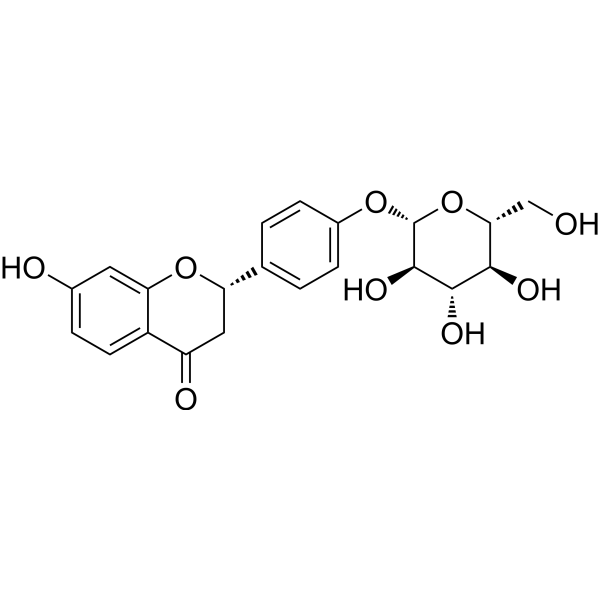
Liquiritin, a flavonoid isolated from Glycyrrhiza uralensis, is a potent and competitive AKR1C1 inhibitor with IC50s of 0.62 μM, 0.61 μM, and 3.72μM for AKR1C1, AKR1C2 and AKR1C3, respectively. Liquiritin efficiently inhibits progesterone metabolism mediated by AKR1C1 in vivo . Liquiritin acts as an antioxidant and has neuroprotective, anti-cancer and anti-inflammatory activity .
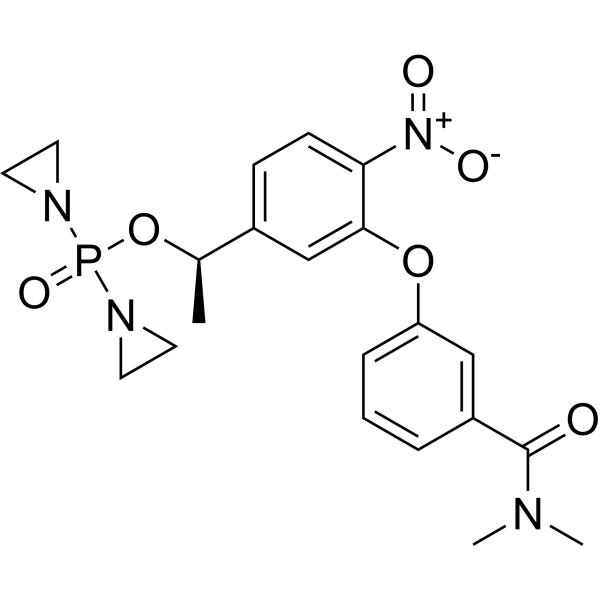
(R)-Odafosfamide (OBI-3424) is a proagent that is selectively converted by AKR1C3 (aldo-keto reductase 1C3) to a potent DNA-alkylating agent. (R)-Odafosfamide can be used for hepatocellular carcinoma, castrate-resistant prostate cancer, and acute lymphoblastic leukemia (ALL) research .
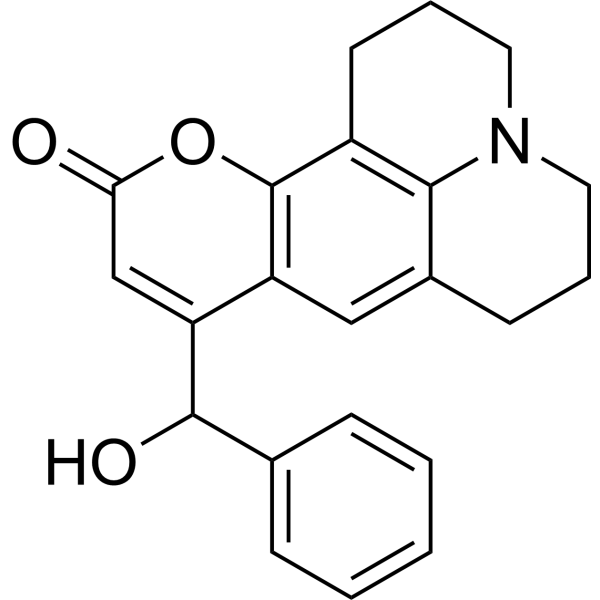
AKR1C3-IN-4 is a potent and selective aldo-keto reductase 1C3(AKR1C3) inhibitor with an IC50 of 0.56 μM. AKR1C3-IN-4 has the potential for castrate resistant prostate cancer (CRPC) research .
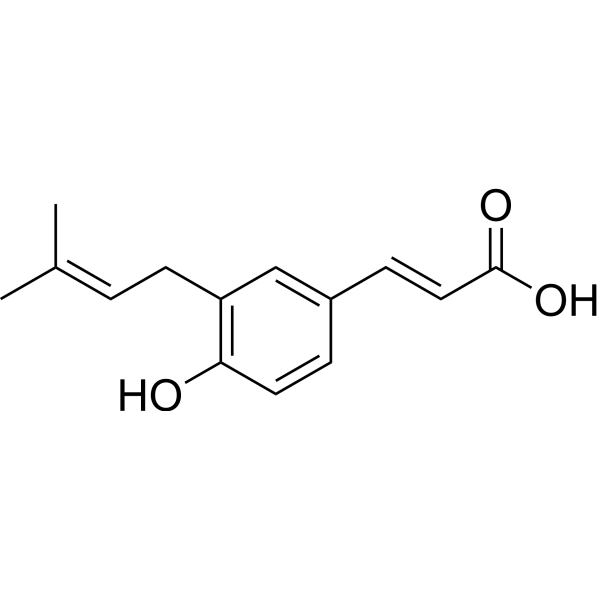
Drupanin is an orally active and selective AKR1C3 enzyme inhibitor and an RXRα agonist with an EC50 value of 4.8 μM, which is found in green propolis. Drupanin also activates PPARγ moderately. Drupanin induces adipogenesis and elevates aP2 mRNA levels in 3T3-L1 fibroblasts Drupanin has the potential for the research of breast and prostate cancers .
S07-2010 is a potent pan-AKR1C (aldo-keto reductase family 1 member C) inhibitor, with IC50 values of 0.19, 0.36, 0.47, and 0.73 μM for AKR1C3, AKR1C4, AKR1C1 and AKR1C2, respectively. S07-2010 induces apoptosis in A549/DDP cells. S07-2010 strengthens the cytotoxicity of chemotherapeutic agents in drug-resistant cells. S07-2010 significantly inhibits the proliferation of drug-resistant cells .
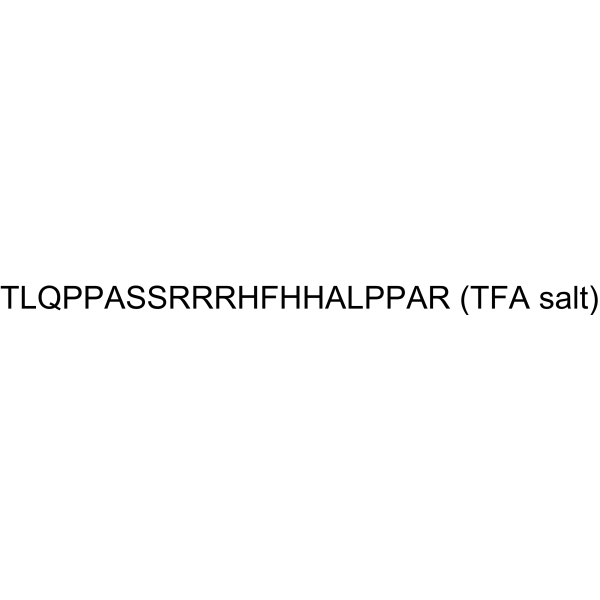
TLQP-21 TFA, a VGF-derived peptide endowed of endocrine and extraendocrine properties, is a potent G-protein-coupled receptor complement-3a receptor1 (C3aR1) agonist (EC50: mouse TLQP-21=10.3 μM; human TLQP-21=68.8μM). TLQP-21 TFA activates C3aR1 to induce an increase of intracellular Ca 2+. TLQP-21 TFA is used for the research in regulation of nociception and other relevant physiologic functions .
S19-1035 is a highly potent and specific aldo-keto reductase 1C3(AKR1C3) inhibitor. S19-1035 inhibits AKR1C3 with an IC50 value of 3.04 nM. S19-1035 can be used for the research of tumor .
AKR1C3-IN-9 is a selective inhibitor of Aldo-keto Reductase 1C3(AKR1C3) with an IC50 value of 8.92 nM. AKR1C3-IN-9 significantly reverses the Doxorubicin (HY-15142A) (DOX) resistance in a resistant breast cancer cell line .
Odafosfamide ((S)-OBI-3424) is a highly selective prodrug bis-alkylating agent activated by aldehyde-keto reductase 1C3(AKR1C3(). Odafosfamide is highly cytotoxic to cell lines with high AKR1C3 expression. Odafosfamide exhibits antitumor activity in a variety of tumors with high AKR1C3 expression (such as liver cancer, non-small cell lung cancer, and leukemia). Odafosfamide can be used in cancer research .
SN34037 is a specific inhibitor of Aldo-keto reductase 1C3 (AKR1C3, EC 1.1.1.188) with the ability to inhibit the cytotoxic activity of PR-104A. SN34037-sensitive coumberone reduction provides a rapid and specific assay for AKR1C3 activity. SN34037 inhibits the aerobic cytotoxicity of PR-104A in TF1 erythroleukemia cells with high AKR1C3 expression, but not in Nalm6 pre-B acute lymphoblastic leukemia cells with low AKR1C3 expression .
ACHM-025 is a prodrug, which is selectively activated by AKR1C3 to a nitrogen mustard DNA alkylating agent. ACHM-025 can be used for the research of cancer, such as leukemia .
CPI-203-PEG1-C3-O-COOH is a conjugate of the BRD4 ligand (HY-78695) and the linker (HY-42427). CPI-203-PEG1-C3-O-COOH can be used for synthesizing PROTAC BRD4 degrader ARV-771 (HY-100972) .
RJG-2051 is a selective covalent aldo-keto reductase family 1 member C3 (AKR1C3) inhibitor with an IC50 value of 13 nM. RJG-2051 interferes with the metabolic process of substrates such as androgens, estrogens, and prostaglandins by AKR1C3. RJG-2051 is promising for research of cancers .
TLQP-21, a VGF-derived peptide endowed of endocrine and extraendocrine properties, is a potent G-protein-coupled receptor complement-3a receptor 1 (C3aR1) agonist (EC50: mouse TLQP-21=10.3 μM; human TLQP-21=68.8 μM). TLQP-21 activates C3aR1 to induce an increase of intracellular Ca 2+. TLQP-21 is used for the research in regulation of nociception and other relevant physiologic functions .
BAY-1128688 is a potent, orally active and selective AKR1C3 inhibitor with IC50 < 2 nM. BAY-1128688 shows high selectivity over related AKR1C enzymes (1C1, 1C2, 1C4) and AKR1D1. BAY-1128688 exhibits no relevant activity at major nuclear hormone receptors. BAY-1128688 reduces endometriotic lesions in the marmoset monkey endometriosis model. BAY-1128688 can be used for endometriosis research .
LX1 is an anti-prostate cancer compound that targets androgen receptor (AR), AR variants and steroidogenic enzyme AKR1C3. LX1 inhibits the enzymatic activity of AKR1C3, reduces the conversion of androstenedione to testosterone and reduces the expression of AR and AR-V7 and downregulates their target genes. LX1 overcomes the resistance of tumor cells to Enzalutamide (HY-70002), and the combination with Enzalutamide (HY-70002) further inhibits tumor growth .
AKR1C3-IN-12 (compound 2j) is an aldo-keto reductase 1C3(AKR1C3) inhibitor with an IC50 of 27 nM. AKR1C3-IN-12 enhances the efficacy of Gemcitabine and Cisplatin in bladder cancer .
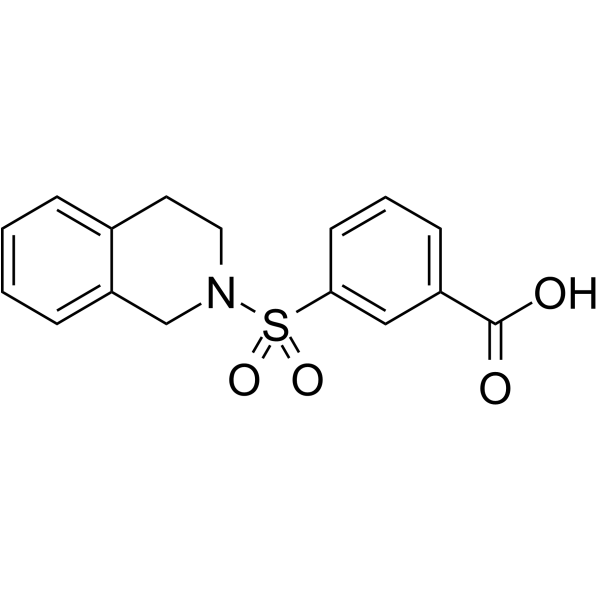
AKR1C3-IN-11 (Compound 6e) is a Aldo-keto reductase 1C3(AKR1C3) inhibitor with an IC50 of 2.0 μM. AKR1C3-IN-11 inhibit cell proliferation in combination with abiraterone (HY-70013). AKR1C3-IN-11 can be used for the research of prostate cancer .
AKR1C3-IN-6 (Compound 1) is a potent, selective AKR1C3 inhibitor with IC50 values of 0.31 μM and 73.23 μM against AKR1C3 and AKR1C2, respectively. AKR1C3-IN-6 shows antitumor activity .
PROTAC AKR1C3 degrader-1 (compound 5) is a potent AKR1C3 PROTAC degrader. PROTAC AKR1C3 degrader-1 decreases the protein expression of AKR1C3, AKR1C1/2, and ARv7. PROTAC AKR1C3 degrader-1 has the potential for the research of prostate cancer. (Blue:ubiquitin E3 ligase cereblon ligand (HY-A0003), Black: linker (HY-163647); Pink: AKR1C3 inhibitor (HY-163610)) .
S07-1066 is an aldo-keto reductase 1C3(AKR1C3) inhibitor, synergizing doxorubicin (DOX) cytotoxicity. S07-1066 selectively blocks AKR1C3-mediated reduction of DOX, and reverses the DOX resistance in overexpressing AKR1C3 cells .
S07-2005 racemic is a potent and selective aldo-keto reductase 1C3(AKR1C3) inhibitor with an IC50 value of 0.13 μM and 0.75 μM for AKR1C3 and AKR1C4, respectively. S07-2005 racemic has potential as a chemotherapeutic potentiator for cancer agent resistance .
S07-2001 is a potent and selective aldo-keto reductase 1C3(AKR1C3) inhibitor with an IC50 value of 2.08 μM. S07-2001 enhances the activity of Doxorubicin against cancer cells. S07-2001 has potential as a chemotherapeutic potentiator for cancer agent resistance .
N-Deschlorobenzoyl indomethacin (Compound 18), the primary metabolite of indomethacin (HY-14397), lacks the N-p-chlorobenzoyl group in its structure. Consequently, N-Deschlorobenzoyl indomethacin loses inhibitory activity against AKR1C2 and AKR1C3 (AKR1C2IC50 =100 μM, AKR1C3IC50 >100 μM), exhibiting no selectivity .
AKR1C2/3-IN-1 (compound 3a) is a potent AKR1C2 and AKR1C3 inhibitor with IC50 values of 90, 50 nM, respectively. AKR1C2/3-IN-1 can be used as a radiation sensitizer and as a potentiator of chemotherapy cytotoxicity .
AKR1C3-IN-14 (compound 4) is an AKR1C3 inhibitor (IC50=0.122 μM) that reduces the overproduction of androgens by inhibiting the activity of the AKR1C3 enzyme, thereby regulating hormone-mediated signaling. AKR1C3-IN-14 also plays a role in the biosynthesis of the prostaglandin PGF2α, regulating cell proliferation by affecting this pathway. AKR1C3-IN-14 can be used in the study of prostate cancer .
AKR1C3-IN-5 (Compound 6e) is a potent inhibitor of AKR1C3. AKR1C3 enzyme is overexpressed in hormone-dependent prostate and breast tumors. AKR1C3-IN-5 derived from drupanin, which exhibits half-maximal inhibitory concentration (IC50) of 9.6 ± 3 μM and selectivity index (SI) of 5.5 against MCF-7 cells .
AKR1C3-IN-15 (compound 30) is a potent and selective AKR1C3 inhibitor with an IC50 of 5 nM. AKR1C3-IN-15 enhances Sorafenib (HY-10201)-induced ROS generation, promoted apoptosis, and restored sorafenib sensitivity in HCC models both in vitro and in vivo .
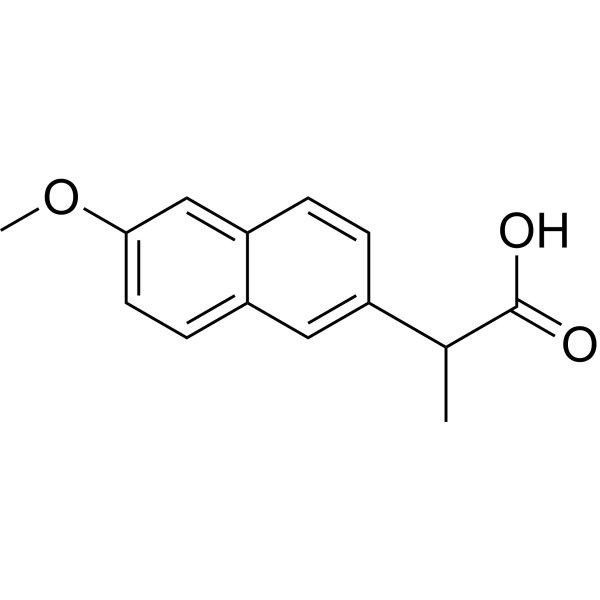
N-(3-Methylphenyl)anthranilic acid is an aldo-keto reductase 1C3(AKR1C3)and AKR1C2 inhibitor with IC50 values of 0.24 μM and 0.38 μM, respectively. N-(3-Methylphenyl)anthranilic acid shows no inhibition of COX-1 or COX-2. N-(3-Methylphenyl)anthranilic acid can be used for the research of castration resistant prostate cancer .
Akr1c3 Rat Pre-designed siRNA Set A contains three designed siRNAs for Akr1c3 gene (Rat), as well as a negative control, a positive control, and a FAM-labeled negative control.
AKR1C3 Human Pre-designed siRNA Set A contains three designed siRNAs for AKR1C3 gene (Human), as well as a negative control, a positive control, and a FAM-labeled negative control.
ASP-9521 (Standard) is the analytical standard of ASP-9521. This product is intended for research and analytical applications. ASP-9521 is a potent, selective and orally available AKR1C3 inhibitor with an IC50 of 11 nM for human AKR1C3.
AKR1C2/3-IN-2 is a potential AKR1C3 inhibitor with selective AKR1C3 activity. AKR1C2/3-IN-2 is able to block AKR1C3-mediated testosterone (T) production and PSA induction, affecting the endocrine activity of prostate cancer cells. AKR1C2/3-IN-2 shows selectivity over other AKR1C enzymes, indicating its potential application in inhibiting drug-resistant prostate cancer. AKR1C2/3-IN-2 has no inhibitory activity against COX isomerases, further emphasizing its specificity as a prostate cancer inhibitory compound .
N-Deschlorobenzoyl indomethacin-d3 is the deuterium labeled N-Deschlorobenzoyl indomethacin (HY-W008567). N-Deschlorobenzoyl indomethacin (Compound 18), the primary metabolite of indomethacin (HY-14397), lacks the N-p-chlorobenzoyl group in its structure. Consequently, N-Deschlorobenzoyl indomethacin loses inhibitory activity against AKR1C2 and AKR1C3 (AKR1C2 IC50 =100 μM, AKR1C3 IC50 >100 μM), exhibiting no selectivity .
Indomethacin methylester (Compound 10; Indometacin methylester) is a potent and selective AKR1C3 inhibitor with an IC50 value of 5.67 μM. Indomethacin methylester is promising for research of postate cancer .
Lenalidomide-COCH-PEG2-azido is a synthesized E3 ligase ligand-linker conjugate that incorporates the Lenalidomide (HY-A0003) based cereblon ligand and a linker. Lenalidomide-COCH-PEG2-azido can be used in the synthesis of PROTAC AKR1C3 degrader-1 (HY-163609) .
Liquiritin (Standard) is the analytical standard of Liquiritin. This product is intended for research and analytical applications. Liquiritin, a flavonoid isolated from Glycyrrhiza uralensis, is a potent and competitive AKR1C1 inhibitor with IC50s of 0.62 μM, 0.61 μM, and 3.72μM for AKR1C1, AKR1C2 and AKR1C3, respectively. Liquiritin efficiently inhibits progesterone metabolism mediated by AKR1C1 in vivo . Liquiritin acts as an antioxidant and has neuroprotective, anti-cancer and anti-inflammatory activity .
C3N-Dbn-Trp2 is an inhibitor for ATP-binding cassette transporter ABCB1. C3N-Dbn-Trp2 inhibits the ABCB1-mediated Rhodamine 123 (HY-D0816) efflux in cells HEK293T and HCT-15 with IC50 of 5.9 µM and 2.2 µM. C3N-Dbn-Trp2 inhibits the Doxorubicin (HY-15142A) efflux, enhances the cytotoxicity of Doxorubicin in ABCB1-expressing cells .
AKR1Cs-IN-1 (Compound 29) is a potent and broad-spectrum inhibitor targeting members of the Aldo-Keto Reductase 1C family (AKR1C1-1C4). By simultaneously occupying the SP2 and SP3 pockets, it effectively inhibits multiple isoforms and disrupts metabolic pathways associated with drug resistance. In enzymatic activity assays, AKR1Cs-IN-1 exhibited significant inhibitory potency, with IC50 values of 0.09, 0.28, 0.05, and 0.51 µM against AKR1C1, AKR1C2, AKR1C3, and AKR1C4, respectively. In the doxorubicin (DOX)-resistant breast cancer cell line MCF-7/ADR, AKR1Cs-IN-1 showed remarkable resensitization effects and significantly enhanced the cytotoxicity of DOX. AKR1Cs-IN-1 holds promise for research on overcoming drug resistance in breast cancer .
AKR1C3-IN-1 (Standard) is the analytical standard of AKR1C3-IN-1 (HY-107379). This product is intended for research and analytical applications. AKR1C3-IN-1 is a potent, highly selective inhibitor of AKR1C3, with an IC50 of 13 nM.
KARS-IN-1 (152) is a AKR1C3 dependent KARS inhibitor with an AC50 of 9.1 nM for human KARS. KARS-IN-1 shows anti-proliferative activity in H460 (NRF2 pathway mutant cell line with high AKR1C3 expression) and Hara (NRF2 pathway wild type cell line with low AKR1C3 expression), with AC50 values ??of 21 nM and 16 nM, respectively. KARS-IN-1 can be used for the study of non-small cell lung cancer (NSCLC) .
SG-55 is a selective, noncompetitive and orally active AKR1C3 inhibitor with an IC50 of 5 nM and a Ki of 10 nM. SG-55 shows >2000-fold selectivity for AKR1C3 over AKR1C1, AKR1C2, and AKR1C4 (> 10 μM). SG-55 increases the ratio of reduced/oxidized nicotinamide adenine dinucleotide phosphate (NADPH/NADP +), decreases the ratio of reduced/oxidized glutathione (GSH/GSSG), and induces DNA double-strand breaks. SG-55 can overcome Osimertinib (HY-15772) resistance mediated by EGFR C797S triple mutation in non-small cell lung cancer (NSCLC) .
CRT0093964 is an isoform-selective non-carboxylate inhibitor of AKR1C3 (IC50=0.11 μM) with no activity against AKR1C1, AKR1C2, AKR1C4, COX-1, and COX-2.CRT0093964 can be used for the research of leukemia, hormone-related cancers, colon cancer .
TLQP-21 TFA, a VGF-derived peptide endowed of endocrine and extraendocrine properties, is a potent G-protein-coupled receptor complement-3a receptor1 (C3aR1) agonist (EC50: mouse TLQP-21=10.3 μM; human TLQP-21=68.8μM). TLQP-21 TFA activates C3aR1 to induce an increase of intracellular Ca 2+. TLQP-21 TFA is used for the research in regulation of nociception and other relevant physiologic functions .
TLQP-21, a VGF-derived peptide endowed of endocrine and extraendocrine properties, is a potent G-protein-coupled receptor complement-3a receptor 1 (C3aR1) agonist (EC50: mouse TLQP-21=10.3 μM; human TLQP-21=68.8 μM). TLQP-21 activates C3aR1 to induce an increase of intracellular Ca 2+. TLQP-21 is used for the research in regulation of nociception and other relevant physiologic functions .
Liquiritin, a flavonoid isolated from Glycyrrhiza uralensis, is a potent and competitive AKR1C1 inhibitor with IC50s of 0.62 μM, 0.61 μM, and 3.72μM for AKR1C1, AKR1C2 and AKR1C3, respectively. Liquiritin efficiently inhibits progesterone metabolism mediated by AKR1C1 in vivo . Liquiritin acts as an antioxidant and has neuroprotective, anti-cancer and anti-inflammatory activity .
Drupanin is an orally active and selective AKR1C3 enzyme inhibitor and an RXRα agonist with an EC50 value of 4.8 μM, which is found in green propolis. Drupanin also activates PPARγ moderately. Drupanin induces adipogenesis and elevates aP2 mRNA levels in 3T3-L1 fibroblasts Drupanin has the potential for the research of breast and prostate cancers .
Liquiritin (Standard) is the analytical standard of Liquiritin. This product is intended for research and analytical applications. Liquiritin, a flavonoid isolated from Glycyrrhiza uralensis, is a potent and competitive AKR1C1 inhibitor with IC50s of 0.62 μM, 0.61 μM, and 3.72μM for AKR1C1, AKR1C2 and AKR1C3, respectively. Liquiritin efficiently inhibits progesterone metabolism mediated by AKR1C1 in vivo . Liquiritin acts as an antioxidant and has neuroprotective, anti-cancer and anti-inflammatory activity .
AKR1C3 Protein, Human (HEK293, His) expresses in HEK293 cells with a His tag. Aldo-keto reductase family 1 member C3 (AKR1C3) is a steroidogenic enzyme that plays a crucial role in the conversion of adrenal androgen dehydroepiandrosterone (DHEA) into high-affinity ligands for the androgen receptor (testosterone [T] and dihydrotestosterone [DHT]).
Collagen alpha-1(VIII) chain (COL8A1) is an important macromolecular component of Descemet membrane formation and the endothelial lining of blood vessels. COL8A1 is critical for vascular smooth muscle cell migration and proliferation, suggesting its importance in maintaining the structural integrity of the vessel wall, particularly in atherogenesis. Collagen alpha-1 (VIII) chain/COL8A1 Protein, Human (HEK293, His) is the recombinant human-derived Collagen alpha-1(VIII) chain/COL8A1 protein, expressed by HEK293 , with C-6*His labeled tag.
N-Deschlorobenzoyl indomethacin-d3 is the deuterium labeled N-Deschlorobenzoyl indomethacin (HY-W008567). N-Deschlorobenzoyl indomethacin (Compound 18), the primary metabolite of indomethacin (HY-14397), lacks the N-p-chlorobenzoyl group in its structure. Consequently, N-Deschlorobenzoyl indomethacin loses inhibitory activity against AKR1C2 and AKR1C3 (AKR1C2 IC50 =100 μM, AKR1C3 IC50 >100 μM), exhibiting no selectivity .
Lenalidomide-COCH-PEG2-azido is a synthesized E3 ligase ligand-linker conjugate that incorporates the Lenalidomide (HY-A0003) based cereblon ligand and a linker. Lenalidomide-COCH-PEG2-azido can be used in the synthesis of PROTAC AKR1C3 degrader-1 (HY-163609) .
Akr1c3 Rat Pre-designed siRNA Set A contains three designed siRNAs for Akr1c3 gene (Rat), as well as a negative control, a positive control, and a FAM-labeled negative control.
AKR1C3 Human Pre-designed siRNA Set A contains three designed siRNAs for AKR1C3 gene (Human), as well as a negative control, a positive control, and a FAM-labeled negative control.
Inquiry Online
Your information is safe with us. * Required Fields.
Western blot analysis of extracts from THP-1(lane 2(20μg), Jurkat (lane 3(20μg) and NIH3T3(lane 4(20μg) using FOXO1A (HY-P80132) Rabbit mAb. Proteins were transferred
to a PVDF membrane and blocked with 5% non-fat milk in TBST for 2 hour at room temperature. The primary antibody (1/1000) and Loading control antibody (Beta Actin, HY-P80438, 1/10000) was
used in 5% non-fat milk in TBST at 4°C overnight. Goat Anti-Mouse/Rabbit IgG-HRP Secondary Antibody (1/10000) was used for 1 hour at room temperature.
Western blot analysis of extracts from THP-1(lane 2(20μg), Jurkat (lane 3(20μg) and NIH3T3(lane 4(20μg) using FOXO1A (HY-P80132) Rabbit mAb. Proteins were transferred
to a PVDF membrane and blocked with 5% non-fat milk in TBST for 2 hour at room temperature. The primary antibody (1/1000) and Loading control antibody (Beta Actin, HY-P80438, 1/10000) was
used in 5% non-fat milk in TBST at 4°C overnight. Goat Anti-Mouse/Rabbit IgG-HRP Secondary Antibody (1/10000) was used for 1 hour at room temperature.
Western blot analysis of extracts from THP-1(lane 2(20μg), Jurkat (lane 3(20μg) and NIH3T3(lane 4(20μg) using FOXO1A (HY-P80132) Rabbit mAb. Proteins were transferred
to a PVDF membrane and blocked with 5% non-fat milk in TBST for 2 hour at room temperature. The primary antibody (1/1000) and Loading control antibody (Beta Actin, HY-P80438, 1/10000) was
used in 5% non-fat milk in TBST at 4°C overnight. Goat Anti-Mouse/Rabbit IgG-HRP Secondary Antibody (1/10000) was used for 1 hour at room temperature.
Western blot analysis of extracts from THP-1(lane 2(20μg), Jurkat (lane 3(20μg) and NIH3T3(lane 4(20μg) using FOXO1A (HY-P80132) Rabbit mAb. Proteins were transferred
to a PVDF membrane and blocked with 5% non-fat milk in TBST for 2 hour at room temperature. The primary antibody (1/1000) and Loading control antibody (Beta Actin, HY-P80438, 1/10000) was
MedchemExpress Validation 03
Western blot analysis of extracts from THP-1(lane 2(20μg), Jurkat (lane 3(20μg) and NIH3T3(lane 4(20μg) using FOXO1A (HY-P80132) Rabbit mAb. Proteins were transferred
MedchemExpress Validation 04
Western blot analysis of extracts from THP-1(lane 2(20μg), Jurkat (lane 3(20μg) and NIH3T3(lane 4(20μg) using FOXO1A (HY-P80132) Rabbit mAb. Proteins were transferred
to a PVDF membrane and blocked with 5% non-fat milk in TBST for 2 hour at room temperature. The primary antibody (1/1000) and Loading control antibody (Beta Actin, HY-P80438, 1/10000) was
used in 5% non-fat milk in TBST at 4°C overnight. Goat Anti-Mouse/Rabbit IgG-HRP Secondary Antibody (1/10000) was used for 1 hour at room temperature.
MedchemExpress Validation
Western blot analysis of extracts from THP-1(lane 2(20μg), Jurkat (lane 3(20μg) and NIH3T3(lane 4(20μg) using FOXO1A (HY-P80132) Rabbit mAb. Proteins were transferred
to a PVDF membrane and blocked with 5% non-fat milk in TBST for 2 hour at room temperature. The primary antibody (1/1000) and Loading control antibody (Beta Actin, HY-P80438, 1/10000) was
used in 5% non-fat milk in TBST at 4°C overnight. Goat Anti-Mouse/Rabbit IgG-HRP Secondary Antibody (1/10000) was used for 1 hour at room temperature.
Western blot analysis of extracts from THP-1(lane 2(20μg), Jurkat (lane 3(20μg) and NIH3T3(lane 4(20μg) using FOXO1A (HY-P80132) Rabbit mAb. Proteins were transferred
to a PVDF membrane and blocked with 5% non-fat milk in TBST for 2 hour at room temperature. The primary antibody (1/1000) and Loading control antibody (Beta Actin, HY-P80438, 1/10000) was
used in 5% non-fat milk in TBST at 4°C overnight. Goat Anti-Mouse/Rabbit IgG-HRP Secondary Antibody (1/10000) was used for 1 hour at room temperature.
MedchemExpress Validation
Western blot analysis of extracts from THP-1(lane 2(20μg), Jurkat (lane 3(20μg) and NIH3T3(lane 4(20μg) using FOXO1A (HY-P80132) Rabbit mAb. Proteins were transferred
to a PVDF membrane and blocked with 5% non-fat milk in TBST for 2 hour at room temperature. The primary antibody (1/1000) and Loading control antibody (Beta Actin, HY-P80438, 1/10000) was
used in 5% non-fat milk in TBST at 4°C overnight. Goat Anti-Mouse/Rabbit IgG-HRP Secondary Antibody (1/10000) was used for 1 hour at room temperature.
MedchemExpress Validation
Western blot analysis of extracts from THP-1(lane 2(20μg), Jurkat (lane 3(20μg) and NIH3T3(lane 4(20μg) using FOXO1A (HY-P80132) Rabbit mAb. Proteins were transferred
to a PVDF membrane and blocked with 5% non-fat milk in TBST for 2 hour at room temperature. The primary antibody (1/1000) and Loading control antibody (Beta Actin, HY-P80438, 1/10000) was
used in 5% non-fat milk in TBST at 4°C overnight. Goat Anti-Mouse/Rabbit IgG-HRP Secondary Antibody (1/10000) was used for 1 hour at room temperature.
MedchemExpress Validation
Western blot analysis of extracts from THP-1(lane 2(20μg), Jurkat (lane 3(20μg) and NIH3T3(lane 4(20μg) using FOXO1A (HY-P80132) Rabbit mAb. Proteins were transferred
to a PVDF membrane and blocked with 5% non-fat milk in TBST for 2 hour at room temperature. The primary antibody (1/1000) and Loading control antibody (Beta Actin, HY-P80438, 1/10000) was
used in 5% non-fat milk in TBST at 4°C overnight. Goat Anti-Mouse/Rabbit IgG-HRP Secondary Antibody (1/10000) was used for 1 hour at room temperature.
MedchemExpress Validation
Western blot analysis of extracts from THP-1(lane 2(20μg), Jurkat (lane 3(20μg) and NIH3T3(lane 4(20μg) using FOXO1A (HY-P80132) Rabbit mAb. Proteins were transferred
to a PVDF membrane and blocked with 5% non-fat milk in TBST for 2 hour at room temperature. The primary antibody (1/1000) and Loading control antibody (Beta Actin, HY-P80438, 1/10000) was
used in 5% non-fat milk in TBST at 4°C overnight. Goat Anti-Mouse/Rabbit IgG-HRP Secondary Antibody (1/10000) was used for 1 hour at room temperature.
MedchemExpress Validation
Western blot analysis of extracts from THP-1(lane 2(20μg), Jurkat (lane 3(20μg) and NIH3T3(lane 4(20μg) using FOXO1A (HY-P80132) Rabbit mAb. Proteins were transferred
to a PVDF membrane and blocked with 5% non-fat milk in TBST for 2 hour at room temperature. The primary antibody (1/1000) and Loading control antibody (Beta Actin, HY-P80438, 1/10000) was
used in 5% non-fat milk in TBST at 4°C overnight. Goat Anti-Mouse/Rabbit IgG-HRP Secondary Antibody (1/10000) was used for 1 hour at room temperature.
MedchemExpress Validation
Western blot analysis of extracts from THP-1(lane 2(20μg), Jurkat (lane 3(20μg) and NIH3T3(lane 4(20μg) using FOXO1A (HY-P80132) Rabbit mAb. Proteins were transferred
to a PVDF membrane and blocked with 5% non-fat milk in TBST for 2 hour at room temperature. The primary antibody (1/1000) and Loading control antibody (Beta Actin, HY-P80438, 1/10000) was
used in 5% non-fat milk in TBST at 4°C overnight. Goat Anti-Mouse/Rabbit IgG-HRP Secondary Antibody (1/10000) was used for 1 hour at room temperature.
MedChemExpress values your privacy and your trust is important to us. We use cookies to enhance your website experience. Some cookies are necessary to run the website.
Privacy and Cookie Policy

