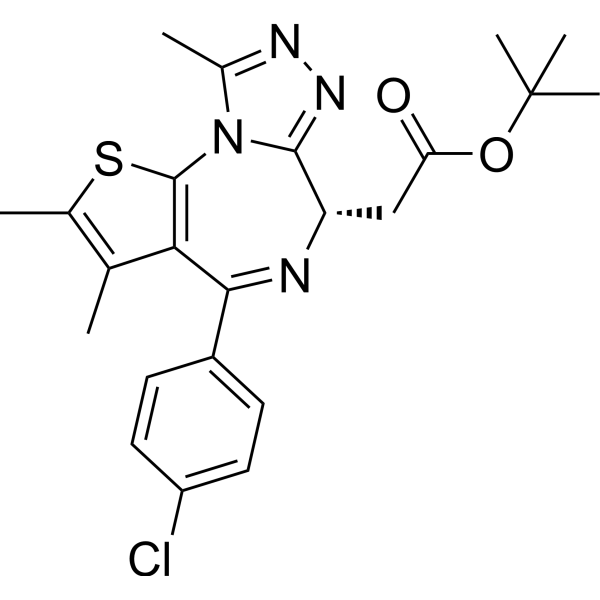
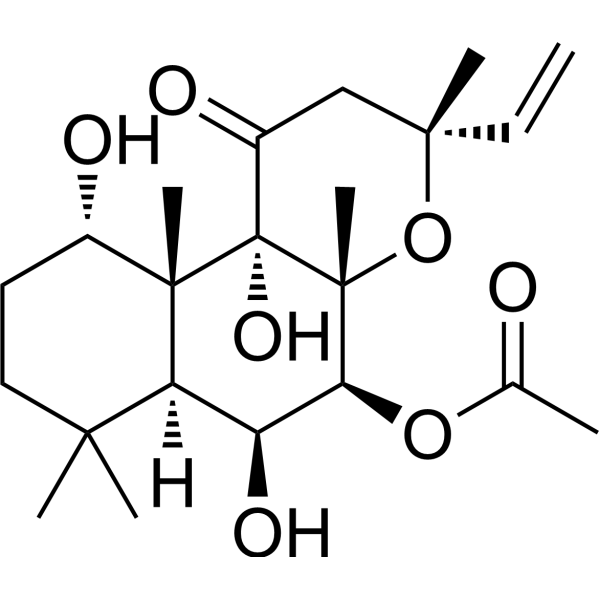
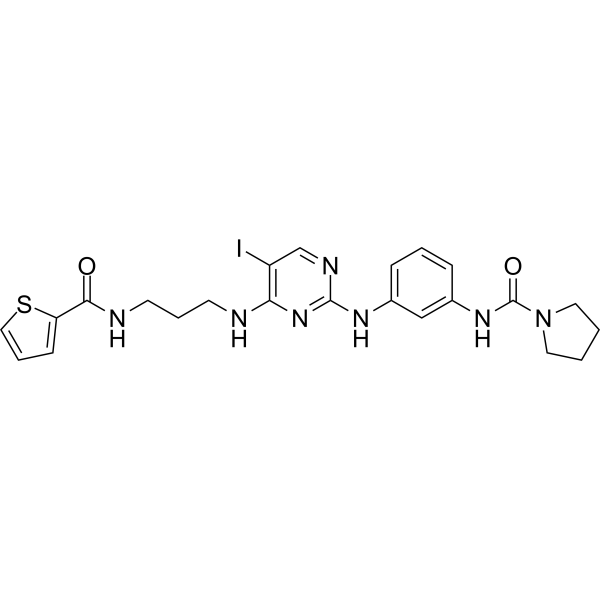
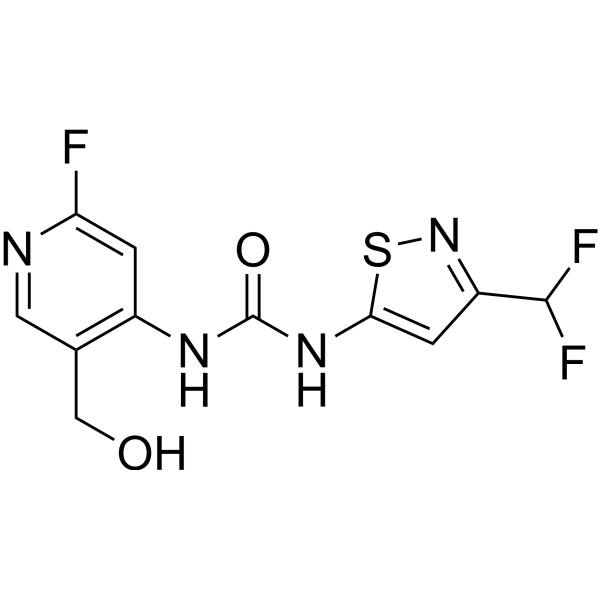
1. Search Result
Search Result
Results for "

4-(1

" in MedChemExpress (MCE) Product Catalog:

1971

Inhibitors & Agonists

3

Screening Libraries

7

Fluorescent Dyes

54

Biochemical Assay Reagents

74

Peptides

34

Inhibitory Antibodies

117

Natural
Products

97

Recombinant Proteins

192

Isotope-Labeled Compounds

105

Antibodies

12

Click Chemistry

63

Oligonucleotides

1

GMP Molecules

Cat. No. Product Name Target Research Areas Chemical Structure
  • HY-W053709A

    (4-(1,2,4,5-Tetrazin-3-yl)phenyl)methanamine (monohydrochloride); Tetrazine-NH2 monohydrochloride

    Biochemical Assay Reagents Cancer
    Tetrazine-Amine monohydrochloride is the monohydrochloride form of Tetrazine-Amine (HY-W053709). Tetrazine-amine is a Tetrazine linker that can be used to covalently label living cells by cycloaddition . Tetrazine-Amine (monohydrochloride) is a click chemistry reagent, it contains a Tetrazine group that can undergo an inverse electron demand Diels-Alder reaction (iEDDA) with molecules containing TCO groups.
    Tetrazine-Amine monohydrochloride
  • HY-125809

    Biochemical Assay Reagents Others
    4-(1-Phenylethyl)resorcinol is a skin lightening agent used in cosmetics. It works by inhibiting the production of melanin, the pigment that gives skin its color. This helps reduce the appearance of dark spots, hyperpigmentation and uneven skin tone. 4-(1-Phenylethyl)resorcinol is considered safe for cosmetic use and is approved for use in several countries.
    4-(1-Phenylethyl)resorcinol
  • HY-148755

    Lipase Cancer
    ERX-41 is an orally active and stereospecific small molecule targeting to lysosomal acid lipase A (LIPA). ERX-41 induces endoplasmic reticulum (ER) stress resulting in cell death, indicating a function independent of LIPA but dependent on its ER localization. ERX-41 involves in a targeted strategy for solid tumors .
    ERX-41
  • HY-P5275

    CG-Lipoxyn

    NF-κB Histone Demethylase Metabolic Disease
    Tripeptide-41 (CG-Lipoxyn) is a signal peptide. Tripeptide-41 activates the NF-kB signaling pathway, inhibits the expression of C/EBP and increases cAMP. Tripeptide-41 is an important intracellular signaling factor that causes lipolysis by promoting the hydrolysis of lipids into triglycerides. Tripeptide-41 can be used in cosmetics that targets fat accumulation .
    Tripeptide-41
  • HY-131165

    Antibiotic Bacterial Infection Cancer
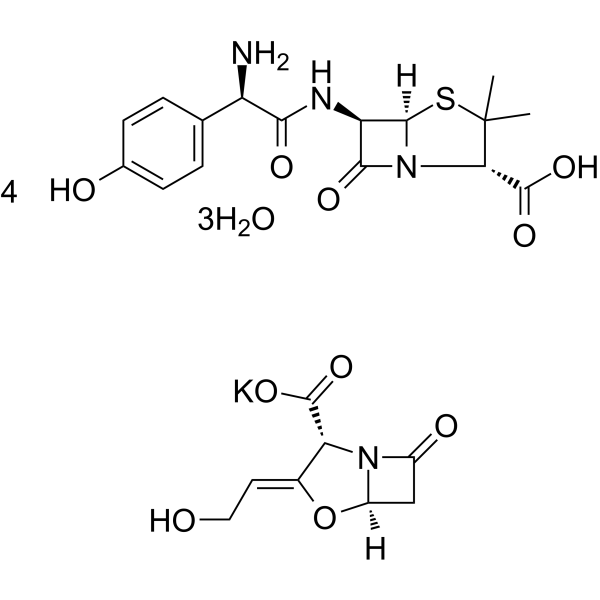
    Amoxicillin (trihydrate) mixture with potassium clavulanate (4:1) an antibiotic with good oral absorption and broad spectrum antimicrobial activity. Amoxicillin (trihydrate) mixture with potassium clavulanate (4:1) inhibits the biosynthesis of polypeptides in the cell wall, thereby inhibiting cell growth .
    Amoxicillin trihydrate mixture with potassium clavulanate (4:1)
  • HY-149258

    Necroptosis RIP kinase Mixed Lineage Kinase Inflammation/Immunology
    KWCN-41 is a selective and efficient inhibitor of RIPK1 kinase with an IC50 value of 88 nM. KWCN-41 specifically inhibits cell necrosis but does not inhibit apoptosis. KWCN-41 also has anti-inflammatory effects .
    KWCN-41
  • HY-155309

    YAP Cancer
    LM-41 is a Flufenamic acid-derived TEAD inhibitor hat strongly reduce the expression of CTGF, Cyr61, Axl and NF2. LM-41 inhibits migration of human MDA-MB-231 breast cancer cells .
    LM-41
  • HY-16967

    G-quadruplex Bcl-2 Family Ras Caspase Cancer
    MM41 is a quadruplex-interacting compound. MM41 binds tightly to quadruplexes encoded in the promoter sequences of the BCL-2 and k-RAS genes. MM41 reduces BCL-2 and k-RAS protein levels, increases caspase 3. MM41 has antitumor effects against pancreatic cancer .
    MM41
  • HY-W053709

    (4-(1,2,4,5-Tetrazin-3-yl)phenyl)methanamine; Tetrazine-NH2

    MOFs Cancer
    Tetrazine-Amine ((4-(1,2,4,5-Tetrazin-3-yl)phenyl)methanamine) is a tetrazine linker that can be used to covalently label live cells through a cycloaddition . Tetrazine-Amine is a click chemistry reagent, it contains a Tetrazine group that can undergo an inverse electron demand Diels-Alder reaction (iEDDA) with molecules containing TCO groups.
    Tetrazine-Amine
  • HY-P10364

    UBI(29-41)

    Bacterial Antibiotic Infection Inflammation/Immunology
    Ubiquicidin (29-41) (UBI (29-41)) is an Antimicrobial peptide and infection-localizing agent. Ubiquicidin (29-41) acts as an infection-specific imaging agent and infection-targeting agent. Ubiquicidin (29-41) serves as an antibiotic efficacy monitoring agent, and its aggregation level in infections induced by Staphylococcus aureus is higher than that in infections induced by Escherichia coli .
    Ubiquicidin(29-41)
  • HY-100029A
    Bay 41-4109 racemate
    2 Publications Verification

    HBV Infection
    BAY 41-4109 racemate is the racemate of BAY 41-4109. BAY 41-4109 is a potent inhibitor of human hepatitis B virus (HBV) with an IC50 of 53 nM.
    Bay 41-4109 racemate
  • HY-I0459

    Drug Intermediate Others
    Apixaban impurity 41 is an impurity of Apixaban (HY-50667).
    Apixaban impurity 41
  • HY-W024904

    PROTAC Linkers Cancer
    4-(1-Boc-4-piperidyl)phenylboronic acid pinacol ester is a PROTAC linker that can be used in the synthesis of PROTACs.
    4-(1-Boc-4-piperidyl)phenylboronic acid pinacol ester
  • HY-P5258

    EGFR Metabolic Disease
    Oligopeptide-41 is a bioactive peptide with promotion of hair growth effect and has been reported used as a cosmetic ingredient .
    Oligopeptide-41
  • HY-W075276

    MOFs Others
    4-((1H-Pyrazol-1-yl)methyl)benzoic acid (4-(1H-pyrazol-1-ylmethyl)benzoic acid) is a metal-organic framework (MOF).
    4-(1H-Pyrazol-1-ylmethyl)benzoic acid
  • HY-W041241

    PROTAC Linkers Cancer
    4-(1-(tert-Butoxycarbonyl)piperidin-4-yl)benzoic acid is a PROTAC linker that can be used in the synthesis of PROTACs.
    4-(1-(tert-Butoxycarbonyl)piperidin-4-yl)benzoic acid
  • HY-W075285

    MOFs Others
    4-(1,2,2-Triphenylvinyl)benzoic acid (4-(1,2,2-triphenyl vinyl)benzoic acid) is a metal-organic framework (MOF).
    4-(1,2,2-Triphenylvinyl)benzoic acid
  • HY-W015462

    4-(1H-Imidazol-1-yl)aniline

    HSV Infection
    LANA-IN-1 (compound 8) is an N-acetyl-derived LANA inhibitor with antiviral activity against herpesvirus. In fluorescence assays using the LANA probe LBS2, 1 mM LANA-IN-1 shows an inhibition rate of 32%. LANA-IN-1 may inhibit the interaction between LANA and the viral genome .
    LANA-IN-1
  • HY-180183

    Epigenetic Reader Domain Cancer
    DLG-41 is a GAS41 YEATS domain inhibitor (IC50: 600 nM in AlphaLISA). DLG-41 potently disrupts the association of GAS41 YEATS with chromatin in cells. DLG-41 strongly enhances levels of CDKN1A. DLG-41 has anticancer activity against NSCLC .
    DLG-41
  • HY-165624

    Drug Derivative 5-HT Receptor Neurological Disease
    LY-41 is a 2-aminotetralin (HY-W022362) derivative related to 8-OH-DPAT (HY-112061). LY-41 decreases 5-HT synthesis. LY-41 induces 5-HT motor syndrome. (R)-LY-41 and (S)-LY-41 are novel 5-HT1A receptor agonists .
    LY-41
  • HY-165624B

    Drug Isomer Drug Derivative 5-HT Receptor Neurological Disease
    (R)-LY-41, R-enantiomer of LY-41 (HY-165624), is 2-Sminotetralin (HY-W022362) derivative and 8-OH-DPAT (HY-112061) analogue. (R)-LY-41 is a potent and selective 5-HT1A receptor agonist. (R)-LY-41 can reduce the accumulation of 5-hydroxytryptophan (the precursor for 5-HT synthesis) in the rat brain induced by decarboxylase inhibitors (NSD 1015). (R)-LY-41 can lower the body temperature of rats and inhibit the escape response from the cage. (R)-LY-41 can induce the 5-HT behavioral syndrome but is weaker than (S)-LY-41 (HY-165624A). (R)-LY-41 can be used for the research of neurological disease, such as depression and anxiety .
    (R)-LY-41
  • HY-165624A

    Drug Isomer Drug Derivative 5-HT Receptor Neurological Disease
    (S)-LY-41, R-enantiomer of LY-41 (HY-165624), is 2-Sminotetralin (HY-W022362) derivative and 8-OH-DPAT (HY-112061) analogue. (S)-LY-41 is a potent and selective 5-HT1A receptor agonist. (S)-LY-41 can reduce the accumulation of 5-hydroxytryptophan (the precursor for 5-HT synthesis) in the rat brain induced by decarboxylase inhibitors (NSD 1015). (S)-LY-41 can lower the body temperature of rats and inhibit the escape response from the cage. (S)-LY-41 can induce the 5-HT behavioral syndrome. (S)-LY-41can be used for the research of neurological disease, such as depression and anxiety .
    (S)-LY-41
  • HY-173329

    Ras Cancer
    KRAS-IN-41 is an inhibitor of KRAS with IC50 values of <0.01 μM for KRAS G12D and KRAS G12V. KRAS-IN-41 inhibits RAS mutant cell lines, GP2D (KRAS-G12D) and SW620 (KRAS-G12V). KRAS-IN-41 can be used in cancer research .
    KRAS-IN-41
  • HY-174239

    SHP2 Cancer
    SHP2-IN-41 (Compound 4) is a SHP2 inhibitor with an IC50 of less than 0.1 μM. SHP2-IN-41 has an IC50 against KYSE-520 cells also less than 0.1 μM. SHP2-IN-41 can be used in the study of cancer .
    SHP2-IN-41
  • HY-147840

    HDAC Cancer
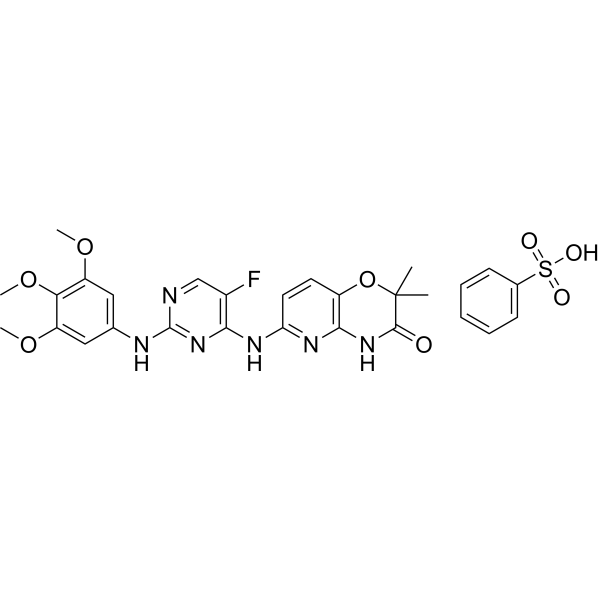
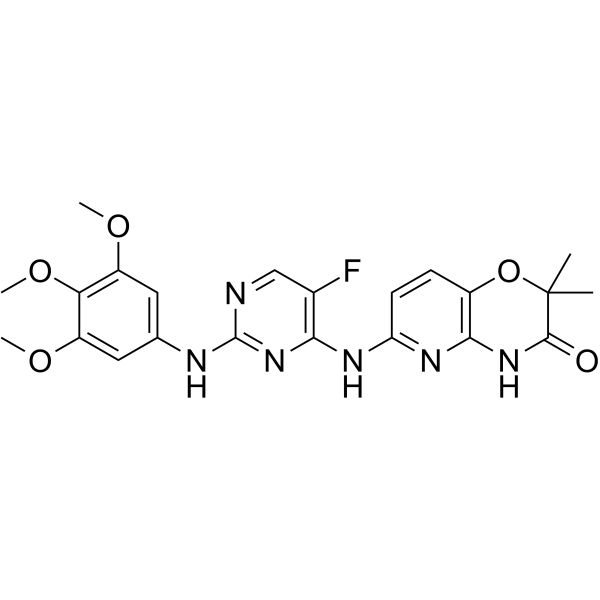
    HDAC-IN-41 (Compound 7c) is a selective, orally active class I HDAC inhibitor with IC50 values of 0.62, 1.46 and 0.62 μM against HDAC1, HDAC2 and HDAC3, respectively. HDAC-IN-41 shows NO releasing activity .
    HDAC-IN-41
  • HY-W111467S

    Eicosyl bromide-d41

    Isotope-Labeled Compounds Others
    1-Bromoeicosane-d41 is the deuterium labeled 1-Bromoicosane .
    1-Bromoeicosane-d41
  • HY-180482

    Drug Metabolite Others
    41-O-Demethylrapamycin is a metabolite of Rapamycin (HY-10219) produced by Bacillus megaterium .
    41-O-Demethylrapamycin
  • HY-W052191

    MOFs Others
    4-(1H-Imidazol-2-yl)pyridine is a metal-organic framework (MOF).
    4-(1H-Imidazol-2-yl)pyridine
  • HY-W118240

    PROTAC Linkers Cancer
    (4-(((1-(Tert-butoxycarbonyl)piperidin-4-yl)oxy)methyl)phenyl)boronic acid is a PROTAC linker that can be used in the synthesis of PROTACs.
    (4-(((1-(Tert-butoxycarbonyl)piperidin-4-yl)oxy)methyl)phenyl)boronic acid
  • HY-W112721

    4-(1H-Pyrazol-4-yl)-1H-pyrazole

    MOFs Others
    1H,1'H-4,4'-Bipyrazole (4-(1H-Pyrazol-4-yl)-1H-pyrazole) is a metal-organic framework (MOF).
    1H,1'H-4,4'-Bipyrazole
  • HY-78248

    Biochemical Assay Reagents Others
    4-(1H-Pyrazol-4-yl)-7-[[2-(trimethylsilyl)ethoxy]methyl]-7H-pyrrolo[2,3-d]pyrimidine is a biochemical reagent that can be used as a biological material or organic compound for life science related research.
    4-(1H-Pyrazol-4-yl)-7-[[2-(trimethylsilyl)ethoxy]methyl]-7H-pyrrolo[2,3-d]pyrimidine
  • HY-131165R

    Antibiotic Bacterial Reference Standards Infection Cancer
    Amoxicillin (trihydrate) mixture with potassium clavulanate (4:1) (Standard) is the analytical standard of Amoxicillin (trihydrate) mixture with potassium clavulanate (4:1). This product is intended for research and analytical applications. Amoxicillin (trihydrate) mixture with potassium clavulanate (4:1) an antibiotic with good oral absorption and broad spectrum antimicrobial activity. Amoxicillin (trihydrate) mixture with potassium clavulanate (4:1) inhibits the biosynthesis of polypeptides in the cell wall, thereby inhibiting cell growth .
    Amoxicillin trihydrate mixture with potassium clavulanate (4:1) (Standard)
  • HY-136943

    Antibiotic Parasite Bacterial Infection
    K-41 is an orally active antibiotic. K-41 can be obtained from Streptomyces hygroscopicus. K-41 has antibacterial and antiplasmodial activity .
    K-41
  • HY-P5682

    Bacterial Infection
    Maximin 41 is an antimicrobial peptide. Maximin 41 has antibacterial activity against S. aureus (MIC: 75 μg/mL). Maximin 41 has hemolytic activities against human red cells .
    Maximin 41
  • HY-111298

    GABA Receptor Neurological Disease
    TG 41 is positive modulator of GABAA receptor. TG 41 enhances the binding both of GABA and of Flunitrazepam to rat cerebral cortical membranes .
    TG 41
  • HY-151439

    Fungal Infection
    Antifungal agent 41 (compound B01) is an antifungal agent. Antifungal agent 41 shows inhibitory effect on Candida albicans in virto and vivo. Antifungal agent 41 can be used for the research of invasive fungal infections .
    Antifungal agent 41
  • HY-124870

    HIV Infection
    N.41 is an antiviral agent. N.41 protects APOBEC3G (an antiviral factor) from HIV Vif protein-mediated degradation. N.41 inhibits the Vif-A3G interaction and increases cellular A3G levels and incorporation of A3G into virions, thereby attenuating virus infectivity in a Vif-dependent manner. N.41 inhibits HIV-1 viral replication in PBMCs (IC50: 8.4 μM) .
    N.41
  • HY-131051

    Reactive Oxygen Species (ROS) Bacterial Fungal Infection
    Antimicrobial agent-41 (Compound 19) is a thiazolidinedione derivative. Antimicrobial agent-41 exhibits excellent antioxidant activity (IC50 = 27.66 μg/mL). Antimicrobial agent-41 also exhibits antidiabetic activity (IC50 = 40.01 μg/mL). Antimicrobial agent-41 has antimicrobial activity again both bacterial and fungi .
    Antimicrobial agent-41
  • HY-156188

    Cholinesterase (ChE) Others
    AChE-IN-41 (Compound 2) is a compound of the Galantamine Memantine hybrid. AChE-IN-41 has the inhibition ability of cholinesterase. AChE-IN-41 shows higher plasma stability and comparable microsomal stability in vitro, while showing lower half-life and faster clearance in vivo .
    AChE-IN-41
  • HY-175567

    Apoptosis Reactive Oxygen Species (ROS) Cancer
    Apoptosis inducer 41 is an apoptosis inducer that induces apoptosis through the mitochondrial pathway. Apoptosis inducer 41 exhibits remarkable inhibitory effects against MCF-7 cells (IC50 = 6.2 μM). Apoptosis inducer 41 significantly arrests MCF-7 cells in the G2/M phase, increases ROS accumulation, induces mitochondrial membrane potential depolarization. Apoptosis inducer 41 can used for the study of breast cancer .
    Apoptosis inducer 41
  • HY-N12362

    Influenza Virus Infection
    Antiviral agent 41 (compound 5) is a diarylheptanoid isolated from Alpinia officinarum. Antiviral agent 41 exhibits potential antiviral activity against influenza virus in vitro .
    Antiviral agent 41
  • HY-176129

    Ligands for Target Protein for PROTAC Androgen Receptor Cancer
    AR ligand 41 is a PROTAC target protein ligand (Ligands for Target Protein for PROTACs). AR ligand 41 can be used for the synthesis of BWA-6047 (HY-176128) .
    AR ligand 41
  • HY-171131

    Btk Cancer
    BTK-IN-41 (Compound 47) is the inhibitor for BTK with an IC50 of 5.4 nM. BTK-IN-41 inhibits the diffuse large B cell lymphoma cell TDM-8 with IC50 of 13.8 nM .
    BTK-IN-41
  • HY-163765

    PI4K Potassium Channel Infection
    Antimalarial agent 41 (Compound 17) exhibits antimalarial activity, which inhibits Plasmodium falciparum with an IC50 of 40 nM (NF54 strain) and 76 nM (K1 strain). Antimalarial agent 41 is an inhibitor for P. falciparum phosphatidylinositol-4-kinase β (Pf PI4K) and hERG channel, with an IC50 of 53 nM and 3 μM. Antimalarial agent 41 exhibits cytotoxicity to CHO cells with an IC50 of 34 μM. Antimalarial agent 41 ameliorates the malaria infection and exhibits good pharmacokinetic characters in mouse models .
    Antimalarial agent 41
  • HY-174381

    Cholinesterase (ChE) Amyloid-β Tau Protein Neurological Disease
    BChE-IN-41 is a highly selective Butyrylcholinesterase (BChE) inhibitor (IC50 =12 nM, Ki = 6.6 nM). BChE-IN-41 has high brain penetration with a brain-to-plasma ratio of 9.0. BChE-IN-41 has pro-cognitive effects on mice with AD-like symptoms induced by Scopolamine (HY-N0296) and Aβ1-42 .
    BChE-IN-41
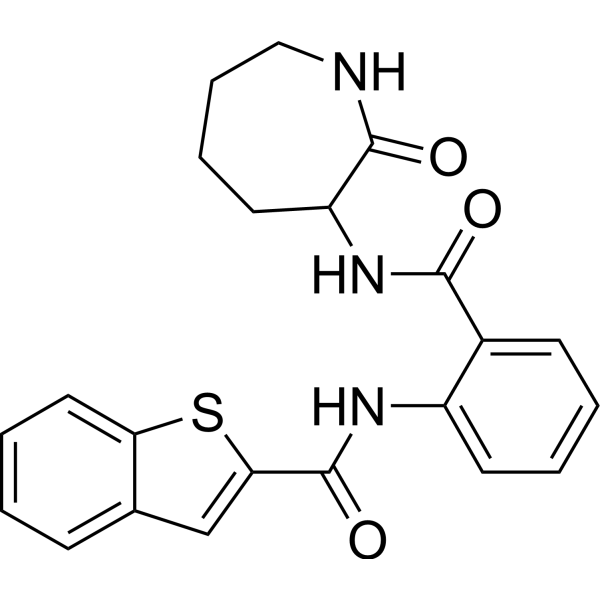
  • HY-162326

    VEGFR Apoptosis Cancer
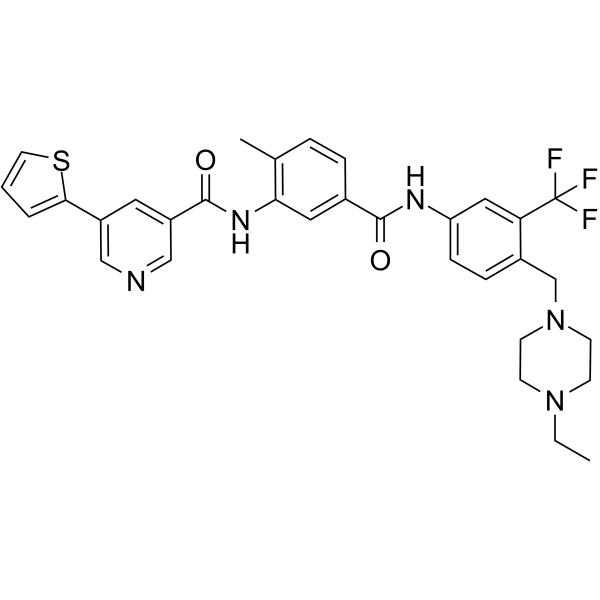
    VEGFR-2 IN-41 (Compound 8) is a VEGFR-2 inhibitor with an IC50 of 0.0554 μM. VEGFR-2 IN-41 can induce apoptosis. VEGFR-2-IN-41 has antitumor activity .
    VEGFR-2-IN-41
  • HY-168903

    STAT Cancer
    STAT3-IN-41 (Compound 16) is a prodrug of compound 1. STAT3-IN-41 slowly releases compound 1 inhibiting STAT3 signaling pathway. STAT3-IN-41 shows antitumor activity against lung cancer, hepatocellular carcinoma and pancreatic cancer .
    STAT3-IN-41
  • HY-117637

    Oxytocin Receptor Neurological Disease
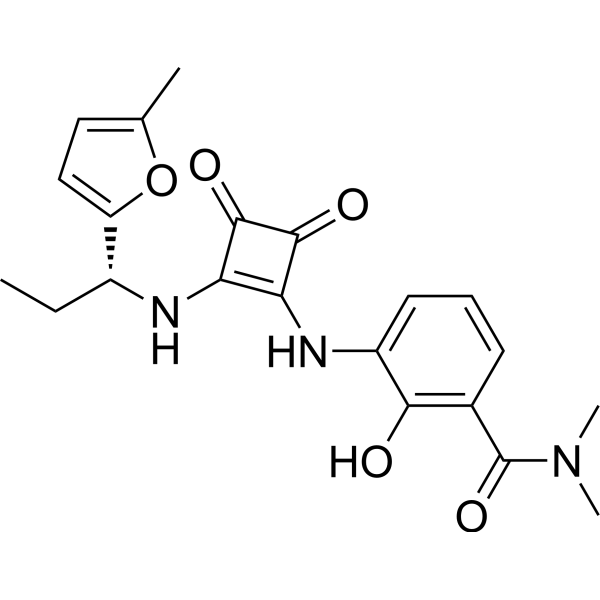
    ALS-I-41 is a novel, potent and selective oxytocin receptor antagonist with the potential to modulate biological activities related to social behavior and mental disorders. ALS-I-41 is being evaluated for behavioral pharmacology experiments in non-human primates and can be administered via intranasal or intramuscular injection. The central nervous system penetration and metabolic rate of ALS-I-41 were studied by mass spectrometry analysis in cerebrospinal fluid and plasma of macaque monkeys .
    ALS-I-41
  • HY-100029AR

    Reference Standards HBV Infection
    Bay 41-4109 (racemate) (Standard) is the analytical standard of Bay 41-4109 (racemate). This product is intended for research and analytical applications. BAY 41-4109 racemate is the racemate of BAY 41-4109. BAY 41-4109 is a potent inhibitor of human hepatitis B virus (HBV) with an IC50 of 53 nM.
    Bay 41-4109 racemate (Standard)
  • HY-144125

    Apoptosis Cancer
    Antitumor agent-41 (compound N-12), a potent antitumor agent, enhibits excellent antimigration and anti-invasion activity. Antitumor agent-41 (compound N-12) induces tumor inhibition via tumor necrosis and inflammatory response .
    Antitumor agent-41

Inquiry Online

Your information is safe with us. * Required Fields.

Salutation


Country or Region *

Applicant Name *


Organization Name *

Department *


Email Address *


Product Name *

Cat. No.


Requested quantity *

Phone Number *


Remarks

Inquiry Online

Inquiry Information

Product Name:
Cat. No.:
Quantity:
MCE Japan Authorized Agent:

