



Amikacin
Based on 30 publication(s) in Google Scholar
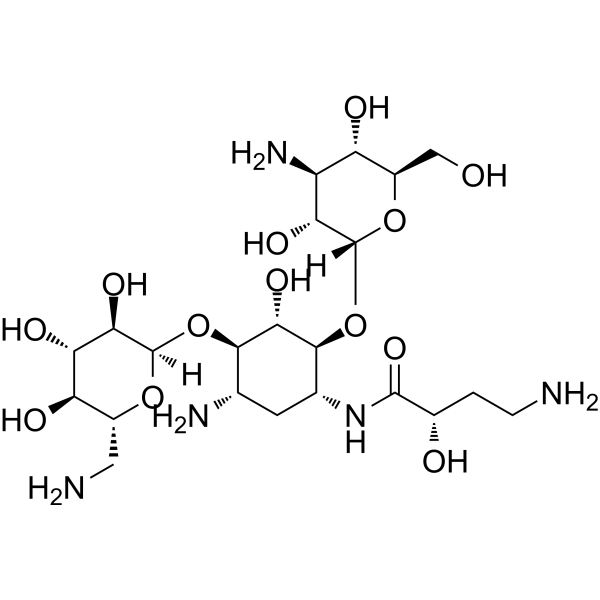
Amikacin (BAY 41-6551) is a semisynthetic kanamycin analog that is active against most Gram-negative bacteria, including gentamicin- and tobramycin-resistant strains. Significant inhibitory effect. Amikacin is ototoxic and nephrotoxic. Amikacin can be used in bacteriostatic, anti-cancer and analgesic studies.
For research use only. We do not sell to patients.
- Purity : 99.92%
- CAS No.: 37517-28-5
- Formula: C22H43N5O13
- Molecular Weight:585.60
-
Storage:
4°C, sealed storage, away from moisture
* In solvent : -80°C, 6 months; -20°C, 1 month (sealed storage, away from moisture)

To place orders, for customer services and technical support, please contact: MedChemExpress USA
Tel: 609-228-6898 E-mail: [email protected] [email protected]


-
 Biological Activity
-
Chemical Information
-
Solvent & Solubility
- Protocols
- Purity & Documentation
- References
-
 Help & FAQs


-
HY-B0441
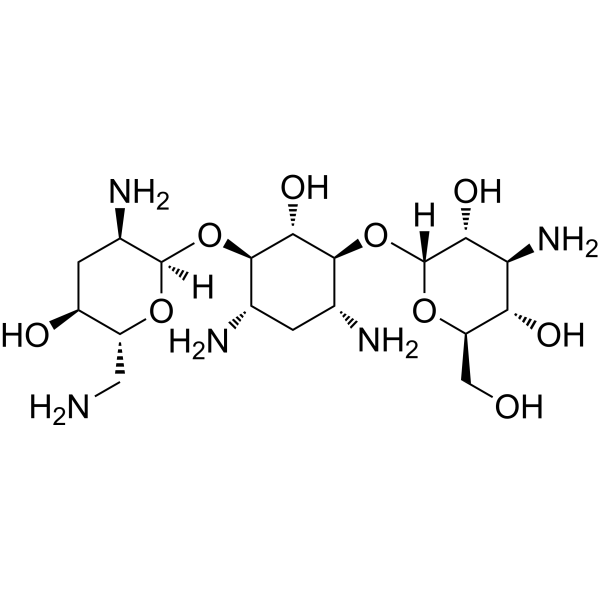
TobramycinBacterial Inhibitor -
HY-13678
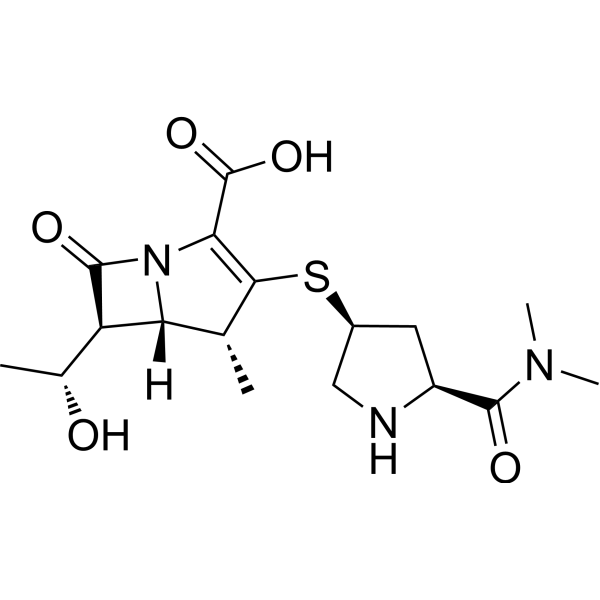
MeropenemAntimicrobial Agent -
HY-B0330
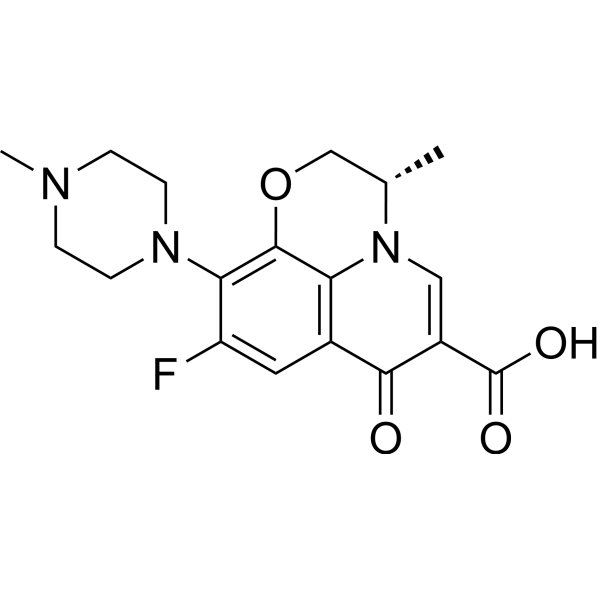
LevofloxacinDNA Gyrase/Topoisomerase Inhibitor -
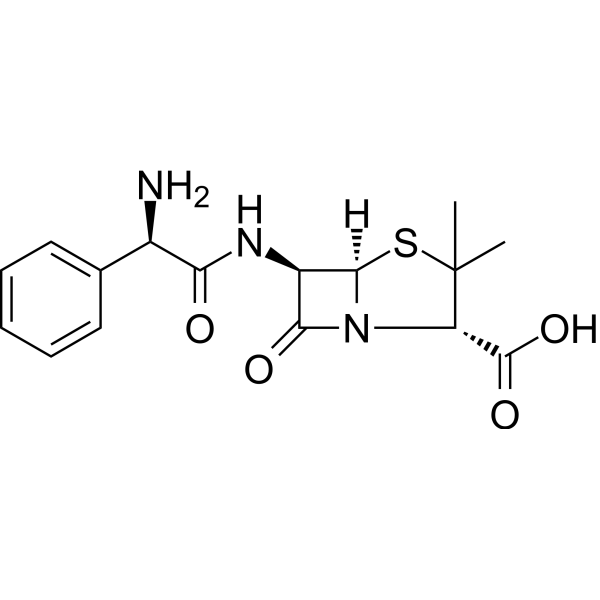
HY-B0522
AmpicillinBacterial Inhibitor -
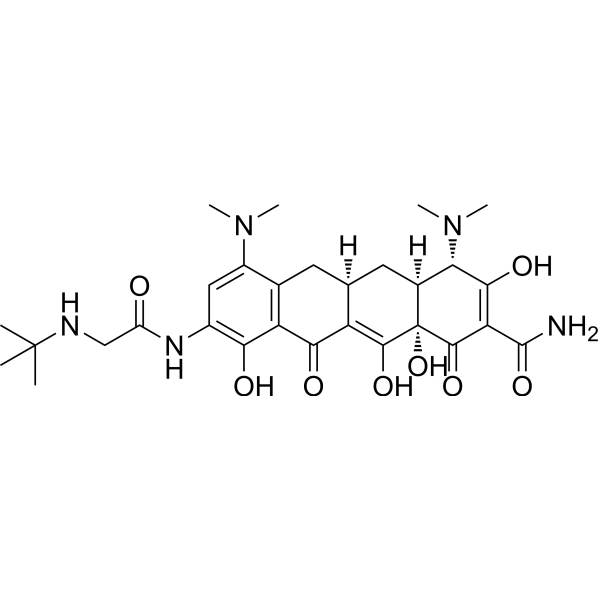
HY-B0117
TigecyclineBacterial Inhibitor -
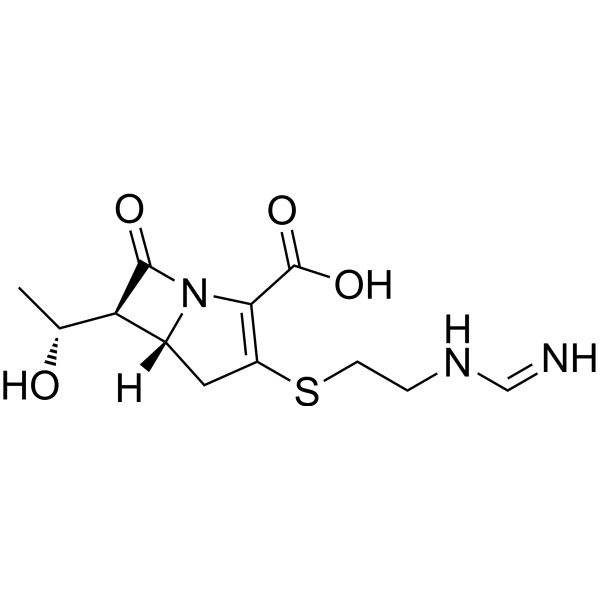
HY-B1369A
ImipenemAntibiotic -

HY-149179
Polymyxin BAntibiotic -
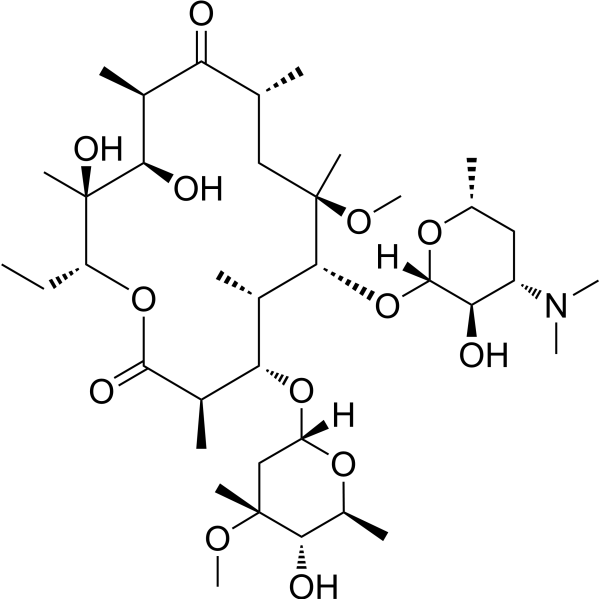
HY-17508
ClarithromycinAntimicrobial Agent -
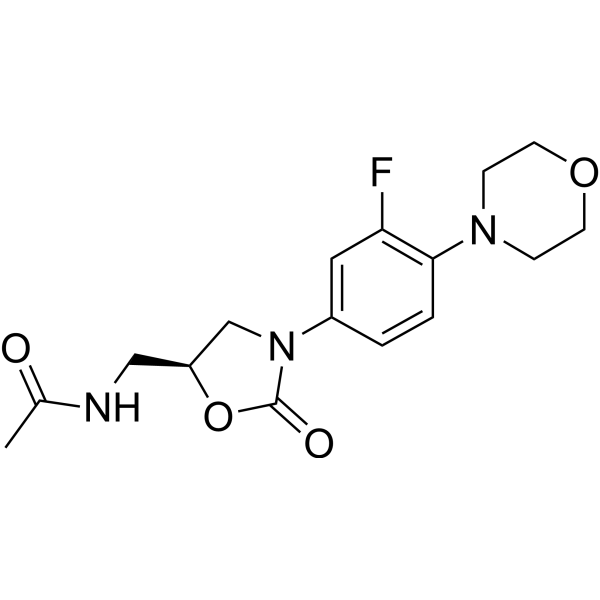
HY-10394
LinezolidAntibiotic -
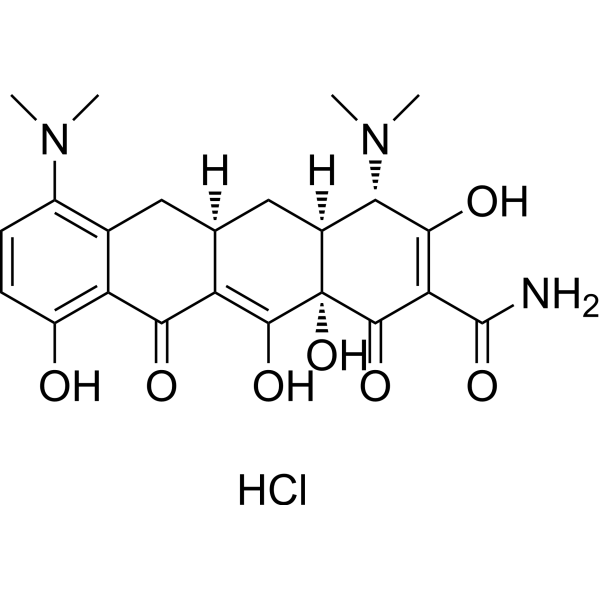
HY-17412
Minocycline hydrochlorideHIF-1α/Glutamate Inhibitor -
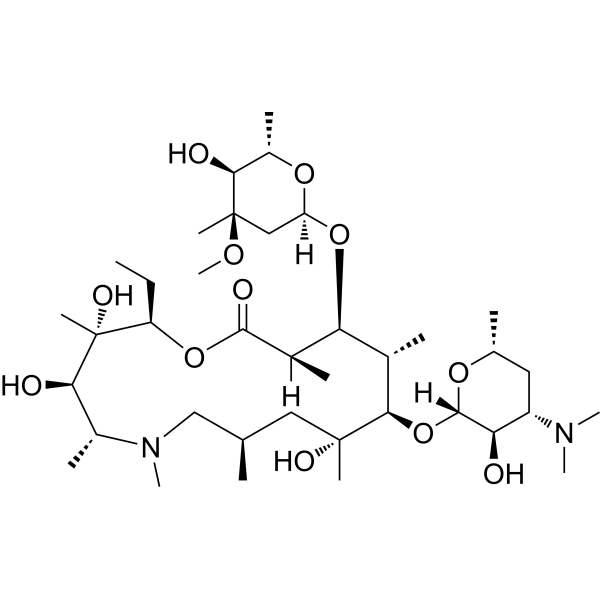
HY-17506
Azithromycin -
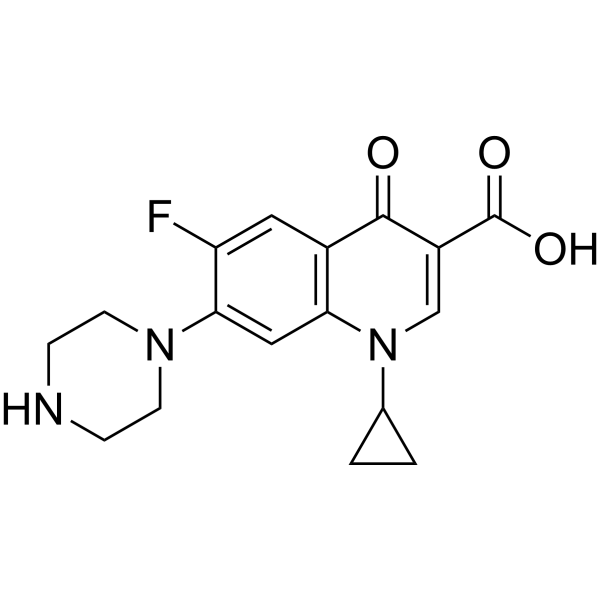
HY-B0356
CiprofloxacinTopoisomerase IV Inhibitor
Publications Citing Use of MedChemExpress (MCE) Amikacin
More- Signal Transduct Target Ther. 2025 Dec 15;10(1):406. [Abstract]
- Nat Commun. 2022 Mar 2;13(1):1116. [Abstract]
- J Exp Clin Cancer Res. 2025 Nov 7;44(1):302. [Abstract]
- J Exp Med. 2026 Mar 2;223(3):e20241287. [Abstract]
- EBioMedicine. 2025 Jul:117:105776. [Abstract]
- J Clin Microbiol. 2025 Aug 20:e0084125. [Abstract]
- Commun Biol. 2025 Oct 6;8(1):1425. [Abstract]
- Antibiotics (Basel). 2021 Sep 14;10(9):1110. [Abstract]
- Int J Antimicrob Agents. 2025 Oct;66(4):107551. [Abstract]
- Int J Antimicrob Agents. 2018 Aug;52(2):269-271. [Abstract]
- Appl Microbiol Biotechnol. 2022 Apr;106(7):2689-2702. [Abstract]
- ACS Infect Dis. 2024 Apr 12;10(4):1327-1338. [Abstract]
- Antimicrob Agents Chemother. 2025 Jul 2;69(7):e0024925. [Abstract]
- Antimicrob Agents Chemother. 2024 Dec 5;68(12):e0094524. [Abstract]
- J Antimicrob Chemother. 2026 Jun 3;81(7):dkag204. [Abstract]
- Microbiol Spectr. 2026 Mar 30;14(5):e0147325. [Abstract]
- Microbiol Spectr. 2025 Jul;13(7):e0307424. [Abstract]
- J Antimicrob Chemother. 2020 Sep 1;75(9):2609-2615. [Abstract]
- J Antimicrob Chemother. 2020 Jul 1;75(7):1850-1858. [Abstract]
- AMB Express. 2024 Dec 24;14(1):141. [Abstract]
- Pathogens. 2025 Mar 21;14(4):302. [Abstract]
- ACS Chem Biol. 2022 Jan 21;17(1):39-53. [Abstract]
- Infect Drug Resist. 2026 May 8;19.
- Eur J Clin Microbiol Infect Dis. 2025 Sep 29. [Abstract]
- Eur J Clin Microbiol Infect Dis. 2025 Jun;44(6):1493-1500. [Abstract]
- Curr Microbiol. 2021 Dec 14;79(1):12. [Abstract]
- Int J Med Microbiol. 2023 Mar 28;313(2):151578. [Abstract]
- Authorea. 2025 Sep 17.
- bioRxiv. 2025 May 30.
- bioRxiv. 2024 May 10.
 Customer Validation & Images

-
Microbiological Assay

-
Microbiological Assay

-
Microbiological Assay

All Antibiotic Isoforms
More

Biological Activity
Description
IC50 & Target
|
Aminoglycoside |
TXNIP |
Cellular Effect
|
Cell Line

|
Type | Value | Description | References |
|---|---|---|---|---|
| BMDM | CC50 |
>90 μg/mL
Compound: AMK
|
Cytotoxicity against mouse BMDM cells
Cytotoxicity against mouse BMDM cells
|
[PMID: 35307568] |
| Vero | IC50 |
>6.25 μg/mL
Compound: Amikacin
|
Cytotoxicity against monkey Vero cells assessed as decrease in cell viability after 72 hrs by MTT assay
Cytotoxicity against monkey Vero cells assessed as decrease in cell viability after 72 hrs by MTT assay
|
[PMID: 28552337] |
| Vero | IC50 |
>62.5 μg/mL
Compound: Amikacin
|
Cytotoxicity against african green monkey Vero cells after 72 hrs by MTT assay
Cytotoxicity against african green monkey Vero cells after 72 hrs by MTT assay
|
[PMID: 23352268] |
In Vitro
Amikacin (30 µg, 0-24 h) has antibacterial activity, with a MIC50 value of 512 µg/mL against clinically isolated E. coli, and has a synergistic effect with imipenem (HY-B1369A), and the antibacterial effect is better when used in combination[1].
Amikacin (250 µg/mL, 0-24 h) inhibits the migration and invasion of human breast cancer cell line MDA-MB-231 cells by up-regulating the expression of TXNIP, indicating its anti-tumor potential[2].
MedChemExpress (MCE) has not independently confirmed the accuracy of these methods. They are for reference only. Further protocols information, click here.
-
Cell Line:human breast cancer cell line MDA-MB-231 cells
-
Concentration:250 µg/mL
-
Incubation Time:0-24 h
-
Result:Upregulated the expression of TXNIP to 4.87 times.
In Vivo
Amikacin (500 mg/kg/day for 8 days, s.c.) damages calpain activity in rat cochlea, promotes the degradation of sensory cells and neurons, and then leads to ototoxicity[4].
Amikacin (100 and 500 mg/kg/day for 10 days, s.c.) is nephrotoxic and its continued accumulation in rats can lead to kidney damage[5].
Pharmacokinetic Analysis in SD rats[5]
| Route | Dose (mg/kg) | Ka (h-1) | Ke1 (h-1) | t1/2 (h) | V (liter/kg) | AUC0-∞ (mg·h/mL) |
| s.c. | 100 | 1.20 | 6.77 | 0.10 | 0.28 | 53.0 |
| s.c. | 500 | 1.40 | 1.39 | 0.50 | 0.55 | 649.7 |