

Search Result
Results for "
5-HT releasers
" in MedChemExpress (MCE) Product Catalog:
5
Isotope-Labeled Compounds
| Cat. No. |
Product Name |
Target |
Research Areas |
Chemical Structure |
-
- HY-13409
-
SB 242084
Maximum Cited Publications
6 Publications Verification
|
5-HT Receptor
|
Neurological Disease
Metabolic Disease
|
|
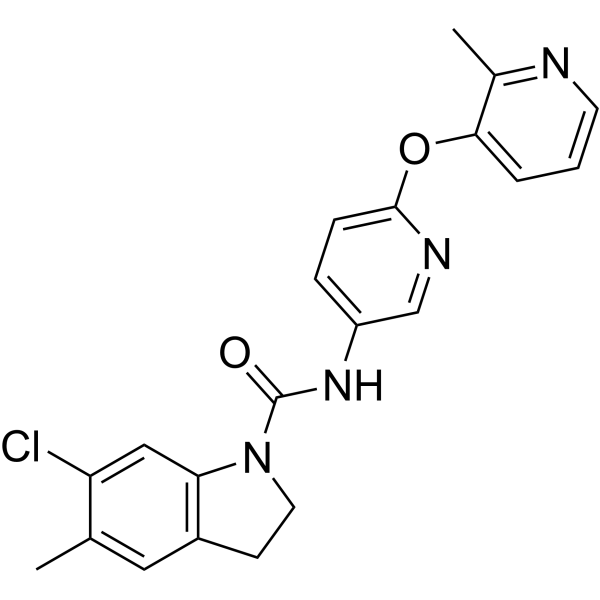
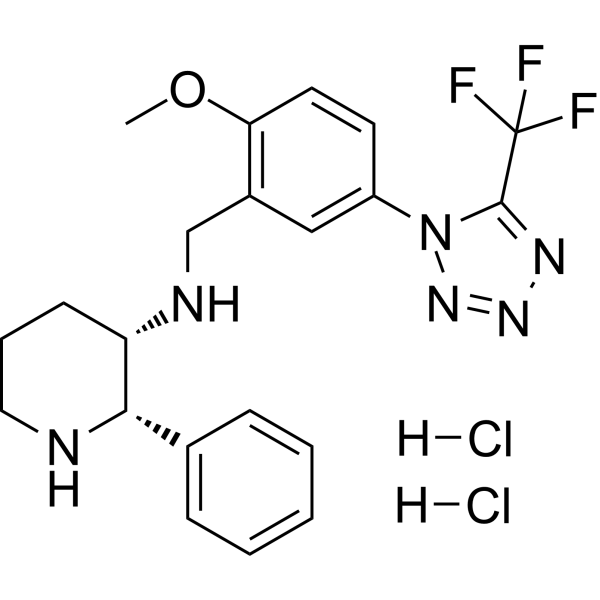
SB 242084 is a selective, competitive and high-affinity (pKi=9.0) 5-HT2C receptor antagonist (crosses the blood-brain barrier). SB 242084 increases basal activity of dopaminergic neurons in the ventral tegmental area (VTA) of the midbrain and dopamine release in the vomeronasal nucleus. SB 242084 also increases mitochondrial gene expression and oxidative metabolism via 5-HT2A receptor. SB 242084 has good research potential in the negative symptoms of anxiety, depression and schizophrenia, as well as in acute organ damage .
|
-
-
- HY-172420
-
|
GM-2505
|
5-HT Receptor
|
Neurological Disease
|
|
Bretisilocin (GM-2505) is the agonist for 5-HT2A receptor and a serotonin releaser. Bretisilocin exhibits antidepressant activity and can be used in the study of depression .
|
-
-
- HY-B0383
-
|
PNU180638
|
5-HT Receptor
|
Neurological Disease
|
|
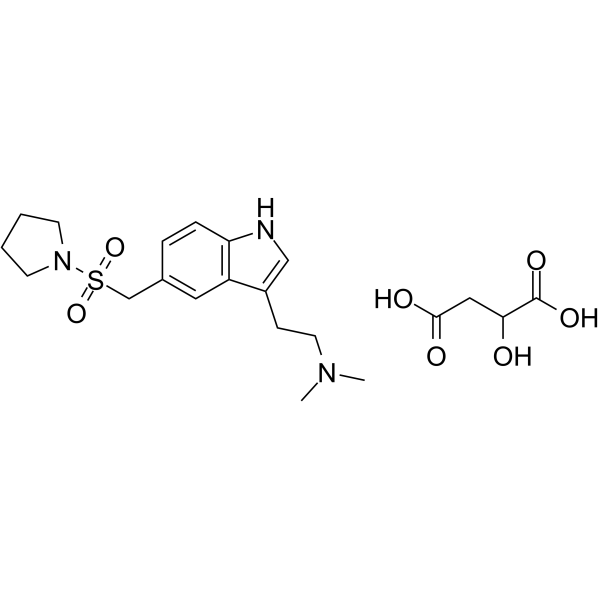
Almotriptan malate (PNU180638) is an orally active, highly selective agonist of the 5-HT1B/1D receptor (5-HT1B/1D receptor), with EC50 values of 1.6 nM and 3.1 nM, respectively. Almotriptan malate shows moderate affinity for the 5-HT1F receptor, and weak affinity for the 5-HT1A, 5-HT6 and 5-HT7 receptors. Almotriptan malate induces intracranial vasoconstriction, inhibits nociceptive neurotransmission in the trigeminocervical complex, and suppresses the release of vasoactive peptides from trigeminal nerve endings. Almotriptan malate can be used in research related to migraine .
|
-
-
- HY-100656
-
|
|
Dopamine Receptor
5-HT Receptor
|
Neurological Disease
|
|
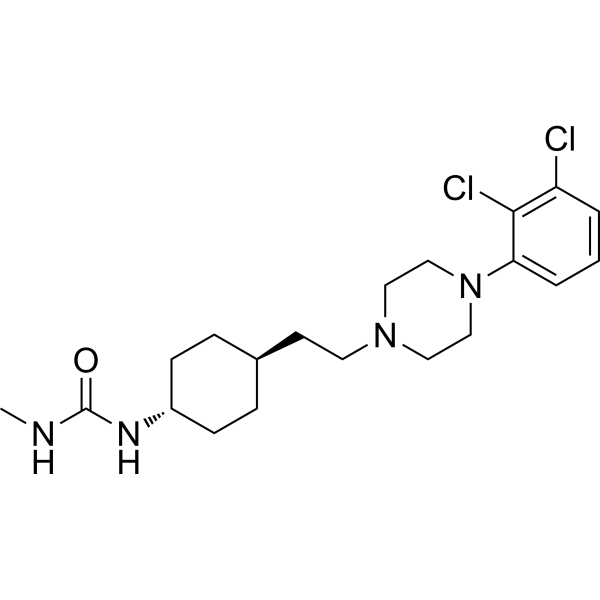
Desmethyl cariprazine is a major active metabolite of cariprazine, with activities at human dopamine receptors and serotonin receptors, showing a pEC50 of 8.90 at human D2 receptors, a pEC50 of 8.09 at D3 receptors, and a pEC50 of 6.28 at 5-HT1A receptors. Desmethyl cariprazine inhibits forskolin-induced cAMP production at D2, D3 and 5-HT1A receptors, and suppresses serotonin-induced Ca 2+ release at 5-HT2B receptors. Desmethyl cariprazine is applicable to research related to schizophrenia, bipolar disorder type I and bipolar disorder.
|
-
-
- HY-P1422
-
Spadin
1 Publications Verification
|
Potassium Channel
5-HT Receptor
|
Neurological Disease
|
|
Spadin, a natural peptide derived from a propeptide released in blood, is a potent TREK-1 channel blocker with IC50 value of 10 nM. Spadin enhances dorsal raphe nucleus 5-HT neurotransmission in mice and induces hippocampal CREB activation and neurogenesis. Spadin can be used for antidepressant research .
|
-
-
- HY-13409A
-
|
|
5-HT Receptor
|
Neurological Disease
Metabolic Disease
|
|
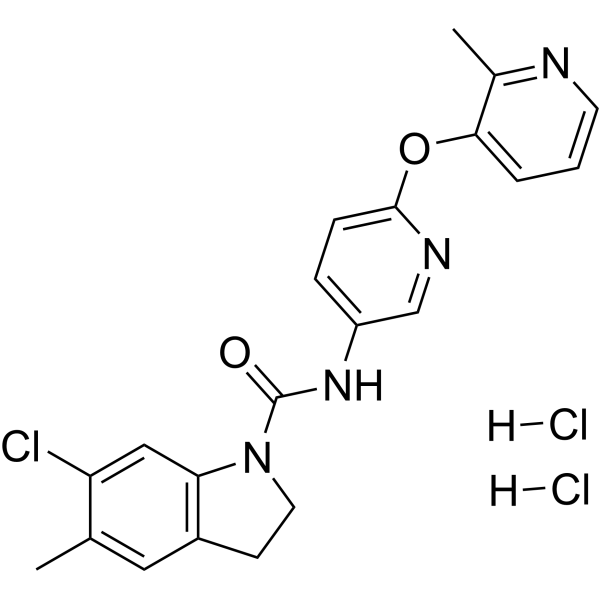
SB 242084 dihydrochloride is a selective, competitive and high-affinity (pKi=9.0) 5-HT2C receptor antagonist (crosses the blood-brain barrier). SB 242084 dihydrochloride increases basal activity of dopaminergic neurons in the ventral tegmental area (VTA) of the midbrain and dopamine release in the vomeronasal nucleus. SB 242084 dihydrochloride also increases mitochondrial gene expression and oxidative metabolism via 5-HT2A receptor. SB 242084 dihydrochloride has good research potential in the negative symptoms of anxiety, depression and schizophrenia, as well as in acute organ damage .
|
-
-
- HY-15472
-
|
|
5-HT Receptor
p38 MAPK
TGF-β Receptor
FGFR
Apoptosis
Caspase
|
Cardiovascular Disease
Neurological Disease
Cancer
|
|
PRX-08066 is a selective and orally active 5-hydroxytryptamine receptor 2B (5-HT2BR) antagonist with a Ki of 3.4 nM. PRX-08066 inhibits the MAPK pathway, 5-HT release and fibrotic factor (TGFβ1, CTGF and FGF2) expression. PRX-08066 inhibits the proliferation of KRJ-I cells and induces apoptosis (caspase-3 activation). PRX-08066 inhibits pulmonary vascular remodeling. PRX-08066 can be used of pulmonary Arterial Hypertension (PAH) and neuroendocrine tumor (NET) .
|
-
-
- HY-B0383A
-
|
PNU180638 free base
|
5-HT Receptor
|
Neurological Disease
|
|
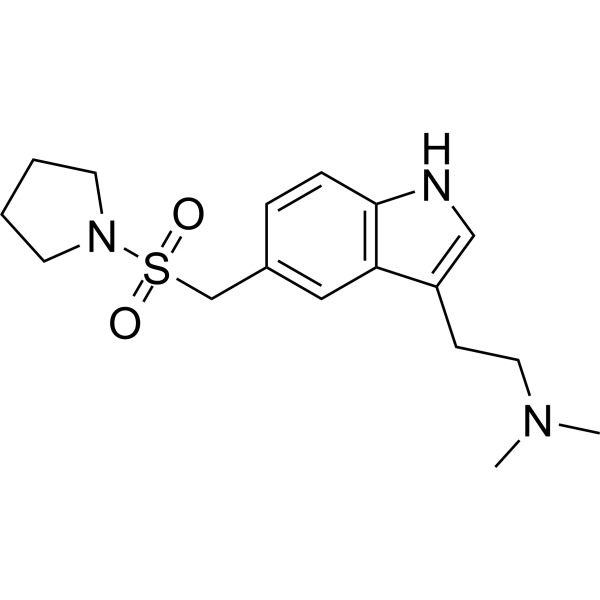
Almotriptan (PNU180638 free base) is an orally active, highly selective agonist of the 5-HT1B/1D receptor (5-HT1B/1D receptor), with EC50 values of 1.6 nM and 3.1 nM, respectively. Almotriptan shows moderate affinity for the 5-HT1F receptor, and weak affinity for the 5-HT1A, 5-HT6 and 5-HT7 receptors. Almotriptan induces intracranial vasoconstriction, inhibits nociceptive neurotransmission in the trigeminocervical complex, and suppresses the release of vasoactive peptides from trigeminal nerve endings. Almotriptan can be used in research related to migraine .
|
-
-
- HY-12143
-
|
GR 205171A
|
Neurokinin Receptor
|
Neurological Disease
|
|
Vofopitant dihydrochloride (GR 205171A) is a blood-brain barrier-permeable NK1 receptor inhibitor with a pKi of 9.02 in mice. Vofopitant dihydrochloride blocks vomiting-related responses and inhibits pseudoptyalism. Vofopitant dihydrochloride exerts anxiolytic effects, regulates 5-HT receptor function and increases central 5-HT release. Vofopitant dihydrochloride improves hyperarousal symptoms of post-traumatic stress disorder. Vofopitant dihydrochloride can be used in research related to depression, anxiety, vomiting and postoperative nausea and vomiting .
|
-
-
- HY-D2335
-
|
|
Fluorescent Dye
|
Neurological Disease
|
|
SERTlight is a fluorescent agent that can specifically label serotonergic neuronal cell bodies, dendrites, and axonal projections as fluorescent substrates of the serotonin transporter (SERT). SERTlight is orthogonal to various genetically encoded sensors in terms of optics, pharmacology, and operation, enabling multiple imaging. SERTlight allows the use of GRAB5HT sensors to label distal 5HT axonal projections and simultaneously image the release of endogenous 5HT, providing a new multifunctional molecular tool for studying serotonergic systems .
|
-
-
- HY-112390A
-
|
|
Syk
5-HT Receptor
|
Inflammation/Immunology
|
|
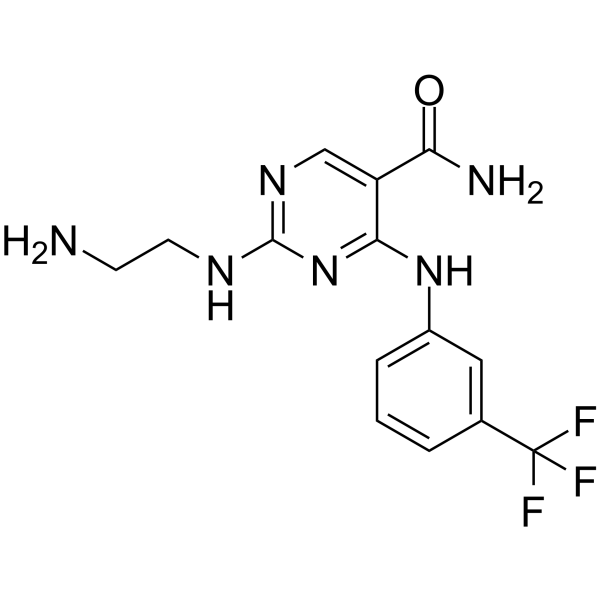
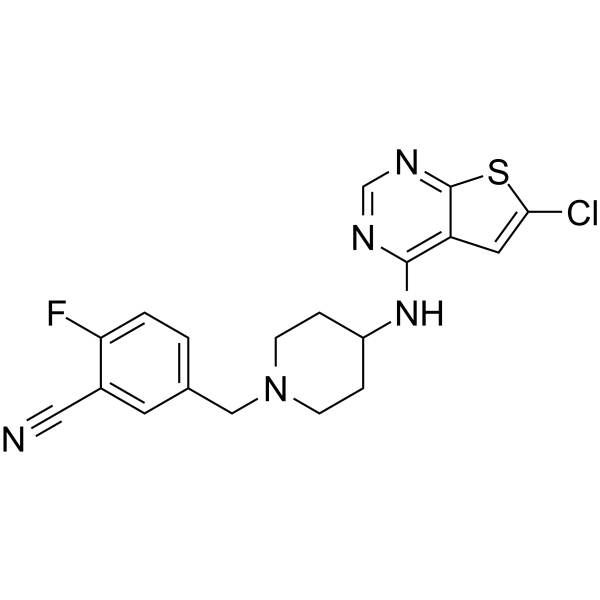
Syk Inhibitor II is a potent, high selective and ATP-competitive Syk inhibitor with an IC50 of 41 nM. Syk Inhibitor II inhibits 5-HT release from RBL-cells with an IC50 of 460 nM. Syk Inhibitor II shows less potent against other kinases and has anti-allergic effect .
|
-
-
- HY-106865
-
|
|
Dopamine Receptor
Adrenergic Receptor
|
Cardiovascular Disease
|
|
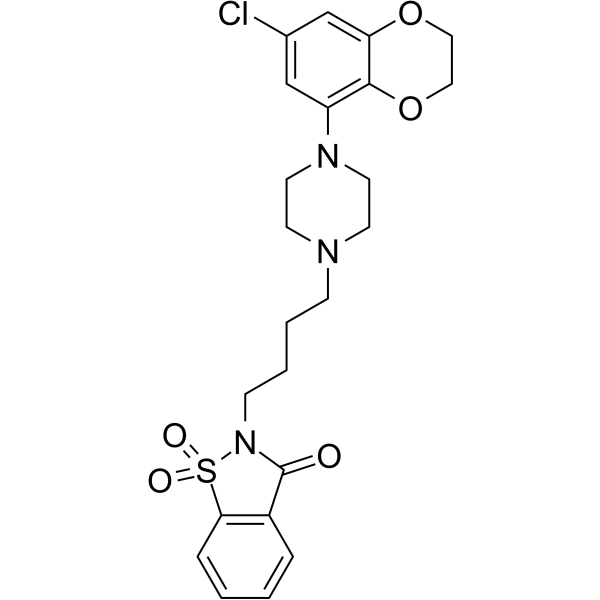
Mivazerol is a selective α2-adrenoceptor agonist. Mivazerol decreases the spontaneous release of serotonin (5-HT) and significantly inhibits the immobilization stress-induced enhancement of norepinephrine (NE), dopamine (DA) and dihydroxyphenylacetic acid (DOPAC). Mivazerol inhibits intrathecal release of glutamate evoked by halothane withdrawal in rats, and exerts neuroprotective effects in forebrain ischemia rats. Mivazerol can be used for myocardial ischemia research .
|
-
-
- HY-129101
-
|
Eseroline fumarate
|
5-HT Receptor
|
Neurological Disease
|
|
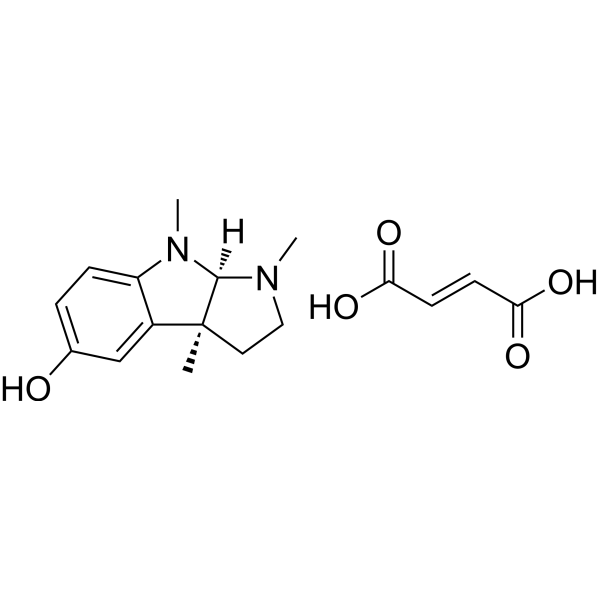
(-)-Eseroline fumarate is a metabolic of Physostigmine (HY-N6608), an AChE inhibitor. (-)-Eseroline fumarate elicits a leakage of lactic acid dehydrogenase (LDH) from cancer cells. (-)-Eseroline fumarate also induces the release of adenine nucleotides and 5-hydroxytryptamine (5-HT) from neuronal cells, thus induce cell death. (-)-Eseroline fumarate inhibits the electrically evoked twitches of the mouse vas deferens and of the guinea-pig ileum .
|
-
-
- HY-19026
-
|
SKF 94836
|
Phosphodiesterase (PDE)
|
Cardiovascular Disease
|
|
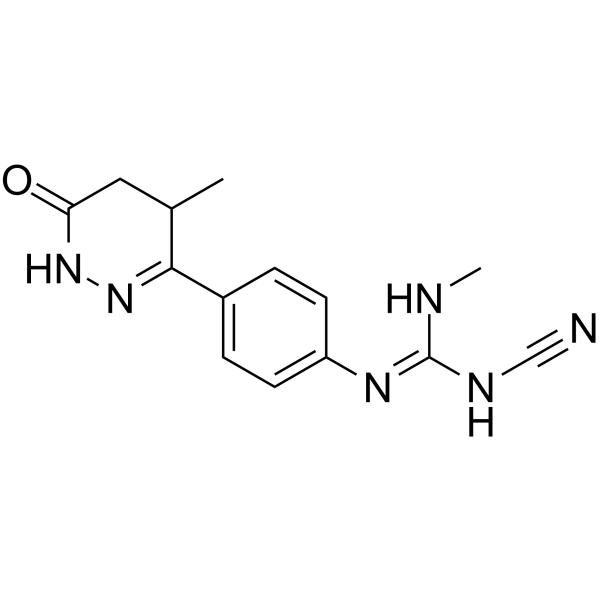
Siguazodan (SKF 94836) is a potent, selective and orally active phosphodiesterase III (PDE-III) inhibitor with an IC50 of 117 nM. Siguazodan increases cAMP accumulation in intact platelets with an EC50 of 18.88 μM. Siguazodan also inhibits phenylephrine-induced 5-HT release with an IC50 value of 4.2 μM .
|
-
-
- HY-P1422A
-
|
|
Potassium Channel
5-HT Receptor
|
Neurological Disease
|
|
Spadin TFA, a natural peptide derived from a propeptide released in blood, is a potent TREK-1 channel blocker with an IC50 value of 10 nM. Spadin TFA enhances dorsal raphe nucleus 5-HT neurotransmission in mice and induces hippocampal CREB activation and neurogenesis. Spadin TFA can be used for antidepressant research .
|
-
-
- HY-19283
-
|
|
5-HT Receptor
|
Neurological Disease
|
|
DU125530 is a potent and selective5-HT1A receptor antagonist with Ki values of 0.7, 890, 1200, 240, 750, 1100 nM for 5-HT1A, 5-HT1B, 5-HT1D, 5-HT2A, 5-HT2C, 5-HT3, respectively. DU125530 shows antidepressant effects .
|
-
-
- HY-124086
-
|
|
5-HT Receptor
|
Neurological Disease
|
BHQ-O-5HT is a light-activated caged 5-HT protected by a BHQ group. When exposed to light at 365 or 740 nm, BHQ-O-5HT releases 5-HT through 1 or 2 photon excitation, respectively. BHQ-O-5HT can be manipulated in space and time to explore the role of 5-HT in regulating mood, appetite, memory, learning, and other cognitive functions .
|
-
-
- HY-W707158
-
|
(±)-Norfenfluramine hydrochloride
|
Drug Metabolite
Serotonin Transporter
|
Neurological Disease
|
|
Norfenfluramine hydrochloride ((±)-Norfenfluramine hydrochloride) is a major and brain-penetrant metabolite of Fenfluramine. Norfenfluramine hydrochloride can interact with 5-HT transporters to release 5-HT from neurons. Norfenfluramine hydrochloride displays antiepileptic effects in vivo .
|
-
-
- HY-12142
-
|
GR 205171
|
Neurokinin Receptor
|
Neurological Disease
|
|
Vofopitant (GR 205171A) is a blood-brain barrier-permeable NK1 receptor inhibitor with a pKi of 9.02 in mice. Vofopitant blocks vomiting-related responses and inhibits pseudoptyalism. Vofopitant exerts anxiolytic effects, regulates 5-HT receptor function and increases central 5-HT release. Vofopitant improves hyperarousal symptoms of post-traumatic stress disorder. Vofopitant can be used in research related to depression, anxiety, vomiting and postoperative nausea and vomiting .
|
-
-
- HY-175515
-
|
|
5-HT Receptor
|
Neurological Disease
|
|
5-HT2C agonist-11 (Compound 1) is an orally active, brain-penetrant and selective 5-HT2C receptor agonist (EC50=15 nM). 5-HT2C agonist-11 activates the Gq protein signaling pathway, promoting intracellular calcium release. 5-HT2C agonist-11 is promising for research of depression, post-traumatic stress disorder (PTSD) and neuropathic pain .
|
-
-
- HY-19742A
-
|
SRA-333 hydrochloride
|
5-HT Receptor
|
Neurological Disease
|
|
Lecozotan (SRA-333) hydrochloride is an orally active and selective antagonist of 5-HT1A with a Ki of 4.5 nM for cloned human 5-HT1A receptor. Lecozotan hydrochloride enhances the stimulated release of glutamate and acetylcholine in the hippocampus and possesses cognitive-enhancing properties. Lecozotan hydrochloride has the potential for mild-to-moderate Alzheimer's disease (AD) research .
|
-
-
- HY-101377A
-
|
(R)-8-Hydroxy-2-dipropylaminotetralin hydrobromide
|
5-HT Receptor
|
Neurological Disease
|
|
R(+)-8-OH-DPAT ((R)-8-Hydroxy-2-dipropylaminotetralin) hydrobromide is a potent 5-HT1A agonist. R(+)-8-OH-DPAT potentiates SUL (HY-B1059)-induced dopamine (DA) release in the medial prefrontal cortex (mPFC) .
|
-
-
- HY-P3839
-
|
|
Opioid Receptor
|
Neurological Disease
|
|
Nocistatin, a neuropeptide, is an endogenous ligand for the orphan opioid receptor-like receptor. Nocistatin is also a functional antagonist of neuropeptide nociceptin or orphanin FQ (Noc/OFQ). Nocistatin inhibits 5-HT release via a Gi/o proteinmediated pathway. Nocistatin blocks Nociceptin (Nociceptin)-induced allodynia and hyperalgesia .
|
-
-
- HY-156807
-
|
|
Serotonin Transporter
5-HT Receptor
|
Neurological Disease
|
LY 367265 is a 5-hydroxytryptamine transporter (SERT) inhibitor (IC₅₀ = 3.1 nM) and a 5-HT₂A receptor antagonist (Kᵢ = 0.81 nM). LY 367265 has the inhibitory activity on the norepinephrine transporter (NET) of extremely weak (IC₅₀ > 1000 nM); it has low affinity for subtypes such as 5-HT₁B (Kᵢ = 490 nM) and 5-HT₁D (Kᵢ = 81 nM), showing high selectivity. LY 367265 concentration-dependently enhances of [³H]5-HT efflux (EC₅₀ = 250 nM). LY 367265 antagonizes the contraction response of Sumatriptan (HY-B0121B), indicating its functional antagonistic activity on 5-HT₁D-like receptors. LY 367265 can be used for the study of diseases such as anxiety disorders and post-traumatic stress disorder .
|
-
-
- HY-137162
-
-
-
- HY-W681014
-
|
|
5-HT Receptor
Dopamine Receptor
|
Neurological Disease
|
|
5-Fluoro-α-methyltryptamine hydrochloride may cause an increase in intracellular levels of 5-HT followed by an increase in 5-HT release. 5-Fluoro-α-methyltryptamine hydrochloride exhibits EC50 values of 37 nM, 14 nM, 78 nM and 8.47 nM for DA, 5HT, NE and 5-HT2A, respectively .
|
-
-
- HY-112390
-
|
|
5-HT Receptor
Syk
|
Inflammation/Immunology
|
|
Syk Inhibitor II dihydrochloride is a potent, high selective and ATP-competitive Syk inhibitor with an IC50 of 41 nM. Syk Inhibitor II dihydrochloride inhibits 5-HT release from RBL-cells with an IC50 of 460 nM. Syk Inhibitor II dihydrochloride shows less potent against other kinases and has anti-allergic effect .
|
-
-
- HY-14149A
-
|
R 51619 monohydrate; (±)-Cisaprid monohydrate
|
5-HT Receptor
|
Neurological Disease
Metabolic Disease
|
|
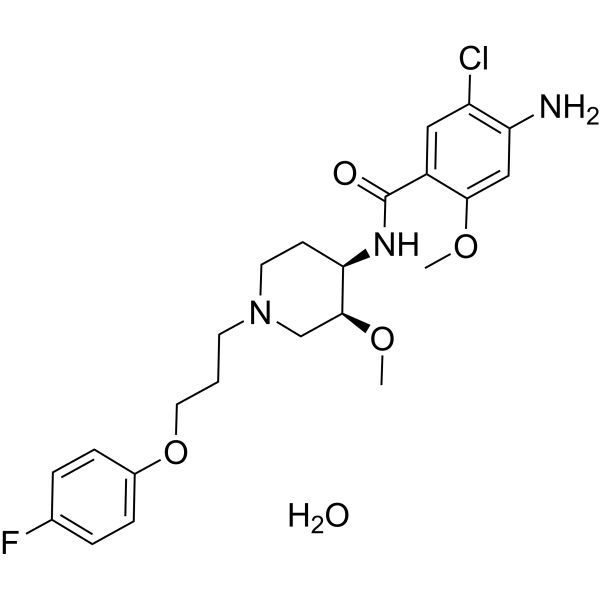
Cisapride monohydrate is an orally and potent 5-HT4 receptor agonist and hERG inhibitor. Cisapride monohydrate is an prokinetic agent which facilitates or restores motility throughout the length of the gastrointestinal tract. Cisapride monohydrate stimulates gastrointestinal motor activity through an indirect mechanism involving the release of acetylcholine mediated by postganglionic nerve endings in the myenteric plexus of the gut .
|
-
-
- HY-116680
-
|
|
5-HT Receptor
|
Cardiovascular Disease
Neurological Disease
|
|
LY53857 is a potent antagonist of vasoconstriction and serotonin-mediated 5-HT2 receptors. LY53857 did not reduce mean arterial blood pressure in spontaneously hypertensive rats (SHR) at doses that blocked the depressor response to serotonin and blocked central serotonin receptors. In addition, LY53857 was able to enhance neurotransmitter release in rat vas deferens and guinea pig ileal nerves .
|
-
-
- HY-W018475
-
|
MK 462 free base
|
5-HT Receptor
|
Neurological Disease
|
|
Rizatriptan (MK 462 free base) is an orally active 5-HT1B/5-HT1D receptor agonist, with BBB permeability. Rizatriptan exerts significant anti-migraine effects by constricting intracranial and extracranial blood vessels and inhibiting neuropeptide release. Rizatriptan exhibits species- and tissue-specific metabolic characteristics; for example, it undergoes oxidative deamination mainly by MAO-A in the liver of brown rats, so co-administration with MAO-A inhibitors is prohibited. Rizatriptan may also exacerbate nitroglycerin-induced cutaneous allodynia, prolong the duration of central sensitization, and increase anxiety-like behavior and active drug-seeking behavior in mice. Rizatriptan has been widely used in studies related to migraine and medication-overuse headache .
|
-
-
- HY-127023
-
|
EPA-5-HT
|
Endogenous Metabolite
FAAH
Interleukin Related
Tyrosine Hydroxylase
|
Metabolic Disease
|
|
Eicosapentaenoyl serotonin (EPA-5-HT) is an endogenous fatty acid-serotonin conjugate lipid mediator. Eicosapentaenoyl serotonin acts as an inhibitor of fatty acid amide hydrolase (FAAH). Eicosapentaenoyl serotonin suppresses IL-17 release in Concanavalin A (HY-P2149)-stimulated human peripheral blood mononuclear cells. Eicosapentaenoyl serotonin is regulated by polyunsaturated fatty acids and modulates intestinal immunity and Th17 signaling. Eicosapentaenoyl serotonin can be used for the study of inflammatory bowel disease-related mechanisms .
|
-
-
- HY-59201A
-
|
|
ERK
5-HT Receptor
Epigenetic Reader Domain
nAChR
|
Neurological Disease
Metabolic Disease
|
|
A-582941 dihydrochloride is a selective, orally active, blood-brain barrier-permeable α7 nAChR agonist, with Ki values of 10.8 nM and 17 nM in rat brain and human frontal cortex, respectively. A-582941 dihydrochloride exhibits agonistic activity at 5-HT3 receptors, with a Ki of 150 nM. A-582941 dihydrochloride triggers phosphorylation of ERK1/2 and CREB, inhibits GSK-3β via Ser-9 phosphorylation, increases acetylcholine release, induces the expression of Arc and c-Fos, activates brain regions associated with working memory and attention, and reduces cell death caused by nerve growth factor (NGF) deprivation. A-582941 dihydrochloride is applicable for the research of Alzheimer's disease and schizophrenia .
|
-
-
- HY-W728110
-
|
5-Methoxy pyrrolidinyltryptamine
|
5-HT Receptor
|
Neurological Disease
|
|
5-MeO-pyr-T (5-Methoxy pyrrolidinyltryptamine) is a 5-HT1AR agonist, with Kis of 0.577 and 373 μM for 5-HT1AR and 5-HT2AR respectively. 5-MeO-pyr-T inhibits 5-HT uptake and elicits 5-HT release. 5-MeO-pyr-T induces hypolocomotion .
|
-
-
- HY-169467
-
|
|
5-HT Receptor
Dopamine Receptor
|
Neurological Disease
|
|
5-Chloro-α-methyltryptamine (Compound 7b) is a potent and selective dual DA/5-HT releaser and 5-HT2a agonist. 5-Chloro-α-methyltryptamine releases DA and 5-HT with the EC50 values of 54.3 nM and 16.2 nM, respectively. 5-Chloro-α-methyltryptamine can be used in the study of neurotransmitter .
|
-
-
- HY-19846
-
|
PRX-03140 potassium salt
|
5-HT Receptor
|
Others
|
|
VRX-03011 (PRX-03140 (potassium salt)) is a compound with the potential to enhance memory and regulate acetylcholine release. It is a 5-HT? agonist that can enhance memory, regulate hippocampal acetylcholine efflux, and regulate APP metabolism without gastrointestinal side effects.
|
-
-
- HY-162511
-
|
|
Dopamine Transporter
Serotonin Transporter
|
Others
|
|
IP2015 is an inhibitor for monoamine reuptake, that inhibits the reuptake of dopamine, serotonin (5-HT), and noradrenaline. IP2015 increases release of central dopamine and peripheral nitric oxide (NO), causes the NO-mediated relaxation of erectile tissue, and thus induces erection in rat model .
|
-
-
- HY-112390C
-
|
|
5-HT Receptor
Syk
|
Inflammation/Immunology
|
|
Syk Inhibitor II hydrochloride is a potent, high selective and ATP-competitive Syk inhibitor with an IC50 of 41 nM. Syk Inhibitor II hydrochloride inhibits 5-HT release from RBL-cells with an IC50 of 460 nM. Syk Inhibitor II hydrochloride shows less potent against other kinases and has anti-allergic effect .
|
-
-
- HY-112390B
-
|
|
Syk
5-HT Receptor
|
Inflammation/Immunology
|
|
Syk Inhibitor II dihydrochloride dihydrate is a potent, high selective and ATP-competitive Syk inhibitor with an IC50 of 41 nM. Syk Inhibitor II dihydrochloride dihydrate inhibits 5-HT release from RBL-cells with an IC50 of 460 nM. Syk Inhibitor II dihydrochloride dihydrate shows less potent against other kinases and has anti-allergic effect .
|
-
-
- HY-12142S
-
|
rac-GR 205171-d3
|
Isotope-Labeled Compounds
Neurokinin Receptor
|
Neurological Disease
|
|
rac-Vofopitant-d3 (rac-GR 205171-d3) is a racemic form of deuterated Vofopitant (HY-12142). Vofopitant (GR 205171A) is a blood-brain barrier-permeable NK1 receptor inhibitor with a pKi of 9.02 in mice. Vofopitant blocks vomiting-related responses and inhibits pseudoptyalism. Vofopitant exerts anxiolytic effects, regulates 5-HT receptor function and increases central 5-HT release. Vofopitant improves hyperarousal symptoms of post-traumatic stress disorder. Vofopitant can be used in research related to depression, anxiety, vomiting and postoperative nausea and vomiting .
|
-
-
- HY-W061043
-
|
|
Serotonin Transporter
Dopamine Transporter
|
Neurological Disease
|
|
DOV-216,303 is an antidepressant compound. DOV-216,303 inhibits the reuptake of norepinephrine (NE), serotonin (5‐HT), and dopamine (DA), with IC50 values of 14 nM, 20 nM and 78 nM for hSERT, hNET and hDAT, respectively. DOV-216,303 increases monoamine release in the prefrontal cortex of olfactory bulbectomized (OBX) rats .
|
-
-
- HY-19026R
-
|
SKF 94836 (Standard)
|
Phosphodiesterase (PDE)
Reference Standards
|
Cardiovascular Disease
|
|
Siguazodan (Standard) is the analytical standard of Siguazodan. This product is intended for research and analytical applications. Siguazodan (SKF 94836) is a potent, selective and orally active phosphodiesterase III (PDE-III) inhibitor with an IC50 of 117 nM. Siguazodan increases cAMP accumulation in intact platelets with an EC50 of 18.88 μM. Siguazodan also inhibits phenylephrine-induced 5-HT release with an IC50 value of 4.2 μM .
|
-
-
- HY-15472A
-
|
|
5-HT Receptor
p38 MAPK
TGF-β Receptor
FGFR
Apoptosis
Caspase
|
Cardiovascular Disease
Neurological Disease
Cancer
|
|
PRX-08066 maleate is a selective and orally active 5-hydroxytryptamine receptor 2B (5-HT2BR) antagonist with a Ki of 3.4 nM. PRX-08066 maleate inhibits the MAPK pathway, 5-HT release and fibrotic factor (TGFβ1, CTGF and FGF2) expression. PRX-08066 maleate inhibits the proliferation of KRJ-I cells and induces apoptosis (caspase-3 activation). PRX-08066 maleate inhibits pulmonary vascular remodeling. PRX-08066 maleate can be used of pulmonary Arterial Hypertension (PAH) and neuroendocrine tumor (NET) .
|
-
-
- HY-111136
-
|
|
GABA Receptor
5-HT Receptor
Dopamine Receptor
Histamine Receptor
|
Neurological Disease
|
|
BL-1020 mesylate is the mesylate salt form of BL-1020. BL-1020 mesylate is an antipsychotic agent. BL-1020 mesylate is inhibitor for dopamine receptor and serotonin receptor (5-HT receptor), with Ki of 0.066, 0.062 and 0.21 nM, for D2L, D2S and 5-HT2A receptors, respectively. BL-1020 mesylate is agonist for GABAA receptor with Ki of 3.74 μM, and enhances the GABA release. BL-1020 mesylate exhibits high affinity with histamine receptor (Ki is 0.47 nM). BL-1020 mesylate reduces Amphetamine-induced hyperactivity, with lower catalepsy and sedation. BL-1020 mesylate is blood-brain barrier penetrate .
|
-
-
- HY-170908
-
|
|
5-HT Receptor
|
Neurological Disease
|
|
Pellotine is an alkaloid that can be isolated from Lophophora. Pellotine is the inverse agonist for 5-HT7 receptor with an EC50 of 291 nM. Pellotine exhibits good affinity to 5-HT1DR and 5-HT6R with Ki of 117 nM and 170 nM. Pellotine reduces intracellular cAMP levels, thereby reducing neuronal excitability and neurotransmitter release .
|
-
-
- HY-174146
-
|
|
5-HT Receptor
|
Neurological Disease
|
|
5-HT1A agonist 1 (Compound Ex.37) is a highly selective 5-HT1a receptor agonist (EC50=0.18 nM). 5-HT1A agonist 1 mimicks serotonin binding to the receptor, promotes postsynaptic membrane hyperpolarization, inhibits neuronal hyperexcitability, and reduces the release of anxiety-related neurotransmitters. 5-HT1A agonist 1 is promising for research of neuropsychiatric diseases .
|
-
-
- HY-W335976
-
|
|
5-HT Receptor
|
Neurological Disease
|
|
Almotriptan (PNU180638) hydrochloride is an orally active, highly selective agonist of the 5-HT1B/1D receptor (5-HT1B/1D receptor), with EC50 values of 1.6 nM and 3.1 nM, respectively. Almotriptan hydrochloride shows moderate affinity for the 5-HT1F receptor, and weak affinity for the 5-HT1A, 5-HT6 and 5-HT7 receptors. Almotriptan hydrochloride induces intracranial vasoconstriction, inhibits nociceptive neurotransmission in the trigeminocervical complex, and suppresses the release of vasoactive peptides from trigeminal nerve endings. Almotriptan hydrochloride can be used in research related to migraine.
|
-
-
- HY-133858
-
|
|
5-HT Receptor
|
Neurological Disease
|
|
25N-NBOMe hydrochloride, a 2C-N derivative, is a 5-HT2A and 5-HT2C receptors agonist with Ki values of 0.144 nM and 1.06 nM, respectively. 25N-NBOMe hydrochloride has little to no efficacy at inducing release of preloaded neurotransmitter from recombinant dopamine, serotonin and norepinephrine transporters .
|
-
-
- HY-B0383AS
-
|
PNU180638 hydrochloride-d6
|
Isotope-Labeled Compounds
5-HT Receptor
|
Neurological Disease
|
|
Almotriptan-d6 (PNU180638-d6) hydrochloride is the deuterium labeled Almotriptan hydrochloride. Almotriptan hydrochloride is an orally active, highly selective agonist of the 5-HT1B/1D receptor (5-HT1B/1D receptor), with EC50 values of 1.6 nM and 3.1 nM, respectively. Almotriptan hydrochloride shows moderate affinity for the 5-HT1F receptor, and weak affinity for the 5-HT1A, 5-HT6 and 5-HT7 receptors. Almotriptan hydrochloride induces intracranial vasoconstriction, inhibits nociceptive neurotransmission in the trigeminocervical complex, and suppresses the release of vasoactive peptides from trigeminal nerve endings. Almotriptan hydrochloride can be used in research related to migraine.
|
-
-
- HY-B0383AS2
-
|
PNU180638 free base-d3 benzoate
|
Isotope-Labeled Compounds
5-HT Receptor
|
Neurological Disease
|
|
Almotriptan-d3 benzoate (PNU180638 free base-d3) is deuterated labeled Almotriptan benzoate. Almotriptan benzoate is an orally active, highly selective agonist of the 5-HT1B/1D receptor (5-HT1B/1D receptor), with EC50 values of 1.6 nM and 3.1 nM, respectively. Almotriptan benzoate shows moderate affinity for the 5-HT1F receptor, and weak affinity for the 5-HT1A, 5-HT6 and 5-HT7 receptors. Almotriptan benzoate induces intracranial vasoconstriction, inhibits nociceptive neurotransmission in the trigeminocervical complex, and suppresses the release of vasoactive peptides from trigeminal nerve endings. Almotriptan benzoate can be used in research related to migraine.
|
-
-
- HY-143797S
-
|
|
Isotope-Labeled Compounds
5-HT Receptor
|
Neurological Disease
|
|
Almotriptan-d6 (PNU180638-d6) maleate is the deuterium labeled Almotriptan maleate. Almotriptan malate is an orally active, highly selective agonist of the 5-HT1B/1D receptor (5-HT1B/1D receptor), with EC50 values of 1.6 nM and 3.1 nM, respectively. Almotriptan malate shows moderate affinity for the 5-HT1F receptor, and weak affinity for the 5-HT1A, 5-HT6 and 5-HT7 receptors. Almotriptan malate induces intracranial vasoconstriction, inhibits nociceptive neurotransmission in the trigeminocervical complex, and suppresses the release of vasoactive peptides from trigeminal nerve endings. Almotriptan malate can be used in research related to migraine.
|
-
- HY-148032
-
|
5-BT
|
5-HT Receptor
|
Neurological Disease
|
|
5-Benzyloxytryptamine (5-BT) is a selective partial agonist for 5-hydroxytryptamine 1D/1B (5-HT1D/1B) receptors with an IC50 value of 40 nM for bovine caudate 5-HT1D and reduced affinity for other receptors (5-HT2 IC50>470 nM). 5-Benzyloxytryptamine inhibits adenylate cyclase to decrease neurotransmitter release and downregulate cAMP signaling. 5-Benzyloxytryptamine is promising for research of neurotransmitter imbalance-related disorders like migraine .
|
-
- HY-101225
-
|
|
5-HT Receptor
Histamine Receptor
|
Inflammation/Immunology
|
|
8 Hydroxy PIPAT oxalate is a selective 5-HT1A receptor agonist that promotes the release of histamine from enteric mast cells. 8 Hydroxy PIPAT oxalate activates serotonergic signaling pathways, leading to the degranulation of mast cells in both guinea pig and human intestinal preparations. 8 Hydroxy PIPAT oxalate enhances the spontaneous release of histamine, which may contribute to the regulation of gastrointestinal functions. 8 Hydroxy PIPAT oxalate has potential implications for understanding and treating functional gastrointestinal disorders such as irritable bowel syndrome.
|
-
- HY-13409B
-
|
|
5-HT Receptor
|
Neurological Disease
Metabolic Disease
|
|
SB 242084 monohydrochloride is a selective, competitive and high-affinity (pKi=9.0) 5-HT2C receptor antagonist (crosses the blood-brain barrier). SB 242084 monohydrochloride increases basal activity of dopaminergic neurons in the ventral tegmental area (VTA) of the midbrain and dopamine release in the vomeronasal nucleus. SB 242084 also increases mitochondrial gene expression and oxidative metabolism via 5-HT2A receptor. SB 242084 monohydrochloride has good research potential in the negative symptoms of anxiety, depression and schizophrenia, as well as in acute organ damage .
|
-
- HY-13409AR
-
|
|
5-HT Receptor
|
Neurological Disease
Metabolic Disease
|
|
SB 242084 (dihydrochloride) (Standard) is the analytical standard of SB 242084 (dihydrochloride). This product is intended for research and analytical applications. SB 242084 dihydrochloride is a selective, competitive and high-affinity (pKi=9.0) 5-HT2C receptor antagonist (crosses the blood-brain barrier). SB 242084 dihydrochloride increases basal activity of dopaminergic neurons in the ventral tegmental area (VTA) of the midbrain and dopamine release in the vomeronasal nucleus. SB 242084 dihydrochloride also increases mitochondrial gene expression and oxidative metabolism via 5-HT2A receptor. SB 242084 dihydrochloride has good research potential in the negative symptoms of anxiety, depression and schizophrenia, as well as in acute organ damage .
|
-
- HY-13409R
-
|
|
5-HT Receptor
|
Neurological Disease
Metabolic Disease
|
|
SB 242084 (Standard) is the analytical standard of SB 242084. This product is intended for research and analytical applications. SB 242084 is a selective, competitive and high-affinity (pKi=9.0) 5-HT2C receptor antagonist (crosses the blood-brain barrier). SB 242084 increases basal activity of dopaminergic neurons in the ventral tegmental area (VTA) of the midbrain and dopamine release in the vomeronasal nucleus. SB 242084 also increases mitochondrial gene expression and oxidative metabolism via 5-HT2A receptor. SB 242084 has good research potential in the negative symptoms of anxiety, depression and schizophrenia, as well as in acute organ damage .
|
-
- HY-125641A
-
|
|
5-HT Receptor
|
Neurological Disease
|
|
AL-34662 (formate) is a 5-HT2 receptor agonist (IC50: 0.8-1.5 nM). AL-34662 (formate) stimulates inositol phosphate turnover and Ca 2+ release in human ciliary muscle cells (h-CM) (E50: 289 nM) and human trabecular meshwork cells (h-TM) (E50: 254 nM). AL-34662 (formate) can be used in studies to lower intraocular pressure (IOP) .
|
-
- HY-14835
-
|
SSR240600
|
Others
|
Others
|
|
Burapitant (SSR240600) is a compound that modulates cholinergic transmission and regulates acetylcholine release in the limbic/prefrontal region of the rat striatum, with its effects being influenced by the interaction of 5-HT? and 5-HT? receptors.
|
-
- HY-14287
-
|
|
5-HT Receptor
|
Others
|
|
KW-5092 fumarete is a gastrokinetic agent. KW-5092 fumarete can increase intraluminal 5-HT release via the stimulation of cholinergic neurons .
|
-
- HY-172763
-
|
|
Drug Derivative
Serotonin Transporter
Dopamine Transporter
5-HT Receptor
|
Neurological Disease
|
|
EDMA hydrochloride is a derivative of MDMA. EDMA hydrochloride is a substrate for multiple neurotransmitter transporters, including serotonin transporter (SERT), dopamine transporter (DAT), and norepinephrine transporter (NET). EDMA hydrochloride has 5-HT releasing activity at SERT (EC50 = 117 nM) and MPP + releasing activity at DAT (EC50 = 597 nM) and NET (EC50 = 325 nM) .
|
-
- HY-W680886
-
|
|
Monoamine Transporter
Serotonin Transporter
Dopamine Transporter
5-HT Receptor
|
Neurological Disease
|
|
6-APDB is a class of monoamine neurotransmitter releaser and Monoamine Transporter modulator that exerts selective effects on human monoamine transporters and acts as a partial agonist at 5-HT2 family receptors. For NET, 6-APDB has an IC50 of 0.56 μM and a Ki of 18 μM; for SERT, it has an IC50 of 2.3 μM and a Ki of 23 μM; for DAT, it has an IC50 of 33 μM and a Ki of >30 μM, and affinity for rat and mouse TAAR1, with Ki values of 1.0 μM and 0.21 μM, respectively. 6-APDB inhibits norepinephrine and 5-HT reuptake, mediates the release of three types of monoamine neurotransmitters, shows a dose-dependent biphasic locomotor effect in mice, and fully substitutes the discriminative stimulus effect of MDMA. 6-APDB shows no significant cytotoxicity at high concentrations, and possesses empathogenic psychoactivity, potential hallucinogenic effects, and behavioral effects associated with intermittent abuse .
|
-
- HY-100656AS
-
|
|
Isotope-Labeled Compounds
Dopamine Receptor
5-HT Receptor
|
Neurological Disease
|
|
Desmethyl cariprazine-d8 is the deuterium labeled Desmethyl cariprazine (HY-100656). Desmethyl cariprazine is a major active metabolite of cariprazine, with activities at human dopamine receptors and serotonin receptors, showing a pEC50 of 8.90 at human D2 receptors, a pEC50 of 8.09 at D3 receptors, and a pEC50 of 6.28 at 5-HT1A receptors. Desmethyl cariprazine inhibits forskolin-induced cAMP production at D2, D3 and 5-HT1A receptors, and suppresses serotonin-induced Ca 2+ release at 5-HT2B receptors. Desmethyl cariprazine is applicable to research related to schizophrenia, bipolar disorder type I and bipolar disorder.
|
-
- HY-182091
-
|
|
5-HT Receptor
Dopamine Receptor
Dopamine Transporter
Adrenergic Receptor
Calcium Channel
|
Neurological Disease
|
|
CYD-1-79 is a selective positive allosteric modulator of 5-HT2C receptor. CYD-1-79 potentiates 5-HT-evoked intracellular calcium release via a topographically distinct allosteric site. CYD-1-79 shows significant inhibition of binding at dopamine D3 receptor, DAT, and α2A/α2B adrenergic receptors. CYD-1-79 modulates 5-HT2C receptor-mediated spontaneous ambulation in rodents and synergizes with a low dose of a 5-HT2C receptor agonist. CYD-1-79 attenuates relapse vulnerability of psychoactive substance in a rodent self-administration model. CYD-1-79 can be used for the research of neurological disease .
|
-
- HY-59201
-
|
|
nAChR
5-HT Receptor
ERK
Epigenetic Reader Domain
|
Neurological Disease
|
|
A-582941 is a selective, orally active, blood-brain barrier-permeable α7 nAChR agonist, with Ki values of 10.8 nM and 17 nM in rat brain and human frontal cortex, respectively. A-582941 exhibits agonistic activity at 5-HT3 receptors, with a Ki of 150 nM. A-582941 triggers phosphorylation of ERK1/2 and CREB, inhibits GSK-3β via Ser-9 phosphorylation, increases acetylcholine release, induces the expression of Arc and c-Fos, activates brain regions associated with working memory and attention, and reduces cell death caused by nerve growth factor (NGF) deprivation. A-582941 is applicable for the research of Alzheimer's disease and schizophrenia .
|
-
| Cat. No. |
Product Name |
Type |
-
- HY-D2335
-
|
|
Fluorescent Dyes
|
|
SERTlight is a fluorescent agent that can specifically label serotonergic neuronal cell bodies, dendrites, and axonal projections as fluorescent substrates of the serotonin transporter (SERT). SERTlight is orthogonal to various genetically encoded sensors in terms of optics, pharmacology, and operation, enabling multiple imaging. SERTlight allows the use of GRAB5HT sensors to label distal 5HT axonal projections and simultaneously image the release of endogenous 5HT, providing a new multifunctional molecular tool for studying serotonergic systems .
|
| Cat. No. |
Product Name |
Target |
Research Area |
-
- HY-P1422
-
Spadin
1 Publications Verification
|
Potassium Channel
5-HT Receptor
|
Neurological Disease
|
|
Spadin, a natural peptide derived from a propeptide released in blood, is a potent TREK-1 channel blocker with IC50 value of 10 nM. Spadin enhances dorsal raphe nucleus 5-HT neurotransmission in mice and induces hippocampal CREB activation and neurogenesis. Spadin can be used for antidepressant research .
|
-
- HY-P1422A
-
|
|
Potassium Channel
5-HT Receptor
|
Neurological Disease
|
|
Spadin TFA, a natural peptide derived from a propeptide released in blood, is a potent TREK-1 channel blocker with an IC50 value of 10 nM. Spadin TFA enhances dorsal raphe nucleus 5-HT neurotransmission in mice and induces hippocampal CREB activation and neurogenesis. Spadin TFA can be used for antidepressant research .
|
-
- HY-P3839
-
|
|
Opioid Receptor
|
Neurological Disease
|
|
Nocistatin, a neuropeptide, is an endogenous ligand for the orphan opioid receptor-like receptor. Nocistatin is also a functional antagonist of neuropeptide nociceptin or orphanin FQ (Noc/OFQ). Nocistatin inhibits 5-HT release via a Gi/o proteinmediated pathway. Nocistatin blocks Nociceptin (Nociceptin)-induced allodynia and hyperalgesia .
|
| Cat. No. |
Product Name |
Chemical Structure |
-
- HY-12142S
-
|
|
|
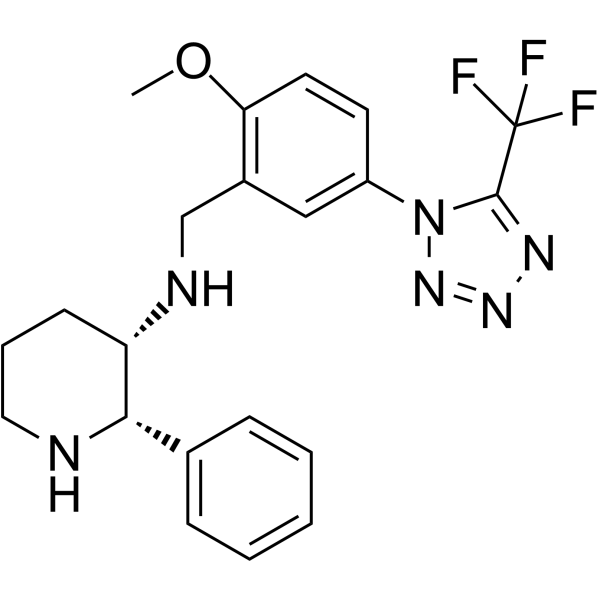
rac-Vofopitant-d3 (rac-GR 205171-d3) is a racemic form of deuterated Vofopitant (HY-12142). Vofopitant (GR 205171A) is a blood-brain barrier-permeable NK1 receptor inhibitor with a pKi of 9.02 in mice. Vofopitant blocks vomiting-related responses and inhibits pseudoptyalism. Vofopitant exerts anxiolytic effects, regulates 5-HT receptor function and increases central 5-HT release. Vofopitant improves hyperarousal symptoms of post-traumatic stress disorder. Vofopitant can be used in research related to depression, anxiety, vomiting and postoperative nausea and vomiting .
|
-
-
- HY-B0383AS
-
|
|
|
Almotriptan-d6 (PNU180638-d6) hydrochloride is the deuterium labeled Almotriptan hydrochloride. Almotriptan hydrochloride is an orally active, highly selective agonist of the 5-HT1B/1D receptor (5-HT1B/1D receptor), with EC50 values of 1.6 nM and 3.1 nM, respectively. Almotriptan hydrochloride shows moderate affinity for the 5-HT1F receptor, and weak affinity for the 5-HT1A, 5-HT6 and 5-HT7 receptors. Almotriptan hydrochloride induces intracranial vasoconstriction, inhibits nociceptive neurotransmission in the trigeminocervical complex, and suppresses the release of vasoactive peptides from trigeminal nerve endings. Almotriptan hydrochloride can be used in research related to migraine.
|
-
-
- HY-B0383AS2
-
|
|
|
Almotriptan-d3 benzoate (PNU180638 free base-d3) is deuterated labeled Almotriptan benzoate. Almotriptan benzoate is an orally active, highly selective agonist of the 5-HT1B/1D receptor (5-HT1B/1D receptor), with EC50 values of 1.6 nM and 3.1 nM, respectively. Almotriptan benzoate shows moderate affinity for the 5-HT1F receptor, and weak affinity for the 5-HT1A, 5-HT6 and 5-HT7 receptors. Almotriptan benzoate induces intracranial vasoconstriction, inhibits nociceptive neurotransmission in the trigeminocervical complex, and suppresses the release of vasoactive peptides from trigeminal nerve endings. Almotriptan benzoate can be used in research related to migraine.
|
-
-
- HY-143797S
-
|
|
|
Almotriptan-d6 (PNU180638-d6) maleate is the deuterium labeled Almotriptan maleate. Almotriptan malate is an orally active, highly selective agonist of the 5-HT1B/1D receptor (5-HT1B/1D receptor), with EC50 values of 1.6 nM and 3.1 nM, respectively. Almotriptan malate shows moderate affinity for the 5-HT1F receptor, and weak affinity for the 5-HT1A, 5-HT6 and 5-HT7 receptors. Almotriptan malate induces intracranial vasoconstriction, inhibits nociceptive neurotransmission in the trigeminocervical complex, and suppresses the release of vasoactive peptides from trigeminal nerve endings. Almotriptan malate can be used in research related to migraine.
|
-
-
- HY-100656AS
-
|
|
|
Desmethyl cariprazine-d8 is the deuterium labeled Desmethyl cariprazine (HY-100656). Desmethyl cariprazine is a major active metabolite of cariprazine, with activities at human dopamine receptors and serotonin receptors, showing a pEC50 of 8.90 at human D2 receptors, a pEC50 of 8.09 at D3 receptors, and a pEC50 of 6.28 at 5-HT1A receptors. Desmethyl cariprazine inhibits forskolin-induced cAMP production at D2, D3 and 5-HT1A receptors, and suppresses serotonin-induced Ca 2+ release at 5-HT2B receptors. Desmethyl cariprazine is applicable to research related to schizophrenia, bipolar disorder type I and bipolar disorder.
|
-
Your information is safe with us. * Required Fields.
Inquiry Information
- Product Name:
- Cat. No.:
- Quantity:
- MCE Japan Authorized Agent:

