3 Results for "

625-19-4

" in MedChemExpress (MCE) Product Catalog:
Products (3)

3 Results for "625-19-4" in MCE Product Catalog:

Cat. No.: HY-A0083C
CAS No.: 625-19-4
Synonyms: Acetyl-β-methylcholine iodide
Target:  

mAChR

Research Areas:  

Cardiovascular Disease

Methacholine iodide is a potent muscarinic-3 (M3) agonist. Methacholine iodide acts directly on acetylcholine receptors on smooth muscle causing bronchoconstriction and airway narrowing. Methacholine iodide shows a high sensitivity to identify bronchial hyperresponsiveness (BHR). Methacholine iodide can be used to measure airway hyperresponsiveness (AHR) as a diagnostic aid in the assessment of individuals with asthma-like symptoms and normal resting expiratory flow rates .
loading...
    loading...
6
6 Publications Verification
Cat. No.: HY-A0083
CAS No.: 62-51-1
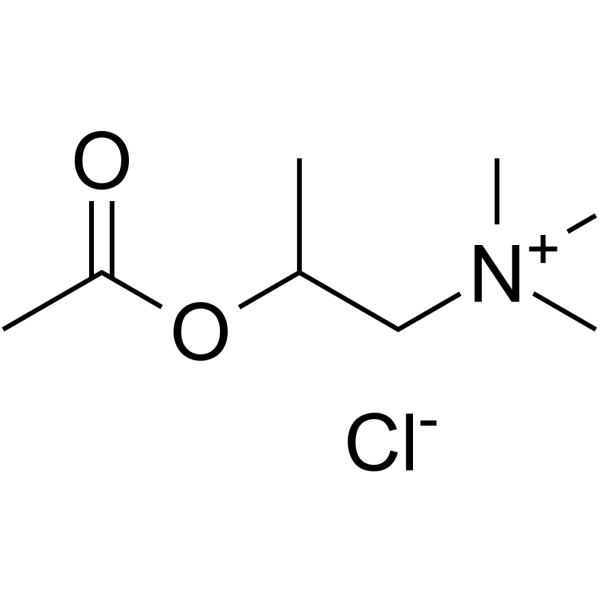
Synonyms: Acetyl-β-methylcholine chloride
Target:  

mAChR

Research Areas:  

Others

Methacholine (Acetyl-β-methylcholine) choride is a potent muscarinic-3 (M3) agonist. Methacholine choride acts directly on acetylcholine receptors on smooth muscle causing bronchoconstriction and airway narrowing. Methacholine choride shows a high sensitivity to identify bronchial hyperresponsiveness (BHR). Methacholine choride can be used to measure airway hyperresponsiveness (AHR) as a diagnostic aid in the assessment of individuals with asthma-like symptoms and normal resting expiratory flow rates .
loading...
    loading...
Cat. No.: HY-A0083B
CAS No.: 333-31-3
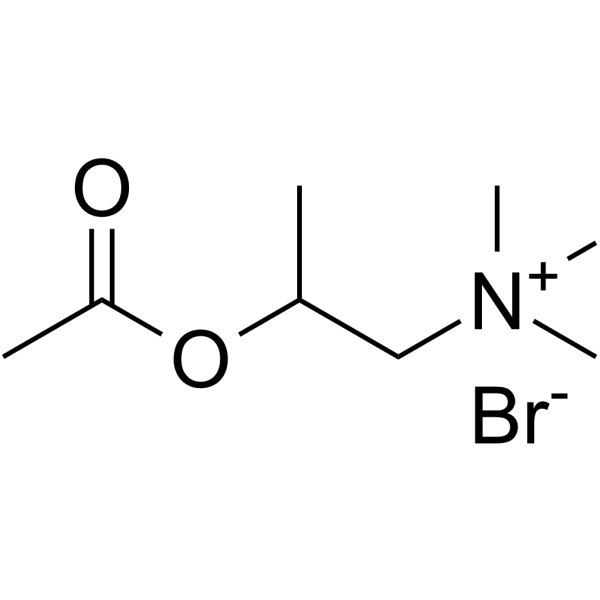
Synonyms: Acetyl-β-methylcholine bromide
Target:  

mAChR

Research Areas:  

Cardiovascular Disease

Methacholine (Acetyl-β-methylcholine) bromide is a potent muscarinic-3 (M3) agonist. Methacholine bromide acts directly on acetylcholine receptors on smooth muscle causing bronchoconstriction and airway narrowing. Methacholine bromide shows a high sensitivity to identify bronchial hyperresponsiveness (BHR). Methacholine bromide can be used to measure airway hyperresponsiveness (AHR) as a diagnostic aid in the assessment of individuals with asthma-like symptoms and normal resting expiratory flow rates .
loading...
    loading...

