

22 Results for "

Bak BH3

" in MedChemExpress (MCE) Product Catalog:
Products (22)

22 Results for "Bak BH3" in MCE Product Catalog:

Cat. No.: HY-P0300
CAS No.: 300349-67-1
Target:  

Bcl-2 Family

Research Areas:  

Cancer

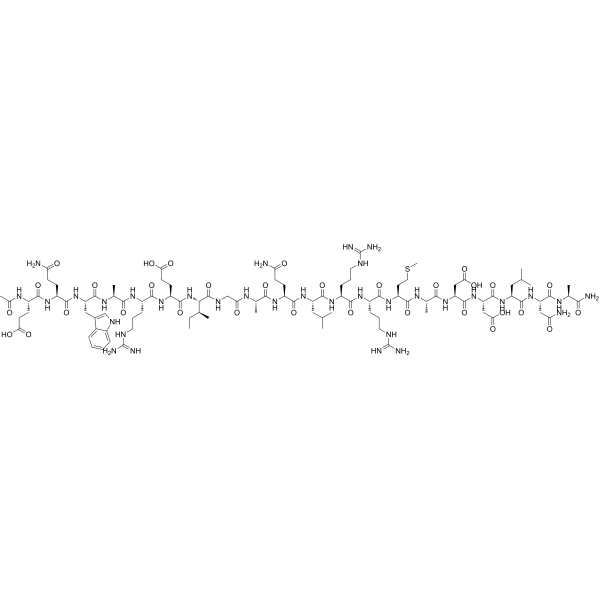
Bak BH3 is derived from the BH3 domain of Bak, can antagonize the function of Bcl-xL in cells.
loading...
    loading...
71
71 Publications Verification
Cat. No.: HY-50907
CAS No.: 852808-04-9
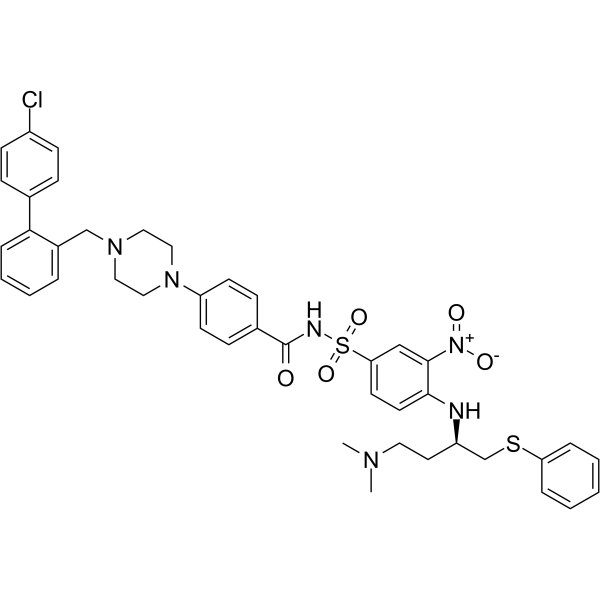
ABT-737, a BH3 mimetic, is a potent Bcl-2, Bcl-xL and Bcl-w inhibitor with EC50s of 30.3 nM, 78.7 nM, and 197.8 nM, respectively. ABT-737 induces the disruption of the BCL-2/BAX complex and BAK-dependent but BIM-independent activation of the intrinsic apoptotic pathway. ABT-737 induces autophagy and has the potential for acute myeloid leukemia (AML) research .
loading...
    loading...
19
19 Cited Publications
Cat. No.: HY-12048
CAS No.: 3895-92-9
Purity:  99.11%
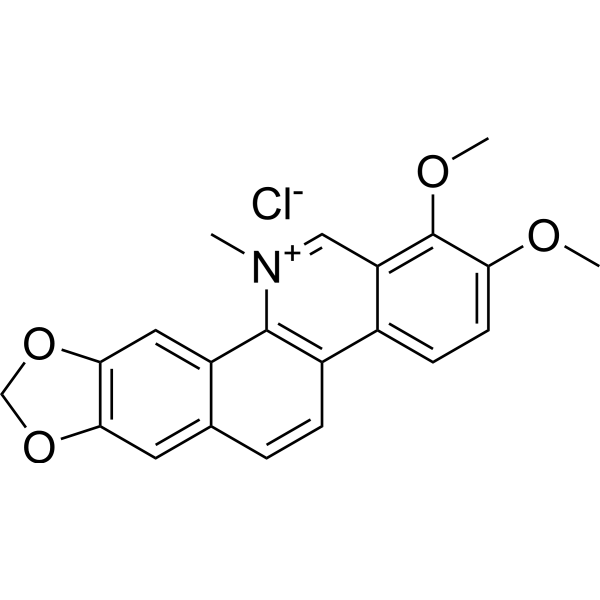
Chelerythrine chloride is a potent, cell-permeable inhibitor of protein kinase C, with an IC50 of 660 nM. Chelerythrine chloride inhibits the Bcl-XL-Bak BH3 peptide binding with IC50 of 1.5 μM and displaces Bax from Bcl-XL. Chelerythrine chloride induces apoptosis and autophagy.
loading...
    loading...
Cat. No.: HY-172262
Research Areas:  

Cancer

WEHI-3773 is a VDAC2 ligand and apoptosis modulator. WEHI-3773 directly binds to the β7-β10 region of VDAC2 and disrupts its interaction with BAX and BAK. WEHI-3773 regulates BAX-mediated apoptosis in BAK-deficient cells by modulating conformational activation of BAX, mitochondrial redistribution, and cytochrome c release. WEHI-3773 overcomes Venetoclax (HY-15531) resistance, resensitizes leukemia cells carrying BAX mutations to BH3 mimetics, and enables long-term clonogenic survival of BAK-deficient cells treated with BH3 mimetics. WEHI-3773 is applicable to research related to acute myeloid leukemia .
loading...
    loading...
Cat. No.: HY-162858
CAS No.: 2329719-65-3
Research Areas:  

Cancer

BRD-810 is a potent and selective MCL1 inhibitor with a Kd of 0.3 nM. BRD-810 can specifically block the BH3 binding groove of MCL1, while having little effect on other anti-apoptotic proteins (such as Bcl-2, Bcl-xL). BRD-810 effectively destroys the MCL1-BAK complex (IC50 = 1.2 nM) in cancer cells, rapidly activates Caspase and induces cell apoptosis. BRD-810 can be used in the research of various cancers such as hematological tumors and solid tumors .
loading...
    loading...
Cat. No.: HY-N2359
CAS No.: 34316-15-9
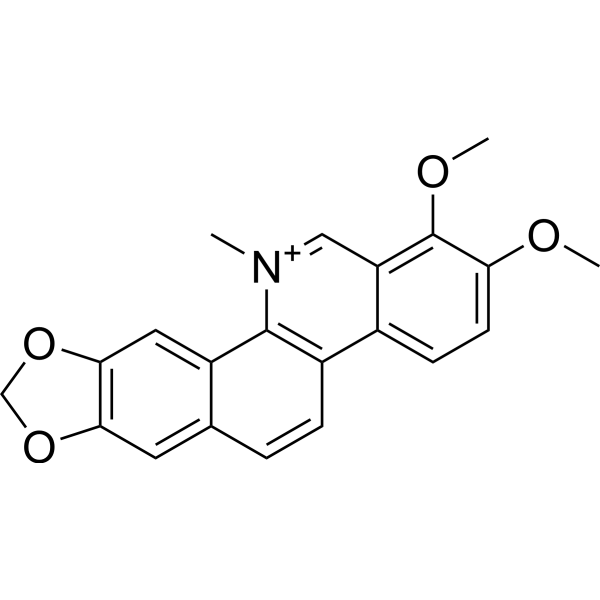
Chelerythrine is an alkaloid, acts as a potent and selective Ca 2+/phospholopid-dependent PKC antagonist, with an IC50 of 0.7 μM. Chelerythrine inhibits the BclXL-Bak BH3 peptide binding with IC50 of 1.5 μM. Chelerythrine triggers Apoptosis and Autophagy. Chelerythrine has antitumor, antidiabetic and anti-inflammatory activity. Chelerythrine shows antibacterial activities against Gram-positive bacteria, Staphylococcus aureus (SA), MRSA .
loading...
    loading...
Cat. No.: HY-100383
CAS No.: 300817-68-9
Purity:  ≥98.0%
Synonyms: BHI1
Research Areas:  

Cancer

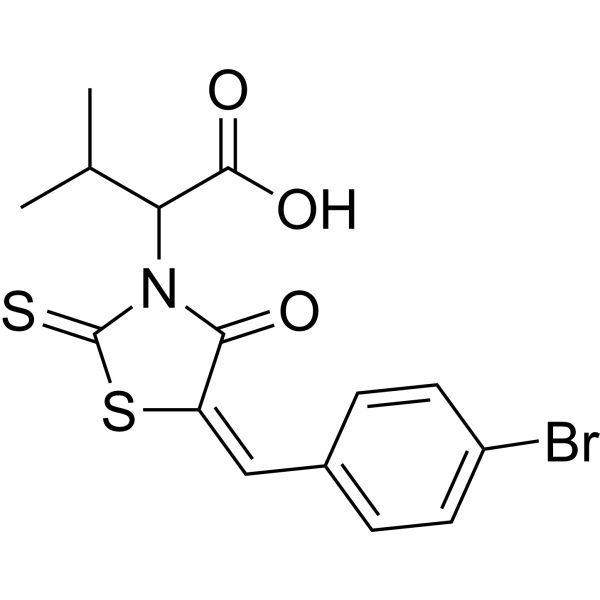
BH3I-1 is a Bcl-2 family antagonist, which inhibits the binding of the Bak BH3 peptide to Bcl-xL with a Ki of 2.4±0.2 μM in FP assay. BH3I-1 has a Kd of 5.3 μM against the p53/MDM2 pair.
loading...
    loading...
Cat. No.: HY-P2343
Target:  

Apoptosis

Research Areas:  

Cancer

BH3 hydrochloride, a BBB penetrated peptide, provoke apoptosis either by direct activation of pro-apoptotic Bax/Bak or by neutralizing anti-apoptotic Bcl-2 proteins (Bcl-2, Bcl-XL, Bcl-w, Mcl-1 and A-1) via their BH3 domian .
loading...
    loading...
Cat. No.: HY-P1562
Target:  

Bcl-2 Family

Research Areas:  

Cancer

PUMA BH3 is a p53 upregulated modulator of apoptosis (PUMA) BH3 domain peptide, acts as a direct activator of Bak, with a Kd of 26 nM.
loading...
    loading...
Cat. No.: HY-P0300F
Target:  

Bcl-2 Family

Research Areas:  

Others

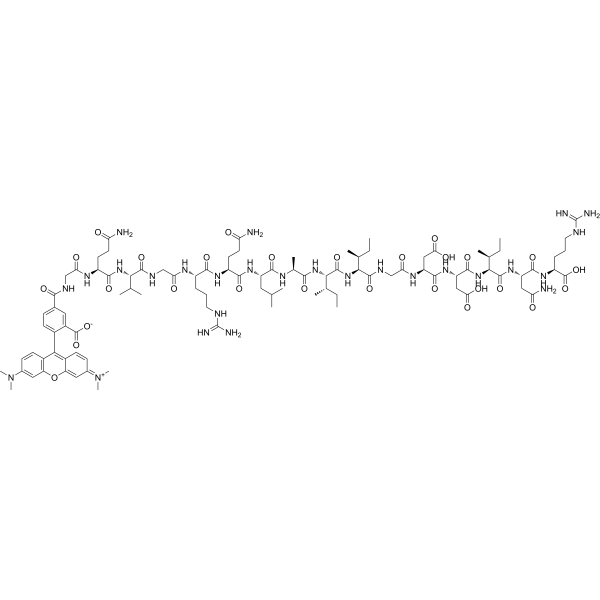
Bak BH3 (72-87), TAMRA-labeled is a biological active peptide.
loading...
    loading...
Cat. No.: HY-P5325A
Target:  

Bcl-2 Family

Research Areas:  

Others

Bid BH3 (80-99) acetate is a biological active peptide. (BID is a pro-apoptotic member of the 'BH3-only' (BOPS) subset of the BCL-2 family of proteins that constitute a critical control point in apoptosis. Bid is the first of the BOPs reported to bind and activate Bcl-2, Bax, and Bak. Bid serves as a death-inducing ligand that moves from the cytosol to the mitochondrial membrane to inactivate Bcl-2 or to activate Bax.Pyroglutamyl (pGlu) peptides may spontaneously form when either Glutamine (Q) or Glutamic acid (E) is located at the sequence N-terminus. The conversion of Q or E to pGlu is a natural occurrence and in general it is believed that the hydrophobic γ-lactam ring of pGlu may play a role in peptide stability against gastrointestinal proteases. Pyroglutamyl peptides are therefore considered a normal subset of such peptides and are included as part of the peptide purity during HPLC analysis.)
loading...
    loading...
Cat. No.: HY-P5325
CAS No.: 505070-05-3
Target:  

Bcl-2 Family

Research Areas:  

Others

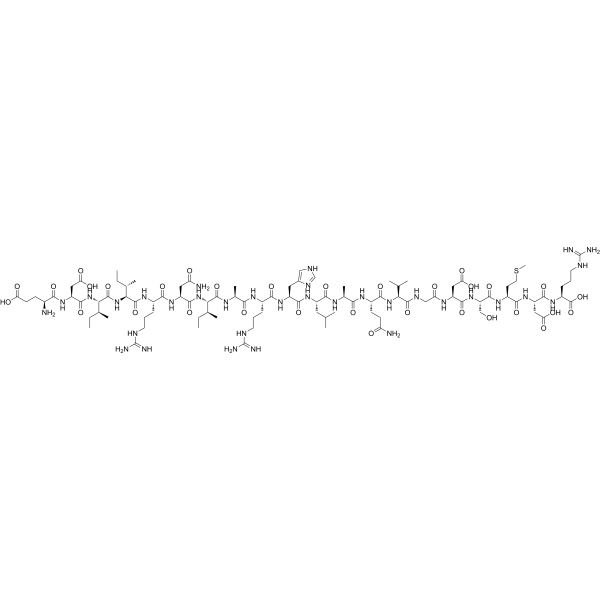
Bid BH3 (80-99) is a biological active peptide. (BID is a pro-apoptotic member of the 'BH3-only' (BOPS) subset of the BCL-2 family of proteins that constitute a critical control point in apoptosis. Bid is the first of the BOPs reported to bind and activate Bcl-2, Bax, and Bak. Bid serves as a death-inducing ligand that moves from the cytosol to the mitochondrial membrane to inactivate Bcl-2 or to activate Bax.Pyroglutamyl (pGlu) peptides may spontaneously form when either Glutamine (Q) or Glutamic acid (E) is located at the sequence N-terminus. The conversion of Q or E to pGlu is a natural occurrence and in general it is believed that the hydrophobic γ-lactam ring of pGlu may play a role in peptide stability against gastrointestinal proteases. Pyroglutamyl peptides are therefore considered a normal subset of such peptides and are included as part of the peptide purity during HPLC analysis.)
loading...
    loading...
Cat. No.: HY-P10614
CAS No.: 300349-78-4
Target:  

Apoptosis Bcl-2 Family

Research Areas:  

Cancer

Bid BH3 peptide is a pro-apoptotic peptide derived from the Bid protein. Through its α-helical conformation, Bid BH3 peptide inserts into the hydrophobic grooves of anti-apoptotic Bcl-2 family proteins (Bcl-xl, Bcl-2, Bcl-w and Bax), competitively displaces and releases the pro-apoptotic proteins Bax/Bak, thereby initiating mitochondrial outer membrane permeabilization (MOMP) and the caspase cascade for apoptosis. Bid BH3 peptide can be used in cancer-related research .
loading...
    loading...
Cat. No.: HY-P1562A
Target:  

Bcl-2 Family

Research Areas:  

Cancer

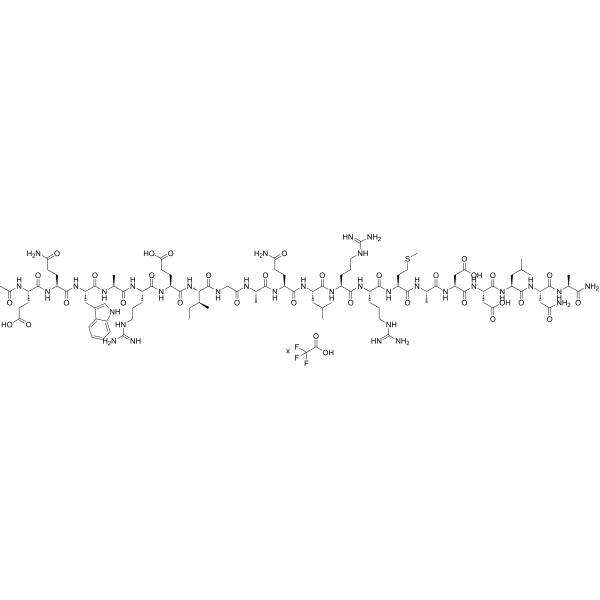
PUMA BH3 TFA is a p53 upregulated modulator of apoptosis (PUMA) BH3 domain peptide, acts as a direct activator of Bak, with a Kd of 26 nM .
loading...
    loading...
Cat. No.: HY-161577
CAS No.: 701231-39-2
Target:  

Bcl-2 Family

Research Areas:  

Cancer

BFC1103 is a small-molecule compound whose primary mechanism of action involves interaction with a specific domain of Bcl-2, particularly its loop domain. This interaction induces a conformational change in Bcl-2, exposing its BH3 (Bcl-2 homology 3) domain, thereby switching Bcl-2's function from anti-apoptotic to pro-apoptotic. The cell death induced by BFC1103 is dependent on the presence of Bax or Bak, both of which are key proteins involved in the intrinsic apoptotic pathway mediated by mitochondria. BFC1103 has successfully inhibited lung metastasis of triple-negative breast cancer in mouse models. It can be utilized in studying the roles of Bcl-2 family proteins in cancer development and how they impact the survival and proliferation of cancer cells .
loading...
    loading...
Cat. No.: HY-W286906
CAS No.: 518303-27-0
Target:  

Bcl-2 Family Apoptosis

Research Areas:  

Cancer

Mcl1-IN-15 (Compound 7) is the inhibitor for myeloid cell leukemia 1 (Mcl-1) with an IC50 of 8.73 μM. Mcl1-IN-15 inhibits Mcl1-BH3 peptide interaction, activates the Bak/Bax-mediated apoptosis and exhibits antitumor activity .
loading...
    loading...
Cat. No.: HY-12048R
CAS No.: 3895-92-9
Chelerythrine (chloride) (Standard) is the analytical standard of Chelerythrine (chloride). This product is intended for research and analytical applications. Chelerythrine chloride is a potent, cell-permeable inhibitor of protein kinase C, with an IC50 of 660 nM. Chelerythrine chloride inhibits the Bcl-XL-Bak BH3 peptide binding with IC50 of 1.5 μM and displaces Bax from Bcl-XL. Chelerythrine chloride induces apoptosis and autophagy.
loading...
    loading...
Cat. No.: HY-50907S
CAS No.: 1217686-68-4
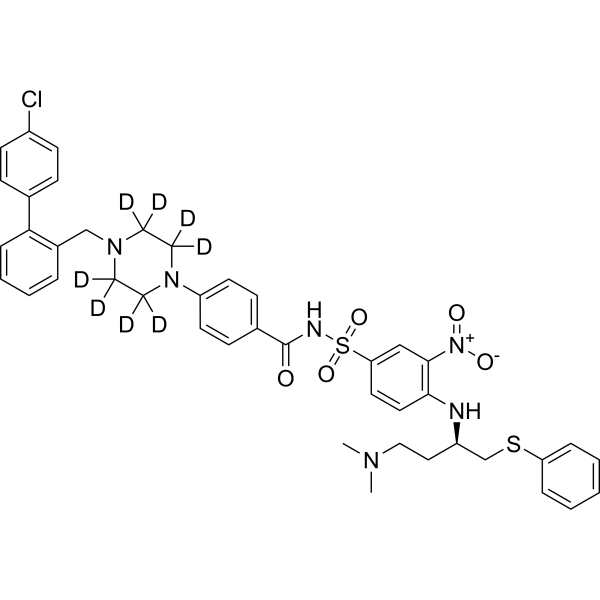
ABT 737-d8 is the deuterium labeled ABT-737. ABT-737, a BH3 mimetic, is a potent Bcl-2, Bcl-xL and Bcl-w inhibitor with EC50s of 30.3 nM, 78.7 nM, and 197.8 nM, respectively. ABT-737 induces the disruption of the BCL-2/BAX complex and BAK-dependent but BIM-independent activation of the intrinsic apoptotic pathway. ABT-737 induces autophagy and has the potential for acute myeloid leukemia (AML) research .
loading...
    loading...
Cat. No.: HY-P10614A
Target:  

Apoptosis Bcl-2 Family

Research Areas:  

Cancer

Bid BH3 peptide acetate is a pro-apoptotic peptide derived from the Bid protein. Through its α-helical conformation, Bid BH3 peptide inserts into the hydrophobic grooves of anti-apoptotic Bcl-2 family proteins (Bcl-xl, Bcl-2, Bcl-w and Bax), competitively displaces and releases the pro-apoptotic proteins Bax/Bak, thereby initiating mitochondrial outer membrane permeabilization (MOMP) and the caspase cascade for apoptosis. Bid BH3 peptide acetate can be used in cancer-related research .
loading...
    loading...
Cat. No.: HY-N9826
CAS No.: 561-47-7
Icterogenin is a selective inhibitor targeting the Bcl-XL/Bak BH3 domain peptide interaction and exhibits anti-leukemic activity. Icterogenin regulates protein interactions and affects tumor cell survival. Icterogenin is an oleanane-type triterpenoid compound that can be isolated from Lantana camara and is useful in the field of anti-tumor drug development .
loading...
    loading...

