


Search Result
Results for "
Brain Metastasis
" in MedChemExpress (MCE) Product Catalog:
| Cat. No. |
Product Name |
Target |
Research Areas |
Chemical Structure |
-
- HY-12708
-
Chlorpromazine
Maximum Cited Publications
128 Publications Verification
|
Dopamine Receptor
Cytochrome P450
Autophagy
5-HT Receptor
|
Cardiovascular Disease
Neurological Disease
Cancer
|
|
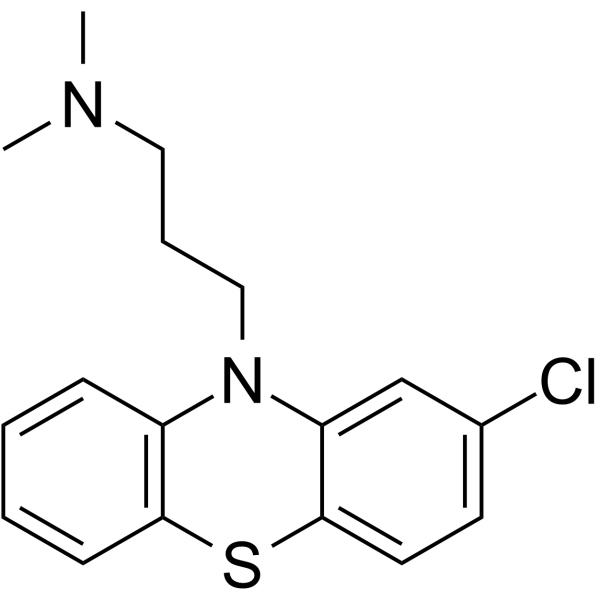
Chlorpromazine is an orally active, blood-brain barrier-transparent antipsychotic agent that effectively antagonises D2 dopamine receptors and 5-HT2A, which is widely used in schizophrenia and other psychiatric disorders. Chlorpromazine exerts anti-cancer activity through a variety of pathways, including anti-proliferation, induction of autophagy and cycle arrest (G2-M phase), inhibition of cytochrome c oxidase (CcO), inhibition of tumour growth and metastasis, and inhibition of tumour immune escape. Chlorpromazine also blocks hNav1.7 channels (IC50=25.9 μM; concentration-dependent) and HERG potassium channels (IC50=21.6 μM), which has potential for analgesic and cardiac arrhythmic studies. Chlorpromazine also can inhibit clathrin-mediated endocytosis .
|
-
-
- HY-B0407A
-
|
|
Dopamine Receptor
Autophagy
Cytochrome P450
5-HT Receptor
|
Cardiovascular Disease
Neurological Disease
Cancer
|
|
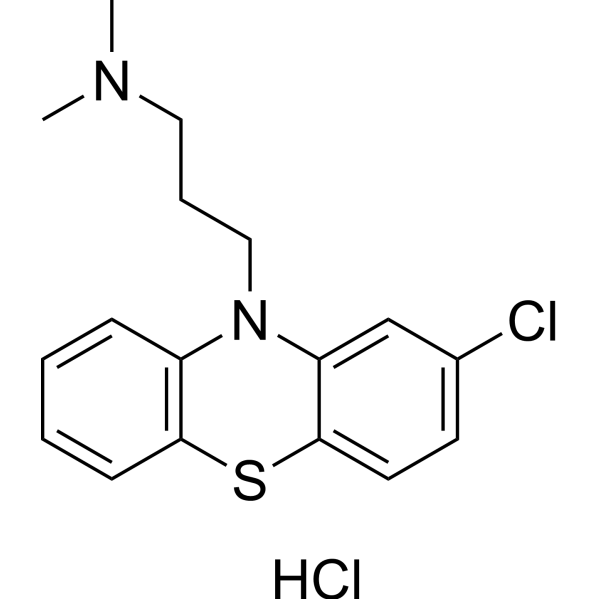
Chlorpromazine hydrochloride is an orally active, blood-brain barrier-transparent antipsychotic agent that effectively antagonises D2 dopamine receptors and 5-HT2A, which is widely used in schizophrenia and other psychiatric disorders. Chlorpromazine hydrochloride exerts anti-cancer activity through a variety of pathways, including anti-proliferation, induction of autophagy and cycle arrest (G2-M phase), inhibition of cytochrome c oxidase (CcO), inhibition of tumour growth and metastasis, and inhibition of tumour immune escape. Chlorpromazine hydrochloride also blocks hNav1.7 channels (IC50=25.9 μM; concentration-dependent) and HERG potassium channels (IC50=21.6 μM), which has potential for analgesic and cardiac arrhythmic studies. Chlorpromazine hydrochloride also can inhibit clathrin-mediated endocytosis .
|
-
-
- HY-B0807A
-
|
|
Dopamine Receptor
NADPH Oxidase
Dengue Virus
Flavivirus
|
Neurological Disease
Inflammation/Immunology
Cancer
|
|
Prochlorperazine dimaleate is an orally active phenothiazine-type dopamine D2 receptor (D2R) antagonist. Prochlorperazine exhibits anti-cancer activity in vitro against various cancer cell lines. Prochlorperazine dimaleate exhibits IC50 values of 6.4 μM, 4.5 μM and 2.3 μM for NOX1, NOX2 and NOX5, respectively. Prochlorperazine dimaleate has antedesmosidic activity against dengue virus (DENV). Prochlorperazine dimaleate can be used for research on nausea, vomiting, migraine, and schizophrenia .
|
-
-
- HY-P4073
-
|
GRN1005; Paclitaxel trevatide
|
Peptide-Drug Conjugates (PDCs)
LDLR
|
Cancer
|
|
ANG1005 (Paclitaxel trevatide) is a brain-penetrating peptide-drug conjugate. ANG1005, a taxane derivative, consists of three paclitaxel (HY-B0015) molecules covalently linked to Angiopep-2, designed to cross the blood-brain and blood-cerebrospinal barriers and to penetrate malignant cells via low density lipoprotein receptor-related protein (LRP1) transport system .
|
-
-
- HY-131498
-
|
Mca-Pro-Leu-Gly-Leu-Dpa-Ala-Arg-NH2
|
Fluorescent Dye
MMP
|
Cancer
|
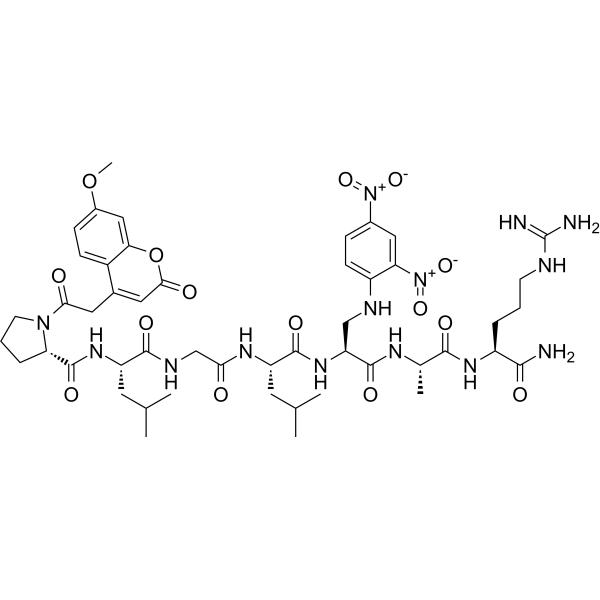
MOCAc-PLGL (Dpa) AR (Mca-Pro-Leu-Gly-Leu-Dpa-Ala-Arg-NH2) is a synthetic fluorescent substrate mainly used for in vitro enzymatic activity assays of MMP-7 (detection at 393 nm after excitation at 328 nm). MOCAc-PLGL (Dpa) AR is specifically cleaved and hydrolyzed by MMP-7 at the Gly-Leu peptide bond, allowing enzymatic activity to be monitored via fluorometry or HPLC (DMSO is usually added to ensure sufficient dissolution when determining kinetic parameters). MOCAc-PLGL (Dpa) AR is used to accurately evaluate the catalytic activity and pH dependence of recombinant mature human MMP-7 in vitro. MOCAc-PLGL (Dpa) AR is suitable for research on the mechanisms of tumor metastasis and invasion, particularly in fields such as prostate cancer, colon cancer, lung cancer and breast cancer .\n
|
-
-
- HY-139300
-
|
HMPL-813
|
EGFR
|
Cancer
|
|
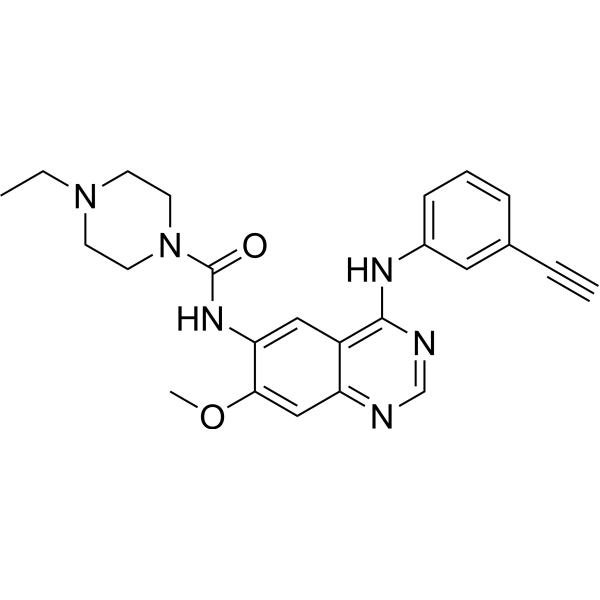
Epitinib (HMPL-813) is a selective, orally active, blood-brain barrier-permeable EGFR tyrosine kinase inhibitor. Epitinib is applicable to research on EGFR T790M-positive non-small cell lung cancer with brain metastasis and advanced solid tumors .
|
-
-
- HY-P99463
-
|
AVB-500; AVB-S6-500
|
TAM Receptor
PI3K
Akt
p38 MAPK
|
Cancer
|
|
Batiraxcept (AVB-500; AVB-S6-500) is a selective, soluble AXL receptor and GAS6 inhibitor that targets the GAS6-AXL signaling axis. Batiraxcept is orally inactive and does not cross the blood-brain barrier. Batiraxcept competitively binds to GAS6 ((KD <1 nM), preventing its interaction with the AXL receptor tyrosine kinase, thereby inhibiting downstream PI3K/AKT and MAPK signaling pathways, reducing tumor cell glycolysis, angiogenesis, and metastatic potential. Batiraxcept has demonstrated antitumor activity in preclinical models of endometrial, cholangiocarcinoma, and ovarian cancer by inhibiting tumor growth, invasion, and metastasis .
|
-
-
- HY-P10862
-
|
|
Exosomes
Virus Protease
|
Infection
Cancer
|
AH-D peptide is a brain-penetrant antiviral agent disrupting highly curved lipid membranes. AH-D peptide exhibits broad-spectrum antiviral activity against ZIKV, Dengue virus, Chikungunya virus, yellow fever virus and Japanese encephalitis virus, with IC50 values of 11.9, 12.5, 35.7, 206 and 136 nM, respectively. AH-D peptide reduces the viral load in the brain, suppresses inflammation, protects neurons, and does not damage the blood brain barrier. AH-D peptide restores antitumor immunity by decreasing circulating PD-L1 + exosomes, reducing intratumoral immunosuppressive cells (regulatory T cells, myeloid-derived suppressor cells), and enhancing T cell function. AH-D peptide inhibits membrane-enveloped viruses and cancer cell metastasis in vivo. AH-D peptide exhibits no immunogenicity and has negligible effects on normal tissues. AH-D peptide can be used for research in Zika virus and other mosquito-borne viruses, cancer immunotherapy and metastasis .
|
-
-
- HY-P10427
-
|
|
CXCR
Dengue Virus
|
Neurological Disease
Inflammation/Immunology
Cancer
|
|
DV1 is a CXCR4 inhibitor with anti-proteolytic properties that specifically blocks the binding of SDF-1α to its receptor. DV1 inhibits the migration of breast cancer cells and enables the targeted delivery of avidin-PLGA nanoparticles to CXCR4-expressing cancer cells. DV1 not only effectively suppresses the progression of metastatic breast cancer in mouse models, but also preferentially accumulates in brain tumor tissues rather than normal brain tissues, showing potential for inhibiting intracranial tumor metastasis. As a humoral immune stimulant, DV1 induces the production of specific IgG, neutralizing antibodies and cellular immune responses, thereby providing the host with protection against lethal challenges. DV1 has been applied to studies on CXCR4-expressing cancers, glioblastoma, dengue fever and other related diseases .
|
-
-
- HY-13459
-
|
|
Smo
|
Cancer
|
|
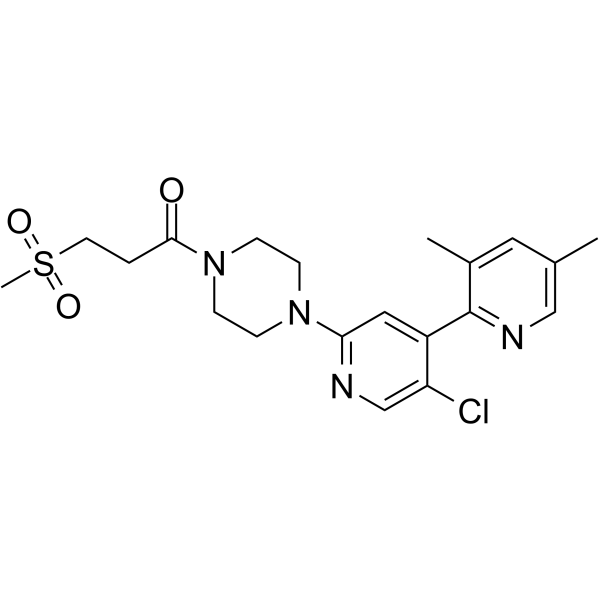
PF-5274857 is a potent, selective, orally active and brain-penetrant antagonist of Smo, with an IC50 of 5.8 nM and Ki of 4.6 nM. PF-5274857 has potential for research of tumor types including brain tumors and brain metastasis driven by an activated Hh pathway .
|
-
-
- HY-P10427A
-
|
|
CXCR
Dengue Virus
|
Infection
|
|
DV1 TFA is a CXCR4 inhibitor with anti-proteolytic properties that specifically blocks the binding of SDF-1α to its receptor. DV1 TFA inhibits the migration of breast cancer cells and enables the targeted delivery of avidin-PLGA nanoparticles to CXCR4-expressing cancer cells. DV1 TFA not only effectively suppresses the progression of metastatic breast cancer in mouse models, but also preferentially accumulates in brain tumor tissues rather than normal brain tissues, showing potential for inhibiting intracranial tumor metastasis. As a humoral immune stimulant, DV1 TFA induces the production of specific IgG, neutralizing antibodies and cellular immune responses, thereby providing the host with protection against lethal challenges. DV1 TFA has been applied to studies on CXCR4-expressing cancers, glioblastoma, dengue fever and other related diseases .
|
-
-
- HY-178242
-
|
|
PROTACs
EGFR
|
Cancer
|
|
PROTAC EGFR degrader 16 (Compound 98) a selective EGFR PROTAC degrader with DC50 values of < 50 nM in NCI-H1975 (EGFR L858R-T970M), NCI-H3225 (EGFR L858R) and NCI-H1976 + CS (EGFR L858R-T970M-L797S). PROTAC EGFR degrader 16 can be used for the study of EGFR-driven cancerssuch as non-small cell lung cancer (Pink: EGFR ligand (HY-178313); Blue: CRBN ligand (HY-W1128702); Black: Linker; EGFR ligand + Linker (HY-178311)) .
|
-
-
- HY-16491
-
|
DJ-927
|
Microtubule/Tubulin
|
Cancer
|
|
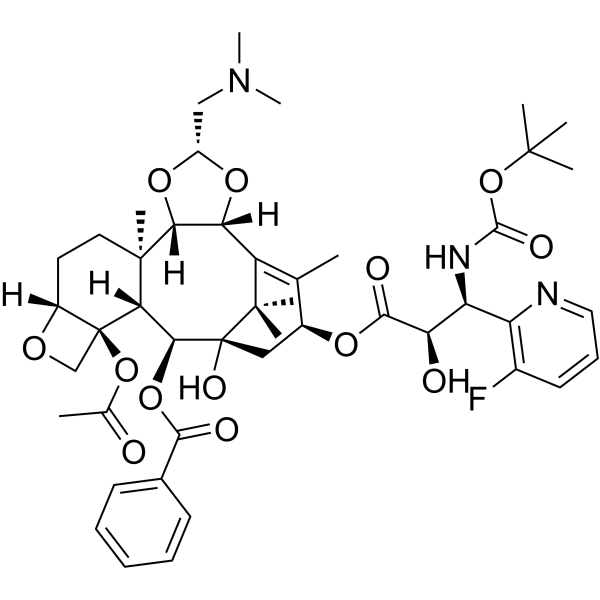
Tesetaxel (DJ-927) is an orally active and brain-penetrant taxane tubulin inhibitor. Tesetaxel inhibits tubulin depolymerization with an IC50 of 0.44 μM. Tesetaxel inhibits cancer cells proliferation and shows potent antitumor activity against P-glycoprotein-positive cancer cells. Tesetaxel can be used for the research of cancer, such as solid tumors, liver metastasis, and advanced breast cancer .
|
-
-
- HY-178313
-
|
|
Ligands for Target Protein for PROTAC
EGFR
|
Cancer
|
|
EGFR ligand-18 is a PROTAC target protein ligand that can be used for synthesis of PROTACs, such as PROTAC EGFR degrader 16 (HY-178242). PROTAC EGFR degrader 16 is a potent EGFR PROTAC degrader with anti-tumor activity .
|
-
-
- HY-168012
-
|
|
Ras
Phosphatase
|
Cancer
|
|
Pan-RAS-IN-6 (compound 24) is an inhibitor targeting DUSP6, which reduces MAPK activation in the brain of the NCI-H1373-Luc model (DUSP6), at the same time, it shows significant tumor growth inhibition and tumor regression effects in the NSCLC brain metastasis mouse model. Pan-RAS-IN-6 shows high selectivity and strong inhibitory effects, especially in KRAS mutation-related signaling pathways, demonstrating varying inhibitory activity against different KRAS mutants and interacting proteins. The IC50 values for KRAS G12C, G12D, and G12V are 1.3 nM, 4.7 nM, and 0.3 nM, respectively .
|
-
-
- HY-B0407AR
-
|
|
Reference Standards
Dopamine Receptor
Autophagy
Cytochrome P450
5-HT Receptor
|
Cardiovascular Disease
Neurological Disease
Cancer
|
|
Chlorpromazine (hydrochloride) (Standard) is the analytical standard of Chlorpromazine (hydrochloride). This product is intended for research and analytical applications. Chlorpromazine hydrochloride is an orally active, blood-brain barrier-transparent antipsychotic agent that effectively antagonises D2 dopamine receptors and 5-HT2A, which is widely used in schizophrenia and other psychiatric disorders. Chlorpromazine hydrochloride exerts anti-cancer activity through a variety of pathways, including anti-proliferation, induction of autophagy and cycle arrest (G2-M phase), inhibition of cytochrome c oxidase (CcO), inhibition of tumour growth and metastasis, and inhibition of tumour immune escape. Chlorpromazine hydrochloride also blocks hNav1.7 channels (IC50=25.9 μM; concentration-dependent) and HERG potassium channels (IC50=21.6 μM), which has potential for analgesic and cardiac arrhythmic studies. Chlorpromazine hydrochloride also can inhibit clathrin-mediated endocytosis .
|
-
-
- HY-13459A
-
|
|
Smo
|
Cancer
|
|
PF-5274857 hydrochloride is a potent, selective, orally active and brain-penetrant antagonist of Smo, with an IC50 of 5.8 nM and Ki of 4.6 nM. PF-5274857 hydrochloride has potential for research of tumor types including brain tumors and brain metastasis driven by an activated Hh pathway .
|
-
-
- HY-176486
-
|
|
Estrogen Receptor/ERR
|
Cancer
|
|
ER degrader 11 (Compound 5) is an orally active, brain-penetrant and selective estrogen receptor (ER) degrader (ERα IC50=1.6 nM). ER degrader 11 is promising for research of breast cancer brain metastasis .
|
-
-
- HY-W041470R
-
|
|
Reference Standards
Endogenous Metabolite
|
Metabolic Disease
|
|
Chlorpromazine (hydrochloride) (Standard) is the analytical standard of Chlorpromazine (hydrochloride). This product is intended for research and analytical applications. Chlorpromazine hydrochloride is an orally active, blood-brain barrier-transparent antipsychotic agent that effectively antagonises D2 dopamine receptors and 5-HT2A, which is widely used in schizophrenia and other psychiatric disorders. Chlorpromazine hydrochloride exerts anti-cancer activity through a variety of pathways, including anti-proliferation, induction of autophagy and cycle arrest (G2-M phase), inhibition of cytochrome c oxidase (CcO), inhibition of tumour growth and metastasis, and inhibition of tumour immune escape. Chlorpromazine hydrochloride also blocks hNav1.7 channels (IC50=25.9 μM; concentration-dependent) and HERG potassium channels (IC50=21.6 μM), which has potential for analgesic and cardiac arrhythmic studies. Chlorpromazine hydrochloride also can inhibit clathrin-mediated endocytosis .
|
-
-
- HY-P99658A
-
-
-
- HY-N18209
-
|
|
p38 MAPK
|
Cancer
|
|
4-Hydroxy-3-butylphthalide is a Phthalide (HY-W015820) derivative found in the rhizome of Ligusticum ChuanXiong Hort. 4-Hydroxy-3-butylphthalide binds core targets linked to lung cancer brain metastasis, such as BDNF, FOS, and MAPK14. 4-Hydroxy-3-butylphthalide can be used for the research of lung cancer brain metastasis .
|
-
-
- HY-109061R
-
|
YH25448 (Standard); GNS-1480 (Standard)
|
Apoptosis
Akt
TRP Channel
EGFR
ERK
Reference Standards
|
Infection
Neurological Disease
Metabolic Disease
Cancer
|
|
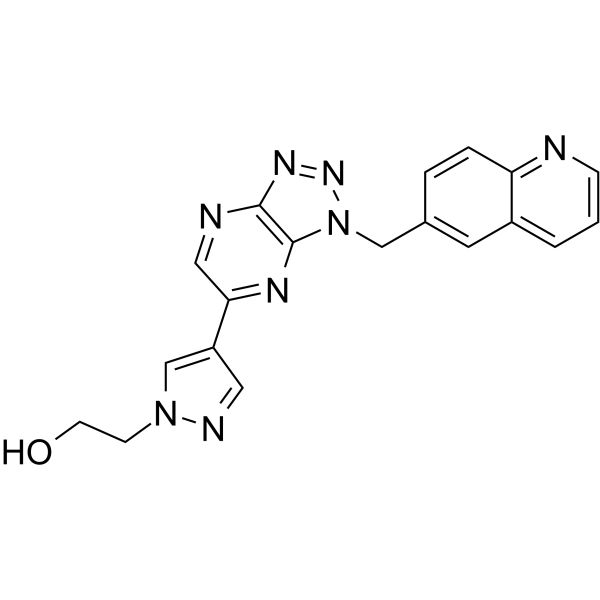
Lazertinib (Standard) is the analytical standard of Lazertinib (HY-109061). This product is intended for research and analytical applications. Lazertinib (YH25448) is a potent, selective, CNS-penetrant, orally available and irreversible EGFR tyrosine Kinase inhibitor, exhibiting high selectivity for activating (EGFRm) and T790M resistance mutations. Lazertinib inhibits phosphorylation of EGFR, AKT and ERK, leading to apoptosis and suppression of tumor growth in mouse H1975-luc brain metastasis xenograft models. Lazertinib can be used in the study of non-small cell lung cancer .
|
-
-
- HY-109061BR
-
|
YH25448 mesylate (Standard); GNS-1480 mesylate (Standard)
|
Reference Standards
|
Cancer
|
|
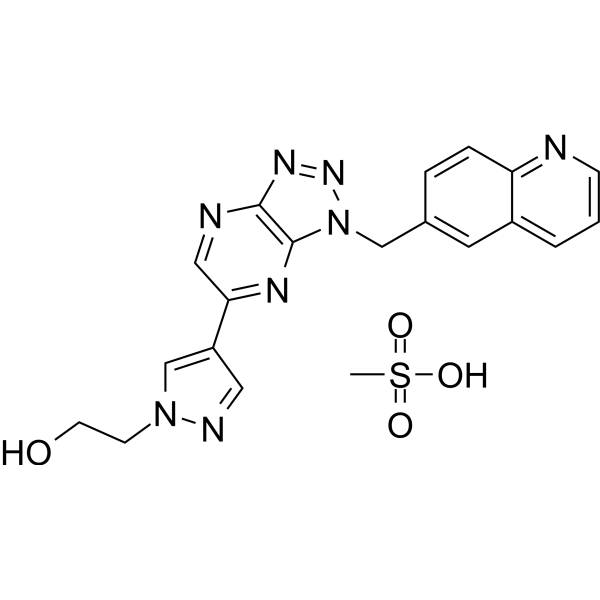
Lazertinib mesylate (Standard) is the analytical standard of Lazertinib (mesylate) (HY-109061B). This product is intended for research and analytical applications. Lazertinib (YH25448) mesylate is a potent, selective, CNS-penetrant, orally available and irreversible EGFR tyrosine Kinase inhibitor, exhibiting high selectivity for activating (EGFRm) and T790M resistance mutations. Lazertinib mesylate inhibits phosphorylation of EGFR, AKT and ERK, leading to apoptosis and suppression of tumor growth in mouse H1975-luc brain metastasis xenograft models. Lazertinib mesylate can be used in the study of non-small cell lung cancer .
|
-
| Cat. No. |
Product Name |
Type |
-
- HY-131498
-
|
Mca-Pro-Leu-Gly-Leu-Dpa-Ala-Arg-NH2
|
Fluorescent Dye
|
MOCAc-PLGL (Dpa) AR (Mca-Pro-Leu-Gly-Leu-Dpa-Ala-Arg-NH2) is a synthetic fluorescent substrate mainly used for in vitro enzymatic activity assays of MMP-7 (detection at 393 nm after excitation at 328 nm). MOCAc-PLGL (Dpa) AR is specifically cleaved and hydrolyzed by MMP-7 at the Gly-Leu peptide bond, allowing enzymatic activity to be monitored via fluorometry or HPLC (DMSO is usually added to ensure sufficient dissolution when determining kinetic parameters). MOCAc-PLGL (Dpa) AR is used to accurately evaluate the catalytic activity and pH dependence of recombinant mature human MMP-7 in vitro. MOCAc-PLGL (Dpa) AR is suitable for research on the mechanisms of tumor metastasis and invasion, particularly in fields such as prostate cancer, colon cancer, lung cancer and breast cancer .\n
|
| Cat. No. |
Product Name |
Target |
Research Area |
-
- HY-P4073
-
|
GRN1005; Paclitaxel trevatide
|
Peptide-Drug Conjugates (PDCs)
LDLR
|
Cancer
|
|
ANG1005 (Paclitaxel trevatide) is a brain-penetrating peptide-drug conjugate. ANG1005, a taxane derivative, consists of three paclitaxel (HY-B0015) molecules covalently linked to Angiopep-2, designed to cross the blood-brain and blood-cerebrospinal barriers and to penetrate malignant cells via low density lipoprotein receptor-related protein (LRP1) transport system .
|
-
- HY-P10862
-
|
|
Exosomes
Virus Protease
|
Infection
Cancer
|
AH-D peptide is a brain-penetrant antiviral agent disrupting highly curved lipid membranes. AH-D peptide exhibits broad-spectrum antiviral activity against ZIKV, Dengue virus, Chikungunya virus, yellow fever virus and Japanese encephalitis virus, with IC50 values of 11.9, 12.5, 35.7, 206 and 136 nM, respectively. AH-D peptide reduces the viral load in the brain, suppresses inflammation, protects neurons, and does not damage the blood brain barrier. AH-D peptide restores antitumor immunity by decreasing circulating PD-L1 + exosomes, reducing intratumoral immunosuppressive cells (regulatory T cells, myeloid-derived suppressor cells), and enhancing T cell function. AH-D peptide inhibits membrane-enveloped viruses and cancer cell metastasis in vivo. AH-D peptide exhibits no immunogenicity and has negligible effects on normal tissues. AH-D peptide can be used for research in Zika virus and other mosquito-borne viruses, cancer immunotherapy and metastasis .
|
-
- HY-P10427
-
|
|
CXCR
Dengue Virus
|
Neurological Disease
Inflammation/Immunology
Cancer
|
|
DV1 is a CXCR4 inhibitor with anti-proteolytic properties that specifically blocks the binding of SDF-1α to its receptor. DV1 inhibits the migration of breast cancer cells and enables the targeted delivery of avidin-PLGA nanoparticles to CXCR4-expressing cancer cells. DV1 not only effectively suppresses the progression of metastatic breast cancer in mouse models, but also preferentially accumulates in brain tumor tissues rather than normal brain tissues, showing potential for inhibiting intracranial tumor metastasis. As a humoral immune stimulant, DV1 induces the production of specific IgG, neutralizing antibodies and cellular immune responses, thereby providing the host with protection against lethal challenges. DV1 has been applied to studies on CXCR4-expressing cancers, glioblastoma, dengue fever and other related diseases .
|
-
- HY-P10427A
-
|
|
CXCR
Dengue Virus
|
Infection
|
|
DV1 TFA is a CXCR4 inhibitor with anti-proteolytic properties that specifically blocks the binding of SDF-1α to its receptor. DV1 TFA inhibits the migration of breast cancer cells and enables the targeted delivery of avidin-PLGA nanoparticles to CXCR4-expressing cancer cells. DV1 TFA not only effectively suppresses the progression of metastatic breast cancer in mouse models, but also preferentially accumulates in brain tumor tissues rather than normal brain tissues, showing potential for inhibiting intracranial tumor metastasis. As a humoral immune stimulant, DV1 TFA induces the production of specific IgG, neutralizing antibodies and cellular immune responses, thereby providing the host with protection against lethal challenges. DV1 TFA has been applied to studies on CXCR4-expressing cancers, glioblastoma, dengue fever and other related diseases .
|
| Cat. No. |
Product Name |
Target |
Research Area |
Image |
-
- HY-P99463
-
|
AVB-500; AVB-S6-500
|
TAM Receptor
PI3K
Akt
p38 MAPK
|
Cancer
|
|
Batiraxcept (AVB-500; AVB-S6-500) is a selective, soluble AXL receptor and GAS6 inhibitor that targets the GAS6-AXL signaling axis. Batiraxcept is orally inactive and does not cross the blood-brain barrier. Batiraxcept competitively binds to GAS6 ((KD <1 nM), preventing its interaction with the AXL receptor tyrosine kinase, thereby inhibiting downstream PI3K/AKT and MAPK signaling pathways, reducing tumor cell glycolysis, angiogenesis, and metastatic potential. Batiraxcept has demonstrated antitumor activity in preclinical models of endometrial, cholangiocarcinoma, and ovarian cancer by inhibiting tumor growth, invasion, and metastasis .
|
-
(5)
-
- HY-P99658A
-
-
(5)
| Cat. No. |
Product Name |
Category |
Target |
Chemical Structure |
-
- HY-W041470R
-
|
|
Ketones, Aldehydes, Acids
Endogenous metabolite
Source Classification
|
Reference Standards
Endogenous Metabolite
|
|
Chlorpromazine (hydrochloride) (Standard) is the analytical standard of Chlorpromazine (hydrochloride). This product is intended for research and analytical applications. Chlorpromazine hydrochloride is an orally active, blood-brain barrier-transparent antipsychotic agent that effectively antagonises D2 dopamine receptors and 5-HT2A, which is widely used in schizophrenia and other psychiatric disorders. Chlorpromazine hydrochloride exerts anti-cancer activity through a variety of pathways, including anti-proliferation, induction of autophagy and cycle arrest (G2-M phase), inhibition of cytochrome c oxidase (CcO), inhibition of tumour growth and metastasis, and inhibition of tumour immune escape. Chlorpromazine hydrochloride also blocks hNav1.7 channels (IC50=25.9 μM; concentration-dependent) and HERG potassium channels (IC50=21.6 μM), which has potential for analgesic and cardiac arrhythmic studies. Chlorpromazine hydrochloride also can inhibit clathrin-mediated endocytosis .
|
-
-
- HY-N18209
-
-
| Cat. No. |
Product Name |
|
Classification |
-
- HY-139300
-
|
HMPL-813
|
|
Alkynes
|
|
Epitinib (HMPL-813) is a selective, orally active, blood-brain barrier-permeable EGFR tyrosine kinase inhibitor. Epitinib is applicable to research on EGFR T790M-positive non-small cell lung cancer with brain metastasis and advanced solid tumors .
|
Your information is safe with us. * Required Fields.
Inquiry Information
- Product Name:
- Cat. No.:
- Quantity:
- MCE Japan Authorized Agent:

