

Search Result
Results for "
CAGE
" in MedChemExpress (MCE) Product Catalog:
1
Isotope-Labeled Compounds
| Cat. No. |
Product Name |
Target |
Research Areas |
Chemical Structure |
-
- HY-108786
-
|
ENB-0040
|
Phosphatase
|
Metabolic Disease
|
|
Asfotase alfa (ENB-0040) is a bone-targeted genetically engineered glycoprotein. Asfotase alfa increases the survival rate, bone mineralization and bone length and prevents mineralization defects of the feet, rib cage, lower limbs, jaw bones in Akp2 / knockout mice. Asfotase alfa can be used for the research of perinatal, infantile, and juvenile-onset hypophosphatasia (HPP) .
|
-
-
- HY-P10761
-
|
|
Radionuclide-Drug Conjugates (RDCs)
Carbonic Anhydrase
|
Cancer
|
|
DPI-4452 is a CAIX-targeting cyclic peptide with a DOTA cage, and can be chelated with radionuclide for CAIX-expressing tumor PET-CT imaging and study. DPI-4452 specifically and selectively binds CAIX without interaction with an in vitro off-target receptor panel of 55 targets (IC50 for recombinant hCAIX: 130 nM). Radiolabeled DPI-4452 inhibits tumor growth in HT-29 and SK-RC-52 xenograft mouse models . DPI-4452 can be used for the synthesis/research of Radionuclide-Drug Conjugates (RDCs).
|
-
-
- HY-N2427
-
|
|
Others
|
Others
|
|
Adamantane is a polycyclic cage molecule with high symmetry and remarkable properties. Adamantane can be incorporated into a lipophilic part of the lipid bilayer that constitutes membranes and as an anchor in the lipid bilayer of liposomes. Adamantane can be studied in pharmacological research to improve the lipophilicity and pharmacological properties of other active products .
|
-
-
- HY-107520
-
|
|
Drug Derivative
|
Neurological Disease
|
|
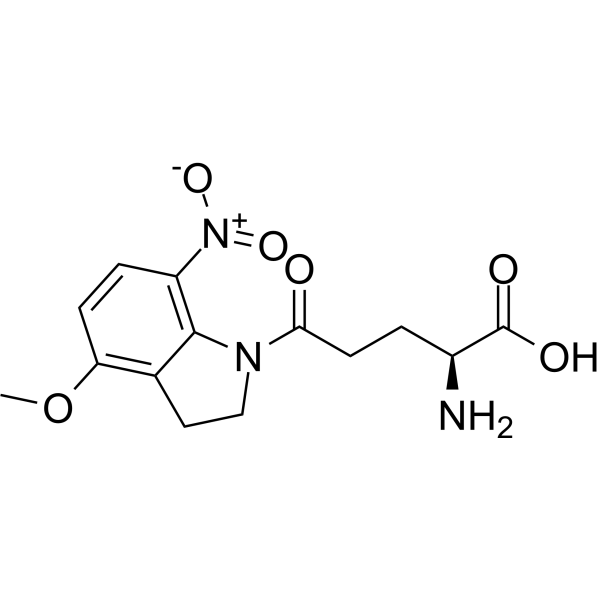
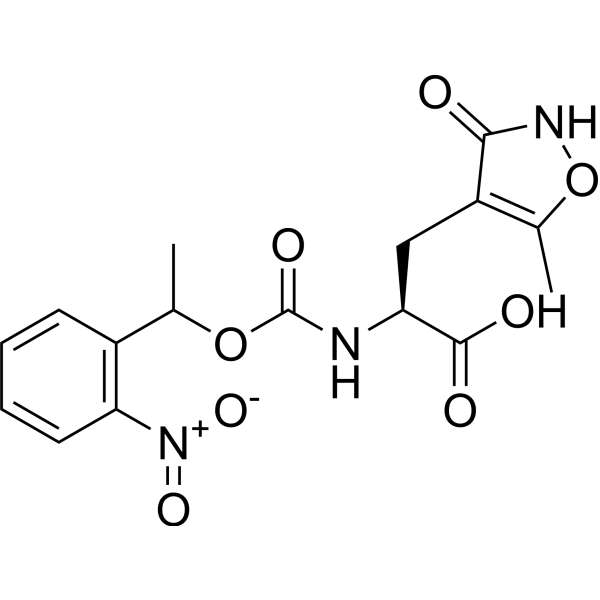
MNI-caged-L-glutamate is an inert photolabile glutamate precursor. MNI-caged-L-glutamate does not modulate NMDA and AMPA receptor function in cultured neurones. MNI-caged-L-glutamate can be used for research on neurotransmitters .
|
-
-
- HY-136276
-
|
|
Amino Acid Derivatives
|
Others
|
|
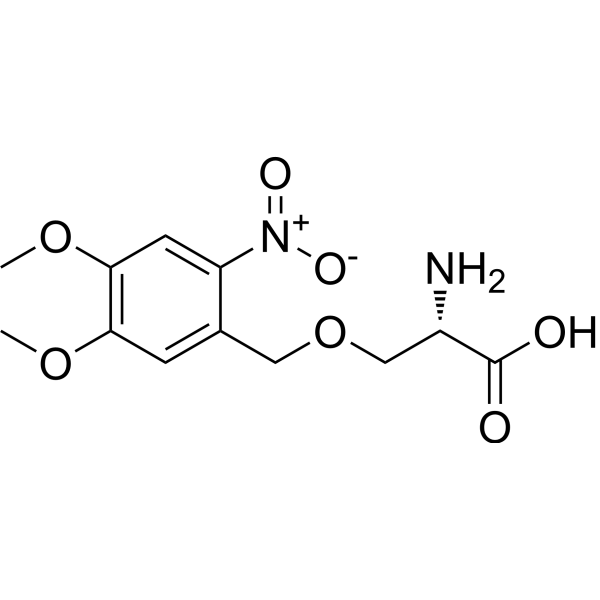
DMNB-caged-Serine is a photocaged amino acid. DMNB-caged-Serine can be used as a catalytic residue, hydrogen bonding partner or site of post-translational modification. DMNB-caged-Serine can be used for the control of protein phosphorylation .
|
-
-
- HY-168992
-
|
|
Histone Methyltransferase
|
Neurological Disease
Cancer
|
|
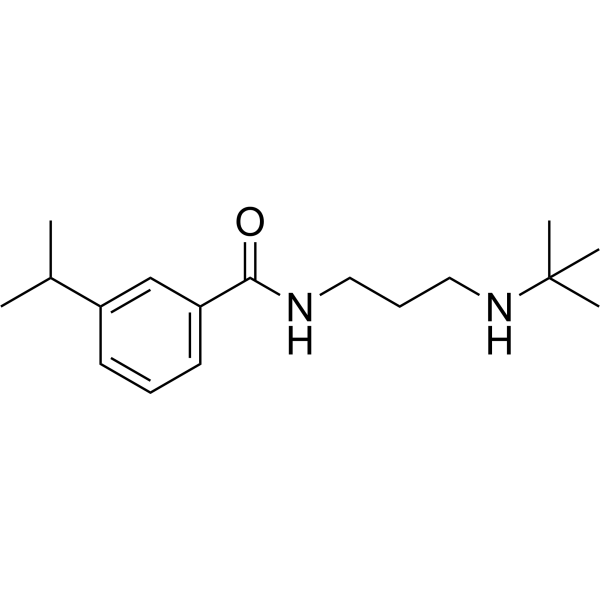
UNC6535 is a covalent ligand targeting the SETDB1 triple Tudor domain (3TD) with negative allosteric modulator properties, with an IC50 of 3.4 μM and a Kd of 4.2 μM. UNC6535 inhibits the methyltransferase activity of recombinant SETDB1 protein lacking the 3TD domain. UNC6535 reversibly binds to the aromatic cages of both TD2 and TD3 subdomains of SETDB1 3TD simultaneously, displacing the endogenous H3K9Me2K14Ac histone tail ligand. UNC6535 can be used in research on cancer and neurodegenerative diseases .
|
-
-
- HY-156906
-
|
|
MDM-2/p53
|
Cancer
|
|
UNC3474 is a small molecule ligand, binding with 53BP1. UNC3474 binds the aromatic methyl-lysine binding cage of 53BP1 TT, with a dissociation constant (Kd) of 1.0 ± 0.3 μM. UNC3474 inhibits the recruitment of 53BP1 to DSBs by stabilizing a pre-existing autoinhibited state of 53BP1 in cells .
|
-
-
- HY-153890
-
|
|
Biochemical Assay Reagents
|
Others
|
|
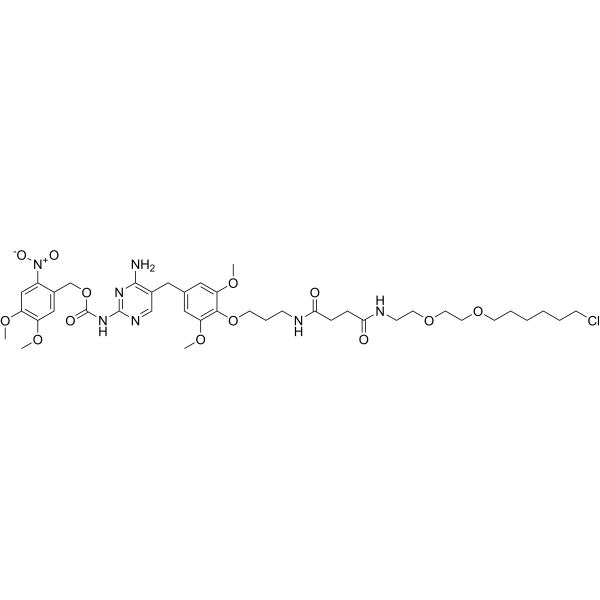
NVOC cage-TMP-Halo is a cell-permeable and photoactivatable protein dimerization inducer. NVOC cage-TMP-Halo can rapidly and reversibly control protein localization in living cells. NVOC cage-TMP-Halo can be used for dynamic cellular processes research .
|
-
-
- HY-126789
-
|
|
Biochemical Assay Reagents
|
Metabolic Disease
|
|
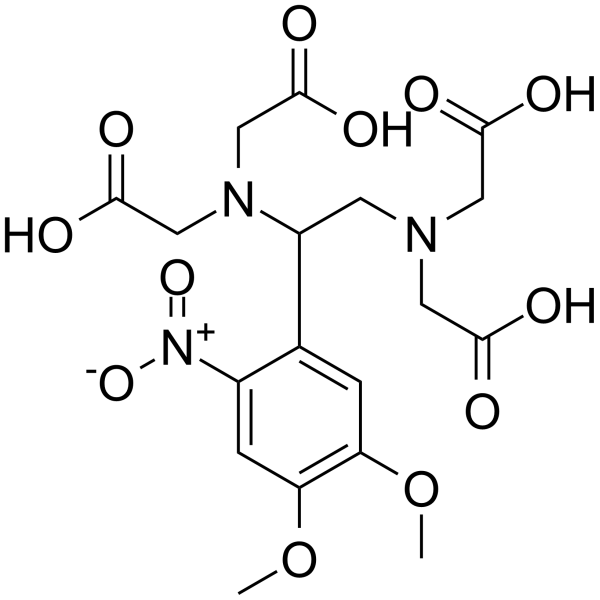
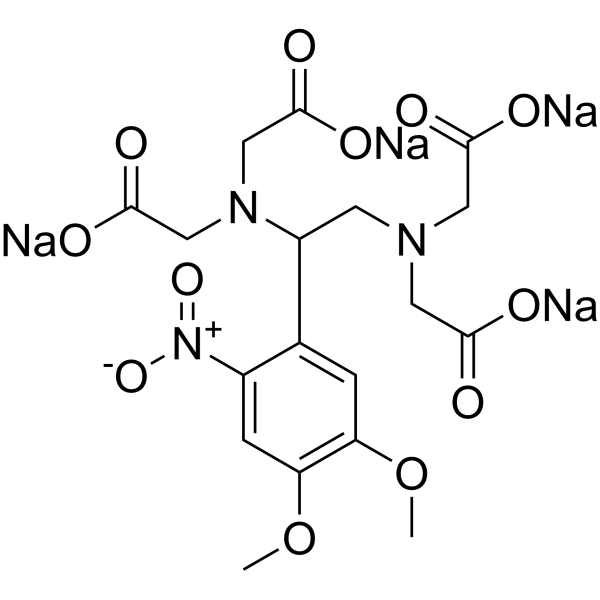
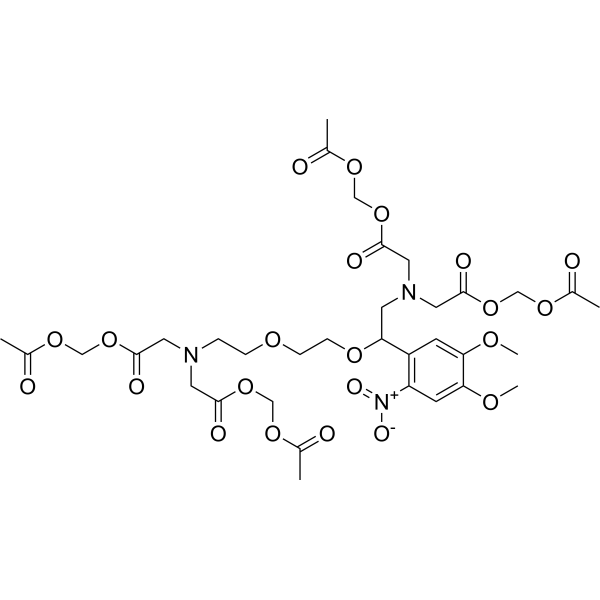
DM-Nitrophen is a photolabile caged calcium compound that acts as a calcium releaser. DM-Nitrophen binds Ca 2+ with high affinity and Mg 2+ with considerable affinity before photolysis. DM-Nitrophen releases Ca 2+ into the cytosol upon ultraviolet light irradiation. DM-Nitrophen induces calcium concentration pulses, triggers cytosolic calcium transients, promotes calcium-dependent exocytosis. DM-Nitrophen can be used for the research of calcium-dependent cellular processes .
|
-
-
- HY-103427
-
|
|
Dopamine Receptor
|
Neurological Disease
|
|
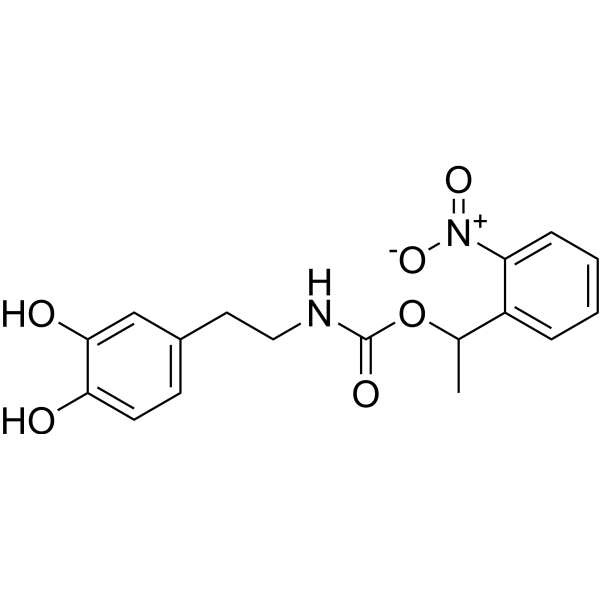
NPEC-caged-dopamine is a caged version of dopamine. NPEC-caged-Dopamine was used by applying focal photolysis with UV light (360 nm) to releases dopamine, which leads to D1 receptor activation .
|
-
-
- HY-126789A
-
|
|
Biochemical Assay Reagents
|
Metabolic Disease
|
|
DM-Nitrophen tertasodium is a photolabile caged calcium compound that acts as a calcium releaser. DM-Nitrophen tertasodium binds Ca 2+ with high affinity and Mg 2+ with considerable affinity before photolysis. DM-Nitrophen tertasodium releases Ca 2+ into the cytosol upon ultraviolet light irradiation. DM-Nitrophen tertasodium induces calcium concentration pulses, triggers cytosolic calcium transients, promotes calcium-dependent exocytosis. DM-Nitrophen tertasodium can be used for the research of calcium-dependent cellular processes .
|
-
-
- HY-131039
-
|
MDNI-glu
|
Amino Acid Derivatives
|
Others
|
|
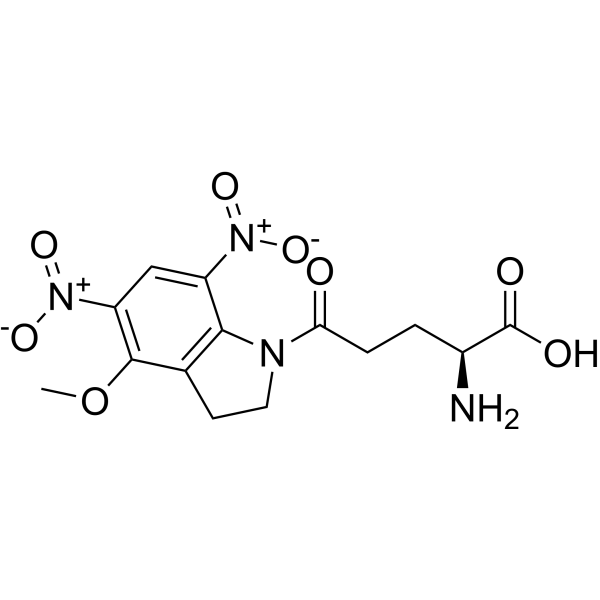
MDNI-caged-L-glutamate (MDNI-glu) is a biologically inert, photosensitive derivative of the major excitatory amino acid, L-glutamate. MDNI-caged-L-glutamate makes more efficient use of incident light .
|
-
-
- HY-N8727
-
|
|
Others
|
Cancer
|
|
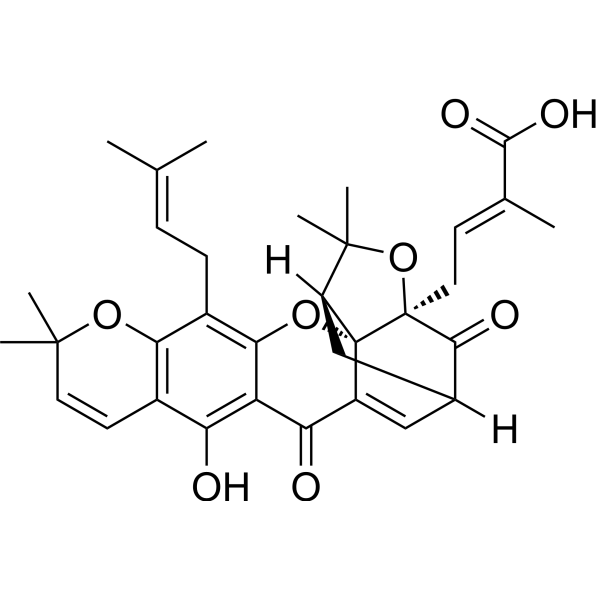
Isomorellic acid is a cytotoxic caged xanthone and can be used for cancer research .
|
-
-
- HY-D1343
-
|
|
Fluorescent Dye
|
|
|
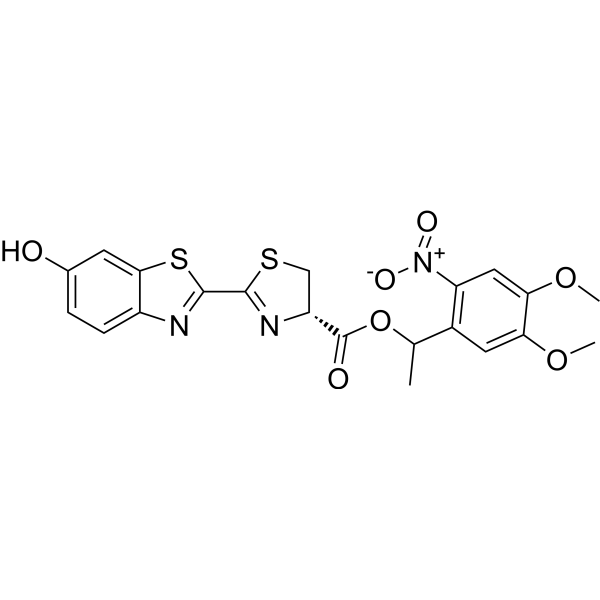
DMNPE-caged D-luciferin is a heterocyclic luminescent compound that is a natural ligand for luciferase, an enzyme used to detect cell activity. Its reaction requires ATP and emits yellow-green light with a peak wavelength of about 530 nm. The luciferin in the DMNPE cage easily crosses the cell membrane.
|
-
-
- HY-N2427S
-
|
|
Isotope-Labeled Compounds
|
Others
|
|
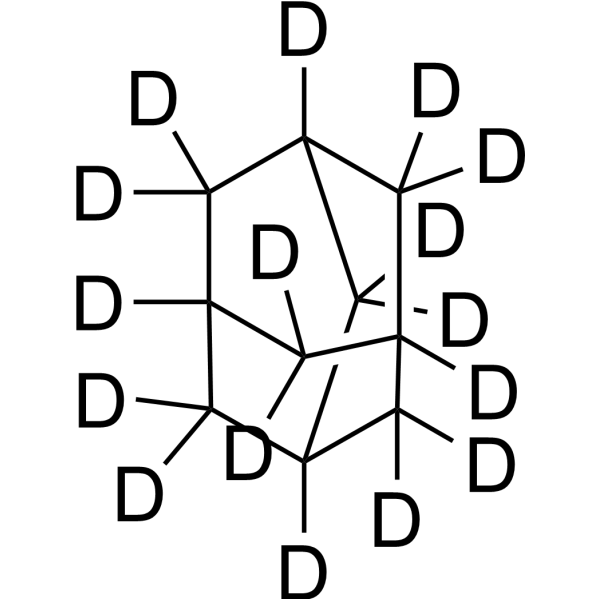
Adamantane-d16is the deuterium labeled Adamantane (HY-N2427). Adamantane, a polycyclic cage molecule with high symmetry and remarkable properties. Adamantane can be incorporated into a lipophilic part of the lipid bilayer that constitutes membranes and as an anchor in the lipid bilayer of liposomes. Adamantane can be used in research of surface recognition and drug delivery .
|
-
-
- HY-124086
-
|
|
5-HT Receptor
|
Neurological Disease
|
BHQ-O-5HT is a light-activated caged 5-HT protected by a BHQ group. When exposed to light at 365 or 740 nm, BHQ-O-5HT releases 5-HT through 1 or 2 photon excitation, respectively. BHQ-O-5HT can be manipulated in space and time to explore the role of 5-HT in regulating mood, appetite, memory, learning, and other cognitive functions .
|
-
-
- HY-136283
-
|
|
Calcium Channel
|
Neurological Disease
|
|
DMNPE-4 AM-caged-calcium, photolabile analogues of EGTA, is an extremely effective Ca 2+ selective cage, with a Kd for Ca 2+ of 48 nM and 19 nM at pH 7.2 and pH 7.4, respectively. DMNPE-4 AM-caged-calcium has a lower affinity for Ca 2+ (Kd=~2 nM) after photolysis .
|
-
-
- HY-103235
-
|
|
iGluR
|
Neurological Disease
|
|
NPEC- caged-(S)-AMPA, a caged neurotransmitter analog, is a NPEC photoprotecting group caged the (S)-AMPA (HY-100815A) to make caged ligands specific for glutamate receptor sub-types. NPEC- caged-(S)-AMPA selectively activates AMPA receptor .
|
-
-
- HY-115231
-
|
|
Drug Derivative
|
Others
|
|
ci-IP3/PM is a caged and cell permeable derivative of IP3. ci-IP3/PM can induce Ca 2+ release from internal stores .
|
-
-
- HY-103527
-
|
|
GABA Receptor
|
Neurological Disease
|
|
RuBi-GABA is a new ruthenium-based caged GABA compound. RuBi-GABA photocleaves and releases GABA after being excited with visible wavelengths. RuBi-GABA produces gaba receptor-mediated currents .
|
-
-
- HY-153056
-
|
|
NO Synthase
|
Others
|
|
BNN3 is a caged nitric oxide (NO) donor. BNN3 is membrane-permeant and incorporated in the lipid membrane .
|
-
-
- HY-N7502
-
|
|
Others
|
Others
|
|
2-(Hydroxymethyl)anthraquinone is used as a photoremovable protecting group (PRPG) to chemically cage sex pheromone (e.g. (Z)-11-hexadecen-1-ol (sex pheromone of Chilo infuscatellussnellen)) .
|
-
-
- HY-113770
-
|
Lys-Thr
|
Drug Intermediate
|
Cancer
|
|
Lysyl threonine (Lys-Thr) is a dipeptide. Lysyl threonine can be used to synthesize the pentapeptide Gly-Thr-Gly-Lys-Thr. Gly-Thr-Gly-Lys-Thr confers cell sensitivity to anticancer agents by inhibiting the binding of CAGE to GSK3β and reducing the expression of CyclinD1 .
|
-
-
- HY-165624A
-
|
|
Drug Isomer
Drug Derivative
5-HT Receptor
|
Neurological Disease
|
|
(S)-LY-41, R-enantiomer of LY-41 (HY-165624), is 2-Sminotetralin (HY-W022362) derivative and 8-OH-DPAT (HY-112061) analogue. (S)-LY-41 is a potent and selective 5-HT1A receptor agonist. (S)-LY-41 can reduce the accumulation of 5-hydroxytryptophan (the precursor for 5-HT synthesis) in the rat brain induced by decarboxylase inhibitors (NSD 1015). (S)-LY-41 can lower the body temperature of rats and inhibit the escape response from the cage. (S)-LY-41 can induce the 5-HT behavioral syndrome. (S)-LY-41can be used for the research of neurological disease, such as depression and anxiety .
|
-
-
- HY-165624B
-
|
|
Drug Isomer
Drug Derivative
5-HT Receptor
|
Neurological Disease
|
|
(R)-LY-41, R-enantiomer of LY-41 (HY-165624), is 2-Sminotetralin (HY-W022362) derivative and 8-OH-DPAT (HY-112061) analogue. (R)-LY-41 is a potent and selective 5-HT1A receptor agonist. (R)-LY-41 can reduce the accumulation of 5-hydroxytryptophan (the precursor for 5-HT synthesis) in the rat brain induced by decarboxylase inhibitors (NSD 1015). (R)-LY-41 can lower the body temperature of rats and inhibit the escape response from the cage. (R)-LY-41 can induce the 5-HT behavioral syndrome but is weaker than (S)-LY-41 (HY-165624A). (R)-LY-41 can be used for the research of neurological disease, such as depression and anxiety .
|
-
-
- HY-RS01825
-
|
|
Small Interfering RNA (siRNA)
|
Others
|
|
CAGE1 Human Pre-designed siRNA Set A contains three designed siRNAs for CAGE1 gene (Human), as well as a negative control, a positive control, and a FAM-labeled negative control.
|
-
CAGE1 Human Pre-designed siRNA Set A
-
- HY-N2427R
-
|
|
Reference Standards
Others
|
Others
|
|
Adamantane (Standard) is the analytical standard of Adamantane. This product is intended for research and analytical applications. Adamantane, a polycyclic cage molecule with high symmetry and remarkable properties. Adamantane can be incorporated into a lipophilic part of the lipid bilayer that constitutes membranes and as an anchor in the lipid bilayer of liposomes. Adamantane can be used in research of surface recognition and drug delivery .
|
-
-
- HY-RS03658
-
|
|
Small Interfering RNA (siRNA)
|
Others
|
|
DDX53 Human Pre-designed siRNA Set A contains three designed siRNAs for DDX53 gene (Human), as well as a negative control, a positive control, and a FAM-labeled negative control.
|
-
DDX53 Human Pre-designed siRNA Set A
-
- HY-107520A
-
|
|
Drug Derivative
|
Neurological Disease
|
|
MNI-caged-L-glutamate TFA is an inert photolabile glutamate precursor. MNI-caged-L-glutamate TFA does not modulate NMDA and AMPA receptor function in cultured neurones. MNI-caged-L-glutamate TFA can be used for research on neurotransmitters .
|
-
-
- HY-103298
-
|
|
Endogenous Metabolite
|
Neurological Disease
|
|
MNI-caged kainate is a photoprotected neuroactive amino acid with the activity to generate large inward currents. MNI-caged kainate can be released at the resting membrane potential of Purkinje cells and generate significant inward currents. The release of MNI-caged kainate results in approximately 40% of the current being generated through AMPA receptor activation. MNI-caged kainate is used to study fast synaptic receptor mechanisms. The photorelease time of MNI-caged kainate is in the sub-microsecond range, making it suitable for investigating the mechanisms of fast synaptic transmission .
|
-
-
- HY-164264
-
|
|
iGluR
|
Neurological Disease
|
|
Caged MK801 (cMK801) is a selective, non-competitive, irreversible NMDA receptor open-channel blocker. NVOC cages are neuro pharmocologically compatible .
|
-
-
- HY-107717
-
|
|
iGluR
|
Neurological Disease
|
|
MNI-caged-NMDA is a light-sensitive amino acid with rapid release properties suitable for use in the study of fast synaptic receptor mechanisms. MNI-caged-NMDA shows metered release of NMDA receptors, inducing rapid and sustained receptor activation in cerebellar interneurons. MNI-caged-NMDA is able to achieve rapid transient responses and generate large inward currents by local laser photolysis. The use of MNI-caged-NMDA can effectively study neurotransmitter signaling and its inhibitory effects on GABA-A receptors .
|
-
-
- HY-159110
-
|
|
Drug Derivative
|
Others
|
|
ABA-DMNB is a photo-caged chemically induced proximity (CIP) inducer. ABA-DMNB is a photo-caged ABA (Abscisic acid (HY-100560)). ABA-DMNB can be uncaged under light irradiation and generate active ABA .
|
-
-
- HY-103300
-
|
|
Endogenous Metabolite
|
Infection
|
|
NPE-caged-proton is a reagent that releases protons under UV light and has the activity of activating the fusion protein GP64 under weak acidic conditions. NPE-caged-proton can promote the binding of enveloped viruses to liposome membranes with acidic phospholipids in an environment of pH 4.0 to 5.5, thereby initiating membrane fusion. The ultraviolet unblocking effect of NPE-caged-proton can lower the environmental pH, thereby triggering the process of viral membrane fusion. When studying the interaction between viruses and cell membranes, NPE-caged-proton provides a valuable tool for revealing the subtle behaviors of viruses in different chemical and biochemical environments .
|
-
-
- HY-110304
-
-
-
- HY-103467
-
|
|
Fluorescent Dye
|
Others
|
|
NPE-caged-HPTS sodium is a caged fluorophore that fluoresces upon uncaged fluorophore release, releasing the free highly polar fluorophore HPTS (Exc=470/40 nm, Em=525/50 nm). HPTS releases the fluorophore rapidly and uniformly, allowing for measurement of diffusion within tissues, with a diffusion coefficient of μm 2s -1, similar to that of synaptic L-glutamate .
|
-
-
- HY-103555
-
-
-
- HY-103526
-
|
|
GABA Receptor
|
Neurological Disease
|
|
DPNI-GABA is a nitroindoline cage compound that inhibits GABA(A) receptors and reduces GABA-evoked peak responses with an IC50 value of 0.5 mM .
|
-
-
- HY-N10256
-
|
|
Endogenous Metabolite
|
Infection
|
|
Varioxepine A is a 3H-oxepine-containing alkaloid with a new oxa-cage found in the marine algal-derived endophytic fungus Paecilomyces variotii. Varioxepine A inhibits plant pathogenic fungus Fusarium graminearum .
|
-
-
- HY-N7502R
-
|
|
Reference Standards
Others
|
Others
|
|
2-(Hydroxymethyl)anthraquinone is used as a photoremovable protecting group (PRPG) to chemically cage sex pheromone (e.g. (Z)-11-hexadecen-1-ol (sex pheromone of Chilo infuscatellussnellen)) .
|
-
-
- HY-161005
-
|
|
Hapten
|
Metabolic Disease
|
|
TETS-Methyl benzoate(compound 2j) is a haptendirectly conjugated to the carrier protein via carboxylic acid function using the standard activated ester method .
|
-
-
- HY-131019
-
|
|
mGluR
|
Neurological Disease
|
|
JF-NP-26, an inactive photocaged derivative of raseglurant, is the first caged mGlu5 receptor negative allosteric modulator. Uncaging of JF-NP-26 is elicited with light pulses in the visible spectrum (405 nm). JF-NP-26 induces light-dependent analgesia in models of inflammatory and neuropathic pain in freely behaving animals .
|
-
-
- HY-131885
-
|
|
GABA Receptor
|
Neurological Disease
|
|
RuBi-Glutamate hexafluorophosphate sodium is a neuronal activator. RuBi-Glutamate hexafluorophosphate sodium photocleaves to release glutamate upon one- or two-photon excitation, activating glutamate receptors in cortical pyramidal neurons. RuBi-Glutamate hexafluorophosphate sodium reduces peak amplitude of evoked GABAergic inhibitory postsynaptic currents in its caged form. RuBi-Glutamate hexafluorophosphate sodium can be used for the research of Huntington's disease .
|
-
-
- HY-131001
-
|
|
nAChR
|
Neurological Disease
|
|
DPNB-ABT594 is a nitrobenzyl-caged ABT594 (HY-14316A) and activates nAChRs containing the α4β2 subunits with good selectivity than the α7 subunit. DPNB-ABT594 can be used to map the distribution of nAChRs on neurons of the medial habenula (MHb) and helps to gain a deeper understanding of the nAChR-mediated Ca 2+ signalling in the MHb .
|
-
-
- HY-108578
-
|
|
Potassium Channel
|
Neurological Disease
|
|
RuBi-4AP, a derivative of 4-aminopyridine (4AP; HY-B0604), is a caged Kv channel blocker. RuBi-4AP contains a photolabile protecting group, allowing its effect to be controlled precisely in both space and time with light. RuBi-4AP can be used for the research of neuronal excitability, synaptic transmission, and signal propagation .
|
-
-
- HY-155817
-
|
|
Histone Methyltransferase
|
Others
|
|
UNC7096 (compound 53) is a biotinylated affinity reagent. The phenyl ring of UNC7096 replaces the pyrimidine ring in UNC6934 (HY-145103) and introduces biotin at the para position of the phenyl ring, which has a high binding affinity to the NSD2-PWWP1 domain (Kd=46 nM). UNC7096 blocks the interaction between NSD2-PWWP1 and nucleosomal H3K36me2 by occupying the methyl-lysine binding pocket of NSD2-PWWP1. This binding is achieved by covalent binding through the formation of hydrogen bonds and a specific aromatic cage structure. UNC7096 can be used to capture proteins that interact with the NSD2-PWWP1 domain to further analyze the biological significance of these interactions .
|
-
-
- HY-P11782
-
|
|
GSK-3
CDK
Apoptosis
|
Cancer
|
|
GTGKT is a CAGE inhibitor. GTGKT binds to CAGE and blocks the binding of CAGE to GSK3β. GTGKT alters the localization of CAGE and inhibits the binding of CAGE to the promoter sequence of Cyclin D1. GTGKT enhances the Apoptotic effect of anticancer agents. GTGKT reduces the expression of Cyclin D1. GTGKT decreases the tumorigenic potential of melanoma and hepatocellular carcinoma cells .
|
-
-
- HY-182134
-
-
-
- HY-182128
-
-
-
- HY-182461
-
|
|
Bacterial
|
Infection
|
|
Deoxymorellin is a caged xanthone found in resins and fruits of Garcinia hanburyi hook. f.. Deoxymorellin exhibits cytotoxicity. Deoxymorellin can be used for research of Methicillin (HY-121544)-resistant or Methicillin-susceptible Staphylococcus aureus .
|
-
- HY-N7890
-
|
|
Proteasome
|
Cancer
|
|
Isomoreollic acid is a cage xanthonoid. Isomoreollic acid exhibits cytotoxicity against colon cancer cells, with an IC50 > 10 μM for proteasome inhibition. Isomoreollic acid is present in the stem bark of Garcinia lateriflora. Isomoreollic acid can be used in colon cancer research .
|
-
- HY-183603
-
|
|
DNA/RNA Synthesis
|
Cancer
|
|
FRC-222 is a CHD1 tandem chromodomain inhibitor with a Kd of 0.15 μM and an IC50 of 0.18 μM. FRC-222 binds to the H3K4me3 binding site of CHD1 tandem chromodomain via aromatic cage interactions and extended ligand contacts. FRC-222 can be used for the research of prostate cancer[1].
|
-
- HY-168992A
-
|
|
Histone Methyltransferase
|
Others
|
|
UNC6535 TFA is a covalent ligand targeting the triple Tudor domain (3TD) of SETDB1. UNC6535 TFA reversibly binds to the aromatic cages of both TD2 and TD3 within SETDB1 3TD simultaneously, weakly inhibits the methyltransferase activity of SETDB1, and displaces the H3K9Me2K14Ac peptide from SETDB1 3TD .
|
-
- HY-N9731
-
|
|
NF-κB
|
Others
|
|
6-O-p-Hydroxybenzoylglutinoside acts as a selective NF-κB inhibitor that suppresses the transcriptional activity of TNF-α-activated NF-κB (IC50=52.78 μM). 6-O-p-Hydroxybenzoylglutinoside shows no significant inhibitory activity against sEH, AChE, or BChE. 6-O-p-Hydroxybenzoylglutinoside is a caged chlorinated iridoid glycoside identified from the seeds of Catalpa bungei (Manchurian catalpa) .
|
-
- HY-183602
-
|
|
DNA/RNA Synthesis
|
Cancer
|
|
FRC-303 is a CHD1 inhibitor with a Kd of 0.14 μM and an IC50 of 0.18 μM. FRC-303 binds to the H3K4me3 binding site of CHD1 tandem chromodomain, forms aromatic cage interactions and extended ligand contacts, acts as a methyl-lysine mimic, and occupies natural peptide ligand-binding regions. FRC-303 can be used for the research of prostate cancer .
|
-
- HY-W394166
-
|
|
Biochemical Assay Reagents
|
Others
|
|
6-Bromo-7-hydroxy-4-(hydroxymethyl)coumarin is a photosensitive cage like ceramide. 6-Bromo-7-hydroxy-4-(hydroxymethyl)coumarin can release active ceramides under light exposure. 6-Bromo-7-hydroxy-4-(hydroxymethyl)coumarin can be used for research on drug release with high spatiotemporal precision .
|
-
- HY-D3181
-
|
|
Fluorescent Dye
Caspase
|
Cancer
|
|
CyGbPF is a granzyme B-specific near-infrared fluorescent probe. CyGbPF can be cleaved by granzyme B to remove the peptide cage group, restoring near-infrared fluorescence. CyGbPF passively accumulates in mouse tumors, and its activated fluorescence correlates with granzyme B expression, CD8 + cytotoxic T lymphocyte populations, and CD4 + helper T lymphocyte populations in tumor tissues. CyGbPF is efficiently cleared by the kidneys, enabling the assessment of immune activation via optical urine analysis. CyGbPF allows real-time non-invasive evaluation of cancer immunotherapeutic efficacy in living animals. CyGbPF can be used in research on cancers such as breast cancer. Excitation wavelength/emission wavelength: approximately 658 nm/approximately 717 nm .
|
-
| Cat. No. |
Product Name |
Type |
-
- HY-D1343
-
|
|
Fluorescent Dye
|
|
DMNPE-caged D-luciferin is a heterocyclic luminescent compound that is a natural ligand for luciferase, an enzyme used to detect cell activity. Its reaction requires ATP and emits yellow-green light with a peak wavelength of about 530 nm. The luciferin in the DMNPE cage easily crosses the cell membrane.
|
-
- HY-D3181
-
|
|
Fluorescent Dye
|
|
CyGbPF is a granzyme B-specific near-infrared fluorescent probe. CyGbPF can be cleaved by granzyme B to remove the peptide cage group, restoring near-infrared fluorescence. CyGbPF passively accumulates in mouse tumors, and its activated fluorescence correlates with granzyme B expression, CD8 + cytotoxic T lymphocyte populations, and CD4 + helper T lymphocyte populations in tumor tissues. CyGbPF is efficiently cleared by the kidneys, enabling the assessment of immune activation via optical urine analysis. CyGbPF allows real-time non-invasive evaluation of cancer immunotherapeutic efficacy in living animals. CyGbPF can be used in research on cancers such as breast cancer. Excitation wavelength/emission wavelength: approximately 658 nm/approximately 717 nm .
|
| Cat. No. |
Product Name |
Target |
Research Area |
-
- HY-P10761
-
|
|
Radionuclide-Drug Conjugates (RDCs)
Carbonic Anhydrase
|
Cancer
|
|
DPI-4452 is a CAIX-targeting cyclic peptide with a DOTA cage, and can be chelated with radionuclide for CAIX-expressing tumor PET-CT imaging and study. DPI-4452 specifically and selectively binds CAIX without interaction with an in vitro off-target receptor panel of 55 targets (IC50 for recombinant hCAIX: 130 nM). Radiolabeled DPI-4452 inhibits tumor growth in HT-29 and SK-RC-52 xenograft mouse models . DPI-4452 can be used for the synthesis/research of Radionuclide-Drug Conjugates (RDCs).
|
-
- HY-113770
-
|
Lys-Thr
|
Drug Intermediate
|
Cancer
|
|
Lysyl threonine (Lys-Thr) is a dipeptide. Lysyl threonine can be used to synthesize the pentapeptide Gly-Thr-Gly-Lys-Thr. Gly-Thr-Gly-Lys-Thr confers cell sensitivity to anticancer agents by inhibiting the binding of CAGE to GSK3β and reducing the expression of CyclinD1 .
|
-
- HY-P11782
-
|
|
GSK-3
CDK
Apoptosis
|
Cancer
|
|
GTGKT is a CAGE inhibitor. GTGKT binds to CAGE and blocks the binding of CAGE to GSK3β. GTGKT alters the localization of CAGE and inhibits the binding of CAGE to the promoter sequence of Cyclin D1. GTGKT enhances the Apoptotic effect of anticancer agents. GTGKT reduces the expression of Cyclin D1. GTGKT decreases the tumorigenic potential of melanoma and hepatocellular carcinoma cells .
|
| Cat. No. |
Product Name |
Target |
Research Area |
Image |
-
- HY-108786
-
|
ENB-0040
|
Phosphatase
|
Metabolic Disease
|
|
Asfotase alfa (ENB-0040) is a bone-targeted genetically engineered glycoprotein. Asfotase alfa increases the survival rate, bone mineralization and bone length and prevents mineralization defects of the feet, rib cage, lower limbs, jaw bones in Akp2 / knockout mice. Asfotase alfa can be used for the research of perinatal, infantile, and juvenile-onset hypophosphatasia (HPP) .
|
-
(5)
| Cat. No. |
Product Name |
Category |
Target |
Chemical Structure |
| Cat. No. |
Product Name |
Chemical Structure |
-
- HY-N2427S
-
|
|
|
Adamantane-d16is the deuterium labeled Adamantane (HY-N2427). Adamantane, a polycyclic cage molecule with high symmetry and remarkable properties. Adamantane can be incorporated into a lipophilic part of the lipid bilayer that constitutes membranes and as an anchor in the lipid bilayer of liposomes. Adamantane can be used in research of surface recognition and drug delivery .
|
-
| Cat. No. |
Product Name |
|
Classification |
Your information is safe with us. * Required Fields.
Inquiry Information
- Product Name:
- Cat. No.:
- Quantity:
- MCE Japan Authorized Agent:

