





Search Result
Results for "
CCA
" in MedChemExpress (MCE) Product Catalog:
1
Biochemical Assay Reagents
3
Isotope-Labeled Compounds
| Cat. No. |
Product Name |
Target |
Research Areas |
Chemical Structure |
-
- HY-146245
-
-
-
- HY-N1423
-
|
|
P-glycoprotein
Bcl-2 Family
G protein-coupled Bile Acid Receptor 1
Endogenous Metabolite
Bacterial
Apoptosis
FXR
Caspase
MDM-2/p53
LPL Receptor
|
Metabolic Disease
Inflammation/Immunology
Cancer
|
|
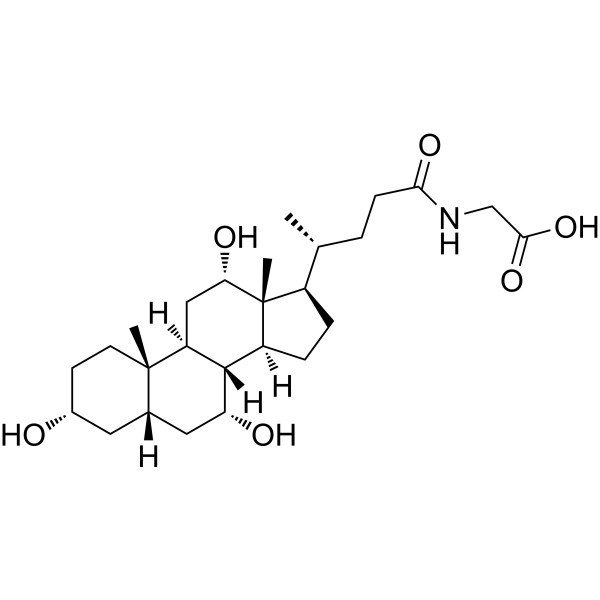
Glycocholic acid is a bile acid derivative. Glycocholic acid downregulates MDR1, Bcl-2, MRP1, MRP2 and FXR, upregulates Bax, p53, caspase-9, caspase-3, TGR5 and S1PR2. Glycocholic acid inhibits multidrug resistance and efflux pumps, induces mitochondrial apoptosis, and enhances chemosensitivity. Glycocholic acid modulates related bile acid receptor signaling. Glycocholic acid suppresses growth and conjugation of Enterobacteriaceae and increases their antibiotic susceptibility. Glycocholic acid can be used for the research of colon adenocarcinoma and cholangiocarcinoma (CCA) .
|
-
-
- HY-108753
-
|
AVI 4658
|
Arp2/3 Complex
|
Metabolic Disease
|
|
Eteplirsen (AVI 4658) is a synthetic antisense oligonucleotide. Eteplirsen can be used for Duchenne muscular dystrophy research .
|
-
-
- HY-N0416
-
-
-
- HY-N1423A
-
|
|
P-glycoprotein
Bcl-2 Family
G protein-coupled Bile Acid Receptor 1
Bacterial
Apoptosis
FXR
Caspase
MDM-2/p53
LPL Receptor
Endogenous Metabolite
|
Metabolic Disease
Cancer
|
|
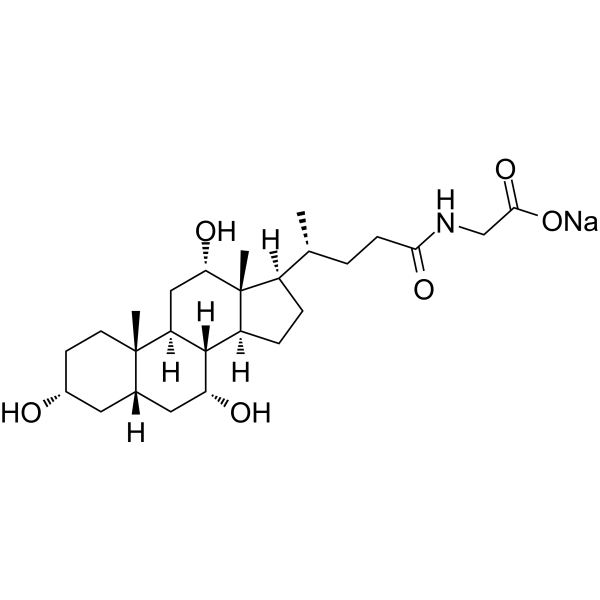
Glycocholic acid sodium is a bile acid derivative. Glycocholic acid downregulates MDR1, Bcl-2, MRP1, MRP2 and FXR, upregulates Bax, p53, caspase-9, caspase-3, TGR5 and S1PR2. Glycocholic acid sodium inhibits multidrug resistance and efflux pumps, induces mitochondrial apoptosis, and enhances chemosensitivity. Glycocholic acid sodium modulates related bile acid receptor signaling. Glycocholic acid sodium suppresses growth and conjugation of Enterobacteriaceae and increases their antibiotic susceptibility. Glycocholic acid sodium can be used for the research of colon adenocarcinoma and cholangiocarcinoma (CCA) .
|
-
-
- HY-N1423S
-
|
|
Isotope-Labeled Compounds
P-glycoprotein
Bcl-2 Family
G protein-coupled Bile Acid Receptor 1
Endogenous Metabolite
Bacterial
Apoptosis
FXR
Caspase
MDM-2/p53
LPL Receptor
|
Metabolic Disease
Cancer
|
|
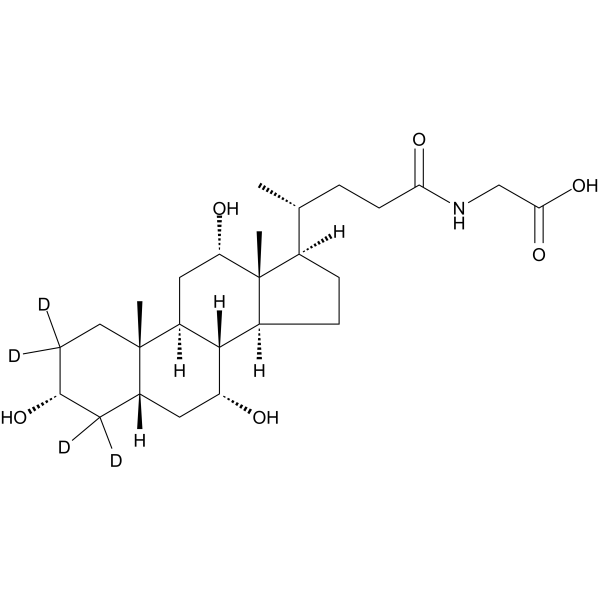
Glycocholic acid-d4 is the deuterium labeled Glycocholic acid (HY-N1423). Glycocholic acid is a bile acid derivative. Glycocholic acid downregulates MDR1, Bcl-2, MRP1, MRP2 and FXR, upregulates Bax, p53, caspase-9, caspase-3, TGR5 and S1PR2. Glycocholic acid inhibits multidrug resistance and efflux pumps, induces mitochondrial apoptosis, and enhances chemosensitivity. Glycocholic acid modulates related bile acid receptor signaling. Glycocholic acid suppresses growth and conjugation of Enterobacteriaceae and increases their antibiotic susceptibility. Glycocholic acid can be used for the research of colon adenocarcinoma and cholangiocarcinoma (CCA).
|
-
-
- HY-150726
-
|
|
Toll-like Receptor (TLR)
Bacterial
|
Infection
Neurological Disease
Inflammation/Immunology
|
|
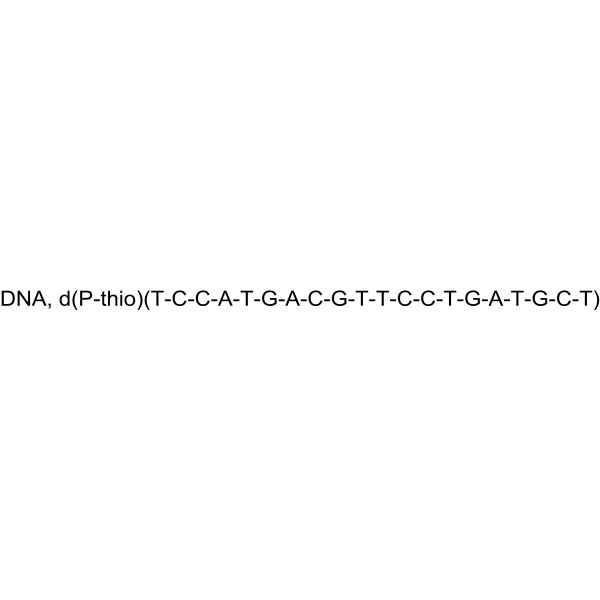
ODN 1668, a class B CpG ODN (oligodeoxynucleotide), is a TLR-9 agonist. ODN 1668 has strong immune regulatory properties, can enhance the level of antibody IgG2 subtype, promote the immune response of T cells and B cells, and can be used in the study of vaccine adjuvants. In addition, CpG ODN 1668 induces an antimicrobial immune response via a CaTLR9 dependent pathway in groupers. Sequence: 5'-tccatgacgttcctgatgct-3’ .
|
-
-
- HY-W755338
-
|
Cl-CCA
|
Biochemical Assay Reagents
|
Others
|
|
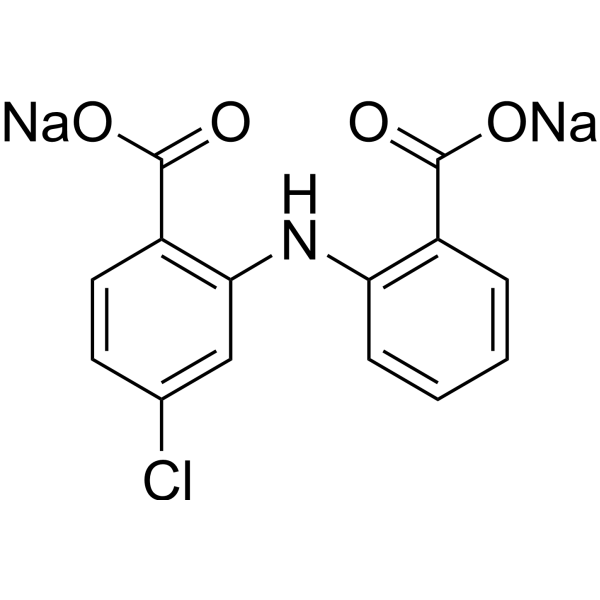
4-Chloro-α-cyanocinnamic acid (Cl-CCA) is an advanced, rationally designed MALDI (Matrix-assisted laser desorption ionization) matrix .
|
-
-
- HY-W013105
-
|
N-Cholylglycine sodium salt, 98%
|
Bcl-2 Family
Caspase
Endogenous Metabolite
Bacterial
MDM-2/p53
P-glycoprotein
LPL Receptor
FXR
G protein-coupled Bile Acid Receptor 1
Apoptosis
|
Others
|
|
Sodium glycocholate hydrate, 98% is a bile acid derivative. Sodium glycocholate hydrate, 98% downregulates MDR1, Bcl-2, MRP1, MRP2 and FXR, upregulates Bax, p53, caspase-9, caspase-3, TGR5 and S1PR2. Sodium glycocholate hydrate, 98% inhibits multidrug resistance and efflux pumps, induces mitochondrial apoptosis, and enhances chemosensitivity. Sodium glycocholate hydrate, 98% modulates related bile acid receptor signaling. Sodium glycocholate hydrate, 98% suppresses growth and conjugation of Enterobacteriaceae and increases their antibiotic susceptibility. Sodium glycocholate hydrate, 98% can be used for the research of colon adenocarcinoma and cholangiocarcinoma (CCA) .
|
-
-
- HY-N1423B
-
|
|
Endogenous Metabolite
Caspase
G protein-coupled Bile Acid Receptor 1
LPL Receptor
MDM-2/p53
Bcl-2 Family
P-glycoprotein
FXR
Bacterial
Apoptosis
|
Metabolic Disease
Inflammation/Immunology
Cancer
|
|
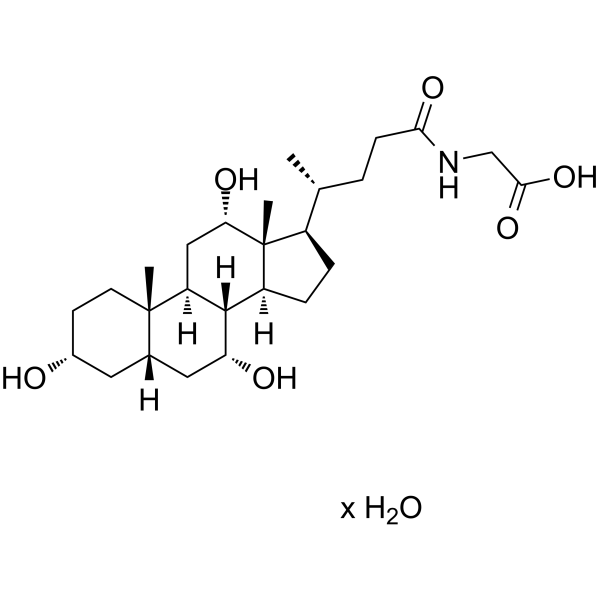
Glycocholic acid hydrate is a bile acid derivative. Glycocholic acid hydrate downregulates MDR1, Bcl-2, MRP1, MRP2 and FXR, upregulates Bax, p53, caspase-9, caspase-3, TGR5 and S1PR2. Glycocholic acid hydrate inhibits multidrug resistance and efflux pumps, induces mitochondrial apoptosis, and enhances chemosensitivity. Glycocholic acid hydrate modulates related bile acid receptor signaling. Glycocholic acid hydrate suppresses growth and conjugation of Enterobacteriaceae and increases their antibiotic susceptibility. Glycocholic acid hydrate can be used for the research of colon adenocarcinoma and cholangiocarcinoma (CCA) .
|
-
-
- HY-147253
-
|
NS 089; NCNP 02
|
DNA/RNA Synthesis
|
Neurological Disease
|
|
Brogidirsen (NS 089; NCNP 02) is a a dual-targeting antisense oligonucleotide. Brogidirsen can induce dystrophin protein experession. Brogidirsen can be used for the research of Duchenne muscular dystrophy .
|
-
-
- HY-178360
-
|
|
PROTACs
Histone Acetyltransferase
HIF/HIF Prolyl-Hydroxylase
PD-1/PD-L1
PTEN
|
Metabolic Disease
Inflammation/Immunology
Cancer
|
|
NP1192 is a potent, selective PROTAC NAT10 degrader that depletes NAT10 protein and inhibits ac4C modification in cancer cells. NP1192 demonstrates dual inhibition of hypoxia-driven glycolysis and immunosuppression via NAT10/HIF-1α/PD-L1 axis disruption, achieving superior antitumor efficacy and synergizing with anti-PD-L1 both in vitro and in vivo. NP1192 can be used for ovarian, cervical, and glioblastoma cancer research. (Blue: CRBN ligand (HY-148834); Black: linker; Pink: NAT10 ligand (HY-16706)) .
|
-
-
- HY-145728
-
|
ISIS-2302
|
Integrin
|
Inflammation/Immunology
|
|
Alicaforsen is an oligonucleotide and immunostimulant targeting human ICAM-1 mRNA. Alicaforsen hybridizes to specific sites to reduce the expression level of ICAM-1. Alicaforsen is applicable to relevant research on psoriasis, rheumatoid arthritis and inflammatory bowel disease .
|
-
-
- HY-107360
-
-
-
- HY-178120
-
|
|
Src
Apoptosis
|
Cancer
|
|
Lck-IN-4 (Compound A-1) is a protein tyrosine kinase Lck inhibitor with an IC50 of 2 nM. Lck-IN-4 significantly inhibits YAP tyrosine phosphorylation and activity and induces apoptosis in cholangiocarcinoma CCA cells. Lck-IN-4 is cytotoxic in CCA tumor-derived organoids with elevated YAP activity Lck-IN-4 can be used for cancers like cholangiocarcinoma (CCA) research .
|
-
-
- HY-118874
-
|
|
Bcl-2 Family
Apoptosis
|
Cancer
|
|
Oblimersen is a BCL-2 inhibitor targeting BCL-2 RNA. Oblimersen specifically binds to the first six codons of the bcl-2 mRNA sequence, resulting in degradation of bcl-2 mRNA and induces apoptosis by down-regulating expression of Bcl-2. Oblimersen can be used for cancer research .
|
-
-
- HY-N0416R
-
-
-
- HY-N1423S1
-
|
|
Isotope-Labeled Compounds
P-glycoprotein
Bcl-2 Family
G protein-coupled Bile Acid Receptor 1
Endogenous Metabolite
Bacterial
Apoptosis
FXR
Caspase
MDM-2/p53
LPL Receptor
|
Metabolic Disease
Cancer
|
|
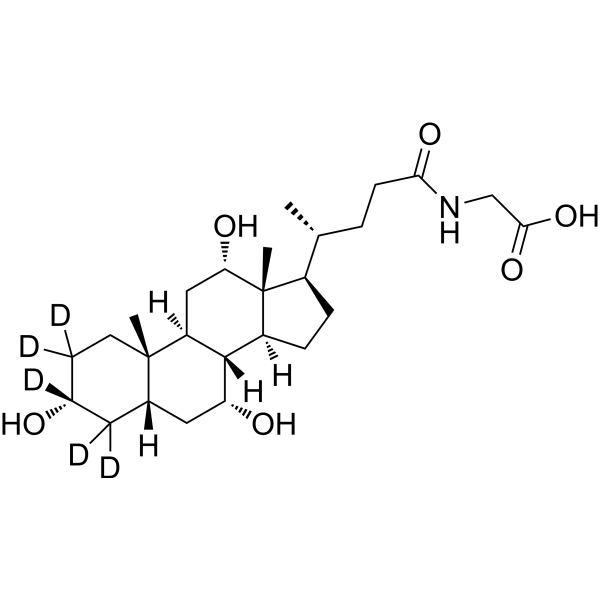
Glycocholic acid-d5 is the deuterium labeled Glycocholic acid (HY-N1423). Glycocholic acid is a bile acid derivative. Glycocholic acid downregulates MDR1, Bcl-2, MRP1, MRP2 and FXR, upregulates Bax, p53, caspase-9, caspase-3, TGR5 and S1PR2. Glycocholic acid inhibits multidrug resistance and efflux pumps, induces mitochondrial apoptosis, and enhances chemosensitivity. Glycocholic acid modulates related bile acid receptor signaling. Glycocholic acid suppresses growth and conjugation of Enterobacteriaceae and increases their antibiotic susceptibility. Glycocholic acid can be used for the research of colon adenocarcinoma and cholangiocarcinoma (CCA).
|
-
-
- HY-RS04777
-
|
|
Small Interfering RNA (siRNA)
|
Others
|
|
FBN2 Human Pre-designed siRNA Set A contains three designed siRNAs for FBN2 gene (Human), as well as a negative control, a positive control, and a FAM-labeled negative control.
|
-
FBN2 Human Pre-designed siRNA Set A
-
- HY-147265
-
|
|
MicroRNA
|
Cancer
|
|
Eldocasiran is a micro-ARN-193a-3p analogue, Eldocasiran has anticancer activity. Eldocasiran can be used for cancer research .
|
-
-
- HY-150729
-
|
|
Toll-like Receptor (TLR)
|
Inflammation/Immunology
|
|
ODN 1982 is a unmethylated oligodeoxyribonucleotide (ODN) with no CpG motif, can be used to prepare DNA vaccines. ODN 1982 inhibits R-848 signaling. ODN 1982 sequence: 5’-tccaggacttctctcaggtt-3’ .
|
-
-
- HY-107360R
-
-
-
- HY-N1423AR
-
|
|
Reference Standards
P-glycoprotein
Bcl-2 Family
G protein-coupled Bile Acid Receptor 1
Bacterial
Apoptosis
FXR
Caspase
MDM-2/p53
LPL Receptor
Endogenous Metabolite
|
Metabolic Disease
Cancer
|
|
Glycocholic acid (sodium) (Standard) is the analytical standard of Glycocholic acid sodium (HY-N1423A). This product is intended for research and analytical applications. Glycocholic acid sodium is a bile acid derivative. Glycocholic acid downregulates MDR1, Bcl-2, MRP1, MRP2 and FXR, upregulates Bax, p53, caspase-9, caspase-3, TGR5 and S1PR2. Glycocholic acid sodium inhibits multidrug resistance and efflux pumps, induces mitochondrial apoptosis, and enhances chemosensitivity. Glycocholic acid sodium modulates related bile acid receptor signaling. Glycocholic acid sodium suppresses growth and conjugation of Enterobacteriaceae and increases their antibiotic susceptibility. Glycocholic acid sodium can be used for the research of colon adenocarcinoma and cholangiocarcinoma (CCA).
|
-
-
- HY-W754548
-
|
|
Isotope-Labeled Compounds
Endogenous Metabolite
P-glycoprotein
Bcl-2 Family
G protein-coupled Bile Acid Receptor 1
Bacterial
Apoptosis
FXR
Caspase
MDM-2/p53
LPL Receptor
|
Metabolic Disease
Cancer
|
|
Glycocholic acid- 13C2,d4 is the deuterium labeled and 13C-labeled Glycocholic acid (HY-N1423). Glycocholic acid is a bile acid derivative. Glycocholic acid downregulates MDR1, Bcl-2, MRP1, MRP2 and FXR, upregulates Bax, p53, caspase-9, caspase-3, TGR5 and S1PR2. Glycocholic acid inhibits multidrug resistance and efflux pumps, induces mitochondrial apoptosis, and enhances chemosensitivity. Glycocholic acid modulates related bile acid receptor signaling. Glycocholic acid suppresses growth and conjugation of Enterobacteriaceae and increases their antibiotic susceptibility. Glycocholic acid can be used for the research of colon adenocarcinoma and cholangiocarcinoma (CCA).
|
-
| Cat. No. |
Product Name |
Type |
-
- HY-W013105
-
|
N-Cholylglycine sodium salt, 98%
|
Biochemical Assay Reagents
|
|
Sodium glycocholate hydrate, 98% is a bile acid derivative. Sodium glycocholate hydrate, 98% downregulates MDR1, Bcl-2, MRP1, MRP2 and FXR, upregulates Bax, p53, caspase-9, caspase-3, TGR5 and S1PR2. Sodium glycocholate hydrate, 98% inhibits multidrug resistance and efflux pumps, induces mitochondrial apoptosis, and enhances chemosensitivity. Sodium glycocholate hydrate, 98% modulates related bile acid receptor signaling. Sodium glycocholate hydrate, 98% suppresses growth and conjugation of Enterobacteriaceae and increases their antibiotic susceptibility. Sodium glycocholate hydrate, 98% can be used for the research of colon adenocarcinoma and cholangiocarcinoma (CCA) .
|
| Cat. No. |
Product Name |
Category |
Target |
Chemical Structure |
-
- HY-N1423
-
|
|
Structural Classification
Human Gut Microbiota Metabolites
Classification of Application Fields
Endogenous metabolite
Disease Research Fields
Steroids
Source Classification
Cancer
|
P-glycoprotein
Bcl-2 Family
G protein-coupled Bile Acid Receptor 1
Endogenous Metabolite
Bacterial
Apoptosis
FXR
Caspase
MDM-2/p53
LPL Receptor
|
|
Glycocholic acid is a bile acid derivative. Glycocholic acid downregulates MDR1, Bcl-2, MRP1, MRP2 and FXR, upregulates Bax, p53, caspase-9, caspase-3, TGR5 and S1PR2. Glycocholic acid inhibits multidrug resistance and efflux pumps, induces mitochondrial apoptosis, and enhances chemosensitivity. Glycocholic acid modulates related bile acid receptor signaling. Glycocholic acid suppresses growth and conjugation of Enterobacteriaceae and increases their antibiotic susceptibility. Glycocholic acid can be used for the research of colon adenocarcinoma and cholangiocarcinoma (CCA) .
|
-
-
- HY-N0416
-
-
-
- HY-N1423A
-
|
|
Triterpenes
Structural Classification
Terpenoids
Endogenous metabolite
Source Classification
|
P-glycoprotein
Bcl-2 Family
G protein-coupled Bile Acid Receptor 1
Bacterial
Apoptosis
FXR
Caspase
MDM-2/p53
LPL Receptor
Endogenous Metabolite
|
|
Glycocholic acid sodium is a bile acid derivative. Glycocholic acid downregulates MDR1, Bcl-2, MRP1, MRP2 and FXR, upregulates Bax, p53, caspase-9, caspase-3, TGR5 and S1PR2. Glycocholic acid sodium inhibits multidrug resistance and efflux pumps, induces mitochondrial apoptosis, and enhances chemosensitivity. Glycocholic acid sodium modulates related bile acid receptor signaling. Glycocholic acid sodium suppresses growth and conjugation of Enterobacteriaceae and increases their antibiotic susceptibility. Glycocholic acid sodium can be used for the research of colon adenocarcinoma and cholangiocarcinoma (CCA) .
|
-
-
- HY-N1423B
-
|
|
Structural Classification
Classification of Application Fields
Metabolic Disease
Endogenous metabolite
Disease Research Fields
Steroids
Source Classification
|
Endogenous Metabolite
Caspase
G protein-coupled Bile Acid Receptor 1
LPL Receptor
MDM-2/p53
Bcl-2 Family
P-glycoprotein
FXR
Bacterial
Apoptosis
|
|
Glycocholic acid hydrate is a bile acid derivative. Glycocholic acid hydrate downregulates MDR1, Bcl-2, MRP1, MRP2 and FXR, upregulates Bax, p53, caspase-9, caspase-3, TGR5 and S1PR2. Glycocholic acid hydrate inhibits multidrug resistance and efflux pumps, induces mitochondrial apoptosis, and enhances chemosensitivity. Glycocholic acid hydrate modulates related bile acid receptor signaling. Glycocholic acid hydrate suppresses growth and conjugation of Enterobacteriaceae and increases their antibiotic susceptibility. Glycocholic acid hydrate can be used for the research of colon adenocarcinoma and cholangiocarcinoma (CCA) .
|
-
-
- HY-N0416R
-
-
-
- HY-N1423AR
-
|
|
Structural Classification
Endogenous metabolite
Steroids
Source Classification
|
Reference Standards
P-glycoprotein
Bcl-2 Family
G protein-coupled Bile Acid Receptor 1
Bacterial
Apoptosis
FXR
Caspase
MDM-2/p53
LPL Receptor
Endogenous Metabolite
|
|
Glycocholic acid (sodium) (Standard) is the analytical standard of Glycocholic acid sodium (HY-N1423A). This product is intended for research and analytical applications. Glycocholic acid sodium is a bile acid derivative. Glycocholic acid downregulates MDR1, Bcl-2, MRP1, MRP2 and FXR, upregulates Bax, p53, caspase-9, caspase-3, TGR5 and S1PR2. Glycocholic acid sodium inhibits multidrug resistance and efflux pumps, induces mitochondrial apoptosis, and enhances chemosensitivity. Glycocholic acid sodium modulates related bile acid receptor signaling. Glycocholic acid sodium suppresses growth and conjugation of Enterobacteriaceae and increases their antibiotic susceptibility. Glycocholic acid sodium can be used for the research of colon adenocarcinoma and cholangiocarcinoma (CCA).
|
-
| Cat. No. |
Product Name |
Chemical Structure |
-
- HY-N1423S
-
|
|
|
Glycocholic acid-d4 is the deuterium labeled Glycocholic acid (HY-N1423). Glycocholic acid is a bile acid derivative. Glycocholic acid downregulates MDR1, Bcl-2, MRP1, MRP2 and FXR, upregulates Bax, p53, caspase-9, caspase-3, TGR5 and S1PR2. Glycocholic acid inhibits multidrug resistance and efflux pumps, induces mitochondrial apoptosis, and enhances chemosensitivity. Glycocholic acid modulates related bile acid receptor signaling. Glycocholic acid suppresses growth and conjugation of Enterobacteriaceae and increases their antibiotic susceptibility. Glycocholic acid can be used for the research of colon adenocarcinoma and cholangiocarcinoma (CCA).
|
-
-
- HY-N1423S1
-
|
|
|
Glycocholic acid-d5 is the deuterium labeled Glycocholic acid (HY-N1423). Glycocholic acid is a bile acid derivative. Glycocholic acid downregulates MDR1, Bcl-2, MRP1, MRP2 and FXR, upregulates Bax, p53, caspase-9, caspase-3, TGR5 and S1PR2. Glycocholic acid inhibits multidrug resistance and efflux pumps, induces mitochondrial apoptosis, and enhances chemosensitivity. Glycocholic acid modulates related bile acid receptor signaling. Glycocholic acid suppresses growth and conjugation of Enterobacteriaceae and increases their antibiotic susceptibility. Glycocholic acid can be used for the research of colon adenocarcinoma and cholangiocarcinoma (CCA).
|
-
-
- HY-W754548
-
|
|
|
Glycocholic acid- 13C2,d4 is the deuterium labeled and 13C-labeled Glycocholic acid (HY-N1423). Glycocholic acid is a bile acid derivative. Glycocholic acid downregulates MDR1, Bcl-2, MRP1, MRP2 and FXR, upregulates Bax, p53, caspase-9, caspase-3, TGR5 and S1PR2. Glycocholic acid inhibits multidrug resistance and efflux pumps, induces mitochondrial apoptosis, and enhances chemosensitivity. Glycocholic acid modulates related bile acid receptor signaling. Glycocholic acid suppresses growth and conjugation of Enterobacteriaceae and increases their antibiotic susceptibility. Glycocholic acid can be used for the research of colon adenocarcinoma and cholangiocarcinoma (CCA).
|
-
| Cat. No. |
Product Name |
|
Classification |
-
- HY-146245
-
|
CpG 1826
|
|
CpG ODNs
|
|
ODN 1826 is a class B CpG ODN (oligodeoxynucleotide) and TLR9 agonist. ODN 1826 induces NO and iNOS production and enhances Apoptosis. ODN 1826 enhances immune surveillance. ODN 1826 increases aortic atherosclerotic plaque size. ODN 1826 has antitumor activity against lung cancer, glioma and melanoma .
|
-
- HY-108753
-
|
AVI 4658
|
|
Antisense Oligonucleotides
|
|
Eteplirsen (AVI 4658) is a synthetic antisense oligonucleotide. Eteplirsen can be used for Duchenne muscular dystrophy research .
|
-
- HY-150726
-
|
|
|
CpG ODNs
|
|
ODN 1668, a class B CpG ODN (oligodeoxynucleotide), is a TLR-9 agonist. ODN 1668 has strong immune regulatory properties, can enhance the level of antibody IgG2 subtype, promote the immune response of T cells and B cells, and can be used in the study of vaccine adjuvants. In addition, CpG ODN 1668 induces an antimicrobial immune response via a CaTLR9 dependent pathway in groupers. Sequence: 5'-tccatgacgttcctgatgct-3’ .
|
-
- HY-147253
-
|
NS 089; NCNP 02
|
|
Antisense Oligonucleotides
|
|
Brogidirsen (NS 089; NCNP 02) is a a dual-targeting antisense oligonucleotide. Brogidirsen can induce dystrophin protein experession. Brogidirsen can be used for the research of Duchenne muscular dystrophy .
|
-
- HY-145728
-
|
ISIS-2302
|
|
Antisense Oligonucleotides
|
|
Alicaforsen is an oligonucleotide and immunostimulant targeting human ICAM-1 mRNA. Alicaforsen hybridizes to specific sites to reduce the expression level of ICAM-1. Alicaforsen is applicable to relevant research on psoriasis, rheumatoid arthritis and inflammatory bowel disease .
|
-
- HY-118874
-
|
|
|
Antisense Oligonucleotides
|
|
Oblimersen is a BCL-2 inhibitor targeting BCL-2 RNA. Oblimersen specifically binds to the first six codons of the bcl-2 mRNA sequence, resulting in degradation of bcl-2 mRNA and induces apoptosis by down-regulating expression of Bcl-2. Oblimersen can be used for cancer research .
|
-
- HY-RS04777
-
|
|
|
siRNAs
Human Pre-designed siRNA Sets
|
|
FBN2 Human Pre-designed siRNA Set A contains three designed siRNAs for FBN2 gene (Human), as well as a negative control, a positive control, and a FAM-labeled negative control.
|
-
- HY-147265
-
|
|
|
MicroRNAs
|
|
Eldocasiran is a micro-ARN-193a-3p analogue, Eldocasiran has anticancer activity. Eldocasiran can be used for cancer research .
|
-
- HY-150729
-
|
|
|
CpG ODNs
|
|
ODN 1982 is a unmethylated oligodeoxyribonucleotide (ODN) with no CpG motif, can be used to prepare DNA vaccines. ODN 1982 inhibits R-848 signaling. ODN 1982 sequence: 5’-tccaggacttctctcaggtt-3’ .
|
Your information is safe with us. * Required Fields.
Inquiry Information
- Product Name:
- Cat. No.:
- Quantity:
- MCE Japan Authorized Agent:

