1. Search Result
Search Result
Results for "

Ca 2 sensitive

" in MedChemExpress (MCE) Product Catalog:

31

Inhibitors & Agonists

6

Fluorescent Dyes

2

Biochemical Assay Reagents

1

Natural
Products

1

Recombinant Proteins

2

Isotope-Labeled Compounds

1

GMP Molecules

Cat. No. Product Name Target Research Areas Chemical Structure
  • HY-B0246
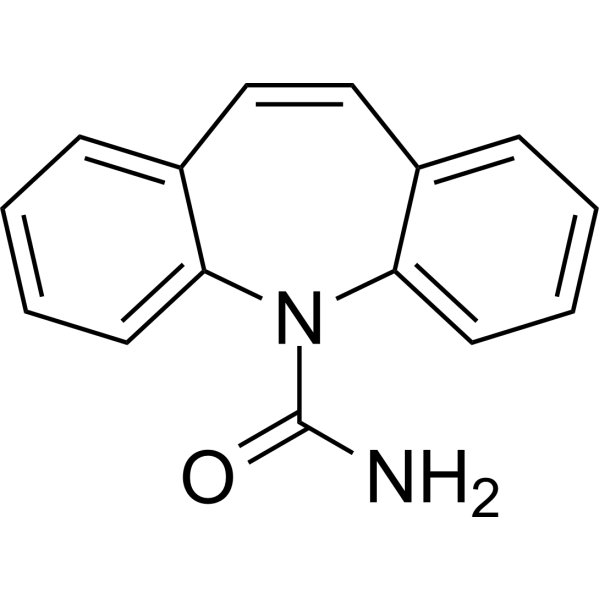
    Carbamazepine
    Maximum Cited Publications
    17 Publications Verification

    CBZ; NSC 169864

    Sodium Channel Autophagy Mitophagy Potassium Channel Calcium Channel HDAC Neurological Disease Cancer
    Carbamazepine is an orally active pressure-sensitive sodium ion channel blocker with an IC50 of 131 μM. Carbamazepine blocks voltage gated Na +, Ca 2+, and K + channels, and is also a HDAC inhibitor (IC50: 2 μM). Carbamazepine is an anticonvulsant and can be used for research of epilepsy and neuropathic pain .
    Carbamazepine
  • HY-D1024
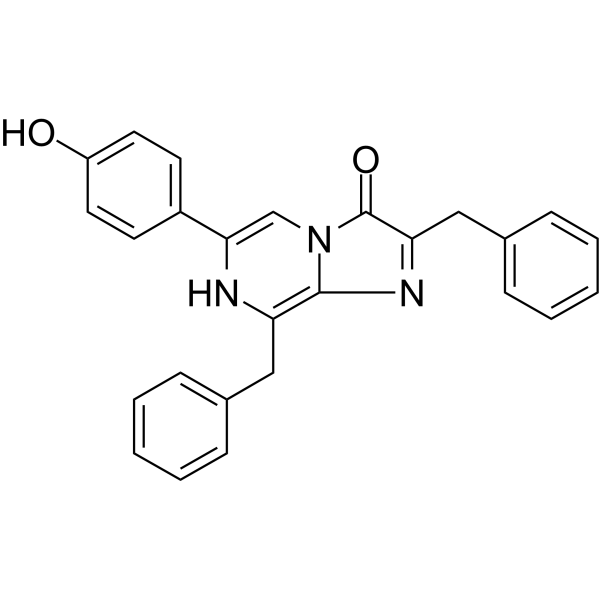
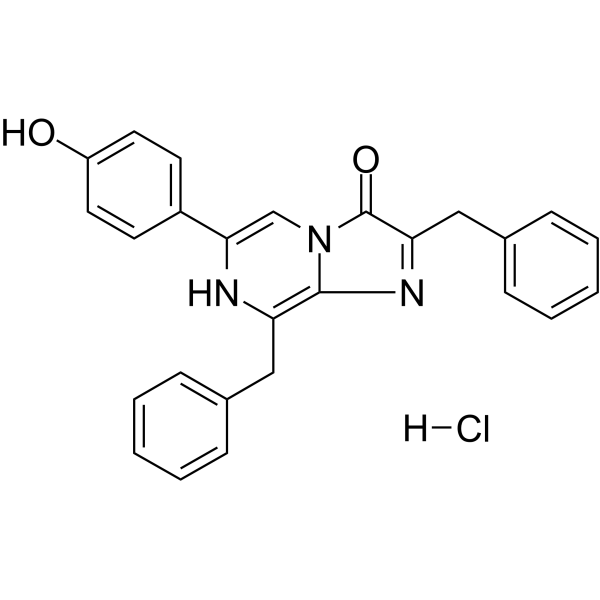
    Coelenterazine h
    3 Publications Verification

    2-Deoxycoelenterazine; CLZN-h

    Calcium Channel Neurological Disease
    Coelenterazine h (2-Deoxycoelenterazine), a coelenterazine derivative, is a luminescent substrate for RLuc8. Coelenterazine h is more sensitive to Ca 2+, thus providing a valuable tool for measuring small changes in Ca 2+ concentrations (Ex/Em = 437/466 nm) .
    Coelenterazine h
  • HY-103474
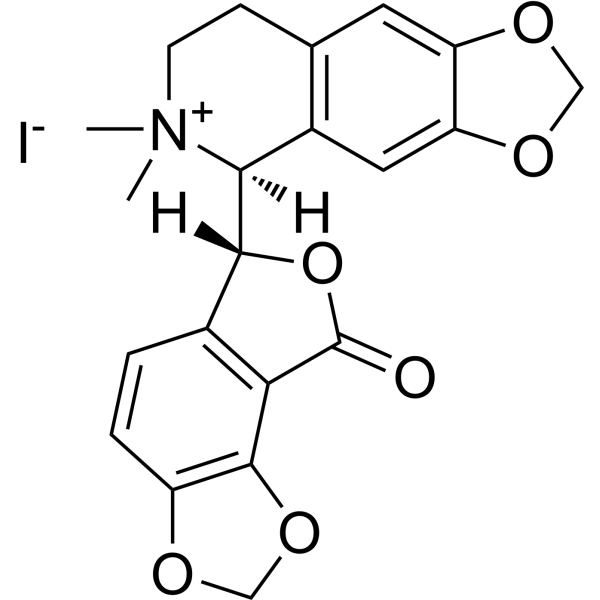
    Bicuculline methiodide
    4 Publications Verification

    (-)-Bicuculline methiodide

    GABA Receptor Neurological Disease
    Bicuculline methiodide ((-)-Bicuculline methiodide) is a potent GABAA blocker. Bicuculline methiodide alters membrane properties and firing pattern. Bicuculline methiodide reduces the Apamin-sensitive afterhyperpolarization, while Apamin is a toxin isolated from bee venom to block small conductance Ca 2+ -activated K + channels. Bicuculline methiodide facilitates burst firing via blocking apamin-sensitive Ca 2+ -activated K + current .
    Bicuculline methiodide
  • HY-Y0669
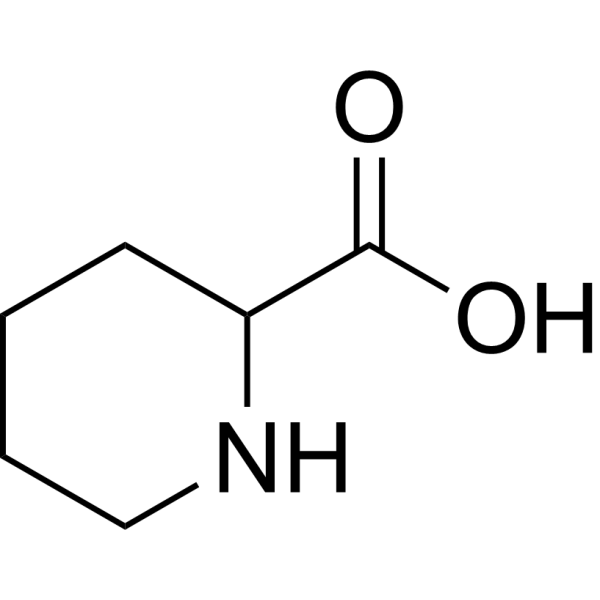
    Pipecolic acid
    2 Publications Verification

    Endogenous Metabolite YAP Glutathione Peroxidase Ferroptosis Neurological Disease Metabolic Disease Inflammation/Immunology
    Pipecolic acid is an orally bioavailable, blood-brain barrier-permeable metabolite of lysine with antioxidant, inhibitor, and inducer activity. Pipecolic acid modulates the YAP-GPX4 signaling pathway, reduces retinal vascular tube formation, and mitigates ferroptosis. Pipecolic acid potentiates voltage-sensitive Ca 2+ channel currents and induces neuronal apoptosis. Pipecolic acid can be used for the research of diabetic retinopathy .
    Pipecolic acid
  • HY-B0473

    AmethoCaine hydrochloride

    Environmental Pollutants Calcium Channel Neurological Disease
    Tetracaine hydrochloride (Amethocaine hydrochloride) is a calcium channel protein inhibitor and blocks voltage-sensitive release of Ca 2+ from sarcoplasmic reticulum. Tetracaine hydrochloride is mainly used topically in ophthalmology and as an antipruritic .
    Tetracaine hydrochloride
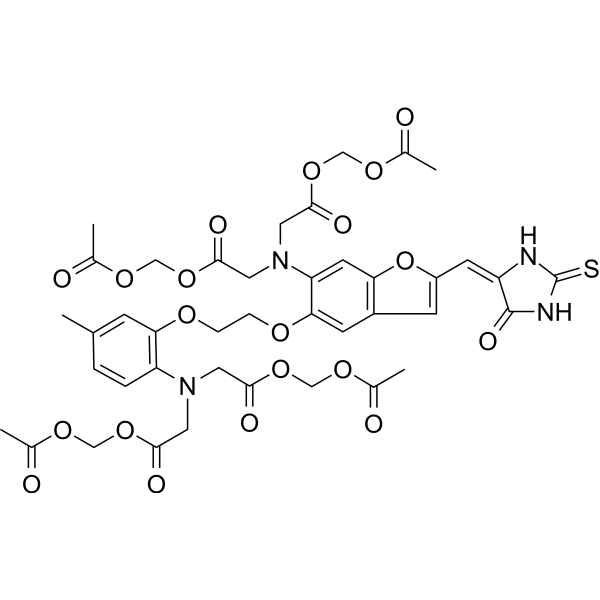
  • HY-D1631

    Fluorescent Dye Calcium Channel Neurological Disease
    Calcium Green-5N AM is a Ca 2+-sensitive fluorescent probe (Kd = 14 μM). Calcium Green-5N AM shows enhanced fluorescence intensity upon binding to Ca 2+, and it can monitor free Ca 2+ in neurons .
    Calcium Green-5N AM
  • HY-101360

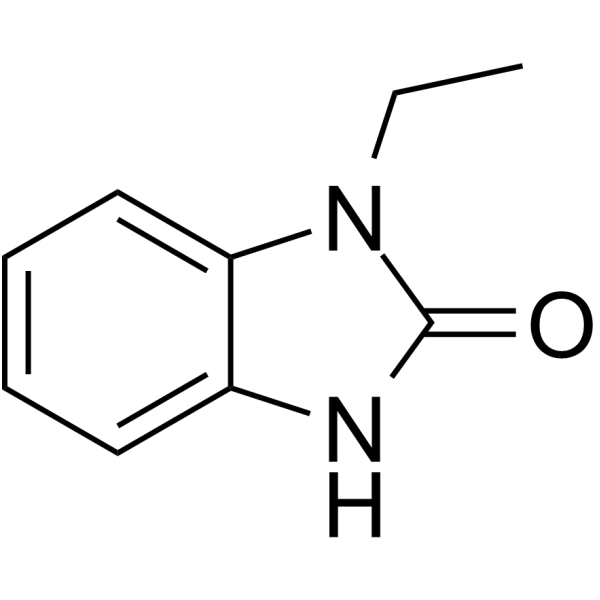
    1-Ethyl-2-benzimidazolinone

    Potassium Channel Neurological Disease
    1-EBIO is an activator of Ca 2+ sensitive K + channels. 1-EBIO is used to study the role of K + channels in diverse physiological functions .
    1-EBIO
  • HY-D0077

    Oregon green 488

    Fluorescent Dye Others
    2',7'-Difluorofluorescein (Oregon green 488) is a fluorescein derivative and a pH-sensitive fluorescent probe (pKa ~4.7). Upon excitation at 488 nm, 2',7'-Difluorofluorescein exhibits pH-sensitive fluorescence intensity through the formation of dianions, while its pH sensitivity decreases under excitation at 450 nm, allowing its use in ratiometric pH analysis. 2',7'-Difluorofluorescein can be used for the quantitative analysis of pH values in the range of 2-7 in submicron aerosol particles. 2',7'-Difluorofluorescein undergoes buffer-mediated and buffer-free excited-state proton transfer between different protonated forms, and its cationic form undergoes rapid excited-state deprotonation. 2',7'-Difluorofluorescein is resistant to photodegradation, maintains stable absorption and fluorescence properties within the physiological pH range, and serves as a fluorescent protein label, a component of Ca 2+ indicators, a fluorescent imaging agent, and an anisotropy probe .
    2',7'-Difluorofluorescein
  • HY-B0246R

    CBZ (Standard); NSC 169864 (Standard)

    Reference Standards Sodium Channel Autophagy Mitophagy Potassium Channel Calcium Channel HDAC Neurological Disease Cancer
    Carbamazepine (Standard) is the analytical standard of Carbamazepine. This product is intended for research and analytical applications. Carbamazepine is an orally active pressure-sensitive sodium ion channel blocker with an IC50 of 131 μM. Carbamazepine blocks voltage gated Na +, Ca 2+, and K + channels, and is also a HDAC inhibitor (IC50: 2 μM). Carbamazepine is an anticonvulsant and can be used for research of epilepsy and neuropathic pain .
    Carbamazepine (Standard)
  • HY-104056

    Fluorescent Dye Others
    Fura Red is a Ca 2+-sensitive fluorescent dye, which decreases in fluorescence with rising [Ca 2+] .
    Fura Red
  • HY-100783
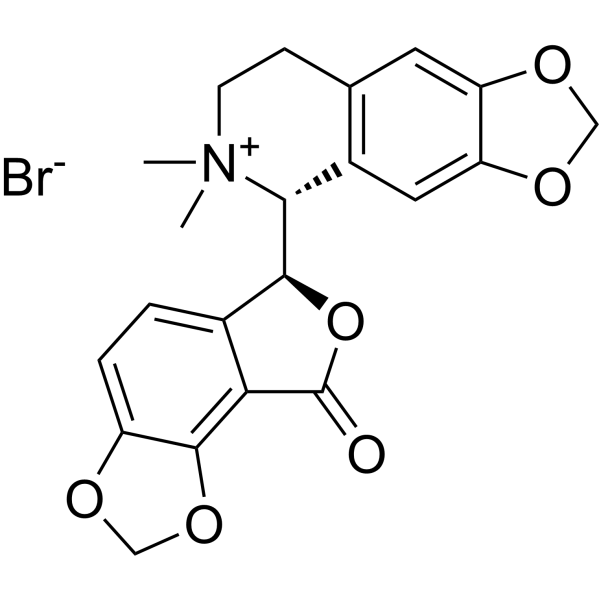
    (-)-Bicuculline methobromide
    4 Publications Verification

    GABA Receptor Neurological Disease
    (-)-Bicuculline methobromide is a potent GABAA blocker. (-)-Bicuculline methobromide alters membrane properties and firing pattern. (-)-Bicuculline methobromide reduces the Apamin-sensitive afterhyperpolarization, while Apamin is a toxin isolated from bee venom to block small conductance Ca 2+ -activated K + channels. (-)-Bicuculline methobromide facilitates burst firing via blocking apamin-sensitive Ca 2+ -activated K + current .
    (-)-Bicuculline methobromide
  • HY-135746
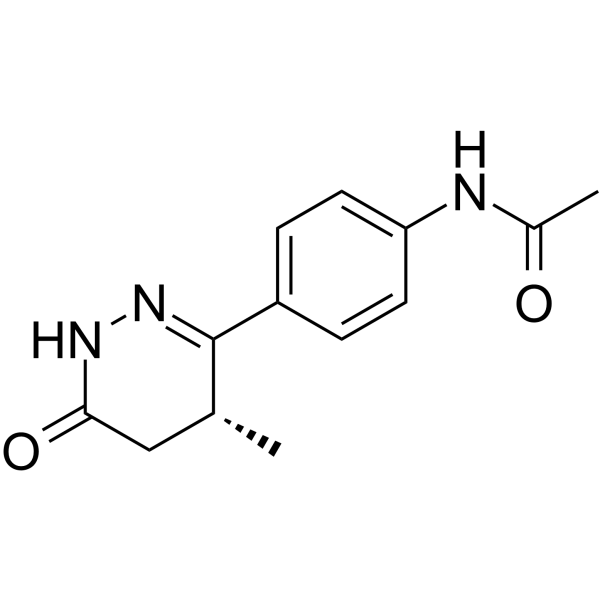
    OR-1896
    2 Publications Verification

    Potassium Channel Phosphodiesterase (PDE) Drug Metabolite Apoptosis Cardiovascular Disease
    OR-1896 is an active long-lived metabolite of Levosimendan. OR-1896 is a highly selective phosphodiesterase (PDE) III isoform inhibitor and a powerful vasodilator. OR-1896 can open ATP-sensitive K + channels and has Ca 2+-sensitizing effect. OR-1896 mitigates cardiomyocyte apoptosis, cardiac remodeling and myocardial inflammation .
    OR-1896
  • HY-D1024A
    Coelenterazine h hydrochloride
    3 Publications Verification

    2-Deoxycoelenterazine hydrochloride; CLZN-h hydrochloride

    Calcium Channel Neurological Disease
    Coelenterazine h (2-Deoxycoelenterazine) hydrochloride, a coelenterazine derivative, is a luminescent substrate for RLuc8. Coelenterazine h hydrochloride is more sensitive to Ca 2+, thus providing a valuable tool for measuring small changes in Ca 2+ concentrations (Ex/Em = 437/466 nm) .
    Coelenterazine h hydrochloride
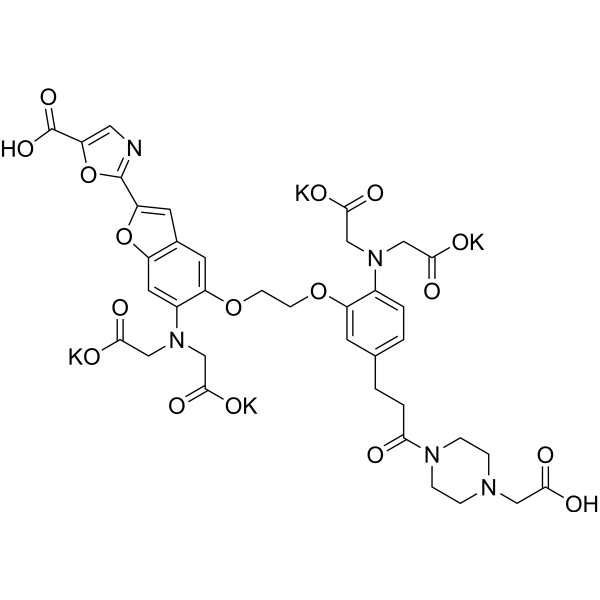
  • HY-D1631A

    Fluorescent Dye Neurological Disease
    Calcium green-5N hexapotassium is a cell-impermeant Ca 2+-sensitive fluorescent probe. Calcium green-5N hexapotassium shows enhancement in fluorescence intensity on binding Ca 2+, and can monitor free Ca 2+ in neurons .
    Calcium green-5N hexapotassium
  • HY-B0246S4

    CBZ-d4; NSC 169864-d4

    Isotope-Labeled Compounds Others
    Carbamazepine-d4 (CBZ-d4) is the deuterium labeled Carbamazepine (HY-B0246) . Carbamazepine is an orally active pressure-sensitive sodium ion channel blocker with an IC50 of 131 μM. Carbamazepine blocks voltage gated Na +, Ca 2+, and K + channels, and is also a HDAC inhibitor (IC50: 2 μM). Carbamazepine is an anticonvulsant and can be used for research of epilepsy and neuropathic pain.
    Carbamazepine-d4
  • HY-D2952

    Fluorescent Dye Others
    BOCA-1-BG is a BODIPY-labeled SNAP tag fluorescence probe. BOCA-1-BG can be used to detect Ca 2+ concentration and serves as a highly sensitive Ca 2+ fluorescent indicator .
    BOCA-1-BG
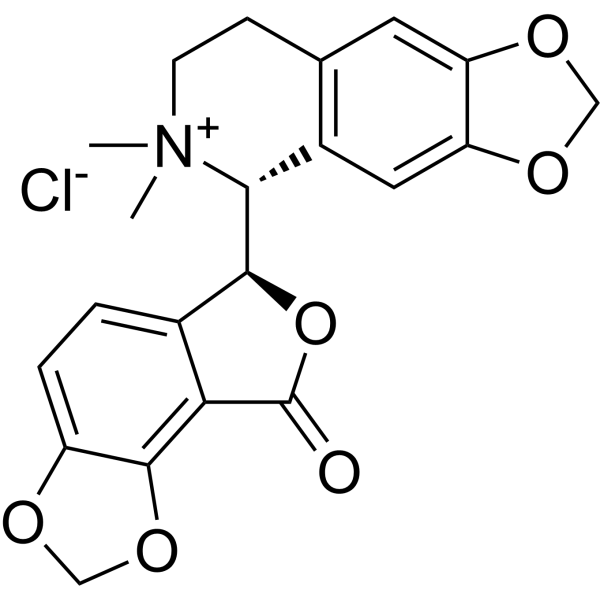
  • HY-100783A

    GABA Receptor Neurological Disease
    (+)-Bicuculline methobromide is a potent GABAA blocker. (+)-Bicuculline methobromide alters membrane properties and firing pattern. (+)-Bicuculline methobromide reduces the Apamin-sensitive afterhyperpolarization, while Apamin is a toxin isolated from bee venom to block small conductance Ca 2+ -activated K + channels. (+)-Bicuculline methobromide facilitates burst firing via blocking apamin-sensitive Ca 2+ -activated K + current .
    (+)-Bicuculline methochloride
  • HY-116540A

    7DMB-Forskolin

    Adenylate Cyclase Cardiovascular Disease
    L 858051 (7DMB-Forskolin) dihydrochloride, an analog of Forskolin (HY-15371), is an adenylyl cyclase stimulator. L 858051 dihydrochloride directly activates adenylyl cyclase to increase intracellular, cellular, and ciliary cAMP levels. L 858051 dihydrochloride activates recombinant cyclic nucleotide-gated (E583M CNGA2) channels to induce a non-selective, Mg 2+-sensitive current in adult rat ventricular myocytes. L 858051 dihydrochloride maximally stimulates L-type Ca 2+ current in adult rat ventricular myocytes. L 858051 dihydrochloride increases total PDE3 and PDE4 activities in adult rat ventricular myocytes, with effects insensitive to PKA inhibition. L 858051 dihydrochloride serves as a tool to elevate intracellular cAMP for studying subsarcolemmal cAMP dynamics and compartmentation in adult rat ventricular myocytes .
    L 858051 dihydrochloride
  • HY-B0473R

    AmethoCaine hydrochloride (Standard)

    Reference Standards Calcium Channel Neurological Disease
    Tetracaine (hydrochloride) (Standard) is the analytical standard of Tetracaine (hydrochloride). This product is intended for research and analytical applications. Tetracaine hydrochloride (Amethocaine hydrochloride) is a calcium channel protein inhibitor and blocks voltage-sensitive release of Ca2+ from sarcoplasmic reticulum. Tetracaine hydrochloride is mainly used topically in ophthalmology and as an antipruritic .
    Tetracaine hydrochloride (Standard)
  • HY-N6777R

    Reference Standards Caspase Bacterial Apoptosis Antibiotic Infection Cancer
    Tetracaine (hydrochloride) (Standard) is the analytical standard of Tetracaine (hydrochloride). This product is intended for research and analytical applications. Tetracaine hydrochloride (Amethocaine hydrochloride) is a calcium channel protein inhibitor and blocks voltage-sensitive release of Ca2+ from sarcoplasmic reticulum. Tetracaine hydrochloride is mainly used topically in ophthalmology and as an antipruritic .
    Penicillic acid (Standard)
  • HY-D1501

    Fluorescent Dye Others
    Fura PE-3 potassium is a Ca 2+sensitive fluorophore. Fura PE-3 potassium loads in IPA (intrapulmonary arteries) and MA (mesenteric resistance arteries) for the research of vasoconstriction .
    Fura PE-3 potassium
  • HY-164684

    3',4'-Dichlorobenzamil; L-594881

    Calcium Channel Sodium Channel Na+/Ca2+ Exchanger Others
    Dichlorobenzamil (3',4'-Dichlorobenzamil; L-594881) is an effective Na/Ca exchange inhibitor. Dichlorobenzamil significantly inhibits 45Ca uptake mediated by reverse Na/Ca exchange in pancreatic islet cells (IC50 = 18 μM). Dichlorobenzamil can also block K + channels and voltage-sensitive Ca 2+ channels .
    Dichlorobenzamil
  • HY-147383

    Potassium Channel Endocrinology
    NS-8, a pyrrole derivative, activates the Ca 2+-sensitive k +-channel. NS-8 can suppress the micturition reflex by decreasing afferent pelvic nerve activity. NS-8 can be used in the research of urinary frequency and incontinence .
    NS-8
  • HY-171469

    Potassium Channel Cardiovascular Disease
    SKP-451 is an ATP-sensitive potassium (K +) channel agonist. SKP-451 activates the ATP-sensitive K + channels, promotes the efflux of K +, causes membrane hyperpolarization, and inhibits the influx of Ca 2+, thereby relaxing the vascular smooth muscle. SKP-451 relaxs the canine coronary artery, rabbit basilar artery, and vertebral artery. SKP-451 also reduces the mean arterial blood pressure of conscious spontaneously hypertensive rats (SHR). SKP-451 is promising for research of cardiovascular diseases .
    SKP-451
  • HY-D1755

    Fluorescent Dye Others
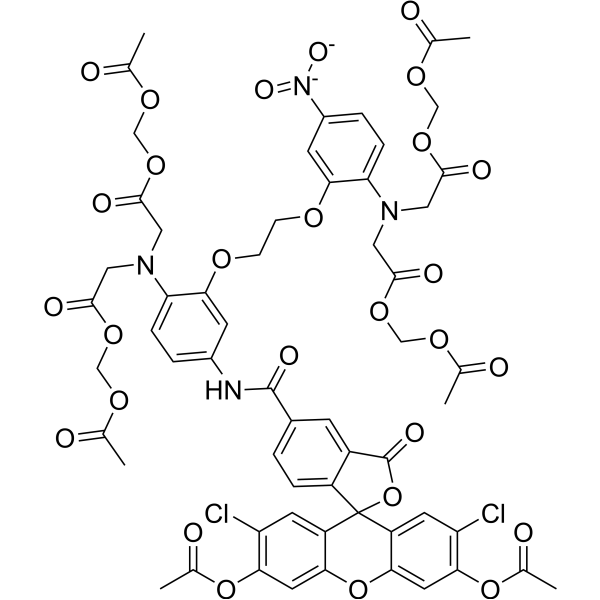
    Fluo-3FF AM is a low affinity (Kd = 42 μM) fluorescent Ca 2+ sensitive indicator (Abs/Em = 462 nm/526 nm). Fluo-3FF AM is Mg 2+ insensitive and relatively photostable. Fluo-3FF AM is an analog of Fluo-3FF AM. Fluo-3FF AM is essentially non-fluorescent, but exhibits a strong fluorescence enhancement upon entry into cells and binding to calcium.
    Fluo-3FF AM
  • HY-116540

    7DMB-Forskolin free base

    Adenylate Cyclase Cardiovascular Disease
    L 858051 (7DMB-Forskolin free base), an analog of Forskolin (HY-15371), is an adenylyl cyclase stimulator. L 858051 directly activates adenylyl cyclase to increase intracellular, cellular, and ciliary cAMP levels. L 858051 activates recombinant cyclic nucleotide-gated (E583M CNGA2) channels to induce a non-selective, Mg 2+-sensitive current in adult rat ventricular myocytes. L 858051 maximally stimulates L-type Ca 2+ current in adult rat ventricular myocytes. L 858051 increases total PDE3 and PDE4 activities in adult rat ventricular myocytes, with effects insensitive to PKA inhibition. L 858051 serves as a tool to elevate intracellular cAMP for studying subsarcolemmal cAMP dynamics and compartmentation in adult rat ventricular myocytes .
    L 858051
  • HY-103474R

    (-)-Bicuculline methiodide (Standard)

    Reference Standards GABA Receptor Neurological Disease
    Bicuculline methiodide (Standard) is the analytical standard of Bicuculline methiodide (HY-103474). This product is intended for research and analytical applications. Bicuculline methiodide ((-)-Bicuculline methiodide) is a potent GABAA blocker. Bicuculline methiodide alters membrane properties and firing pattern. Bicuculline methiodide reduces the Apamin-sensitive afterhyperpolarization, while Apamin is a toxin isolated from bee venom to block small conductance Ca2+ -activated K+ channels. Bicuculline methiodide facilitates burst firing via blocking apamin-sensitive Ca2+ -activated K+ current .
    Bicuculline methiodide (Standard)
  • HY-135746S

    Isotope-Labeled Compounds Phosphodiesterase (PDE) Apoptosis Potassium Channel Drug Metabolite Cardiovascular Disease
    OR-1896-d3 is the deuterium labeled OR-1896 (HY-135746). OR-1896 is an active long-lived metabolite of Levosimendan. OR-1896 is a highly selective phosphodiesterase (PDE) III isoform inhibitor and a powerful vasodilator. OR-1896 can open ATP-sensitive K+ channels and has Ca2+-sensitizing effect. OR-1896 mitigates cardiomyocyte apoptosis, cardiac remodeling and myocardial inflammation .
    OR-1896-d3
  • HY-183206

    Potassium Channel Calcium Channel Cardiovascular Disease Inflammation/Immunology
    UR 8225 is an orally active ATP-sensitive K + channel activator with vasodilator, smooth muscle relaxant, antihypertensive, and bronchodilator activities. UR 8225 induces membrane hyperpolarization by increasing outward K + conductance and reduces Ca 2+ influx through voltage-gated L-type Ca 2+ channels. UR 8225 reduces total peripheral vascular resistance, shortens cardiac action potential duration, inhibits agonist-induced Ca 2+ influx, and stimulates renin release. UR 8225 induces reflex tachycardia but lacks β-adrenergic receptor blocking activity. UR 8225 is widely applicable to research in fields related to hypertension, myocardial ischemia, ventricular fibrillation, and other conditions .
    UR 8225
  • HY-101360R

    1-Ethyl-2-benzimidazolinone (Standard)

    Potassium Channel Reference Standards Cardiovascular Disease Neurological Disease Cancer
    1-EBIO (1-Ethyl-2-benzimidazolinone) (Standard) is the analytical standard of 1-EBIO (HY-101360). This product is intended for research and analytical applications. 1-EBIO is an activator of Ca 2+ sensitive K + channels wirh an EC50 of 136 μM for KCa3.1. 1-EBIO induces Cl - secretion, K + conductance, membrane hyperpolarization, and afterhyperpolarisation currents. 1-EBIO reduces epileptiform activity, seizure incidence, and rescues cells from Ionomycin (HY-13434)-induced death .
    1-EBIO (Standard)
  • HY-12292G

    NF-κB STAT GSK-3 β-catenin Bcr-Abl Cancer
    IM-12 GMP is IM-12 (HY-12292) produced by using GMP guidelines. GMP small molecules works appropriately as an auxiliary reagent for cell therapy manufacture. IM-12 is an orally active anti-inflammatory agent that targets and inhibits the NF-κB and STAT3 signaling pathways. IM-12 activates the Wnt signaling pathway and promotes the nuclear translocation of β-catenin by inhibiting GSK3β, while also blocking the tyrosine kinase activity of p210BCR/ABL. IM-12 reduces the levels of IL-6, IL-17, NO, prostaglandin E2, iNOS and COX-2, and induces ER stress, Ca 2+ release, autophagy and apoptosis. IM-12 is heat-sensitive and does not induce autophagy in IM-resistant p210BCR/ABL T315I mutant cells. IM-12 is also a component of the 5iLA medium used for naive pluripotent stem cell research. IM-12 has been applied in studies related to carrageenan (HY-125474)-induced hind paw edema, TNBS-induced colitis, and acute and chronic myeloid leukemia .
    IM-12

Inquiry Online

Your information is safe with us. * Required Fields.

Salutation


Country or Region *

Applicant Name *


Organization Name *

Department *


Email Address *


Product Name *

Cat. No.


Requested quantity *

Phone Number *


Remarks

Inquiry Online

Inquiry Information

Product Name:
Cat. No.:
Quantity:
MCE Japan Authorized Agent:

