Search Result
Results for "
Carbachol
" in MedChemExpress (MCE) Product Catalog:
2
Isotope-Labeled Compounds
| Cat. No. |
Product Name |
Target |
Research Areas |
Chemical Structure |
-
- HY-N0340
-
|
Hyoscine butylbromide; (-)-Scopolamine butylbromide; Butylscopolamine bromide
|
mAChR
|
Neurological Disease
Inflammation/Immunology
|
|
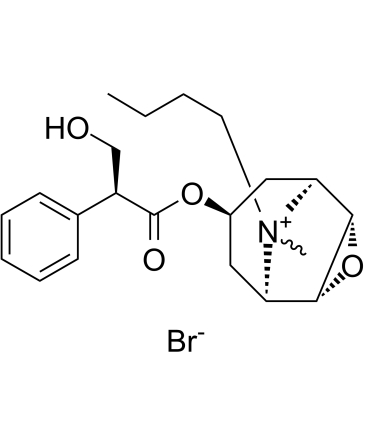
Scopolamine butylbromide (Hyoscine butylbromide) is an orally active anticholinergic agent and spasmolytic. Scopolamine butylbromide binds with high affinity to rat cardiac M2 (Ki 83 nmol/L), hM2 (Ki 233 nmol/L), rat intestinal M3 (Ki 290 nmol/L) and hM3 (Ki 643 nmol/L) muscarinic receptors. Scopolamine butylbromide exerts a dose-dependent antagonistic effect on Carbachol-induced gastrointestinal smooth muscle spasm. Scopolamine butylbromide can be used for the research of abdominal colic and pain associated with gastrointestinal spasm, functional abdominal pain, chronic gastropathy and gastric ulcer .
|
-
-
- HY-19408
-
Pyr10
3 Publications Verification
|
TRP Channel
|
Others
|
|
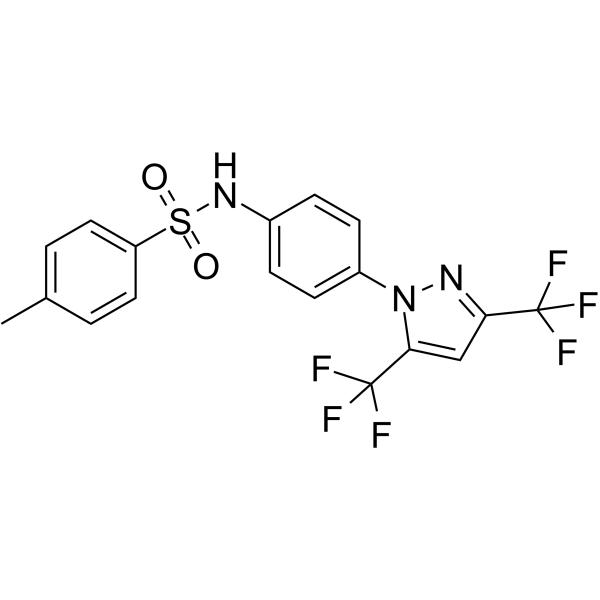
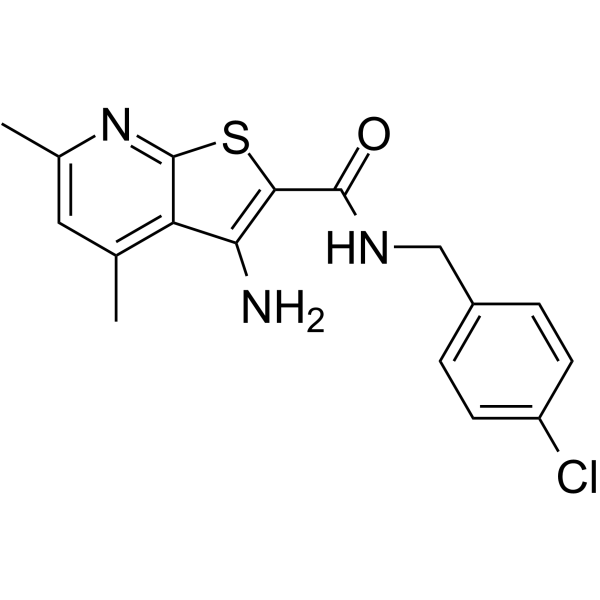
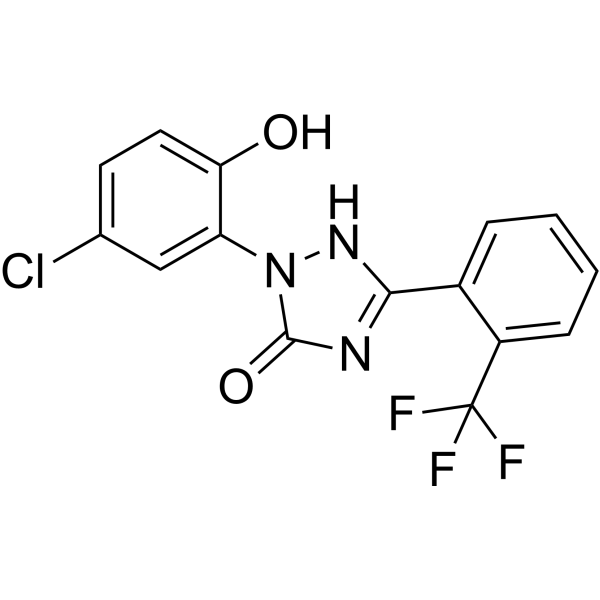
Pyr10 is a pyrazole derivative and a selective TRP cation 3 (TRPC3) inhibitor. Pyr10 inhibits Ca 2+ influx in carbachol-stimulated TRPC3-transfected HEK293 cells with an IC50 of 0.72 μM (IC50 of 13.08 μM for store operated Ca 2+ entry in BRL-2H3 cells). Pyr10 has the ability to distinguish between receptor-operated TRPC3 and native stromal interaction molecule 1 (STIM1)/Orai1 channels .
|
-
-
- HY-P1726
-
|
|
Melanocortin Receptor
|
Neurological Disease
Metabolic Disease
Inflammation/Immunology
Cancer
|
|
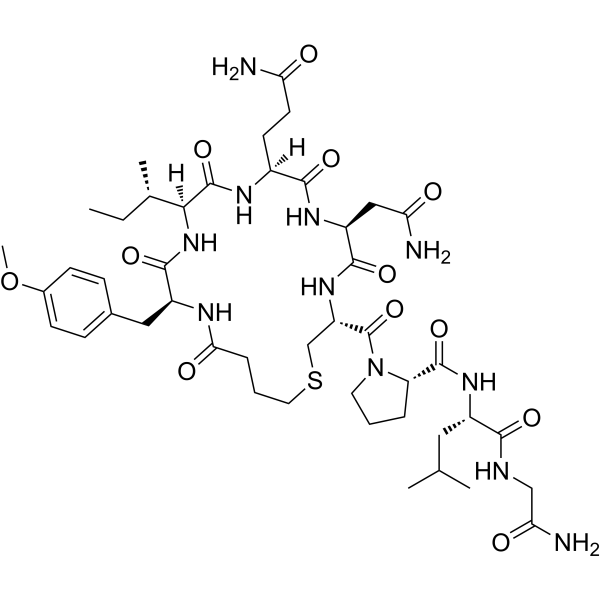
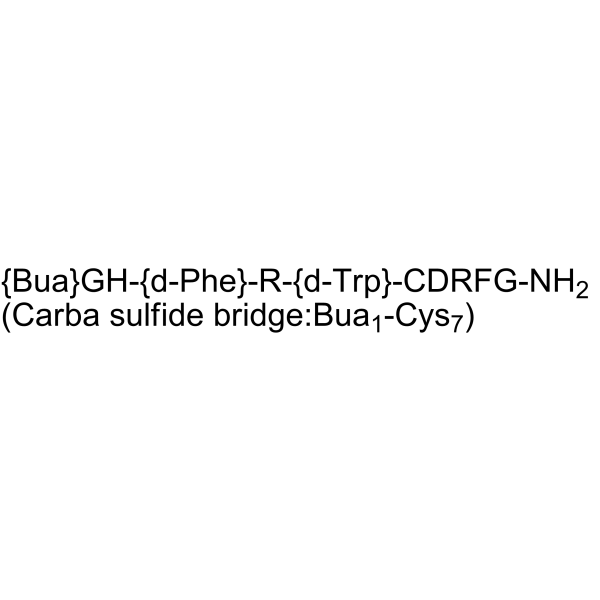
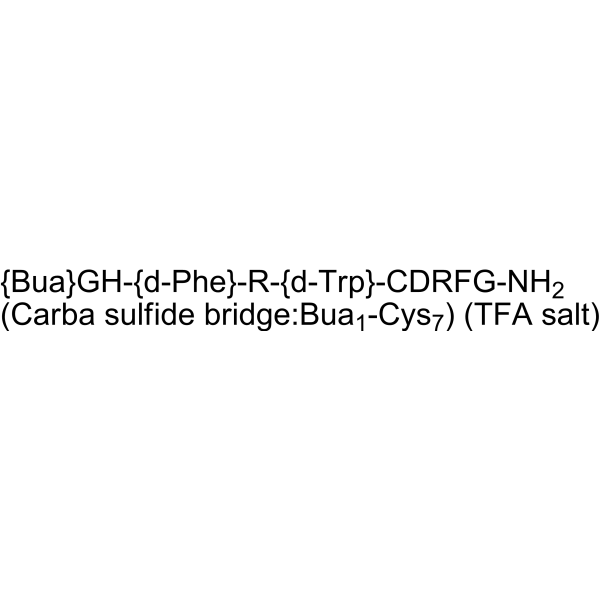
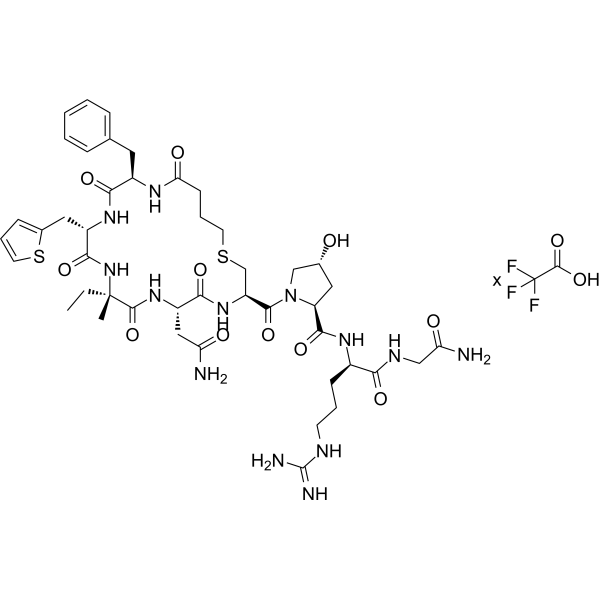
MSG606 is a selective melanocortin 1 receptor (MC1R) antagonist. MSG606 can abolish the neuroprotective effects of BMS-470539 (HY-15616) (MC1R agonist). MSG606 can inhibit cancer cell proliferation and transition from the G1 to the S phase. MSG606 can delay pain hypersensitivity and reduce cholesterol levels. MSG606 can be used for the researches of cancer, inflammation, neurological and metabolic disease, such as breast cancer and subarachnoid hemorrhage (SAH) .
|
-
-
- HY-109532
-
|
Ganirest
|
GnRH Receptor
|
Metabolic Disease
|
|
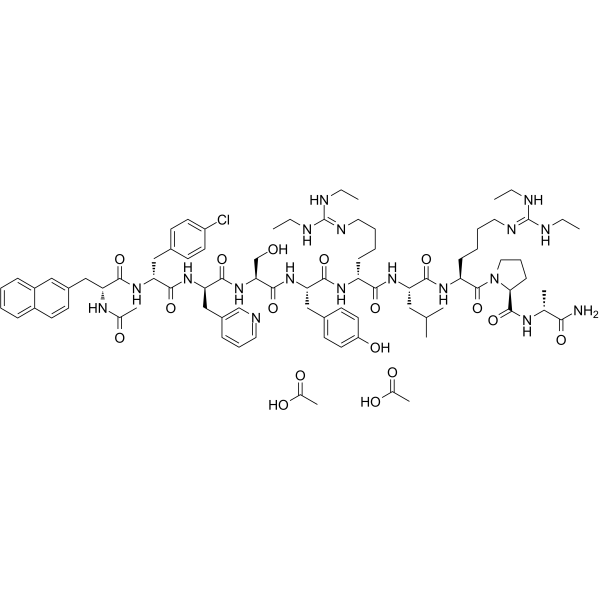
Ganirelix acetate (Ganirest) is a competitive and selective gonadotropin-releasing hormone (GnRH) antagonist. Ganirelix acetate blocks endogenous GnRH-induced release of luteinizing hormone (LH) and follicle-stimulating hormone. Ganirelix acetate antagonizes Prostaglandin E2 (HY-101952)-induced detrusor overactivity and enhances Carbachol (HY-B1208)-induced detrusor contraction. Ganirelix acetate is applicable to research related to female infertility and detrusor overactivity .
|
-
-
- HY-101222
-
|
|
5-HT Receptor
|
Cardiovascular Disease
Neurological Disease
|
|
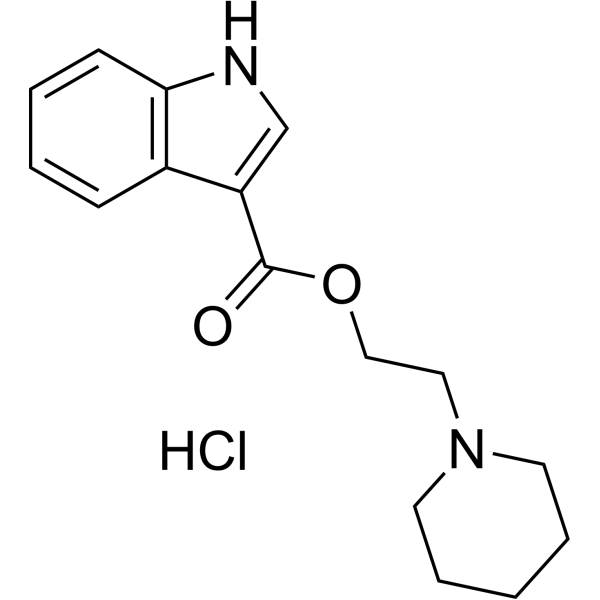
SB-203186 hydrochloride is a potent, selective and competitive 5-HT4 antagonist. SB-203186 hydrochloride antagonizes the 5-HT4 receptor-mediated relaxations of the carbachol-contracted rat isolated oesophagus against 5-HT with pKB values of 10.9 (rat oesophagus), 9.5 (guinea-pig ileum), and 9.0 (human colon) respectively .
|
-
-
- HY-B0267C
-
|
Aroxybutynin
|
mAChR
|
Neurological Disease
|
|
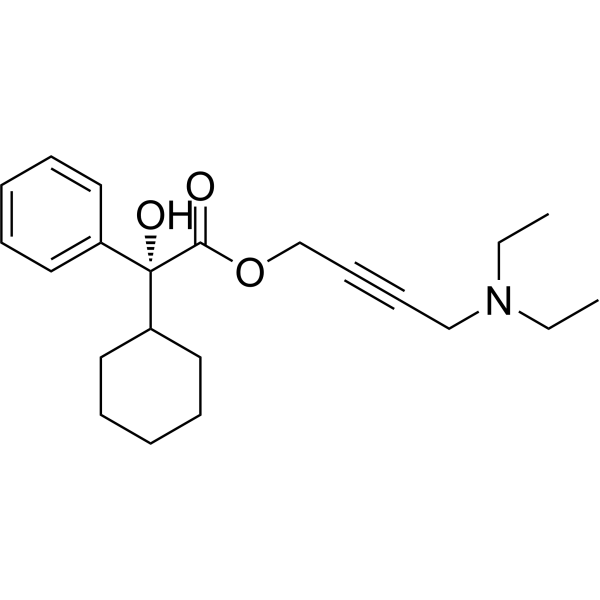
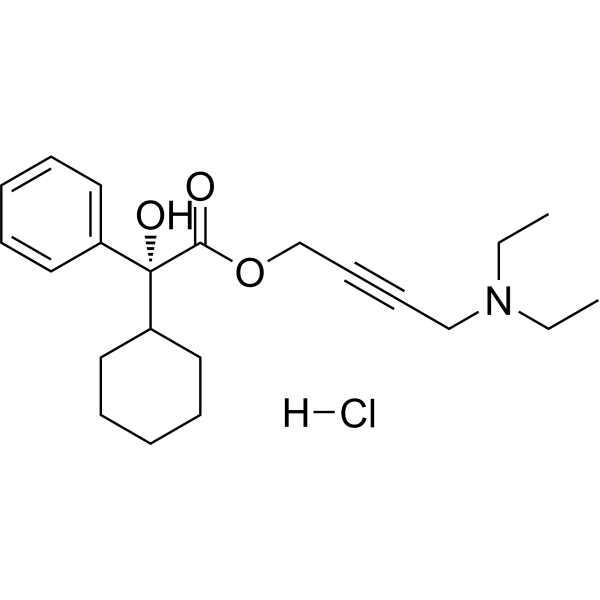
(R)-Oxybutynin (Aroxybutynin) is the racemic isomer of Oxybutynin and an orally active muscarinic receptor antagonist. (R)-Oxybutynin has antispasmodic, antimuscarinic, and anticholinergic activities and competitively antagonizes carbachol-induced contractions. (R)-Oxybutynin can be used to study urinary incontinence caused by neurogenic bladder dysfunction .
|
-
-
- HY-14563
-
|
|
mAChR
|
Neurological Disease
|
|
VU10010 is a potent, highly selective and allosteric M4 mAChR potentiator with an EC50 of 400 nM. VU10010 binds to an allosteric site on M4 mAChR and increases affinity for acetylcholine and coupling to G proteins. VU10010 increases carbachol-induced depression of transmission at excitatory but not inhibitory synapses in the hippocampus .
|
-
-
- HY-B0267B
-
|
Aroxybutynin hydrochloride
|
mAChR
|
Neurological Disease
|
|
(R)-Oxybutynin hydrochloride, a (R)-isomer of Oxybutynin hydrochloride, is an orally active muscarinic receptor antagonist. (R)-Oxybutynin hydrochloride has antimuscarinic, antispasmodic and anticholinergic activity, competitively antagonizes Carbachol-induced contractions. (R)-Oxybutynin hydrochloride can be used for researching incontinence due to neurogenic bladder dysfunction . (R)-Oxybutynin (hydrochloride) is a click chemistry reagent, it contains an Alkyne group and can undergo copper-catalyzed azide-alkyne cycloaddition (CuAAc) with molecules containing Azide groups.
|
-
-
- HY-P10768A
-
|
|
PACAP Receptor
|
Inflammation/Immunology
|
|
Ro 25-1553 TFA is a 31 amino acid vasoactive intestinal peptide (VIP) analog, that acts as an agonist for VIP2 receptor (VPAC2 receptor). Ro 25-1553 TFA exhibits a bronchodilator effect in nerve-induced or Carbachol (HY-B1208)-induced tracheal smooth muscle contraction in guinea pig model .
|
-
-
- HY-105505
-
|
|
Phosphodiesterase (PDE)
Histamine Receptor
|
Inflammation/Immunology
|
|
KF-17625 is an orally active bronchodilator. KF-17625 can inhibit bronchoconstriction induced by Carbachol (HY-B1208), Histamine (HY-B1204), or Leukotriene D4 (HY-113456). KF-17625 can inhibit canine tracheal phosphodiesterase (PDE) IV (IC50 = 12 μM) and Concanavalin-A (HY-P2149)-induced histamine release from rat mast cells (44% inhibition at 10 mM). KF-17625 can be used for the researches of immunology and inflammation .
|
-
-
- HY-P10768
-
|
|
PACAP Receptor
|
Inflammation/Immunology
|
|
Ro 25-1553 is a selective VIP2 receptor (VPAC2 receptor) agonist. Ro 25-1553 exhibits bronchodilatory effects on tracheal smooth muscle contractions induced by nerve stimulation or Carbachol (HY-B1208). Ro 25-1553 produces a superimposed effect when combined with Formoterol and Salmeterol (HY-14302). Ro 25-1553 can be used for the study of bronchoconstriction .
|
-
-
- HY-105483
-
|
|
Leukotriene Receptor
|
Inflammation/Immunology
|
|
MDL 43291 is a competitive leukotriene (LT) receptor antagonist. MDL 43291 antagonize LTD4 and LTE4 with pA2 of 6.7. MDL 43291 does not antagonize histamine, carbachol or substance P. MDL 43291 can be used for the researches of inflammation and immunology, such as asthma .
|
-
-
- HY-148533
-
|
|
mAChR
Adrenergic Receptor
|
Neurological Disease
|
|
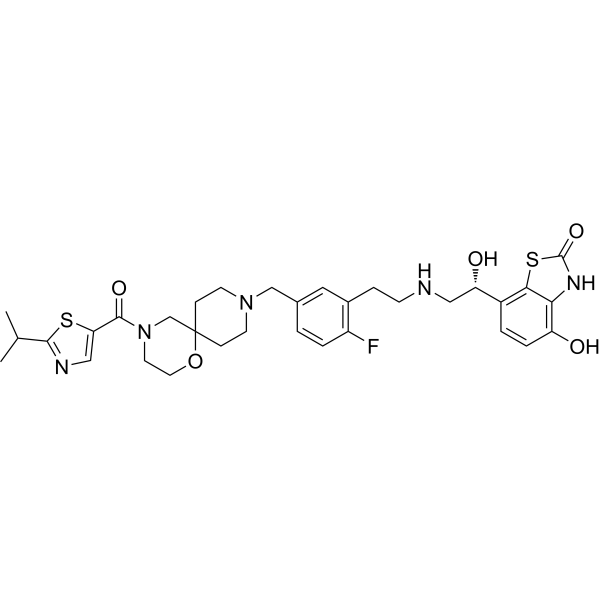
β2AR agonist /M-receptor antagonist-1 is a potent dual muscarinic antagonist/beta 2 agonist (MABA). β2AR agonist /M-receptor antagonist-1 potently relaxes either Carbachol?(HY-B1208)-induced contraction, in the absence (MABA) or presence of Propranolol?(HY-B1208), or Histamine(HY-B1204)-induced contraction (β2) .
|
-
-
- HY-P0077
-
|
|
Oxytocin Receptor
|
Endocrinology
|
|
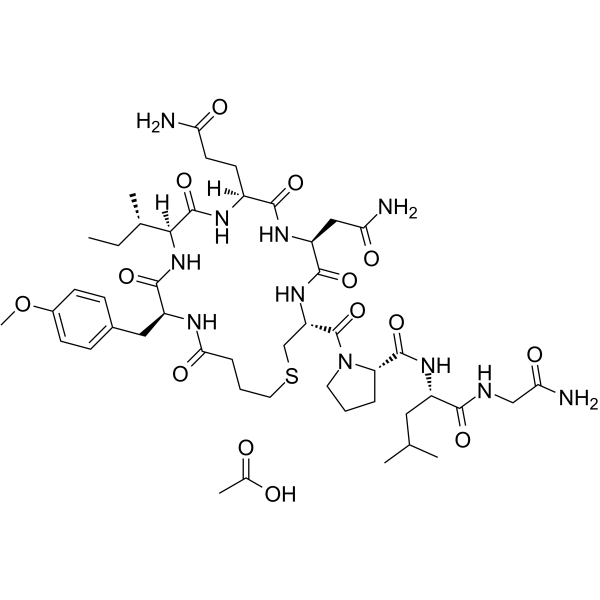
Merotocin is a selective, short-acting peptidic oxytocin receptor agonist. Merotocin can be used to support lactation .
|
-
-
- HY-P1726A
-
|
|
Melanocortin Receptor
|
Neurological Disease
Metabolic Disease
Inflammation/Immunology
Cancer
|
|
MSG606 TFA is a selective melanocortin 1 receptor (MC1R) antagonist. MSG606 TFA can abolish the neuroprotective effects of BMS-470539 (HY-15616) (MC1R agonist). MSG606 TFA can inhibit cancer cell proliferation and transition from the G1 to the S phase. MSG606 TFA can delay pain hypersensitivity and reduce cholesterol levels. MSG606 TFA can be used for the researches of cancer, inflammation, neurological and metabolic disease, such as breast cancer and subarachnoid hemorrhage (SAH) .
|
-
-
- HY-P0041A
-
-
-
- HY-120620
-
|
|
Calcium Channel
|
Others
|
|
BMS-195270 is a small molecule that inhibits Carbachol (HY-B1208)-evoked tonicity of isolated rat bladder strips. BMS-195270 inhibits calcium flux .
|
-
-
- HY-B0267BS
-
|
|
mAChR
Isotope-Labeled Compounds
|
Neurological Disease
|
|
Oxybutynin-d5 hydrochloride is deuterated labeled (R)-Oxybutynin hydrochloride (HY-B0267B). (R)-Oxybutynin hydrochloride, a (R)-isomer of Oxybutynin hydrochloride, is an orally active muscarinic receptor antagonist. (R)-Oxybutynin hydrochloride has antimuscarinic, antispasmodic and anticholinergic activity, competitively antagonizes Carbachol-induced contractions. (R)-Oxybutynin hydrochloride can be used for researching incontinence due to neurogenic bladder dysfunction . (R)-Oxybutynin hydrochloride is a click chemistry reagent, it contains an Alkyne group and can undergo copper-catalyzed azide-alkyne cycloaddition (CuAAc) with molecules containing Azide groups.
|
-
-
- HY-114743
-
|
|
mAChR
Histamine Receptor
CRAC Channel
|
Others
|
|
GS 283 is a compound with calcium antagonist and weak histamine and muscarinic receptor blocking activity, with activity in modulating contraction of guinea pig and rat tracheal smooth muscle. GS 283 inhibits contractions induced by carbachol, histamine (guinea pig only), and high H + in guinea pig and rat tracheal smooth muscle, inhibits Ca 2+-induced contractions in guinea pig tracheal smooth muscle, and at high concentrations completely abolishes contractions induced by carbachol in Ca 2+-free medium.
|
-
-
- HY-161118
-
|
|
nAChR
|
Neurological Disease
|
|
MB327 is a bipyridine nonoxime compound that restores neuromuscular function. MB327 restores the activity of nicotinamide acetylcholine receptors (nAChRs) for carbachol desensitization in a typical type II PAM manner. MB327 can neutralize nerve agent poisoning .
|
-
-
- HY-19641
-
|
|
Biochemical Assay Reagents
Prostaglandin Receptor
|
Others
|
|
AH13205 is a selective prostanoid EP2-receptor agonist. AH13205 causes concentration-related relaxations of Carbachol (HY-B1208)-contracted trachea. AH13205 causes dose-related protection against Histamine (HY-B1204)-induced increases in respiratory rate .
|
-
-
- HY-B0267CS
-
|
Aroxybutynin-d10
|
Isotope-Labeled Compounds
mAChR
|
Neurological Disease
|
|
(R)-Oxybutynin-d10 (Aroxybutynin-d10) is deuterium labeled (R)-Oxybutynin. (R)-Oxybutynin (Aroxybutynin) is the racemic isomer of Oxybutynin and an orally active muscarinic receptor antagonist. (R)-Oxybutynin has antispasmodic, antimuscarinic, and anticholinergic activities and competitively antagonizes carbachol-induced contractions. (R)-Oxybutynin can be used to study urinary incontinence caused by neurogenic bladder dysfunction .
|
-
-
- HY-174257
-
|
|
NF-κB
Oxidative Phosphorylation
|
Inflammation/Immunology
|
|
RCD405 is a bronchodilator. RCD405 exerts relaxant effects by acting directly on human airway smooth muscle (hASM) with an EC50 value of 12 μM for histamine-induced contractions and 45.71 μM for carbachol-induced contractions. RCD405 inhibits cholinergic and histaminergic tone and reduces electrically stimulated (EFS)-induced contractions. RCD405 is promising for research of asthma and chronic obstructive pulmonary disease (COPD) .
|
-
-
- HY-P2331
-
|
Antibiotic A 3802-IV-3; Gardimycin
|
Antibiotic
|
Infection
|
|
Actagardin is a tetracyclic lantibiotic produced by several species of Actinoplanes. It is composed of macrocyclic rings formed by thioether bridges. Actagardin preferably targets Gram-positive bacteria, inhibiting the synthesis of peptidoglycan.
|
-
-
- HY-N15424
-
|
|
Apoptosis
Bcl-2 Family
|
|
|
Himachalol, a sesquiterpene, is an orally active antispasmodic and anticancer constituent found in the wood of Cedrus deodara. Himachalol has anti-proliferative activity against the melanoma cells, and induces apoptosis (decreases Bcl-2 level and increases Bax level). Himachalol has systemic hypotension and peripheral vasodilation effect. Himachalol inhibits Carbachol-induced spasm of the intestine. The LD50 of Himachalol in mice is 265 mg/kg (p.o.) and 247 mg/kg (i.p.) .
|
-
-
- HY-B0530A
-
|
γ-pipradol hydrochloride
|
Reactive Oxygen Species (ROS)
mAChR
NADPH Oxidase
|
Cancer
|
|
Azacyclonol (γ-pipradol) hydrochloride is a compound with promising anticancer activity, showing effectiveness in inhibiting NOX-derived ROS in A549 human lung cancer cells. Azacyclonol hydrochloride exhibits enhanced proliferation inhibition against androgen-refractory cancer cell lines, specifically DU145 and PC-3. Azacyclonol hydrochloride demonstrates antitumor activity in DU145-xenografted chorioallantoic membrane tumor models. Azacyclonol hydrochloride also acts as a ligand for the M3 muscarinic acetylcholine receptor, which is overexpressed in ARPC. Azacyclonol hydrochloride effectively blocks carbachol-induced proliferation and NOX activity in DU145 cells. Azacyclonol hydrochloride can also be utilized for the treatment of chronic schizophrenia.
|
-
-
- HY-N0340R
-
|
Hyoscine butylbromide (Standard); (-)-Scopolamine butylbromide (Standard); Butylscopolamine bromide (Standard)
|
Reference Standards
mAChR
|
Neurological Disease
Inflammation/Immunology
|
|
Scopolamine butylbromide (Standard) is the analytical standard of Scopolamine butylbromide (HY-N0340). This product is intended for research and analytical applications. Scopolamine butylbromide (Hyoscine butylbromide) is an orally active anticholinergic agent and spasmolytic. Scopolamine butylbromide binds with high affinity to rat cardiac M2 (Ki 83 nmol/L), hM2 (Ki 233 nmol/L), rat intestinal M3 (Ki 290 nmol/L) and hM3 (Ki 643 nmol/L) muscarinic receptors. Scopolamine butylbromide exerts a dose-dependent antagonistic effect on Carbachol-induced gastrointestinal smooth muscle spasm. Scopolamine butylbromide can be used for the research of abdominal colic and pain associated with gastrointestinal spasm, functional abdominal pain, chronic gastropathy and gastric ulcer .
|
-
-
- HY-P0041
-
-
-
- HY-P10768B
-
|
|
PACAP Receptor
|
Inflammation/Immunology
|
|
Ro 25-1553 acetate is a selective VIP2 receptor (VPAC2 receptor) agonist. Ro 25-1553 acetate exhibits bronchodilatory effects on tracheal smooth muscle contractions induced by nerve stimulation or Carbachol (HY-B1208). Ro 25-1553 acetate produces a superimposed effect when combined with Formoterol and Salmeterol (HY-14302). Ro 25-1553 acetate can be used for the study of bronchoconstriction .
|
-
-
- HY-105101
-
|
|
Histamine Receptor
|
Inflammation/Immunology
|
|
Osutidine is a selective histamine H2 receptor antagonist, can effectively inhibit histamine-stimulated gastric acid secretion. Osutidine does not affect [ 14C]aminopyrine accumulation stimulated by carbachol or dibutyryl-cAMP. Osutidine is insurmountable and includes non-competitive inhibition. Osutidine can be used for the study of gastric mucosal injury .
|
-
-
- HY-120053
-
|
|
5-HT Receptor
|
Inflammation/Immunology
|
|
SC-53606 is a potent and selective 5-HT4 receptor antagonist, with a pA2 value of 8.13. SC-53606 acts as an antagonist of 5-HT4 receptor-mediated relaxation of Carbachol (HY-B1208)-induced contractions .
|
-
-
- HY-183932
-
|
|
mAChR
|
Neurological Disease
Inflammation/Immunology
|
|
NPC-14695 is a competitive and selective M3 muscarinic receptor antagonist, with a Kd value of 15 nM for guinea pig M3, 60 nM for guinea pig M2, and 25 nM for rabbit M1. NPC-14695 exhibits higher activity towards M3 receptors in bronchial smooth muscle than towards those regulating salivary secretion. NPC-14695 inhibits Carbachol (HY-B1208)-induced contraction of isolated rabbit iris smooth muscle .
|
-
-
- HY-182393
-
|
|
Histamine Receptor
|
Inflammation/Immunology
|
|
IGN-2098 is an orally active, competitive histamine H2 receptor antagonist with a pA2 value of 7.32. IGN-2098 inhibits basal and stimulated gastric acid secretion. IGN-2098 accelerates ulcer healing, suppresses ulcer edge elevation, and protects gastric and duodenal mucosa from damage. IGN-2098 can be used in research related to gastric ulcers .
|
-
| Cat. No. |
Product Name |
Target |
Research Area |
-
- HY-P1726
-
|
|
Melanocortin Receptor
|
Neurological Disease
Metabolic Disease
Inflammation/Immunology
Cancer
|
|
MSG606 is a selective melanocortin 1 receptor (MC1R) antagonist. MSG606 can abolish the neuroprotective effects of BMS-470539 (HY-15616) (MC1R agonist). MSG606 can inhibit cancer cell proliferation and transition from the G1 to the S phase. MSG606 can delay pain hypersensitivity and reduce cholesterol levels. MSG606 can be used for the researches of cancer, inflammation, neurological and metabolic disease, such as breast cancer and subarachnoid hemorrhage (SAH) .
|
-
- HY-P10768A
-
|
|
PACAP Receptor
|
Inflammation/Immunology
|
|
Ro 25-1553 TFA is a 31 amino acid vasoactive intestinal peptide (VIP) analog, that acts as an agonist for VIP2 receptor (VPAC2 receptor). Ro 25-1553 TFA exhibits a bronchodilator effect in nerve-induced or Carbachol (HY-B1208)-induced tracheal smooth muscle contraction in guinea pig model .
|
-
- HY-P10768
-
|
|
PACAP Receptor
|
Inflammation/Immunology
|
|
Ro 25-1553 is a selective VIP2 receptor (VPAC2 receptor) agonist. Ro 25-1553 exhibits bronchodilatory effects on tracheal smooth muscle contractions induced by nerve stimulation or Carbachol (HY-B1208). Ro 25-1553 produces a superimposed effect when combined with Formoterol and Salmeterol (HY-14302). Ro 25-1553 can be used for the study of bronchoconstriction .
|
-
- HY-P0077
-
|
|
Oxytocin Receptor
|
Endocrinology
|
|
Merotocin is a selective, short-acting peptidic oxytocin receptor agonist. Merotocin can be used to support lactation .
|
-
- HY-P1726A
-
|
|
Melanocortin Receptor
|
Neurological Disease
Metabolic Disease
Inflammation/Immunology
Cancer
|
|
MSG606 TFA is a selective melanocortin 1 receptor (MC1R) antagonist. MSG606 TFA can abolish the neuroprotective effects of BMS-470539 (HY-15616) (MC1R agonist). MSG606 TFA can inhibit cancer cell proliferation and transition from the G1 to the S phase. MSG606 TFA can delay pain hypersensitivity and reduce cholesterol levels. MSG606 TFA can be used for the researches of cancer, inflammation, neurological and metabolic disease, such as breast cancer and subarachnoid hemorrhage (SAH) .
|
-
- HY-P0041A
-
-
- HY-P2331
-
|
Antibiotic A 3802-IV-3; Gardimycin
|
Antibiotic
|
Infection
|
|
Actagardin is a tetracyclic lantibiotic produced by several species of Actinoplanes. It is composed of macrocyclic rings formed by thioether bridges. Actagardin preferably targets Gram-positive bacteria, inhibiting the synthesis of peptidoglycan.
|
-
- HY-P10014
-
-
- HY-P0041
-
-
- HY-P10768B
-
|
|
PACAP Receptor
|
Inflammation/Immunology
|
|
Ro 25-1553 acetate is a selective VIP2 receptor (VPAC2 receptor) agonist. Ro 25-1553 acetate exhibits bronchodilatory effects on tracheal smooth muscle contractions induced by nerve stimulation or Carbachol (HY-B1208). Ro 25-1553 acetate produces a superimposed effect when combined with Formoterol and Salmeterol (HY-14302). Ro 25-1553 acetate can be used for the study of bronchoconstriction .
|
| Cat. No. |
Product Name |
Category |
Target |
Chemical Structure |
-
- HY-N0340
-
|
Hyoscine butylbromide; (-)-Scopolamine butylbromide; Butylscopolamine bromide
|
Alkaloids
Structural Classification
Other Alkaloids
Datura metel L.
Solanaceae
Plants
Source Classification
|
mAChR
|
|
Scopolamine butylbromide (Hyoscine butylbromide) is an orally active anticholinergic agent and spasmolytic. Scopolamine butylbromide binds with high affinity to rat cardiac M2 (Ki 83 nmol/L), hM2 (Ki 233 nmol/L), rat intestinal M3 (Ki 290 nmol/L) and hM3 (Ki 643 nmol/L) muscarinic receptors. Scopolamine butylbromide exerts a dose-dependent antagonistic effect on Carbachol-induced gastrointestinal smooth muscle spasm. Scopolamine butylbromide can be used for the research of abdominal colic and pain associated with gastrointestinal spasm, functional abdominal pain, chronic gastropathy and gastric ulcer .
|
-
-
- HY-N15424
-
|
|
Cedrus deodara (Roxburgh) G. Don
Pinaceae
Terpenoids
Sesquiterpenes
Plants
Source Classification
|
Apoptosis
Bcl-2 Family
|
|
Himachalol, a sesquiterpene, is an orally active antispasmodic and anticancer constituent found in the wood of Cedrus deodara. Himachalol has anti-proliferative activity against the melanoma cells, and induces apoptosis (decreases Bcl-2 level and increases Bax level). Himachalol has systemic hypotension and peripheral vasodilation effect. Himachalol inhibits Carbachol-induced spasm of the intestine. The LD50 of Himachalol in mice is 265 mg/kg (p.o.) and 247 mg/kg (i.p.) .
|
-
-
- HY-N0340R
-
|
Hyoscine butylbromide (Standard); (-)-Scopolamine butylbromide (Standard); Butylscopolamine bromide (Standard)
|
Alkaloids
Structural Classification
Other Alkaloids
Datura metel L.
Solanaceae
Plants
Source Classification
|
Reference Standards
mAChR
|
|
Scopolamine butylbromide (Standard) is the analytical standard of Scopolamine butylbromide (HY-N0340). This product is intended for research and analytical applications. Scopolamine butylbromide (Hyoscine butylbromide) is an orally active anticholinergic agent and spasmolytic. Scopolamine butylbromide binds with high affinity to rat cardiac M2 (Ki 83 nmol/L), hM2 (Ki 233 nmol/L), rat intestinal M3 (Ki 290 nmol/L) and hM3 (Ki 643 nmol/L) muscarinic receptors. Scopolamine butylbromide exerts a dose-dependent antagonistic effect on Carbachol-induced gastrointestinal smooth muscle spasm. Scopolamine butylbromide can be used for the research of abdominal colic and pain associated with gastrointestinal spasm, functional abdominal pain, chronic gastropathy and gastric ulcer .
|
-
| Cat. No. |
Product Name |
Chemical Structure |
-
- HY-B0267BS
-
|
|
|
Oxybutynin-d5 hydrochloride is deuterated labeled (R)-Oxybutynin hydrochloride (HY-B0267B). (R)-Oxybutynin hydrochloride, a (R)-isomer of Oxybutynin hydrochloride, is an orally active muscarinic receptor antagonist. (R)-Oxybutynin hydrochloride has antimuscarinic, antispasmodic and anticholinergic activity, competitively antagonizes Carbachol-induced contractions. (R)-Oxybutynin hydrochloride can be used for researching incontinence due to neurogenic bladder dysfunction . (R)-Oxybutynin hydrochloride is a click chemistry reagent, it contains an Alkyne group and can undergo copper-catalyzed azide-alkyne cycloaddition (CuAAc) with molecules containing Azide groups.
|
-
-
- HY-B0267CS
-
|
|
|
(R)-Oxybutynin-d10 (Aroxybutynin-d10) is deuterium labeled (R)-Oxybutynin. (R)-Oxybutynin (Aroxybutynin) is the racemic isomer of Oxybutynin and an orally active muscarinic receptor antagonist. (R)-Oxybutynin has antispasmodic, antimuscarinic, and anticholinergic activities and competitively antagonizes carbachol-induced contractions. (R)-Oxybutynin can be used to study urinary incontinence caused by neurogenic bladder dysfunction .
|
-
Your information is safe with us. * Required Fields.
Inquiry Information
- Product Name:
- Cat. No.:
- Quantity:
- MCE Japan Authorized Agent:

