
1. Search Result
Search Result
Results for "

Castration-Resistant Prostate Cancer

" in MedChemExpress (MCE) Product Catalog:

144

Inhibitors & Agonists

1

Fluorescent Dye

5

Peptides

9

Inhibitory Antibodies

8

Natural
Products

7

Isotope-Labeled Compounds

2

Click Chemistry

2

Oligonucleotides

Targets Recommended:
Cat. No. Product Name Target Research Areas Chemical Structure
  • HY-10617A
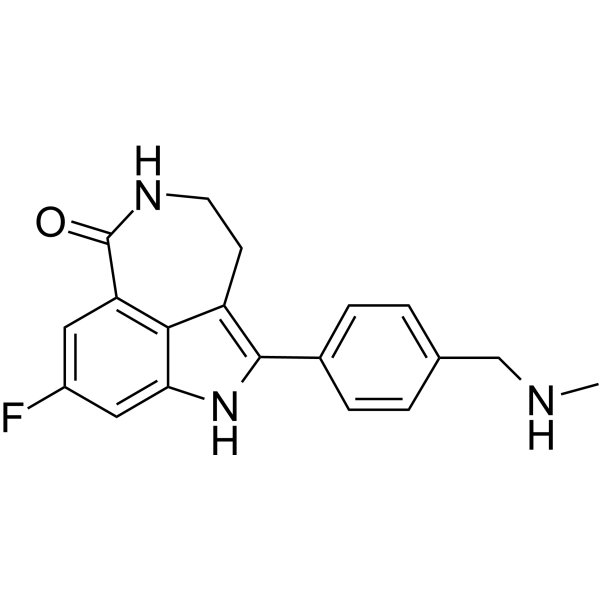
    Rucaparib
    Maximum Cited Publications
    47 Publications Verification

    AG014699; PF-01367338

    PARP Cancer
    Rucaparib (AG014699) is an orally active, potent inhibitor of PARP proteins (PARP-1, PARP-2 and PARP-3) with a Ki of 1.4 nM for PARP1. Rucaparib is a modest hexose-6-phosphate dehydrogenase (H6PD) inhibitor. Rucaparib has the potential for castration-resistant prostate cancer (CRPC) research .
    Rucaparib
  • HY-145388
    AU-15330
    10+ Cited Publications

    PROTACs SWI/SNF Complex Cancer
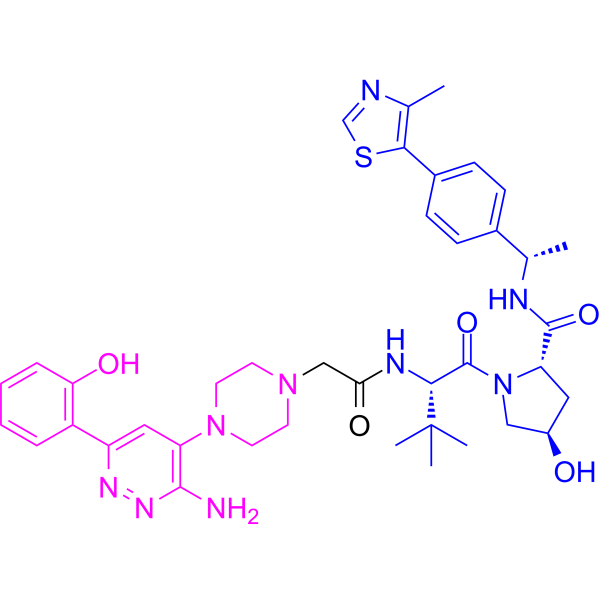
    AU-15330 is a proteolysis-targeting chimera (PROTAC) degrader of the SWI/SNF ATPase subunits, SMARCA2 and SMARCA4. AU-15330 induces potent inhibition of tumour growth in xenograft models of prostate cancer and synergizes with the AR antagonist enzalutamide. AU-15330 induces disease remission in castration-resistant prostate cancer (CRPC) models without toxicity .
    AU-15330
  • HY-10528
    Tasquinimod
    15+ Cited Publications

    ABR-215050

    HDAC Cancer
    Tasquinimod is an oral antiangiogenic agent, which has the potential for castration-resistant prostate cancer treatment. Tasquinimod binds to the regulatory Zn 2+ binding domain of HDAC4 with Kd of 10-30 nM. Tasquinimod also is a S100A9 inhibitor .
    Tasquinimod
  • HY-158101
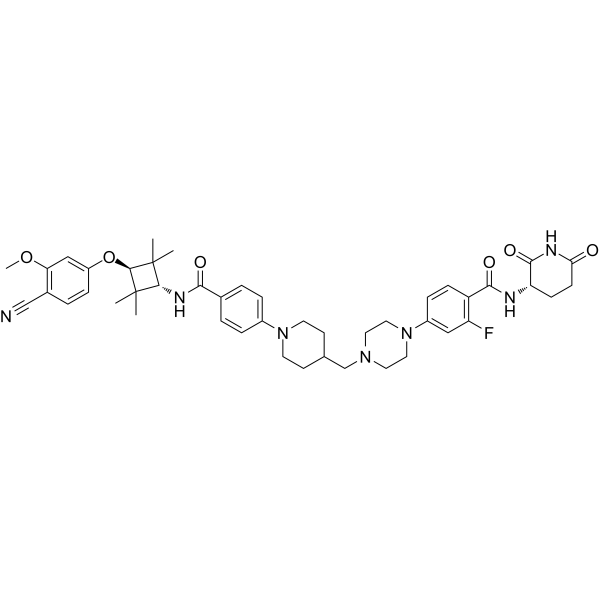
    BMS-986365
    1 Publications Verification

    CC-94676

    PROTACs Androgen Receptor Cancer
    BMS-986365 (CC-94676) is an orally active and selective targeted androgen receptor (AR) PROTAC degrader (DC50 of 10-40 nM). BMS-986365 is capable of inducing cereblon (CRBN) E3 ligase-dependent ubiquitination and degradation of the androgen receptor (AR), as well as various AR mutants. BMS-986365 shows no degradation of the close AR family members estrogen receptor (ER), progesterone receptor (PR), and glucocorticoid receptor (GR). BMS-986365 shows significant in vivo potency, degrading AR, inhibiting AR signaling, and restricting tumor growth in animal models of advanced prostate cancer. BMS-986365 can be used for the study of metastatic castration-resistant prostate cancer (mCRPC) .
    BMS-986365
  • HY-156628

    MK-5684; ODM-208

    Cytochrome P450 Cancer
    Opevesostat (MK-5684; ODM-208) is an orally active and selective CYP11A1 inhibitor. Opevesostat has the potential for the research of metastatic castration-resistant prostate cancer (mCRPC) .
    Opevesostat
  • HY-P991015

    JNJ-78278343; KLCB-245

    CD3 Cancer
    Pasritamig (JNJ-78278343; KLCB-245) is a bispecific T-cell engager (BiTE) that targets the complex of human kallikrein KLK2 and CD3 receptor. Pasritamig redirects the cytotoxicity of T cells to KLK2-expressing tumor cells and induces T cell-mediated lysis of KLK2-expressing prostate cancer cells. Administered via subcutaneous injection, subcutaneous infusion or intravenous infusion, Pasritamig exhibits antitumor activity against metastatic castration-resistant prostate cancer. Pasritamig has a safety profile with an extremely low incidence of cytokine release syndrome and can be safely administered in an outpatient setting. Pasritamig is applicable to the research of metastatic castration-resistant prostate cancer .
    Pasritamig
  • HY-P990673

    DSTP-3086S Antibody; RG-7450 Antibody

    ADC Antibody Transmembrane Glycoprotein Mitosis Cancer
    Vandortuzumab (DSTP-3086S Antibody; RG-7450 Antibody) is a humanized anti-STEAP1 IgG1 antibody and antimitotic agent that can be conjugated with MMAE (HY-15162) to form the antibody-drug conjugate (ADC) Vandortuzumab vedotin. Vandortuzumab vedotin specifically binds to STEAP1 and drives internalization of the complex, releasing the MMAE (HY-15162) payload intracellularly. After binding to tubulin, MMAE inhibits cell division and induces cell death. Vandortuzumab exhibits antitumor activity in preclinical xenograft models of prostate cancer and can be used for research related to metastatic castration-resistant prostate cancer (mCRPC) .
    Vandortuzumab
  • HY-112078

    VHL ligand 2; E3 ligase Ligand 1A

    Ligands for E3 Ligase Cancer
    (S,R,S)-AHPC-Me (VHL ligand 2) is the (S,R,S)-AHPC-based VHL ligand used in the recruitment of the von Hippel-Lindau (VHL) protein . (S,R,S)-AHPC-Me can be used to synthesize ARV-771, a von Hippel-Landau (VHL) E3 ligase-based BET PROTAC degrader. ARV-771 potently degrades BET protein in castration-resistant prostate cancer (CRPC) cells with a DC50 <1 nM .
    (S,R,S)-AHPC-Me
  • HY-P990688

    AMG-509

    CD3 Cancer
    Xaluritamig (AMG-509) is a bispecific T cell engager and cytolytic agent with a Kd of 27.6 nM for human CD3ε. Xaluritamig binds to CD3ε via an anti-CD3 single-chain variable fragment (scFv) domain, and to STEAP1 via a bispecific anti-STEAP1 antigen-binding fragment (Fab) domain, thereby recruiting and activating T cells and forming a bridge between T cells and STEAP1-expressing cancer cells. Xaluritamig induces T cell-mediated redirected cytotoxicity, tumor cell lysis, cytokine release, CD8 + T cell activation and expansion, as well as tumor stasis or regression. Xaluritamig contains an Fc domain with no effector function, which prolongs serum half-life, exhibits only minimal activity against cells with low STEAP1 expression and normal cells, and shows extremely low target-related off-tumor toxicity in cynomolgus monkeys. Xaluritamig is used in STEAP1×CD3 XmAb 2+1 immunotherapy and in research on metastatic castration-resistant prostate cancer and Ewing sarcoma .
    Xaluritamig
  • HY-10617
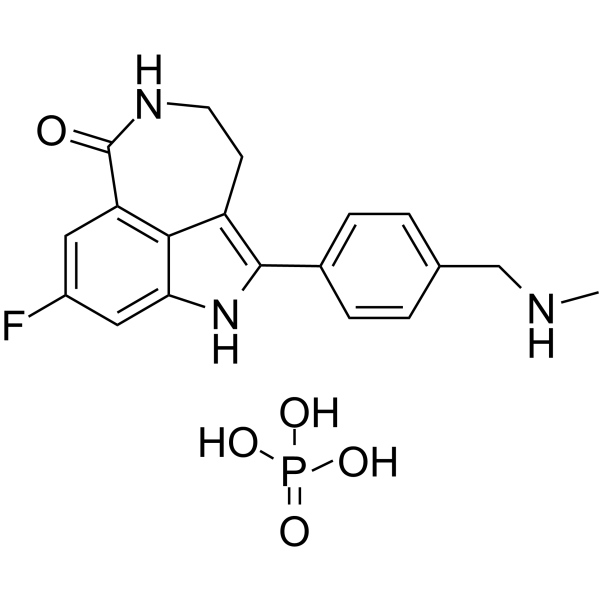
    Rucaparib phosphate
    45+ Cited Publications

    AG-014699 phosphate; PF-01367338 phosphate

    PARP Cancer
    Rucaparib (AG014699) phosphate is an orally active, potent inhibitor of PARP proteins (PARP-1, PARP-2 and PARP-3) with a Ki of 1.4 nM for PARP1. Rucaparib phosphate is a modest hexose-6-phosphate dehydrogenase (H6PD) inhibitor. Rucaparib phosphate has the potential for castration-resistant prostate cancer (CRPC) research .
    Rucaparib phosphate
  • HY-10088
    Zibotentan
    1 Publications Verification

    ZD4054

    Endothelin Receptor Apoptosis Endocrinology Cancer
    Zibotentan (ZD4054) is a potent, selective and orally active endothelin A (ETA) receptor antagonist with a Ki of 13 nM. Zibotentan has no inhibitory effect on ETB. Zibotentan has anticancer effects and can be used for castration-resistant prostate cancer (CRPC) research .
    Zibotentan
  • HY-P99802
    Pasotuxizumab
    1 Publications Verification

    BAY 2010112; AMG 212; MT112

    CD3 Cancer
    Pasotuxizumab (BAY 2010112) is a PSMA and CD3 bispecific T-cell engager (BiTE). Pasotuxizumab binds to CD3 and PSMA with KDs of 9.4 nM and 47.0 nM for human CD3 and PSMA. Pasotuxizumab can be used for research of metastatic castration-resistant prostate cancer (mCRPC) .
    Pasotuxizumab
  • HY-42424

    VHL ligand 2 hydrochloride; E3 ligase Ligand 1

    Ligands for E3 Ligase Cancer
    (S,R,S)-AHPC-Me hydrochloride (VHL ligand 2 hydrochloride) is the (S,R,S)-AHPC-based VHL ligand used in the recruitment of the von Hippel-Lindau (VHL) protein . (S,R,S)-AHPC-Me hydrochloride can be used to synthesize ARV-771, a von Hippel-Landau (VHL) E3 ligase-based BET PROTAC degrader. ARV-771 potently degrades BET protein in castration-resistant prostate cancer (CRPC) cells with a DC50 <1 nM .
    (S,R,S)-AHPC-Me hydrochloride
  • HY-N5074

    Apoptosis Inflammation/Immunology Cancer
    Terrestrosin D is an orally active apoptosis inducer. Terrestrosin D induces cell cycle arrest at the G1 and S phases, reduces mitochondrial membrane potential, and inhibits the growth of cancer cells and endothelial cells. Terrestrosin D is studied in castration-resistant prostate cancer and pulmonary fibrosis .
    Terrestrosin D
  • HY-102003
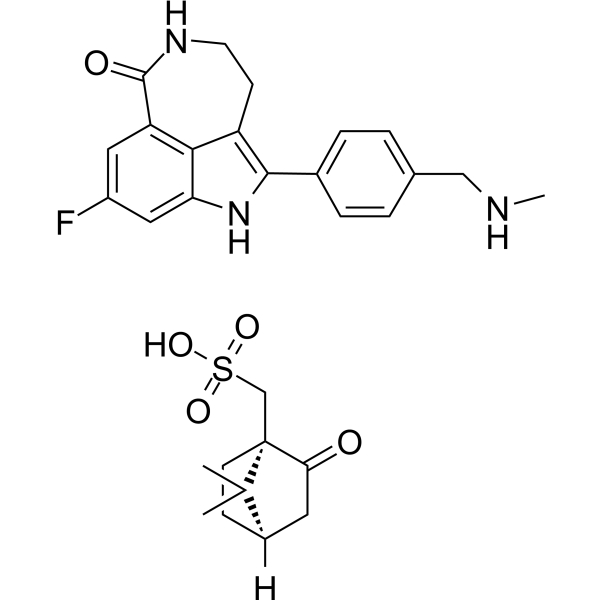
    Rucaparib monocamsylate
    35+ Cited Publications

    AG014699 monocamsylate; PF-01367338 monocamsylate

    PARP Cancer
    Rucaparib (AG014699) monocamsylate is an orally active, potent inhibitor of PARP proteins (PARP-1, PARP-2 and PARP-3) with a Ki of 1.4 nM for PARP1. Rucaparib monocamsylate is a modest hexose-6-phosphate dehydrogenase (H6PD) inhibitor. Rucaparib monocamsylate has the potential for castration-resistant prostate cancer (CRPC) research .
    Rucaparib monocamsylate
  • HY-124628
    IPI-9119
    2 Publications Verification

    Fatty Acid Synthase (FASN) Cancer
    IPI-9119 is an orally active, selective and irreversible FASN inhibitor with an IC50 of 0.3 nM in vitro biochemical assay. IPI-9119 inhibits tumor growth of castration-resistant prostate cancer (CRPC) xenografts mouse models .
    IPI-9119
  • HY-P9992

    BAY-2315497; PSMA-TTC

    PSMA Apoptosis Cancer
    Peligifatamab is a PSMA-targeted α-radioimmunoconjugate with an EC50 of 1.2 nM against human targets. Peligifatamab induces DNA damage, DNA double-strand breaks, cell cycle arrest and apoptosis (Apoptosis) in PSMA-positive prostate cancer cells. Peligifatamab reduces cell viability in a manner dependent on cellular PSMA expression levels. Peligifatamab inhibits tumor growth and tumor-induced abnormal bone growth in prostate cancer bone metastasis models. Peligifatamab exhibits antitumor efficacy in subcutaneous prostate cancer models and xenograft models. Peligifatamab can be used for the research of metastatic castration-resistant prostate cancer .
    Pelgifatamab
  • HY-145722
    Apatorsen sodium
    1 Publications Verification

    OGX-427 sodium

    HSP Cancer
    Apatorsen (OGX-427) sodium is a 2'-methoxyethyl-modified antisense oligonucleotide and also a Hsp27 inhibitor. Apatorsen sodium reduces Hsp27 mRNA and protein levels, impairs stress-induced cytoprotective functions, induces cell apoptosis, inhibits tumor growth and prevents metastasis. Apatorsen sodium is applicable to research related to non-small cell lung cancer, castration-resistant prostate cancer, breast cancer, ovarian cancer and bladder cancer .
    Apatorsen sodium
  • HY-15194
    Dimethylcurcumin
    Maximum Cited Publications
    14 Publications Verification

    ASC-J9; GO-Y025

    Androgen Receptor Cancer
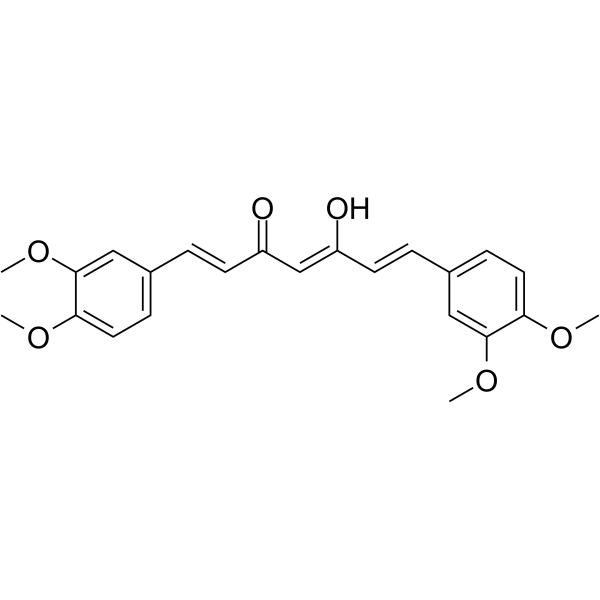
    Dimethylcurcumin (ASC-J9) is an androgen receptor degradation enhancer that effectively suppresses castration resistant prostate cancer cell proliferation and invasion.
    Dimethylcurcumin
  • HY-100348

    Androgen Receptor PPAR Apoptosis Cancer
    EPI-001, a selective inhibitor of Androgen Receptor (AR), targets transactivation unit 5 (Tau-5) of the AR. EPI-001 can inhibit transactivation of the AR amino-terminal domain (NTD), with an IC50 of ~6 μM. EPI-001 is also a selective modulator of PPARγ. EPI-001 is active against castration-resistant prostate cancer .
    EPI-001
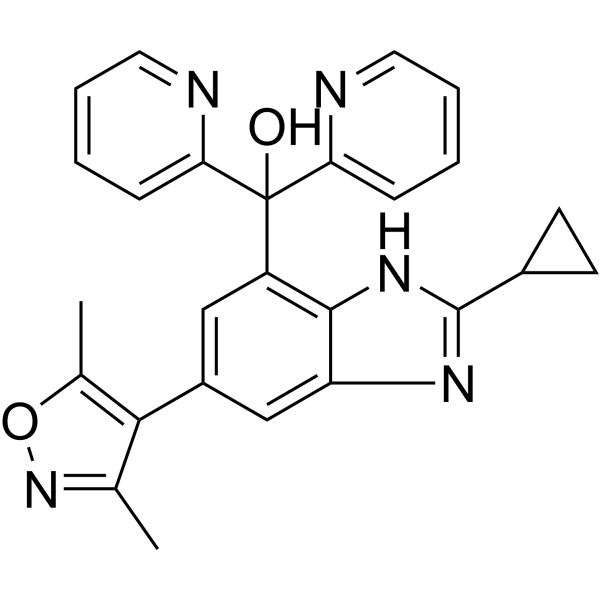
  • HY-141546

    Histone Acetyltransferase Cancer
    Pocenbrodib is a P300/CBP inhibitor. Pocenbrodib blocks the function of P300/CBP and inhibits the acetylation of histones and non-histone proteins. Pocenbrodib may be used in research related to castration-resistant prostate cancer and other cancers .
    Pocenbrodib
  • HY-P99217

    AMG 102

    c-Met/HGFR Cancer
    Rilotumumab (AMG 102) is an anti-HGF (anti-hepatocyte growth factor) monoclonal antibody, inhibits HGF/MET-driven signaling. Rilotumumab shows anti-tumor activity, and can be used in castration-resistant prostate cancer (CRPC) and solid tumor research .
    Rilotumumab
  • HY-45661

    NUV-422

    CDK Neurological Disease Cancer
    Inixaciclib (NUV-422) is a blood-brain barrier-penetrant inhibitor of CDK2, CDK4 and CDK6. Inixaciclib inhibits cancer cell growth. Inixaciclib induces anti-tumor activity in xenograft models of glioblastoma, CDK4/CDK6 inhibitor-resistant HR + HER2 - metastatic breast cancer, and anti-androgen-resistant prostate cancer. Inixaciclib can be used for the research of relapsed or metastatic castration-resistant prostate cancer .
    Inixaciclib
  • HY-19337
    Ketodarolutamide
    1 Publications Verification

    BAY 1896953; ORM-15341

    Androgen Receptor Cancer
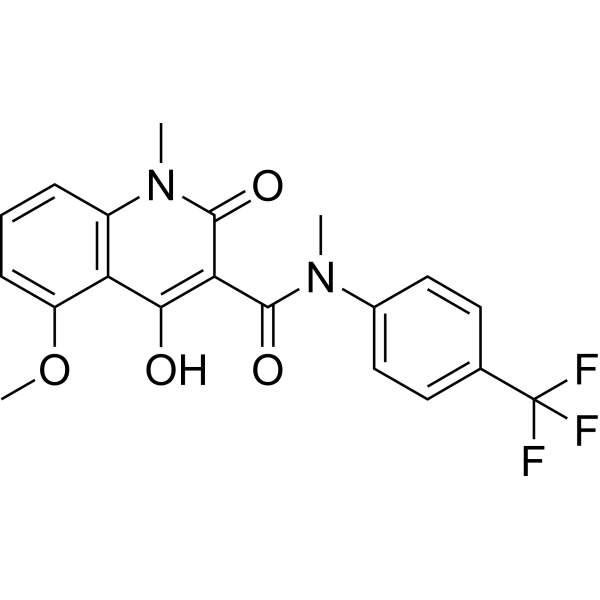
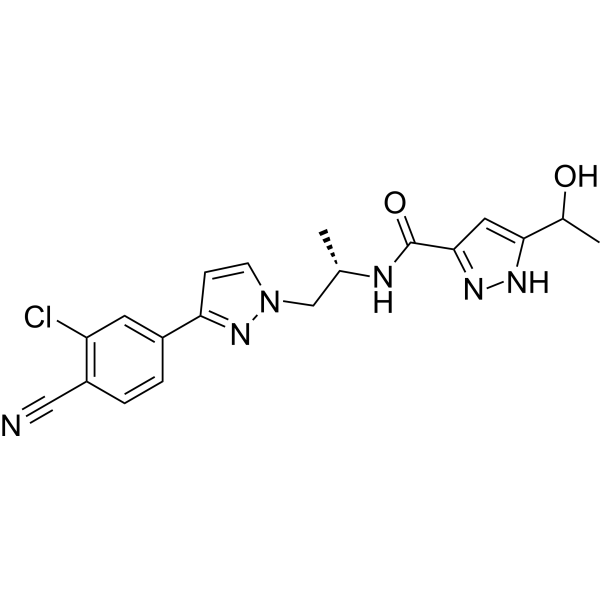
    Ketodarolutamide (ORM-15341) is a potent, high-affinity nonsteroidal competitive full antagonist of androgen receptor (AR). Ketodarolutamide displays a Ki value of 8 nM for rat wild-type AR and an IC50 value of 38 nM in AR-HEK293 cells . Ketodarolutamide inhibits testosterone-induced nuclear translocation of the AR and antagonizes both overexpressed and mutant ARs . Ketodarolutamide specifically suppresses the proliferation of AR-dependent prostate cancer cells and exhibits antitumor activity in models of castration-resistant prostate cancer (CRPC) . Ketodarolutamide is suitable for the mechanistic and therapeutic research of prostate cancer .
    Ketodarolutamide
  • HY-109070

    EPI-002

    Androgen Receptor Cancer
    Ralaniten (EPI-002) is a potent and orally active antagonist of the androgen receptor-N-terminal domain (AR-NTD). Ralaniten inhibits AR transcriptional activity, with IC50 of 7.4 μM. Ralaniten can be used for the research of castration-resistant prostate cancer (CRPC) .
    Ralaniten
  • HY-109050
    Alobresib
    2 Publications Verification

    GS-5829

    Epigenetic Reader Domain Cancer
    Alobresib (GS-5829) is a BET bromodomain inhibitor, which represents a highly effective therapeutics agent against recurrent/chemotherapy resistant uterine serous carcinoma (USC) overexpressing c-Myc. Alobresib can be used in the metastatic castration-resistant prostate cancer (mCRPC) research .
    Alobresib
  • HY-134635

    Bacterial Fungal HIV CDK Infection Cancer
    Dehydrozingerone is a ginger-derived component and cyclin D1 inhibitor that downregulates cyclin D1 expression and induces cell cycle G1 phase arrest. Dehydrozingerone reduces the proliferative capacity of castration-resistant prostate cancer cells under in vitro conditions. Dehydrozingerone reduces subcutaneous tumor growth by inhibiting cell proliferation and angiogenesis. Dehydrozingerone exerts antibacterial and antifungal activities via its α,β-unsaturated carbonyl conjugated system. Dehydrozingerone can be used in studies related to castration-resistant prostate cancer, bacterial infections, and food spoilage fungal infections .
    Dehydrozingerone
  • HY-170329

    PROTACs Androgen Receptor Apoptosis Cancer
    PROTAC AR Degrader-8 is the PROTAC degrader for androgen receptor (AR) that degrades AR-FL with DC50s of 0.018 μM and 0.14 μM in 22Rv1 cell and LNCaP cell, degrades AR-V7 with DC50 of 0.026 μM in 22Rv1 cell. PROTAC AR Degrader-8 inhibits the proliferation of cancer cell 22Rv1 and LNCaP with IC50 values of 0.038 μM and 1.11 μM. PROTAC AR Degrader-8 arrests cell cycle at G2/M phase, induces apoptosis in 22Rv1 cell. PROTAC AR Degrader-8 exhibits anticancer efficacy in mouse and zebrafish model. PROTAC AR Degrader-8 can be used for the research of prostate cancer, castration-resistant prostate cancer .
    PROTAC AR Degrader-8
  • HY-P99714

    MGD019

    PD-1/PD-L1 CTLA-4 Cancer
    Lorigerlimab (MGD019) is a bispecific IgG4 dual-affinity re-targeting antibody (DART). Lorigerlimab can block PD-1 and CTLA-4, and improves T-cell responses. Lorigerlimab can be used for research of metastatic castration-resistant prostate cancer (mCRPC) .
    Lorigerlimab
  • HY-115282A
    JNJ-63576253
    1 Publications Verification

    TRC-253

    Androgen Receptor Cancer
    JNJ-63576253 (TRC-253) is a potent and orally active full antagonist of androgen receptor (AR), with IC50s of 37 and 54 nM for F877L mutant AR and wild-type AR in LNCaP cells. JNJ-63576253 can be used for the research of castration-resistant prostate cancer (CRPC) .
    JNJ-63576253
  • HY-150102
    EPI-7170
    1 Publications Verification

    Androgen Receptor Cancer
    EPI-7170, a ralaniten analogue, is a potent androgen receptor N-terminal structural domain antagonist that blocks the transcriptional activity of full-length AR (FL-AR) and AR splice variants (AR-Vs). EPI-7170 has antitumor effects against enzalutamide resistant castration-resistant prostate cancer (CRPC) .
    EPI-7170
  • HY-145722A
    Apatorsen
    1 Publications Verification

    OGX-427

    HSP Cancer
    Apatorsen is a 2'-methoxyethyl-modified antisense oligonucleotide and also a Hsp27 inhibitor. Apatorsen reduces Hsp27 mRNA and protein levels, impairs stress-induced cytoprotective functions, induces cell apoptosis, inhibits tumor growth and prevents metastasis. Apatorsen is applicable to research related to non-small cell lung cancer, castration-resistant prostate cancer, breast cancer, ovarian cancer and bladder cancer .
    Apatorsen
  • HY-149894

    c-Myc Cadherin Cancer
    MC-1-F2 is a FOXC2 inhibitor. MC-1-F2 shows a binding affinity (Kd) of 26 μM for full-length FOXC2. MC-1-F2 reduces epithelial-mesenchymal transition (EMT) markers in breast cancer cells, suppresses cancer stem cell (CSC) properties and reduces invasiveness in castration-resistant prostate cancer (CRPC) cells. MC-1-F2 can be used for the study of CRPC and breast cancer .
    MC-1-F2
  • HY-125170

    STAT Cancer
    Galiellalactone is a is a small non-toxic and non-mutagenic fungal metabolite, a selective inhibitor of STAT3 signaling, with an IC50 of 250-500 nM. Galiellalactone can be used to research castration-resistant prostate cancer .
    Galiellalactone
  • HY-164552

    Apoptosis Androgen Receptor Cancer
    ZNU-IMB-Z15 (Compound Z15) is an antagonist of the androgen receptor (AR) and also a selective degrader of AR and ARV7. ZNU-IMB-Z15 can directly bind to the ligand-binding domain (LBD) and activation function-1 region of AR, and promote AR degradation through the proteasome pathway. ZNU-IMB-Z15 effectively inhibits the transcriptional activity of AR, AR mutants, and AR splice variants (ARVs), downregulating the mRNA and protein levels of AR downstream target genes, thereby overcoming the resistance to second-generation antiandrogen drugs induced by AR LBD mutations, AR amplification, and ARVs in castration-resistant prostate cancer (CRPC). ZNU-IMB-Z15 can inhibit the proliferation of AR-positive CRPC cell lines and induce their apoptosis, demonstrating anticancer activity both in vivo and in vitro .
    ZNU-IMB-Z15
  • HY-144636

    Atg4 Cathepsin Phospholipase Autophagy Cancer
    Atg4B-IN-2 is a potent competitive Atg4B inhibitor with Ki value of 3.1 μM, also possesses declining PLA2 inhibitory potency, IC50s of 11 μM and 3.5 μM for Atg4B and PLA2, respectively. Atg4B-IN-2 enhances the anticancer activity of anti-castration-resistant prostate cancer agents via autophagy inhibition .
    Atg4B-IN-2
  • HY-163340

    Glucocorticoid Receptor Androgen Receptor Cancer
    GA32 (compound 58r) is potent androgen receptor (AR)/glucocorticoid receptor (GR) dual inhibitor with IC50 values of 0.13 μM and 0.83 μM for AR and GR, respectively. GA32 inhibits the proliferation of Enzalutamide (HY-70002) resistance castration-resistant prostate cancer both in vitro and in vivo .
    GA32
  • HY-P10740

    Peptide-Drug Conjugates (PDCs) PSMA Folate Receptor (FR) Cancer
    CBP-1018 is a PDC (peptide-drug conjugate) formed by conjugating Monomethyl auristatin E (HY-15162) to a dual-targeting ligand of FLOR1/PSMA (prostate-specific membrane antigen) via a linker (HY-78738). CBP-1018 binds to FLOR1 and prostate-specific membrane antigen (PSMA). CBP-1018 is applicable to the research of solid tumors and metastatic castration-resistant prostate cancer .
    CBP-1018
  • HY-19833

    CFG920

    Cytochrome P450 Cancer
    Lapiteronel (CFG920) is an orally active, nonsteroidal, reversible dual CYP17 and CYP11B2 inhibitor. Lapiteronel has the potential for metastatic castration-resistant prostate cancer research .
    Lapiteronel
  • HY-42424A

    VHL ligand 2 dihydrochloride; E3 ligase Ligand 1 dihydrochloride

    Ligands for E3 Ligase Cancer
    (S,R,S)-AHPC-Me dihydrochloride (VHL ligand 2 dihydrochloride) is the (S,R,S)-AHPC-based VHL ligand used in the recruitment of the von Hippel-Lindau (VHL) protein . (S,R,S)-AHPC-Me dihydrochloride can be used to synthesize ARV-771, a von Hippel-Landau (VHL) E3 ligase-based BET PROTAC degrader. ARV-771 potently degrades BET protein in castration-resistant prostate cancer (CRPC) cells with a DC50 <1 nM .
    (S,R,S)-AHPC-Me dihydrochloride
  • HY-160187A

    Cadherin MMP Akt FAK ERK NF-κB Cancer
    (Rac)-AAA is a regulator and inhibitor targeting GPR75. By blocking the 20-HETE-induced downregulation of GPR75 expression, (Rac)-AAA effectively inhibits the activation of key downstream signaling pathways including EGFR, AKT, NF-κB and FAK. (Rac)-AAA reverses 20-HETE-mediated epithelial-mesenchymal transition, which is specifically characterized by downregulating vimentin (vimentin), upregulating E-Cadherin, as well as reducing MMP-2 activity and cancer cell migration ability. (Rac)-AAA also abolishes the 20-HETE-induced upregulation of HIC-5 expression and anchorage-independent growth, and modulates the subcellular localization of PKC-α and phosphorylated AKT. (Rac)-AAA is investigated in androgen-independent prostate cancer (castration-resistant prostate cancer) .
    (Rac)-AAA
  • HY-158118

    DNA-PK Cancer
    Lys(CO-C3-p-I-Ph)-OMe is a pharmacokinetic modifier (PK modifier) that can improve the PK properties of PSMA ligand molecules (such as Ac-PSMA-trillium). Lys(CO-C3-p-I-Ph)-OMe can increase the residence time of Ac-PSMA-trillium in plasma by increasing its binding capacity to albumin. Lys(CO-C3-p-I-Ph)-OMe also reduces salivary gland absorption of Ac-PSMA-trillium, potentially extending its half-life. Ac-PSMA-trillium is a suitable PSMA-targeting compound that has different biological applications after modification with different radioactive isotopes. If labeled with 111In, it can be used as DOTA chelating agent and imaging agent. Or labeled with 225Ac as a Macropa chelator for targeted radionuclide therapy (TRT) in the study of metastatic castration-resistant prostate cancer (mCRPC) .
    Lys(CO-C3-p-I-Ph)-OMe
  • HY-111061

    Estrogen Receptor/ERR Cancer
    GTX-758 is an orally active, nonsteroidal, selective agonist of ERα. GTX-758 plays an important role in castration resistant prostate cancer (CRPC) research .
    GTX-758
  • HY-137193

    Drug Metabolite Cancer
    5,6-Dihydroabiraterone is the metabolism of Abiraterone (HY-70013). Abiraterone is a potent and irreversible CYP17A1 inhibitor with antiandrogen activity, and shows antitumor activity in CRPC (castration-resistant prostate cancer) .
    5,6-Dihydroabiraterone
  • HY-158119A

    Felivotide mopaxetan

    PSMA Cancer
    PSMA-trillium is a PSMA targeting compound, consisting of a PSMA targeting molecule (PSMA binder), a Macropa chelating molecule, and a group that regulates pharmacokinetics (PK modifier). PSMA-trillium is a non-radioactive form of Actinium-225-PSMA-Trillium (BAY 3563254) with improved PSMA targeting and pharmacokinetic properties. PSMA-trillium can bind Ac through the Macropa chelating molecule, or the radioactive isotope 225Actinium. Actinium-225-PSMA-Trillium is a potent inhibitor of metastatic castration-resistant prostate cancer (mCRPC) .
    PSMA-trillium
  • HY-158125

    PSMA Cancer
    PSMA binder-2 is a ligand for PSMA and can be used to synthesize Ac-PSMA-trillium. Ac-PSMA-trillium is a suitable PSMA-targeting compound with improved PSMA binding properties and pharmacokinetic properties. PSMA ligands have different biological applications after being modified with different radioactive isotopes. If labeled with 111In, it can be used as DOTA chelating agent and imaging agent. Or labeled with 225Ac as a Macropa chelator for targeted radionuclide therapy (TRT) in the study of metastatic castration-resistant prostate cancer (mCRPC) .
    PSMA binder-2
  • HY-146397

    PROTACs Androgen Receptor Cancer
    TD-802 (Compound 33c) is an androgen receptor (AR) PROTAC degrader with good microsomal stability. TD-802 has good antitumor efficacy in vivo and can be used for metastatic castration-resistant prostate cancer research .
    TD-802
  • HY-179056

    PROTACs PSMA Androgen Receptor HSP Apoptosis Cancer
    Psa-AR is a PROTAC degrader targeting PSMA, with a Kd of 7.2 nM. Psa-AR exhibits strong degradation capabilities for AR, AR-V7, and HSP90, and induces cell apoptosis. Psa-AR demonstrates potent tumor suppressive activity in the 22Rv1 xenograft tumor model. Psa-AR can be used in the research of castration-resistant prostate cancer .
    Psa-AR
  • HY-102003A

    AG014699 camsylate; PF-01367338 camsylate

    PARP Cancer
    Rucaparib (AG014699) camsylate is an orally active, potent inhibitor of PARP proteins (PARP-1, PARP-2 and PARP-3) with a Ki of 1.4 nM for PARP1. Rucaparib camsylate is a modest hexose-6-phosphate dehydrogenase (H6PD) inhibitor. Rucaparib camsylate has the potential for castration-resistant prostate cancer (CRPC) research .
    Rucaparib camsylate
  • HY-173186

    TLK Apoptosis Cancer
    TLK1-IN-1 is a TLK1B inhibitor with a human IC50 of 7.2 μM. TLK1-IN-1 causes accumulation of DNA damage and induces apoptotic cell death in cancer cells. TLK1-IN-1 can be used for the research of metastatic castration-resistant prostate cancer .
    TLK1-IN-1

Inquiry Online

Your information is safe with us. * Required Fields.

Salutation


Country or Region *

Applicant Name *


Organization Name *

Department *


Email Address *


Product Name *

Cat. No.


Requested quantity *

Phone Number *


Remarks

Inquiry Online

Inquiry Information

Product Name:
Cat. No.:
Quantity:
MCE Japan Authorized Agent:

