33 Results for "

Charge transfer

" in MedChemExpress (MCE) Product Catalog:
Products (33)

33 Results for "Charge transfer" in MCE Product Catalog:

1
1 Cited Publications
Cat. No.: HY-W127832
CAS No.: 123148-15-2
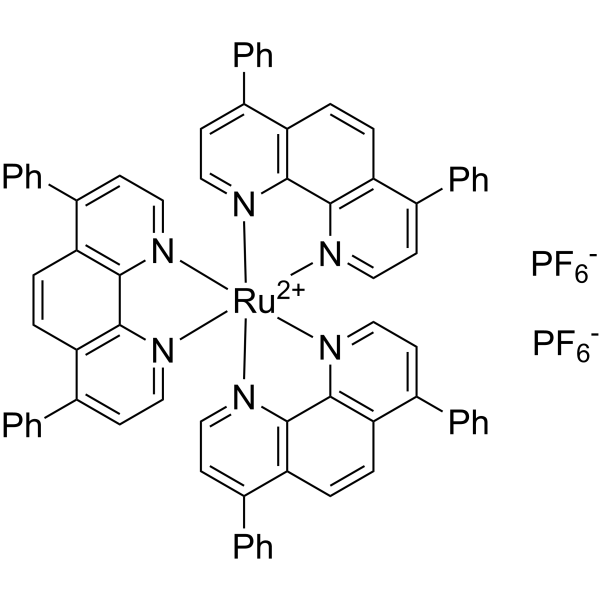
Ru(dpp)3(PF6)2 is a ruthenium (II) polypyridine complex and oxygen-sensing luminophore with excellent photostability and bright orange emission properties based on metal-to-ligand charge transfer (MLCT). Ru(dpp)3(PF6)2 undergoes oxygen-induced collisional luminescence quenching following the Stern-Volmer relationship, and can also engage in Förster-type resonance energy transfer with closed-form BTF6. Featuring excellent photophysical and electrochemical properties, Ru(dpp)3(PF6)2 is applied in studies on quenching-type oxygen sensors based on fluorinated ORMOSIL/xerogels and solid-state light-emitting devices .
loading...
    loading...
Cat. No.: HY-W345885
CAS No.: 87-73-0
Saccharic acid is a competitive and potent inhibitor of β-glucuronidase. Saccharic acid inhibits glucuronide synthesis. Saccharic acid as an efficient iron chelate to enhance photo-Fenton
degradation of organic contaminants .
loading...
    loading...
Cat. No.: HY-I0259
CAS No.: 118-46-7
8-Amino-2-naphthol is a photoactive charge transfer compounds, which can be used as fluorescent probe. 8-Amino-2-naphthol undergoes excited-state proton transfer (ESPT) to form a zwitterion under acidic conditions, where the photoacidity of its hydroxyl group is regulated by the protonation state of the amino group, enabling pH to act as an on/off switch for photoacidity. 8-Amino-2-naphthol is also utilized as chiral organocatalyst .
loading...
    loading...
Cat. No.: HY-152073
CAS No.: 2924598-24-1
Purity:  98.76%
Target:  

Fluorescent Dye

Research Areas:  

Others

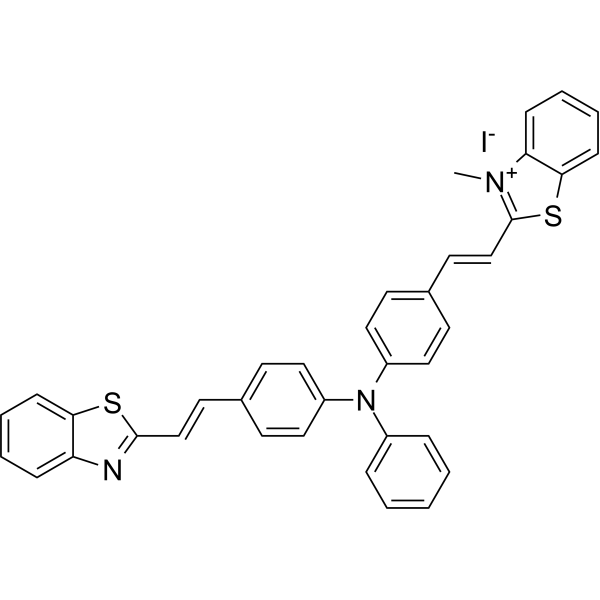
BETA-1 is the first twisted intramolecular charge transfer (TICT)-aggregation-induced emission (AIE) integration molecule. BETA-1 emits cyan fluorescence in lipid droplets (LDs) and red fluorescence in mitochondria. BETA-1 can be used for the simultaneous and dual-color imaging of LDs and mitochondria in vivo and in vitro .
loading...
    loading...
Cat. No.: HY-D0916
CAS No.: 143413-85-8
Synonyms: YOYO 1; YOYO1
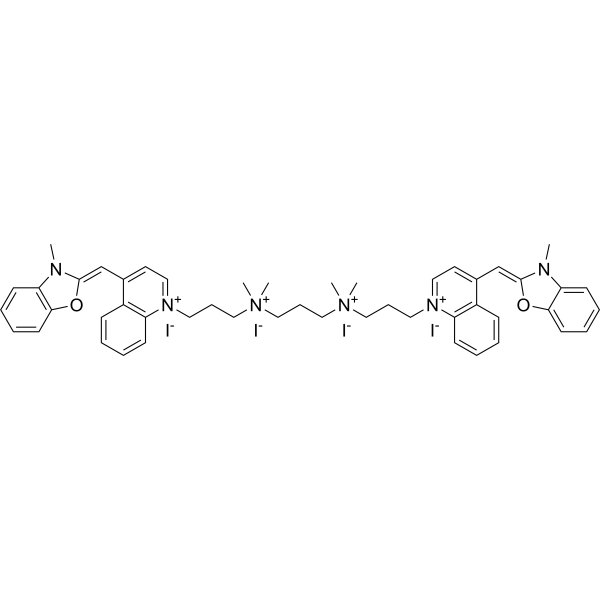
Thiazole orange dimer YOYO 1 (YOYO 1) is a cell-impermeable cyanine dimer with no inherent fluorescence, and its fluorescence intensity increases significantly upon binding to double-stranded DNA (dsDNA) . Thiazole orange dimer YOYO 1 can serve as a nuclear counterstain or a dead cell indicator (Ex/Em = 505/512 nm).
loading...
    loading...
Cat. No.: HY-D0948
CAS No.: 1562-90-9
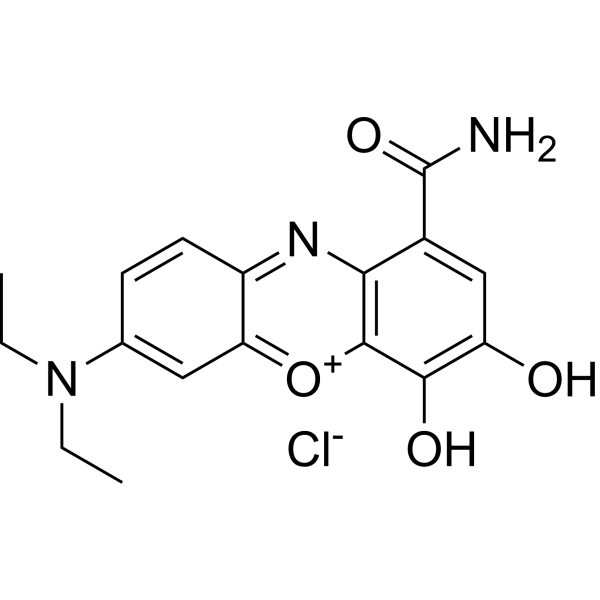
Celestine Blue is a electroactive indicator in DNA biosensors. Celestine Blue is strongly adsorbed on the spinel phases and CNT (carbon nanotubes), facilitates dispersion, acts as a capping agent and allows for the fabrication of spinel decorated CNT. Celestine Blue is an efficient charge transfer mediator, which allows for significant improvement of capacitive behavior. TiO2 nanoparticles doped with Celestine Blue can be used as a label in a sandwich immunoassay for the hepatitis C virus (HCV) core antigen .
loading...
    loading...
Cat. No.: HY-W024271
CAS No.: 63149-33-7
Synonyms: 9-Formyl-8-hydroxyjulolidine
8-Hydroxyjulolidine-9-carboxaldehyde (9-Formyl-8-hydroxyjulolidine) is a highly selective fluorescent probe for hydrogen sulfide (S 2−) and silicate (SiO3 2−). 8-Hydroxyjulolidine-9-carboxaldehyde operates via a mechanism of blocking intramolecular charge transfer (ICT), exhibiting significant fluorescence enhancement in the presence of weak acid ions. 8-Hydroxyjulolidine-9-carboxaldehyde is promising for research of fluorescence imaging of hydrogen sulfide within living cells .
loading...
    loading...
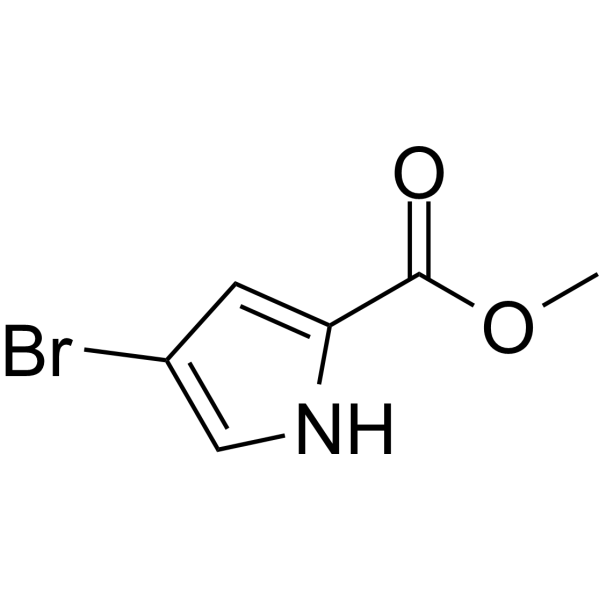
Cat. No.: HY-W007392
CAS No.: 934-05-4
Synonyms: Methyl 4-bromopyrrole-2-carboxylate
Methyl 4-bromo-1H-pyrrole-2-carboxylate (Methyl 4-bromopyrrole-2-carboxylate) is a biologically active pyrrole derivative. Methyl 4-bromo-1H-pyrrole-2-carboxylate can be used in studies on the development of pyrrole-related biosensors .
loading...
    loading...
Cat. No.: HY-D2479
CAS No.: 2978635-30-0
DMANI is an intramolecular charge transfer (ICT)-based mitochondria-targeted ratiometric fluorescent probe. DMANI can monitor mitochondrial peroxynitrite (ONOO ) in living cells .
loading...
    loading...
Cat. No.: HY-D1259
CAS No.: 2414276-32-5
Synonyms: VDP-green (NEP)
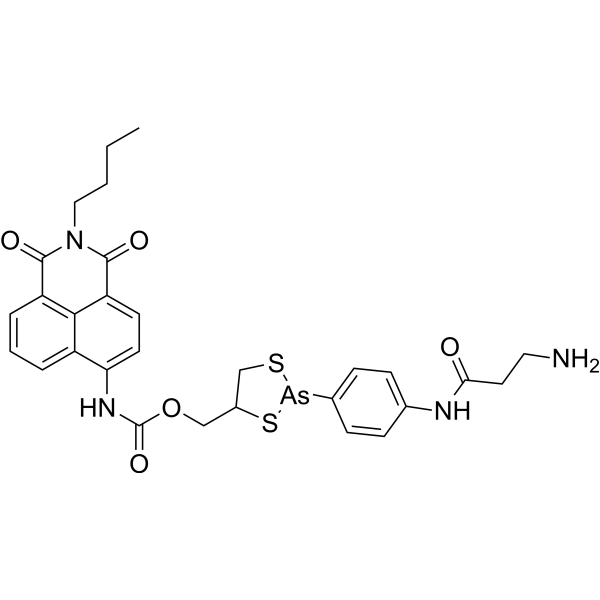
NEP (VDP-green (NEP)) is a turn-on fluorescent probe based on the intramolecular charge transfer (ICT) mechanism for sensing vicinal dithiol-containing proteins (VDPs). NEP exhibits high selectivity toward VDPs in live cells and in vivo and displays a strong green fluorescence signal (λexem=430/535 nm). NEP has the potential for parkinsonism .
loading...
    loading...
Cat. No.: HY-149203
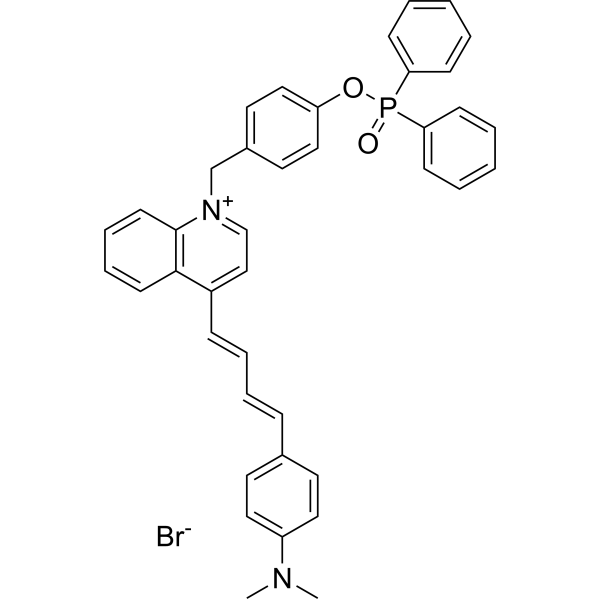
MQA-P is a multifunctional near-infrared (NIR) fluorescent probe for simultaneously detecting ONOO -, viscosity, and polarity within mitochondria. MQA-P exhibits a remarkable turn-on response to ONOO -em=645 nm) and is highly sensitive to viscosity/polarity in the NIR channel with λem>704 nm. MQA-P exhibits excited-state intramolecular charge transfer (ESICT) feature that is highly polarity-sensitive by engineering N,N-dimethylamino as the electron donor and a quinoline cationic unit as the electron acceptor. MQA-P is used for ferroptosis or cancer diagnosis in vitro and in vivo via dual-channel images .
loading...
    loading...
Cat. No.: HY-124357
CAS No.: 127685-30-7
Synonyms: S-Norfluoxetine hydrochloride; LY 215229 hydrochloride
Target:  

Dopamine Receptor

Research Areas:  

Neurological Disease

Seproxetine (S-Norfluoxetine) hydrochloride is a selective serotonin reuptake inhibitor (SSRI) that enhances serotonin levels in the brain by specifically inhibiting the serotonin uptake carrier. Seproxetine hydrochloride exhibits strong charge transfer interactions with π-electron acceptors, forming stable complexes that enhance its binding affinity to multiple receptors, including serotonin and dopamine receptors. Seproxetine hydrochloride demonstrates improved biological activity when interacting with charge transfer complexes, leading to increased stability and efficacy in therapeutic applications.
loading...
    loading...
Cat. No.: HY-149203A
Purity:  97.36%
Target:  

Fluorescent Dye

Research Areas:  

Others

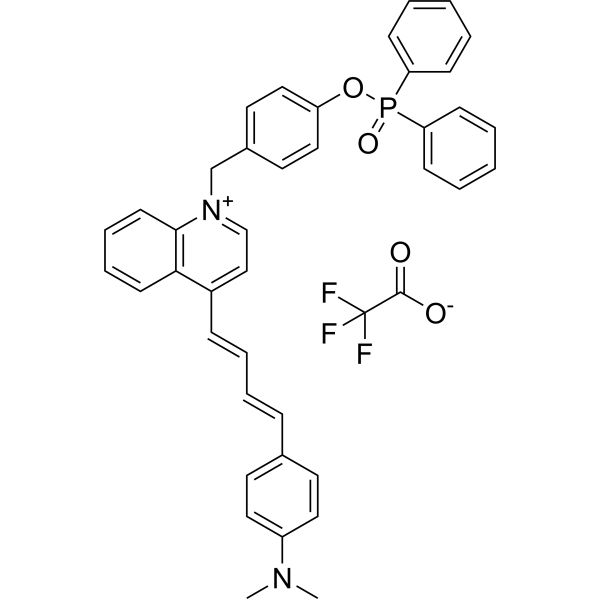
MQA-P is a multifunctional near-infrared (NIR) fluorescent probe that simultaneously detects ONOO -, viscosity, and polarity within mitochondria. MQA-P exhibits significant response to ONOO -, λem=645 nm; and NIR channel at λem>704 nm Medium is highly sensitive to viscosity/polarity. MQA-P possesses excited-state intramolecular charge transfer (ESICT) properties that are highly sensitive to polarity by designing the N,N-dimethylamino group as the electron donor and the quinoline cation unit as the electron acceptor. MQA-P is used for ferroptosis or cancer diagnosis in vitro and in vivo via dual-channel images .
loading...
    loading...
Cat. No.: HY-W094110
CAS No.: 10028-22-5
Iron (III) sulfate is a stable rhombohedral NASICON compound. Iron (III) sulfate can serve as a sodium ion intercalation host, enabling sodium ion intercalation and deintercalation via a single-phase mechanism relying on the Fe 2+/Fe 3+ redox couple. Iron (III) sulfate exhibits reversible electrochemical behavior and moderate polarization in cyclic voltammetry tests, and its charge transfer resistance changes during charge-discharge cycles. Iron (III) sulfate possesses a high redox potential, excellent rate capability, and long-cycle stability .
loading...
    loading...
Cat. No.: HY-D3127
CAS No.: 455251-97-5
Target:  

Fluorescent Dye

Research Areas:  

Others

DCA-Mln is a Fluorescent probe for ferric iron (Fe³⁺) detection. The probe works via an internal charge transfer (ICT) process from its diethylamino group to its dicyano group, which produces bright pink fluorescence in its unbound state; when Fe³⁺ is present, two molecules of DCA-Mln chelate with one Fe³⁺ ion, with one cyano group of each DCA-Mln participating in the complexation, and this binding triggers a photoinduced electron transfer (PET) process that provides a nonradiative deactivation pathway, resulting in fluorescence quenching; additionally, the probe exhibits a visible color change from purple to peach pink upon Fe³⁺ binding, enabling dual-channel detection. The probe has an excitation wavelength of 570 nm and an emission wavelength of 670 nm, and it shows a rapid response, with fluorescence stabilizing within 15 seconds of Fe³⁺ addition. DCA-Mln is cell-membrane-permeable, nontoxic at the imaging concentration of 10 μM, and can be used for Fe³⁺ detection in actual water samples, Fe³⁺ imaging in living cells, and as an anti-counterfeiting ink[1].
loading...
    loading...
Cat. No.: HY-D3108
CAS No.: 2569032-08-0
BV-1 is a fluorescent probe for detecting mitochondrial viscosity in living cells. The detection mechanism of BV-1 relies on a twisted intramolecular charge transfer (TICT) mechanism associated with environmental viscosity: in low-viscosity media, the unsaturated domain at the meso-position of the BODIPY fluorophore undergoes TICT, achieving efficient excited-state deactivation through molecular rotation, thereby quenching fluorescence; under high-viscosity conditions, such molecular rotation is restricted, TICT is inhibited, and the conjugated system of the probe extends, which leads to significant fluorescence enhancement accompanied by a red shift in emission wavelength. BV-1 exhibits low cytotoxicity. Its detection wavelengths include excitation wavelengths of 480 nm or 488 nm, with an emission wavelength of 545 nm in low-viscosity environments and 570 nm in high-viscosity environments; in addition, its absorption peak locates at 528 nm in ethanol and red-shifts to 531 nm in glycerol .
loading...
    loading...
Cat. No.: HY-D3118
CAS No.: 2989973-69-3
Target:  

Fluorescent Dye

Research Areas:  

Others

Biotin-V is a fluorescent probe targeting the biotin receptor (BiR), which can be used to detect changes in intracellular viscosity in cancer cells and tumor tissues. Biotin-V consists of a viscosity-responsive TICT (twisted internal charge transfer) fluorophore and a biotin-targeting moiety. In a high-viscosity environment, intramolecular rotation is restricted, which reduces non-radiative transitions and enhances fluorescence intensity and fluorescence lifetime. Biotin-V enters BiR-positive cancer cells via biotin receptor-mediated uptake, and mainly localizes to mitochondria, enabling dual-modal viscosity imaging (fluorescence intensity imaging and fluorescence lifetime imaging) (Ex/Em = 540/608 nm; cell imaging Ex/Em = 561/570-620 nm) .
loading...
    loading...
Cat. No.: HY-D3125
Target:  

Fluorescent Dye

Research Areas:  

Others

NtHzBtd is a fluorescent probe for detecting Fe 3+. NtHzBtd is applicable to the selective fluorescent detection of Fe 3+ ions and live cell imaging studies. NtHzBtd can selectively coordinate with Fe 3+ to form a 1:1 complex, triggering chelation enhanced quenching (CHEQ) and intramolecular charge transfer (ICT) processes, which result in fluorescence turn-off, thereby enabling sensitive detection of Fe 3+ and live cell fluorescence imaging. After binding to Fe 3+, NtHzBtd reduces fluorescence intensity, exhibits a rapid response property, with a limit of detection of 0.036 μM and a response time of approximately 55 s. The detection wavelengths are Ex/Em = 334/401 nm (solution system) .
loading...
    loading...
Cat. No.: HY-D3090
CAS No.: 2757682-04-3
Target:  

Fluorescent Dye

Research Areas:  

Others

NRLD is a lipid droplet-targeting solvatochromic fluorescent probe developed based on Nile Red (HY-D0718), which can target lipid droplets and sense the non-polar lipid microenvironment inside lipid droplets. NRLD exhibits superior lipid droplet-targeting selectivity compared to the parent Nile Red dye in HeLa cell imaging. NRLD achieves detection relying on the solvatochromic effect generated by excited-state charge transfer, and its emission wavelength shifts according to the local polarity changes of the microenvironment it locates in: the more compact and ordered the lipid packing and the lower the environmental polarity, the more blue-shifted the emission; the looser the lipid packing or the stronger the hydration and the higher the environmental polarity, the more red-shifted the emission. NRLD shows blue shift in the non-polar oil core of lipid droplets and red shift in high-polarity environments such as phosphate buffer .
loading...
    loading...
Cat. No.: HY-D3105
Target:  

Fluorescent Dye

Research Areas:  

Others

DCA is a Fluorescent probe for visualization of phase behavior in ER membranes. DCA is an ER-targeting, polarity-responsive NIR ratiometric probe, with its p-toluenesulfonamide group responsible for ER localization; its sensitivity to polarity relies on its donor-π-acceptor (D-π-A) structure, where aniline acts as the donor and dicyanomethylene acts as the acceptor, driving an intramolecular charge transfer (ICT) process upon excitation. In environments with low polarity, such as the closely packed, low water content ERₒ phase of ER membranes, DCA emits at a shorter wavelength, while in high polarity environments like the loosely packed, higher water content ERd phase, ICT leads to a red-shifted emission, allowing discrimination of the two phases via dual NIR emission colors and ratiometric imaging. Ex/Em = 488/570–620 nm and 488/665–735 nm; additional excitation/emission pairs include Ex/Em = 488/631 nm in low polarity 1,4-dioxane and Ex/Em = 488/677 nm in 1,4-dioxane with 30% water, the higher polarity condition. It shows a large Stokes shift of ~170 nm, and pH, viscosity, and biologically relevant species including Cys, GSH, H₂O₂, and metal ions do not exert marked interference on its fluorescence spectra[1].
loading...
    loading...

