1. Search Result
Search Result
Results for "

Colletotrichum

" in MedChemExpress (MCE) Product Catalog:

23

Inhibitors & Agonists

1

Biochemical Assay Reagents

8

Natural
Products

1

Isotope-Labeled Compounds

Cat. No. Product Name Target Research Areas Chemical Structure
  • HY-100385
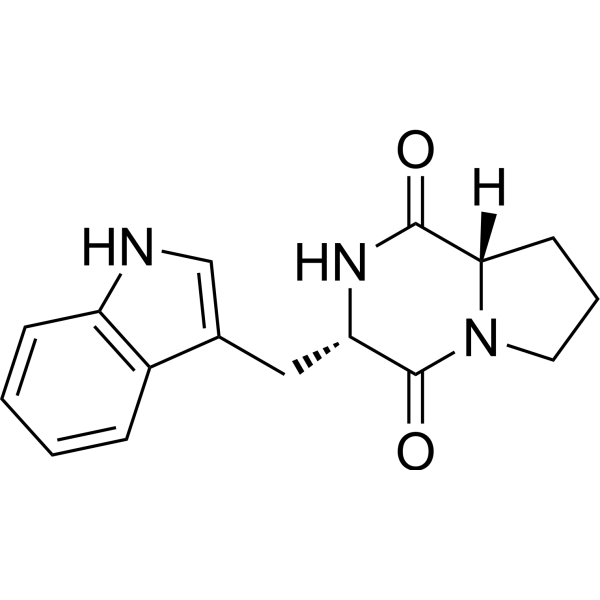
    Brevianamide F
    2 Publications Verification

    Cyclo(L-Pro-L-Trp)

    PI3K Bacterial Infection
    Brevianamide F (Cyclo(L-Pro-L-Trp)) is a mycotoxin isolated from Colletotrichum gloeosporioides, with antibacterial activity. Brevianamide F shows potent PI3Kα inhibitory activity with an IC50 of 4.8 μM .
    Brevianamide F
  • HY-N8574

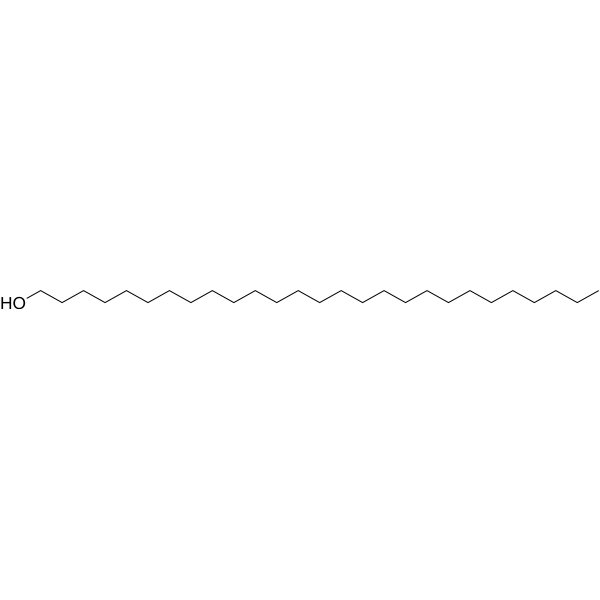
    Heptacosan-1-ol

    Biochemical Assay Reagents Infection
    1-Heptacosanol (Heptacosan-1-ol) is a long-chain fatty alcohol with antifungal, antibacterial (against Escherichia coli and Staphylococcus aureus), nematicidal, anticancer and antioxidant activities. 1-Heptacosanol can be isolated from leaf extracts of Ficus septica and Lecaniodiscus cupanioides. 1-Heptacosanol not only effectively resists pathogenic fungal infections, but also shows potential against pepper anthracnose in phytopathology. 1-Heptacosanol can be used in the research of fungal infections, cancer and oxidative stress-related diseases .
    1-Heptacosanol
  • HY-W115529

    Geranate; NSC 229335; GAGE

    Environmental Pollutants Fungal Tyrosinase Infection Cancer
    Geranic acid (Geranate) acts as a tyrosinase inhibitor and antifungal agent, with an IC50 value of 0.14-2.3 mM against mushroom tyrosinase. Geranic acid reduces the viability of human pancreatic cancer cells and B-lymphoma cells. Geranic acid inhibits mycelial growth of the maize pathogens Colletotrichum graminicola and Fusarium graminearum. Geranic acid is applicable to research related to fungal infections, pancreatic cancer and B-lymphoma .
    Geranic acid
  • HY-E70119

    Fungal Infection
    Pectate Lyase is an enzyme that exists in microorganisms, plants and animals. Pectate Lyase degrades pectic acid via the β-elimination mechanism. Pectate Lyase induces plant immune responses and participates in virulence. Pectate Lyase is applied in fields such as plant fiber degumming and fruit and vegetable processing .
    Pectate Lyase
  • HY-N5020

    Bacterial Infection Cancer
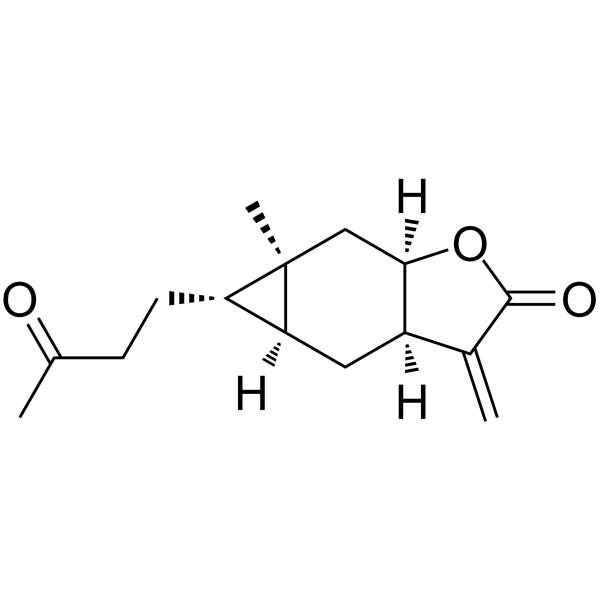
    Carabrone is isolated from the fruits of Carpesium abrotanoides , is a well-known sesquiterpene and exhibits significant anti-bacterial and anti-tumor activities . Carabrone exhibits antifungal activities in vitro and in vivo against Botrytis cinerea, Colletotrichum lagenarium(EC50=7.10 μg/mL) and Erysiphe graminis .
    Carabrone
  • HY-N9768

    9-oxo-ODA

    Fungal PPAR Infection
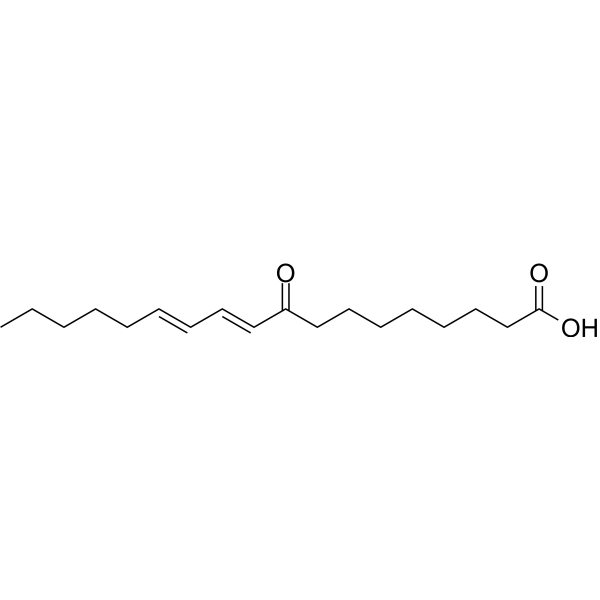
    (10E,12E)-9-Oxo-10,12-octadecadienoic acid (9-oxo-ODA) is a PPARα agonist that can be isolated from the basidiomycete Gomphus floccosus. (10E,12E)-9-Oxo-10,12-octadecadienoic acid enhances fatty acid oxidation through PPARα activation, thereby inhibiting triglyceride accumulation. (10E,12E)-9-Oxo-10,12-octadecadienoic acid also has antifungal (Fungal) activity .
    (10E,12E)-9-Oxo-10,12-octadecadienoic acid
  • HY-W047478

    NSC 10154

    Fungal Interleukin Related Infection Inflammation/Immunology Cancer
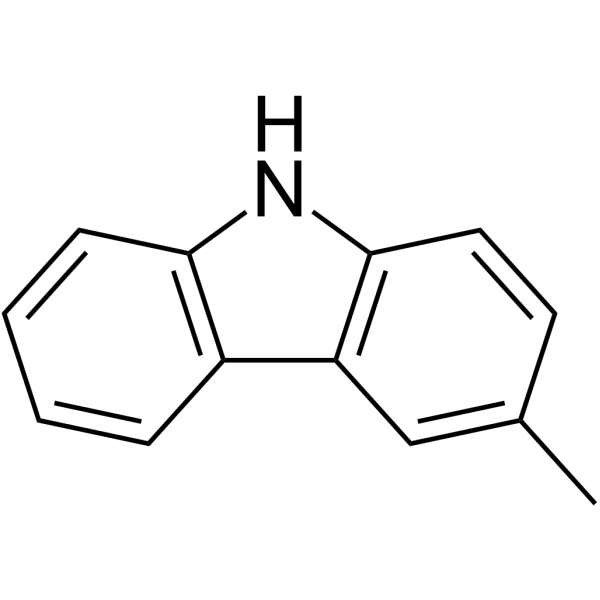
    3-Methylcarbazole (NSC 10154) is a carbazole alkaloid with an IC50 of 25 μg/mL against human fibrosarcoma cells. 3-Methylcarbazole inhibits mycelial growth and conidial germination of a variety of phytopathogenic fungi. 3-Methylcarbazole exhibits anti-inflammatory and antitumor activities. 3-Methylcarbazole can be used in studies related to fibrosarcoma, phytopathogenic fungal infections and inflammatory diseases .
    3-Methylcarbazole
  • HY-B1975

    Fungal Reactive Oxygen Species (ROS) Infection
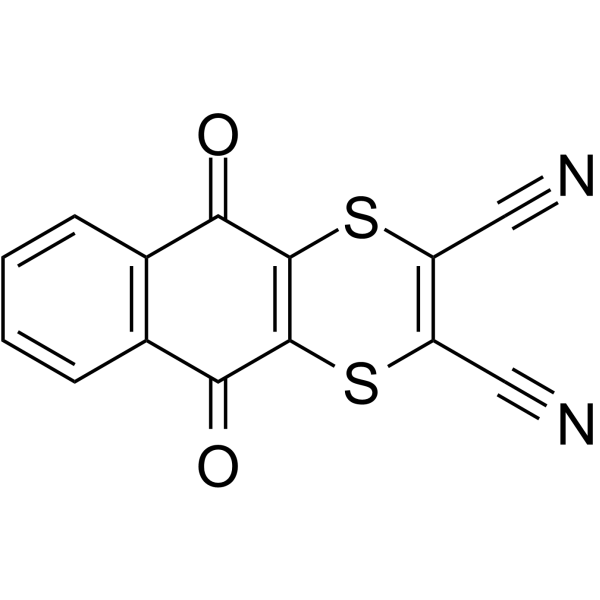
    Dithianon is a broad-spectrum anthraquinone fungicide with good adherence to the surface of leaves and fruits. Dithianon is used to control several several fungal of some fruits and vegetables, as anthracnose (Colletotrichum sp., Elsinoe ampelina), mildew (Plasmopara viticola), phomopsis (Phomopsis viticola), among others .
    Dithianon
  • HY-Y0729
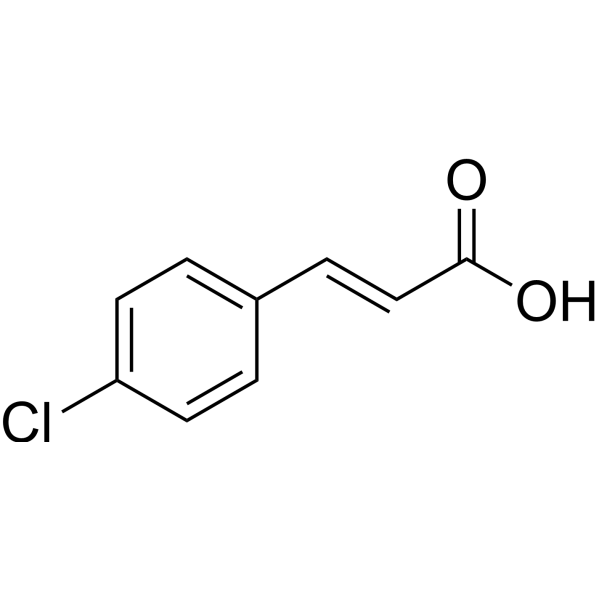
    4-Chlorocinnamic acid
    1 Publications Verification

    Tyrosinase Bacterial Fungal Drug Derivative Infection Neurological Disease
    4-Chlorocinnamic acid is a derivative of Cinnamic acid (HY-N0610A). 4-Chlorocinnamic acid inhibits the monophenolase and diphenolase activities of mushroom tyrosinase with IC50 values of 0.477 mM and 0.229 mM, respectively. 4-Chlorocinnamic acid inhibits the mycelial growth of Colletotrichum gloeosporioides. 4-Chlorocinnamic acid exhibits anticonvulsant activity against acute epilepsy induced by pentylenetetrazol .
    4-Chlorocinnamic acid
  • HY-W741556

    Antibiotic Fungal Infection
    Dehydrogriseofulvin can be isolated from Penicillium sp. Dehydrogriseofulvin inhibits Colletotrichum musae with MIC > 1 µg/scrip.
    Dehydrogriseofulvin
  • HY-169965

    Succinate Dehydrogenase Infection
    Succinate dehydrogenase-IN-4 (Compound 4b) is the inhibitor for succinate dehydrogenase with an IC50 of 3.38 μM. Succinate dehydrogenase-IN-4 exhibits antifungal activity against Physalospora piricola and Colletotrichum orbiculare with EC50 of 16.33 μM and 18.06 μM .
    Succinate dehydrogenase-IN-4
  • HY-132968

    Fungal Infection
    Antifungal agent 20 exhibits remarkable antifungal activity against Colletotrichum gloeosprioides, Rhizoctonia solani, Phytophthora nicotianae var. nicotianae, Diplodia pinea, Colletotrichum acutatum, and Fusarium oxysporum f. sp. niveum.
    Antifungal agent 20
  • HY-N15048

    Fungal Infection
    Phellinsin selectively inhibits the activity of the chitin synthase I and II with IC50s (μg/mL) of 76 and 28, respectively. Phellinsin has the antifungal activity on Colletotrichum lagenarium, Pyricularia oryzae, Aspergillus fumigatus and Trichophyton mentagrophytes and so on (MIC is 12.5-50 μg/mL) .
    Phellinsin
  • HY-175722

    Fungal Infection
    JSZ16 is a Succinate dehydrogenase (SDH) inhibitor with an IC50 of 30.3  μM. JSZ16 has potent broad-spectrum fungicidal activity, such as Sclerotinia sclerotiorum, Botrytis cinerea and Colletotrichum fragariae, with an EC50 of 4.4 mg/L for Sclerotinia sclerotiorum. JSZ16 influences the cell membrane permeability of pathogenic fungi. JSZ16 can be used for the development of fungicide .
    JSZ16
  • HY-B1975R

    Reference Standards Fungal Reactive Oxygen Species (ROS) Infection
    Dithianon (Standard) is the analytical standard of Dithianon. This product is intended for research and analytical applications. Dithianon is a broad-spectrum anthraquinone fungicide with good adherence to the surface of leaves and fruits. Dithianon is used to control several several fungal of some fruits and vegetables, as anthracnose (Colletotrichum sp., Elsinoe ampelina), mildew (Plasmopara viticola), phomopsis (Phomopsis viticola), among others .
    Dithianon (Standard)
  • HY-B1975S

    Reactive Oxygen Species (ROS) Infection
    Dithianon-d4 is the deuterium labeled Dithianon (HY-B1975). Dithianon is a broad-spectrum anthraquinone fungicide with good adherence to the surface of leaves and fruits. Dithianon is used to control several several fungal of some fruits and vegetables, as anthracnose (Colletotrichum sp., Elsinoe ampelina), mildew (Plasmopara viticola), phomopsis (Phomopsis viticola), among others .
    Dithianon-d4
  • HY-174388

    Fungal Herbicide Reactive Oxygen Species (ROS) Infection
    Antifungal agent 134 (Compound B13) is an antifungal agent with EC50s of 3.24, 1.89, 1.70, 0.36, 4.27, and 1.50 μg/mL for Botrytis cinerea, Alternaria solani, Fusarium graminearum, Rhizoctonia solani, Colletotrichum orbiculare, and Alternaria alternata, respectively. Antifungal agent 134 can disrupt the cell membrane and mitochondria of the hyphae, leading to significant ROS accumulation. Antifungal agent 134 also has significant herbicidal activities against field weeds, such as Amaranthus retroflexus L and Abutilon theophrasti Medicus. Antifungal agent 134 can be used for crop diseases and field weeds research .
    Antifungal agent 134
  • HY-176552

    Fungal Microtubule/Tubulin Infection
    Tubulin polymerization-IN-83 (Compound A23) is a flavonol derivative. Tubulin polymerization-IN-83 exhibits antifungal activity against various phytopathogenic fungi, with an EC50 of 0.338 μg/mL against Botrytis cinerea. Tubulin polymerization-IN-83 exerts its effects by targeting β-tubulin, disrupting mycelial morphology, and increasing cell membrane permeability, with relatively low ecological and environmental risks .
    Tubulin polymerization-IN-83
  • HY-N1117

    Phosphatase NO Synthase Infection Metabolic Disease Cancer
    Tristin is a PTP1B inhibitor (IC50=21.2 μM) with antioxidant and antifungal activities. Tristin inhibits lipid peroxidation and NO production in LPS-stimulated macrophages, and also exhibits activity against a variety of phytopathogenic fungi. Tristin is also able to inhibit cancer cell proliferation. Tristin can be used in the research of diseases associated with phytopathogenic fungal infection, leukemia, type 2 diabetes and inflammatory responses .
    Tristin
  • HY-179411

    Fungal Infection
    Antifungal agent 139 (Compound li) is an antifungal agent that exhibits antifungal activity against Colletotrichum gloeosporioides by inhibiting CgSfu1 and CgRidA. Antifungal agent 139 completely inhibits mycelial growth, spore germination, and appressorium formation, with an EC50 of 18 μg/mL. Antifungal agent 139 can completely block the pathogen's infection of host plants (such as linden trees, cypress trees). Antifungal agent 139 can be used for research on anthrax .
    Antifungal agent 139
  • HY-183295

    Fungal Reactive Oxygen Species (ROS) Infection
    Antifungal agent 160 is a cytochrome bc1 complex inhibitor with activity against Alternaria solani, Gibberella zeae, Colletotrichum gloeosporioides, and Fusarium oxysporum f. sp. melonis. Antifungal agent 160 impairs ATP synthesis, suppresses ATPase activity, induces ROS bursts, compromises plasma membrane integrity, and suppresses fungal growth. Antifungal agent 160 can be used for the research of fungal infection .
    Antifungal agent 160
  • HY-118817

    Reactive Oxygen Species (ROS) Calcium Channel JNK ERK p38 MAPK Apoptosis Neurological Disease
    Evariquinone is an anthraquinone compound isolated from the endophytic fungus Colletotrichum sp. JS-0367 of mulberry. Evariquinone possesses direct antioxidant activity. It inhibits excessive phosphorylation of the JNK, ERK1/2 and p38 MAPK signaling pathways by suppressing ROS and Ca 2+, thereby reducing neuronal apoptosis. Evariquinone can be used to study glutamate excitotoxicity-related neurological disorders (such as Alzheimer's disease, Parkinson's disease, cerebral ischemia, etc.) .
    Evariquinone
  • HY-N19815

    Aspergilol E

    Bacterial Fungal Infection
    Gibellulin A is a natural antimicrobial agent. Gibellulin A inhibits the growth of aquatic bacteria, human pathogenic bacteria and phytopathogenic fungi.Gibellulin A can be used for the research of bacterial and fungal infections .
    Gibellulin A

Inquiry Online

Your information is safe with us. * Required Fields.

Salutation


Country or Region *

Applicant Name *


Organization Name *

Department *


Email Address *


Product Name *

Cat. No.


Requested quantity *

Phone Number *


Remarks

Inquiry Online

Inquiry Information

Product Name:
Cat. No.:
Quantity:
MCE Japan Authorized Agent:

