
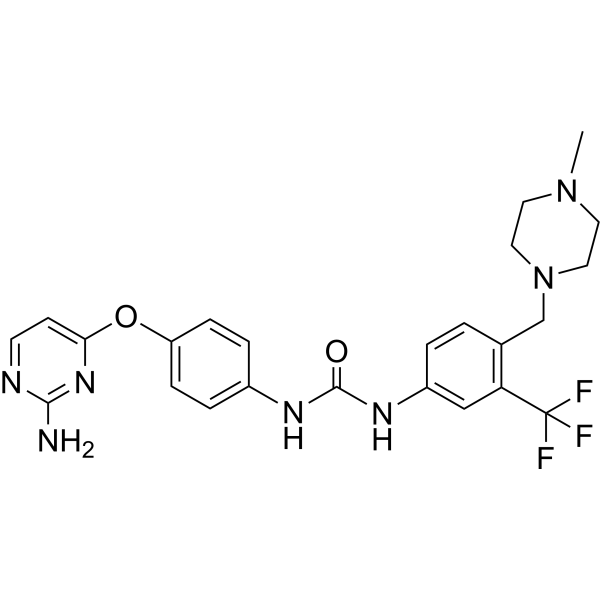
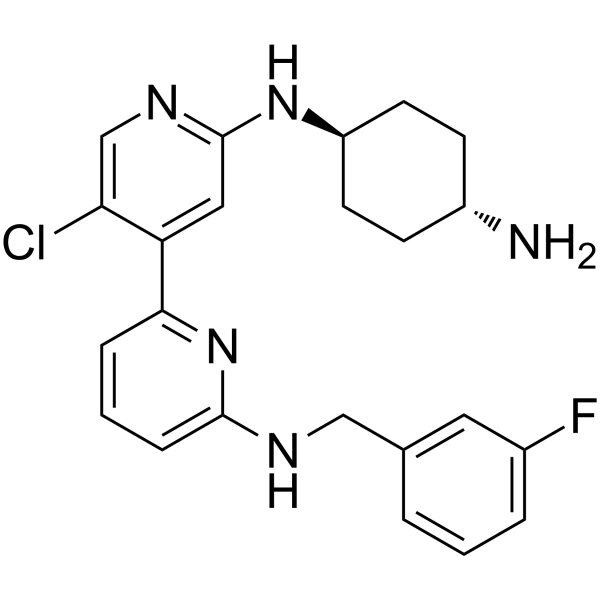
1. Search Result
Search Result
Results for "

Cyclins

" in MedChemExpress (MCE) Product Catalog:

443

Inhibitors & Agonists

1

Biochemical Assay Reagents

10

Peptides

1

MCE Kits

1

Inhibitory Antibodies

47

Natural
Products

5

Isotope-Labeled Compounds

1

Click Chemistry

1

Oligonucleotides

Cat. No. Product Name Target Research Areas Chemical Structure
  • HY-12529
    Ro-3306
    65+ Cited Publications

    CDK Apoptosis Cancer
    Ro-3306 is a potent and selective inhibitor of CDK1, with Kis of 20 nM, 35 nM and 340 nM for CDK1, CDK1/cyclin B1 and CDK2/cyclin E, respectively.
    Ro-3306
  • HY-137894A
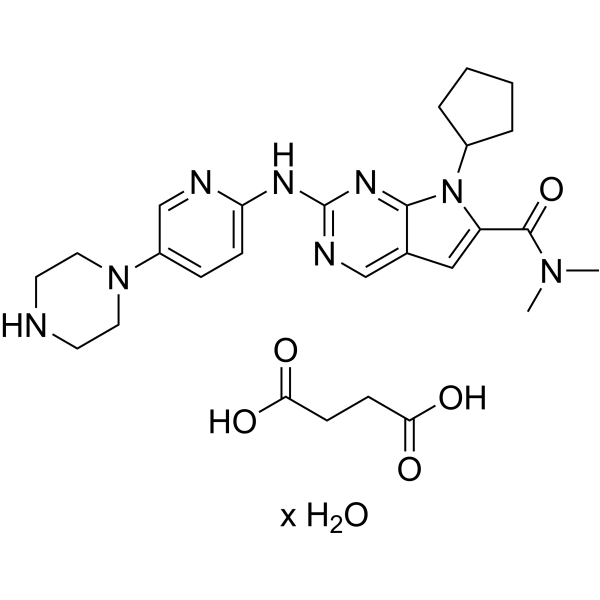
    Tagtociclib hydrate
    4 Publications Verification

    PF-07104091 hydrate

    CDK GSK-3 Cancer
    PF-07104091 hydrate is a potent and selective CDK2/cyclin E1 and GSK3β inhibitor, with Kis of 1.16 and 537.81 nM, respectively. PF-07104091 hydrate has anti-tumor activity for cyclin E1-amplified cancers. (patent WO2020157652A2).
    Tagtociclib hydrate
  • HY-N0034
    Arctiin
    5 Publications Verification

    Arctii; NSC 315527; Arctigenin-4-glucoside

    NF-κB Inflammation/Immunology Cancer
    Arctiin is an orally active inhibitor of NF-κB. Arctiin suppresses cyclin D1 protein expression in human tumor cells. Arctiin also reduces malondialdehyde and pro-in ammatory cytokines levels. Arctiin can used in study glomerulonephritis .
    Arctiin
  • HY-18340
    (R)​-​CR8
    1 Publications Verification

    CR8, (R)-Isomer

    Molecular Glues CDK Apoptosis Neurological Disease Cancer
    (R)-CR8, a second-generation analog of Roscovitine, is a potent CDK1/2/5/7/9 inhibitor. (R)-CR8 inhibits CDK1/cyclin B (IC50=0.09 μM), CDK2/cyclin A (0.072 μM), CDK2/cyclin E (0.041 μM), CDK5/p25 (0.11 μM), CDK7/cyclin H (1.1 μM), CDK9/cyclin T (0.18 μM) and CK1δ/ε (0.4 μM). (R)-CR8 induces apoptosis and has neuroprotective effect . (R)-CR8 acts as a molecular glue degrader that depletes cyclin K .
    (R)​-​CR8
  • HY-B0294
    Flubendazole
    5+ Cited Publications

    Parasite Microtubule/Tubulin STAT MDM-2/p53 Apoptosis Autophagy Infection Cancer
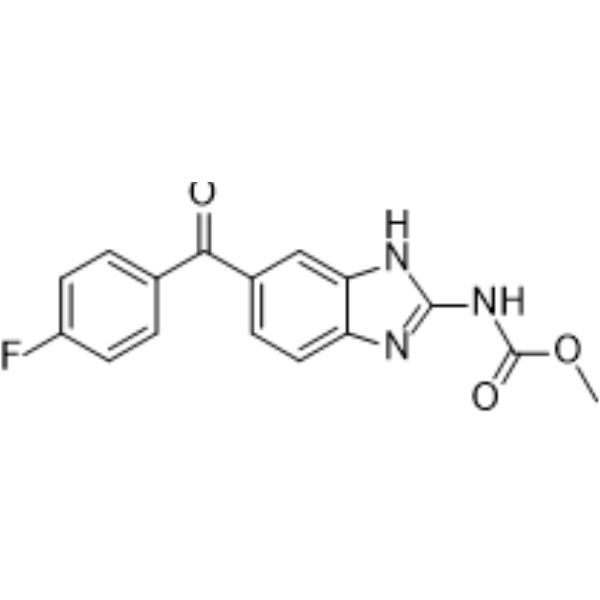
    Flubendazole is an anthelmintic drug based on altering microtubule structure, inhibition of tubulin polymerization and disruption of microtubule function. Flubendazole induces apoptosis in human colorectal cancer (CRC) by blocking the STAT3 signaling axis and activation of autophagy. Flubendazole induces P53 expression and reduced Cyclin B1 and p-cdc2 expression. Flubendazole is an antitumor agent. Flubendazole can be used for worm and intestinal parasites .
    Flubendazole
  • HY-10424
    Milciclib
    5+ Cited Publications

    PHA-848125

    CDK Autophagy Cancer
    Milciclib (PHA-848125) is a potent, ATP-competitive and dual inhibitor of CDK and Tropomyosin receptor kinase (TRK), with IC50s of 45, 150, 160, 363, 398 nM and 53 nM for cyclin A/CDK2, cyclin H/CDK7, cyclin D1/CDK4, cyclin E/CDK2, cyclin B/CDK1 and TRKA, respectively.
    Milciclib
  • HY-12302
    Kenpaullone
    10+ Cited Publications

    9-Bromopaullone; NSC-664704

    CDK GSK-3 Cancer
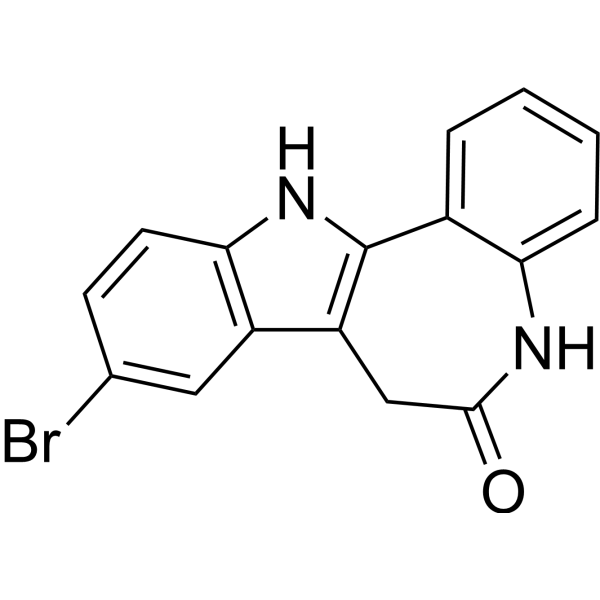
    Kenpaullone is a potent inhibitor of CDK1/cyclin B and GSK-3β, with IC50s of 0.4 μM and 23 nM, and also inhibits CDK2/cyclin A, CDK2/cyclin E, and CDK5/p25 with IC50s of 0.68 μM, 7.5 μM, 0.85 μM, respectively. Kenpaullone, a small molecule inhibitor of KLF4, reduces self-renewal of breast cancer stem cells and cell motility in vitro.
    Kenpaullone
  • HY-130665
    TL12-186
    1 Publications Verification

    PROTACs CDK Cancer
    TL12-186 is a Cereblon-dependent multi-kinase PROTAC degrader. Multi-kinases include CDK, BTK, FLT3, Aurora kinases, TEC, ULK, ITK, et al. TL12-186 inhibits CDK2/cyclin A (IC50=73 nM) and CDK9/cyclin T1 (IC50=55 nM) .
    TL12-186
  • HY-108359
    Alsterpaullone
    1 Publications Verification

    9-Nitropaullone; NSC 705701

    CDK GSK-3 Apoptosis Cancer
    Alsterpaullone (9-Nitropaullone) is a potent CDK inhibitor, with IC50s of 35 nM, 15 nM, 200 nM and 40 nM for CDK1/cyclin B, CDK2/cyclin A, CDK2/cyclin E and CDK5/p35, respectively. Alsterpaullone also competes with ATP for binding to GSK-3alpha/GSK-3beta with IC50s of both 4 nM. Alsterpaullone has antitumor activity, and possesses potential for the study in neurodegenerative and proliferative disorders . Alsterpaullone induces apoptosis in leukemia cell line .
    Alsterpaullone
  • HY-18299A
    Purvalanol A
    4 Publications Verification

    NG-60

    CDK Autophagy Apoptosis Cancer
    Purvalanol A is a potent CDK inhibitor, which inhibits cdc2-cyclin B, cdk2-cyclin A, cdk2-cyclin E, cdk4-cyclin D1, and cdk5-p35 with IC50s of 4, 70, 35, 850, 75 nM, resepctively.
    Purvalanol A
  • HY-10014
    R547
    2 Publications Verification

    CDK GSK-3 Apoptosis Cancer
    R547 is a potent, selective and orally active ATP-competitive CDK inhibitor, with Kis of 2 nM, 3 nM and 1 nM for CDK1/cyclin B, CDK2/cyclin E and CDK4/cyclin D1, respectively .
    R547
  • HY-137478
    KB-0742
    3 Publications Verification

    CDK Cancer
    KB-0742 is a potent, selective and orally active CDK9 inhibitor with an IC50 of 6 nM for CDK9/cyclin T1. KB-0742 is selective for CDK9/cyclin T1 with >50-fold selectivity over other CDK kinases. KB-0742 has potent anti-tumor activity .
    KB-0742
  • HY-15504A
    RGB-286638 free base
    3 Publications Verification

    CDK GSK-3 MEK JAK Cancer
    RGB-286638 is a CDK inhibitor that inhibits the kinase activity of cyclin T1-CDK9, cyclin B1-CDK1, cyclin E-CDK2, cyclin D1-CDK4, cyclin E-CDK3, and p35-CDK5 with IC50s of 1, 2, 3, 4, 5 and 5 nM, respectively; also inhibits GSK-3β, TAK1, Jak2 and MEK1, with IC50s of 3, 5, 50, and 54 nM.
    RGB-286638 free base
  • HY-137432
    Avotaciclib
    3 Publications Verification

    BEY1107

    CDK Apoptosis Cancer
    Avotaciclib (BEY1107) is an orally active cyclin-dependent kinase 1 (CDK1) inhibitor. Avotaciclib can inhibit the proliferation and induce apoptosis of tumor cells. Avotaciclib can be used in the research of cancer such as pancreatic cancer and lung cancer .
    Avotaciclib
  • HY-145669
    DIF-3
    5+ Cited Publications

    Wnt CDK GSK-3 Infection Cancer
    DIF-3 is an orally active anticancer agent. DIF-3 reduces the expression levels of cyclin D1 and c-Myc by facilitating their degradation via activation of GSK-3β. DIF-3 inhibits Wnt/β-catenin signaling pathway-related proteins in cells. DIF-3 induces reactive oxygen species (ROS) and autophagy. DIF suppresses the growth of Trypanosoma. cruzi in HT1080 cells. DIF-3 exerts antitumor effects both in vitro and in vivo .
    DIF-3
  • HY-111361
    FN-1501
    2 Publications Verification

    LT-171-861

    CDK FLT3 Cancer
    FN-1501 is a potent inhibitor of FLT3 and CDK, with IC50s of 2.47, 0.85, 1.96, and 0.28 nM for CDK2/cyclin A, CDK4/cyclin D1, CDK6/cyclin D1 and FLT3, respectively. FN-1501 has anticancer activity.
    FN-1501
  • HY-117535
    CDK2-IN-4
    3 Publications Verification

    CDK Cancer
    CDK2-IN-4 (compound 73) is a potent and selective CDK2 inhibitor with an IC50 of 44 nM for CDK2/cyclin A, shows 2,000-fold selectivity over CDK1/cyclin B (IC50=86 uM) .
    CDK2-IN-4
  • HY-15504
    RGB-286638
    3 Publications Verification

    CDK GSK-3 MEK JAK Cancer
    RGB-286638 is a CDK inhibitor that inhibits the kinase activity of cyclin T1-CDK9, cyclin B1-CDK1, cyclin E-CDK2, cyclin D1-CDK4, cyclin E-CDK3, and p35-CDK5 with IC50s of 1, 2, 3, 4, 5 and 5 nM, respectively; also inhibits GSK-3β, TAK1, Jak2 and MEK1, with IC50s of 3, 5, 50, and 54 nM.
    RGB-286638
  • HY-18299
    Purvalanol B
    2 Publications Verification

    NG 95

    CDK Parasite Infection Cancer
    Purvalanol B (NG 95) is a potent, selective, reversible and ATP-competitive inhibitor CDK, with IC50s of 6 nM, 6 nM, 9 nM, 6 nM for cdc2-cyclin B, CDK2-cyclin A, CDK2-cyclin E and CDK5-p35, respectively. Purvalanol B shows selectivity for CDK over a range of other protein kinases (IC50>1000 nM). Purvalanol B inhibits the growth a chloroquine-resistant strain of P. falciparum .
    Purvalanol B
  • HY-144981
    HQ461
    1 Publications Verification

    CDK Molecular Glues Cancer
    HQ461 is a molecular glue that promotes CDK12-DDB1 interaction to trigger cyclin K degradation. HQ461-mediated degradation of cyclin K impairs CDK12 function, resulting in decreased CDK12 substrate phosphorylation, downregulation of DNA damage response genes, and cell death .
    HQ461
  • HY-104013
    Aminopurvalanol A
    1 Publications Verification

    CDK Apoptosis Cancer
    Aminopurvalanol A is a potent, selective, and cell permeable inhibitor of Cyclins/Cdk complexes. Aminopurvalanol A preferentially targets the G2/M-phase transition inhibiting cancer cell differentiation. Aminopurvalanol A causes the inhibition of sperm fertilizing ability via the inhibition of physiological capacitation-dependent actin polymerization .
    Aminopurvalanol A
  • HY-103382

    Fungal Cancer
    Arcyriaflavin A is an indolo[2,3-a]carbazole compound and also a cyclin D1/CDK4 inhibitor. Arcyriaflavin A exists in the marine ascidian Eudistoma sp. and the slime mold Arcyria denudata. Arcyriaflavin A is applicable to research related to colon cancer and lung cancer .
    Arcyriaflavin A
  • HY-N4327

    NF-κB Apoptosis Akt Bcl-2 Family Infection Inflammation/Immunology
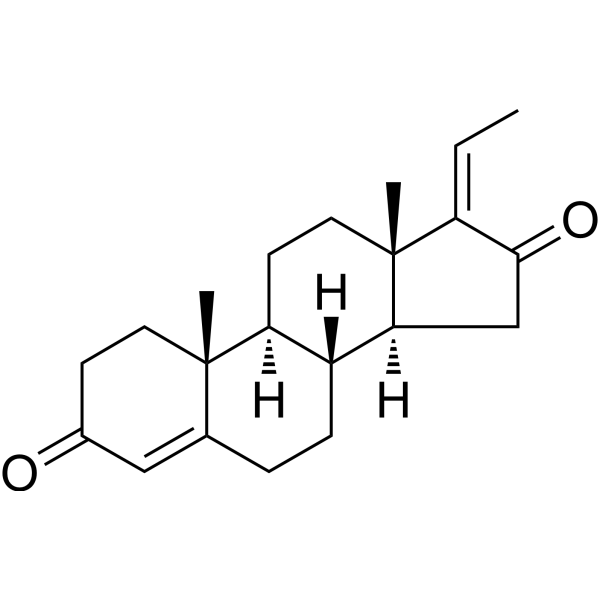
    Eurycomalactone is an active quassinoid could be isolated from Eurycoma longifolia Jack. Eurycomalactone is a potent NF-κB inhibitor with an IC50 value of 0.5 μM. Eurycomalactone inhibits protein synthesis and depletes cyclin D1. Eurycomalactone enhances radiosensitivity through arrest cell cycle at G2/M phase and delayed DNA double-strand break repair. Eurycomalactone inhibits the activation of AKT/NF-κB signaling, induces apoptosis and enhances chemosensitivity to Cisplatin (HY-17394) .
    Eurycomalactone
  • HY-W011428
    Olomoucine
    1 Publications Verification

    CDK Others Cancer
    Olomoucine is an ATP competitive inhibitor of CDKs. Olomoucine is a purine (HY-34431) derivative and inhibits CDC2/cyclin B, Cdk2/cyclin A, Cdk2/cyclin E (both IC50=7 μM), CDK/p35 kinase (IC50=3 μM) and ERK1/p44 MAP kinase (IC50=25 μM) . Olomoucine regulates cell cycle and shows anti-melanin tumor activity .
    Olomoucine
  • HY-162706
    BSJ-5-63
    1 Publications Verification

    PROTACs CDK Cancer
    BSJ-5-63 is a potent CDK12, CDK7, CDK9 PROTAC degrader. BSJ-5-63 BSJ-5-63 decreases the protein expression of CDK12, CDK7, CDK9, RNAPII, Cyclin K. BSJ-5-63 decreases the mRNA expression of BRCA1, BRCA2. BSJ-5-63 shows anticancer activity and has the potential for the research of prostate cancer (Pink: ligand for target protein (HY-150948); black: linker (HY-W140827); Blue: E3 ligase ligand (HY-112078)) .
    BSJ-5-63
  • HY-16366

    ON 014185

    Eukaryotic Initiation Factor (eIF) CDK c-Myc MDM-2/p53 Caspase Apoptosis Cancer
    Briciclib (ON 014185) is a eukaryotic translation initiation factor 4E (eIF4E) inhibitor. Briciclib exhibits broad-spectrum anti-cancer activity, including in mantle cell leukemia, breast cancer, gastric cancer, and esophageal cancer cells. Briciclib reduces the expression of cyclin D1 and c-Myc, and enhances the expression of P53 and Cleaved Caspase 3 pro-apoptotic proteins. Briciclib can be used for the study of hematological system tumors and solid tumors .
    Briciclib
  • HY-137478A
    KB-0742 dihydrochloride
    3 Publications Verification

    CDK Cancer
    KB-0742 dihydrochloride is a potent, selective and orally active CDK9 inhibitor with an IC50 of 6 nM for CDK9/cyclin T1. KB-0742 dihydrochloride is selective for CDK9/cyclin T1 with >50-fold selectivity over other CDK kinases. KB-0742 dihydrochloride has potent anti-tumor activity .
    KB-0742 dihydrochloride
  • HY-103647

    CDK VEGFR GSK-3 Cancer
    K00546 is a potent CDK1 and CDK2 inhibitor with IC50s of 0.6 nM and 0.5 nM for CDK1/cyclin B and CDK2/cyclin A, respectively. K00546 is also a potent CDC2-like kinase 1 (CLK1) and CLK3 inhibitor with IC50s of 8.9 nM and 29.2 nM, respectively .
    K00546
  • HY-144971

    Molecular Glues CDK Cancer
    dCeMM2 (Compound 2) is a molecular glue-type degrader that targets cyclin K. dCeMM2 induces ubiquitination and degradation of cyclin K by prompting an interaction of CDK12-cyclin K with a CRL4B ligase complex .
    dCeMM2
  • HY-144977

    Molecular Glues CDK Cancer
    dCeMM4 (Compound 5) is a molecular glue degrader. dCeMM4 induces ubiquitination and degradation of cyclin K by prompting an interaction of CDK12-cyclin K with a CRL4B ligase complex .
    dCeMM4
  • HY-125035
    LCH-7749944
    5 Publications Verification

    GNF-PF-2356

    PAK Apoptosis Cancer
    LCH-7749944 (GNF-PF-2356) is a potent PAK4 inhibitor with an IC50 of 14.93 μM. LCH-7749944 effectively suppresses the proliferation of human gastric cancer cells through downregulation of PAK4/c-Src/EGFR/cyclin D1 pathway and induces apoptosis .
    LCH-7749944
  • HY-100429
    CAN508
    1 Publications Verification

    CDK Cancer
    CAN508 is a potent, ATP-competitive CDK9/cyclin T1 inhibitor with an IC50 of 0.35 μM. CAN508 exhibits a 38-fold selectivity for CDK9/cyclin T over other CDK/cyclin complexes. Antitumor activity .
    CAN508
  • HY-18340A
    (R)-CR8 trihydrochloride
    1 Publications Verification

    CR8, (R)-Isomer trihydrochloride

    Molecular Glues CDK Apoptosis Neurological Disease Cancer
    (R)-CR8 (CR8) trihydrochloride, a second-generation analog of Roscovitine, is a potent CDK1/2/5/7/9 inhibitor. (R)-CR8 trihydrochloride inhibits CDK1/cyclin B (IC50=0.09 μM), CDK2/cyclin A (0.072 μM), CDK2/cyclin E (0.041 μM), CDK5/p25 (0.11 μM), CDK7/cyclin H (1.1 μM), CDK9/cyclin T (0.18 μM) and CK1δ/ε (0.4 μM). (R)-CR8 trihydrochloride induces apoptosis and has neuroprotective effect . (R)-CR8 trihydrochloride acts as a molecular glue degrader that depletes cyclin K .
    (R)-CR8 trihydrochloride
  • HY-134635

    Bacterial Fungal HIV CDK Infection Cancer
    Dehydrozingerone is a ginger-derived component and cyclin D1 inhibitor that downregulates cyclin D1 expression and induces cell cycle G1 phase arrest. Dehydrozingerone reduces the proliferative capacity of castration-resistant prostate cancer cells under in vitro conditions. Dehydrozingerone reduces subcutaneous tumor growth by inhibiting cell proliferation and angiogenesis. Dehydrozingerone exerts antibacterial and antifungal activities via its α,β-unsaturated carbonyl conjugated system. Dehydrozingerone can be used in studies related to castration-resistant prostate cancer, bacterial infections, and food spoilage fungal infections .
    Dehydrozingerone
  • HY-139329

    CDK Cancer
    CDK12-IN-6, a pyrazolotriazine, is a potent CDK12 inhibitor with an IC50 of 1.19 μM at high ATP (2 mM). CDK12-IN-6 has no effect on CDK2/Cyclin E (IC50>20 μM) and CDK9/Cyclin T1 (IC50>20 μM) at high ATP (2 mM) (WO2021116178A1) .
    CDK12-IN-6
  • HY-161168

    CDK Cancer
    Cyclin K degrader 1 (compound 40) is an AT7519 (HY-50940) based Cyclin K degrader with DC50 of 21 nM. Cyclin K degrader 1 has an affinity for cyclin K that is ~500-fold higher than its affinity for CDK12 .
    Cyclin K degrader 1
  • HY-144691

    PROTACs CDK Cancer
    PP-C8 is a potent and selective PROTAC CDK12-Cyclin K degrader. PP-C8 induces CDK12-Cyclin K degradation with DC50s of 416 and 412 nM for CDK12 and Cyclin K, respectively. PP-C8 demonstrates profound synergistic antiproliferative effects with PARP inhibitor in triple-negative breast cancer (TNBC) .
    PP-C8
  • HY-144976

    Molecular Glues CDK Cancer
    dCeMM3 (Compound 3) is a molecular glue degrader. dCeMM3 induces ubiquitination and degradation of cyclin K by prompting an interaction of CDK12-cyclin K with a CRL4B ligase complex .
    dCeMM3
  • HY-137432A
    Avotaciclib trihydrochloride
    3 Publications Verification

    BEY1107 trihydrochloride

    CDK Apoptosis Cancer
    Avotaciclib (BEY1107) trihydrochloride is an orally active cyclin-dependent kinase 1 (CDK1) inhibitor. Avotaciclib trihydrochloride can inhibit the proliferation and induce apoptosis of tumor cells. Avotaciclib trihydrochloride can be used in the research of cancer such as pancreatic cancer and lung cancer .
    Avotaciclib trihydrochloride
  • HY-139328

    CDK Cancer
    CDK12-IN-5, a pyrazolotriazine, is a potent CDK12 inhibitor with an IC50 of 23.9 nM at high ATP (2 mM). CDK12-IN-5 has no effect on CDK2/Cyclin E (IC50=173 μM) and CDK9/Cyclin T1 (IC50=127 μM) at high ATP (2 mM) (WO2021116178A1) .
    CDK12-IN-5
  • HY-175729

    CDK Cancer
    Cyclin A/B RxL-IN-1 is a inhibitor targeting the Cyclin A/B RxL interaction at the hydrophobic patch (HP). Cyclin A/B RxL-IN-1 inhibits Cyclin A with an IC50 of 0.12 μM. Cyclin A/B RxL-IN-1 demonstrates antitumor efficacy in mouse cell line-derived xenograft (CDX) models. CDK-IN-19 can be used for the study of E2F-driven cancers such as small-cell lung cancer (SCLC) .
    Cyclin A/B RxL-IN-1
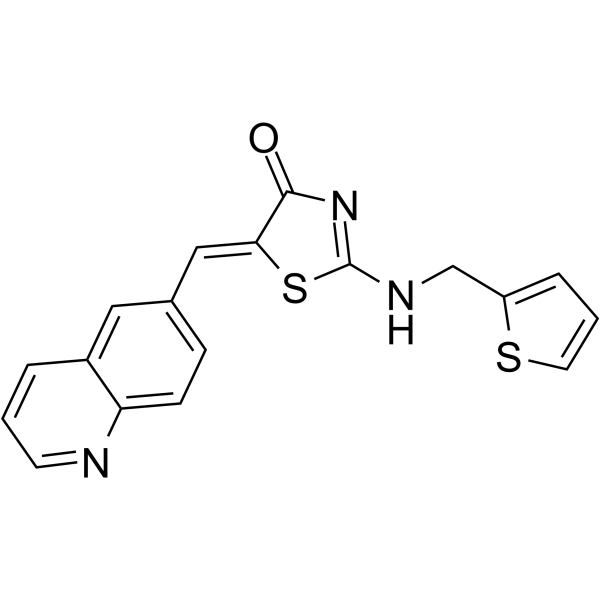
  • HY-120458
    LCAHA
    1 Publications Verification

    LCA hydroxyamide

    Deubiquitinase Cancer
    LCAHA (LCA hydroxyamide) is a deubiquitinase USP2a inhibitor with IC50s of 9.7 μM and 3.7μM in Ub-AMC Assay and Di-Ub Assay, respectively. LCAHA destabilizes Cyclin D1 and induces G0/G1 arrest by inhibiting deubiquitinase USP2a .
    LCAHA
  • HY-15612

    CDK Cancer
    CDK4 inhibitor is a novel and specific CDK4/Cyclin D1 inhibitor with an IC50 of 10 nM; 1500 and 500 fold than CDK1/Cyclin B (IC50>15 uM) and CDK2/Cyclin A (IC50=5.265 uM) respectively.
    CDK4-IN-1
  • HY-170897

    CDK Cancer
    CDK2-IN-40 is a CDK2 (Cyclin dependent kinase 2) inhibitor, extracted from patent WO 2024/254245 A1 (Example 1). CDK2-IN-40 inhibits CDK2/Cyclin E1 with an IC50 of ≤ 10 nM .
    CDK2-IN-40
  • HY-171787A

    CDK Cancer
    PPA-037 TFA is an orally active, highly potent and selective inhibitor of cyclin-dependent kinase 12 (CDK12). PPA-037 TFA induces the degradation of cyclin K (Cyclin K), enhancing antiproliferative effects on tumor cells. PPA-037 TFA is promising for research of cancers .
    PPA-037 TFA
  • HY-108907

    Casein Kinase Cancer
    SR-1277 is a potent, selective and ATP competitive CK1δ/ε inhibitor, with IC50s of 49 nM and 260 nM, respectively. SR-1277 also inhibits FLT3, CDK4/cyclin D1, CDK6/cyclin D3 and CDK9/cyclin K, with IC50s of 305 nM, 1340 nM, 311 nM and 109 nM, respectively. SR-1277 can be used for the research of cancer .
    SR-1277
  • HY-147651

    β-catenin CDK c-Myc Cancer
    β-catenin-IN-4 (Compound 39) is a β-catenin inhibitor with a Ki of 0.64 μM. β-catenin-IN-4 reduces the protein expression levels of cyclin D1 and c-Myc .
    β-catenin-IN-4
  • HY-137432B
    Avotaciclib hydrochloride
    3 Publications Verification

    BEY1107 hydrochloride

    CDK Apoptosis Cancer
    Avotaciclib (BEY1107) hydrochloride is an orally active cyclin-dependent kinase 1 (CDK1) inhibitor. Avotaciclib hydrochloride can inhibit the proliferation and induce apoptosis of tumor cells. Avotaciclib hydrochloride can be used in the research of cancer such as pancreatic cancer and lung cancer .
    Avotaciclib hydrochloride
  • HY-177780

    Molecular Glues CDK Apoptosis Cancer
    Cyclin K degrader 2 is a molecular glucose degrading agent that targets the cyclin K protein. Cyclin K degrader 2 has inhibitory activity against CDK1 and CDK9. Cyclin K degrader 2 causes a decrease in RNA polymerase II Ser2 phosphorylation levels, downregulation of DNA damage response gene expression, accumulation of DNA damage, G1 phase arrest of the cell cycle, and apoptosis. Cyclin K degrader 2 can be used for cancer research .
    Cyclin K degrader 2
  • HY-177743

    Molecular Glues CDK DNA/RNA Synthesis Cancer
    TR-213 is a potent molecular glue degrader that targets Cyclin K (CDK). TR-213 induces 91% and 56% decrease in CDK12 and Cyclin at 1 μM. TR-213 can inhibit RNA polymerase II activity and regulates alternative polyadenylation (APA) activity. TR-213 can be used for the research of cancer .
    TR-213

Inquiry Online

Your information is safe with us. * Required Fields.

Salutation


Country or Region *

Applicant Name *


Organization Name *

Department *


Email Address *


Product Name *

Cat. No.


Requested quantity *

Phone Number *


Remarks

Inquiry Online

Inquiry Information

Product Name:
Cat. No.:
Quantity:
MCE Japan Authorized Agent:

