
1. Search Result
Search Result
Results for "

Cyp7a1

" in MedChemExpress (MCE) Product Catalog:

19

Inhibitors & Agonists

4

Natural
Products

1

Recombinant Proteins

2

Antibodies

7

Oligonucleotides

Cat. No. Product Name Target Research Areas Chemical Structure
  • HY-W008226

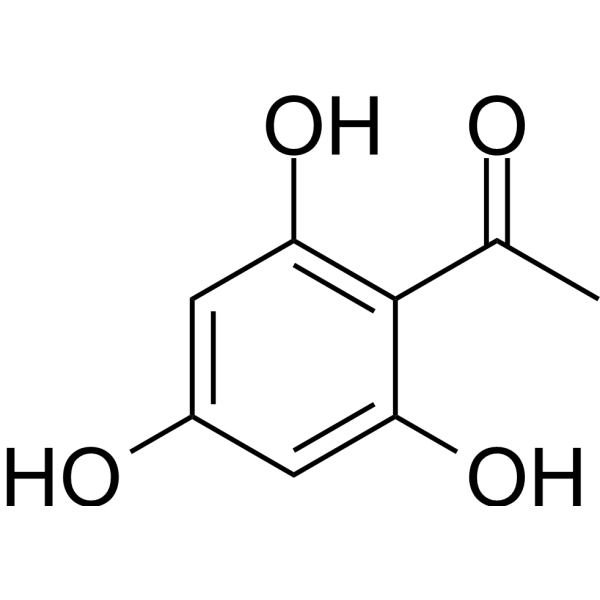
    2,4,6-trihydroxyacetophenone; 1-(2,4,6-Trihydroxyphenyl)ethanone

    Cytochrome P450 Bacterial Antibiotic Infection Metabolic Disease
    Phloracetophenone (2,4,6-trihydroxyacetophenone) is the aglycone part of acetophenone glycoside obtained from Curcuma comosa Roxb, with cholesterol-lowering activity. Phloracetophenone enhances cholesterol 7α-hydroxylase (CYP7A1) activity . Phloracetophenone stimulats bile secretion mediated through Mrp2 .
    Phloracetophenone
  • HY-106539

    FXR G protein-coupled Bile Acid Receptor 1 GLP Receptor Metabolic Disease Cancer
    Colesevelam hydrochloride is an orally active bile acid sequestrant, lipid-lowering agent, and glycemic control agent. Colesevelam hydrochloride binds bile acids in the gastrointestinal tract to form nonabsorbable complexes, interrupts enterohepatic recirculation and increases fecal bile acid elimination. Colesevelam hydrochloride modulates FXR, TGR5, and Cyp7a1 activity and triggers cAMP signaling and GLP-1 release. Colesevelam hydrochloride alters hepatic lipid and glucose metabolism, suppresses hepatic glycogenolysis, reduces hepatic triglyceride and cholesterol levels, and increases LDL-C (low-density lipoprotein cholesterol) clearance. Colesevelam hydrochloride can be used for the research of type 2 diabetes mellitus, hypercholesterolemia, and alcohol-related liver disease .
    Colesevelam hydrochloride
  • HY-N0430

    Coptisin

    Indoleamine 2,3-Dioxygenase (IDO) NF-κB p38 MAPK PI3K Akt Apoptosis Reactive Oxygen Species (ROS) Mitochondrial Metabolism DNA/RNA Synthesis ROCK LDLR Cardiovascular Disease Neurological Disease Metabolic Disease Inflammation/Immunology Cancer
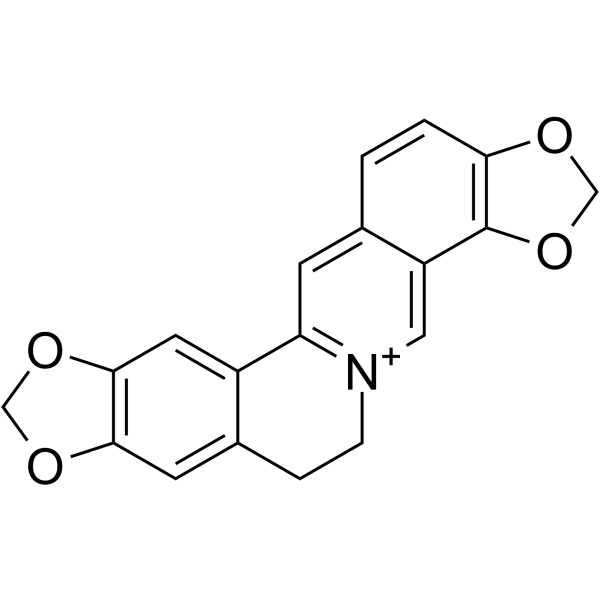
    Coptisine is an orally active and brain-penetrant alkaloid found in Coptis chinensis. Coptisine is a reversible, uncompetitive IDO inhibitor with a Ki of 5.8 μM and an IC50 of 6.3 μM. Coptisine suppresses neuroinflammation, reduces Aβ plaque burden and shows neuroprotective activity. Coptisine shows anti-inflammation activity by blocking NF-κB, MAPK, and PI3K/Akt activation. Coptisine inhibits cancer cells proliferation, induces DNA damage, G2/M phase cell cycle arrest, apoptosis, ROS production and mitochondrial dysfunction. Coptisine inhibits Rho/ROCK pathway activation, reduces arrhythmia, limits cardiac injury marker release, reduces infarct size, and preserves cardiac function in rat myocardial ischemia/reperfusion models. Coptisine downregulates HMGCR and upregulates LDLR and CYP7A1 to modulate cholesterol metabolism, reduces abnormal serum lipid levels, and promotes fecal bile acid excretion. Coptisine can be used for the research of cancer, hypercholesterolemia, Alzheimer’s disease, inflammatory disorders and cardiovascular disease .
    Coptisine
  • HY-N0430A
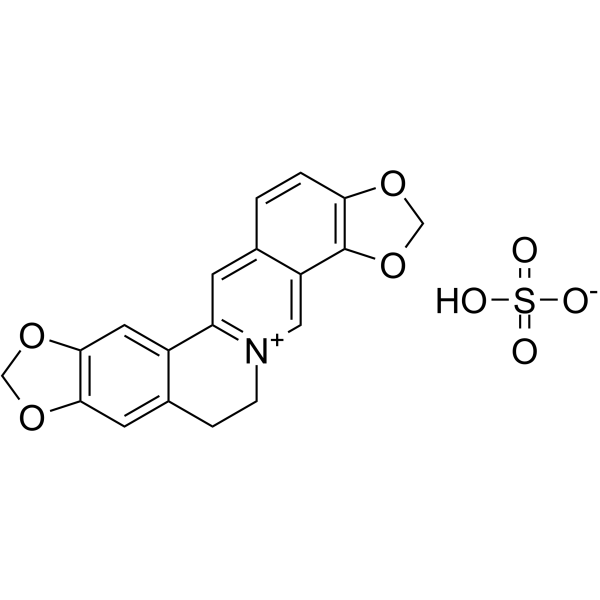
    Coptisine Sulfate
    5 Publications Verification

    Indoleamine 2,3-Dioxygenase (IDO) NF-κB p38 MAPK PI3K Akt Apoptosis Reactive Oxygen Species (ROS) Mitochondrial Metabolism DNA/RNA Synthesis ROCK LDLR Cardiovascular Disease Neurological Disease Metabolic Disease Inflammation/Immunology Cancer
    Coptisine Sulfate is an orally active and brain-penetrant alkaloid found in Coptis chinensis. Coptisine Sulfate is a reversible, uncompetitive IDO inhibitor with a Ki of 5.8 μM and an IC50 of 6.3 μM. Coptisine Sulfate suppresses neuroinflammation, reduces Aβ plaque burden and shows neuroprotective activity. Coptisine Sulfate shows anti-inflammation activity by blocking NF-κB, MAPK, and PI3K/Akt activation. Coptisine Sulfate inhibits cancer cells proliferation, induces DNA damage, G2/M phase cell cycle arrest, apoptosis, ROS production and mitochondrial dysfunction. Coptisine Sulfate inhibits Rho/ROCK pathway activation, reduces arrhythmia, limits cardiac injury marker release, reduces infarct size, and preserves cardiac function in rat myocardial ischemia/reperfusion models. Coptisine Sulfate downregulates HMGCR and upregulates LDLR and CYP7A1 to modulate cholesterol metabolism, reduces abnormal serum lipid levels, and promotes fecal bile acid excretion. Coptisine Sulfate be used for the research of cancer, hypercholesterolemia, Alzheimer’s disease, inflammatory disorders and cardiovascular disease .
    Coptisine Sulfate
  • HY-113259

    Endogenous Metabolite Metabolic Disease
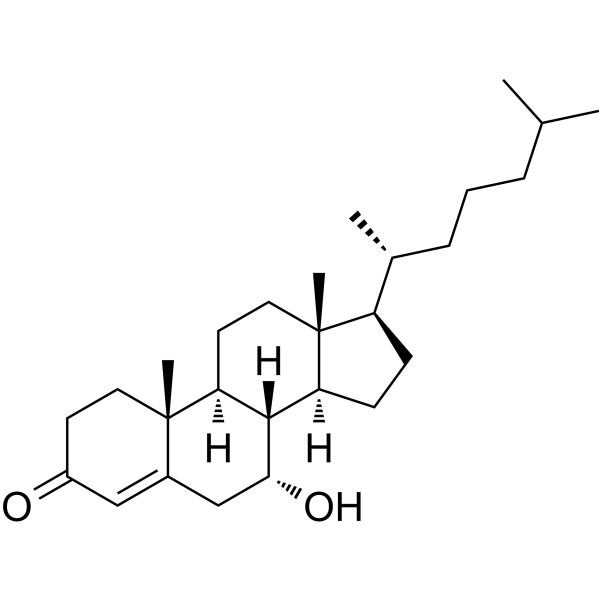
    7α-Hydroxy-4-cholesten-3-one is an intermediate in synthesis of bile acids from cholesterol. 7α-Hydroxy-4-cholesten-3-one is a pregnane X receptor (PXR) agonist. 7α-Hydroxy-cholest-4-en-3-one is a biomarker for bile acid loss, irritable bowel syndrome, and other diseases associated with defective bile acid biosynthesis. 7α-Hydroxy-cholest-4-en-3-one is the physiological substrate for CYP8B1 .
    7α-Hydroxy-4-cholesten-3-one
  • HY-163436

    FXR Cytochrome P450 RAR/RXR PPAR ROR Metabolic Disease
    F44-A13 is an orally active and highly selective farnesoid X receptor (FXR) antagonist with an IC50 value of 1.1 μM. F44-A13 can optimize cholesterol metabolism and reduce its activity by inducing CYP7A1 expression. F44-A13 reduces levels of cholesterol, triglycerides, and low-density lipoprotein cholesterol (LDL-C) in mouse models. F44-A13 can be used in the study of metabolic diseases associated with lipid disorders .
    F44-A13
  • HY-117147A

    REV-ERB Cytochrome P450 Metabolic Disease
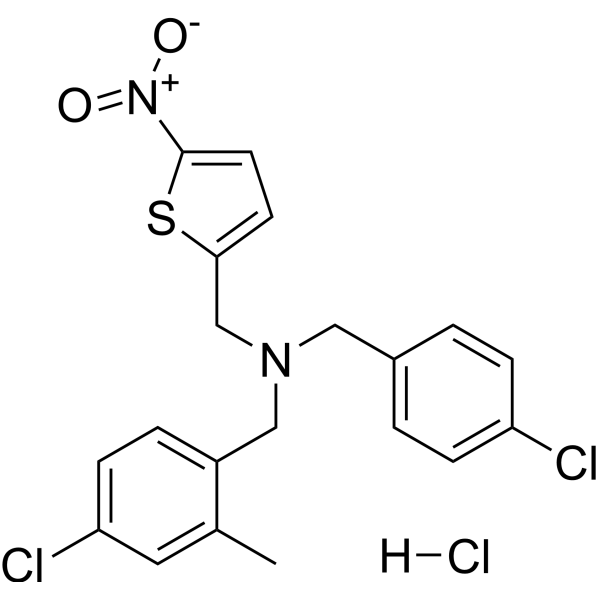
    GSK2945 hydrochloride is a class of tertiary amine, and is a highly specific Rev-erbα/REV-ERBα (mouse/human reverse erythroblastosis virus α) antagonist with EC50s of 21.5 μM and 20.8 μM, respectively. GSK2945 hydrochloride enhances cholesterol 7α-hydroxylase (CYP7A1) level and cholesterol metabolism .
    GSK2945 hydrochloride
  • HY-RS03487

    Small Interfering RNA (siRNA) Others

    CYP7A1 Human Pre-designed siRNA Set A contains three designed siRNAs for CYP7A1 gene (Human), as well as a negative control, a positive control, and a FAM-labeled negative control.

    CYP7A1 Human Pre-designed siRNA Set A
    CYP7A1 Human Pre-designed siRNA Set A
  • HY-RS23663

    Small Interfering RNA (siRNA) Others

    Cyp7a1 Rat Pre-designed siRNA Set A contains three designed siRNAs for Cyp7a1 gene (Rat), as well as a negative control, a positive control, and a FAM-labeled negative control.

    Cyp7a1 Rat Pre-designed siRNA Set A
    Cyp7a1 Rat Pre-designed siRNA Set A
  • HY-175266

    PROTACs Cytochrome P450 Pregnane X Receptor (PXR) Metabolic Disease
    MI1013 is a PROTAC PXR degrader (DC50 = 89 nM, Dmax = 82%). MI1013 degrades PXR in human hepatocellular carcinoma RG cells (HepaRG). MI1013 specifically and safely regulates CYP3A4 promoter activity through PXR degradation. MI1013 affects several key genes involved in sulfate conjugation (e.g., SULT1E1), bile acid synthesis (CYP7A1), gluconeogenesis (PCK1), ketone synthesis (HMGCS20), and hepatocyte proliferation (MKI67). (Pink: PXR ligand 3: HY-175267, Blue: Pomalidomide-propargyl ligand: HY-W410002, Pink + Black: PXR ligand-Linker Conjugate 1: HY-175268) .
    MI1013
  • HY-RS17211

    Small Interfering RNA (siRNA) Others

    Cyp7a1 Mouse Pre-designed siRNA Set A contains three designed siRNAs for Cyp7a1 gene (Mouse), as well as a negative control, a positive control, and a FAM-labeled negative control.

    Cyp7a1 Mouse Pre-designed siRNA Set A
    Cyp7a1 Mouse Pre-designed siRNA Set A
  • HY-19264

    Apical Sodium-Dependent Bile Acid Transporter Metabolic Disease
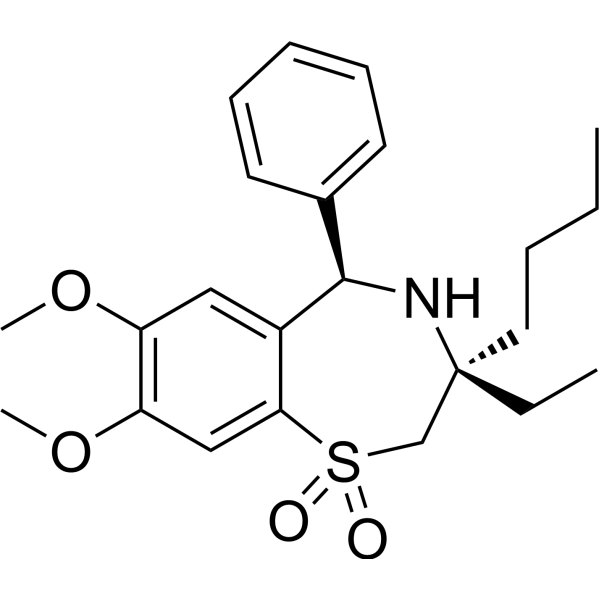
    264W94 is a potent ileal bile acid transporter (IBAT) inhibitor and a new cholesterol lowering agent. 264W94 has CYP7A1 induction, and antilipemic action .
    264W94
  • HY-117147

    Cytochrome P450 Metabolic Disease
    GSK2945 is a class of tertiary amine, and is a highly specific Rev-erbα/REV-ERBα (mouse/human reverse erythroblastosis virus α) antagonist with EC50s of 21.5 μM and 20.8 μM, respectively. GSK2945 enhances cholesterol 7α-hydroxylase (CYP7A1) level and cholesterol metabolism .
    GSK2945
  • HY-N13218

    Others Cardiovascular Disease
    Pueraria Extract is a kudzu extract, and its components include: Isoflavones. Pueraria Extract (ethanol extract) can significantly improve cardiac damage in rats with acute myocardial infarction. Pueraria Extract improves bile acid levels by increasing the expression of CYP7A1 and restoring the diversity of intestinal microbiota. Pueraria Extract can also inhibit the FXR-FGF15 signaling pathway and increase the expression of OST-α to increase bile acid reabsorption and fecal excretion. .
    Pueraria Extract
  • HY-181761

    FXR Metabolic Disease
    FXR agonist 16 is a FXR agonist with an EC50 of 2.2 μM. FXR agonist 16 activates FXR transcriptional activity, upregulates SHP and BSEP, and downregulates Cyp7a1. FXR agonist 16 exhibits hepatoprotective activity and reduces AST and ALT levels in free fatty acid-induced hepatocellular injury models. FXR agonist 16 can be used for the research of liver injury .
    FXR agonist 16
  • HY-RS03488

    Small Interfering RNA (siRNA) Others

    CYP7B1 Human Pre-designed siRNA Set A contains three designed siRNAs for CYP7B1 gene (Human), as well as a negative control, a positive control, and a FAM-labeled negative control.

    CYP7B1 Human Pre-designed siRNA Set A
    CYP7B1 Human Pre-designed siRNA Set A
  • HY-174703

    mRNA Cancer
    Human FGF19 mRNA encodes the human fibroblast growth factor 19 (FGF19) protein, a member of the fibroblast growth factor (FGF) family. FGF19 probably involves in the suppression of bile acid biosynthesis through down-regulation of CYP7A1 expression, following positive regulation of the JNK and ERK1/2 cascades.
    Human FGF19 mRNA
  • HY-RS18706

    Small Interfering RNA (siRNA) Others

    Cyp7b1 Mouse Pre-designed siRNA Set A contains three designed siRNAs for Cyp7b1 gene (Mouse), as well as a negative control, a positive control, and a FAM-labeled negative control.

    Cyp7b1 Mouse Pre-designed siRNA Set A
    Cyp7b1 Mouse Pre-designed siRNA Set A
  • HY-RS25193

    Small Interfering RNA (siRNA) Others

    Cyp7b1 Rat Pre-designed siRNA Set A contains three designed siRNAs for Cyp7b1 gene (Rat), as well as a negative control, a positive control, and a FAM-labeled negative control.

    Cyp7b1 Rat Pre-designed siRNA Set A
    Cyp7b1 Rat Pre-designed siRNA Set A

Inquiry Online

Your information is safe with us. * Required Fields.

Salutation


Country or Region *

Applicant Name *


Organization Name *

Department *


Email Address *


Product Name *

Cat. No.


Requested quantity *

Phone Number *


Remarks

Inquiry Online

Inquiry Information

Product Name:
Cat. No.:
Quantity:
MCE Japan Authorized Agent:

