1. Search Result
Search Result
Pathways Recommended: Cell Cycle/DNA Damage
Results for "

DNA polymerase γ

" in MedChemExpress (MCE) Product Catalog:

13

Inhibitors & Agonists

1

Natural
Products

1

Isotope-Labeled Compounds

Cat. No. Product Name Target Research Areas Chemical Structure
  • HY-174216

    DNA/RNA Synthesis Oxidative Phosphorylation Mitochondrial Metabolism Neurological Disease Metabolic Disease
    PZL-A is a activator of mitochondrial DNA (mtDNA) synthesis. PZL-A restores wild-type-like activity to mutant forms of polymerase γ (POLγ) with AC50 s of 160 and 20 nM for A467T and G848S. PZL-A activates mtDNA synthesis in cells, enhancing biogenesis of the oxidative phosphorylation machinery and cellular respiration. PZL-A is promising for relieving POLG disease and other severe conditions linked to depletion of mtDNA .
    PZL-A
  • HY-W015490
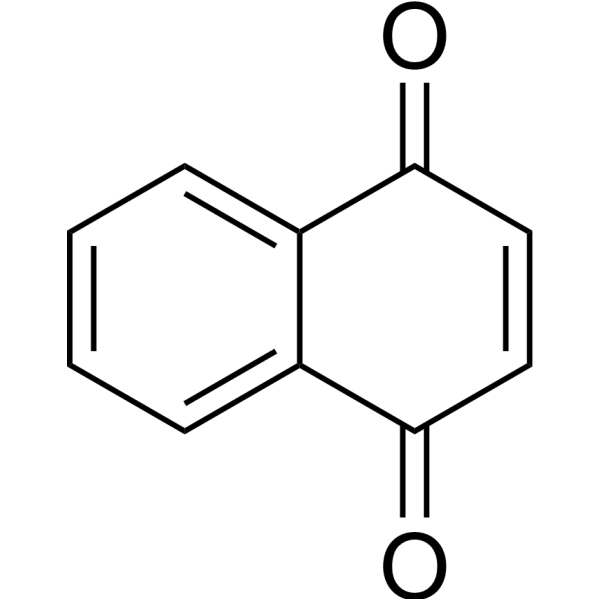
    1,4-Naphthoquinone
    3 Publications Verification

    Environmental Pollutants DNA/RNA Synthesis NF-κB Monoamine Oxidase TNF Receptor Bacterial Infection Inflammation/Immunology Cancer
    1,4-Naphthoquinone is an inhibitor with broad-spectrum inhibitory activity targeting DNA polymerase, NF-κB and monoamine oxidase (MAO-A/B), with antibacterial and anti-biofilm efficacy. 1,4-Naphthoquinone is a competitive inhibitor of MAO-B (Ki=1.4 μM) and a non-competitive inhibitor of MAO-A (Ki=7.7 μM). 1,4-Naphthoquinone inhibits DNA polymerase pol α, β, γ, δ, ε, λ with IC50 ranging from 5.57-128 μM. 1,4-Naphthoquinone inhibits tumor cell proliferation, induces apoptosis and necrosis, and has anti-angiogenic and anti-inflammatory activities by inducing oxidative stress, depleting glutathione (GSH), inhibiting DNA polymerase-mediated DNA synthesis and blocking NF-κB nuclear translocation. 1,4-Naphthoquinone can be used in anti-bacterial , anti-tumor and anti-inflammatory studies, including inhibition of melanoma and colon cancer cell growth and endothelial cell function, as well as LPS-induced inflammation models .
    1,4-Naphthoquinone
  • HY-163944

    DNA/RNA Synthesis Molecular Glues CDK Apoptosis RAD51 ATM/ATR PARP Cancer
    LL-K12-18 is a CDK12 kinase inhibitor and a dual-site molecular glue. LL-K12-18 inhibits human CDK12 with an IC50 value of 283.9 nM, and selectively degrades cyclin K via the ubiquitin-proteasome system by stabilizing the CDK12-DDB1 complex. LL-K12-18 downregulates DNA damage response genes, reduces the phosphorylation level of CTD Ser2 in RNA polymerase II, and modulates biomarkers such as ATM, RAD51, γ-H2AX and cleaved PARP, thereby effectively inducing apoptosis and inhibiting proliferation of breast cancer cells. LL-K12-18 exhibits high target selectivity and serves as a research tool for studies on triple-negative breast cancer .
    LL-K12-18
  • HY-19587

    NSC335153

    DNA/RNA Synthesis Cancer
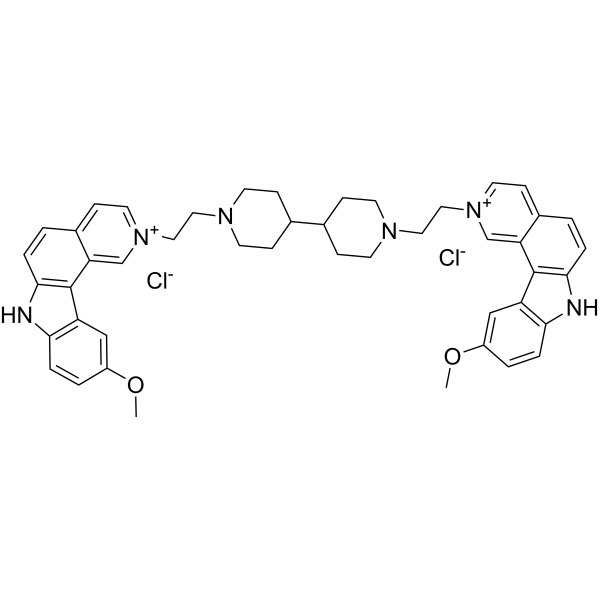
    Ditercalinium chloride is an anticancer agent. Ditercalinium chloride inhibits human DNA polymerase gamma activity. Ditercalinium chloride can deplete mitochondrial DNA in both mouse and human cells. Ditercalinium chloride is a potential ligand against the COMMD10-AP3S1 fusion protein .
    Ditercalinium chloride
  • HY-W015490S

    Isotope-Labeled Compounds DNA/RNA Synthesis NF-κB Monoamine Oxidase TNF Receptor Bacterial Infection Inflammation/Immunology Cancer
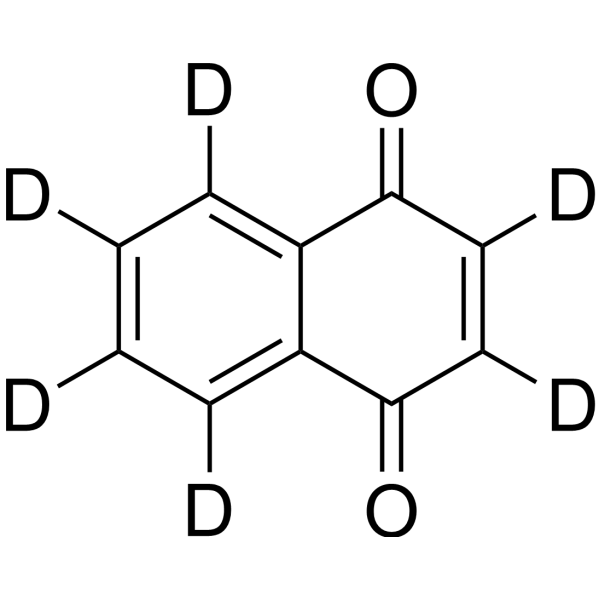
    1,4-Naphthoquinone-d6 is the deuterium labeled 1,4-Naphthoquinone. 1,4-Naphthoquinone is an inhibitor with broad-spectrum inhibitory activity targeting DNA polymerase, NF-κB and monoamine oxidase (MAO-A/B), with antibacterial and anti-biofilm efficacy. 1,4-Naphthoquinone is a competitive inhibitor of MAO-B (Ki=1.4 μM) and a non-competitive inhibitor of MAO-A (Ki=7.7 μM). 1,4-Naphthoquinone inhibits DNA polymerase pol α, β, γ, δ, ε, λ with IC50 ranging from 5.57-128 μM. 1,4-Naphthoquinone inhibits tumor cell proliferation, induces apoptosis and necrosis, and has anti-angiogenic and anti-inflammatory activities by inducing oxidative stress, depleting glutathione (GSH), inhibiting DNA polymerase-mediated DNA synthesis and blocking NF-κB nuclear translocation. 1,4-Naphthoquinone can be used in anti-bacterial , anti-tumor and anti-inflammatory studies, including inhibition of melanoma and colon cancer cell growth and endothelial cell function, as well as LPS-induced inflammation models .
    1,4-Naphthoquinone-d6
  • HY-14913

    SPD754; AVX754

    Nucleoside Antimetabolite/Analog HIV DNA/RNA Synthesis Infection
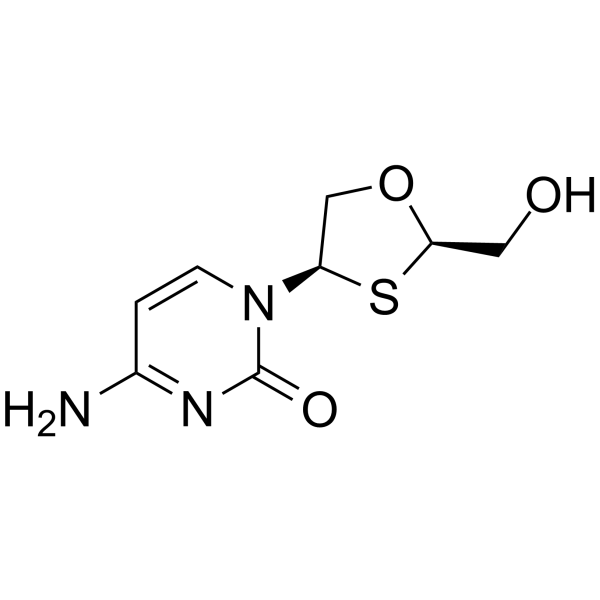
    Apricitabine (SPD754; AVX754), the (-) enantiomer of 2′-deoxy-3′-oxa-4′-thiocytidine (dOTC), is a highly selective and orally active HIV-1 reverse transcriptase (RT) inhibitor (Ki=0.08 μM), as well as inhibits DNA polymerases α, β, and γ with Ki value of 300 μM, 12 μM, and 112.25 μM, respectively . Apricitabine (SPD754; AVX754) shows promising antiretroviral efficacy, good tolerability and a low propensity for resistance selection in antiretroviral-naive HIV infection .
    Apricitabine
  • HY-W015490R

    Reference Standards DNA/RNA Synthesis NF-κB Monoamine Oxidase TNF Receptor Bacterial Infection Inflammation/Immunology Cancer
    1,4-Naphthoquinone is an inhibitor with broad-spectrum inhibitory activity targeting DNA polymerase, NF-κB and monoamine oxidase (MAO-A/B), with antibacterial and anti-biofilm efficacy. 1,4-Naphthoquinone is a competitive inhibitor of MAO-B (Ki=1.4 μM) and a non-competitive inhibitor of MAO-A (Ki=7.7 μM). 1,4-Naphthoquinone inhibits DNA polymerase pol α, β, γ, δ, ε, λ with IC50 ranging from 5.57-128 μM. 1,4-Naphthoquinone inhibits tumor cell proliferation, induces apoptosis and necrosis, and has anti-angiogenic and anti-inflammatory activities by inducing oxidative stress, depleting glutathione (GSH), inhibiting DNA polymerase-mediated DNA synthesis and blocking NF-κB nuclear translocation. 1,4-Naphthoquinone can be used in anti-bacterial , anti-tumor and anti-inflammatory studies, including inhibition of melanoma and colon cancer cell growth and endothelial cell function, as well as LPS-induced inflammation models .
    1,4-Naphthoquinone (Standard)
  • HY-N7821

    Aphidicolin 17-monoacetate

    DNA/RNA Synthesis Cancer
    Aphidicolin 17-acetate is a selective eukaryotic DNA polymerase α inhibitor. Aphidicolin 17-acetate does not inhibit DNA polymerase β and γ. Aphidicolin 17-acetate markedly inhibits the in vivo DNA synthesis of sea urchin embryos and HeLa cells but not RNA and protein syntheses .
    Aphidicolin 17-acetate
  • HY-137694A

    DNA/RNA Synthesis DNA Alkylator/Crosslinker HIV Infection
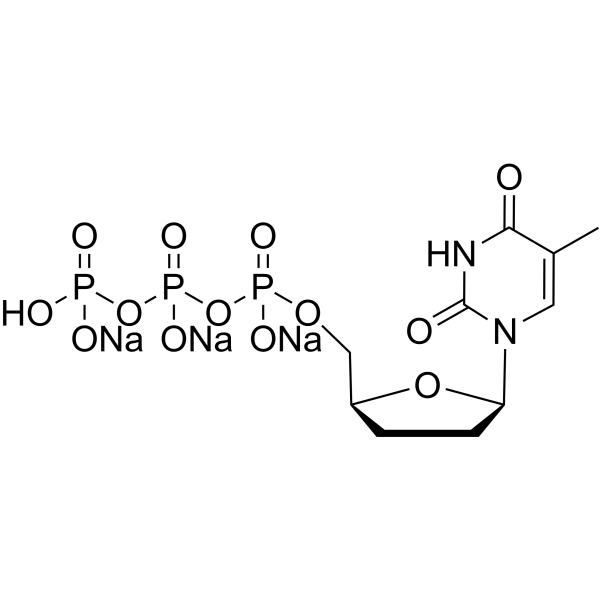
    ddTTP tetrasodium is a DNA polymerase γ inhibitor, with Ki values of 0.05 μM and 0.4 μM against bovine testicular DNA polymerase γ. ddTTP tetrasodium can be incorporated into DNA to cause termination of the extended DNA strand. ddTTP tetrasodium can be used in the research of HIV infection .
    ddTTP tetrasodium
  • HY-181557

    DNA Alkylator/Crosslinker DNA/RNA Synthesis Apoptosis Cancer
    SY-589 is an orally active DNA polymerase Polθ helicase domain inhibitor (IC50=2.29 nM) and DNA damage inducer. SY-589 inhibits the ATPase activity of the Polθ helicase domain and blocks the Polθ-mediated microhomology-mediated end joining (MMEJ) DNA repair pathway (IC50=0.85 nM). SY-589 also induces the accumulation of DNA double-strand breaks by increasing γ-H2AX levels. SY-589 exerts antiproliferative effects on BRCA2-deficient cells and is used in the research of HR-deficient tumors .
    SY-589
  • HY-179413

    DNA/RNA Synthesis Cancer
    Polθ-IN-9 is an orally active Polθ polymerase inhibitor (IC50 = 9.6 nM, Kd = 47.5 nM). Polθ-IN-9 shows remarkable selectivity with no inhibitory activity against other human DNA polymerases, including Pol α, Pol ε, Pol γ, Pol λ, and Pol μ. Polθ-IN-9 exhibits strong antiproliferative activity in DLD1 BRCA2 KO cells (IC50 = 2.9 μM), and high sensitivity to MDA-MB-436 cells (IC50 = 4.9 μM). Polθ-IN-9 increases DNA damage accumulation, induces γH2AX levels, and inhibits tumor growth in combination with Olaparib (HY-10162), in the MDA-MB-436 xenograft model. Polθ-IN-9 can be used for the research of homologous recombination (HR)-deficient cancers such as breast cancer .
    Polθ-IN-9
  • HY-183873

    SARS-CoV Flavivirus Infection
    HLB-0532247 is a cell-permeable phosphoramidate prodrug of 3'-deoxy-3',4'-didehydrocytidine (ddhC). HLB-0532247 increases the intracellular level of the endogenous antiviral nucleotide ddhCTP. HLB-0532247 reduces the titers of Zika virus and West Nile virus in cell cultures. HLB-0532247 can be used in studies related to Zika virus infection, West Nile virus infection, and coronavirus infection .
    HLB-0532247
  • HY-19009B

    CCR Metabolic Disease Inflammation/Immunology Cancer
    Propagermanium is an orally active and selective CCR2 inhibitor. Propagermanium enhances IFN-γ, IL-2, 2',5'-oligoadenylate synthetase, and unspecified cytokine production, and induces mature cytolytic NK cell subsets. Propagermanium reduces HBe antigen and HBV DNA polymerase levels, promotes HBV clearance and lowers serum ALT. Propagermanium downregulates STAT1, inhibits pro-inflammatory microglia polarization, pro-inflammatory cytokine release, and monocyte/macrophage infiltration. Propagermanium can be used for the research of chronic hepatitis B, atherosclerosis, breast cancer, non-alcoholic steatohepatitis, insulin resistance, refractory gastric cancer, multiple myeloma, type 2 diabetes .
    Propagermanium

Inquiry Online

Your information is safe with us. * Required Fields.

Salutation


Country or Region *

Applicant Name *


Organization Name *

Department *


Email Address *


Product Name *

Cat. No.


Requested quantity *

Phone Number *


Remarks

Inquiry Online

Inquiry Information

Product Name:
Cat. No.:
Quantity:
MCE Japan Authorized Agent:

