

1. Search Result
Search Result
Pathways Recommended: MAPK/ERK Pathway
Results for "

Erk phosphorylation

" in MedChemExpress (MCE) Product Catalog:

393

Inhibitors & Agonists

4

Biochemical Assay Reagents

31

Peptides

6

Inhibitory Antibodies

86

Natural
Products

13

Isotope-Labeled Compounds

4

Click Chemistry

2

Oligonucleotides

Cat. No. Product Name Target Research Areas Chemical Structure
  • HY-50706
    Selumetinib
    85+ Cited Publications

    AZD6244; ARRY-142886

    MEK Apoptosis Neurological Disease Metabolic Disease Inflammation/Immunology Cancer
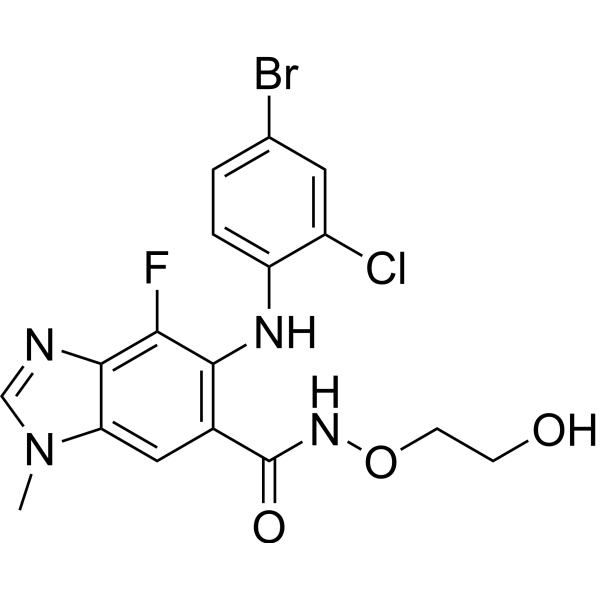
    Selumetinib (AZD6244) is selective, non-ATP-competitive oral MEK1/2 inhibitor, with an IC50 of 14 nM for MEK1. Selumetinib (AZD6244) inhibits ERK1/2 phosphorylation. Selumetinib can penetrate the blood brain barrier (BBB) .
    Selumetinib
  • HY-17600
    Acalabrutinib
    30+ Cited Publications

    Calquence; ACP-196

    Btk Inflammation/Immunology Cancer
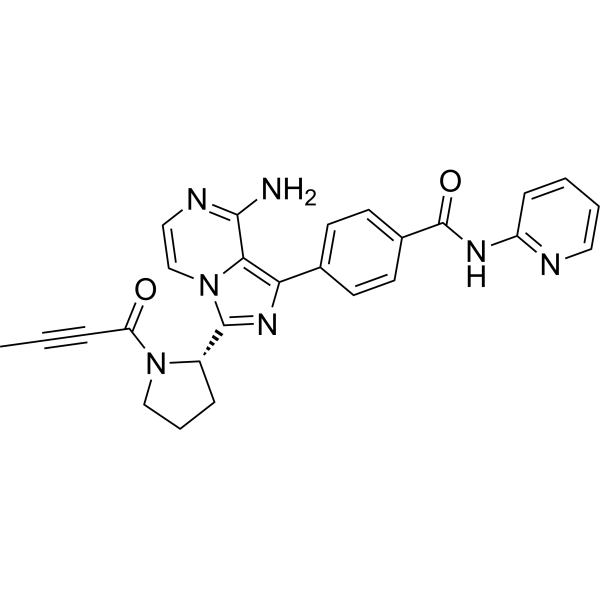
    Acalabrutinib (ACP-196) is an orally active, irreversible, and highly selective second-generation BTK inhibitor. Acalabrutinib binds covalently to Cys481 in the ATP-binding pocket of BTK. Acalabrutinib demonstrates potent on-target effects and efficacy in mouse models of chronic lymphocytic leukemia (CLL). Acalabrutinib can be used for CLL research . Acalabrutinib is a click chemistry reagent, itcontains an Alkyne group and can undergo copper-catalyzed azide-alkyne cycloaddition (CuAAc) with molecules containing Azide groups.
    Acalabrutinib
  • HY-13241
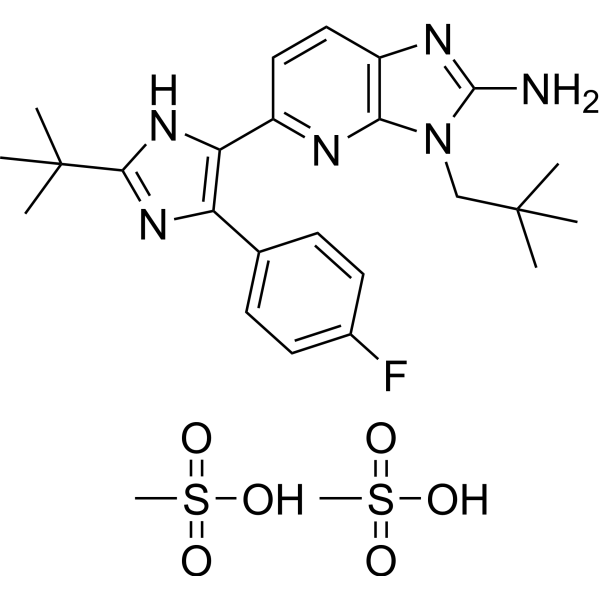
    Ralimetinib dimesylate
    10+ Cited Publications

    LY2228820 dimesylate

    p38 MAPK Autophagy Apoptosis Inflammation/Immunology Cancer
    Ralimetinib dimesylate (LY2228820 dimesylate) is a selective, ATP-competitive inhibitor of p38 MAPK α/β with IC50s of 5.3 and 3.2 nM, respectively. Ralimetinib (LY2228820) selectively inhibits phosphorylation of MK2 (Thr334), with no effect on phosphorylation of p38a MAPK, JNK, ERK1/2, c-Jun, ATF2, or c-Myc.
    Ralimetinib dimesylate
  • HY-126477
    NNK
    2 Publications Verification

    Endogenous Metabolite Cancer
    NNK is a nicotine-nitrosated derivative. NNK simultaneously stimulates Bcl2 phosphorylation exclusively at Ser 70 and c-Myc at Thr 58 and Ser 62 through activation of both ERK1/2 and PKCα . NNK induces survival and proliferation of human lung cancer cells. NNK can be used for lung cancer mice model structure .
    NNK
  • HY-B0188A
    Mianserin hydrochloride
    1 Publications Verification

    Org GB 94

    Histamine Receptor Opioid Receptor ERK p38 MAPK Neurological Disease Metabolic Disease
    Mianserin hydrochloride (Org GB 94) is an orally active H1 receptor antagonist. Mianserin hydrochloride can activate κ-opioid receptor and octopamine receptor. Mianserin hydrochloride increases ERK1/2 and CREB phosphorylation, and antagonizes full κ-opioid agonist and Dynorphin A (HY-P1333)-induced MAPK phosphorylation. Mianserin hydrochloride modulates social and exploratory behaviour, raises electroconvulsive thresholds. Mianserin hydrochloride can be used for the research of neurological disease, such as depression and epilepsy .
    Mianserin hydrochloride
  • HY-100403
    Ro 67-7476
    20+ Cited Publications

    mGluR Cancer
    Ro 67-7476 is a potent positive allosteric modulator of mGluR1 and potentiates glutamate-induced calcium release in HEK293 cells expressing rat mGluR1a with an EC50 of 60.1 nM . Ro 67-7476 is a potent P-ERK1/2 agonist and activates ERK1/2 phosphorylation in the absence of exogenously added glutamate (EC50=163.3 nM) .
    Ro 67-7476
  • HY-107818
    4-Hydroxychalcone
    2 Publications Verification

    ERK Akt Cardiovascular Disease Inflammation/Immunology Endocrinology
    4-Hydroxychalcone is an orally active flavonoid precursor. 4-Hydroxychalcone inhibits VEGF- and bFGF-induced phosphorylation of ERK1/2 and Akt. 4-Hydroxychalcone suppresses resistant hypertension by alleviating hyperaldosteronism, inflammation and renal injury in cryptochrome gene knockout mice. 4-Hydroxychalcone possesses anti-angiogenic activity .\n

    4-Hydroxychalcone
  • HY-14985
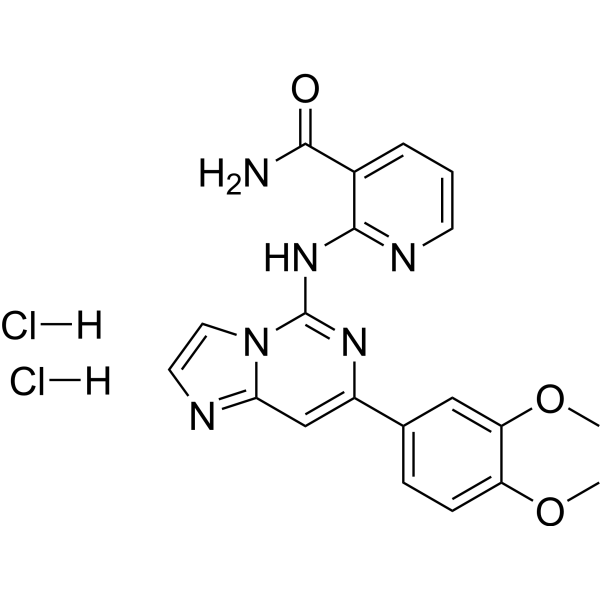
    BAY 61-3606 dihydrochloride
    5+ Cited Publications

    Syk Apoptosis Inflammation/Immunology Cancer
    BAY 61-3606 dihydrochloride is an orally available, ATP-competitive, reversible and highly selective Syk inhibitor with a Ki of 7.5 nM an IC50 of 10 nM . BAY 61-3606 dihydrochloride reduces ERK1/2 and Akt phosphorylation in neuroblastoma cell . BAY 61-3606 dihydrochloride induces a large decrease of Syk phosphorylation in K-rn cell lysates . Bay 61-3606 dihydrochloride sensitizes TRAIL-induced apoptosis by downregulating Mcl-1 in breast cancer cells .
    BAY 61-3606 dihydrochloride
  • HY-P1342
    Prosaptide Tx14(A)
    1 Publications Verification

    Neurological Disease
    Prosaptide Tx14(A), a prosaposin-derived peptide, is a potent GPR37L1 and GPR37 agonist with EC50s of 5 and 7 nM, respectively. Prosaptide Tx14(A) increases both ERK1 and ERK2 phosphorylation in Schwann cells .
    Prosaptide Tx14(A)
  • HY-50706A
    Selumetinib sulfate
    85+ Cited Publications

    AZD6244 sulfate; ARRY-142886 sulfate

    MEK Apoptosis Neurological Disease Metabolic Disease Inflammation/Immunology Cancer
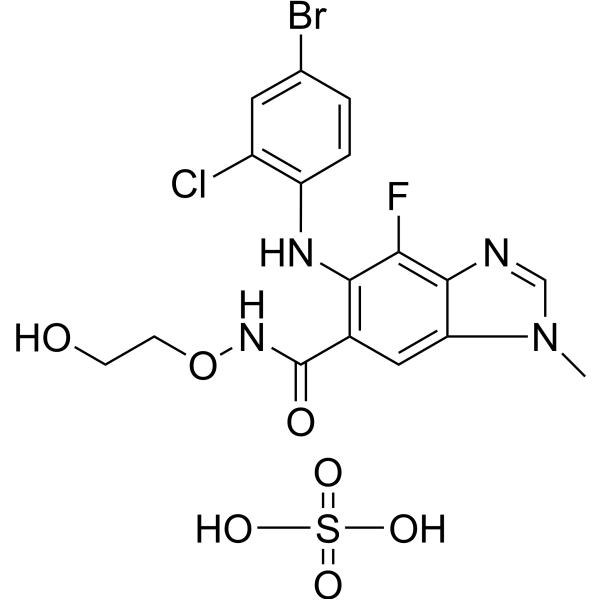
    Selumetinib (AZD6244) sulfate is selective, non-ATP-competitive oral MEK1/2 inhibitor, with an IC50 of 14 nM for MEK1. Selumetinib (AZD6244) sulfate inhibits ERK1/2 phosphorylation. Selumetinib sulfate can penetrate the blood brain barrier (BBB) .
    Selumetinib sulfate
  • HY-16697
    CID 16020046
    2 Publications Verification

    GPR55 Cancer
    CID 16020046 is a potent and selective GPR55 antagonist and inhibits GPR55 constitutive activity with an IC50 of 0.15 μM. CID 16020046 inhibits GPR55-mediated Ca 2+ signaling and GPR55-mediated ERK1/2 phosphorylation. CID 16020046 reduces wound healing in endothelial cells and is involved in the regulation of platelet function .
    CID 16020046
  • HY-N0774
    Isofraxidin
    4 Publications Verification

    ERK COX MMP Toll-like Receptor (TLR) Inflammation/Immunology
    Isofraxidin, a coumarin component from Acanthopanax senticosus, inhibits MMP-7 expression and cell invasion of human hepatoma cells. Isofraxidin inhibits the phosphorylation of ERK1/2 in hepatoma cells . Isofraxidin attenuates the expression of iNOS and COX-2, Isofraxidinalso inhibits TLR4/myeloid differentiation protein-2 (MD-2) complex formation .
    Isofraxidin
  • HY-114436
    MRTX-1257
    5 Publications Verification

    Ras Cancer
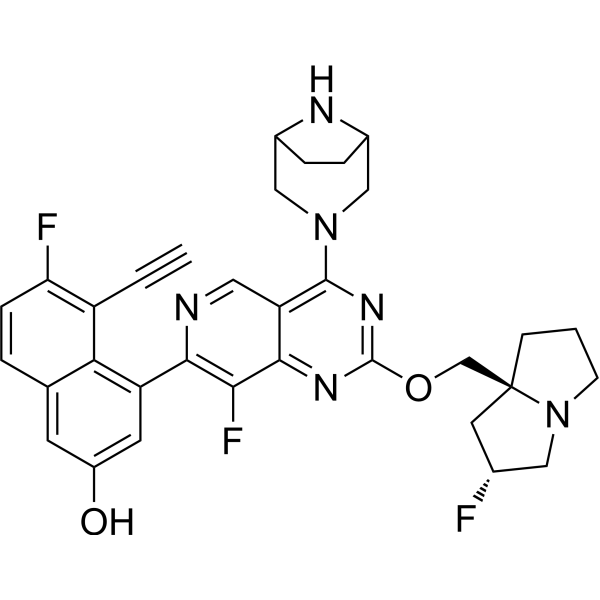
    MRTX-1257 is a selective, irreversible, covalent and orally active KRAS G12C inhibitor, with an IC50 of 900 pM for KRAS dependent ERK phosphorylation in H358 cells .
    MRTX-1257
  • HY-108330
    AG126
    3 Publications Verification

    Tyrphostin AG126

    ERK Mitosis Inflammation/Immunology
    AG126 is a tyrosine kinase inhibitor, can inhibit the phosphorylation of ERK1 and ERK2 at 25-50 μM. AG126 can be used in meiosis, mitosis, and postmitotic research .
    AG126
  • HY-B0188
    Mianserin
    1 Publications Verification

    Mianserine

    Histamine Receptor Opioid Receptor ERK p38 MAPK Neurological Disease
    Mianserin (Mianserine) is an orally active H1 receptor antagonist. Mianserin can activate κ-opioid receptor and octopamine receptor. Mianserin increases ERK1/2 and CREB phosphorylation, and antagonizes full κ-opioid agonist and Dynorphin A (HY-P1333)-induced MAPK phosphorylation. Mianserin modulates social and exploratory behaviour, raises electroconvulsive thresholds. Mianserin can be used for the research of neurological disease, such as depression and epilepsy .
    Mianserin
  • HY-110318
    VUF11207 fumarate
    3 Publications Verification

    CXCR Inflammation/Immunology Cancer
    VUF11207 fumarate is a CXCR7 agonist that binds specifically to CXCR7. VUF11207 fumarate reduces CXCL12-mediated osteoclastogenesis and bone resorption by inhibiting ERK phosphorylation .
    VUF11207 fumarate
  • HY-122246

    GPR55 PKC ERK Arrestin Metabolic Disease
    ML192 is a selective ligand antagonist of GPR55. ML192 inhibits the β-arrestin trafficking, ERK1/2 phosphorylation and PKCβII translocation .
    ML192
  • HY-12960

    FLT3-​IN-​1

    FLT3 c-Kit Apoptosis Cancer
    SKLB4771 is a potent and selective Flt3 inhibitor with an IC50 value of 10 nM. SKLB4771 downregulates the phosphorylation of FLT3/STAT5/ERK, blocks cell proliferation, and induces apoptosis in tumor tissue .
    SKLB4771
  • HY-147301A

    AP1189 acetate

    Melanocortin Receptor Metabolic Disease Inflammation/Immunology
    Resomelagon (AP1189) acetate is a potent, orally active melanocortin receptor (MR) agonist about MC1 and MC3. Resomelagon acetate induces ERK1/2 phosphorylation and Ca 2+ mobilization. Resomelagon acetate has anti-inflammatory activity. Resomelagon acetate can be used for obesity and chronic inflammation research .
    Resomelagon acetate
  • HY-124404A

    ERK DNA/RNA Synthesis p38 MAPK Cancer
    12(S)-HETE is the 12-lipoxygenase metabolite of arachidonic acid and has a mitogenic effect on cancer cell proliferation. 12(S)-HETE induces tyrosine phosphorylation of cellular proteins, promotes ERK and P38 MAPK phosphorylation, increases DNA synthesis, and stimulates the proliferation of pancreatic cancer cells .
    12(S)-HETE
  • HY-N2484
    Methylnissolin
    2 Publications Verification

    Astrapterocarpan

    PDGFR ERK Cardiovascular Disease Neurological Disease Metabolic Disease Inflammation/Immunology
    Methylnissolin (Astrapterocarpan) is an osteoclast inhibitor with anti-inflammatory, neuroprotective and antioxidant activities. Methylnissolin downregulates the activation of the MAPK and PI3K/AKT pathways, inhibits the phosphorylation of MAPK1 and AKT1, and blocks PDGF-BB-induced phosphorylation of ERK1/2. Methylnissolin reduces the expression and secretion of proinflammatory mediators, decreases intracellular ROS levels, upregulates antioxidant enzymes, and downregulates osteoclastogenesis markers. Methylnissolin is applicable to research related to ischemic stroke, osteoporosis, cardiovascular diseases, skin aging, etc.
    Methylnissolin
  • HY-13905
    Flumatinib mesylate
    3 Publications Verification

    HHGV678 mesylate

    Bcr-Abl c-Kit PDGFR Cancer
    Flumatinib (HHGV678) mesylate is an orally active and selective inhibitor of Bcr-Abl. Flumatinib mesylate inhibits c-Abl, PDGFRβ and c-Kit with IC50 values of 1.2, 307.6 and 665.5 nM, respectively. Flumatinib mesylate inhibits Bcr-Abl autophosphorylation and Stat5 and Erk1/2 phosphorylation. Flumatinib mesylate inhibits tumor growth in chronic myelogenous leukemia model .
    Flumatinib mesylate
  • HY-P99183

    EMD 525797; DI17E6

    Integrin Cancer
    Abituzumab (DI17E6) is a humanised anti-integrin αV monoclonal antibody (IgG2 type). Abituzumab effectively reduces the phosphorylation of FAK, Akt and ERK. Abituzumab can be used in cancer research, particularly in prostate cancer .
    Abituzumab
  • HY-150700

    ERK Metabolic Disease
    RLX-33 is a potent, selective and blood-brain barrier (BBB) penetrant relaxin family peptide 3 (RXFP3) antagonist, also blocks relaxin-3-induced ERK1/2 phosphorylation, with IC50 values of 2.36 μM for RXFP3, 7.82 and 13.86 μM for ERK1 and ERK2 phosphorylation, respectively. RLX-33 can block the stimulation of food intake induced by the RXFP3-selective agonist R3/I5 in rats. RLX-33 can be used for the research of metabolic syndrome .
    RLX-33
  • HY-147301

    AP1189

    Melanocortin Receptor Metabolic Disease Inflammation/Immunology
    Resomelagon (AP1189) is a potent, orally active melanocortin receptor (MR) agonist about MC1 and MC3. Resomelagon induces ERK1/2 phosphorylation and Ca 2+ mobilization. Resomelagon has anti-inflammatory activity. Resomelagon can be used for obesity and chronic inflammation research .
    Resomelagon
  • HY-N0363
    (+)-Columbianetin
    2 Publications Verification

    (S)-Columbianetin

    ERK JNK Collagen TGF-beta/Smad p38 MAPK Reactive Oxygen Species (ROS) Others
    (+)-Columbianetin ((S)-Columbianetin) acts as an inhibitor of JNK/ERK. (+)-Columbianetin inhibits UVA-induced phosphorylation of JNK and ERK, reduces the production of MMP-1, reverses UVA-induced Collagen (HY-NP003) degradation, and alleviates UVA-mediated inhibition of Smad2/3 phosphorylation and translocation. (+)-Columbianetin regulates the AP-1 and ASK1-MAPK signaling pathways, inhibits the production of ROS and blocks sub-G1 cell cycle arrest. (+)-Columbianetin is applicable to research related to skin aging .
    (+)-Columbianetin
  • HY-P99768

    TTAC-0001; Tanibirumab

    VEGFR Cancer
    Olinvacimab (TTAC-0001) is a fully human anti-VEGFR2 monoclonal antibody. Olinvacimab inhibits VEGF binds to KDR with a Kd value of 0.23 nM. Olinvacimab has antiangiogenic activity. Olinvacimab can be used for the research of recurrent glioblastoma and breast cancer .
    Olinvacimab
  • HY-111083

    CID23612552

    GPR55 Others
    ML-191 is an antagonist of GPR55. It inhibits GPR55 signaling induced by lysophosphatidylinositol (EC50=1.076 µM in U2OS cells overexpressing GPR55). ML-191 inhibits LPI-induced phosphorylation of ERK1/2 (IC50=328 nM) and receptor-dependent translocation of PKCβII when used at a concentration of 30 µM .
    ML191
  • HY-124097

    Insulin Receptor Metabolic Disease
    HNMPA-(AM)3 is a cell-permeable and selective insulin receptor tyrosine kinase inhibitor analog of HNMPA. HNMPA-(AM)3 greatly inhibits the ability of prothoracicotropic hormone (PTTH) to activate ERK phosphorylation and stimulate ecdysteroidogenesis. HNMPA-(AM)3 is also effective in inhibiting ecdysteroid production (IC50=14.2 μM) and insulin receptor activity (IC50 is 14.2 μM and 200 μM in mosquitoes and mammals, respectively) .
    HNMPA-(AM)3
  • HY-124740

    Melanocortin Receptor Cancer
    ML00253764 is a selective melanocortin receptor 4 (MC4R) antagonist, can induce apoptosis by inhibiting ERK1/2 and Akt phosphorylation, and has anticancer activity .
    ML00253764
  • HY-76474A
    BAY 61-3606 hydrochloride
    4 Publications Verification

    Apoptosis Syk Inflammation/Immunology Cancer
    BAY 61-3606 hydrochloride is an orally available, ATP-competitive, reversible and highly selective Syk inhibitor with a Ki of 7.5 nM and an IC50 of 10 nM . BAY 61-3606 hydrochloride reduces ERK1/2 and Akt phosphorylation in neuroblastoma cell. BAY 61-3606 hydrochloride induces a large decrease of Syk phosphorylation in K-rn cell lysates. BAY 61-3606 hydrochloride sensitizes TRAIL-induced apoptosis by downregulating Mcl-1 in breast cancer cells.
    BAY 61-3606 hydrochloride
  • HY-76474

    Syk Apoptosis Inflammation/Immunology Cancer
    BAY 61-3606 is an orally available, ATP-competitive, reversible and highly selective Syk inhibitor with a Ki of 7.5 nM and an IC50 of 10 nM . BAY 61-3606 reduces ERK1/2 and Akt phosphorylation in neuroblastoma cell . BAY 61-3606 induces a large decrease of Syk phosphorylation in K-rn cell lysates . Bay 61-3606 sensitizes TRAIL-induced apoptosis by downregulating Mcl-1 in breast cancer cells .
    BAY 61-3606
  • HY-17600S

    ACP-196-d4

    Btk Cancer
    Acalabrutinib-d4 (ACP-196-d4) is a deuterium labeled Acalabrutinib. Acalabrutinib (ACP-196) is an orally active, irreversible, and highly selective second-generation BTK inhibitor . Acalabrutinib-d4 is a click chemistry reagent, it contains an Alkyne group and can undergo copper-catalyzed azide-alkyne cycloaddition (CuAAc) with molecules containing Azide groups.
    Acalabrutinib-d4
  • HY-155417

    Orphan GPCR ERK Neurological Disease
    GPR34 receptor antagonist 3 (Compound 5e) is a class of GRP34 antagonists, IC50 is 0.680 μM. GPR34 receptor antagonist 3 inhibited ERK1/2 phosphorylation induced by lysophosphatidylserine in a dose-dependent way without obvious cytotoxicity. GPR34 receptor antagonist 3 shows antisensory activity in mouse neuropathic pain model .
    GPR34 receptor antagonist 3
  • HY-P0178

    Integrin Inflammation/Immunology
    LXW7, a cyclic peptide containing Arg-Gly-Asp (RGD), is an integrin αvβ3 inhibitor. LXW7 has a high binding affinity to αvβ3 integrin with an IC50 of 0.68 μM. LXW7 increases phosphorylation of VEGFR-2 and activation of ERK1/2. Anti-inflammatory effect .
    LXW7
  • HY-147259

    c-Met/HGFR Cancer
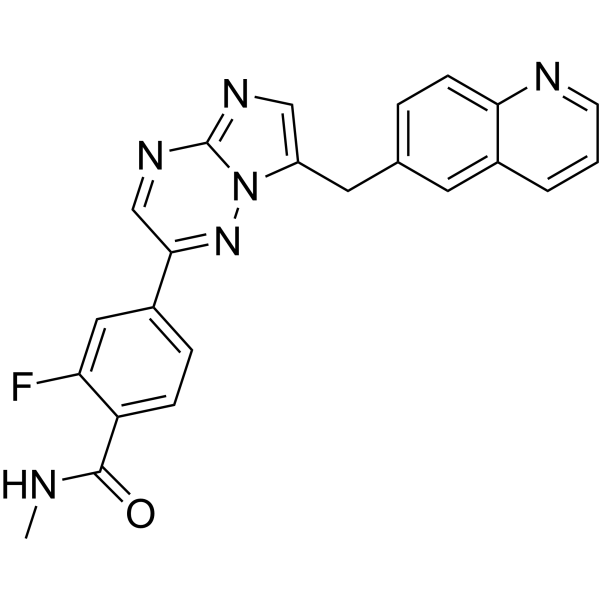
    Dalmelitinib is an orally active selective c-Met kinase inhibitor (IC50: 2.9 nM) that binds to the ATP-binding region of c-Met. Dalmelitinib induces the phosphorylation of MET, partially or completely inhibits the phosphorylation of AKT and ERK. Dalmelitinib potently inhibits cancer cell (c-Met oncogene amplification) proliferation, and is used for the research of cancers like human non-small cell lung cancer (NSCLC) .
    Dalmelitinib
  • HY-N1987
    Cucurbitacin IIb
    2 Publications Verification

    Apoptosis Inflammation/Immunology
    Cucurbitacin IIb is an active component isolated from Hemsleya amabilis, induces apoptosis with anti-inflammatory activity. Cucurbitacin IIb inhibits phosphorylation of STAT3, JNK and Erk1/2, enhances the phosphorylation of IκB and NF-κB (p65), blocks nuclear translocation of NF-κB (p65) and decreases mRNA levels of IκBα and TNF-α .
    Cucurbitacin IIb
  • HY-153445
    Polfurmetinib
    1 Publications Verification

    MEK-IN-6

    ERK MEK Cancer
    Polfurmetinib (MEK-IN-6) (Example 69) is a MEK inhibitor. MEK-IN-6 inhibits ERK1/2 (Thr202/Tyr204) phosphorylation in A375 cells (IC50: 2 nM). Polfurmetinib can be used for research of cancer .
    Polfurmetinib
  • HY-N2270
    Chicanine
    1 Publications Verification

    p38 MAPK ERK IKK Inflammation/Immunology
    Chicanine is a lignan compound of Schisandra chinesis, inhibits LPS-induced phosphorylation of p38 MAPK, ERK 1/2 and IκB-α, with anti-inflammatory activity .
    Chicanine
  • HY-113599

    EGFR ERK Akt Others
    Isoprocurcumenol is a guaiane type sesquiterpene, that can be isolated from Curcuma comosa. Isoprocurcumenol can activate EGFR signaling. Isoprocurcumenol increases the phosphorylation of ERK and AKT. Isoprocurcumenol promotes the proliferation of keratinocytes .
    Isoprocurcumenol
  • HY-P3751

    Bradykinin Receptor ERK Cardiovascular Disease Endocrinology
    [Tyr8] Bradykinin is a B2 kinin receptor agonist. [Tyr8] Bradykinin also stimulates ERK1/2 phosphorylation. [Tyr8] Bradykinin can be used as an internal standard .
    [Tyr8] Bradykinin
  • HY-113592
    ERK-IN-4
    1 Publications Verification

    ERK Cancer
    ERK-IN-4 is an ERK inhibitor binds preferentially to ERK2 with a Kd of 5 μM. ERK-IN-4 specificity inhibits ERK Rsk-1 and Elk-1 phosphorylation. ERK-IN-4 has little effect on ERK protein phosphorylation by its upstream activator MEK1/2 .
    ERK-IN-4
  • HY-134454

    Prolyl Endopeptidase (PREP) Parasite Infection
    Z-Pro-Pro-CHO is a potent inhibitor of prolyl oligopeptidase (POP), with extremely high affinity for human prolyl oligopeptidase (HsPOP) (IC50=0.012 μM), and it also effectively inhibits the activity of Schistosoma mansoni prolyl oligopeptidase (SmPOP) (IC50=0.16 μM). Z-Pro-Pro-CHO does not block the phosphorylation of ERK or the production of TNF-α or IFN-γ in immune cells from presensitized mice, nor does it induce harmful phenotypes in cultured Schistosoma mansoni schistosomula. Z-Pro-Pro-CHO only partially inhibits epithelial cell wound healing at extremely high concentrations. Z-Pro-Pro-CHO finds wide application in studies related to schistosomiasis .
    Z-Pro-Pro-CHO
  • HY-145491

    ERK NF-κB CCR Inflammation/Immunology
    Resolvin D5 is an anti-inflammatory and analgesic agent produced in M2 macrophages. Resolvin D5 alleviates Paclitaxel (HY-B0015)-induced mechanical allodynia and inflammatory pain by activating the GPR32 receptor, with gender specificity (effective only in male mice) and independence from TRPV1 or TRPA1 channels. Resolvin D5 attenuates LPS-induced ERK phosphorylation and NF-κB nuclear translocation, downregulates proinflammatory mediators such as IL-6 and CCL5, inhibits Th17 cell differentiation and osteoclastogenesis, promotes regulatory T cell differentiation, and shows no cytotoxicity to human monocytes. The level of Resolvin D5 is elevated in arthritic SKG mice, but Resolvin D5 has no effect on dendritic cell differentiation or M1 macrophage polarization, nor does it prevent ZyA-induced arthritis progression. Resolvin D5 is suitable for research related to chemotherapy-induced peripheral neuropathy, inflammatory pain and rheumatoid arthritis .
    Resolvin D5
  • HY-P0178A

    Integrin Inflammation/Immunology
    LXW7 TFA, a cyclic peptide containing Arg-Gly-Asp (RGD), is an integrin αvβ3 inhibitor. LXW7 has a high binding affinity to αvβ3 integrin with an IC50 of 0.68 μM. LXW7 TFA increases phosphorylation of VEGFR-2 and activation of ERK1/2. Anti-inflammatory effect .
    LXW7 TFA
  • HY-134811

    Ras PERK Cancer
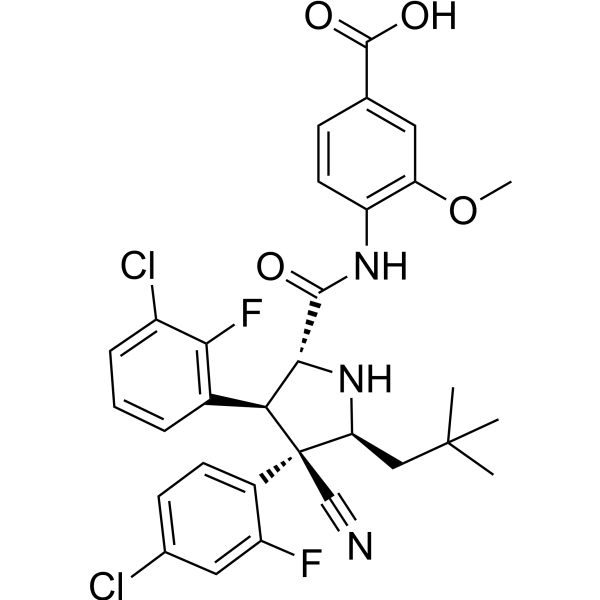
    KRAS G12D inhibitor 1 is a KRAS G12D inhibitor with an IC50 value of 0.4 nM. KRAS G12D inhibitor 1 inhibits KRas G12D-mediated ERK phosphorylation. KRAS G12D inhibitor 1 can be used for cancer research .
    KRAS G12D inhibitor 1
  • HY-114436S

    Isotope-Labeled Compounds Cancer
    MRTX-1257-d6 is the deuterium labeled MRTX-1257 (HY-114436). MRTX-1257 is a selective, irreversible, covalent and orally active KRAS G12C inhibitor, with an IC50 of 900 pM for KRAS dependent ERK phosphorylation in H358 cells .
    MRTX-1257-d6
  • HY-B0188AR

    Org GB 94 (Standard)

    Reference Standards Histamine Receptor Opioid Receptor ERK p38 MAPK Neurological Disease Metabolic Disease
    Mianserin hydrochloride (Org GB 94) (Standard) is the analytical standard of Mianserin hydrochloride. This product is intended for research and analytical applications. Mianserin hydrochloride is an orally active H1 receptor antagonist. Mianserin hydrochloride can activate κ-opioid receptor and octopamine receptor. Mianserin hydrochloride increases ERK1/2 and CREB phosphorylation, and antagonizes full κ-opioid agonist and Dynorphin A (HY-P1333)-induced MAPK phosphorylation. Mianserin hydrochloride modulates social and exploratory behaviour, raises electroconvulsive thresholds. Mianserin hydrochloride can be used for the research of neurological disease, such as depression and epilepsy .
    Mianserin hydrochloride (Standard)
  • HY-B0188S

    Mianserine-d3

    Histamine Receptor Isotope-Labeled Compounds Opioid Receptor ERK p38 MAPK Neurological Disease
    Mianserin-d3 is the deuterium labeled Mianserin (HY-B0188). Mianserin (Mianserine) is an orally active H1 receptor antagonist. Mianserin can activate κ-opioid receptor and octopamine receptor. Mianserin increases ERK1/2 and CREB phosphorylation, and antagonizes full κ-opioid agonist and Dynorphin A (HY-P1333)-induced MAPK phosphorylation. Mianserin modulates social and exploratory behaviour, raises electroconvulsive thresholds. Mianserin can be used for the research of neurological disease, such as depression and epilepsy .
    Mianserin-d3
  • HY-N10047

    NF-κB PPAR Cardiovascular Disease
    7,8-Didehydrocimigenol is an active triterpenoid that can be isolated from Cimicifugae rhizoma. 7,8-Didehydrocimigenol inhibits TNF-α-induced VCAM-1 expression, inhibits NF-kB activity and phosphorylation of ERK1/2 and Akt, increases PPAR-γ expression. 7,8-Didehydrocimigenol can be used for the research of cardiovascular disorders such as atherosclerosis .
    7,8-Didehydrocimigenol

Inquiry Online

Your information is safe with us. * Required Fields.

Salutation


Country or Region *

Applicant Name *


Organization Name *

Department *


Email Address *


Product Name *

Cat. No.


Requested quantity *

Phone Number *


Remarks

Inquiry Online

Inquiry Information

Product Name:
Cat. No.:
Quantity:
MCE Japan Authorized Agent:

