
1. Search Result
Search Result
Results for "

GOT

" in MedChemExpress (MCE) Product Catalog:

24

Inhibitors & Agonists

1

Biochemical Assay Reagents

5

Natural
Products

2

Recombinant Proteins

2

Isotope-Labeled Compounds

4

Antibodies

6

Oligonucleotides

Cat. No. Product Name Target Research Areas Chemical Structure
  • HY-B0091
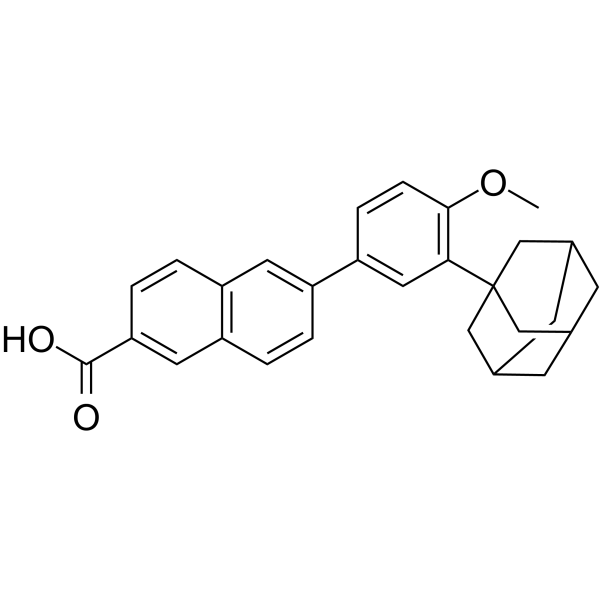
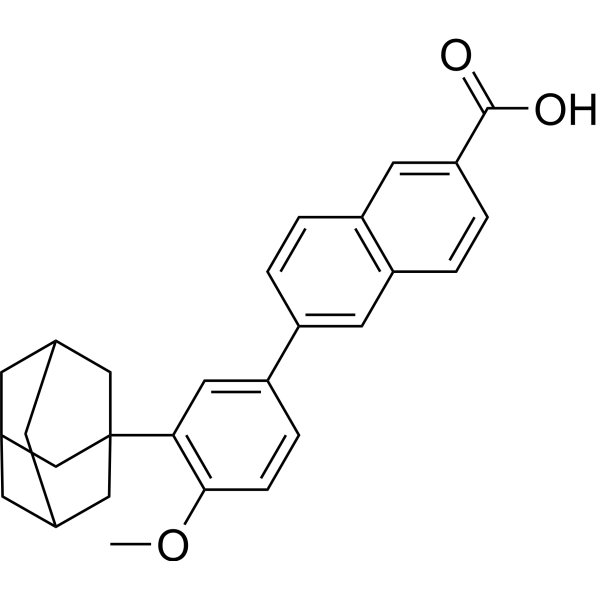
    Adapalene
    5 Publications Verification

    CD271

    RAR/RXR Autophagy Apoptosis Neurological Disease Inflammation/Immunology Cancer
    Adapalene (CD271), a third-generation synthetic retinoid, is widely used for the research of acne. Adapalene is a potent RAR agonist, with AC50s of 2.3 nM, 9.3 nM, and 22 nM for RARβ, RARγ, RARα, respectively. Adapalene also inhibits the enzymatic activity of GOT1 in a non-competitive manner. Adapalene exhibits anti-tumor activity .
    Adapalene
  • HY-122723
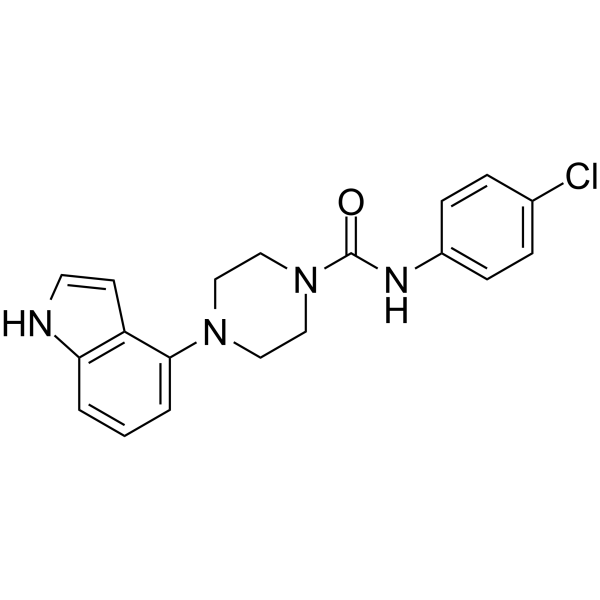
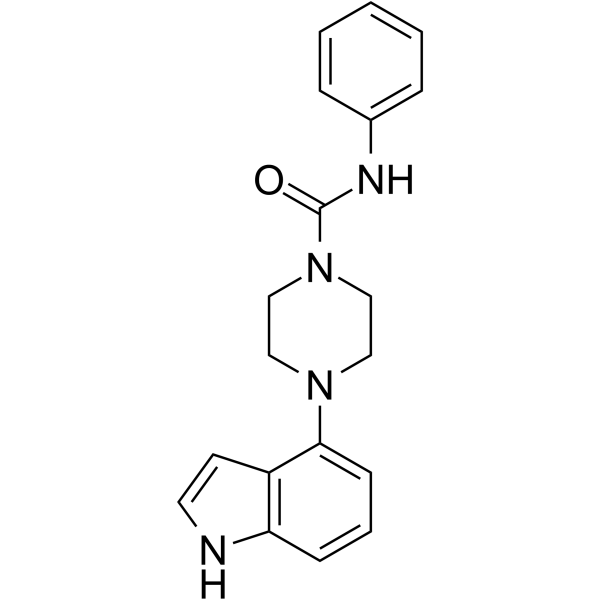
    GOT1 inhibitor-1
    2 Publications Verification

    Reactive Oxygen Species (ROS) Cancer
    GOT1 inhibitor-1 (compound 2c), a tryptamine-based derivative, acts as a novel, potent and non-covalent inhibitor of glutamate oxaloacetate transaminase 1 (GOT1) with an IC50 of 8.2 uM. GOT1 plays an important role in energy metabolism and Reactive Oxygen Species (ROS) balance. GOT1 inhibitor-1 can be used for the research of pancreatic ductal adenocarcinoma (PDAC) .
    GOT1 inhibitor-1
  • HY-P3016A

    EC 2.6.1.1, porcine heart; GOT, porcine heart; AST, porcine heart

    Aminotransferases (Transaminases) Cardiovascular Disease
    Aspartate aminotransferase (EC 2.6.1.1), porcine heart is a metabolic regulator with the highest activity in the heart, liver and skeletal muscle. Aspartate aminotransferase, porcine heart comprises two isozymes: the cytoplasmic form (AST1) and the mitochondrial form (AST2). By catalyzing reversible transamination reactions between oxaloacetate, L-glutamate and other substances, it is deeply involved in key physiological processes such as amino acid metabolism, the tricarboxylic acid cycle and neurotransmitter synthesis. Aspartate aminotransferase, porcine heart also provides substrate support for the synthesis of urea and purines/pyrimidines. Aspartate aminotransferase, porcine heart is a serum marker reflecting cardiac and hepatic injury, and its abnormal levels are also closely associated with myocardial infarction, cardiovascular diseases and various cancers .
    Aspartate aminotransferase, porcine heart
  • HY-P3016

    EC 2.6.1.1; GOT; AST

    Aminotransferases (Transaminases) Cardiovascular Disease
    Aspartate aminotransferase (EC 2.6.1.1), Genetically engineered bacteria is a metabolic regulator with the highest activity in the heart, liver and skeletal muscle. Aspartate aminotransferase, Genetically engineered bacteria comprises two isozymes: the cytoplasmic form (AST1) and the mitochondrial form (AST2). By catalyzing reversible transamination reactions between oxaloacetate, L-glutamate and other substances, it is deeply involved in key physiological processes such as amino acid metabolism, the tricarboxylic acid cycle and neurotransmitter synthesis. Aspartate aminotransferase, Genetically engineered bacteria also provides substrate support for the synthesis of urea and purines/pyrimidines. Aspartate aminotransferase, Genetically engineered bacteria is a serum marker reflecting cardiac and hepatic injury, and its abnormal levels are also closely associated with myocardial infarction, cardiovascular diseases and various cancers .
    Aspartate aminotransferase, Genetically engineered bacteria
  • HY-N3307
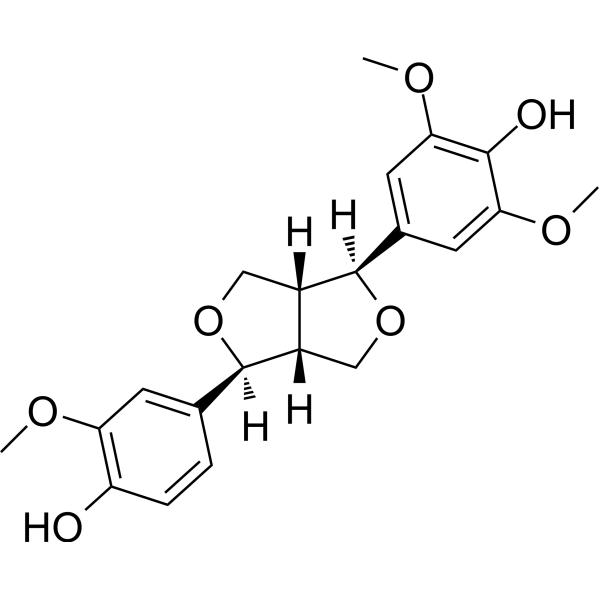
    (+)-Medioresinol
    1 Publications Verification

    Bacterial Fungal Reactive Oxygen Species (ROS) Apoptosis MMP Interleukin Related PI3K Akt mTOR PPAR PGC-1α Pyroptosis Infection Neurological Disease Inflammation/Immunology
    (+)-Medioresinol is a furofuran-type lignan with antifungal and antibacterial properties. (+)-Medioresinol synergizes with antibiotics to exert antimicrobial and antibiofilm effects. (+)-Medioresinol induces intracellular ROS accumulation and mitochondrial-mediated apoptosis in Candida albicans. (+)-Medioresinol inhibits LPS (HY-D1056)-stimulated IL-12p40 production. (+)-Medioresinol is a PGC-1α activator that protects against endothelial cell pyroptosis in ischemic stroke via the PPARα-GOT1 axis. (+)-Medioresinol can be used in research on fungal and bacterial infection, inflammation, and ischemic stroke .
    (+)-Medioresinol
  • HY-124825

    Aminotransferases (Transaminases) Cancer
    iGOT1-01 is a potent aspartate aminotransferase 1 (glutamate oxaloacetate transaminase 1; GOT1) inhibitor. iGOT1-01 has IC50s of 85 μM and 11.3 μM in MDH coupled GOT1 enzymatic assay and GOT1/GLOX/HRP assay, respectively. iGOT1-01 has anti-cancer activity .
    iGOT1-01
  • HY-RS05605

    Small Interfering RNA (siRNA) Others

    GOT1 Human Pre-designed siRNA Set A contains three designed siRNAs for GOT1 gene (Human), as well as a negative control, a positive control, and a FAM-labeled negative control.

    GOT1 Human Pre-designed siRNA Set A
    GOT1 Human Pre-designed siRNA Set A
  • HY-147064A

    Endogenous Metabolite Fructose-1,6-bisphosphate aldolase Others
    DL-4-Hydroxy-2-ketoglutarate serves as a substrate for the enzymes GOT (glutamic oxalacetic aminotransferase) and 2-keto-4-hydroxyglutarate aldolase, facilitating the reversible breakdown of 2-keto-4-hydroxyglutarate into pyruvate and glyoxylate; it has also found applications in mass spectrometry for the swift analysis of negatively charged, water-soluble cellular metabolites.
    DL-4-Hydroxy-2-ketoglutarate
  • HY-RS05606

    Small Interfering RNA (siRNA) Others

    GOT2 Human Pre-designed siRNA Set A contains three designed siRNAs for GOT2 gene (Human), as well as a negative control, a positive control, and a FAM-labeled negative control.

    GOT2 Human Pre-designed siRNA Set A
    GOT2 Human Pre-designed siRNA Set A
  • HY-N6237

    Aminotransferases (Transaminases) Apoptosis Cancer
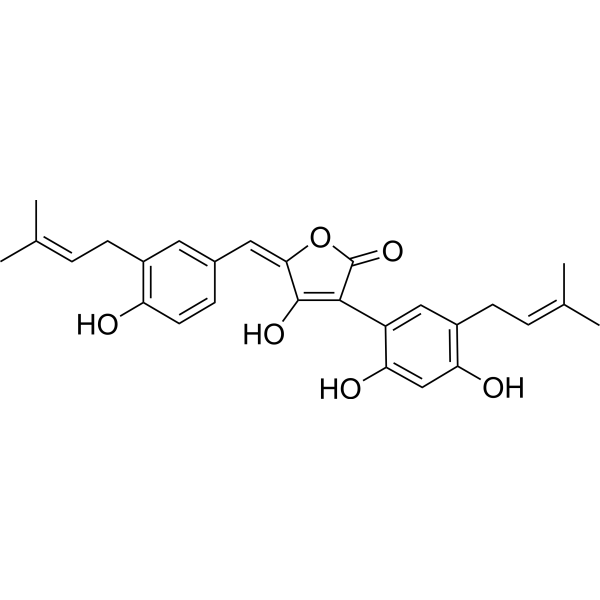
    Aspulvinone O is a selective inhibitor of glutamate oxaloacetate aminotransferase GOT1. Aspulvinone O inhibits glutamine metabolism and reduces NADPH production, thereby inducing oxidative stress and apoptosis in pancreatic ductal adenocarcinoma (PDAC) cells. Aspulvinone O inhibits PDAC cell proliferation in vitro and tumor growth in xenograft models .
    Aspulvinone O
  • HY-P3016B

    EC 2.6.1.1, Human liver; GOT, Human liver; AST, Human liver

    Aminotransferases (Transaminases) Cardiovascular Disease
    Aspartate aminotransferase (EC 2.6.1.1), Human liver is a metabolic regulator with the highest activity in the heart, liver and skeletal muscle. Aspartate aminotransferase, Human liver comprises two isozymes: the cytoplasmic form (AST1) and the mitochondrial form (AST2). By catalyzing reversible transamination reactions between oxaloacetate, L-glutamate and other substances, it is deeply involved in key physiological processes such as amino acid metabolism, the tricarboxylic acid cycle and neurotransmitter synthesis. Aspartate aminotransferase, Human liver also provides substrate support for the synthesis of urea and purines/pyrimidines. Aspartate aminotransferase, Human liver is a serum marker reflecting cardiac and hepatic injury, and its abnormal levels are also closely associated with myocardial infarction, cardiovascular diseases and various cancers .
    Aspartate aminotransferase, Human liver
  • HY-B0091A
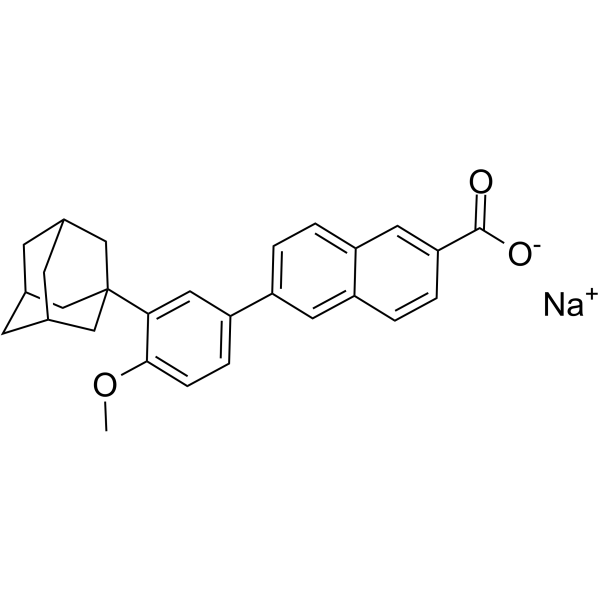
    Adapalene sodium salt
    5 Publications Verification

    CD 271 sodium salt

    RAR/RXR Autophagy Apoptosis Neurological Disease Inflammation/Immunology Cancer
    Adapalene (CD271) sodium salt, a third-generation synthetic retinoid, is widely used for the research of acne. Adapalene sodium salt is a potent RAR agonist, with AC50s of 2.3 nM, 9.3 nM, and 22 nM for RARβ, RARγ, RARα, respectively. Adapalene sodium salt also inhibits the enzymatic activity of GOT1 in a non-competitive manner. Adapalene sodium salt exhibits anti-tumor activity .
    Adapalene sodium salt
  • HY-N15587

    Gostatine

    Aminotransferases (Transaminases) Metabolic Disease
    Gostatin is an inhibitor of aspartate aminotransferase (GOT). Gostatin is found in Streptomyces sumanensis nov. sp. NK-23. Gostatin has a strong inhibitory effect on pig heart GOT, a weak inhibitory effect on wheat germ GOT and GPT, and no significant effect on glutamate dehydrogenase and glutamine synthetase. The inhibitory mechanism of gostatin is similar to substrate competitive inhibition, and aspartate has a protective effect on its inhibitory effect. Gostatin can be used to study the catalytic mechanism of GOT and its role in nitrogen metabolism .
    Gostatin
  • HY-RS16967

    Small Interfering RNA (siRNA) Others

    Got1 Mouse Pre-designed siRNA Set A contains three designed siRNAs for Got1 gene (Mouse), as well as a negative control, a positive control, and a FAM-labeled negative control.

    Got1 Mouse Pre-designed siRNA Set A
    Got1 Mouse Pre-designed siRNA Set A
  • HY-RS23410

    Small Interfering RNA (siRNA) Others

    Got1 Rat Pre-designed siRNA Set A contains three designed siRNAs for Got1 gene (Rat), as well as a negative control, a positive control, and a FAM-labeled negative control.

    Got1 Rat Pre-designed siRNA Set A
    Got1 Rat Pre-designed siRNA Set A
  • HY-B0091S

    Isotope-Labeled Compounds RAR/RXR Autophagy Apoptosis Neurological Disease Inflammation/Immunology Cancer
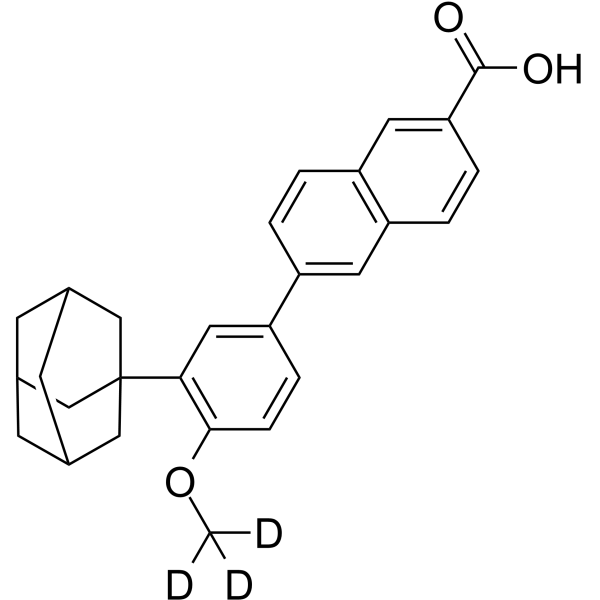
    Adapalene-d3 is the deuterium labeled Adapalene. Adapalene (CD271), a third-generation synthetic retinoid, is widely used for the research of acne. Adapalene is a potent RAR agonist, with AC50s of 2.3 nM, 9.3 nM, and 22 nM for RARβ, RARγ, RARα, respectively. Adapalene also inhibits the enzymatic activity of GOT1 in a non-competitive manner. Adapalene exhibits anti-tumor activity .
    Adapalene-d3
  • HY-B0091R

    CD271 (Standard)

    Reference Standards RAR/RXR Autophagy Apoptosis Neurological Disease Inflammation/Immunology Cancer
    Adapalene (Standard) is the analytical standard of Adapalene. This product is intended for research and analytical applications. Adapalene (CD271), a third-generation synthetic retinoid, is widely used for the research of acne. Adapalene is a potent RAR agonist, with AC50s of 2.3 nM, 9.3 nM, and 22 nM for RARβ, RARγ, RARα, respectively. Adapalene also inhibits the enzymatic activity of GOT1 in a non-competitive manner. Adapalene exhibits anti-tumor activity .
    Adapalene (Standard)
  • HY-RS17809

    Small Interfering RNA (siRNA) Others

    Got2 Mouse Pre-designed siRNA Set A contains three designed siRNAs for Got2 gene (Mouse), as well as a negative control, a positive control, and a FAM-labeled negative control.

    Got2 Mouse Pre-designed siRNA Set A
    Got2 Mouse Pre-designed siRNA Set A
  • HY-RS24277

    Small Interfering RNA (siRNA) Others

    Got2 Rat Pre-designed siRNA Set A contains three designed siRNAs for Got2 gene (Rat), as well as a negative control, a positive control, and a FAM-labeled negative control.

    Got2 Rat Pre-designed siRNA Set A
    Got2 Rat Pre-designed siRNA Set A
  • HY-116509

    Linoleic acid anilide; LAA

    Drug Derivative Lactate Dehydrogenase Aminotransferases (Transaminases) Cardiovascular Disease
    Linoleylanilide (Linoleic acid anilide) is a Linoleic acid (HY-N0729) derivative. Linoleylanilide slightly inhibits the PMA (HY-18739)-induced expression of CD11b. Linoleylanilide inhibits serum LDH, GOT and GPT activities. Linoleylanilide decreases red cell counts and hemoglobin content .
    Linoleylanilide
  • HY-P3016C

    EC 2.6.1.1, Human (HEK293); GOT, Human (HEK293); AST, Human (HEK293)

    Aminotransferases (Transaminases) Cardiovascular Disease
    Aspartate aminotransferase (EC 2.6.1.1), Human (HEK293) is a metabolic regulator with the highest activity in the heart, liver and skeletal muscle. Aspartate aminotransferase, Human (HEK293) comprises two isozymes: the cytoplasmic form (AST1) and the mitochondrial form (AST2). By catalyzing reversible transamination reactions between oxaloacetate, L-glutamate and other substances, it is deeply involved in key physiological processes such as amino acid metabolism, the tricarboxylic acid cycle and neurotransmitter synthesis. Aspartate aminotransferase, Human (HEK293) also provides substrate support for the synthesis of urea and purines/pyrimidines. Aspartate aminotransferase, Human (HEK293) is a serum marker reflecting cardiac and hepatic injury, and its abnormal levels are also closely associated with myocardial infarction, cardiovascular diseases and various cancers .
    Aspartate aminotransferase, Human (HEK293)
  • HY-W752012

    CD271-13C6

    Isotope-Labeled Compounds RAR/RXR Autophagy Apoptosis Neurological Disease Inflammation/Immunology Cancer
    Adapalene- 13C6 (CD271- 13C6) is the 13C-labeled Adapalene (HY-B0091). Adapalene (CD271), a third-generation synthetic retinoid, is widely used for the research of acne. Adapalene is a potent RAR agonist, with AC50s of 2.3 nM, 9.3 nM, and 22 nM for RARβ, RARγ, RARα, respectively. Adapalene also inhibits the enzymatic activity of GOT1 in a non-competitive manner. Adapalene exhibits anti-tumor activity .
    Adapalene-13C6
  • HY-N13285

    (-)-EGC-4'-O-ME

    Drug Derivative Metabolic Disease Inflammation/Immunology
    (-)-Epigallocatechin-4'-O-methylether ((-)-EGC-4'-O-ME) is an orally active natural phenolic catechin with antioxidant, free radical-scavenging and hepatoprotective activities. (-)-Epigallocatechin-4'-O-methylether interferes with radiation-induced free radical formation, scavenges DPPH free radicals, inhibits carbon tetrachloride-induced increases in serum GOT and GPT, suppresses carbon tetrachloride-induced TBA-RS formation, and counteracts carbon tetrachloride-induced hepatocyte toxicity. (-)-Epigallocatechin-4'-O-methylether binds specifically to human serum albumin. (-)-Epigallocatechin-4'-O-methylether can be used in studies related to liver injury .
    (-)-Epigallocatechin-4'-O-methylether
  • HY-N14093

    Cholinesterase (ChE) Lipase Reactive Oxygen Species (ROS) Apoptosis Bacterial Infection Inflammation/Immunology Cancer
    Aspulvinone H is an orally active inhibitor of AChE, pancreatic lipase, glutamic-oxaloacetic transaminase 1, and α-glucosidase, with IC50 values of 25.95 μM, 47.06 μM, 5.91/6.91 μM, and 4.6 μM, respectively. It has a Ka of 2.14 μM against GOT1 and a Ki of 6.58 μM against α-glucosidase. Aspulvinone H inhibits cancer cell proliferation, interferes with glutamine metabolism, elevates ROS levels, and induces cell apoptosis and S-phase arrest. Aspulvinone H exhibits antibacterial activity against Staphylococcus aureus. Aspulvinone H inhibits the growth of pancreatic ductal adenocarcinoma xenografts. Aspulvinone H reduces postprandial blood glucose in mice. Aspulvinone H can be used in research related to pancreatic ductal adenocarcinoma, diabetes, and Staphylococcus aureus infection .
    Aspulvinone H

Inquiry Online

Your information is safe with us. * Required Fields.

Salutation


Country or Region *

Applicant Name *


Organization Name *

Department *


Email Address *


Product Name *

Cat. No.


Requested quantity *

Phone Number *


Remarks

Inquiry Online

Inquiry Information

Product Name:
Cat. No.:
Quantity:
MCE Japan Authorized Agent:

