



Adapalene sodium salt
Based on 5 publication(s) in Google Scholar
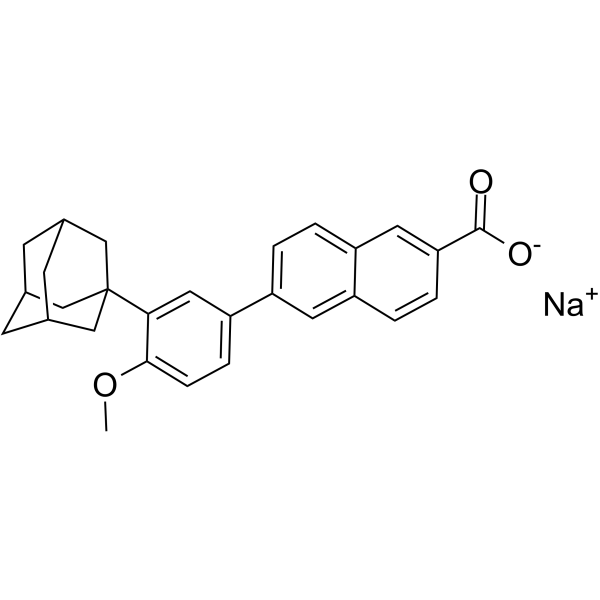
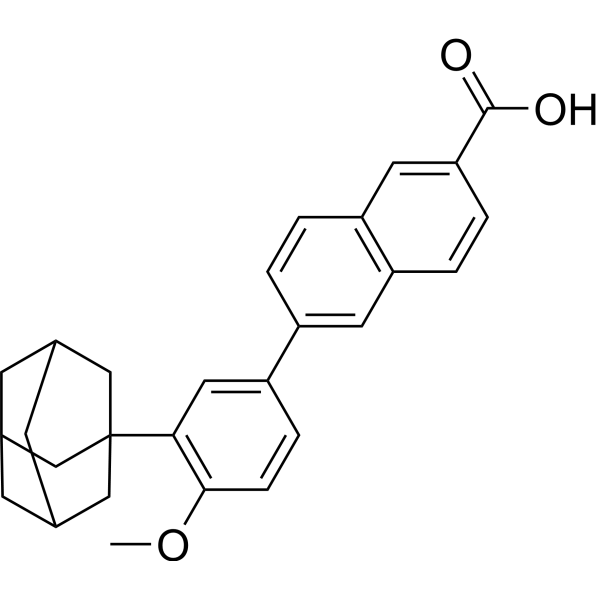
Adapalene (CD271) sodium salt, a third-generation synthetic retinoid, is widely used for the research of acne. Adapalene sodium salt is a potent RAR agonist, with AC50s of 2.3 nM, 9.3 nM, and 22 nM for RARβ, RARγ, RARα, respectively. Adapalene sodium salt also inhibits the enzymatic activity of GOT1 in a non-competitive manner. Adapalene sodium salt exhibits anti-tumor activity.
For research use only. We do not sell to patients.
- Purity : 99.69%
- CAS No.: 911110-93-5
- Formula: C28H27NaO3
- Molecular Weight:434.50
-
Storage:Powder -20°C, 3 years , 4°C, 2 years ; In solvent -80°C, 6 months , -20°C, 1 month

To place orders, for customer services and technical support, please contact: MedChemExpress USA
Tel: 609-228-6898 E-mail: [email protected] [email protected]


-
 Biological Activity
-
Chemical Information
-
Solvent & Solubility
- Purity & Documentation
- References
-
 Help & FAQs


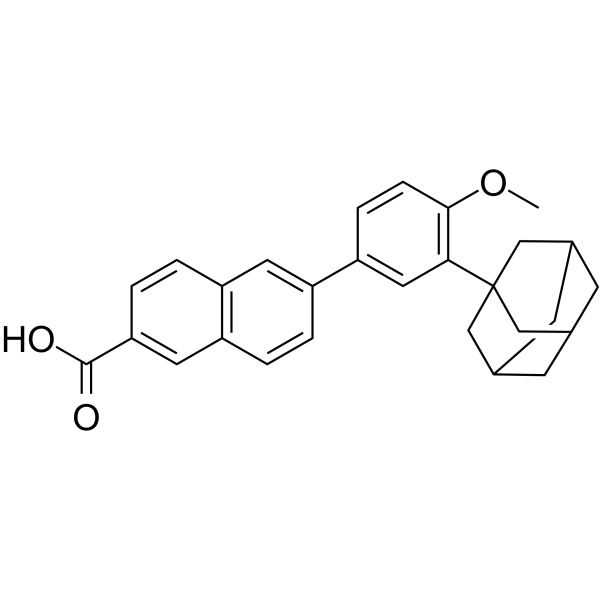
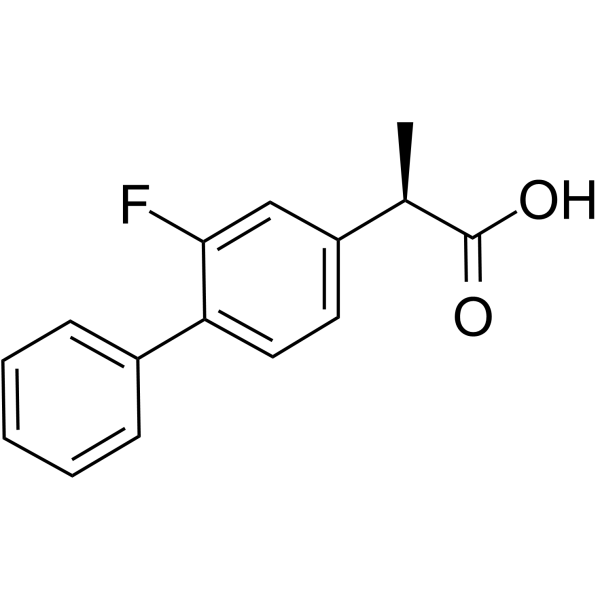
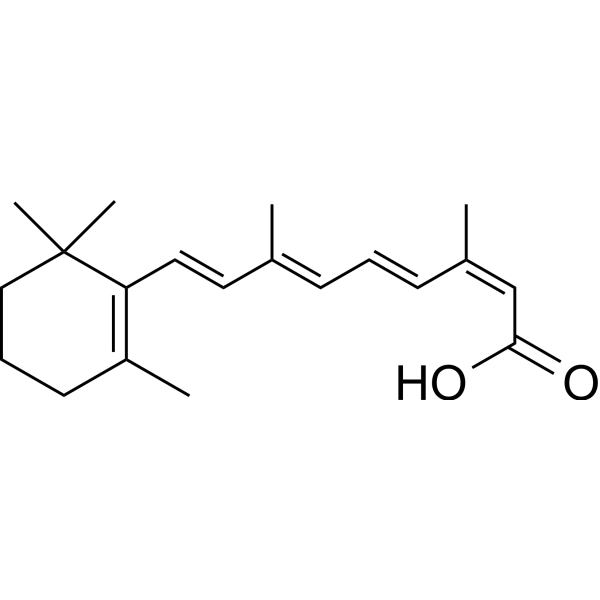
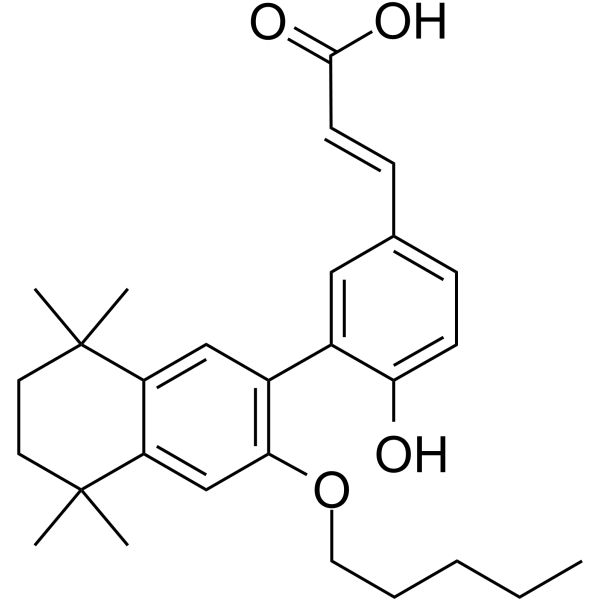

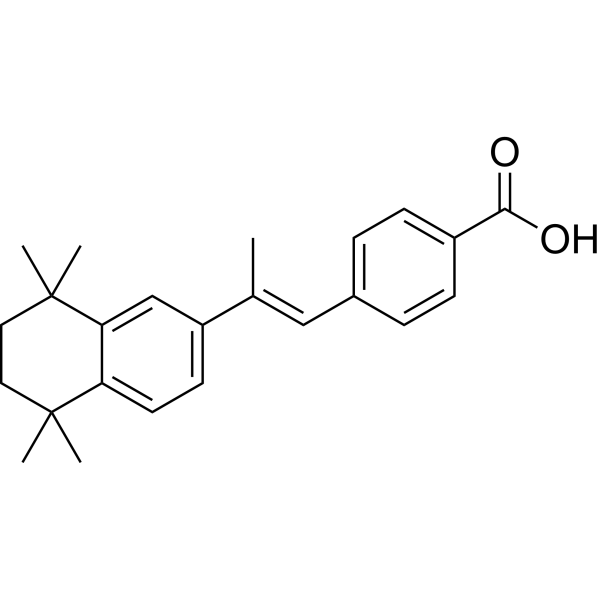
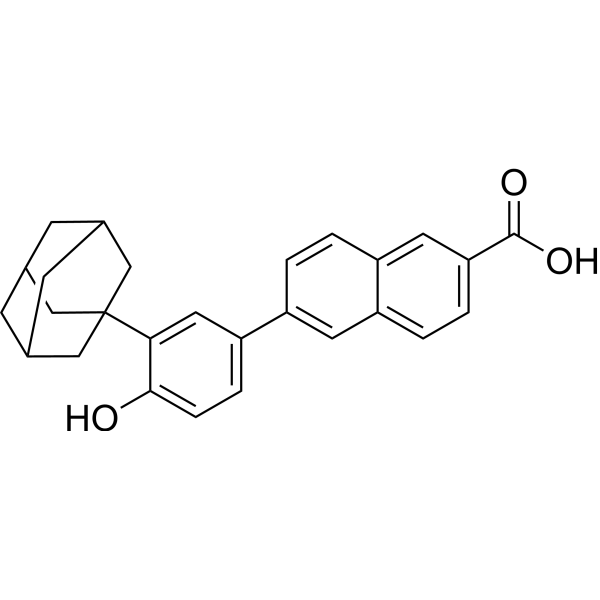

Publications Citing Use of MedChemExpress (MCE) Adapalene sodium salt
More Customer Validation & Images

-
Flow Cytometry


Biological Activity
Description
IC50 & Target
AC50: 2.3 nM (RARβ), 9.3 nM (RARγ), and 22 nM (RARα)[1]
In Vitro
Adapalene sodium salt (1-200 μM; 24 h) inhibits the viability of ES-2, HOV-7, MCF-7 , Hela, SW1990, HT1080, and MM-468 cells, with IC50s of 10.36 μM, 10.81 μM, 12.00 μM, 19.08 μM, 19.52 μM, 21.70 μM, and 31.47 μM, respectively[2].
Adapalene sodium salt (10-40 μM; 24 h) induces ES-2 cells apoptosis and inhibits proliferation in vitro[2].
Adapalene sodium salt (3-30 μM; 6-24 h) significantly increases the G1-phase population in LoVo or DLD1 cells[3].
Adapalene sodium salt (1-200 μM) inhibits GOT1 activity, with an IC50 of 21.79 μM[2].
Adapalene sodium salt (10-6-10-3 nM) inhibits the expression of plasma membrane-associated enzyme transglutaminase Type I, with an IC50 of 2.5 nM[1].
MedChemExpress (MCE) has not independently confirmed the accuracy of these methods. They are for reference only.
-
Cell Line:Pancreatic cancer (SW1990, Aspc-1), breast cancer (mm-231, mm-468, MCF-7), liver cancer (Hep3B), cervical cancer (Hela), ovarian cancer (HOV-7, ES-2), normal cells (CHO, L929)
-
Concentration:1-200 μM
-
Incubation Time:24 hours
-
Result:Inhibited the viability of cancer cells with higher GOT1 protein expression.
-
Cell Line:ES-2 cells
-
Concentration:10, 20, 40 μM
-
Incubation Time:24 hours
-
Result:Showed a significant increase in apoptosis compared with the control group.
Down regulated the expression of anti-apoptotic protein Bcl-2 and PARP.
-
Cell Line:LoVo or DLD1 cells
-
Concentration:3, 10, 30 μM
-
Incubation Time:6, 12, 24 hours
-
Result:Caused cell cycle arrest in G1 phase in a dose- and time-dependent manner.
In Vivo
MedChemExpress (MCE) has not independently confirmed the accuracy of these methods. They are for reference only.
-
Animal Model:Female BALB/C nude mice (15 g, 4-5 weeks) were injected with DLD1 cells[3]
-
Dosage:15, 20, 65, 100 mg/kg
-
Administration:P.o. daily for 21 days
-
Result:Significantly reduced tumor weight and volume.
Clinical Trial
| NCT Number | Sponsor | Condition | Start Date |
Phase

|
|---|---|---|---|---|
| NCT01329991 | Plexxikon| | 2011-05 | PHASE1 |


Chemical Information
-
CAS No. 911110-93-5
-
Appearance Solid
-
Molecular Weight 434.50
-
Formula C28H27NaO3
-
Color White to off-white
-
SMILES
O=C(C1=CC2=CC=C(C3=CC=C(OC)C(C45C[C@@H](C[C@H](C6)C5)C[C@@H]6C4)=C3)C=C2C=C1)[O-].[Na+]
-
Synonyms
CD 271 sodium salt
-
Shipping
Room temperature in continental US; may vary elsewhere.
-
Storage
Powder -20°C 3 years 4°C 2 years In solvent -80°C 6 months -20°C 1 month


Publications (5)
-
Journal Impact Factor
-
Most Recent
-
Adv Sci (Weinh)
Retinoic Acid Reprograms Mast Cells Toward a Proinflammatory State to Enhance Antitumor Immunity. [Abstract]2025 Nov 27:e09340. PMID: 41309490
Adapalene sodium salt purchased from MedChemExpress. Usage Cited in: Adv Sci (Weinh). 2025 Nov 27:e09340. [Abstract]
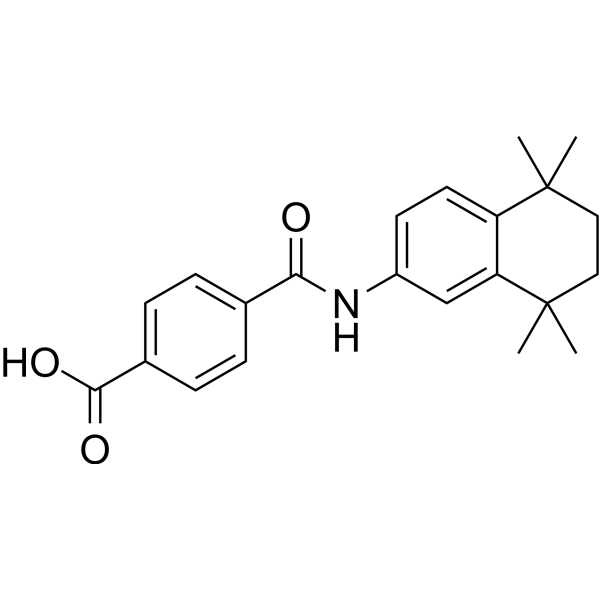
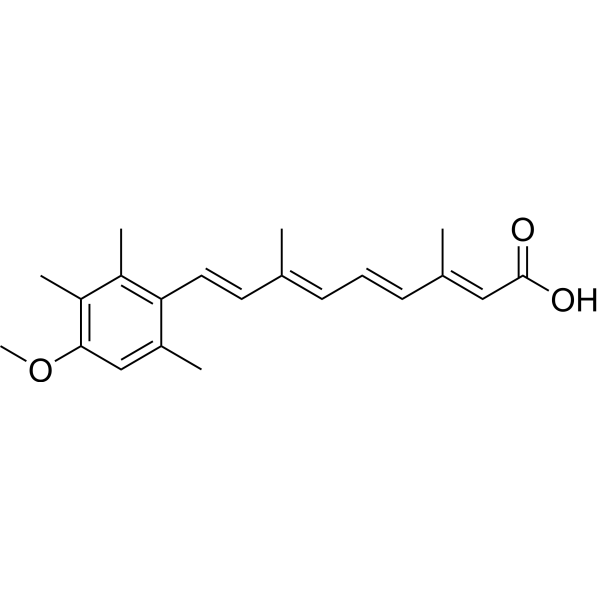
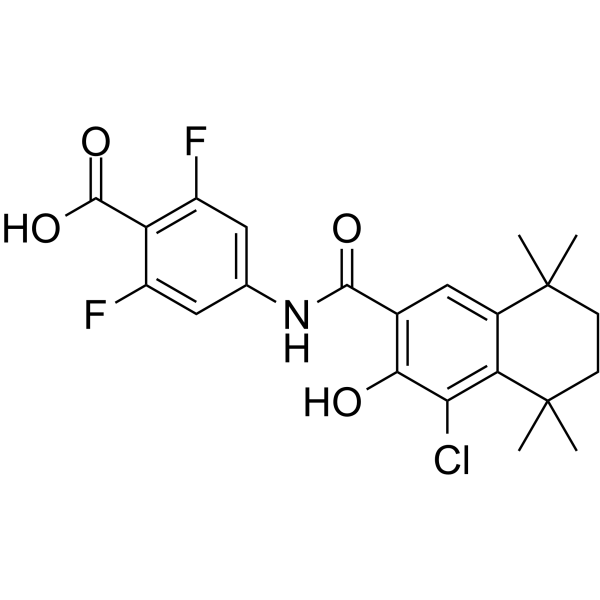
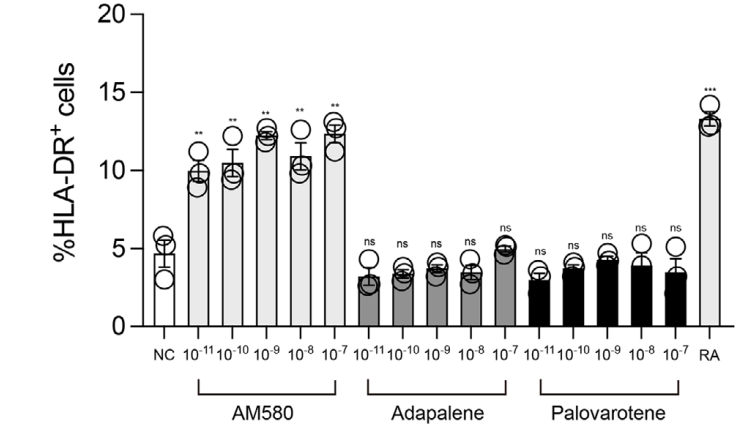
Flow cytometry analysis showing HLA‐DR expression after IFN‐γ +AM580, IFN‐γ +Adapalene, and IFN‐γ +Palovarotene treatment for 48 h.
-
Proc Natl Acad Sci U S A
2021 Jan 12;118(2):e2009539118. PMID: 33376206 -
Eur J Pharmacol
Adapalene suppressed the proliferation of melanoma cells by S-phase arrest and subsequent apoptosis via induction of DNA damage. [Abstract]2019 May 15:851:174-185. PMID: 30836068 -
Fundam Clin Pharmacol
The third-generation retinoid adapalene triggered DNA damage to induce S-phase arrest in HaCat cells. [Abstract]2020 Jun;34(3):380-388. PMID: 31808972 -


Solvent & Solubility
In Vitro:
DMSO : 4.17 mg/mL (9.60 mM; ultrasonic and warming and heat to 60°C; Hygroscopic DMSO has a significant impact on the solubility of product, please use newly opened DMSO)
Please refer to the solubility information to select the appropriate solvent. Once prepared, please aliquot and store the solution to prevent product inactivation from repeated freeze-thaw cycles.
Storage method and period of stock solution: -80°C, 6 months; -20°C, 1 month. When stored at -80°C, please use it within 6 months. When stored at -20°C, please use it within 1 month.
Please refer to the solubility information to select the appropriate solvent. Once prepared, please aliquot and store the solution to prevent product inactivation from repeated freeze-thaw cycles.
Storage method and period of stock solution: -80°C, 6 months; -20°C, 1 month. When stored at -80°C, please use it within 6 months. When stored at -20°C, please use it within 1 month.
Concentration (start) × Volume (start) = Concentration (final) × Volume (final)


Purity & Documentation
-
Data Sheet (280 KB)
-
SDS (254 KB)
- English - EN (254 KB)
- Français - FR (254 KB)
- Deutsch - DE (254 KB)
- Norwegian - NO (254 KB)
- Español - ES (254 KB)
- Swedish - SV (254 KB)
- Italian - IT (254 KB)
- Korean - KR (254 KB)
- Portuguese - PT (254 KB)
-
Handling Instructions (2659 KB)
References
[1]. Shroot B, et, al. Pharmacology and chemistry of adapalene. J Am Acad Dermatol. 1997 Jun;36(6 Pt 2):S96-103. [Content Brief]
[2]. Wang Q, et, al. Adapalene inhibits ovarian cancer ES-2 cells growth by targeting glutamic-oxaloacetic transaminase 1. Bioorg Chem. 2019 Dec;93:103315. [Content Brief]
[3]. Shi XN, et, al. Adapalene inhibits the activity of cyclin-dependent kinase 2 in colorectal carcinoma. Mol Med Rep. 2015 Nov;12(5):6501-8. [Content Brief]


Complete Stock Solution Preparation Table
Please refer to the solubility information to select the appropriate solvent. Once prepared, please aliquot and store the solution to prevent product inactivation from repeated freeze-thaw cycles.
Storage method and period of stock solution: -80°C, 6 months; -20°C, 1 month. When stored at -80°C, please use it within 6 months. When stored at -20°C, please use it within 1 month.
| Optional Solvent | Concentration Solvent Mass | 1 mg | 5 mg | 10 mg | 25 mg |
|---|---|---|---|---|---|
| DMSO | 1 mM | 2.3015 mL | 11.5075 mL | 23.0150 mL | 57.5374 mL |
| 5 mM | 0.4603 mL | 2.3015 mL | 4.6030 mL | 11.5075 mL |


Adapalene sodium salt Related Classifications
HY-B0091A Related Classifications
 Powered by Bioz