1. Search Result
Search Result
Results for "

H22

" in MedChemExpress (MCE) Product Catalog:

19

Inhibitors & Agonists

1

Peptides

2

Inhibitory Antibodies

2

Natural
Products

Cat. No. Product Name Target Research Areas Chemical Structure
  • HY-P99136
    Anti-Mouse IFN gamma Antibody (H22)
    1 Publications Verification

    IFNAR Infection Inflammation/Immunology
    Anti-Mouse IFN gamma Antibody (H22) is an anti-mouse IFN gamma IgG antibody inhibitor derived from host Armenian Hamster. Anti-Mouse IFN gamma Antibody (H22) abrogates specific binding of I25II-rIFN-γ to macrophages. Anti-Mouse IFN gamma Antibody (H22) inhibits macrophage-activating factor (MAF) (ID50 = 56 ng). Anti-Mouse IFN gamma Antibody (H22) inhibits IFN-gamma dependent antiviral activity (ID50 = 2 ng). Anti-Mouse IFN gamma Antibody (H22) neutralizes IFNγ in mice. Anti-Mouse IFN gamma Antibody (H22) can be used for the researches of inflammation and infection, such as arthritis .
    Anti-Mouse IFN gamma Antibody (H22)
  • HY-108551
    MG-262
    1 Publications Verification

    Z-Leu-Leu-LeuB(OH)2; ZL3B

    Proteasome VEGFR Apoptosis Reactive Oxygen Species (ROS) Cardiovascular Disease Inflammation/Immunology Cancer
    MG-262 (Z-Leu-Leu-LeuB(OH)2; ZL3B) is a reversible proteasome inhibitor. MG-262 down-regulates VEGF receptor Flt-1. MG-262 inhibits cell growth and induces apoptosis in malignant cells. MG-262 induces reactive oxygen species (ROS). MG-262 can be used for anti-cancer study .
    MG-262
  • HY-151425

    Indoleamine 2,3-Dioxygenase (IDO) Cancer
    TDO-IN-1 is an orally active and selective inhibitor of tryptophan 2,3-dioxygenase (TDO), shows excellent selectivity over indoleamine-2,3-dioxygenase (IDO), with an IC50 value of 0.62 μM (IDO). TDO-IN-1 reverse the local immune tolerance of tumor tissue to inhibit tumor growth in vivo .
    TDO-IN-1
  • HY-161141

    c-Met/HGFR Cancer
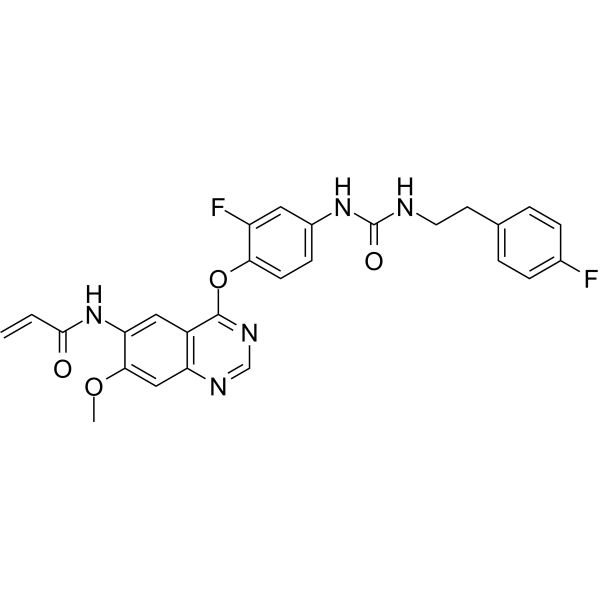
    EGFR/ C-Met-in-2 (Compound H-22) is a dual inhibitor of EGFR/c-Met. EGFR/c-Met-IN-2 inhibits cell proliferation by arresting G2/M phase. EGFR/c-Met-IN-2 has antitumor activity .
    EGFR/c-Met-IN-2
  • HY-172108

    TGF-β Receptor Cancer
    TGFβRI-IN-7 (compound 16W) is a potent inhibitor of TGFβRI. TGFβRI-IN-7 inhibits SMAD2/3 phosphorylation and H22 cell viability with IC50 values of 12 and 65 nM, respectively. TGFβRI-IN-7 shows anti-tumor efficacy in a xenograft model of H22 cells, with TGI of 79.6 % .
    TGFβRI-IN-7
  • HY-W040584

    MOFs Others
    1H,1'H-2,2'-Biimidazole is a metal-organic framework (MOF).
    1H,1'H-2,2'-Biimidazole
  • HY-126876
    GL-V9
    1 Publications Verification

    Apoptosis AMPK Reactive Oxygen Species (ROS) Cancer
    GL-V9 inhibits proliferation of HepG2 cell (IC50 is 35.2 μM) through induction of apoptosis and cell cycle arrest at G2/M phase. GL-V9 regulates mitochondrial membrane potential and increases the production of intracellular reactive oxygen species. GL-V9 inhibits the pentose phosphate pathway (PPP), enhances fatty acid oxidation (FAO) through activation of AMPK, and thus inhibits the metastasis of cancer cells. GL-V9 exhibits antitumor efficacy in mouse model .
    GL-V9
  • HY-144232

    Others Cancer
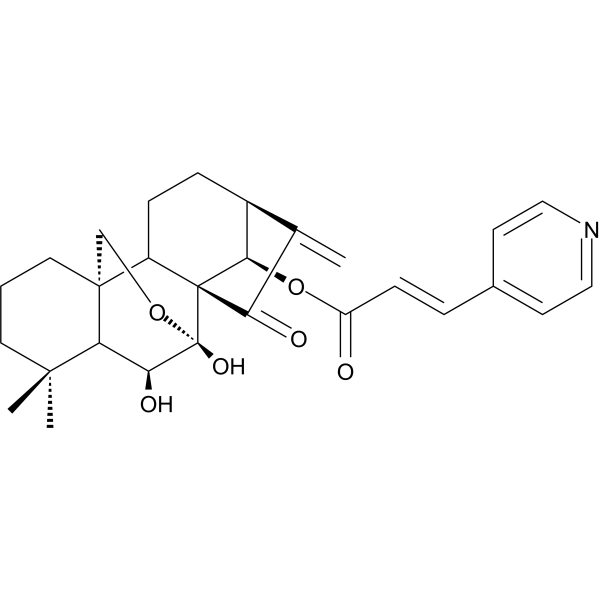
    Anticancer agent 28 shows good antitumor activity in H22 allogeneic mice in vivo. Anticancer agent 28 has inhibitory potency in K562 cells of 50 times than oridonin, and its IC50 value is 0.09 μM.
    Anticancer agent 28
  • HY-175459

    PROTACs FAK Inflammation/Immunology Cancer
    PROTAC FAK degrader 3 is a selective FAK PROTAC degrader (DC50 = 1.08 nM). PROTAC FAK degrader 3 induces FAK degradation dependent on the ubiquitin-proteasome system and its binding to FAK and CRBN. PROTAC FAK degrader 3 upregulates MHC-I gene transcription and tumor cell surface expression by inhibiting the non-catalytic activity of FAK, leading to increased antigen presentation and activation of cytotoxic CD8 T cells. PROTAC FAK degrader 3 enhances in vivo anti-tumor activity by promoting MHC-I expression and enhancing T cell activation. PROTAC FAK degrader 3 can be used in cancer research targeting FAK degradation in ovarian cancer, hepatocellular carcinoma, and other cancers. (Pink: FAK-IN-3:HY-143407, Blue: Thalidomide-4-OH:HY-103596, Blue + Black: FAK ligand-3: HY-W939883, Black: Linker) .
    PROTAC FAK degrader 3
  • HY-139815

    HDAC Cancer
    ZYJ-34c is an orally active and potent histone deacetylase inhibitor (HDACi) with IC50s of 0.056 μM and 0.146 μM for HDAC6 and HDAC8, respectively. ZYJ-34c causes G1 phase arrest in low concentration. ZYJ-34c has antiproliferative activities. ZYJ-34c exhibits antitumor potency in MDA-MB-231 and HCT116 xenograft models and possesses antimetastatic potential in a mouse hepatoma-22 (H22) pulmonary metastasis model .
    ZYJ-34c
  • HY-N13352

    Mitochondrial Metabolism STAT JAK Interleukin Related Atg7 Autophagy Pim Inflammation/Immunology Cancer
    Bufothionine is an alkaloid. Bufothionine can be isolated from Cinobufacini. Bufothionine induces mitochondria-mediated Apoptosis. Bufothionine significantly reduces serum IL-6 concentration, suppresses p-Stat3 tyr705, p-Stat3 ser727 and Jak2 expressions. Bufothionine upregulates Atg5, Atg7 and LC3Ⅱ expressions. Bufothionine induces Autophagy. Bufothionine suppresses PIM3 expression. Bufothionine relieves symptoms of H22-tumor-bearing mice and exerts anti-inflammation activity. Bufothionine exerts anti-cancer activities against gastric cancer .
    Bufothionine
  • HY-182447

    DL111-IT

    CDK Apoptosis Endocrinology Cancer
    Contragestazol (DL111-IT) is a non-hormonal antifertility agent. Contragestazol reduces the expression of Cyclin D1 and CDK4, increases the expression of total retinoblastoma protein (pRb), and decreases the level of hyperphosphorylated pRb. Contragestazol induces G0/G1 phase cell cycle arrest. Contragestazol inhibits embryonic development by inducing luteal cell apoptosis and reducing intrauterine polyamine levels. Contragestazol exhibits antitumor activity against prostate cancer, S180 tumor and H22 tumor. Contragestazol shows extremely potent activity in terminating early pregnancy in animals .
    Contragestazol
  • HY-P10832

    Apoptosis Ras Raf MEK ERK Caspase PARP Bcl-2 Family Cancer
    ATWLPPRAANLLMAAS is a chimeric peptide with anti-angiogenic and potent anti-tumor effects. ATWLPPRAANLLMAAS can inhibit the proliferation, viability, migration, and invasion of human hepatocellular carcinoma cells, and induce apoptosis. .
    ATWLPPRAANLLMAAS
  • HY-W128191

    2,2'-Bipyrrole

    MOFs Others
    1H,1'H-2,2'-Bipyrrole (2,2'-Bipyrrole) is a metal-organic framework (MOF).
    1H,1'H-2,2'-Bipyrrole
  • HY-W456336

    MOFs Others
    4,4'-(1H,1'H-[2,2'-Biimidazole]-1,1'-diyl)dibenzoic acid is a metal-organic framework (MOF).
    4,4'-(1H,1'H-[2,2'-Biimidazole]-1,1'-diyl)dibenzoic acid
  • HY-W075088

    1,1'-Diaethyl-2,2'-biimidazol

    MOFs Others
    1,1'-Diethyl-1H,1'H-2,2'-biimidazole (1,1'-Diaethyl-2,2'-biimidazol) is a metal-organic framework (MOF).
    1,1'-Diethyl-1H,1'H-2,2'-biimidazole
  • HY-W112832

    1,1-Bis(pyridin-4-ylmethyl)-2,2-bisimidazole

    MOFs Others
    1,1'-Bis(pyridin-4-ylmethyl)-1H,1'h-2,2'-biimidazole (1,1-Bis(pyridin-4-ylmethyl)-2,2-bisimidazole) is a metal-organic framework (MOF).
    1,1'-Bis(pyridin-4-ylmethyl)-1H,1'h-2,2'-biimidazole
  • HY-P991960

    CTLA-4 Interleukin Related Cancer
    JS007 is a humanized IgG1 monoclonal antibody and also a CTLA-4 binder, with a Kd of 0.21 nM for CTLA-4. JS007 blocks the interaction between CTLA-4 and B7-1. JS007 activates T cells, promotes increased IL-2 secretion, and inhibits tumor growth in CTLA-4 knock-in mouse syngeneic tumor models. JS007 is applicable to research related to cancer and advanced solid tumors.
    JS007
  • HY-N17440

    Apoptosis Caspase Bcl-2 Family DNA/RNA Synthesis Bacterial Fungal Infection Inflammation/Immunology Cancer
    2-Methoxyjuglone, a naphthoquinone, is an apoptosis inducer. 2-Methoxyjuglone activates caspase-9 and caspase-3 via the mitochondrial cytochrome c-dependent intrinsic apoptosis cascade. 2-Methoxyjuglone increases pro-apoptotic Bax levels, decreases anti-apoptotic Bcl-2 levels, and promotes mitochondrial cytochrome c release. 2-Methoxyjuglone induces apoptosis morphological features, early apoptosis, S-phase and G2/M-phase cell cycle arrest, and DNA double-strand breaks. 2-Methoxyjuglone exerts activity against Gram-positive bacteria, pathogenic fungi, and phytopathogenic fungi. 2-Methoxyjuglone can be used for the research of hepatocellular carcinoma, osteosarcoma, colon adenocarcinoma, breast cancer, fungal infection, bacterial infection .
    2-Methoxyjuglone

Inquiry Online

Your information is safe with us. * Required Fields.

Salutation


Country or Region *

Applicant Name *


Organization Name *

Department *


Email Address *


Product Name *

Cat. No.


Requested quantity *

Phone Number *


Remarks

Inquiry Online

Inquiry Information

Product Name:
Cat. No.:
Quantity:
MCE Japan Authorized Agent:

