94 Results for "

HCT116+cell

" in MedChemExpress (MCE) Product Catalog:
Products (94)

94 Results for "HCT116+cell" in MCE Product Catalog:

2
2 Cited Publications
Cat. No.: HY-N2409
CAS No.: 528-53-0
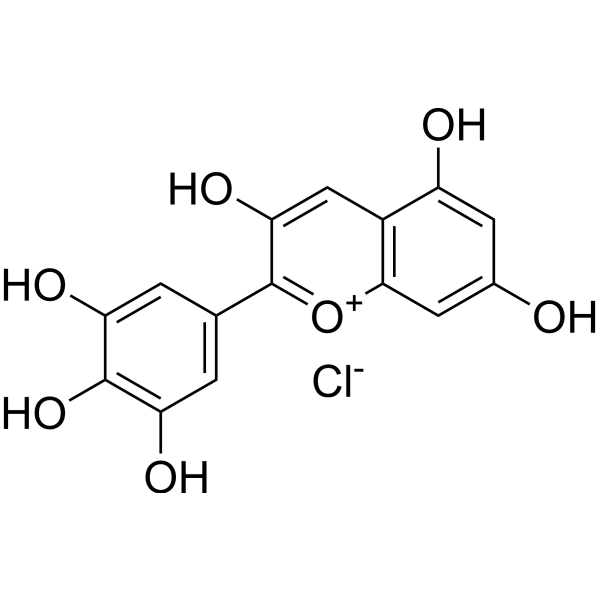
Delphinidin chloride is an anthocyanin isolated from berries and red wine. Delphinidin chloride exhibits endothelium-dependent vasodilation and anticancer activity. Delphinidin chloride also modulates JAK/STAT3 and MAPK signaling, thereby inducing apoptosis in HCT116 cells. Delphinidin chloride is also a potent inhibitor of EGFR (IC50: 1.3 μM), shutting down downstream signaling cascades .
Cat. No.: HY-136521
CAS No.: 3040082-19-4
Purity:  99.22%
Research Areas:  

Cancer

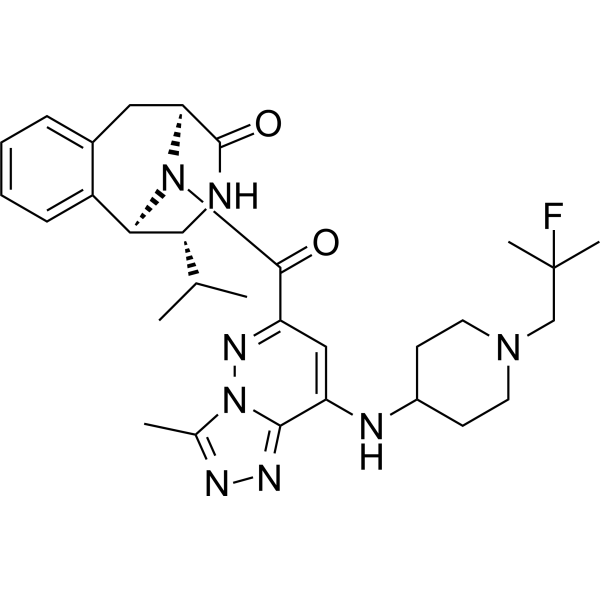
AZ13824374 is a potent and selective ATAD2 bromodomain inhibitor (pIC50 of 6.9 in HCT116 cells). AZ13824374 disrupts chromatin interactions and gene transcription by binding to the acetyl-lysine binding site of the ATAD2 bromodomain. AZ13824374 has anticancer activity against breast cancer .
Cat. No.: HY-144315
CAS No.: 2415281-52-4
Purity:  99.76%
Synonyms: Snail/HDAC-IN-1
Target:  

HDAC

Research Areas:  

Cancer

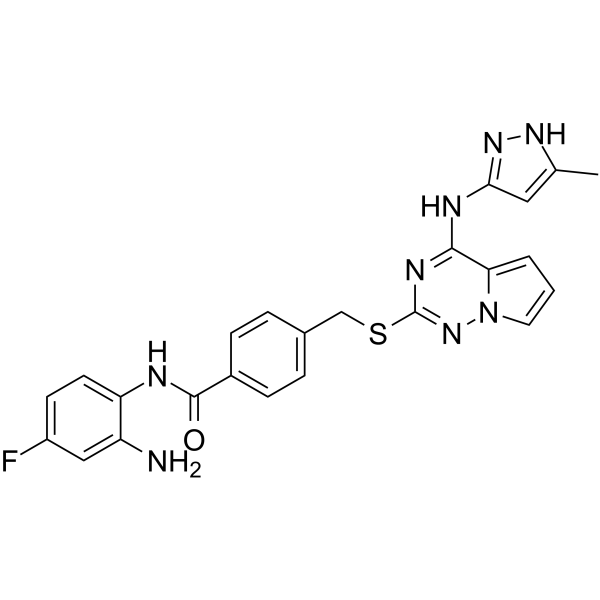
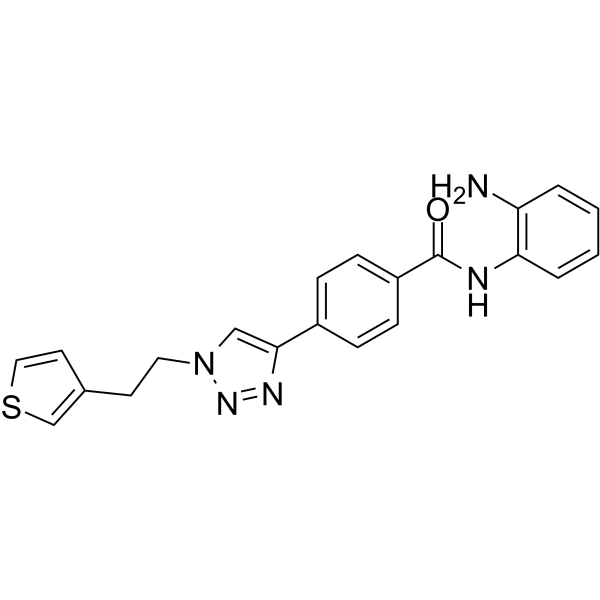
CYD19 is a potent Snail/HDAC dual target inhibitor. CYD19 displays potent inhibitory activity against HDAC1 with an IC50 of 0.405 μM and potent inhibition against Snail with a Kd of 0.18 μM. CYD19 increases histone H4 acetylation in HCT-116 cells and decreases the expression of Snail protein to induce cell apoptosis .
Cat. No.: HY-145819
CAS No.: 2669785-85-5
Target:  

PROTACs HDAC

Research Areas:  

Cancer

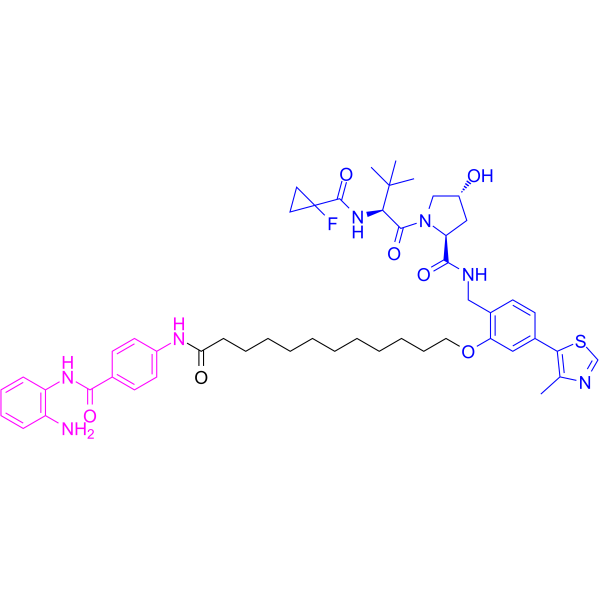
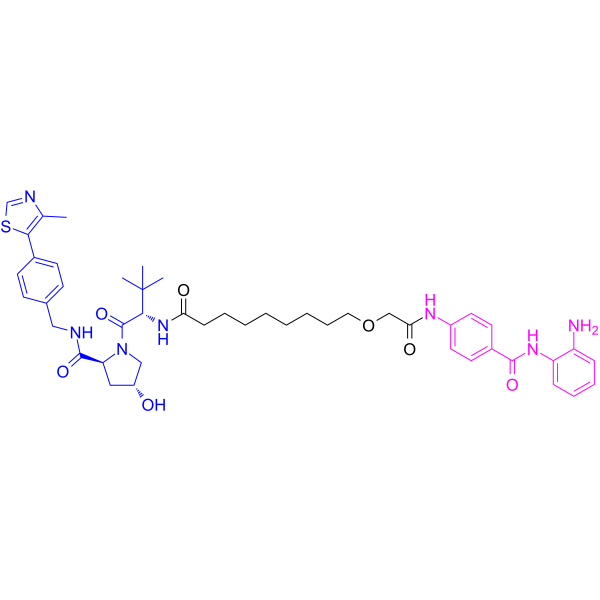
JPS036 is a benzamide-based Von Hippel-Lindau (VHL) E3-ligase proteolysis targeting chimeras (PROTAC). JPS036 degrades class I histone deacetylase (HDAC). JPS036 is potent HDAC1/2 degrader correlated with greater total differentially expressed genes and enhanced apoptosis in HCT116 cells .
Cat. No.: HY-143904
CAS No.: 2953426-43-0
Purity:  98.01%
Target:  

PROTACs Mps1

Research Areas:  

Cancer

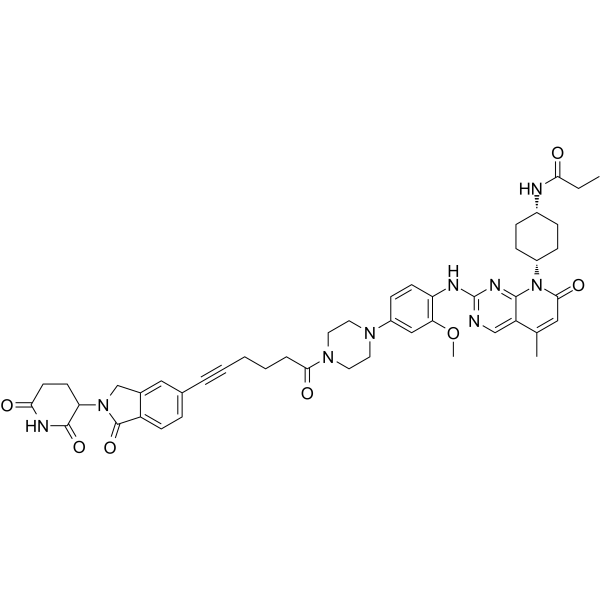
PROTAC TTK degrader-1 is a potent Mps1/TTK (threonine tyrosine kinase) PROTAC degrader, with DC50 values of 1.7 and 5.8 nM in COLO-205 and HCT-116 cell, respectively. PROTAC TTK degrader-1 exhibits target degradation and anticancer efficacy in a xenograft mouse model of COLO-205 human colorectal cancer cells .
Cat. No.: HY-123295
CAS No.: 1451042-18-4
Purity:  98.35%
Target:  

HDAC

Research Areas:  

Infection Cancer

HDAC3-IN-T247 is a potent and selective HDAC3 (histone deacetylase 3) inhibitor, with an IC50 of 0.24 µM. HDAC3-IN-T247 induces a selective increase of NF-κB acetylation in HCT116 cells. HDAC3-IN-T247 shows anticancer and antiviral activity. HDAC3-IN-T247 inhibits growth of cancer cells, and activates HIV gene expression in latent HIV-infected cells .
Cat. No.: HY-145777
CAS No.: 2377491-54-6
Purity:  99.51%
AGI-43192 is a potent and orally active inhibitor of methionine adenosyltransferase 2A (MAT2A) that limitedly penetrates the blood-brain barrier. AGI-43192 exhibits inhibitory activitity against MAT2A and S-adenosyl methionine (SAM) in HCT-116 MTAP-null cells with IC50s of 32 and 14 nM. AGI-43192 can significantly inhibit the proliferation of HCT-116 cells and tumor growth. AGI-43192 can be used to study the role of SAM regulation in the central nervous system (CNS) and colon cancer .
Cat. No.: HY-145778
CAS No.: 2377492-26-5
Purity:  99.94%
AGI-41998 is a potent and orally active inhibitor of methionine adenosyltransferase 2A (MAT2A) that effectively penetrates the blood-brain barrier. AGI-41998 exhibits inhibitory activities against MAT2A and S-adenosyl methionine (SAM) in HCT-116 MTAP-null cells with IC50s of 22 nM and 34 nM. AGI-41998 can significantly inhibit the proliferation of HCT-116 cells and tumor growth. AGI-41998 can be used to study the role of SAM regulation in the central nervous system (CNS) and colon cancer .
Cat. No.: HY-147348
CAS No.: 2730-82-7
Purity:  99.32%
Research Areas:  

Cancer

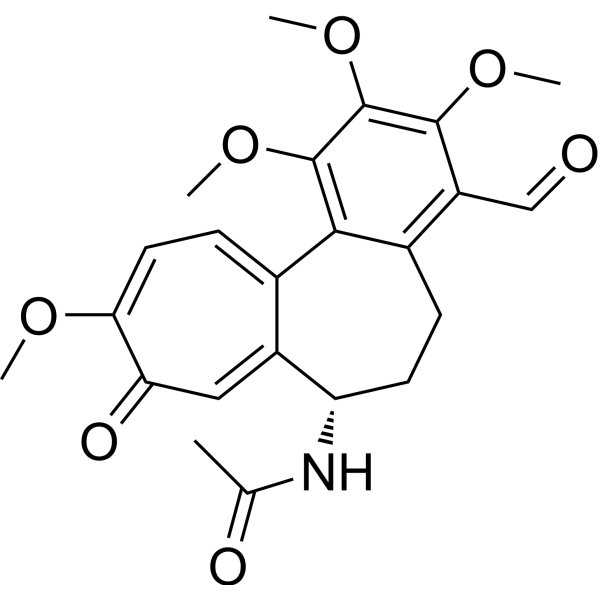
4-Formylcolchicine is a potent anticancer agent. 4-Formylcolchicine shows cytotoxicity activity with IC50 values of 1.007, 0.128, 0.054 μM for A549, HT-29, HCT116 cells, respectively .
Cat. No.: HY-156500
CAS No.: 1313603-22-3
Target:  

ICMT

Research Areas:  

Cancer

ICMT-IN-1 (compound 75) is an inhibitor of ICMT (IC50=0.0013 μM). ICMT-IN-1 dose-dependently induces ICMT accumulation in the cytoplasm of HCT-116 cells and inhibits the proliferation of multiple cancer cell lines expressing K-Ras and N-Ras .
Cat. No.: HY-145815A
Purity:  98.40%
Target:  

PROTACs HDAC Apoptosis

Research Areas:  

Cancer

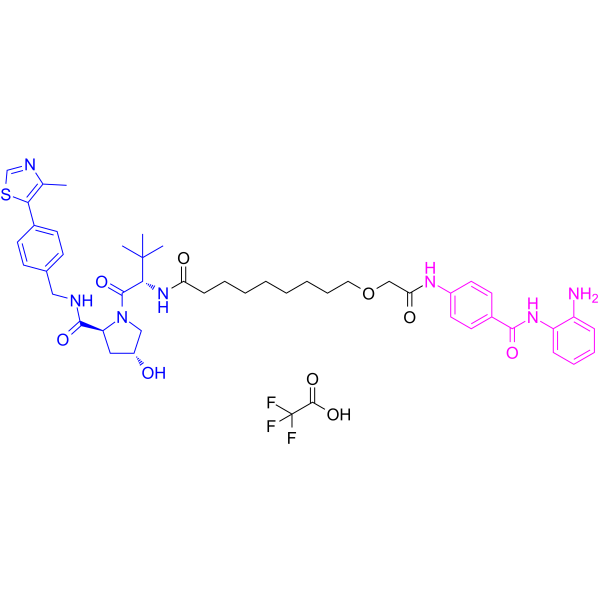
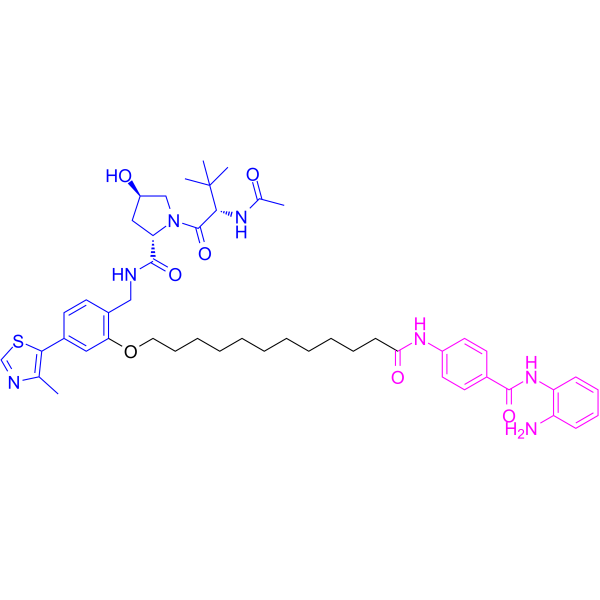
JPS014 TFA is a benzamide-based Von Hippel-Lindau (VHL) E3-ligase proteolysis targeting chimeras (PROTAC). JPS014 TFA degrades class I histone deacetylase (HDAC). JPS014 TFA is potent HDAC1/2 degrader correlated with greater total differentially expressed genes and enhanced apoptosis in HCT116 cells .
Cat. No.: HY-N13009
CAS No.: 2744300-63-6
MO-2097 is a RAF-1/HIF-1α inhibitor. MO-2097 induces RAF-1 destabilization, leading to a reduction in EMT-associated transcription factors and mesenchymal markers. MO-2097 inhibits HIF-1a protein expression mediated by hnRNPA2B1 under hypoxic and mimetic hypoxia. MO-2097 induces mitochondrial ROS, which leads to apoptosis in cells. MO-2097 effectively suppresses colorectal cancer metastasis by inhibiting the RAF/MEK/ERK signaling pathway. MO-2097 attenuates tumor growth in a xenograft HCT116 cell mouse model. MO-2097 can be used for the study of colorectal cancer .
Cat. No.: HY-160786
CAS No.: 2588445-13-8
Target:  

DNA/RNA Synthesis

Research Areas:  

Cancer

TREX1-IN-3 (Compound 95) is an inhibitor of both TREX1 and TREX2, with an IC50 for TREX1 of less than 0.1 μM, an IC50 for TREX2 of less than 1 μM, and an EC50 for HCT116 cells of less than 1 μM. TREX1-IN-3 can be used in cancer research .
Cat. No.: HY-160786A
CAS No.: 2588445-14-9
Target:  

DNA/RNA Synthesis

Research Areas:  

Cancer

TREX1-IN-4 (Compound 96) is an inhibitor of both TREX1 and TREX2, with an IC50 for TREX1 of less than 0.1 μM, an IC50 for TREX2 of less than 1 μM, and an EC50 for HCT116 cells ranging from 0.1 to 10 μM. TREX1-IN-4 can be used in cancer research .
Cat. No.: HY-163134
CAS No.: 2792146-91-7
Target:  

DNA-PK

Research Areas:  

Cancer

DNA-PK-IN-12 (compound 31t) is an oral active DNA-PK inhibitor with the IC50 of 0.1 nM. DNA-PK-IN-12 inhibits cell growth and Hct116 cell colony formation with the IC50 of 33.28 μM, and shows antitumor activity in vivo .
Cat. No.: HY-N8491
CAS No.: 38049-26-2
Dihydrocarveol is an anticancer agent. Dihydrocarveol shows inhibitory activity against human colon adenocarcinoma cells (HCT-116, HT-29, COLO320DM) with an IC50 value of 28.31 μM in HCT-116 cells. Dihydrocarveol is promising for research of colon cancer .
Cat. No.: HY-162837
Target:  

Aurora Kinase

Research Areas:  

Cancer

AURKA against 1 is an inhibitor of AURKA (IC50 less than 0.5 nM), targeting endogenous lysine (K162) acetylation, and has anti-proliferation activity against tumor cells. AURKA against 1 induces K162 acetylation, and the kinase activity of AURKA is reversibly restored in HCT116 cells transfected with SIRT3 .
Cat. No.: HY-145815
CAS No.: 2669785-76-4
Target:  

PROTACs HDAC Apoptosis

Research Areas:  

Cancer

JPS014 is a benzamide-based Von Hippel-Lindau (VHL) E3-ligase proteolysis targeting chimeras (PROTAC). JPS014 degrades class I histone deacetylase (HDAC). JPS014 is potent HDAC1/2 degrader correlated with greater total differentially expressed genes and enhanced apoptosis in HCT116 cells .
Cat. No.: HY-145818
CAS No.: 2669785-84-4
Target:  

PROTACs HDAC

Research Areas:  

Cancer

JPS035 is a benzamide-based Von Hippel-Lindau (VHL) E3-ligase proteolysis targeting chimeras (PROTAC). JPS035 degrades class I histone deacetylase (HDAC). JPS035 is potent HDAC1/2 degrader correlated with greater total differentially expressed genes and enhanced apoptosis in HCT116 cells .
Cat. No.: HY-155068
CAS No.: 2417298-29-2
Purity:  98.04%
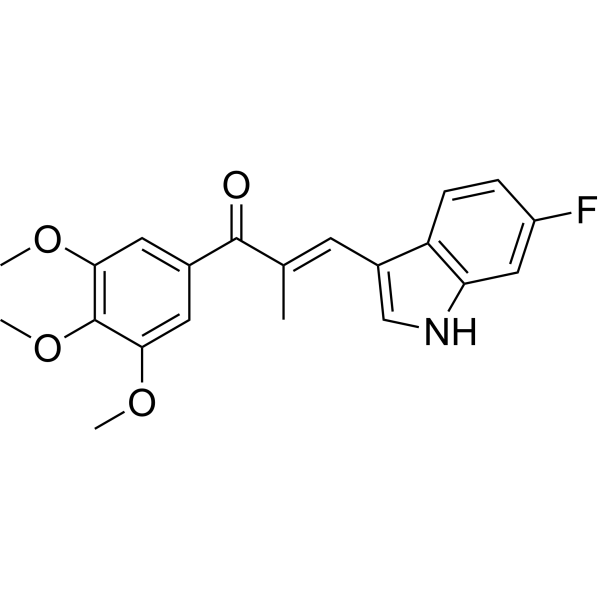
FC-11 is a tubulin inhibitor. FC-116 inhibits the proliferation of colorectal cancer (CRC) cells, with IC50 values of 4.52 nM for HCT116 cells and 18.69 nM for CT26 cells. FC-11 can induce ER stress to generate excess ROS, leading to mitochondrial damage, thereby promoting apoptosis in colorectal cancer (CRC) cells by targeting microtubules. FC-116 exerts potent anti-tumor effects in vivo. FC-11 can be used for the study of colorectal cancer .

