



HDAC3-IN-T247

Based on 1 Customer Validation
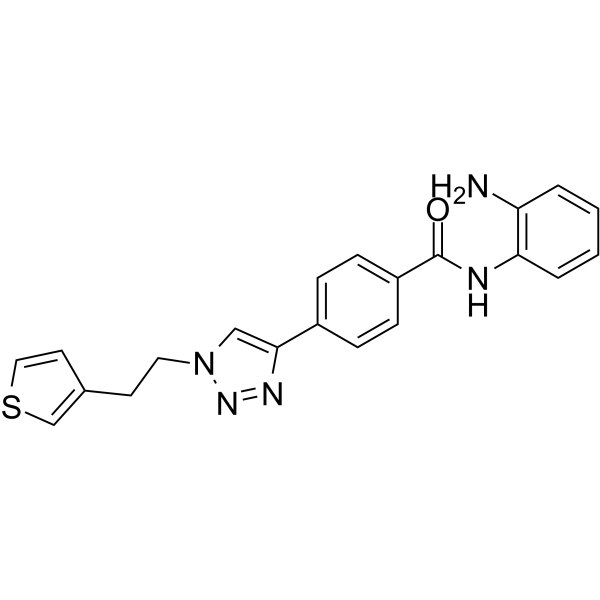
HDAC3-IN-T247 is a potent and selective HDAC3 (histone deacetylase 3) inhibitor, with an IC50 of 0.24 µM. HDAC3-IN-T247 induces a selective increase of NF-κB acetylation in HCT116 cells. HDAC3-IN-T247 shows anticancer and antiviral activity. HDAC3-IN-T247 inhibits growth of cancer cells, and activates HIV gene expression in latent HIV-infected cells.
For research use only. We do not sell to patients.
- Purity : 98.35%
- CAS No.: 1451042-18-4
- Formula: C21H19N5OS
- Molecular Weight:389.47
-
Storage:Powder -20°C, 3 years , 4°C, 2 years ; In solvent -80°C, 6 months , -20°C, 1 month

To place orders, for customer services and technical support, please contact: MedChemExpress USA
Tel: 609-228-6898 E-mail: [email protected] [email protected]


-
 Biological Activity
-
Chemical Information
-
Solvent & Solubility
- Protocols
- Purity & Documentation
- References
-
 Help & FAQs


-
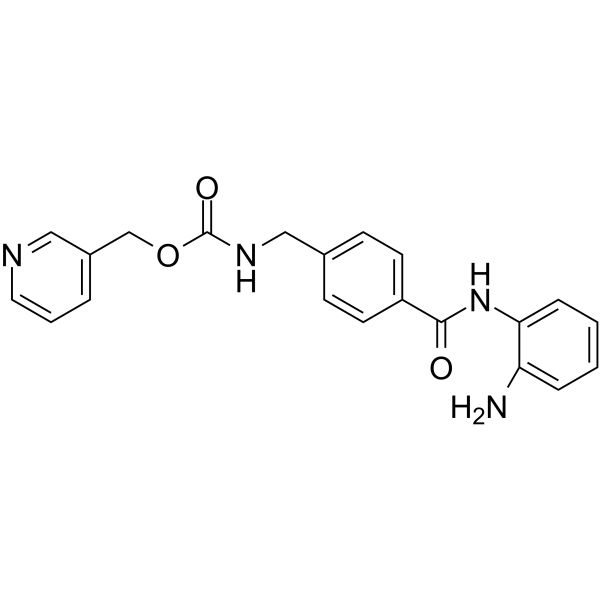
HY-12163
EntinostatHDAC Class I Inhibitor -
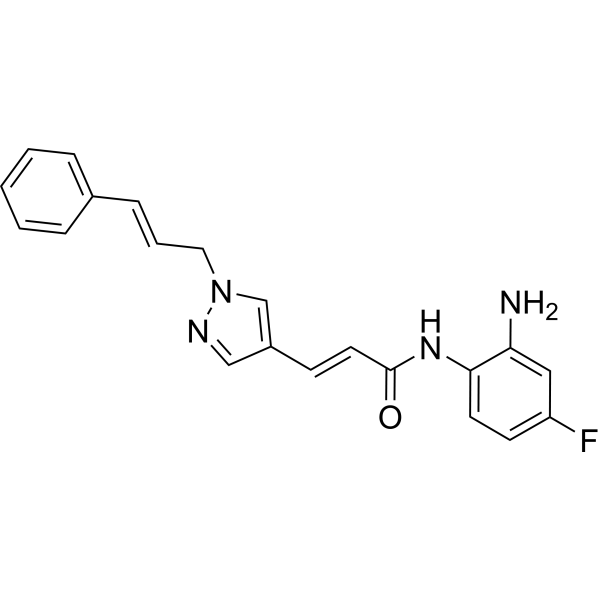
HY-13909
RGFP966HDAC3 Inhibitor -
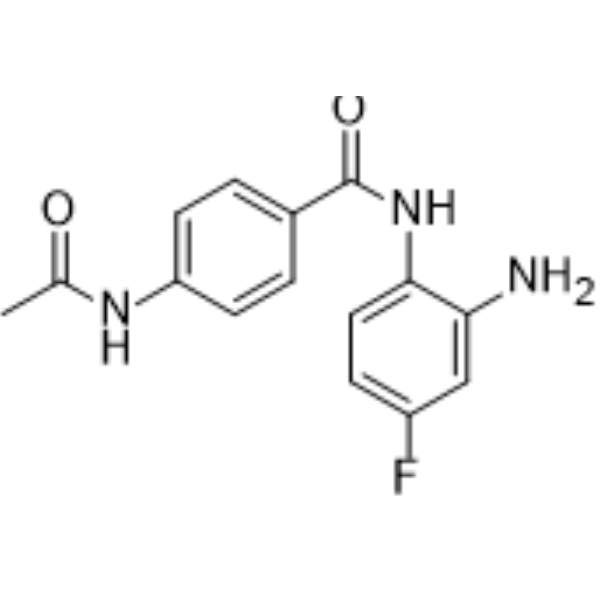
HY-19618
BRD3308HDAC3 Inhibitor -

HY-164782
PT3HDAC3 Inhibitor -
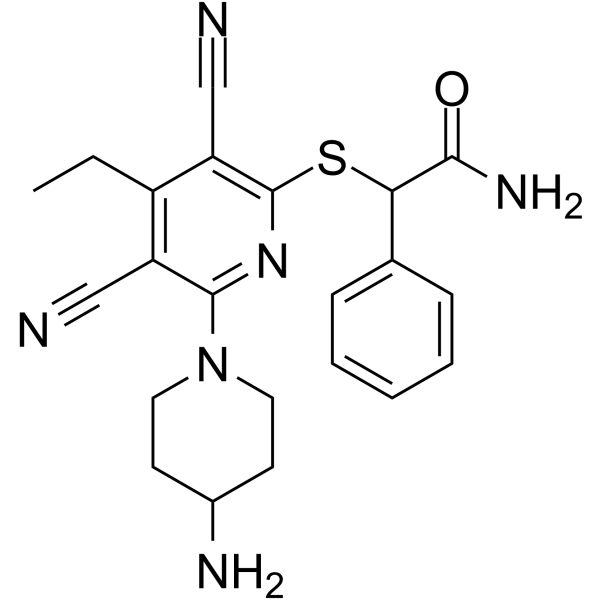
HY-139664
GSK-3685032DNMT1 Inhibitor -
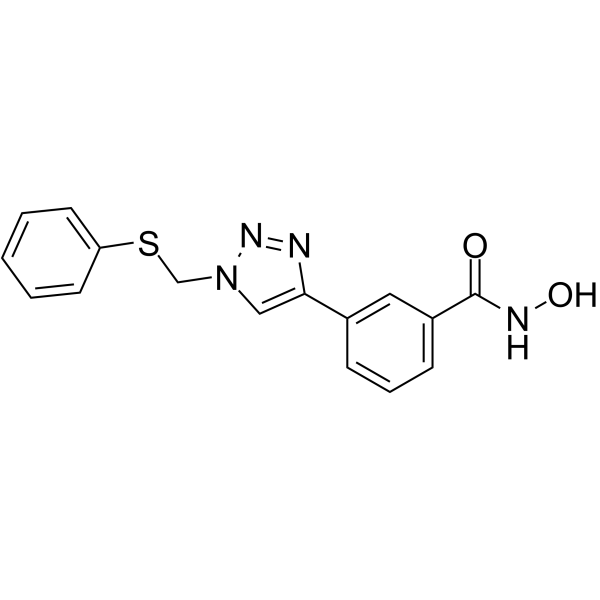
HY-117348
NCC-149HDAC8 Inhibitor -
![3-Trifluoromethyl-5,6,7,8-tetrahydro-[1,2,4]triazolo[4,3-a]pyrazine hydrochloride](https://file.medchemexpress.com/product_pic/hy-76120.gif)
HY-76120
3-Trifluoromethyl-5,6,7,8-tetrahydro-[1,2,4]triazolo[4,3-a]pyrazine hydrochlorideBiochemical Reagent -

HY-W038396
FerrotraceAnticancer Agent


Biological Activity
Description
IC50 & Target
|
HDAC3 0.24 μM (IC50) |
HDAC1 19 μM (IC50) |
HDAC4 >100 μM (IC50) |
HDAC6 >100 μM (IC50) |
HDAC8 >100 μM (IC50) |
Cellular Effect
|
Cell Line

|
Type | Value | Description | References |
|---|---|---|---|---|
| Sf9 | IC50 |
19 μM
Compound: 22; T247
|
Inhibition of human recombinant full-length C-terminal GST-tagged HDAC1 expressed in baculovirus infected Sf9 insect cells by fluorescence assay
Inhibition of human recombinant full-length C-terminal GST-tagged HDAC1 expressed in baculovirus infected Sf9 insect cells by fluorescence assay
|
[PMID: 30735902] |
| Sf9 | IC50 |
>100 μM
Compound: 73
|
Inhibition of recombinant human full length C-terminal GST-tagged HDAC4 (627 to end residues) expressed in baculovirus Sf9 insect cells using HDAC class 2a substrate incubated for 30 mins by fluorescence assay
Inhibition of recombinant human full length C-terminal GST-tagged HDAC4 (627 to end residues) expressed in baculovirus Sf9 insect cells using HDAC class 2a substrate incubated for 30 mins by fluorescence assay
|
[PMID: 31050421] |
| Sf9 | IC50 |
19 μM
Compound: 73
|
Inhibition of recombinant human full length C-terminal GST-tagged HDAC1 expressed in baculovirus Sf9 insect cells using HDAC Glo I/II substrate by Kinase Glo luminescence assay
Inhibition of recombinant human full length C-terminal GST-tagged HDAC1 expressed in baculovirus Sf9 insect cells using HDAC Glo I/II substrate by Kinase Glo luminescence assay
|
[PMID: 31050421] |
| U-937 | CC50 |
0.83 μM
Compound: T247
|
Cytotoxicity against human U937 cells assessed as reduction in cell viability after 48 hrs by CellTiter-Glo luminescent cell viability assay
Cytotoxicity against human U937 cells assessed as reduction in cell viability after 48 hrs by CellTiter-Glo luminescent cell viability assay
|
[PMID: 29541372] |


Chemical Information
-
CAS No. 1451042-18-4
-
Appearance Solid
-
Molecular Weight 389.47
-
Formula C21H19N5OS
-
Color Light yellow to yellow
-
SMILES
O=C(C1=CC=C(C2=CN(CCC3=CSC=C3)N=N2)C=C1)NC4=C(N)C=CC=C4
-
Shipping
Room temperature in continental US; may vary elsewhere.
-
Storage
Powder -20°C 3 years 4°C 2 years In solvent -80°C 6 months -20°C 1 month


Solvent & Solubility
In Vitro:
DMSO : 25 mg/mL (64.19 mM; Need ultrasonic; Hygroscopic DMSO has a significant impact on the solubility of product, please use newly opened DMSO)
Please refer to the solubility information to select the appropriate solvent. Once prepared, please aliquot and store the solution to prevent product inactivation from repeated freeze-thaw cycles.
Storage method and period of stock solution: -80°C, 6 months; -20°C, 1 month. When stored at -80°C, please use it within 6 months. When stored at -20°C, please use it within 1 month.
Please refer to the solubility information to select the appropriate solvent. Once prepared, please aliquot and store the solution to prevent product inactivation from repeated freeze-thaw cycles.
Storage method and period of stock solution: -80°C, 6 months; -20°C, 1 month. When stored at -80°C, please use it within 6 months. When stored at -20°C, please use it within 1 month.
Concentration (start) × Volume (start) = Concentration (final) × Volume (final)

Protocols
-
RT-PCR
Reverse transcription technology uses RNA as a template to synthesize DNA. RT-PCR is simple, specific and sensitive, and can be used to detect gene expression levels and expression differences in cells; detect RNA virus content; clone cDNA sequences of specific genes.
-
Research Protocol for Infectious Diseases
Infectious-disease experiments test how pathogens interact with host barriers, innate immune receptors, inflammatory signaling, pathogen replication, and tissue injury; pattern-recognition receptors such as TLRs, RIG-I-like receptors, NOD-like receptors, and inflammasomes detect microbial molecules and activate NF-κB, interferon, and cytokine responses. The central hypothesis is that infection severity reflects the balance between pathogen burden and host response: protective inflammation restricts pathogen growth, whereas excessive or mislocalized inflammation contributes to tissue damage and disease phenotype. Unresolved questions include which host pathways are protective versus pathogenic, why some infection models fail to translate to human disease, and which combined readouts best predict clinically relevant infection outcomes.
-
RNA extraction experimental
By lysing cells, releasing RNA, and removing impurities such as proteins and DNA, high-purity RNA products are finally obtained. The commonly used traditional method is the guanidine isothiocyanate/phenol/chloroform method (Trizol), which is suitable for a variety of animal materials including animal tissues, microorganisms, cultured cells, etc., and most plant materials.
-
Cell Cytotoxicity Assay
Cytotoxicity assays are usually based on the assessment of cell membrane damage, which can also be indirectly detected by measuring cell viability. Detection methods include MTT assay, CKK-8 assay, LDH assay and ATP assay, etc.
-
Research Protocol for Inflammation-related Diseases
The NLRP3 inflammasome is a cytosolic innate immune signaling platform that integrates priming signals and danger-signal activation to promote caspase-1 activation, maturation of IL-1β and IL-18, and gasdermin D-mediated pyroptotic cell death. The core experimental logic is to determine whether inflammatory disease phenotypes are driven by increased NLRP3 expression, ASC-containing inflammasome assembly, caspase-1 cleavage, GSDMD cleavage, and extracellular release of IL-1β/IL-18 rather than by nonspecific cell injury alone. The pathway is strongly linked to inflammation-related disease phenotypes because monosodium urate crystals activate NALP3/NLRP3 inflammasome signaling in gout-like crystal inflammation, cholesterol crystals activate NLRP3 inflammasomes in atherogenesis models, and DSS-induced intestinal inflammation has been reported to involve NLRP3 inflammasome activity. However, experimental colitis studies also show context-dependent protective effects of NLRP3 inflammasome co
-
Real Time qPCR (Q-PCR)
Real-time quantitative PCR (qPCR) quantifies an amplifiable nucleic-acid target by monitoring fluorescence during PCR cycling rather than measuring product only after amplification. The increase in fluorescence tracks accumulation of PCR product, and the quantification cycle (Cq; historically also Ct/CP) is related to the initial amount of target: samples containing more starting target generally reach the defined fluorescence threshold in fewer cycles.


Purity & Documentation
-
Data Sheet (270 KB)
-
SDS (393 KB)
- English - EN (393 KB)
- Français - FR (393 KB)
- Deutsch - DE (393 KB)
- Norwegian - NO (393 KB)
- Español - ES (393 KB)
- Swedish - SV (393 KB)
- Italian - IT (393 KB)
- Korean - KR (393 KB)
- Portuguese - PT (393 KB)
-
Handling Instructions (2659 KB)
References


Complete Stock Solution Preparation Table
Please refer to the solubility information to select the appropriate solvent. Once prepared, please aliquot and store the solution to prevent product inactivation from repeated freeze-thaw cycles.
Storage method and period of stock solution: -80°C, 6 months; -20°C, 1 month. When stored at -80°C, please use it within 6 months. When stored at -20°C, please use it within 1 month.
| Optional Solvent | Concentration Solvent Mass | 1 mg | 5 mg | 10 mg | 25 mg |
|---|---|---|---|---|---|
| DMSO | 1 mM | 2.5676 mL | 12.8380 mL | 25.6759 mL | 64.1898 mL |
| 5 mM | 0.5135 mL | 2.5676 mL | 5.1352 mL | 12.8380 mL | |
| 10 mM | 0.2568 mL | 1.2838 mL | 2.5676 mL | 6.4190 mL | |
| 15 mM | 0.1712 mL | 0.8559 mL | 1.7117 mL | 4.2793 mL | |
| 20 mM | 0.1284 mL | 0.6419 mL | 1.2838 mL | 3.2095 mL | |
| 25 mM | 0.1027 mL | 0.5135 mL | 1.0270 mL | 2.5676 mL | |
| 30 mM | 0.0856 mL | 0.4279 mL | 0.8559 mL | 2.1397 mL | |
| 40 mM | 0.0642 mL | 0.3209 mL | 0.6419 mL | 1.6047 mL | |
| 50 mM | 0.0514 mL | 0.2568 mL | 0.5135 mL | 1.2838 mL | |
| 60 mM | 0.0428 mL | 0.2140 mL | 0.4279 mL | 1.0698 mL |


HDAC3-IN-T247 Related Classifications
HY-123295 Related Classifications
 Powered by Bioz