
1. Search Result
Search Result
Results for "

Hyaluronate

" in MedChemExpress (MCE) Product Catalog:

26

Inhibitors & Agonists

9

Fluorescent Dyes

5

Biochemical Assay Reagents

2

Natural
Products

7

Recombinant Proteins

3

Antibodies

1

Oligonucleotides

Cat. No. Product Name Target Research Areas Chemical Structure
  • HY-107910
    Hyaluronidase, Bovine testes
    15+ Cited Publications

    Hyaluronate 4-glycanohydrolase, Bovine testes; Hyaluronoglucosaminidase, Bovine testes

    NF-κB Inflammation/Immunology Cancer
    Hyaluronidase, Bovine testes (Hyaluronate 4-glycanohydrolase; Hyaluronoglucosaminidase) is an endoglycosidase that depolymerizes Hyaluronic acid (HA) (HY-B0633A) by cleavage of glycosidic bonds. Hyaluronidase degrades HA and activates membrane receptors that trigger pathways converging in NF-κB activation. Hyaluronidase is employed in the research of granulomatous foreign body reactions, soft-tissue necrosis caused by vascular compromise and uncomplicated nodules, overcorrection, inflamed nodules or tissue ischemia associated with HA filler injection .
    Hyaluronidase, Bovine testes
  • HY-B0633
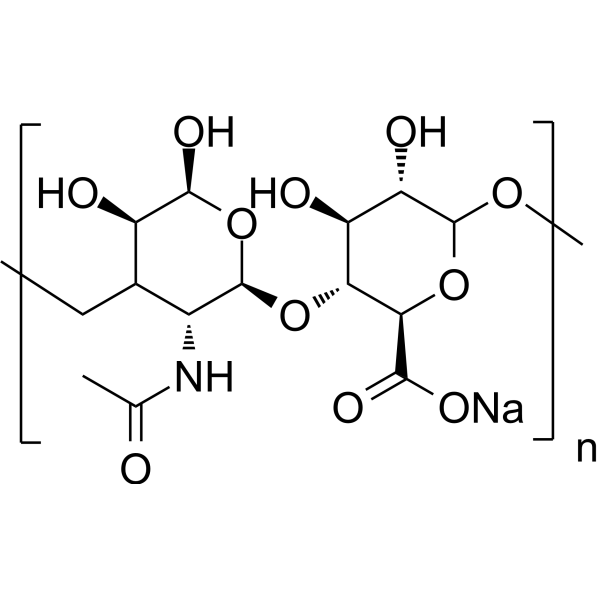
    Hyaluronic acid sodium
    15+ Cited Publications

    Sodium Hyaluronate

    Endogenous Metabolite Bacterial PI3K Akt Inflammation/Immunology Cancer
    Hyaluronic acid sodium (Sodium hyaluronate) is a biopolymer composed of repeating units of disaccharides with various applications. Hyaluronic acid sodium is a major component of the extracellular matrix (ECM). Hyaluronic acid sodium is synthesized at the plasma membrane. Increased hyaluronic acid sodium levels are associated with tumor cell growth, adhesion, migration, invasion and angiogenesis in digestive cancers. Hyaluronic acid sodium participates in tissue remodeling and rapid cell proliferation in some physiological processes including embryonic morphogenesis and wound-healing. Hyaluronic acid sodium activates the PI3K-Akt signaling. Hyaluronic acid sodium acts as a regulator of cancer-associated lymphangiogenesis. Hyaluronic acid sodium also enhances cell invasion and angiogenesis by promoting proteolytic MMP-9 binding to cell surface or stimulating MMP-9 binding to cell surface. Hyaluronic acid sodium can be used as drug delivery for sodium butyrate to improve the anti-proliferative activity on breast cancer cell line. Hyaluronic acid sodium can be studied in joint diseases, wound healing and cancer .
    Hyaluronic acid sodium
  • HY-B0633A
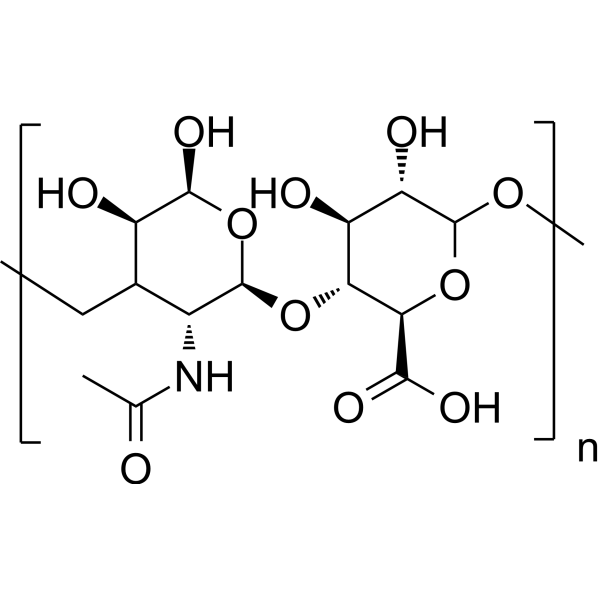
    Hyaluronic acid
    15+ Cited Publications

    Hyaluronan; Hyaluronate

    Endogenous Metabolite Bacterial Akt PI3K Infection Neurological Disease Inflammation/Immunology Cancer
    Hyaluronic acid is a biopolymer composed of repeating units of disaccharides with various applications. Hyaluronic acid is a major component of the extracellular matrix (ECM). Hyaluronic acid is synthesized at the plasma membrane. Increased hyaluronic acid levels are associated with tumor cell growth, adhesion, migration, invasion and angiogenesis in digestive cancers. Hyaluronic acid participates in tissue remodeling and rapid cell proliferation in some physiological processes including embryonic morphogenesis and wound-healing. Hyaluronic acid activates the PI3K-Akt signaling. Hyaluronic acid acts as a regulator of cancer-associated lymphangiogenesis. Hyaluronic acid also enhances cell invasion and angiogenesis by promoting proteolytic MMP-9 binding to cell surface or stimulating MMP-9 binding to cell surface. Hyaluronic acid can be used as drug delivery for sodium butyrate to improve the anti-proliferative activity on breast cancer cell line. Hyaluronic acid can be studied in joint diseases, wound healing and cancer .
    Hyaluronic acid
  • HY-B0633E

    Hyaluronan, low endotoxin; Hyaluronate, low endotoxin

    Endogenous Metabolite CD44 Bacterial Akt PI3K Neurological Disease Metabolic Disease Inflammation/Immunology Cancer
    Hyaluronic acid, low endotoxin (Hyaluronan, low endotoxin) is a biopolymer composed of repeating disaccharide units containing low levels of endotoxin. Hyaluronic acid is a major component of the extracellular matrix (ECM). It is synthesized on the plasma membrane. Hyaluronic acid exerts its effects by binding to receptors CD44 and RHAMM. Hyaluronic acid activates PI3K-Akt signaling. Hyaluronic acid also enhances cell invasion and angiogenesis by promoting or stimulating the binding of proteolytic MMP-9 to the cell surface. Elevated hyaluronic acid levels are associated with tumor cell growth, adhesion, migration, invasion, and angiogenesis in digestive system cancers. Hyaluronic acid is involved in tissue remodeling and rapid cell proliferation in several physiological processes, including embryonic morphogenesis and wound healing. Hyaluronic acid can be used as a regulator of cancer-associated lymphangiogenesis. Hyaluronic acid can be used as a drug delivery carrier for sodium butyrate, enhancing its anti-proliferative activity against breast cancer cell lines. Hyaluronic acid can lubricate the corneal endothelium. Hyaluronic acid can improve tissue hydration and enhance the resistance of cells to mechanical damage. Hyaluronic acid has been conjugated with antibodies to ensure that the active compound continues to exert its effects at the site of inflammation. Hyaluronic acid can be used in research in the fields of osteoarthritis, ophthalmology, cosmetic dermatology, oncology, and liver diseases .
    Hyaluronic acid, low endotoxin
  • HY-D2836

    FITC-Hyaluronate (MW 1000000)

    Fluorescent Dye Others
    FITC-HA (MW 1000000) is hyaluronic acid (HA) (HY-B0633A) labeled with FITC (HY-66019). FITC-HA retains the ability of HA to bind to receptors (such as CD44) and form extracellular matrices, while it can be detected by fluorescence microscopy or flow cytometry for tracing the localization, binding, internalization and metabolic pathways of HA in cells, tissues or living organisms (Ex/Em ≈ 490/520 nM) .
    FITC-HA (MW 1000000)
  • HY-B0633B

    Hyaluronan (MW 50000-100000); Hyaluronate (MW 50000-100000)

    Biochemical Assay Reagents PI3K Others
    Hyaluronic acid (MW 50000-100000) (Hyaluronan (MW 50000-100000)) is a biopolymer composed of repeating units of disaccharides with a molecular weight of 50000-100000 Da. Hyaluronic acid (MW 50000-100000) can be used as a drug carrier for drug delivery .
    Hyaluronic acid (MW 50000-100000)
  • HY-164068

    Biochemical Assay Reagents Others Inflammation/Immunology
    Cross-linked sodium hyaluronate gel is a biomaterial formed by cross-linking sodium hyaluronate. Cross-linked sodium hyaluronate gel has good moisturizing properties, viscoelasticity and biocompatibility. Cross-linked sodium hyaluronate gel can be used for the treatment of arthritis and the development of auxiliary materials in ophthalmic surgery .
    Cross-linked sodium hyaluronate gel
  • HY-P2957

    Biochemical Assay Reagents Metabolic Disease
    Hyaluronate lyase can cleat hyaluronate (HA) and produce unsaturated disaccharides through a β-elimination reaction. The resulting disaccharides further trigger the downstream pathway and catalyze the next reaction. Hyaluronate lyase helps Streptococcus dysgalactiae subsp.equisimilis (SDSE) acquire nutrients from the host, causing bacterial pathogenicity .
    Hyaluronate lyase
  • HY-164069

    Biochemical Assay Reagents Others
    Aldehyde Sodium Hyaluronate is a hyaluronic acid derivative with good moisturizing properties and biocompatibility, and can be used in the research of pharmaceutical and cosmetic fields .
    Aldehyde Sodium Hyaluronate
  • HY-164066

    Biochemical Assay Reagents Others
    Sodium Acetylated Hyaluronate is an acetylated hyaluronic acid derivative with anti-wrinkle and deep skin penetration properties, which can be used in skin aging research and cosmetic development .
    Sodium Acetylated Hyaluronate
  • HY-164065

    Biochemical Assay Reagents Others
    Sodium Hyaluronate Hydroxypropyltrimonium Chloride is a modified form of hyaluronic acid that has been modified by adding positively charged hydroxypropyltrimonium chloride groups to improve its adsorption and retention on the skin. Sodium Hyaluronate Hydroxypropyltrimonium Chloride has good moisturizing and ionic properties and can be used in the research of pharmaceutical and cosmetic fields .
    Sodium Hyaluronate Hydroxypropyltrimonium Chloride
  • HY-D2836I

    FITC-Hyaluronate (MW 5000)

    Fluorescent Dye Others
    FITC-HA (MW 5000) is hyaluronic acid (HA) (HY-B0633A) labeled with FITC (HY-66019). FITC-HA retains the ability of HA to bind to receptors (such as CD44) and form extracellular matrices, while it can be detected by fluorescence microscopy or flow cytometry for tracing the localization, binding, internalization and metabolic pathways of HA in cells, tissues or living organisms (Ex/Em ≈ 490/520 nM) .
    FITC-HA (MW 5000)
  • HY-164067

    Biochemical Assay Reagents Others
    Silylanization hyaluronate ester is a hyaluronate ester derivative with good moisturizing properties and biocompatibility, and can be used in cosmetic research .
    Silylanization hyaluronate ester
  • HY-D2836B

    FITC-Hyaluronate (MW 200000)

    Fluorescent Dye Others
    FITC-HA (MW 200000) is hyaluronic acid (HA) (HY-B0633A) labeled with FITC (HY-66019). FITC-HA retains the ability of HA to bind to receptors (such as CD44) and form extracellular matrices, while it can be detected by fluorescence microscopy or flow cytometry for tracing the localization, binding, internalization and metabolic pathways of HA in cells, tissues or living organisms (Ex/Em ≈ 490/520 nM) .
    FITC-HA (MW 200000)
  • HY-D2836D

    FITC-Hyaluronate (MW 50000)

    Fluorescent Dye Others
    FITC-HA (MW 50000) is hyaluronic acid (HA) (HY-B0633A) labeled with FITC (HY-66019). FITC-HA retains the ability of HA to bind to receptors (such as CD44) and form extracellular matrices, while it can be detected by fluorescence microscopy or flow cytometry for tracing the localization, binding, internalization and metabolic pathways of HA in cells, tissues or living organisms (Ex/Em ≈ 490/520 nM) .
    FITC-HA (MW 50000)
  • HY-D2836C

    FITC-Hyaluronate (MW 100000)

    Fluorescent Dye Others
    FITC-HA (MW 100000) is hyaluronic acid (HA) (HY-B0633A) labeled with FITC (HY-66019). FITC-HA retains the ability of HA to bind to receptors (such as CD44) and form extracellular matrices, while it can be detected by fluorescence microscopy or flow cytometry for tracing the localization, binding, internalization and metabolic pathways of HA in cells, tissues or living organisms (Ex/Em ≈ 490/520 nM) .
    FITC-HA (MW 100000)
  • HY-W540662

    Biochemical Assay Reagents Others
    Hyaluronate decasaccharide is a biochemical reagent.
    Hyaluronate decasaccharide
  • HY-W783987

    Biochemical Assay Reagents Others
    Hyaluronate hexasaccharide is a biochemical assay reagent.
    Hyaluronate hexasaccharide
  • HY-145676E

    ADC Linker Others
    Sodium phenyl ethylamido hyaluronate (10% substitution) is a chemical agent. Sodium phenyl ethylamido hyaluronate (10% substitution) has 10% phenethylamine substitution. The molecular weight is 40-60WD.
    Sodium phenyl ethylamido hyaluronate(10% substitution)
  • HY-145676A

    ADC Linker Others
    Sodium phenyl ethylamido hyaluronate (30% substitution) is a chemical agent. Sodium phenyl ethylamido hyaluronate (30% substitution) has 30% phenethylamine substitution. The molecular weight is 40 WD – 60WD.
    Sodium phenyl ethylamido hyaluronate(30% substitution)
  • HY-145676

    ADC Linker Others
    Sodium phenyl ethylamido hyaluronate (20% substitution) is a chemical agent. Sodium phenyl ethylamido hyaluronate (20% substitution) has 20% phenethylamine substitution. The molecular weight is 40-60WD.
    Sodium phenyl ethylamido hyaluronate(20% substitution)
  • HY-D2836E

    FITC-Hyaluronate (MW 10000)

    Fluorescent Dye Others
    FITC-HA (MW 10000) is hyaluronic acid (HA) (HY-B0633A) labeled with FITC (HY-66019). FITC-HA retains the ability of HA to bind to receptors (such as CD44) and form extracellular matrices, while it can be detected by fluorescence microscopy or flow cytometry for tracing the localization, binding, internalization and metabolic pathways of HA in cells, tissues or living organisms (Ex/Em ≈ 490/520 nM) .
    FITC-HA (MW 10000)
  • HY-D2836J

    FITC-Hyaluronate (MW 3000)

    Fluorescent Dye Others
    FITC-HA (MW 3000) is hyaluronic acid (HA) (HY-B0633A) labeled with FITC (HY-66019). FITC-HA retains the ability of HA to bind to receptors (such as CD44) and form extracellular matrices, while it can be detected by fluorescence microscopy or flow cytometry for tracing the localization, binding, internalization and metabolic pathways of HA in cells, tissues or living organisms (Ex/Em ≈ 490/520 nM) .
    FITC-HA (MW 3000)
  • HY-D2836A

    FITC-Hyaluronate (MW 500000)

    Fluorescent Dye Others
    FITC-HA (MW 500000) is hyaluronic acid (HA) (HY-B0633A) labeled with FITC (HY-66019). FITC-HA retains the ability of HA to bind to receptors (such as CD44) and form extracellular matrices, while it can be detected by fluorescence microscopy or flow cytometry for tracing the localization, binding, internalization and metabolic pathways of HA in cells, tissues or living organisms (Ex/Em ≈ 490/520 nM) .
    FITC-HA (MW 500000)
  • HY-B0633P

    Sodium Hyaluronate (MW 0.9M-1.0Mda)

    Biochemical Assay Reagents Others
    Hyaluronic acid sodium (MW 0.9M-1.0Mda) (Sodium hyaluronate (MW 0.9M-1.0Mda)) is a biopolymer composed of repeating units of disaccharides with a molecular weight of 0.9 M-1.0 Mda. Hyaluronic acid sodium (MW 0.9M-1.0Mda) can be used as a drug carrier for drug delivery .
    Hyaluronic acid sodium (MW 0.9M-1.0Mda)
  • HY-D2836H

    FITC-Hyaluronate (MW 7000)

    Fluorescent Dye Others
    FITC-HA (MW 7000) is hyaluronic acid (HA) (HY-B0633A) labeled with FITC (HY-66019). FITC-HA retains the ability of HA to bind to receptors (such as CD44) and form extracellular matrices, while it can be detected by fluorescence microscopy or flow cytometry for tracing the localization, binding, internalization and metabolic pathways of HA in cells, tissues or living organisms (Ex/Em ≈ 490/520 nM) .
    FITC-HA (MW 7000)

Inquiry Online

Your information is safe with us. * Required Fields.

Salutation


Country or Region *

Applicant Name *


Organization Name *

Department *


Email Address *


Product Name *

Cat. No.


Requested quantity *

Phone Number *


Remarks

Inquiry Online

Inquiry Information

Product Name:
Cat. No.:
Quantity:
MCE Japan Authorized Agent:

