
1. Search Result
Search Result
Results for "

KASUMI-1

" in MedChemExpress (MCE) Product Catalog:

27

Inhibitors & Agonists

1

Inhibitory Antibodies

1

Oligonucleotides

Cat. No. Product Name Target Research Areas Chemical Structure
  • HY-112288
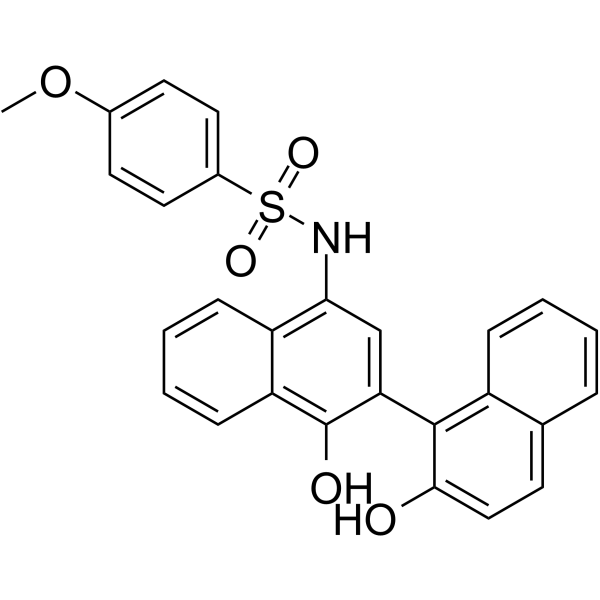
    C188-9
    Maximum Cited Publications
    32 Publications Verification

    TTI-101

    STAT Apoptosis DNA Methyltransferase Metabolic Disease Inflammation/Immunology Cancer
    C188-9 (TTI-101) is a STAT3 inhibitor with a Kd value of 4.7 nM. C188-9 targets the SH2 domain of STAT3, blocks the processes of STAT3 ligand binding, receptor recruitment, homodimerization and phosphorylation, and regulates STAT3-mediated genes associated with tumorigenesis and radioresistance. C188-9 regulates STAT1-mediated genes related to radioresistance and reduces the activation level of STAT1. C188-9 downregulates the expression of DNMT1, enhances DAC-induced demethylation and re-expression of RASSF1A, and simultaneously potentiates the anti-tumor effect of DAC on pancreatic cancer cells. C188-9 inhibits both anchorage-dependent and anchorage-independent growth of cancer cells, induces Apoptosis, blocks the growth of tumor xenografts, and suppresses muscle atrophy. C188-9 maintains muscle mass, increases body weight and improves grip strength in tumor-bearing mice. C188-9 can be used in research related to head and neck squamous cell carcinoma, pancreatic cancer, sepsis-related skeletal muscle wasting, non-small cell lung cancer, acute myeloid leukemia and cancer cachexia [1] .
    C188-9
  • HY-18975
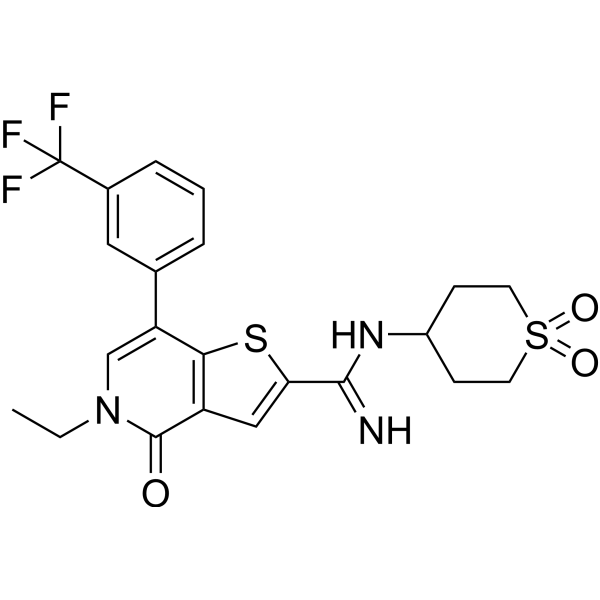
    I-BRD9
    5+ Cited Publications

    Epigenetic Reader Domain Inflammation/Immunology Cancer
    I-BRD9 is a selective cellular chemical probe of bromodomain-containing protein 9 (BRD9) with pIC50 value of 7.3 μM. I-BRD9 has high selectivity for bromodomain and extra terminal domain (BET) family and highly homologous bromodomain-containing protein 7 (BRD7). I-BRD9 can be used to identify genes regulated by BRD9 in Kasumi-1 cells involved in oncology and immune response pathways [1].
    I-BRD9
  • HY-15815
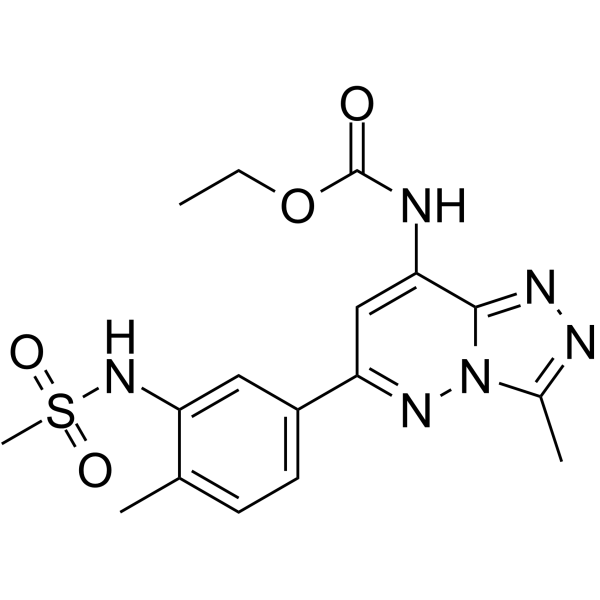
    Bromosporine
    5 Publications Verification

    Epigenetic Reader Domain Apoptosis CDK HIV Cancer
    Bromosporine, a chemical probe, is a potent BET inhibitor with an IC50 value of 2.1 μM for PCAF. Bromosporine can arrest cell cycle and induce apoptosis in cancer cells. Bromosporine exhibits excellent antitumor activity in xenograft mice model when combined with 5-Fluorouracil (HY-90006). Bromosporine can increase CDK9 T-loop phosphorylation in HIV-1 latency models, resulting the protection of reactivate HIV-1 replication from latency. Bromosporine can be used to research colorectal cancer, acute myeloid leukemia (AML) and AIDS [1] .
    Bromosporine
  • HY-16271
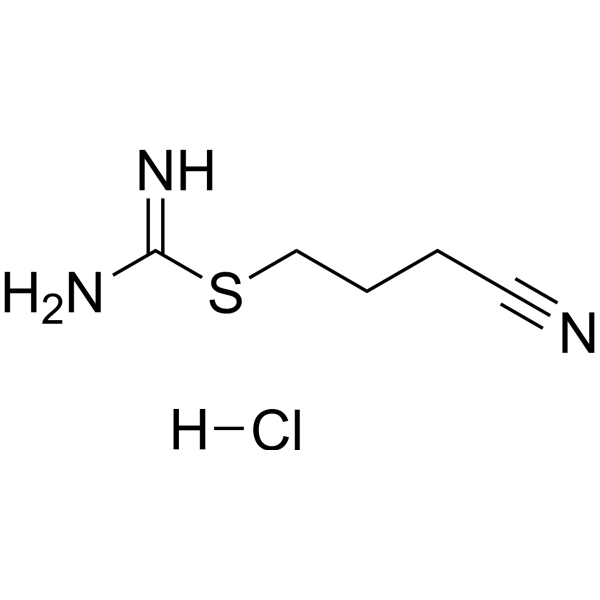
    Kevetrin hydrochloride
    4 Publications Verification

    4-Isothioureidobutyronitrile hydrochloride; thioureidobutyronitrile hydrochloride; thioureido butyronitrile hydrochloride

    MDM-2/p53 Apoptosis Cancer
    Kevetrin hydrochloride is a potent activator of p53, induces apoptosis in TP53 wild-type and mutant acute myeloid leukemia cells. Kevetrin a preferential cytotoxic activity against blast cells [1] .
    Kevetrin hydrochloride
  • HY-155175

    Tim3 IFNAR Cancer
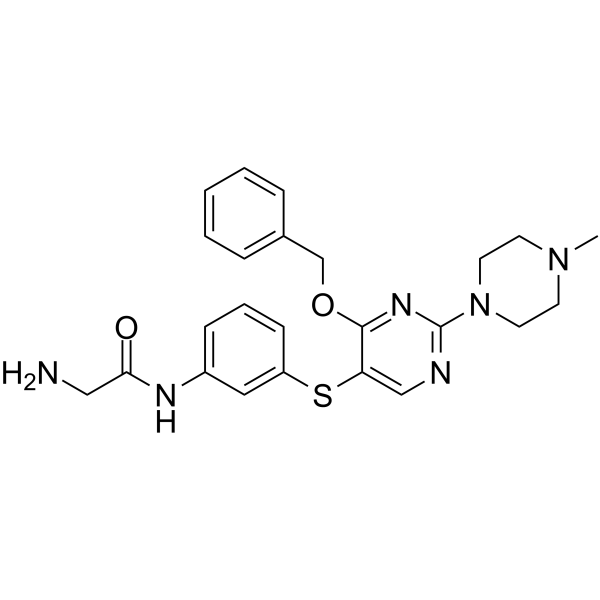
    TIM-3-IN-2 is a TIM-3 inhibitor. TIM-3-IN-2 blocks the interactions of TIM-3 with PtdSer, CEACAM1 and Gal-9, and inhibits the immunosuppressive function of TIM-3. TIM-3-IN-2 restores IFNγ release from peripheral blood mononuclear cells. TIM-3-IN-2 inhibits the proliferation of acute myeloid leukemia cells. TIM-3-IN-2 can be used for the research of acute myeloid leukemia [1].
    TIM-3-IN-2
  • HY-12622
    HSP70-IN-1
    1 Publications Verification

    HSP Cancer
    HSP70-IN-1 is a heat shock protein (HSP) inhibitor; inhibits the growth of Kasumi-1 cells with an IC50 of 2.3 μM.
    HSP70-IN-1
  • HY-131061

    Epigenetic Reader Domain Cancer
    BET bromodomain inhibitor 1 is an orally active, selective bromodomain and extra-terminal (BET) bromodomain inhibitor with an IC50 of 2.6 nM for BRD4. BET bromodomain inhibitor 1 binds to BRD2(2), BRD3(2), BRD4(1), BRD4(2), and BRDT(2) with high affinities (Kd values of 1.3 nM, 1.0 nM, 3.0 nM, 1.6 nM, 2.1 nM, respectively). bromodomain inhibitor 1 has anti-cancer activity [1].
    BET bromodomain inhibitor 1
  • HY-159884

    Tim3 TNF Receptor IFNAR Cancer
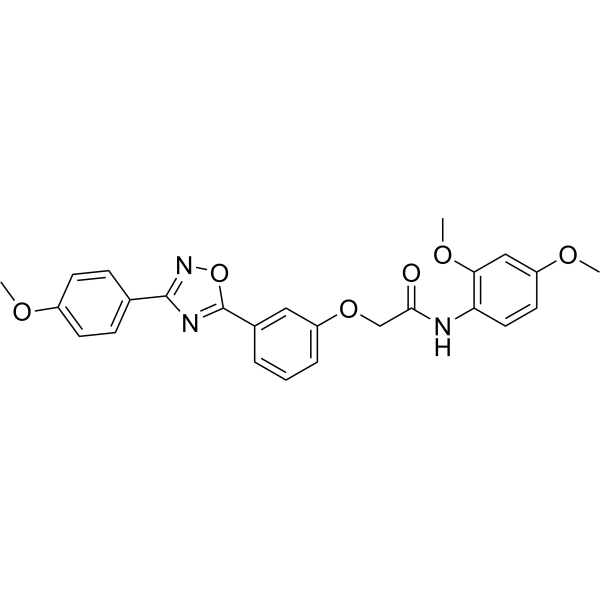
    MG-T-19 is an effective TIM-3 inhibitor that can suppress the interaction of TIM-3 with PtdSer, CEACAM1, and Gal-9. MG-T-19 can increase the production of tumor necrosis factor-α (TNF-α) and interferon-γ (IFN-γ) in peripheral blood mononuclear cells (PBMCs) from healthy donors, and enhance the ability of PBMCs to inhibit the proliferation of Kasumi-1 cells (an acute myelogenous leukemia cell line) [1].
    MG-T-19
  • HY-163626

    DAPK Cancer
    STK17A/B-IN-1 (compound 9) is an orally active, potent, and selective STK17A/B inhibitor with an IC50 of 23 nM against STK17A. STK17A/B-IN-1 can be used for study of cancer [1].
    STK17A/B-IN-1
  • HY-153495

    BP1001

    Bcl-2 Family Apoptosis Reactive Oxygen Species (ROS) Cancer
    Prexigebersen (BP1001) is an antisense oligonucleotide targeting Bcl-2 and Grb2. Prexigebersen exhibits antileukemic activity in cell models. Prexigebersen induces apoptosis (apoptosis), cell cycle arrest and ROS production in leukemia cells. Prexigebersen inhibits Grb2 expression, thereby suppressing tumor growth and survival. Prexigebersen can be used in studies related to acute myeloid leukemia [1] .
    Prexigebersen
  • HY-169093

    PROTACs Epigenetic Reader Domain Apoptosis Cancer
    MS41 is a selective eleven-nineteen leukemia (ENL) PROTAC degrader, with DC50s of 3.50 nM (MV4;11), 2.84 nM (SEMK2), 3.03 nM (Jurkat), and 26.58 nM (KASUMI1), respectively. MS41 effectively inhibits the growth of ENL-dependent leukemia cells, induces G1 cell cycle arrest and increases apoptosis. MS41 reduces the chromatin occupancy of ENL-associated transcription elongation machinery, and suppresses oncogenic gene expression and leukemia progression. Red: ENL ligand (HY-169094). Black: linker (HY-W105744). Blue: VHL ligand (HY-112078) [1].
    MS41
  • HY-150239

    BAY-299N

    DNA/RNA Synthesis Cancer
    BAY-364 (BAY-299N) is an inhibitor of the second bromine domain in TAF1. BAY-364 inhibits the TAF1 of Kasumi-1 cells, CD34 + cells and K562 cells with IC50 values of 1.0 µM, 10.4 µM and 10.0 µM respectively [1].
    BAY-364
  • HY-130854

    E3 Ligase Ligand-Linker Conjugates Autophagy Apoptosis Cancer
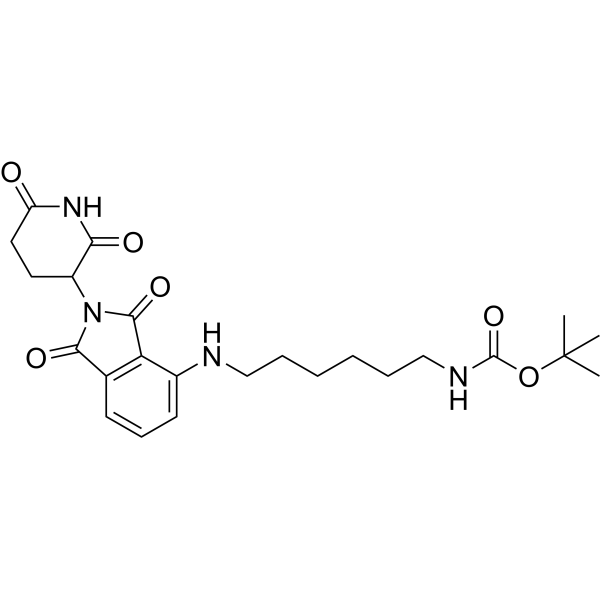
    Thalidomide-NH-C6-NH-Boc is a synthesized E3 ligase ligand-linker conjugate that incorporates the Thalidomide based cereblon ligand and a linker used for MI-389 (compound 22) synthesis. MI-389 is a potent phthalimide PROTAC degrader based on the multi-targeted receptor tyrosine kinase inhibitor sunitinib (HY-10255A) [1].
    Thalidomide-NH-C6-NH-Boc
  • HY-146277A

    Histone Acetyltransferase Cancer
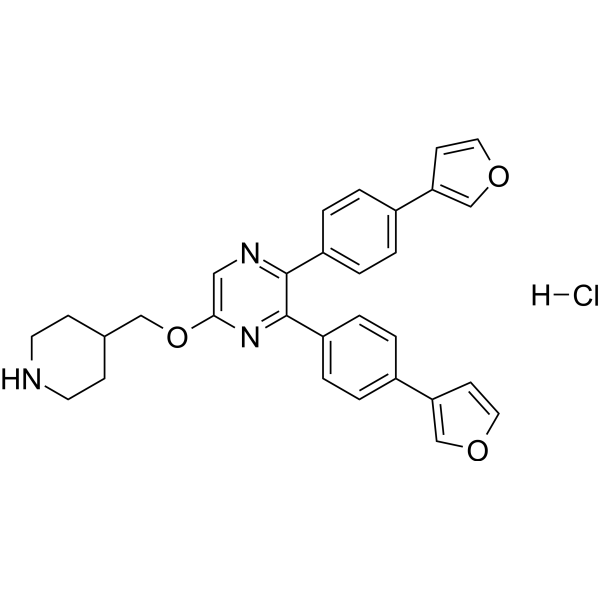
    CBP/p300-IN-19 hydrochloride is a potent and selective p300/CBP HAT inhibitor with IC50s of 1.4, 2.2, >100, >100 µM for p300-HAT, CBP-HAT, PCAF, Myst3, respectively. CBP/p300-IN-19 hydrochloride shows antitumor activity [1].
    CBP/p300-IN-19 hydrochloride
  • HY-146277

    Histone Acetyltransferase Cancer
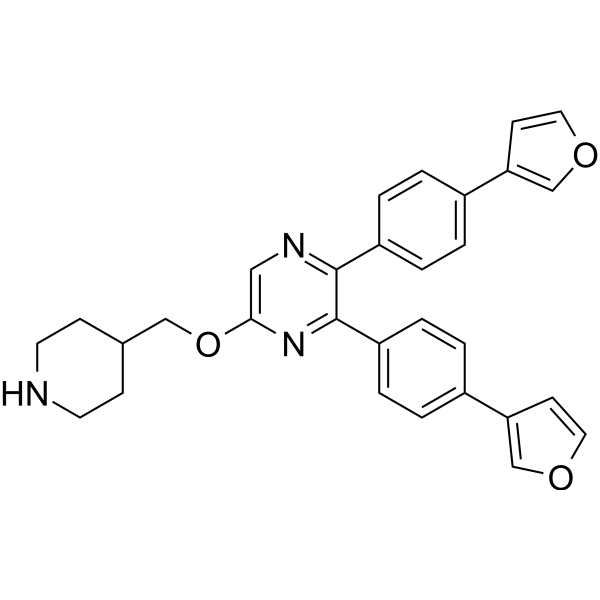
    CBP/p300-IN-19 is a potent p300/CBP HAT inhibitor with IC50s of 1.4, 2.2, >100, >100 µM for p300-HAT, CBP-HAT, PCAF, Myst3, respectively. CBP/p300-IN-19 shows antitumor activity [1].
    CBP/p300-IN-19
  • HY-161708

    PROTACs CDK FLT3 Cancer
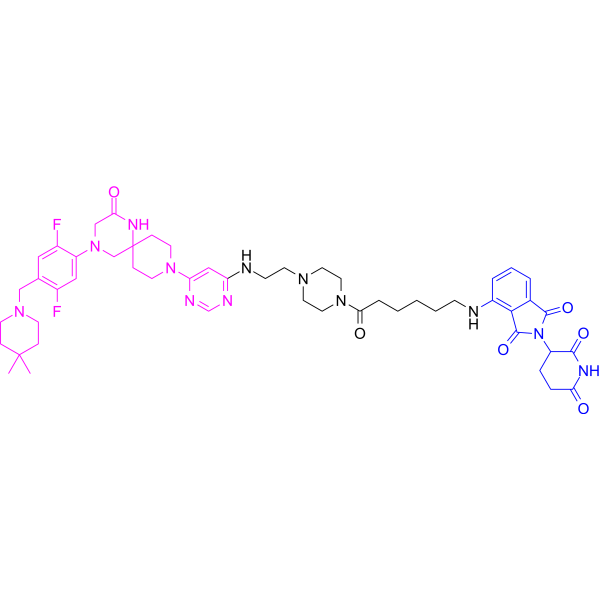
    PROTAC FLT3/CDKs degrader-1 (Compound C3) is a degrader for cyclin-dependent kinases (DC50 is 18.73 nM for CDK2) and the FMS-like tyrosine kinase 3 (FLT3). PROTAC FLT3/CDKs degrader-1 induces differentation of HL-60 (72.77% differentation at 6.25 nM), inhibits proliferation of AML cells, with IC50s of 2.9-37 nM. PROTAC FLT3/CDKs degrader-1 is potential for ameliorating acute myeloid leukemia. (Pink: ligand for target protein FLT3/CDKs ligand-1 (HY-161709); Black: linker (HY-W012935); Black: ligand for E3 ligase Thalidomide 5-fluoride (HY-W087383)) [1]
    PROTAC FLT3/CDKs degrader-1
  • HY-170403

    Histone Demethylase Cancer
    LSD1-IN-38 (Compound 23e) is a reversible, orally active inhibitor for lysine specific demethylase 1 (LSD1) with an IC50 of 1.2 nM. LSD1-IN-38 inhibits the proliferation of cancer cells MV4-11, Kasumi-1 and NCI-H526, with IC50 of 5, 4 and 11 nM, respectively. LSD1-IN-38 activates CD86 expression with an EC50 of 0.034 μM, and induces differentiation in MV4−11 cell. LSD1-IN-38 exhibits antitumor efficacy in mouse models [1].
    LSD1-IN-38
  • HY-P991294

    ADC Antibody Cancer
    MGTA-117 is a humanized monoclonal antibody targeting CD117. MGTA-117 can be used for synthesis of antibody-drug conjugate (ADC), utilizing an amanitin payload. MGTA-117 has potent anti-tumor activity and increases survival in three acute myeloid leukemia (AML) xenograft hNSG mice models (Kasumi-1, AML PDX 1 and AML PDX 2). MGTA-117 enables hematopoietic stem cell transplantation (HSCT) preprocessing in AML, myelodysplasia with excess blasts (MDS-EB) and gene therapy [1] .
    MGTA-117 Antibody
  • HY-161709

    Ligands for Target Protein for PROTAC FLT3 CDK Cancer
    FLT3/CDKs ligand-1 (Compound 14) is a ligand for target protein, which promotes the degradation of cyclin-dependent kinase (CDK) and the FMS-like tyrosine kinase 3 (FLT3), inhibits FLT3/CDK related proliferations and survivals of leukemia cells. LT3/CDKs ligand-1 can be used for synthesis of PROTAC FLT3/CDKs degrader-1 (HY-161708) [1].
    FLT3/CDKs ligand-1
  • HY-143317

    Epigenetic Reader Domain Cancer
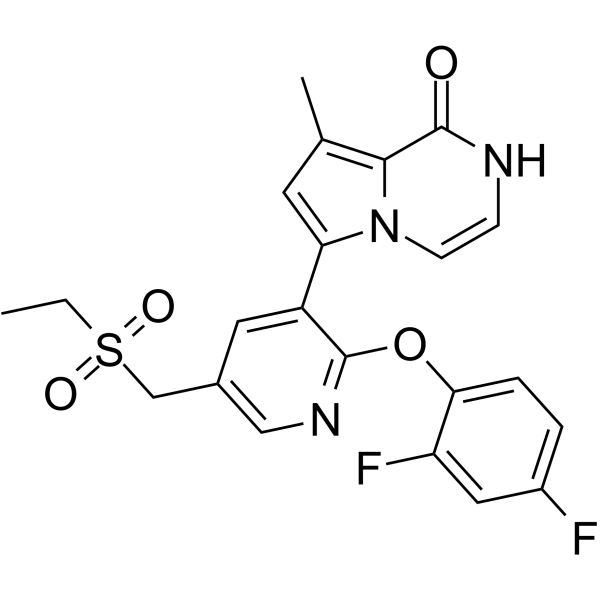
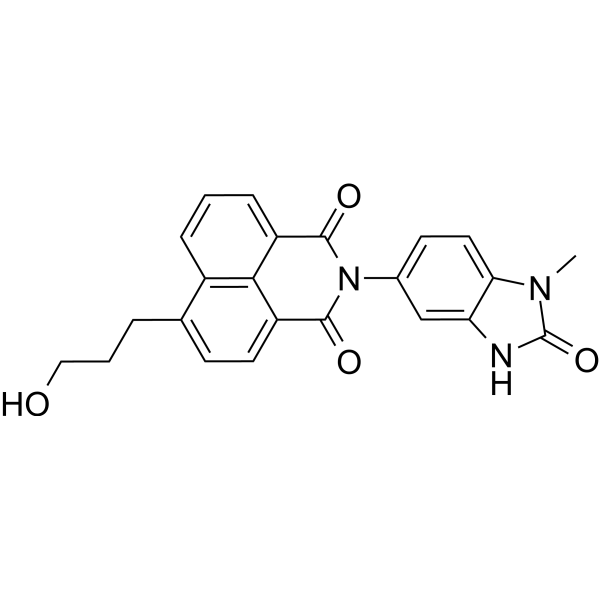
    XY153 (compound 8l) is a BD2-selective BET inhibitor and selectively binds to BRD4 BD2. XY153 binds to BRD4 BD2, BRD3 BD2 and BRD2 BD2 with IC50s of 0.79, 5.31 and 5.09 nM, respectively. XY153 shows potent antiproliferative activity against multiple tumor cell lines. XY153 can be used for the research of acute myeloid leukemia (AML) and cancer [1].
    XY153
  • HY-173145

    Aminopeptidase Cancer
    CD13-IN-1 (Compound 5f) is a CD13 inhibitor with an IC50 of 1.71 μM. CD13-IN-1 can inhibit the proliferation of multiple tumor cells and has anti-tumor activity [1].
    CD13-IN-1
  • HY-183105

    Histone Demethylase Apoptosis Cancer
    DC551040 is an orally active and selective lysine demethylase 1 (LSD1) inhibitor with a human IC50 of 2.14 nM. DC551040 binds to LSD1 via π-π stacking with Trp552, polar interactions with Phe538, and covalent adduct formation with FAD, and disrupts the LSD1-GFI1B-CoREST complex. DC551040 induces H3K4me2 accumulation, apoptosis, and cell differentiation, activates STAT5, NF-κB, AKT, and IL6-STAT3 pathways, and upregulates IL6 expression. DC551040 can be used for the research of acute myeloid leukemia [1].
    DC551040
  • HY-183186

    METTL3 Cytochrome P450 Cancer
    EP102 is an orally active, selective inhibitor of the METTL3/METTL14 complex with an IC50 of 2 nM. EP102 reduces intracellular N6-methyladenosine levels, inhibits cancer cell proliferation, and thereby suppresses tumor growth in mouse models. EP102 is applicable for the research of acute myeloid leukemia, ovarian solid tumors and advanced solid tumors [1].
    EP102
  • HY-120089

    FLT3 ERK Akt STAT Apoptosis Cancer
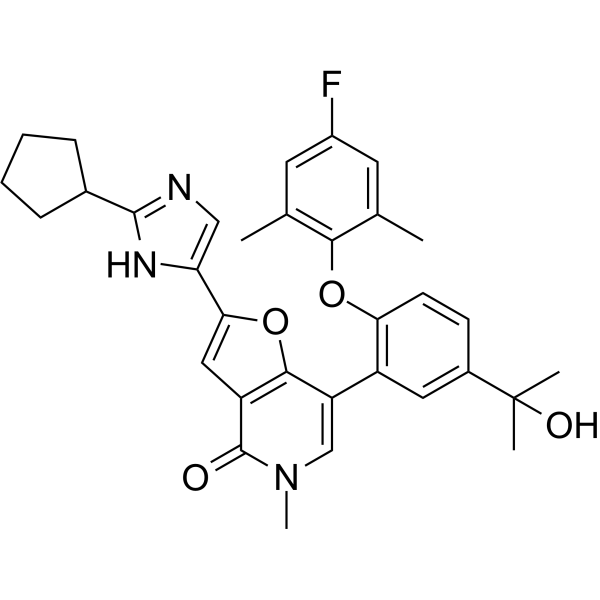
    UNC1666 is an ATP-competitive dual-target Mer/Flt3 tyrosine kinase inhibitor with IC50 values of 0.55 nM and 0.69 nM, and Ki values of 0.16 nM and 0.67 nM, respectively. UNC1666 reduces the phosphorylation levels of Mer and Flt3, suppresses downstream pro-survival signaling pathways (Erk1/2, Akt and Stat), induces cell apoptosis, and decreases colony formation of acute myeloid leukemia cells. UNC1666 is applicable to research related to acute myeloid leukemia [1] .
    UNC1666
  • HY-181767

    PROTACs HDAC Bcl-2 Family Apoptosis Cancer
    PROTAC HDAC3 degrader-1 is a selective PROTAC degrader targeting HDAC3 with a DC50 of 30.73 nM. PROTAC HDAC3 degrader-1 induces degradation of HDAC3 via the ubiquitin-proteasome system. PROTAC HDAC3 degrader-1 promotes apoptosis, induces DNA damage, and downregulates anti-apoptotic proteins Mcl-1 and Bcl-xL. PROTAC HDAC3 degrader-1 can be used for the research of acute myeloid leukemia [1].
    PROTAC HDAC3 degrader-1
  • HY-182956

    Molecular Glues DNA Methyltransferase Cancer
    DNMT1 Degrader-1 is a selective DNMT1 degrader with an IC50 of 202.87 nM and a Kd value of 122 nM. As a molecular glue, DNMT1 Degrader-1 forms a ternary complex with DNMT1 and UHRF1, thereby triggering UHRF1-mediated ubiquitination and degradation of DNMT1, and inhibiting the enzymatic activity of DNMT1. DNMT1 Degrader-1 inhibits the proliferation of primary acute myeloid leukemia cells and exerts anti-tumor activity. DNMT1 Degrader-1 can be used for the research of acute myeloid leukemia [1].
    DNMT1 Degrader-1
  • HY-184106

    HSP Caspase Cancer
    HSP70-IN-9 (Compound 27g) is a Hsp70 inhibitor. HSP70-IN-9 activates Caspase-3 and -7. HSP70-IN-9 exerts anticancer effects against acute myeloid leukemia. HSP70-IN-9 can be used for the research of acute myeloid leukemia [1].
    HSP70-IN-9

Inquiry Online

Your information is safe with us. * Required Fields.

Salutation


Country or Region *

Applicant Name *


Organization Name *

Department *


Email Address *


Product Name *

Cat. No.


Requested quantity *

Phone Number *


Remarks

Inquiry Online

Inquiry Information

Product Name:
Cat. No.:
Quantity:
MCE Japan Authorized Agent:

