Search Result
Results for "
L-alanine
" in MedChemExpress (MCE) Product Catalog:
3
Biochemical Assay Reagents
22
Isotope-Labeled Compounds
| Cat. No. |
Product Name |
Target |
Research Areas |
Chemical Structure |
-
- HY-N0229
-
-
-
- HY-W015546
-
|
BMAA hydrochloride
|
Bacterial
mGluR
PKC
|
Infection
Neurological Disease
Inflammation/Immunology
Cancer
|
|
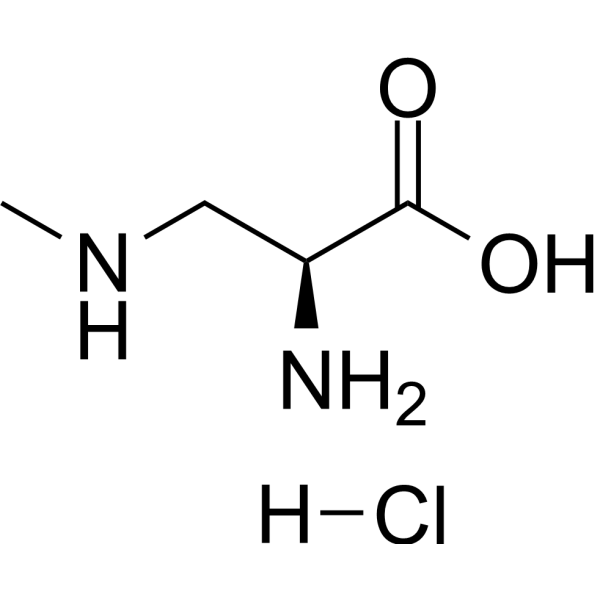
β-N-methylamino-L-alanine hydrochloride (BMAA hydrochloride) is a neurotoxin produced by cyanobacteria. β-N-methylamino-L-alanine hydrochloride activates mGluR3 and inhibits PKC. β-N-methylamino-L-alanine hydrochloride can be used in the research of neurodegenerative diseases and immune diseases .
|
-
-
- HY-112171
-
|
γ-Glu-Ala
|
Endogenous Metabolite
CaSR
|
Others
|
|
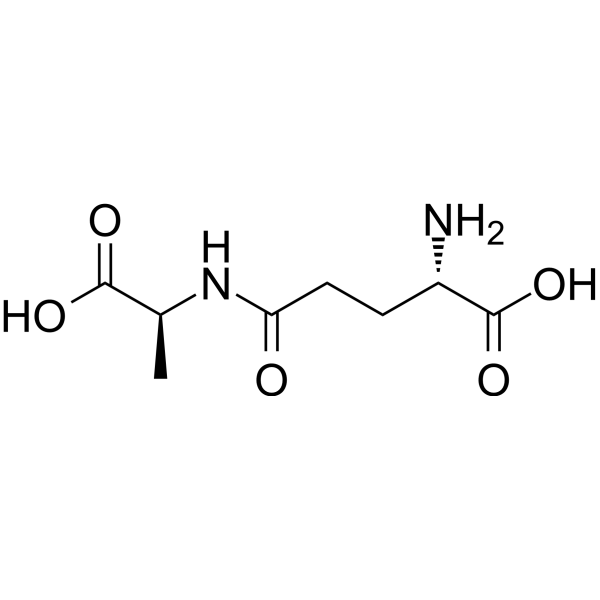
γ-L-Glutamyl-L-alanine (γ-Glu-Ala), composed of gamma-glutamate and alanine, is a proteolytic breakdown product of larger proteins. γ-L-Glutamyl-L-alanine is a natural substrate of the γ-Glutamylcyclotransferase. γ-L-Glutamyl-L-alanine is a positive modulator of calcium-sensing receptor (CaR) function .
|
-
-
- HY-125773
-
|
Beta-cyano-l-alanine
|
Endogenous Metabolite
|
Neurological Disease
|
|
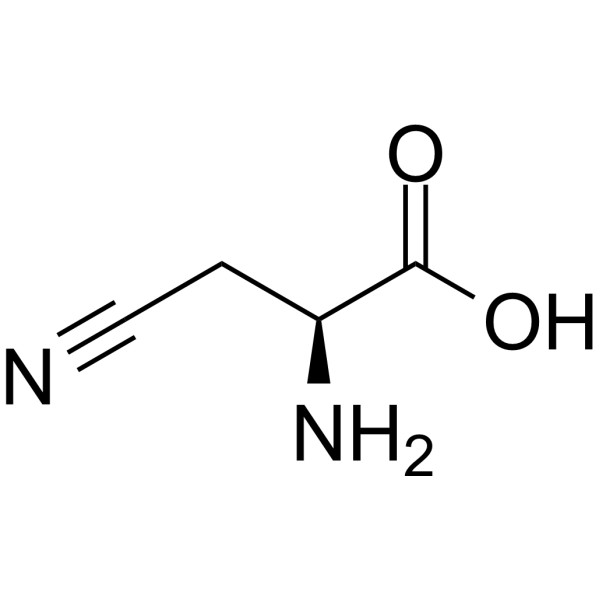
β-cyano-L-Alanine (Beta-cyano-l-alanine), a nitrile of widespread occurrence in higher plants, is enzymatically produced by cyanoalanine synthase from cyanide and cysteine as substrates . β-cyano-L-Alanine abolishes the protective effect of ethanol on cerebral ischemia/reperfusion (I/R) injury .
|
-
-
- HY-W011102
-
|
NSC 83265; S-Tritylcysteine; 3-Tritylthio-L-alanine
|
Kinesin
Apoptosis
|
Cancer
|
|
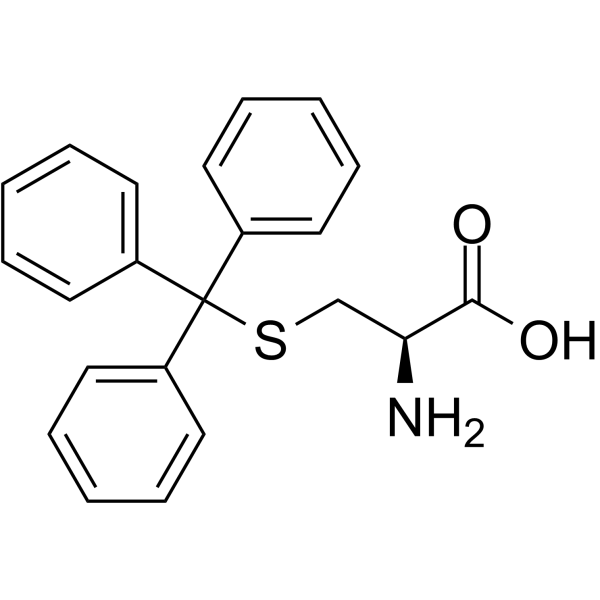
S-Trityl-L-cysteine (NSC 83265) is a selective and allosteric kinesin Eg5 inhibitor with an IC50 of 1 μM for the inhibition of basal ATPase activity and 140 nM for the microtubule-activated ATPase activity. S-Trityl-L-cysteine has antitumor activities .
|
-
-
- HY-W007035
-
-
-
- HY-P2985
-
|
|
Endogenous Metabolite
|
Metabolic Disease
|
|
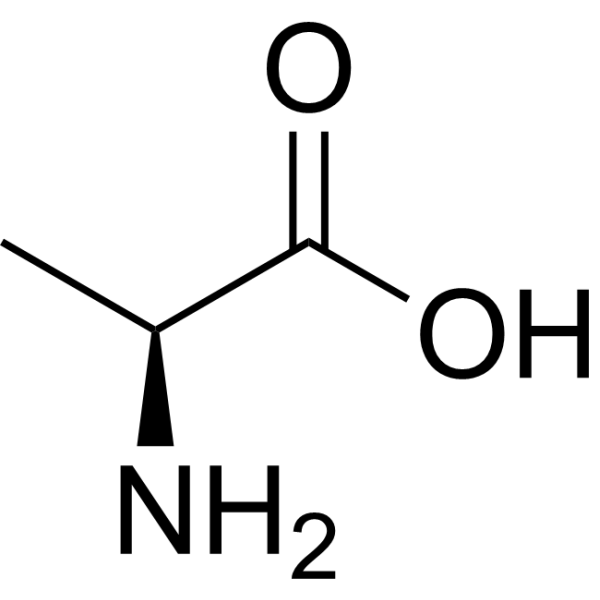
Alanine aminotransferase, Porcine heart is a pyridoxal enzyme that catalyzes the reversible interconversion of L-alanine and 2-oxoglutalate to pyruvate and L-glutamate .
|
-
-
- HY-N0229S12
-
|
L-2-Aminopropionic acid-d3
|
Endogenous Metabolite
|
Neurological Disease
Metabolic Disease
|
|
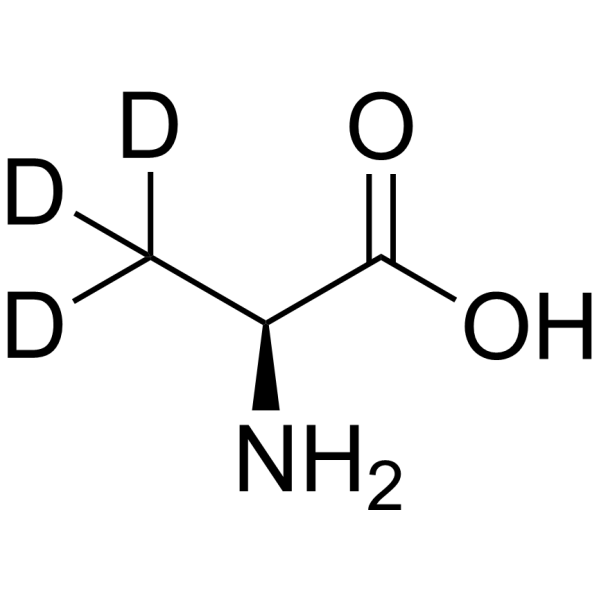
L-Alanine-d3 is the deuterium labeled L-Alanine. L-Alanine is a non-essential amino acid, involved in sugar and acid metabolism, increases immunity, and provides energy for muscle tissue, brain, and central nervous system.
|
-
-
- HY-N0229S3
-
|
L-2-Aminopropionic acid-d4
|
Endogenous Metabolite
|
Neurological Disease
Metabolic Disease
|
|
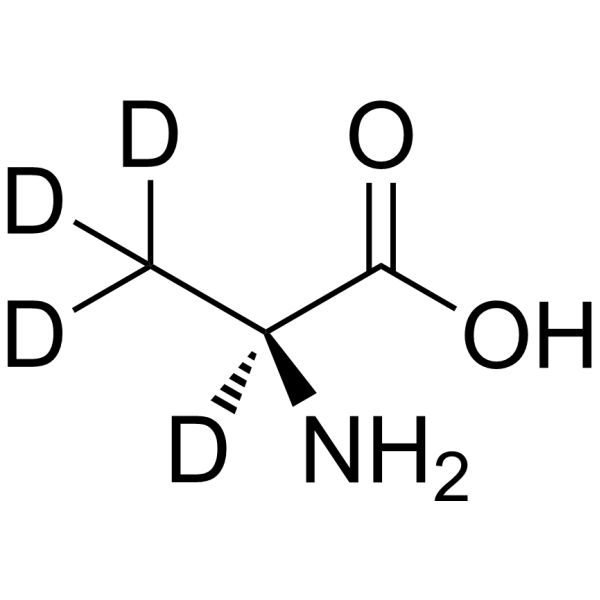
L-Alanine-d4 is the deuterium labeled L-Alanine. L-Alanine is a non-essential amino acid, involved in sugar and acid metabolism, increases immunity, and provides energy for muscle tissue, brain, and central nervous system.
|
-
-
- HY-W038703
-
-
-
- HY-107373
-
|
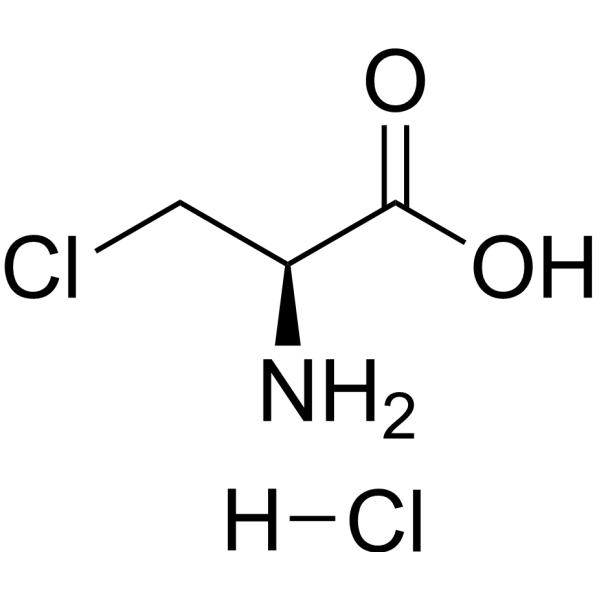
L-β-Chloroalanine
|
Bacterial
|
Infection
|
|
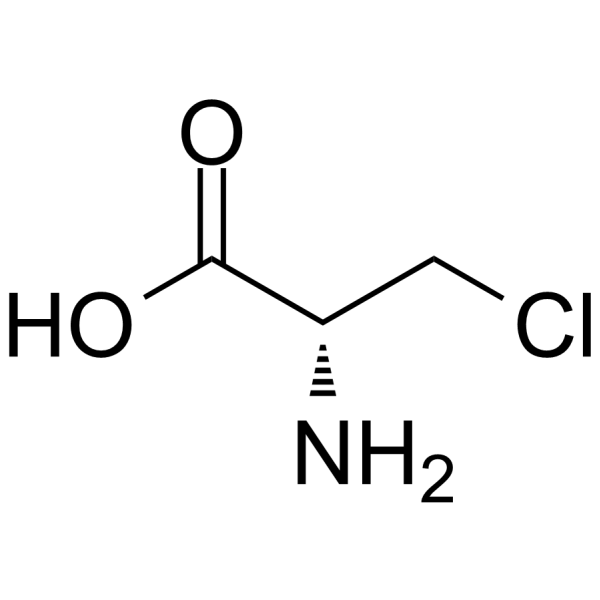
β-Chloro-L-alanine is a bacteriostatic amino acid analog which inhibits a number of enzymes, including threonine deaminase and alanine racemase.
|
-
-
- HY-W007052
-
-
-
- HY-W010162
-
|
L-Alanyl-L-alanine; Ala-Ala
|
Amino Acid Derivatives
|
Others
|
H-Ala-Ala-OH is a substrate of human intestinal oligopeptide transporter (PEPT1/SLC15A1), with an IC50 of 0.25 mM and an EC50 of 0.08 mM against human PEPT1. When used as a dipeptide linker in antibody-drug conjugates (ADCs) loaded with glucocorticoid receptor regulator payloads, H-Ala-Ala-OH enables efficient intracellular payload release .
|
-
-
- HY-41121
-
|
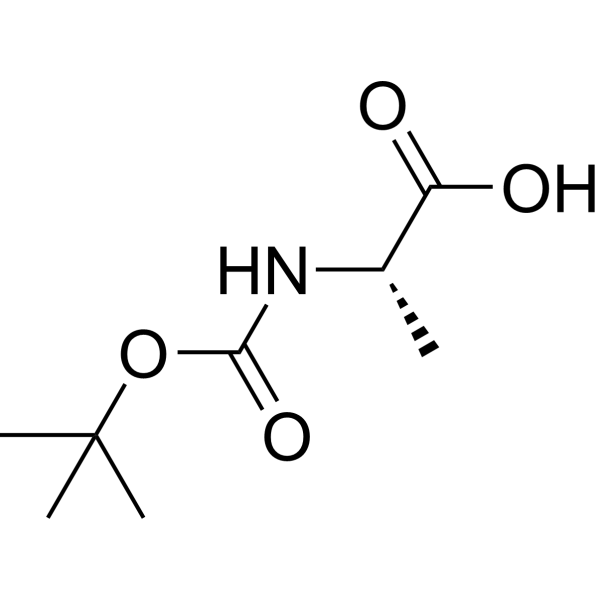
Boc-Ala-OH
|
Amino Acid Derivatives
|
Cancer
|
|
Boc-L-Ala-OH (Boc-Ala-OH) is a single N-protected amino acid ligand and a protected L-alanine derivative. Boc-L-Ala-OH promotes Pd (II)-catalyzed enantioselective C-H alkenylation and kinetic resolution. Boc-L-Ala-OH serves as a coupling reagent for the synthesis of liver-targeted glycogen phosphorylase inhibitors and P6A metabolites, and also acts as a negative control in synthesis studies of betulinic acid amino acid esters. Boc-L-Ala-OH is applicable to research on epidermoid squamous cell carcinoma .
|
-
-
- HY-P3752
-
|
H-Gly-Ala-Tyr-OH
|
Biochemical Assay Reagents
Bacterial
|
Others
|
|
Gly-Ala-Tyr (H-Gly-Ala-Tyr-OH) is a tripeptide substrate composed of L-glycine, alanine, and L-tyrosine joined in sequence by peptide linkages. Gly-Ala-Tyr can be hydrolyzed at both extracellular and intracellular levels by Streptococcus thermophilus, Lactobacillus delbrueckii ssp. bulgaricus, Lactobacillus acidophilus, and Bifidobacterium spp. Ala-Gly-Tyr is functionally related to L-alanine, glycine and L-tyrosine. .
|
-
-
- HY-128434
-
-
-
- HY-I0519
-
-
-
- HY-W336328
-
|
|
Biochemical Assay Reagents
|
Others
|
|
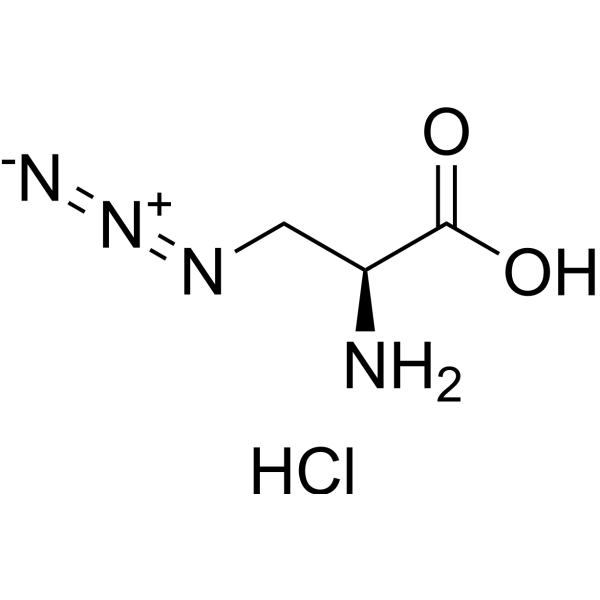
3-Azido-L-alanine hydrochloride is an aliphatic functionalized amino acid with side chain lengths of up to four carbons . 3-Azido-L-alanine (hydrochloride) is a click chemistry reagent, it contains an Azide group and can undergo copper-catalyzed azide-alkyne cycloaddition reaction (CuAAc) with molecules containing Alkyne groups. It can also undergo strain-promoted alkyne-azide cycloaddition (SPAAC) reactions with molecules containing DBCO or BCN groups.
|
-
-
- HY-W141910
-
-
-
- HY-N0229R
-
|
L-2-Aminopropionic acid (Standard)
|
Reference Standards
Endogenous Metabolite
|
Neurological Disease
Metabolic Disease
|
|
L-Alanine (Standard) is the analytical standard of L-Alanine. This product is intended for research and analytical applications. L-Alanine is a non-essential amino acid, involved in sugar and acid metabolism, increases immunity, and provides energy for muscle tissue, brain, and central nervous system.
In Vitro: The viability of both hiPSCs, 201B7 cells and ehiPSCs decrease with an increase in L-Alanine concentration, and reach 7.5±1.3% and 3.7±0.7% respectively at 1.2 M of L-Alanine. On the other hand, no decrease in the viability of hFBs and hSkMCs are observed. Although the viability of iCMs slightly decreases along with the increase of the L-Alanine concentration, viability of iCMs at 1.2 M concentration of L-Alanine, 49.4±6.9%, is significantly higher than that of undifferentiated iPSCs, 201B7 cells and ehiPSCs (p< 0.01). The viability of hiPSCs, 201B7 cells and ehiPSCs, drastically decrease even after 2 or 4 h treatment. In contrast, the viability of hFBs fails to decrease at 1, 2, and 4 h and shows a small decrease at 24 h treatment. The viability of 201B7 cells in suspension culture decreases to 11.8±6.0% following treatment with 1.2 M L-Alanine for 2 h, whereas that of hFBs is 72.9±14.2% .
|
-
-
- HY-N0229S2
-
|
L-2-Aminopropionic acid-15N
|
Endogenous Metabolite
|
Neurological Disease
Metabolic Disease
|
|
L-Alanine- 15N is the 15N-labeled L-Alanine. L-Alanine is a non-essential amino acid, involved in sugar and acid metabolism, increases immunity, and provides energy for muscle tissue, brain, and central nervous system .
|
-
-
- HY-N0229S6
-
-
-
- HY-N0229S8
-
|
L-2-Aminopropionic acid-13C3
|
Endogenous Metabolite
|
Neurological Disease
Metabolic Disease
|
|
L-Alanine- 13C3 is the 13C-labeled L-Alanine. L-Alanine is a non-essential amino acid, involved in sugar and acid metabolism, increases immunity, and provides energy for muscle tissue, brain, and central nervous system.
|
-
-
- HY-W009379
-
-
-
- HY-121907
-
|
|
Drug Intermediate
|
Others
|
|
N-Palmitoyl L-alanine is an organogelator. The granisetron organogel prepared based on N-Palmitoyl L-alanine has good biocompatibility and can effectively exert an antiemetic effect .
|
-
-
- HY-107373A
-
-
-
- HY-W141858
-
|
Indoleacetylalanine; IAA-ala
|
Amino Acid Derivatives
|
Others
|
|
N-(3-Indolylacetyl)-L-alanine (Indoleacetylalanine) is an indoleacetylamino acid. N-(3-Indolylacetyl)-L-alanine appears to increase callus growth and reduces the ability of growths to differentiate into shoots of Phalaenopsis orchids .
|
-
-
- HY-42709
-
|
Carbobenzoxy-L-valyl-L-alanine
|
Amino Acid Derivatives
|
Cancer
|
|
Z-Val-Ala-OH is a dipeptide derivative of valine and alanine. Z-Val-Ala-OH undergoes cleavage by cathepsin B and other lysosomal proteases to enable payload release following lysosomal internalization. Z-Val-Ala-OH can be used for the research of antibody-drug conjugate (ADC) development[1] .
|
-
-
- HY-P1340
-
|
|
Orexin Receptor (OX Receptor)
|
Neurological Disease
|
|
[Ala11,D-Leu15]-Orexin B(human) is a potent and selective orexin-2 receptor (OX2) agonist. [Ala11,D-Leu15]-Orexin B(human) shows a 400-fold selectivity for the OX2 (EC50=0.13 nM) over OX1 (52 nM) .
|
-
-
- HY-79106
-
|
[1,1'-Biphenyl]-4-propanoic acid, α-amino-, (S)-; 4-Biphenylyl-L-alanine; 4-Phenyl-L-phenylalanine; Biphenylalanine
|
Amino Acid Derivatives
|
Others
|
|
L-Biphenylalanine is a phenylalanine derivative .
|
-
-
- HY-N0229S9
-
|
L-2-Aminopropionic acid-13C2
|
Endogenous Metabolite
|
Neurological Disease
Metabolic Disease
|
|
L-Alanine- 13C2 is the 13C-labeled L-Alanine. L-Alanine is a non-essential amino acid, involved in sugar and acid metabolism, increases immunity, and provides energy for muscle tissue, brain, and central nervous system.
|
-
-
- HY-N0229S10
-
-
-
- HY-I0393
-
-
-
- HY-P2985A
-
|
|
Endogenous Metabolite
|
Inflammation/Immunology
|
|
Alanine aminotransferase, human liver is an enzyme mainly produced in the liver. It is a pyridoxalase that catalyzes the reversible interconversion of L-alanine and 2-oxoglutamate to pyruvate and L-glutamate. Alanine aminotransferase, human liver is elevated in active anti-HMGCR myopathy. Alanine aminotransferase, human liver can be used in studies related to immune-mediated necrotizing myopathy and non-alcoholic fatty liver disease .
|
-
-
- HY-N0229S13
-
-
-
- HY-N0229S1
-
|
L-2-Aminopropionic acid-1-13C
|
Endogenous Metabolite
|
Neurological Disease
Metabolic Disease
|
|
L-Alanine-1- 13C is the 13C-labeled L-Alanine. L-Alanine is a non-essential amino acid, involved in sugar and acid metabolism, increases immunity, and provides energy for muscle tissue, brain, and central nervous system.
|
-
-
- HY-N0229S16
-
|
L-2-Aminopropionic acid-d3-1
|
Endogenous Metabolite
|
Metabolic Disease
|
|
L-Alanine-d3-1 is the deuterium labeled L-Alanine . L-Alanine is a non-essential amino acid, involved in sugar and acid metabolism, increases immunity, and provides energy for muscle tissue, brain, and central nervous system .
|
-
-
- HY-N0229S4
-
|
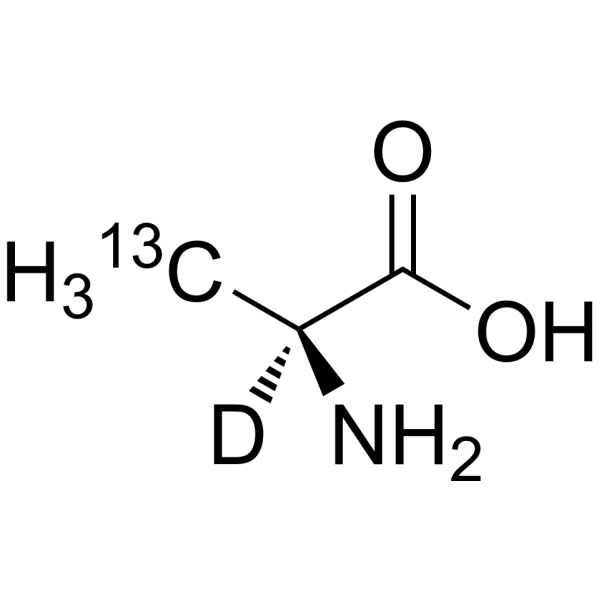
L-2-Aminopropionic acid-13C,d1
|
Endogenous Metabolite
|
Neurological Disease
Metabolic Disease
|
|
L-Alanine- 13C,d is the 13C- and deuterium labeled L-Alanine. L-Alanine is a non-essential amino acid, involved in sugar and acid metabolism, increases immunity, and provides energy for muscle tissue, brain, and central nervous system.
|
-
-
- HY-Y0007
-
|
L-alanine, N-carboxy-, N-benzyl ester (6CI,7CI); (S)-2-(Benzyloxycarbonylamino)propanoic acid
|
Amino Acid Derivatives
|
Others
|
|
N-[(Benzyloxy)carbonyl]-L-alanine is an alanine derivative .
|
-
-
- HY-Z0291
-
|
Isopropyl L-alaninate; L-alanine 2-propyl ester; L-alanine isopropyl ester; O-Isopropyl-L-alanine
|
Amino Acid Derivatives
|
Others
|
|
L-Alanine isopropyl ester is an alanine derivative .
|
-
-
- HY-168761
-
-
-
- HY-151641
-
|
|
Biochemical Assay Reagents
|
Others
|
|
3-Azido-L-alanine is an aliphatic functionalized amino acid with side chain lengths of up to four carbons . 3-Azido-L-alanine is a click chemistry reagent, it contains an Azide group and can undergo copper-catalyzed azide-alkyne cycloaddition reaction (CuAAc) with molecules containing Alkyne groups. It can also undergo strain-promoted alkyne-azide cycloaddition (SPAAC) reactions with molecules containing DBCO or BCN groups.
|
-
-
- HY-134545
-
|
NALA
|
Reactive Oxygen Species (ROS)
|
Cancer
|
|
N-Arachidonoyl-L-alanine is an endocannabinoid analog with anti-cancer effects. N- Arachidonoyl-L-alanine kills HNSCC cells through 5-LO-mediated ROS productio .
|
-
-
- HY-W002578
-
-
-
- HY-W003985
-
-
-
- HY-108546
-
|
3-Phosphono-L-alanine
|
mGluR
|
Neurological Disease
|
|
L-AP3, metabotropic glutamate receptor (mGluR) antagonist, inhibits D-phosphoserine and L-phosphoserine with IC50s of 368 μM and 2087 μM, respectively .
|
-
-
- HY-W007035R
-
-
-
- HY-W041864
-
-
-
- HY-W336442
-
-
-
- HY-P2854
-
-
- HY-137901
-
|
Ala-4-nitroanilide, 99%; H-Ala-pNA, 99%
|
Biochemical Assay Reagents
|
Others
|
|
L-Alanine 4-nitroanilide hydrochloride, 99% is a detection substrate for L-alanine aminopeptidase.
|
-
- HY-W507009
-
|
|
Endogenous Metabolite
|
Cardiovascular Disease
|
|
L-Arginyl-L-alanine is a dipeptide, is a vascular smooth muscle-derived relaxing factor. L-Arginyl-L-alanine increases the smooth muscle levels of cyclic GMP and nitrite in endothelium-denuded arterial rings .
|
-
- HY-W141852
-
-
- HY-W041992
-
-
- HY-79333
-
-
- HY-P2854A
-
|
|
Biochemical Assay Reagents
|
Metabolic Disease
|
|
L-Alanine Dehydrogenase, Bacillus subtilis (EC 1.4.1.1) is an A-stereospecific dehydrogenase that catalyzes the reversible deamination of L-alanine to pyruvate and ammonium.
|
-
- HY-141460
-
|
Ile-Ala; L-Isoleucyl-L-alanine
|
Biochemical Assay Reagents
|
Others
|
|
H-Ile-Ala-OH (Ile-Ala; L-Isoleucyl-L-alanine) is a linear aliphatic dipeptide and self-reactive cyclization reagent that self-assembles into amorphous films or spherical structures from specific solvents. H-Ile-Ala-OH also serves as a precursor for the synthesis of the cyclic peptide cyclo (L-isoleucyl-L-alanine) (HY-N9251). H-Ile-Ala-OH undergoes solid-state cyclization when heated above 206 °C, and its initiation temperature is closely related to the size of side-chain substituents .
|
-
- HY-N0229S7
-
-
- HY-128434R
-
|
|
Reference Standards
Endogenous Metabolite
|
Metabolic Disease
|
|
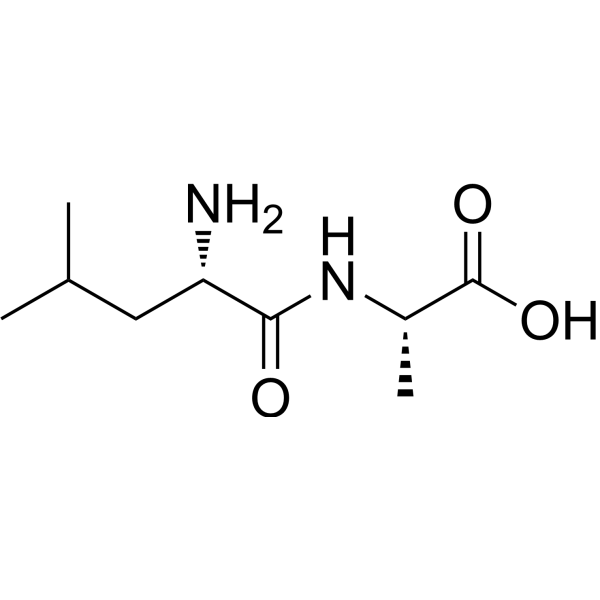
L-Leucyl-L-alanine (Standard) is the analytical standard of L-Leucyl-L-alanine (HY-128434). This product is intended for research and analytical applications. L-Leucyl-L-alanine is a simple aliphatic dipeptide composed of L-leucine and L-alanine .
|
-
- HY-N0229S14
-
-
- HY-N0229S11
-
-
- HY-N0229S19
-
-
- HY-N0229S
-
-
- HY-N0229S15
-
|
L-2-Aminopropionic acid-13C2,15N
|
Endogenous Metabolite
|
Metabolic Disease
|
|
L-Alanine- 13C2, 15N is the 13C- and 15N-labeled L-Alanine. L-Alanine is a non-essential amino acid, involved in sugar and acid metabolism, increases immunity, and provides energy for muscle tissue, brain, and central nervous system.
|
-
- HY-N0229S5
-
|
L-2-Aminopropionic acid-13C3,15N,d4
|
Isotope-Labeled Compounds
Endogenous Metabolite
|
Neurological Disease
Metabolic Disease
|
|
L-Alanine- 13C3, 15N,d4 is the deuterium, 13C-, and 15-labeled L-Alanine. L-Alanine is a non-essential amino acid, involved in sugar and acid metabolism, increases immunity, and provides energy for muscle tissue, brain, and central nervous system.
|
-
- HY-CE00810
-
-
- HY-125773R
-
|
Beta-cyano-l-alanine (Standard)
|
Endogenous Metabolite
Reference Standards
|
Neurological Disease
|
|
β-cyano-L-Alanine (Standard) is the analytical standard of β-cyano-L-Alanine. This product is intended for research and analytical applications. β-cyano-L-Alanine (Beta-cyano-l-alanine), a nitrile of widespread occurrence in higher plants, is enzymatically produced by cyanoalanine synthase from cyanide and cysteine as substrates . β-cyano-L-Alanine abolishes the protective effect of ethanol on cerebral ischemia/reperfusion (I/R) injury .
|
-
- HY-W009379A
-
-
- HY-140848
-
|
|
PROTAC Linkers
|
Cancer
|
|
Azide-PEG3-L-alanine-Fmoc is a PEG-based PROTAC linker that can be used in the synthesis of PROTACs . Azide-PEG3-L-alanine-Fmoc is a click chemistry reagent, it contains an Azide group and can undergo copper-catalyzed azide-alkyne cycloaddition reaction (CuAAc) with molecules containing Alkyne groups. It can also undergo strain-promoted alkyne-azide cycloaddition (SPAAC) reactions with molecules containing DBCO or BCN groups.
|
-
- HY-75379
-
-
- HY-W019265
-
-
- HY-W264526
-
|
|
Biochemical Assay Reagents
|
Others
|
|
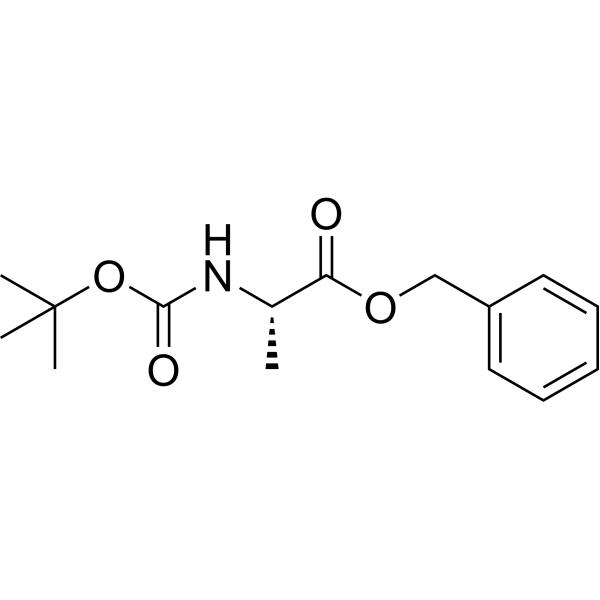
N-Boc-L-alanyl-L-alanine methyl ester is a biochemical reagent that can be used as a biological material or organic compound for life science related research.
|
-
- HY-124013
-
|
4-(α-N-L-alanine)-NBD
|
Fluorescent Dye
|
Others
|
|
NBDA (4-(α-N-L-alanine)-NBD) is a structural and functional analogue of the 2,4-dinitrophenyl group (DNP). NBDA can be used to detect and characterize antinitroaromatic antibodies, even in crude preparations, and possibly on cell surfaces .
|
-
- HY-W049802
-
|
|
Complement System
|
Inflammation/Immunology
|
|
N-((Allyloxy)carbonyl)-N-methyl-L-alanine is a Alanine derivative. N-((Allyloxy)carbonyl)-N-methyl-L-alanine can be used for the synthesis of inhibitors of complement factor D. Complement factor D inhibitors can be used in the research of immune system related disease .
|
-
- HY-N14918
-
|
|
Bacterial
|
Infection
|
|
N-(2,6-Diamino-6-hydroxymethylpimelyl)-L-alanine shows anti-Escherichia coli activity, and is combined with several cell wall synthesis inhibitors such as Fosfomycin, Cycloserine, Penicillin, and Cephalosporin, the combination of sporozoin has obvious synergistic antibacterial effect .
|
-
- HY-W250410
-
|
|
ADC Linker
|
Cancer
|
|
N-Methyl-N-[(3-methyldithio)-1-oxopropyl]-L-alanine is a PEGn linker for antibody-drug-conjugation (ADC).
|
-
- HY-W015546R
-
|
BMAA hydrochloride (Standard)
|
Bacterial
Reference Standards
mGluR
PKC
|
Neurological Disease
Inflammation/Immunology
|
|
Clenbuterol (Standard) is the analytical standard of Clenbuterol. This product is intended for research and analytical applications. Clenbuterol (NAB-365) is a β2-adrenergic receptor agonist with an EC50 of 31.9 nM . Clenbuterol is a very potent inhibitor of the lipopolysaccharide (LPS)-induced release of TNF-α and IL-1β. Clenbuterol can inhibit the inflammatory process. Clenbuterol is a bronchodilator .
|
-
- HY-W076556
-
|
((Allyloxy)carbonyl)-L-valyl-L-alanine
|
Biochemical Assay Reagents
|
Others
|
|
Alloc-Val-Ala-OH (((Allyloxy)carbonyl)-L-valyl-L-alanine) is a building block in the synthesis of Tesirine, a clinical antibody-drug conjugate (ADC) pyrrolobenzodiazepine (PBD) dimer payload. The Val-Ala will specifically be cleaved by Cathepsin B. The Alloc group is stable to treatment with piperidine and TFA, but can be easily removed under mild conditions by palladium catalyzed allyl transfer.
|
-
- HY-141929S
-
-
- HY-W072732
-
-
- HY-112171R
-
|
γ-Glu-Ala (Standard)
|
Endogenous Metabolite
CaSR
Reference Standards
|
Others
|
|
γ-L-Glutamyl-L-alanine (Standard) is the analytical standard of γ-L-Glutamyl-L-alanine. This product is intended for research and analytical applications. γ-L-Glutamyl-L-alanine, composed of gamma-glutamate and alanine, is a proteolytic breakdown product of larger proteins. γ-L-Glutamyl-L-alanine is a natural substrate of the γ-Glutamylcyclotransferase. γ-L-Glutamyl-L-alanine is a positive modulator of calcium-sensing receptor (CaR) function .
|
-
- HY-W010162R
-
|
L-Alanyl-L-alanine (Standard); Ala-Ala (Standard)
|
Amino Acid Derivatives
Reference Standards
|
Others
|
|
H-Ala-Ala-OH (L-Alanyl-L-alanine; Ala-Ala) (Standard) is the analytical standard of H-Ala-Ala-OH (L-Alanyl-L-alanine; Ala-Ala). This product is intended for research and analytical applications. H-Ala-Ala-OH (L-Alanyl-L-alanine; Ala-Ala) is a nonpolar dipeptide that is absorbed by human intestinal Caco-2 cells. The transport of alanine (Ala), like proton/amino acid symport, can lead to cytoplasmic acidification .
|
-
- HY-P1340A
-
|
|
Orexin Receptor (OX Receptor)
|
Neurological Disease
|
|
[Ala11,D-Leu15]-Orexin B(human) TFA is a potent and selective orexin-2 receptor (OX2) agonist. [Ala11,D-Leu15]-Orexin B(human) TFA shows a 400-fold selectivity for the OX2 (EC50=0.13 nM) over OX1 (52 nM) .
|
-
- HY-115499
-
|
|
HSP
|
Cancer
|
|
MPC-0767 is a potent, selective, and orally active hsp90 inhibitor. MPC-0767 is an L-alanine ester proagent of MPC-3100 with improved chemical stability .
|
-
- HY-W751082
-
-
- HY-W141857
-
-
- HY-137842
-
|
alanine β-naphthylamide
|
Aminopeptidase
Biochemical Assay Reagents
|
Others
|
|
L-Alanine-2-naphthylamide (Alanine β-naphthylamide) is an Aminopeptidase (E.C. 3.4.11.) substrate and detection reagent. L-Alanine-2-naphthylamide detects the functional activity of aminopeptidase in the intestine of larval whitefish (Coregonus lavaretus). L-Alanine-2-naphthylamide serves as an initiator in the N-carboxyanhydride (NCA) method for synthesizing poly (β-benzyl-L-aspartate) polymers with a terminal 2-naphthyl energy donor group .
|
-
- HY-W075595
-
(2S,2'S)-2,2'-(1,3,8,10-Tetraoxo-1,3,8,10-tetrahydroanthra[2,1,9-def:6,5,10-d'e'f']diisoquinoline-2,9-diyl)dipropionic acid
N, N'-bis (L-alanine) perylene diamide
|
MOFs
|
Others
|
|
(2S,2'S)-2,2'-(1,3,8,10-Tetraoxo-1,3,8,10-tetrahydroanthra[2,1,9-def:6,5,10-d'e'f']diisoquinoline-2,9-diyl)dipropionic acid (N, N'-bis (L-alanine) perylene diamide) is a metal-organic framework (MOF).
|
-
- HY-CE01570
-
-
- HY-180708
-
-
- HY-W686479
-
-
- HY-W736050
-
|
|
Drug Derivative
|
Others
|
|
D-Cysteic acid is a competitive inhibitor of the aspartate:alanine antiporter (AspT) from Tetragenococcus halophilus. For L-aspartate self-exchange, D-Cysteic acid has a Ki of 0.14 mM and an IC50 of 0.19 mM; for L-alanine self-exchange, it has a Ki of 5.0 mM and an IC50 of 9.0 mM . D-Cysteic acid occupies a distinct substrate-binding site within the substrate transport pathway of AspT, preventing the binding of natural substrates to the transporter . D-Cysteic acid can be used in studies related to substrate recognition and transport mechanisms of transporters .
|
-
- HY-186120A
-
|
|
Amino Acid Derivatives
|
Cancer
|
|
N-(Aminoiminomethyl)-N-methyl-L-alanine is an Amino acid analog. N-(Aminoiminomethyl)-N-methyl-L-alanine can be used in cancer-related research .
|
-
- HY-107373R
-
|
L-β-Chloroalanine (Standard)
|
Reference Standards
Bacterial
|
Infection
|
|
β-Chloro-L-alanine (Standard) (L-β-Chloroalanine (Standard)) is the analytical standard of β-Chloro-L-alanine (HY-107373). This product is intended for research and analytical applications. β-Chloro-L-alanine is a bacteriostatic amino acid analog which inhibits a number of enzymes, including threonine deaminase and alanine racemase.
|
-
- HY-E71256
-
|
|
Biochemical Assay Reagents
|
Others
|
|
β-(isoxazolin-5-on-4-yl)-L-Alanine synthase (EC 2.5.1.119) catalyse EC 2.5.1.118 (β-(isoxazolin-5-on-2-yl)-L-alanine synthase) also catalyse this reaction in vitro, but not in vivo.
|
-
- HY-E71255
-
|
|
Biochemical Assay Reagents
|
Others
|
|
β-(isoxazolin-5-on-2-yl)-L-Alanine synthase (EC 2.5.1.118) forms 3-(5-oxoisoxazolin-4-yl)-L-alanine in vitro (cf. EC 2.5.1.119) . However, only 3-(5-oxoisoxazolin-2-yl)-L-alanine is formed in vivo.
|
-
- HY-P2985B
-
|
|
Endogenous Metabolite
|
Metabolic Disease
|
|
Alanine aminotransferase, Human (E.coli) is a pyridoxal enzyme that catalyzes the reversible interconversion of L-alanine and 2-oxoglutalate to pyruvate and L-glutamate .
|
-
- HY-E71339
-
-
- HY-179279
-
|
|
ADC Linker
|
Cancer
|
|
Mc-glycyl-L-valine(CO-PEG8)-L-alanine-benzenamine-CO-MeO-CO-N(Me)-o-toluic acid is an ADC Linker, and can be used for synthesis of ADCs .
|
-
- HY-W141858S
-
|
Indoleacetylalanine-d4; IAA-ala-d4
|
Isotope-Labeled Compounds
|
Others
|
|
N-(3-Indolylacetyl)-L-alanine-d4 (Indoleacetylalanine-d4) is the deuterium labeled N-(3-Indolylacetyl)-L-alanine (HY-W141858). N-(3-Indolylacetyl)-L-alanine is an indoleacetylamino acid. N-(3-Indolylacetyl)-L-alanine appears to increase callus growth and reduces the ability of growths to differentiate into shoots of Phalaenopsis orchids .
|
-
- HY-135599
-
|
|
Bacterial
|
Infection
|
|
Lysine hydroxamate is an amino acid hydroxamate that inhibits the growth of Escherichia coli K-12. Of the other amino acid hydroxamates tested, only L-lysine hydroxamate reduced the growth rate. The inhibition of growth by L-serine hydroxamate could be rapidly reversed by adding L-serine to the bacterial culture or by removing the analog by filtration. This reversal was specific for L-serine. L-alanine, glycine, or adenine had no effect on the inhibited culture. There was no evidence for active transport of the analog.
|
-
- HY-131286A
-
|
LY-544344 (hydrochloride)
|
Drug Derivative
mGluR
|
Neurological Disease
|
|
Talaglumetad hydrochloride (LY-544344 hydrochloride) is an orally active prodrug of Eglumegad (HY-18941) and a metabotropic glutamate receptor 2/3 (mGluR2/3) agonist. Talaglumetad hydrochloride undergoes transmembrane transport via the intestinal peptide transporter hPepT1, and is enzymatically hydrolyzed to produce L-alanine and the parent drug Eglumegad after entering the body. Talaglumetad hydrochloride can be used in research related to metabotropic glutamate receptor 2-associated neurological systems .
|
-
- HY-W007035S
-
-
- HY-131286
-
|
LY-544344
|
mGluR
|
Neurological Disease
|
|
Talaglumetad (LY-544344) is an orally active prodrug of Eglumegad (HY-18941) and a metabotropic glutamate receptor 2/3 (mGluR2/3) agonist. Talaglumetad undergoes transmembrane transport via the intestinal peptide transporter hPepT1, and is enzymatically hydrolyzed to produce L-alanine and the parent drug Eglumegad after entering the body. Talaglumetad can be used in research related to metabotropic glutamate receptor 2-associated neurological systems .
|
-
- HY-P2082
-
|
|
GnRH Receptor
|
Others
|
|
[D-pGlu1,D-Phe2,D-NaI3,6]-Gn-RH is a gonadotropin-releasing hormone (Gn-RH) agonist that has a dose-dependent inhibitory activity on progesterone secretion from cultured human granulosa cells.
|
-
- HY-121120
-
|
|
Antibiotic
|
Infection
|
|
Isosulfazecin (iSZ) is a novel β-lactam antibiotic produced by Pseudomonas acidophilus sp., synthesized in a nutrient solution supplemented with glycerol and sodium thiosulfate under aerobic conditions in parallel with bacterial growth. It is purified by chromatography and crystallization from aqueous methanol. Physicochemical analysis determined its molecular formula to be C12H20N4O9S, showing a structure with a β-lactam ring, methoxyl and sulfonate groups. Acid hydrolysis yields L-alanine and D-glutamic acid. iSZ is a diastereomer of sulfadiazine and exhibits moderate activity against both gram-positive and gram-negative bacteria, but potent activity against bacteria resistant to β-lactam antibiotics .
|
-
| Cat. No. |
Product Name |
Type |
-
- HY-124013
-
|
4-(α-N-L-alanine)-NBD
|
Fluorescent Dyes
|
|
NBDA (4-(α-N-L-alanine)-NBD) is a structural and functional analogue of the 2,4-dinitrophenyl group (DNP). NBDA can be used to detect and characterize antinitroaromatic antibodies, even in crude preparations, and possibly on cell surfaces .
|
| Cat. No. |
Product Name |
Type |
-
- HY-W010162
-
|
L-Alanyl-L-alanine; Ala-Ala
|
Biochemical Assay Reagents
|
H-Ala-Ala-OH is a substrate of human intestinal oligopeptide transporter (PEPT1/SLC15A1), with an IC50 of 0.25 mM and an EC50 of 0.08 mM against human PEPT1. When used as a dipeptide linker in antibody-drug conjugates (ADCs) loaded with glucocorticoid receptor regulator payloads, H-Ala-Ala-OH enables efficient intracellular payload release .
|
-
- HY-137901
-
|
Ala-4-nitroanilide, 99%; H-Ala-pNA, 99%
|
Biochemical Assay Reagents
|
|
L-Alanine 4-nitroanilide hydrochloride, 99% is a detection substrate for L-alanine aminopeptidase.
|
-
- HY-W010162R
-
|
L-Alanyl-L-alanine (Standard); Ala-Ala (Standard)
|
Biochemical Assay Reagents
|
|
H-Ala-Ala-OH (L-Alanyl-L-alanine; Ala-Ala) (Standard) is the analytical standard of H-Ala-Ala-OH (L-Alanyl-L-alanine; Ala-Ala). This product is intended for research and analytical applications. H-Ala-Ala-OH (L-Alanyl-L-alanine; Ala-Ala) is a nonpolar dipeptide that is absorbed by human intestinal Caco-2 cells. The transport of alanine (Ala), like proton/amino acid symport, can lead to cytoplasmic acidification .
|
| Cat. No. |
Product Name |
Target |
Research Area |
-
- HY-W038703
-
-
- HY-W007052
-
-
- HY-41121
-
|
Boc-Ala-OH
|
Amino Acid Derivatives
|
Cancer
|
|
Boc-L-Ala-OH (Boc-Ala-OH) is a single N-protected amino acid ligand and a protected L-alanine derivative. Boc-L-Ala-OH promotes Pd (II)-catalyzed enantioselective C-H alkenylation and kinetic resolution. Boc-L-Ala-OH serves as a coupling reagent for the synthesis of liver-targeted glycogen phosphorylase inhibitors and P6A metabolites, and also acts as a negative control in synthesis studies of betulinic acid amino acid esters. Boc-L-Ala-OH is applicable to research on epidermoid squamous cell carcinoma .
|
-
- HY-P3752
-
|
H-Gly-Ala-Tyr-OH
|
Biochemical Assay Reagents
Bacterial
|
Others
|
|
Gly-Ala-Tyr (H-Gly-Ala-Tyr-OH) is a tripeptide substrate composed of L-glycine, alanine, and L-tyrosine joined in sequence by peptide linkages. Gly-Ala-Tyr can be hydrolyzed at both extracellular and intracellular levels by Streptococcus thermophilus, Lactobacillus delbrueckii ssp. bulgaricus, Lactobacillus acidophilus, and Bifidobacterium spp. Ala-Gly-Tyr is functionally related to L-alanine, glycine and L-tyrosine. .
|
-
- HY-128434
-
-
- HY-I0519
-
-
- HY-W141910
-
-
- HY-W009379
-
-
- HY-107373A
-
-
- HY-W141858
-
|
Indoleacetylalanine; IAA-ala
|
Amino Acid Derivatives
|
Others
|
|
N-(3-Indolylacetyl)-L-alanine (Indoleacetylalanine) is an indoleacetylamino acid. N-(3-Indolylacetyl)-L-alanine appears to increase callus growth and reduces the ability of growths to differentiate into shoots of Phalaenopsis orchids .
|
-
- HY-42709
-
|
Carbobenzoxy-L-valyl-L-alanine
|
Amino Acid Derivatives
|
Cancer
|
|
Z-Val-Ala-OH is a dipeptide derivative of valine and alanine. Z-Val-Ala-OH undergoes cleavage by cathepsin B and other lysosomal proteases to enable payload release following lysosomal internalization. Z-Val-Ala-OH can be used for the research of antibody-drug conjugate (ADC) development[1] .
|
-
- HY-P1340
-
|
|
Orexin Receptor (OX Receptor)
|
Neurological Disease
|
|
[Ala11,D-Leu15]-Orexin B(human) is a potent and selective orexin-2 receptor (OX2) agonist. [Ala11,D-Leu15]-Orexin B(human) shows a 400-fold selectivity for the OX2 (EC50=0.13 nM) over OX1 (52 nM) .
|
-
- HY-79106
-
|
[1,1'-Biphenyl]-4-propanoic acid, α-amino-, (S)-; 4-Biphenylyl-L-alanine; 4-Phenyl-L-phenylalanine; Biphenylalanine
|
Amino Acid Derivatives
|
Others
|
|
L-Biphenylalanine is a phenylalanine derivative .
|
-
- HY-I0393
-
-
- HY-Y0007
-
|
L-alanine, N-carboxy-, N-benzyl ester (6CI,7CI); (S)-2-(Benzyloxycarbonylamino)propanoic acid
|
Amino Acid Derivatives
|
Others
|
|
N-[(Benzyloxy)carbonyl]-L-alanine is an alanine derivative .
|
-
- HY-Z0291
-
|
Isopropyl L-alaninate; L-alanine 2-propyl ester; L-alanine isopropyl ester; O-Isopropyl-L-alanine
|
Amino Acid Derivatives
|
Others
|
|
L-Alanine isopropyl ester is an alanine derivative .
|
-
- HY-151641
-
|
|
Biochemical Assay Reagents
|
Others
|
|
3-Azido-L-alanine is an aliphatic functionalized amino acid with side chain lengths of up to four carbons . 3-Azido-L-alanine is a click chemistry reagent, it contains an Azide group and can undergo copper-catalyzed azide-alkyne cycloaddition reaction (CuAAc) with molecules containing Alkyne groups. It can also undergo strain-promoted alkyne-azide cycloaddition (SPAAC) reactions with molecules containing DBCO or BCN groups.
|
-
- HY-134545
-
|
NALA
|
Reactive Oxygen Species (ROS)
|
Cancer
|
|
N-Arachidonoyl-L-alanine is an endocannabinoid analog with anti-cancer effects. N- Arachidonoyl-L-alanine kills HNSCC cells through 5-LO-mediated ROS productio .
|
-
- HY-W002578
-
-
- HY-W003985
-
-
- HY-P4383
-
|
|
Peptides
|
Others
|
|
H-Leu-Leu-Ala-OH is a tripeptide composed of two L-leucine units joined to L-alanine by a peptide linkage. H-Leu-Leu-Ala-OH shows antioxidant activities .
|
-
- HY-W041864
-
-
- HY-W336442
-
-
- HY-W141852
-
-
- HY-W041992
-
-
- HY-P4623
-
|
Penta-L-alanine
|
Peptides
|
Neurological Disease
|
|
Penta-alanine (Penta-L-alanine) is a petide. Penta-alanine can be used for neurological disease research .
|
-
- HY-79333
-
-
- HY-P2082
-
|
|
GnRH Receptor
|
Others
|
|
[D-pGlu1,D-Phe2,D-NaI3,6]-Gn-RH is a gonadotropin-releasing hormone (Gn-RH) agonist that has a dose-dependent inhibitory activity on progesterone secretion from cultured human granulosa cells.
|
-
- HY-128434R
-
|
|
Reference Standards
Endogenous Metabolite
|
Metabolic Disease
|
|
L-Leucyl-L-alanine (Standard) is the analytical standard of L-Leucyl-L-alanine (HY-128434). This product is intended for research and analytical applications. L-Leucyl-L-alanine is a simple aliphatic dipeptide composed of L-leucine and L-alanine .
|
-
- HY-75379
-
-
- HY-W019265
-
-
- HY-W049802
-
|
|
Complement System
|
Inflammation/Immunology
|
|
N-((Allyloxy)carbonyl)-N-methyl-L-alanine is a Alanine derivative. N-((Allyloxy)carbonyl)-N-methyl-L-alanine can be used for the synthesis of inhibitors of complement factor D. Complement factor D inhibitors can be used in the research of immune system related disease .
|
-
- HY-W072732
-
-
- HY-P1340A
-
|
|
Orexin Receptor (OX Receptor)
|
Neurological Disease
|
|
[Ala11,D-Leu15]-Orexin B(human) TFA is a potent and selective orexin-2 receptor (OX2) agonist. [Ala11,D-Leu15]-Orexin B(human) TFA shows a 400-fold selectivity for the OX2 (EC50=0.13 nM) over OX1 (52 nM) .
|
| Cat. No. |
Product Name |
Category |
Target |
Chemical Structure |
-
- HY-N0229
-
-
-
- HY-W015546
-
-
-
- HY-112171
-
-
-
- HY-125773
-
-
-
- HY-W007035
-
-
-
- HY-128434
-
-
-
- HY-N0229R
-
|
L-2-Aminopropionic acid (Standard)
|
Structural Classification
Human Gut Microbiota Metabolites
Microorganisms
Disease markers
Amino acids
Endogenous metabolite
Cancer
Source Classification
|
Reference Standards
Endogenous Metabolite
|
|
L-Alanine (Standard) is the analytical standard of L-Alanine. This product is intended for research and analytical applications. L-Alanine is a non-essential amino acid, involved in sugar and acid metabolism, increases immunity, and provides energy for muscle tissue, brain, and central nervous system.
In Vitro: The viability of both hiPSCs, 201B7 cells and ehiPSCs decrease with an increase in L-Alanine concentration, and reach 7.5±1.3% and 3.7±0.7% respectively at 1.2 M of L-Alanine. On the other hand, no decrease in the viability of hFBs and hSkMCs are observed. Although the viability of iCMs slightly decreases along with the increase of the L-Alanine concentration, viability of iCMs at 1.2 M concentration of L-Alanine, 49.4±6.9%, is significantly higher than that of undifferentiated iPSCs, 201B7 cells and ehiPSCs (p< 0.01). The viability of hiPSCs, 201B7 cells and ehiPSCs, drastically decrease even after 2 or 4 h treatment. In contrast, the viability of hFBs fails to decrease at 1, 2, and 4 h and shows a small decrease at 24 h treatment. The viability of 201B7 cells in suspension culture decreases to 11.8±6.0% following treatment with 1.2 M L-Alanine for 2 h, whereas that of hFBs is 72.9±14.2% .
|
-
-
- HY-W007035R
-
-
-
- HY-128434R
-
-
-
- HY-125773R
-
-
-
- HY-N14918
-
|
|
Natural Products
Microorganisms
Source Classification
|
Bacterial
|
|
N-(2,6-Diamino-6-hydroxymethylpimelyl)-L-alanine shows anti-Escherichia coli activity, and is combined with several cell wall synthesis inhibitors such as Fosfomycin, Cycloserine, Penicillin, and Cephalosporin, the combination of sporozoin has obvious synergistic antibacterial effect .
|
-
-
- HY-W015546R
-
-
-
- HY-112171R
-
-
-
- HY-121120
-
|
|
Structural Classification
Microorganisms
Antibiotics
Beta-lactam Antibiotics
Source Classification
|
Antibiotic
|
|
Isosulfazecin (iSZ) is a novel β-lactam antibiotic produced by Pseudomonas acidophilus sp., synthesized in a nutrient solution supplemented with glycerol and sodium thiosulfate under aerobic conditions in parallel with bacterial growth. It is purified by chromatography and crystallization from aqueous methanol. Physicochemical analysis determined its molecular formula to be C12H20N4O9S, showing a structure with a β-lactam ring, methoxyl and sulfonate groups. Acid hydrolysis yields L-alanine and D-glutamic acid. iSZ is a diastereomer of sulfadiazine and exhibits moderate activity against both gram-positive and gram-negative bacteria, but potent activity against bacteria resistant to β-lactam antibiotics .
|
-
-
- HY-180708
-
-
| Cat. No. |
Product Name |
Chemical Structure |
-
- HY-N0229S12
-
1 Publications Verification
|
|
L-Alanine-d3 is the deuterium labeled L-Alanine. L-Alanine is a non-essential amino acid, involved in sugar and acid metabolism, increases immunity, and provides energy for muscle tissue, brain, and central nervous system.
|
-
-
- HY-N0229S3
-
|
|
|
L-Alanine-d4 is the deuterium labeled L-Alanine. L-Alanine is a non-essential amino acid, involved in sugar and acid metabolism, increases immunity, and provides energy for muscle tissue, brain, and central nervous system.
|
-
-
- HY-N0229S2
-
|
|
|
L-Alanine- 15N is the 15N-labeled L-Alanine. L-Alanine is a non-essential amino acid, involved in sugar and acid metabolism, increases immunity, and provides energy for muscle tissue, brain, and central nervous system .
|
-
-
- HY-N0229S6
-
|
|
|
L-Alanine-3- 13C is the 13C-labeled L-Alanine. L-Alanine is a non-essential amino acid, involved in sugar and acid metabolism, increases immunity, and provides energy for muscle tissue, brain, and central nervous system.
|
-
-
- HY-N0229S8
-
|
|
|
L-Alanine- 13C3 is the 13C-labeled L-Alanine. L-Alanine is a non-essential amino acid, involved in sugar and acid metabolism, increases immunity, and provides energy for muscle tissue, brain, and central nervous system.
|
-
-
- HY-N0229S9
-
|
|
|
L-Alanine- 13C2 is the 13C-labeled L-Alanine. L-Alanine is a non-essential amino acid, involved in sugar and acid metabolism, increases immunity, and provides energy for muscle tissue, brain, and central nervous system.
|
-
-
- HY-N0229S10
-
|
|
|
L-Alanine- 13C3, 15N is the 13C- and 15N-labeled L-Alanine. L-Alanine is a non-essential amino acid, involved in sugar and acid metabolism, increases immunity, and provides energy for muscle tissue, brain, and central nervous system.
|
-
-
- HY-N0229S13
-
|
|
|
L-Alanine-d7 is the deuterium labeled L-Alanine. L-Alanine is a non-essential amino acid, involved in sugar and acid metabolism, increases immunity, and provides energy for muscle tissue, brain, and central nervous system.
|
-
-
- HY-N0229S1
-
|
|
|
L-Alanine-1- 13C is the 13C-labeled L-Alanine. L-Alanine is a non-essential amino acid, involved in sugar and acid metabolism, increases immunity, and provides energy for muscle tissue, brain, and central nervous system.
|
-
-
- HY-N0229S16
-
|
|
|
L-Alanine-d3-1 is the deuterium labeled L-Alanine . L-Alanine is a non-essential amino acid, involved in sugar and acid metabolism, increases immunity, and provides energy for muscle tissue, brain, and central nervous system .
|
-
-
- HY-N0229S4
-
1 Publications Verification
|
|
L-Alanine- 13C,d is the 13C- and deuterium labeled L-Alanine. L-Alanine is a non-essential amino acid, involved in sugar and acid metabolism, increases immunity, and provides energy for muscle tissue, brain, and central nervous system.
|
-
-
- HY-N0229S7
-
|
|
|
L-Alanine-2- 13C is the 13C-labeled L-Alanine. L-Alanine is a non-essential amino acid, involved in sugar and acid metabolism, increases immunity, and provides energy for muscle tissue, brain, and central nervous system.
|
-
-
- HY-N0229S14
-
|
|
|
L-Alanine- 15N,d4 is the deuterium and 15N-labeled L-Alanine. L-Alanine is a non-essential amino acid, involved in sugar and acid metabolism, increases immunity, and provides energy for muscle tissue, brain, and central nervous system.
|
-
-
- HY-N0229S11
-
|
|
|
L-Alanine-1- 13C, 15N is the 13C- and 15N-labeled L-Alanine. L-Alanine is a non-essential amino acid, involved in sugar and acid metabolism, increases immunity, and provides energy for muscle tissue, brain, and central nervous system.
|
-
-
- HY-N0229S19
-
|
|
|
L-Alanine-1,2- 13C2 (Alanine- 13C2) is 13C labeled L-Alanine. L-Alanine is a non-essential amino acid, involved in sugar and acid metabolism, increases immunity, and provides energy for muscle tissue, brain, and central nervous system.
|
-
-
- HY-N0229S
-
|
|
|
L-Alanine-2- 13C, 15Nis the 13C-labeled and 15N-labeled L-Alanine. L-Alanine is a non-essential amino acid, involved in sugar and acid metabolism, increases immunity, and provides energy for muscle tissue, brain, and central nervous system.
|
-
-
- HY-N0229S15
-
|
|
|
L-Alanine- 13C2, 15N is the 13C- and 15N-labeled L-Alanine. L-Alanine is a non-essential amino acid, involved in sugar and acid metabolism, increases immunity, and provides energy for muscle tissue, brain, and central nervous system.
|
-
-
- HY-N0229S5
-
|
|
|
L-Alanine- 13C3, 15N,d4 is the deuterium, 13C-, and 15-labeled L-Alanine. L-Alanine is a non-essential amino acid, involved in sugar and acid metabolism, increases immunity, and provides energy for muscle tissue, brain, and central nervous system.
|
-
-
- HY-141929S
-
|
|
|
β-aminomethyl-L-alanine- 13C, 15N2 (dihydrochloride) is the 13C and 15N labeled β-aminomethyl-L-alanine .
|
-
-
- HY-W751082
-
|
|
|
H-N-Me-Ala-OH- 13C,d3 (N-Methyl-L-alanine- 13C,d3) is the deuterium and 13C labeled H-N-Me-Ala-OH (HY-W015926). H-N-Me-Ala-OH is an alanine derivative .
|
-
-
- HY-W007035S
-
|
|
|
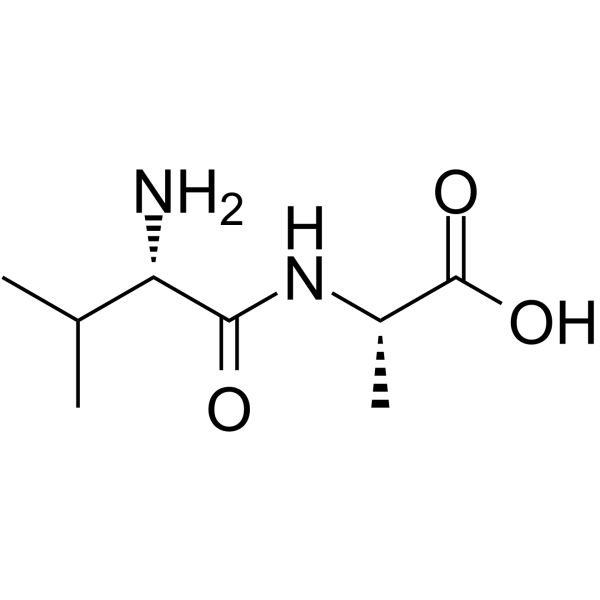
H-Val-Ala-OH- 13C5, 15N (Valyl-alanine- 13C5, 15N) TFA is the 13C- and 15N-labeled H-Val-Ala-OH (HY-W007035). H-Val-Ala-OH (Valyl-alanine) is a dipeptide formed from L-Valine and L-Alanine residues. H-Val-Ala-OH has a role as a metabolite and also has a bitter taste .
|
-
-
- HY-W141858S
-
|
|
|
N-(3-Indolylacetyl)-L-alanine-d4 (Indoleacetylalanine-d4) is the deuterium labeled N-(3-Indolylacetyl)-L-alanine (HY-W141858). N-(3-Indolylacetyl)-L-alanine is an indoleacetylamino acid. N-(3-Indolylacetyl)-L-alanine appears to increase callus growth and reduces the ability of growths to differentiate into shoots of Phalaenopsis orchids .
|
-
| Cat. No. |
Product Name |
|
Classification |
-
- HY-W336328
-
|
|
|
Azide
|
|
3-Azido-L-alanine hydrochloride is an aliphatic functionalized amino acid with side chain lengths of up to four carbons . 3-Azido-L-alanine (hydrochloride) is a click chemistry reagent, it contains an Azide group and can undergo copper-catalyzed azide-alkyne cycloaddition reaction (CuAAc) with molecules containing Alkyne groups. It can also undergo strain-promoted alkyne-azide cycloaddition (SPAAC) reactions with molecules containing DBCO or BCN groups.
|
-
- HY-151641
-
|
|
|
Azide
|
|
3-Azido-L-alanine is an aliphatic functionalized amino acid with side chain lengths of up to four carbons . 3-Azido-L-alanine is a click chemistry reagent, it contains an Azide group and can undergo copper-catalyzed azide-alkyne cycloaddition reaction (CuAAc) with molecules containing Alkyne groups. It can also undergo strain-promoted alkyne-azide cycloaddition (SPAAC) reactions with molecules containing DBCO or BCN groups.
|
-
- HY-140848
-
|
|
|
PROTAC Synthesis
Azide
|
|
Azide-PEG3-L-alanine-Fmoc is a PEG-based PROTAC linker that can be used in the synthesis of PROTACs . Azide-PEG3-L-alanine-Fmoc is a click chemistry reagent, it contains an Azide group and can undergo copper-catalyzed azide-alkyne cycloaddition reaction (CuAAc) with molecules containing Alkyne groups. It can also undergo strain-promoted alkyne-azide cycloaddition (SPAAC) reactions with molecules containing DBCO or BCN groups.
|
Your information is safe with us. * Required Fields.
Inquiry Information
- Product Name:
- Cat. No.:
- Quantity:
- MCE Japan Authorized Agent:

