9 Results for "

LDL peroxidation

" in MedChemExpress (MCE) Product Catalog:
Products (9)

9 Results for "LDL peroxidation" in MCE Product Catalog:

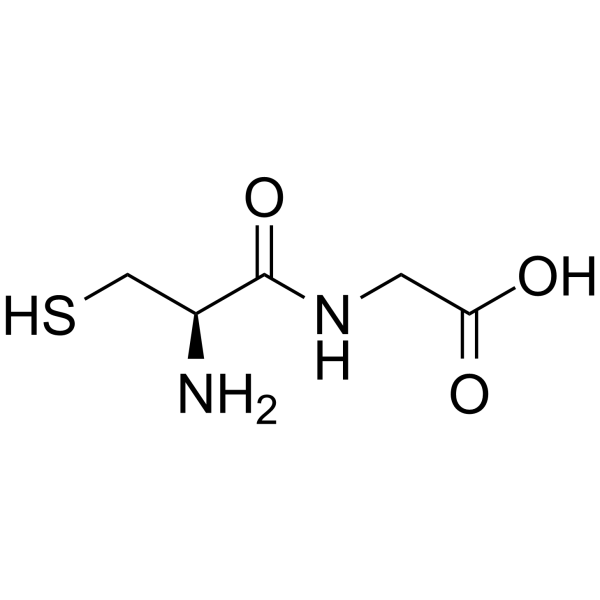
Cat. No.: HY-113110
CAS No.: 19246-18-5
Purity:  99.96%
Synonyms: L-Cysteinylglycine; Cys-Gly; H-Cys-Gly-OH
Cysteinylglycine (L-Cysteinylglycine; Cys-Gly) is a dipeptide formed by the peptide bond linkage between cysteine (Cysteine) and glycine (Glycine). Cysteinylglycine is an important metabolic intermediate in the human body, mainly derived from the degradation of glutathione (GSH). Cysteinylglycine reduces ferric iron to ferrous iron, drives the redox cycle of iron, generates reactive oxygen species (ROS), stimulates oxidative reactions, induces lipid peroxidation of human plasma LDL lipoproteins, and causes oxidative damage to DNA bases. Cysteinylglycine can be used as a biomarker to evaluate ischemic heart disease, breast cancer and other conditions .
loading...
    loading...
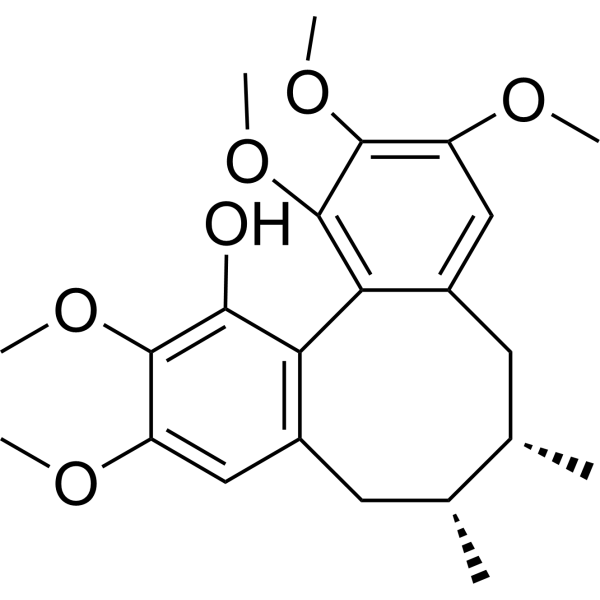
Cat. No.: HY-N0859
CAS No.: 69363-14-0
Synonyms: Schizanhenol; Gomisin-K3
Schisanhenol (Schizanhenol), a lignan, is an orally active antioxidant. Schisanhenol reduces AChE activity, increases SIRT1 and PGC-1α expression, and decreases phosphorylated Tau (Ser 396) levels. Schisanhenol increases SOD and glutathione peroxidase activity, decreases malondialdehyde (MDA) content, and inhibits UGT2B7 activitY. Schisanhenol attenuates ox-LDL-induced apoptosis, intracellular reactive oxygen species generation, and cytotoxicity in endothelial cells. Schisanhenol inhibits LDL oxidation, brain mitochondrial and membrane peroxidative damage, and brain mitochondrial swelling and disintegration. Schisanhenol can be used for the research of Alzheimer’s disease, atherosclerosis, brain ischemia, and age-related brain deterioration .
loading...
    loading...
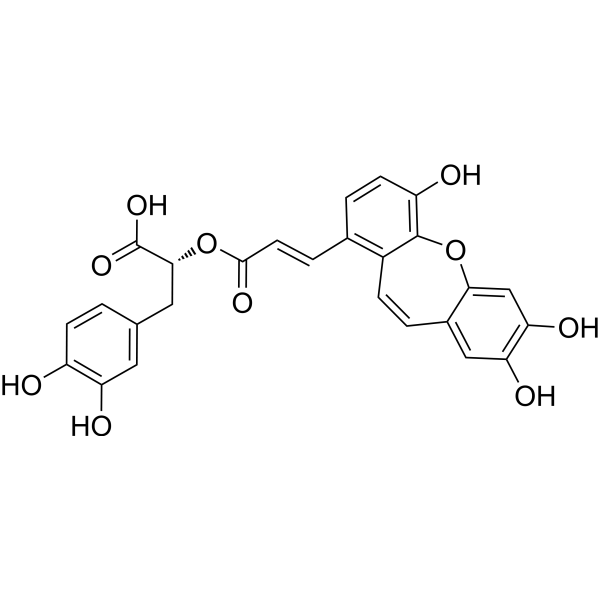
Cat. No.: HY-122967
CAS No.: 142115-17-1
Isosalvianolic acid C is a naturally derived phenolic compound that acts as a signal modulator, antioxidant, and enzyme inhibitor. Isosalvianolic acid C induces the phosphorylation of PLC-γ, IP3R, PKC, and P38, triggering Ca 2+ mobilization, degranulation, and chemokine release. Isosalvianolic acid C activates MRGPRX2 and its murine homolog MrgprB2, leading to pseudo-allergic reactions in vivo. Isosalvianolic acid C inhibits Cu 2+-induced LDL peroxidation. Isosalvianolic acid C can be used in studies related to pseudo-allergy, diabetes, and atherosclerosis .
loading...
    loading...
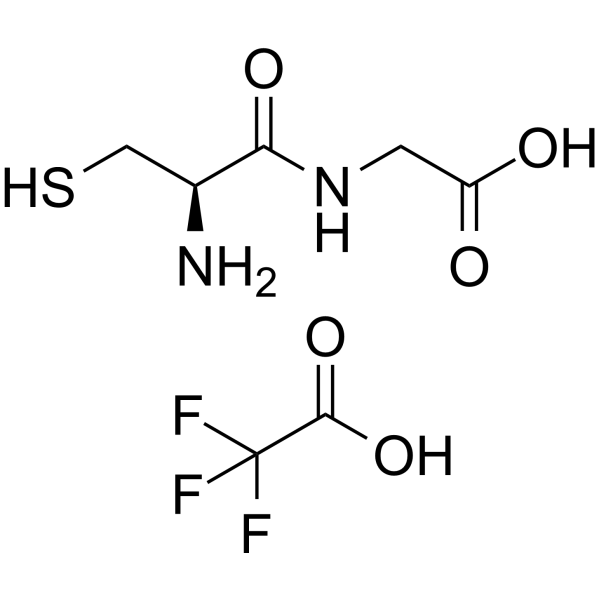
Cat. No.: HY-113110A
CAS No.: 1100364-95-1
Purity:  99.76%
Synonyms: L-Cysteinylglycine TFA; Cys-Gly TFA; H-Cys-Gly-OH TFA
Cysteinylglycine (L-Cysteinylglycine; Cys-Gly) TFA is a dipeptide formed by the peptide bond connection of cysteine and glycine. Cysteinylglycine TFA is an important metabolic intermediate in the human body, mainly derived from the degradation of glutathione (GSH). Cysteinylglycine TFA can reduce trivalent iron to divalent iron, driving the redox cycle of iron, generating reactive oxygen species (ROS), stimulating oxidative reactions, inducing lipid peroxidation in human plasma LDL lipoproteins, and causing oxidative damage to DNA base. Cysteinylglycine TFA can be used as a biomarker to assess ischemic heart disease and breast cancer, etc [1][2][3][4].
loading...
    loading...
Cat. No.: HY-173596
Research Areas:  

Inflammation/Immunology

SNT-8370 is an orally active inhibitor of VAP-1 (IC50: 10 nM) and myeloperoxidase (MPO) (IC50: 17 nM), with >100-1000 fold more potency for VAP-1 and MPO versus other mammalian (per)oxidases. SNT-8370 inhibits MPO-mediated LDL lipid peroxidation. SNT-8370 inhibits leukocyte infiltration in lung injury models of acute inflammation. SNT-8370 is an anti-inflammatory agent, and can be used for research of inflammatory disorders .
loading...
    loading...
Cat. No.: HY-113110R
CAS No.: 19246-18-5
Synonyms: L-Cysteinylglycine (Standard); Cys-Gly (Standard); H-Cys-Gly-OH (Standard)
Cysteinylglycine (Standard) is the analytical standard of Cysteinylglycine. This product is intended for research and analytical applications. Cysteinylglycine is a dipeptide formed by the peptide bond linkage between cysteine (Cysteine) and glycine (Glycine). Cysteinylglycine is an important metabolic intermediate in the human body, mainly derived from the degradation of glutathione (GSH). Cysteinylglycine reduces ferric iron to ferrous iron, drives the redox cycle of iron, generates reactive oxygen species (ROS), stimulates oxidative reactions, induces lipid peroxidation of human plasma LDL lipoproteins, and causes oxidative damage to DNA bases. Cysteinylglycine can be used as a biomarker to evaluate ischemic heart disease, breast cancer and other conditions .
loading...
    loading...
Cat. No.: HY-N0859R
CAS No.: 69363-14-0
Synonyms: Schizanhenol (Standard); Gomisin-K3 (Standard)
Schisanhenol (Standard) (Schizanhenol (Standard)) is the analytical standard of Schisanhenol (HY-N0859). This product is intended for research and analytical applications. Schisanhenol, a lignan, is an orally active antioxidant. Schisanhenol reduces AChE activity, increases SIRT1 and PGC-1α expression, and decreases phosphorylated Tau (Ser 396) levels. Schisanhenol increases SOD and glutathione peroxidase activity, decreases malondialdehyde (MDA) content, and inhibits UGT2B7 activitY. Schisanhenol attenuates ox-LDL-induced apoptosis, intracellular reactive oxygen species generation, and cytotoxicity in endothelial cells. Schisanhenol inhibits LDL oxidation, brain mitochondrial and membrane peroxidative damage, and brain mitochondrial swelling and disintegration. Schisanhenol can be used for the research of Alzheimer’s disease, atherosclerosis, brain ischemia, and age-related brain deterioration.
loading...
    loading...
Cat. No.: HY-182603
CAS No.: 157360-23-1
BO-653 is an orally active anti-atherosclerotic antioxidant that exhibits high binding affinity for LDL. BO-653 scavenges linoleic acid peroxyl radicals, inhibits lipid peroxidation during the auto-oxidation of linoleic acid, and potently suppresses LDL oxidation. BO-653 inhibits Hepatitis C Virus (HCV) replication in a concentration-dependent manner, with an IC50 of 36.0 μM against the HCV subgenomic replicon in FLR3-1 cells. BO-653 demonstrates significant anti-atherosclerotic effects in various animal models, including the Watanabe heritable hyperlipidemic rabbit. BO-653 is suitable for use in research related to atherosclerosis and Hepatitis C Virus infection .
loading...
    loading...
Cat. No.: HY-N11846
CAS No.: 68978-09-6
4′-O-Methylglabridin is an apoptosis inducer with antioxidant, cell cycle-disrupting and anticancer cytotoxic activities. 4′-O-Methylglabridin inhibits various cancer cell lines including liver cancer, breast cancer and colorectal cancer cell lines. By reducing the expression levels of phosphorylated Rb (Ser807/811) and p21 proteins, 4′-O-Methylglabridin promotes cell accumulation at the subG1 and G2/M phases, and triggers caspase-dependent apoptosis via cytochrome C release and caspase-9 activation. 4′-O-Methylglabridin also exerts antioxidant effects by inhibiting lipid peroxide levels and reducing β-carotene consumption, thereby blocking LDL oxidation. 4′-O-Methylglabridin can be used in the research of various cancers and atherosclerotic diseases .
loading...
    loading...

