Search Result
Results for "
LSDs
" in MedChemExpress (MCE) Product Catalog:
6
Isotope-Labeled Compounds
| Cat. No. |
Product Name |
Target |
Research Areas |
Chemical Structure |
-
- HY-17447A
-
-
-
- HY-112623
-
-
-
- HY-12635
-
-
-
- HY-100546A
-
-
-
- HY-111048
-
Corin
5 Publications Verification
|
Histone Demethylase
HDAC
|
Cancer
|
|
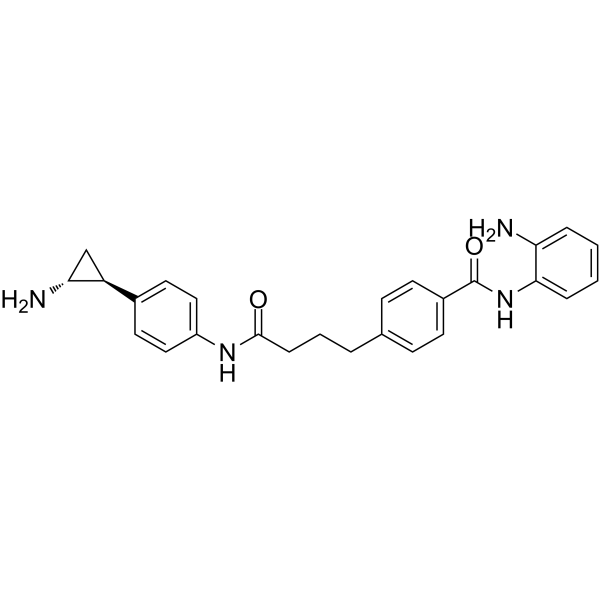
Corin is a dual inhibitor of histone lysine specific demethylase (LSD1) and histone deacetylase (HDAC), with a Ki(inact) of 110 nM for LSD1 and an IC50 of 147 nM for HDAC1.
|
-
-
- HY-18632A
-
|
|
Histone Demethylase
|
Cancer
|
|
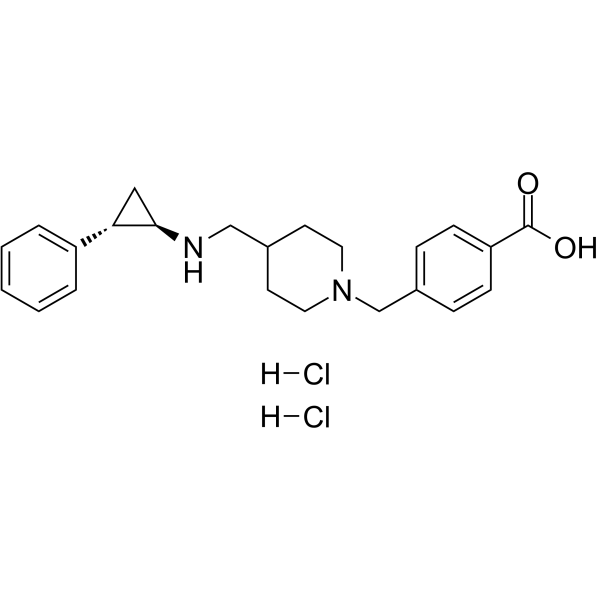
GSK2879552 dihydrochloride an orally active, selective and irreversible inhibitor of lysine specific demethylase 1 (LSD1/KDM1A), with potential antineoplastic activity .
|
-
-
- HY-101075
-
|
|
Phosphatase
|
Others
|
|
L-690330 is a competitive inhibitor of inositol monophosphatase (IMPase) with Kis of 0.27 and 0.19 μM for recombinant human and bovine IMPase, 0.30 and 0.42 μM for human and bovine frontal cortex IMPase, respectively. L-690330 exhibits 10-fold more sensitive than mouse and rat IMPase .
|
-
-
- HY-121675
-
|
BOL-148; Bromolysergide
|
5-HT Receptor
G protein-coupled Bile Acid Receptor 1
|
Neurological Disease
|
|
2-Bromo-LSD (BOL-148) is a blood-brain barrier-permeable 5-HT2A partial agonist and competitive partial antagonist. 2-Bromo-LSD acts as both a potent partial agonist (with an EC50 of 0.81 nM for Gq dissociation) and a potent partial antagonist (with a KB of 0.18 nM for Gq dissociation) at the 5-HT2A receptor. 2-Bromo-LSD exhibits partial agonist activity at multiple aminergic GPCRs, including 5-HT2A. 2-Bromo-LSD lacks 5-HT2B agonist activity. 2-Bromo-LSD induces dendritogenesis and spinogenesis. 2-Bromo-LSD reverses the behavioral effects of chronic stress and increases active coping behaviors in mice .
|
-
-
- HY-110130
-
|
|
Histone Demethylase
|
Cardiovascular Disease
Cancer
|
|
RN-1 dihydrochloride is a potent, brain-penetrant, irreversible and selective lysine-specific demethylase 1 (LSD1) inhibitor with an IC50 of 70 nM. RN-1 dihydrochloride exhibits selectivity for LSD1 over MAO-A and MAO-B with IC50 values of 0.51 μM and 2.785 μM respectively .
|
-
-
- HY-138218
-
|
1-Acetyl-LSD
|
Drug Derivative
5-HT Receptor
|
Neurological Disease
|
|
ALD-52 (1-Acetyl-LSD) is a prodrug for LSD. ALD-52 shows an affinity to 5-HT1A, 5-HT2A and 5-HT2C with a sub>D values of 1054, 174 and 10.2 nM, respectively. ALD-52 is converted to LSD and induces a head-twitch response (HTR) in vivo. ALD-52 can be used for hallucinogen research .
|
-
-
- HY-164099
-
|
|
HDAC
Monoamine Oxidase
Histone Demethylase
|
Cancer
|
|
LSD1/HDAC6-IN-2 (JBI-802) is an orally active LSD1/HDAC6/MAO-A inhibitor, with IC50 values of 5 nM, 11 nM, and 5 nM, respectively. LSD1/HDAC6-IN-2 can inhibit the growth of multiple myeloma cells MM.1S, MM.1R, and RPMI-8226. LSD1/HDAC6-IN-2 can be used for research on diseases such as acute myeloid leukemia and lymphoma .
|
-
-
- HY-P4091
-
|
|
Biochemical Assay Reagents
|
Cancer
|
|
LSD is a peptide. LSD can specifically recognize the lymphatics of C8161 melanoma, but it does not bind to the lymphatics of normal tissues or tumor blood vessels. When conjugated with a proapoptotic peptide, LSD can reduce the number of tumor lymphatics. LSD can be used in the research of targeted therapy and diagnosis of tumor lymphatics .
|
-
-
- HY-W767767
-
-
-
- HY-176875
-
|
|
Molecular Glues
|
Cancer
|
|
CoREST/LSD1 degrader-1 (Compound 4) is a molecular glue degrader targeting the KBTBD4 E3 ubiquitin ligase. CoREST/LSD1 degrader-1 is promising for research of KBTBD4-mutant driven cancers (e.g., medulloblastoma) and epigenetic dysregulation disorders .
|
-
-
- HY-15313C
-
|
|
Histone Demethylase
|
Metabolic Disease
Cancer
|
|
CBB1007 trihydrochloride is a reversible and selective LSD1 inhibitor with an IC50 of 5.27 µM for human LSD1. CBB1007 trihydrochloride significantly blocks the demethylase activity of LSD1 on H3K4Me2 and H3K4Me. CBB1007 trihydrochloride shows selectivity for LSD1 over LSD2 or JARID1A, and induces differentiation-related genes in pluripotent cells. CBB1007 trihydrochloride is studied in non-pluripotent cancer research, targeting teratocarcinoma, embryonic carcinoma, and seminoma .
|
-
-
- HY-178826
-
-
-
- HY-100859
-
|
|
Histone Demethylase
|
Cancer
|
|
LSD1-IN-5 (Compound 4e) is a potent and reversible inhibitor of lysine-specific demethylase 1 (LSD1), with an IC50 of 121 nM. LSD1-IN-5 increases dimethylated Lys4 of histone H3, shows no effect on expression of LSD1 .
|
-
-
- HY-100546
-
|
|
Histone Demethylase
|
Infection
Metabolic Disease
Cancer
|
|
GSK-LSD1, a chemical probe, is a LSD1 inhibitor. GSK-LSD1 reduces food intake and body weight, and improves insulin sensitivity and glycemic control in mouse models of obesity. GSK-LSD1 also ameliorates NAFLD. GSK-LSD1 inhibits SARS-CoV-2-triggered cytokine release in COVID-19 PBMCs. GSK-LSD1 also inhibits cancer growth and metastasis .
|
-
-
- HY-W025799
-
|
N-Benzalaniline; N-Phenylbenzylimine
|
Histone Demethylase
|
Cancer
|
|
N-Benzylideneaniline is an inhibitor of xylinostilbene-α,β-dioxygenase (LSD) .
|
-
-
- HY-137386
-
-
-
- HY-117226A
-
|
|
Histone Demethylase
|
Others
|
|
GSK 690 (Hydrochloride) is a reversible inhibitor of lysine specific demethylase 1 (LSD1), with a Kd value of 9 nM and a biochemical IC50 of 37 nM.
|
-
-
- HY-151194
-
|
|
Histone Demethylase
|
Cancer
|
|
LSD1/2-IN-4, a PCPA derivative, is an inhibitor of lysine-specific demethylase 1 (LSD1) and lysine-specific demethylase 2 (LSD2). LSD1/2-IN-4 inhibits LSD1 and LSD2 with Ki values of 0.11 μM and 130 μM, respectively. LSD1/2-IN-4 can be used for the research of several cancers including T-cell acute lymphoblastic leukemia (TALL) .
|
-
-
- HY-175184
-
|
|
Histone Demethylase
|
Infection
|
|
LSD1-IN-44 (Compound 19) is a LSD1 inhibitor with an IC50 of 0.02 μM for LSD1-CoREST enzymatic complex. LSD1-IN-44 has significant antischistosomal activity against transformed schistosomula (NTS) and Schistosoma mansoni adult worms while showing a delayed onset of action towards juvenile forms. LSD1-IN-44 has no significant toxicity to human cells. LSD1-IN-44 can be used for schistosomiasis research .
|
-
-
- HY-179229
-
|
|
PROTACs
Histone Demethylase
|
Cancer
|
|
LSD1-IN-47 is a highly efficient PROTAC degrader targeting LSD1 (IC50 = 43 nM). LSD1-IN-47 does not alter LSD1 protein levels and does not increase the histone marker H3K4me2. LSD1-IN-47 can be used for the study of colon carcinoma .
|
-
-
- HY-155115
-
|
|
Histone Demethylase
PD-1/PD-L1
|
Cancer
|
|
LSD1-IN-27 is an orally active LSD1 inhibitor (IC50: 13 nM). LSD1-IN-27 inhibits the stemness and migration of gastric cancer cells. LSD1-IN-27 also reduces the expression of PD-L1 in BGC-823 and MFC cells. LSD1-IN-27 can enhance T cell immune response in gastric cancer .
|
-
-
- HY-149978
-
-
-
- HY-179339
-
|
|
Histone Demethylase
|
Cancer
|
LSD1-IN-46 is a potent and orally active Lysine-specific demethylase 1 (LSD1) inhibitor with an IC50 of 0.082 μM. LSD1-IN-46 interrupts the β-catenin-mediated transcriptional program, thereby suppressing the stemness of gastric cancer cells. LSD1-IN-46 exhibits strong anti-tumor activity. LSD1-IN-46 can be used for the research of gastric cancer .
|
-
-
- HY-176254
-
|
|
Histone Demethylase
Amyloid-β
|
Neurological Disease
|
|
LSD1-IN-43 is a highly selective, reversible, orally active and brain-penetrant LSD1 inhibitor with an IC50 value of 0.8 μM. LSD1-IN-43 has low inhibitory activity against MAO-A and MAO-B, two homologs of LSD1. LSD1-IN-43 significantly inhibits Aβ aggregation and enhances Aβ-induced neuronal cell viability. LSD1-IN-43 can be used for the study of Alzheimer’s disease (AD).
|
-
-
- HY-100860
-
|
|
Histone Demethylase
|
Cancer
|
|
LSD1-IN-6 (Compound 4m) is a potent and reversible inhibitor of lysine-specific demethylase 1 (LSD1), with an IC50 of 123 nM. LSD1-IN-6 increases dimethylated Lys4 of histone H3, shows no effect on expression of LSD1 .
|
-
-
- HY-149968
-
|
|
Histone Demethylase
Apoptosis
|
Cancer
|
|
LSD1-IN-25 (Compound 9j) is a potent, selective and orally active LSD1 inhibitor with an IC50 of 46 nM (Ki = 30.3 nM). LSD1-IN-25 induces cancer cell apoptosis .
|
-
-
- HY-12645
-
|
|
Histone Demethylase
|
Cancer
|
|
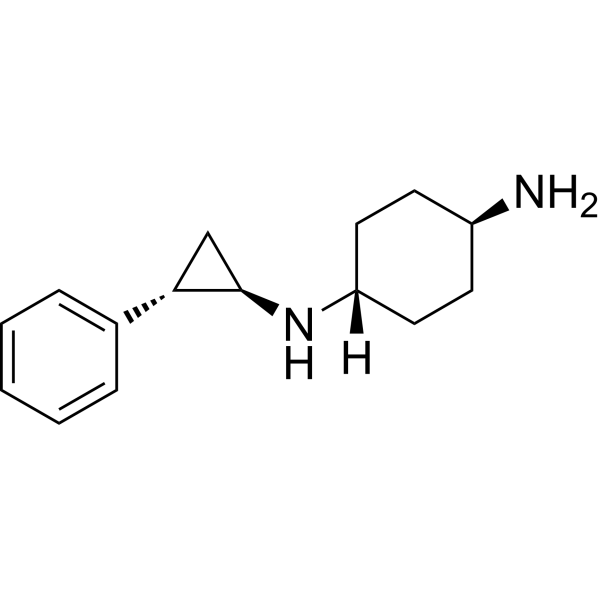
NCL1 is a phenylcyclopropylamine (PCPA)-based Lysine-specific demethylase 1 (LSD1) inhibitor. NCL1 selectively inhibits LSD1 in preference to LSD2, with IC50 values of 2.5 and 26 μM for LSD1 and LSD2, respectively .
|
-
-
- HY-175671
-
|
|
HDAC
Histone Demethylase
|
Neurological Disease
|
|
LSD1/HDAC-IN-3 is a inhibitor targeting class I HDAC and LSD1 enzymes. LSD1/HDAC-IN-3 inhibits HDAC1, HDAC2, HDAC3, and LSD1 with IC50 values of 1702 nM, 842 nM, 358 nM, and 1074 nM, respectively. LSD1/HDAC-IN-3 exhibits antioxidant effects in H2O2-stressed ARPE-19 and 661W retinal cells, increasing levels of acetylated and methylated histone H3. LSD1/HDAC-IN-3 enhances photoreceptor survival in the rd10 mouse model of retinitis pigmentosa. LSD1/HDAC-IN-3 can be used for the study of inherited retinal diseases such as retinitis pigmentosa (RP) .
|
-
-
- HY-149595
-
|
|
Histone Demethylase
|
Cancer
|
|
LSD1-UM-109 is a ighly potent and reversible LSD1 inhibitor with an IC50 of 3.1 nM. LSD1-UM-109 inhibits cell growth with IC50 values of 0.6 nM in the MV4;11 acute leukemia cell line and 1.1 nM in the H1417 small-cell lung cancer cell line .
|
-
-
- HY-112304
-
-
-
- HY-149213
-
|
J54; J3-54
|
Histone Demethylase
TLK
|
Cancer
|
|
LSD1/TLK1-IN-1 is an orally active LSD1, TLK1, TLK2, TTK inhibitor with an LSD1 IC50 of 0.247 μM. LSD1/TLK1-IN-1 suppresses phosphorylation of Nek1 at T141 and Rad9 at S328, abrogates the TLK1>Nek1>ATR>Chk1 axis, protects H3K4me1/2 from demethylation, and does not affect LSD2, MAO-A, or MAO-B. LSD1/TLK1-IN-1 induces apoptosis, bypasses cell-cycle arrest, suppresses tumor growth, acts as a weak D4R antagonist, downregulates PD-L1 expression, enhances T-cell killing response, inhibits gastric cancer cell proliferation, shows minimal toxicity, and has no significant effect on normal prostate cells. LSD1/TLK1-IN-1 can be used for the research of prostate cancer and gastric cancer .
|
-
-
- HY-176283
-
|
|
Microtubule/Tubulin
Histone Demethylase
Apoptosis
Wee1
Bcl-2 Family
Caspase
|
Cancer
|
|
Tubulin/LSD1-IN-1 is an effective dual inhibitor of Tubulin polymerization and LSD1 (IC50 = 1.72 μM). Tubulin/LSD1-IN-1 has broad-spectrum antiproliferative activity against cancer cell lines. Tubulin/LSD1-IN-1 inhibits tubulin polymerization by targeting colchicine binding sites, thereby disrupting the microtubule network in gastric cancer cells. Tubulin/LSD1-IN-1 increases the methylation levels of H3K4me1/2 and H3K9me2/3, thereby achieving epigenetic regulation. Tubulin/LSD1-IN-1 induces G2/M arrest, promotes apoptosis, and effectively inhibits colony formation of gastric cancer cells .
|
-
-
- HY-146380
-
|
|
Histone Demethylase
|
Cancer
|
|
S1427 is a tranylcypromine-derived LSD1 inhibitor with the IC50 of 390 nM and Ki of 80 nM. S1427 exhibits desirable hERG channel inhibition and microsomal stability profiles. Inhibition of LSD1 partially reduces the proliferation of cancer cells .
|
-
-
- HY-123867
-
-
-
- HY-15774
-
-
-
- HY-143238
-
|
|
Histone Demethylase
|
Cancer
|
|
FY-56 is a highly potent and selective LSD1/KDM1A inhibitor (IC50=42 nM) and exhibits high selectivity over MAO-A/B. FY-56 induces differentiation of MOLM-13 and MV4-11 cell and has the potential for AML research .
|
-
-
- HY-161849
-
|
|
Histone Demethylase
|
Metabolic Disease
|
|
LSD1-IN-31 (compound 11e) can directly bind to LSD1/CoREST complex to reduce LSD1 demethylation enzymatic activity. LSD1-IN-31 inhibits LSD1 demethylation activity and influences its downstream IκB/NF-κB signaling pathway. LSD1-IN-31 inhibits osteoclastic bone loss in vitro and in vivo. LSD1-IN-31 can be used for osteoporosis research .
|
-
-
- HY-168504
-
|
|
Histone Demethylase
Apoptosis
|
Cancer
|
|
LSD1-IN-36 is a potent LSD1 inhibitor with an IC50 value of 0.8 nM. LSD1-IN-36 induces apoptosis and arrests the cell cycle. LSD1-IN-36 shows antitumor activity .
|
-
-
- HY-151192
-
|
|
Histone Demethylase
|
Cancer
|
|
LSD1/2-IN-3 is a selective inhibitor of lysine-specific demethylase 1 (LSD1), with a Ki value of 11 nM instead of 7 μM for LSD2. There is aberrant expression of LSD1 in cancer stem cells, LSD1/2-IN-1 inhibits LSD1 cell proliferation .
|
-
-
- HY-152032
-
|
|
Histone Demethylase
|
Cancer
|
|
LSD1-IN-23 is a competitive/non-competitive mixed inhibitor of lysine specific demethylase 1 (LSD1). LSD1-IN-23 has LSD1 inhibitory activity with an IC50 value of 0.58 μM. LSD1-IN-23 can be used for the research of neuroblastoma (NB) .
|
-
-
- HY-173123
-
|
|
Histone Demethylase
Apoptosis
|
Cancer
|
|
LSD1-IN-40 (Compound 9e) is a potent LSD1 inhibitor, with an IC50 of 9.85 nM. LSD1-IN-40 exhibits exceptional selectivity for LSD1 over both MAOs and hERG. LSD1-IN-40 exhibits significant inhibitory activity against leukemia cells (MV-4-11, HL-60, and THP-1 cells). LSD1-IN-40 can induce apoptosis in MV-4-11 cells. LSD1-IN-40 has the potential for the research of acute myeloid leukemia .
|
-
-
- HY-144758
-
|
|
Histone Demethylase
Monoamine Oxidase
|
Cancer
|
|
LSD1-IN-17 (compound 5b) is a potent LSD1 inhibitor. LSD1-IN-17 can inhibit LSD1-CoREST, MAO-A and MAO-B, with IC50 values of 0.005, 0.028, and 0.820 μM, respectively. LSD1-IN-17 displays cell growth arrest in prostate cancer LNCaP cells, with an IC50 of 17.2 μM .
|
-
-
- HY-144756
-
|
|
Histone Demethylase
Monoamine Oxidase
|
Cancer
|
|
LSD1-IN-15 (compound 1b) is a potent LSD1 inhibitor. LSD1-IN-15 can inhibit LSD1-CoREST, MAO-A and MAO-B, with IC50 values of 0.149, 0.028, and 0.327 μM, respectively. LSD1-IN-15 displays cell growth arrest in prostate cancer LNCaP cells, with an IC50 of 9.9 μM .
|
-
-
- HY-144757
-
|
|
Histone Demethylase
Monoamine Oxidase
|
Cancer
|
|
LSD1-IN-16 (compound 4b) is a potent LSD1 inhibitor. LSD1-IN-16 can inhibit LSD1-CoREST, MAO-A and MAO-B, with IC50 values of 0.015, 0.024, and 0.366 μM, respectively. LSD1-IN-16 displays cell growth arrest in prostate cancer LNCaP cells, with an IC50 of 15.2 μM .
|
-
-
- HY-144675A
-
|
|
Histone Demethylase
|
Cancer
|
|
LSD1-IN-13 hydrochloride (compound 7e) is an orally active and potent LSD1 inhibitor, with an IC50 of 24.43 nM. LSD1-IN-13 hydrochloride can activate CD86 expression, with an EC50 of 470 nM. LSD1-IN-13 hydrochloride induces differentiation of AML (acute myeloid leukemia) cell lines .
|
-
-
- HY-144675
-
|
|
Histone Demethylase
|
Cancer
|
|
LSD1-IN-13 (compound 7e) is an orally active and potent LSD1 inhibitor, with an IC50 of 24.43 nM. LSD1-IN-13 can activate CD86 expression, with an EC50 of 470 nM. LSD1-IN-13 induces differentiation of AML (acute myeloid leukemia) cell lines .
|
-
- HY-161869
-
|
|
Histone Methyltransferase
|
Metabolic Disease
|
|
LSD1-IN-32 (compound 11e) is a potent LSD1 inhibitor with an IC50 value of 0.99 µM. LSD1-IN-32 inhibits RANKL-induced osteoclastogenesis, bone resorption and F-actin belt formation. LSD1-IN-32 has the potential for the research of osteoporosis .
|
-
- HY-147697
-
|
|
Histone Demethylase
TNF Receptor
|
Inflammation/Immunology
Cancer
|
|
LSD1-IN-21 (compound 5a) is a potent and BBB-penetrated LSD1 (Lysine specific demethylase-1) inhibitor, with an IC50 of 0.956 µM. LSD1-IN-21 significantly reduces the pro-inflammatory cytokine TNF-α. LSD1-IN-21 shows good anticancer and anti-inflammatory activity .
|
-
- HY-162729
-
|
|
Histone Demethylase
Monoamine Oxidase
TGF-beta/Smad
|
Cardiovascular Disease
|
|
LSD1-IN-34 (Compound 7d) is the orally active inhibitor for Lysine-specific demethylase (LSD) and monoamine oxidase (MAO), with IC50 of 4.51 and 18.46 nM, for LSD1 and MAO A. LSD1-IN-34 inhibits the Ang II-induced neonatal rat myocardial fibroblasts (NRCFs) activation, without significant toxicity (20 μM). LSD1-IN-34 inhibits TGFβ/Smad signaling pathway, and ameliorates heart failure in mice. LSD1-IN-34 exhibits good pharmacokinetic characteristics in rats .
|
-
- HY-151191
-
|
|
Histone Demethylase
|
Cancer
|
|
LSD1-IN-22 is a potent Lysine-specific demethylase 1 (LSD1) inhibitor with a Ki value of 98 nM. LSD1-IN-22 has anti-proliferative activity against certain cancer cells .
|
-
- HY-172809
-
|
|
Histone Demethylase
PD-1/PD-L1
|
Inflammation/Immunology
Cancer
|
|
LSD1-IN-42 (Compound 7ae) is an orally active LSD1 inhibitor that potently inhibits LSD1 activity (IC50 = 0.08 μM). LSD1-IN-42 downregulates PD-L1 expression and enhances T cell-mediated tumor killing effects. LSD1-IN-42 demonstrates significant anti-gastric cancer activity by inhibiting tumor cell invasion and migration .
|
-
- HY-172170
-
|
|
Histone Demethylase
|
Cancer
|
|
LSD1-IN-39 (Compound 14) is a reversible inhibitor for LSD1 with an IC50 of 0.18 μM. LSD1-IN-39 exhibits broad-spectrum anti-proliferative activity against cancer cells, inhibits the cell migration of HepG2 and inhibits the epithelial-mesenchymal transition. LSD1-IN-39 exhibits antitumor activity in mouse models .
|
-
- HY-144673
-
-
- HY-168086
-
|
|
PD-1/PD-L1
Histone Demethylase
|
Infection
Inflammation/Immunology
|
|
LSD1-IN-35 (Compound Z-1) is a selective LSD1 Inhibitor (IC50: 108 nM). LSD1-IN-35 inhibits the demethylation on H3K4me1/2. LSD1-IN-35 is an immunomodulator. LSD1-IN-35 promotes response of gastric cancer cells to T-cell killing effect by decreasing PD-L1 expression and further attenuates the PD-1/PD-L1 interaction .
|
-
- HY-131970
-
|
|
Histone Demethylase
HDAC
|
Cancer
|
|
LSD1/HDAC6-IN-1 is an orally active dual inhibitor of lysine specific demethylase 1(LSD1)/Histone deacetylase 6 (HDAC6), with anti-tumor activity. LSD1/HDAC6-IN-1 can be used for the research of multiple myeloma (MM) .
|
-
- HY-146440
-
|
|
Histone Demethylase
Estrogen Receptor/ERR
Apoptosis
|
Cancer
|
|
LSD1/ER-IN-1 (compound 11g) is a potent ER and LSD1 inhibitor, with an IC50 of 1.55 μM (LSD1). LSD1/ER-IN-1 has high affinity selectivity for ERα protein, with α/β ratio of 7.11. LSD1/ER-IN-1 shows good antiproliferative activity against MCF-7 breast cancer cells, with an IC50 of 8.79 μM .
|
-
- HY-170403
-
|
|
Histone Demethylase
|
Cancer
|
|
LSD1-IN-38 (Compound 23e) is a reversible, orally active inhibitor for lysine specific demethylase 1 (LSD1) with an IC50 of 1.2 nM. LSD1-IN-38 inhibits the proliferation of cancer cells MV4-11, Kasumi-1 and NCI-H526, with IC50 of 5, 4 and 11 nM, respectively. LSD1-IN-38 activates CD86 expression with an EC50 of 0.034 μM, and induces differentiation in MV4−11 cell. LSD1-IN-38 exhibits antitumor efficacy in mouse models .
|
-
- HY-159901
-
|
|
Histone Demethylase
|
Cancer
|
|
LSD1-IN-37 (Compound 5g) is a lysine-specific demethylase 1 (LSD1) inhibitor constructed using an efficient synthesis strategy incorporating hexafluoroisopropyl groups. This metal-free method exhibits excellent reaction stability and adaptability. LSD1-IN-37 demonstrated outstanding LSD1 inhibitory activity and holds potential for further research .
|
-
- HY-145861
-
|
|
Histone Demethylase
Apoptosis
|
Cancer
|
|
LSD1-IN-14 is a potent and selective LSD1 inhibitor (IC50=0.89 μM). LSD1-IN-14 can significantly inhibit the proliferation of A549 and THP-1 cells and induce the apoptosis of tumor cells .
|
-
- HY-160183
-
|
|
Histone Demethylase
|
Cancer
|
|
LSD1-IN-29 (compound 6) is a Lysine specific demethylase 1 (LSD1) inhibitor with the IC50 of 19 nM .
|
-
- HY-169098
-
|
|
HSP
Histone Demethylase
|
Cancer
|
|
HSP90/LSD1-IN-1 (compound 6) is a HSP90/LSD1 dual inhibitor. HSP90/LSD1-IN-1 inhibits the proliferation of prostate cancer cell lines PC-3 and DU145, with GI50 values of 0.24 and 0.30 μM, respectively .
|
-
- HY-169938
-
|
|
HDAC
Histone Demethylase
Apoptosis
|
Cancer
|
|
LSD1/HDAC-IN-2 (Compound 20c) is the inhibitor for LSD and HDAC, that inhibits LSD1, HDAC1, HDAC2, HDAC3, HDAC6, and HDAC8, with IC50s of 39.0, 1.4, 1.0, 1.3, 2.9 and 16.0 nM, respectively. LSD1/HDAC-IN-2 inhibits the proliferation of cancer cells, especially the colorectal cancer cells. LSD1/HDAC-IN-2 arrests the cell cycle at G2/M phase, inhibits cell migration, and induces apoptosis in HCT-116 and HT-29 cells. LSD1/HDAC-IN-2 exhibits antitumor efficacy in mouse model without significant toxicity .
|
-
- HY-162955
-
|
|
HDAC
Histone Demethylase
|
Cancer
|
|
LSD1/HDAC-IN-1 (compound 2) is a potent inhibitor of HDAC and LSD1, with IC50s of 0.125 nM, 0.373 nM, 0.0118 nM, 0.103 nM, and 0.571 μM for HDAC1, HDAC2, HDAC6, HDAC8 and LSD1, respectively. LSD1/HDAC-IN-1 plays an important role in cancer research .
|
-
- HY-146285
-
|
|
Histone Demethylase
Histone Methyltransferase
|
Cancer
|
|
LSD1-IN-20 (compound 1) is a potent dual non-covalent LSD1/G9a inhibitor, with Ki values of 0.44 and 0.68 μM, respectively. LSD1-IN-20 shows antiproliferative activity in THP-1 leukemia cells and MDA-MB-231 breast cancer cells, with IC50 (72 h) of 0.51 and 1.60 μM, respectively .
|
-
- HY-160191
-
|
|
Histone Demethylase
|
Cancer
|
|
LSD1-IN-30 (compound 3) is a potent inhibitor of lysine-specific demethylase 1 (LSD1), with the IC50 value of 0.291 μM .
|
-
- HY-146283
-
|
|
Histone Demethylase
|
Cancer
|
|
LSD1-IN-18 (compound 7) is a potent, non-covalent and selective LSD1 inhibitor, with Ki of 0.156 μM and KD of 0.075 μM, respectively. LSD1-IN-18 shows antiproliferative activity in THP-1 leukemia cells and MDA-MB-231 breast cancer cells, with IC50 (72 h) of 0.16 and 0.21 μM, respectively .
|
-
- HY-146284
-
|
|
Histone Demethylase
|
Cancer
|
|
LSD1-IN-19 (compound 29) is a potent, non-covalent and selective LSD1 inhibitor, with Ki of 0.108 μM and KD of 0.068 μM, respectively. LSD1-IN-19 shows antiproliferative activity in THP-1 leukemia cells and MDA-MB-231 breast cancer cells, with IC50 (72 h) of 0.17 and 0.40 μM, respectively .
|
-
- HY-P4091A
-
|
|
Biochemical Assay Reagents
|
Cancer
|
|
LSD acetate is a peptide. LSD acetate can specifically recognize the lymphatics of C8161 melanoma, but it does not bind to the lymphatics of normal tissues or tumor blood vessels. When conjugated with a proapoptotic peptide, LSD acetate can reduce the number of tumor lymphatics. LSD acetate can be used in the research of targeted therapy and diagnosis of tumor lymphatics .
|
-
- HY-161848
-
|
|
Histone Demethylase
|
Cancer
|
|
TCP-MP-CA (compound 11a) is an inhibitor of LSD1 demethylation enzymatic via binding to LSD1/CoREST complex. TCP-MP-CA exhibits an inhibitory effect on osteoclastogenesis, with an IC50 value of 0.14 µM .
|
-
- HY-15313B
-
|
|
Histone Demethylase
|
Metabolic Disease
Cancer
|
|
CBB1007 hydrochloride is a reversible and selective LSD1 inhibitor with an IC50 of 5.27 µM for human LSD1. CBB1007 hydrochloride significantly blocks the demethylase activity of LSD1 on H3K4Me2 and H3K4Me. CBB1007 hydrochloride shows selectivity for LSD1 over LSD2 or JARID1A, and induces differentiation-related genes in pluripotent cells. CBB1007 hydrochloride is studied in non-pluripotent cancer research, targeting teratocarcinoma, embryonic carcinoma, and seminoma .
|
-
- HY-15313
-
|
|
Histone Demethylase
|
Metabolic Disease
Cancer
|
|
CBB1007 is a reversible and selective LSD1 inhibitor with an IC50 of 5.27 µM for human LSD1. CBB1007 significantly blocks the demethylase activity of LSD1 on H3K4Me2 and H3K4Me. CBB1007 shows selectivity for LSD1 over LSD2 or JARID1A, and induces differentiation-related genes in pluripotent cells. CBB1007 is studied in non-pluripotent cancer research, targeting teratocarcinoma, embryonic carcinoma, and seminoma .
|
-
- HY-168433
-
|
|
Histone Demethylase
EGFR
|
Cancer
|
|
LSD1/EGFR-IN-1 (compound L-1) is a potent inhibitor of LSD1, EGFR T790M/L858R and EGFR L858R/T790M/C797S, with IC50s of 6.24 and 2.06 and 5.01 μM, respectively. LSD1/EGFR-IN-1 plays an important role in cancer research .
|
-
- HY-163859
-
|
|
Histone Demethylase
|
Cardiovascular Disease
|
|
LSD1-IN-33 (7d), an orally active LSD1 inhibitor with an IC50 of 4.51 nM, alleviates Ang II-induced NRCFs activation in vitro and reducing pathological myocardial remodeling in TAC-induced cardiac remodeling and heart failure in vivo .
|
-
- HY-101075A
-
|
|
Phosphatase
|
Others
|
|
L-690330 hydrate is a competitive inhibitor of inositol monophosphatase (IMPase) with Kis of 0.27 and 0.19 μM for recombinant human and bovine IMPase, 0.30 and 0.42 μM for human and bovine frontal cortex IMPase, respectively. L-690330 hydrate exhibits 10-fold more sensitive than mouse and rat IMPase .
|
-
- HY-112304A
-
-
- HY-168527
-
|
|
Histone Demethylase
|
Cancer
|
|
Acaricide agent 1 (Compound 7l) is a potent LSD1 inhibitor. LSD1 exhibits excellent acaricidal activity against egg of T. cinnabarinus with a LC50 of 0.0035 mg/L .
|
-
- HY-173590
-
|
|
Histone Demethylase
|
Cancer
|
|
AW4 is a LSD1 inhibitor. AW4 inhibits LSD1 ΔTTAS activity in H3K4me2 demethylation assays. AW4 can be used for research of drug resistance .
|
-
- HY-151190
-
|
S1024
|
Histone Demethylase
|
Cancer
|
|
cis-4-Br-2,5-F2-PCPA (S1024) is a selective inhibitor of lysine-specific demethylase 1 (LSD1), with a Ki value of 94 nM instead of 8.4 μM for LSD2. There is aberrant expression of LSD1 in cancer stem cells, cis-4-Br-2,5-F2-PCPA inhibits LSD1 cell proliferation and by increasing the level of dimethylated histone H3 at K4 (H3K4) in CCRF-CEM cells .
|
-
- HY-175185
-
|
|
Histone Demethylase
|
Infection
|
|
MC3935 is a LSD1 inhibitor with an IC50 of 0.52 μM for LSD1-CoREST enzymatic complex. MC3935 has significant antischistosomal activity against transformed schistosomula (NTS) and Schistosoma mansoni adult worms while showing a delayed onset of action towards juvenile forms. MC3935 has no significant toxicity to human cells. MC3935 can be used for schistosomiasis research .
|
-
- HY-17447AS
-
|
(1S,2R)-SKF 385-d5 hydrochloride
|
Monoamine Oxidase
|
Neurological Disease
|
|
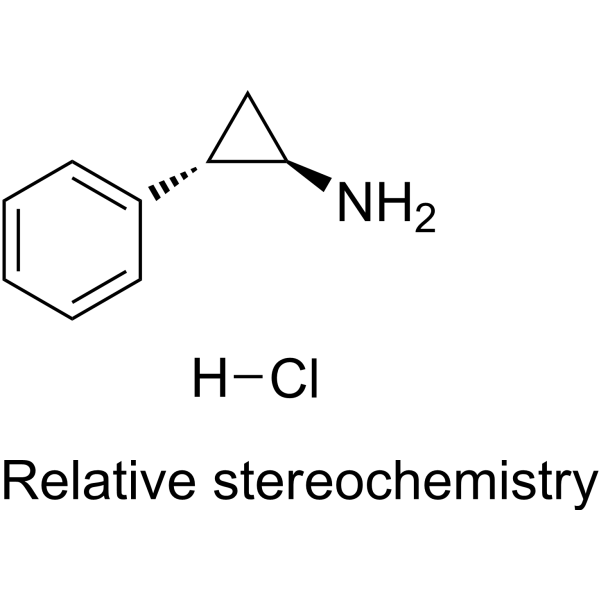
(1S,2R)-Tranylcypromine-d5 (hydrochloride) is the deuterium labeled Tranylcypromine hydrochloride . Tranylcypromine hydrochloride (SKF 385 hydrochloride) is an irreversible inhibitor of lysine-specific demethylase 1 (LSD1/BHC110) and monoamine oxidase (MAO). Tranylcypromine hydrochloride inhibits LSD1, MAO A and MAO B with IC50s of 20.7, 2.3 and 0.95 μM, respectively. Tranylcypromine hydrochloride can be used for the research of depression .
|
-
- HY-115747
-
|
|
Histone Demethylase
|
Cancer
|
|
Namoline, a γ-pyrone, is a selective and reversible Lysine-specific demethylase 1 (LSD1) inhibitor with an IC50 of 51 μM in a HRP-coupled enzymatic assay. Namoline impairs LSD1 demethylase activity and blocks cell proliferation. Namoline has the potential for androgen-dependent prostate cancer research .
|
-
- HY-15774A
-
-
- HY-186116
-
|
|
Histone Demethylase
|
Others
|
|
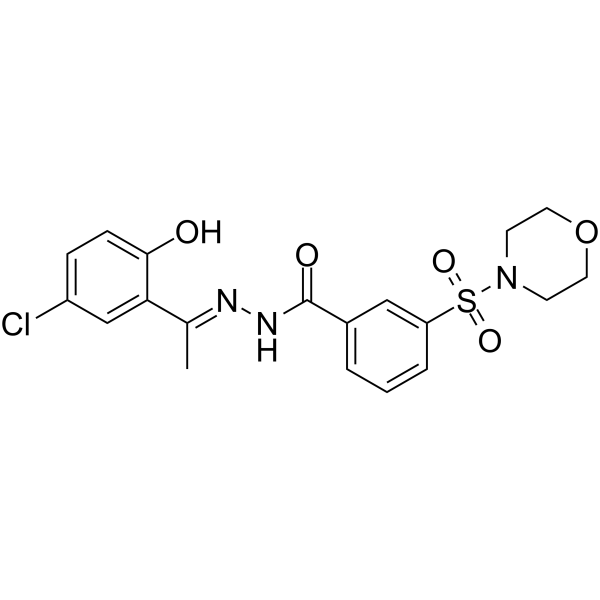
LSD1-IN-49 is a Lysine-specific demethylase 1 (LSD1/KDM1A) inhibitor with a human IC50 of 29 nM. LSD1-IN-49 irreversibly inhibits LSD1 enzyme activity by forming an adduct with the flavin adenine dinucleotide (FAD) cofactor of LSD1. LSD1-IN-49 can be used as a lead compound for the development of LSD1-targeted PET imaging agents for the brain .
|
-
- HY-136878
-
|
|
Histone Demethylase
Monoamine Oxidase
|
Neurological Disease
Cancer
|
|
LSD1-IN-10 is a LSD1/MAO inhibitor with LSD1 IC50 of 5 nM, MAO-A IC50 of 16 μM, and MAO-B IC50 of 7.4 μM. LSD1-IN-10 suppresses enzymatic activity of LSD1, MAO-A, and MAO-B. LSD1-IN-10 can be used for the research of cancer, alzheimer's disease, parkinson's disease, huntington's disease .
|
-
- HY-186116A
-
|
|
Histone Demethylase
|
Neurological Disease
|
|
LSD1-IN-49 hydrochloride (Compound (±) 1) is an irreversible LSD1/KDM1A inhibitor with an IC50 of 29 nM against hLSD1. LSD1-IN-49 hydrochloride irreversibly inhibits the enzymatic activity of LSD1 by forming an adduct with flavin adenine dinucleotide (FAD) in the binding pocket of LSD1. LSD1-IN-49 hydrochloride is applicable to research related to schizophrenia, autism spectrum disorder and Huntington's disease .
|
-
- HY-172519
-
|
|
Histone Demethylase
|
Cancer
|
|
LSD1-IN-41 (compound 7) is a potent and selective LSD1 inhibitor. LSD1-IN-41 can be used for diffuse intrinsic pontine glioma (DIPG) research when combined with HDAC inhibitors .
|
-
- HY-181781
-
|
|
Histone Demethylase
CD44
Apoptosis
|
Cancer
|
|
LSD1-IN-48 is a tranylcypromine-pyrimidine derivative and selective LSD1 inhibitor with a human IC50 of 7.87 nM. LSD1-IN-48 increases H3K4me1/2 histone methylation levels. LSD1-IN-48 induces apoptosis, upregulates CD86, downregulates SOX2 and CD44, inhibits proliferation in cancer cells. LSD1-IN-48 can be used for the research of acute myeloid leukemia .
|
-
- HY-182891
-
|
|
Histone Demethylase
|
Cancer
|
|
MC4455 is a LSD1/PRMT5 dual inhibitor. MC4455 inhibits the LSD1/CoREST and PRMT5/MEP50 complex with IC50 values of 0.104 μM and 0.014 μM. MC4455 covalently binds to LSD1’s FAD cofactor, stabilizes the LSD1/CoREST complex. MC4455 induces myeloid differentiation, alters transcriptomic profiles, drives alternative splicing changes, and impairs leukemic cell viability in AML cells. MC4455 can be used for the research of acute myeloid leukemia .
|
-
- HY-100546AR
-
|
|
Histone Demethylase
Reference Standards
Monoamine Oxidase
|
Cancer
|
|
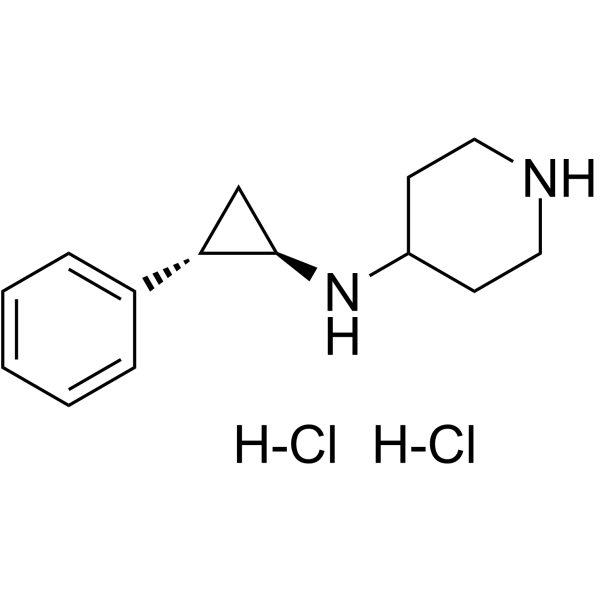
GSK-LSD1 (dihydrochloride) (Standard) is the analytical standard of GSK-LSD1 (dihydrochloride) (HY-100546A). This product is intended for research and analytical applications. GSK-LSD1 dihydrochloride is a potent, selective and irreversible lysine specific demethylase 1 (LSD1) inhibitor with an IC50 of 16 nM.
|
-
- HY-182892
-
|
|
Histone Demethylase
Histone Methyltransferase
|
Cancer
|
|
MC4491 is a selective LSD1/PRMT5 inhibitor, with an IC50 of 0.152 μM against the LSD1/CoREST complex and an IC50 of 0.043 μM against the PRMT5/MEP50 complex. MC4491 induces transcriptomic changes and splicing alterations in AML cells. MC4491 is applicable for the research of acute myeloid leukemia .
|
-
- HY-183202
-
|
|
Histone Demethylase
Apoptosis
|
Cancer
|
|
NCD38 is a Lysine-specific demethylase 1 (LSD1) inhibitor with a target IC50 of 0.59 μM. NCD38 selectively disrupts LSD1-GFI1B interactions, dissociates LSD1 and CoREST from the ERG super-enhancer. NCD38 increases apoptosis-related protein levels, induces apoptosis and reduces SOX2 and Oct4 levels. NCD38 can be used for the research of acute myeloid leukemia .
|
-
- HY-121675A
-
|
BOL-148 D-Tartrate; Bromolysergide D-Tartrate
|
5-HT Receptor
G protein-coupled Bile Acid Receptor 1
|
Neurological Disease
|
|
2-Bromo-LSD D-Tartrate (BOL-148 D-Tartrate) is a blood-brain barrier-permeable 5-HT2A partial agonist and competitive partial antagonist. 2-Bromo-LSD D-Tartrate acts as both a potent partial agonist (with an EC50 of 0.81 nM for Gq dissociation) and a potent partial antagonist (with a KB of 0.18 nM for Gq dissociation) at the 5-HT2A receptor. 2-Bromo-LSD D-Tartrate exhibits partial agonist activity at multiple aminergic GPCRs, including 5-HT2A. 2-Bromo-LSD D-Tartrate lacks 5-HT2B agonist activity. 2-Bromo-LSD D-Tartrate induces dendritogenesis and spinogenesis. 2-Bromo-LSD D-Tartrate reverses the behavioral effects of chronic stress and increases active coping behaviors in mice .
|
-
- HY-183105
-
|
|
Histone Demethylase
Apoptosis
|
Cancer
|
|
DC551040 is an orally active and selective lysine demethylase 1 (LSD1) inhibitor with a human IC50 of 2.14 nM. DC551040 binds to LSD1 via π-π stacking with Trp552, polar interactions with Phe538, and covalent adduct formation with FAD, and disrupts the LSD1-GFI1B-CoREST complex. DC551040 induces H3K4me2 accumulation, apoptosis, and cell differentiation, activates STAT5, NF-κB, AKT, and IL6-STAT3 pathways, and upregulates IL6 expression. DC551040 can be used for the research of acute myeloid leukemia .
|
-
- HY-183067
-
|
|
Histone Demethylase
TGF-beta/Smad
Notch
|
Cancer
|
|
TAS1440 is an orally active LSD1/KDM1A inhibitor with a human IC50 of 4.8 nM. TAS1440 non-covalently binds to the histone H3-binding pocket of LSD1, inhibiting demethylase activity and disrupting repressive complexes with INSM1 and SMAD2. TAS1440 activates tumor-suppressive TGF-β and NOTCH signaling pathways via transcriptional reprogramming. TAS1440 can be used for the research of small cell lung cancer, specifically the SCLC-A subtype .
|
-
- HY-170708
-
-
- HY-183067A
-
|
|
Histone Demethylase
TGF-beta/Smad
Notch
|
Cancer
|
|
TAS1440 benzoate is an orally active LSD1/KDM1A inhibitor with a human IC50 of 4.8 nM. TAS1440 benzoate non-covalently binds to the histone H3-binding pocket of LSD1, inhibiting demethylase activity and disrupting repressive complexes with INSM1 and SMAD2. TAS1440 benzoate activates tumor-suppressive TGF-β and NOTCH signaling pathways via transcriptional reprogramming. TAS1440 benzoate can be used for the research of small cell lung cancer, specifically the SCLC-A subtype .
|
-
- HY-117226
-
|
|
Histone Demethylase
|
Cancer
|
|
GSK 690 is a reversible inhibitor of lysine specific demethylase 1 (LSD1), with a Kd value of 9 nM and a biochemical IC50 of 37 nM.
|
-
- HY-103085
-
|
|
Histone Demethylase
|
Cancer
|
|
T-3775440 (hydrochloride) is an irreversible lysine-specific histone demethylase (LSD1) inhibitor with an IC50 value of 2.1 nM.
|
-
- HY-123577
-
|
|
Histone Demethylase
Apoptosis
|
Cancer
|
|
TPC-144 is a LSD1/KDM1A inhibitor. TPC-144 inhibits LSD1, and leads to a decrease in the protein level of DNMT1, causing low methylation of the LINE-1 element. TPC-144 can also produce a synergistic effect with Decitabine (HY-A0004) (a DNMT inhibitor), jointly promoting DNA demethylation and thereby inducing differentiation and apoptosis of leukemia cells. TPC-144 has also demonstrated anti-tumor efficacy in acute myeloid leukemia (AML) models. TPC-144 can be used for the study of AML .
|
-
- HY-129388B
-
|
CC-90011 benzenesulfonate; LSD1-IN-7 benzenesulfonate
|
Histone Demethylase
|
Inflammation/Immunology
Cancer
|
|
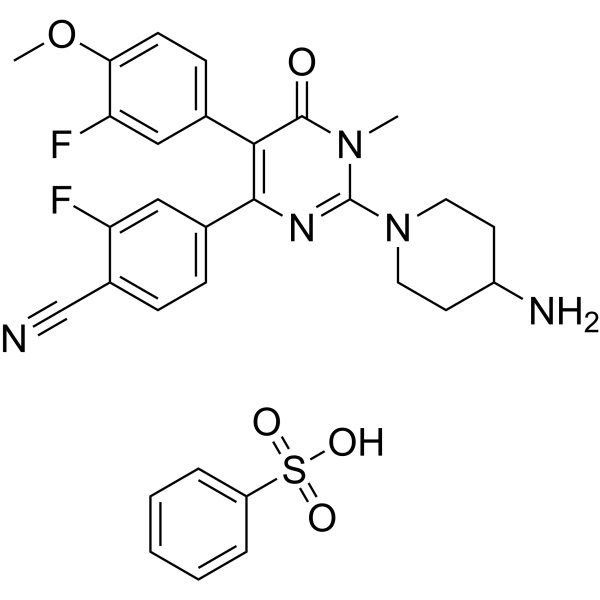
Pulrodemstat (CC-90011) benzenesulfonate is a potent, selective, reversible and orally active inhibitor of lysine specific demethylase-1 (LSD1) with an IC50 of 0.25 nM. Pulrodemstat benzenesulfonate is less enzymatic inhibition against LSD2, MAO-A, and MAO-B. Pulrodemstat benzenesulfonate induces acute myeloid leukemia (AML) and small cell lung cancer (SCLC) cells differentiation and has potent anticancer activity .
|
-
- HY-129388A
-
|
CC-90011; LSD1-IN-7
|
Histone Demethylase
|
Inflammation/Immunology
Cancer
|
|
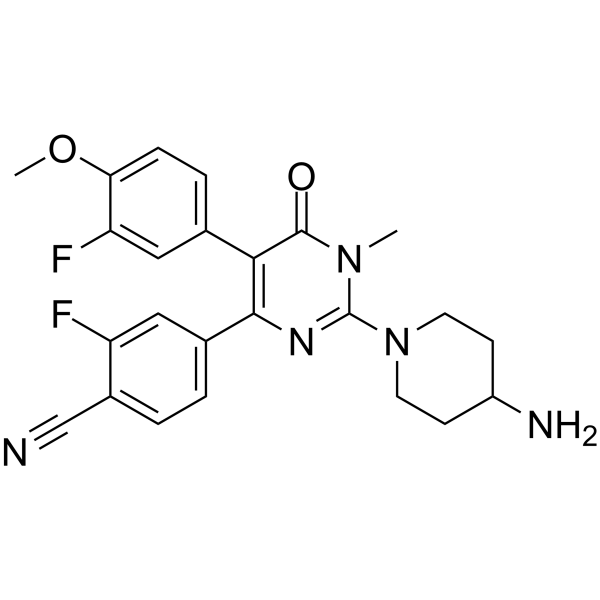
Pulrodemstat (CC-90011) is a potent, selective, reversible and orally active inhibitor of lysine specific demethylase-1 (LSD1) with an IC50 of 0.25 nM. Pulrodemstat is less enzymatic inhibition against LSD2, MAO-A, and MAO-B. Pulrodemstat induces acute myeloid leukemia (AML) and small cell lung cancer (SCLC) cells differentiation and has potent anticancer activity .
|
-
- HY-129388C
-
|
CC-90011 hydrochloride; LSD1-IN-7 hydrochloride
|
Histone Demethylase
|
Inflammation/Immunology
Cancer
|
|
Pulrodemstat (CC-90011) hydrochloride is a potent, selective, reversible and orally active inhibitor of lysine specific demethylase-1 (LSD1) with an IC50 value of 0.25 nM. Pulrodemstat hydrochloride is less enzymatic inhibition against LSD2, MAO-A, and MAO-B. Pulrodemstat hydrochloride induces acute myeloid leukemia (AML) and small cell lung cancer (SCLC) cells differentiation and has potent anticancer activity .
|
-
- HY-129127
-
|
|
Histone Demethylase
|
Others
|
|
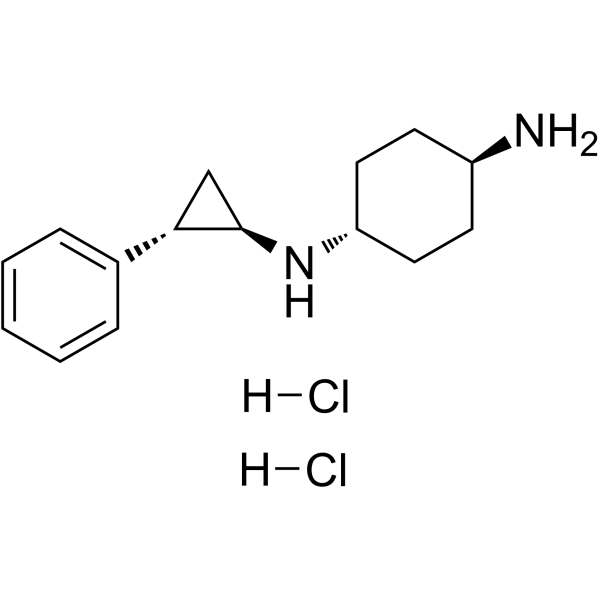
rel-OG-L002 hydrochloride (compound OG-L002) is a selective arylcyclopropylamine-based LSD1 inhibitor .
|
-
- HY-129388
-
|
CC-90011 Methylbenzenesulfonate; LSD1-IN-7 Methylbenzenesulfonate
|
Histone Demethylase
|
Inflammation/Immunology
Cancer
|
|
Pulrodemstat (CC-90011) Methylbenzenesulfonate is a potent, selective, reversible and orally active inhibitor of lysine specific demethylase-1 (LSD1) with an IC50 of 0.25 nM. Pulrodemstat Methylbenzenesulfonate is less enzymatic inhibition against LSD2, MAO-A, and MAO-B. Pulrodemstat Methylbenzenesulfonate induces acute myeloid leukemia (AML) and small cell lung cancer (SCLC) cells differentiation and has potent anticancer activity .
|
-
- HY-77732
-
|
Isopropylidene ticagrelor
|
Drug Derivative
|
Cancer
|
|
Ticagrelor acetonide (Isopropylidene ticagrelor) (Compound 7) is a drug intermediate that can be used for the synthesis of lysine-specific demethylase (LSD1) inhibitors .
|
-
- HY-12782T
-
|
ORY-1001 dihydrochloride; RG6016 dihydrochloride; RO 7051790 dihydrochloride
|
Histone Demethylase
|
Cancer
|
|
Iadademstat (ORY-1001) dihydrochloride is a selective irreversible lysine (K)-specific demethylase 1A (KDM1A/LSD1) inhibitor.
|
-
- HY-176012
-
|
1S-Lysergic acid diethylamide; 1S-LAD
|
Drug Derivative
|
Neurological Disease
|
|
1S-LSD (1S-Lysergic acid diethylamide; 1S-LAD) is a lysergic acid diethylamide analog and is a psychoactive substance .
|
-
- HY-156020
-
|
|
Glycosidase
|
Metabolic Disease
|
|
Glucocerebrosidase-IN-2 (compound 12) is a quinazoline analogue and an inhibitor of glucocerebrosidase (GC). Glucocerebrosidase-IN-2 has the potential to improve GC translocation to lysosomes in Gaucher disease patient-derived cells (mostly carrying the N370S mutation). Glucocerebrosidase-IN-2 inhibits the hydrolysis of 4-methylumbelliferone β-D-glucopyranoside (4MU) and fluorescent glycosylceramide (FlourGC) in N370S mutant tissues with an AC50 of 25.29 μM .
|
-
- HY-18632
-
GSK2879552
Maximum Cited Publications
19 Publications Verification
|
Histone Demethylase
|
Cancer
|
|
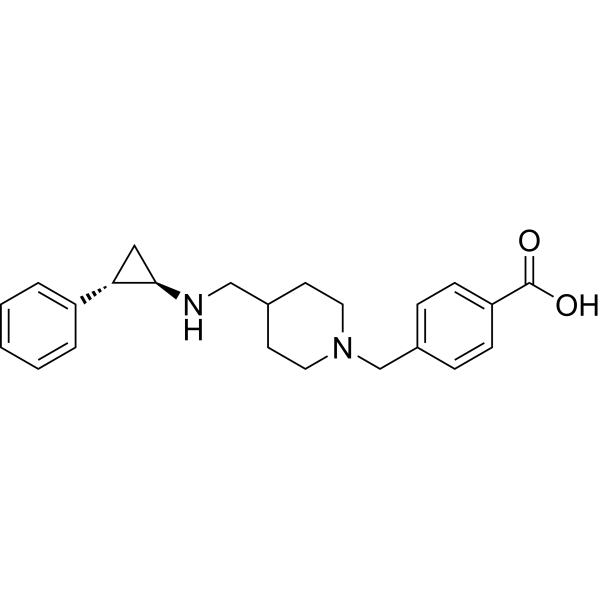
GSK2879552 an orally active, selective and irreversible inhibitor of lysine specific demethylase 1 (LSD1/ KDM1A), with potential antineoplastic activity .
|
-
- HY-169078
-
|
|
Histone Methyltransferase
|
Cancer
|
|
ML234 is a dual inhibitor against EZH2/LSD1 with IC50 values of 0.09 and 0.12 μM, respectively. ML234 displays an excellent antiproliferative capacity against prostate cancer cell lines LNCAP, PC3 and 22RV1. ML234 suppresses the tumor growth in the 22RV1 xenograft mouse model. ML234 is promising for research of anticancer agents in prostate cancer .
|
-
- HY-178825B
-
|
|
PROTACs
Histone Demethylase
Apoptosis
|
Cancer
|
|
LD-110 trihydrochloride is a highly efficient and effective LSD1 PROTAC degrader (DC50 = 0.44 μM). LD-110 trihydrochloride promotes LSD1 degradation and increases the level of H3K4 dimethylation in a ubiquitin-proteasome-dependent manner. LD-110 trihydrochloride inhibits the growth and survival of multiple esophagus squamous cancer cell (ESCC) lines by inducing apoptosis. LD-110 trihydrochloride can be used for the study of esophagus squamous cancer .
|
-
- HY-178825
-
|
|
PROTACs
Histone Demethylase
Apoptosis
|
Cancer
|
|
LD-110 is a highly efficient and effective LSD1 PROTAC degrader (DC50 = 0.44 μM). LD-110 promotes LSD1 degradation and increases the level of H3K4 dimethylation in a ubiquitin-proteasome-dependent manner. LD-110 inhibits the growth and survival of multiple esophagus squamous cancer cell (ESCC) lines by inducing apoptosis. LD-110 can be used for the study of esophagus squamous cancer .
|
-
- HY-19612B
-
|
|
Histone Demethylase
|
Cancer
|
|
DDP-38003 trihydrochloride is an novel, orally available inhibitor of histone lysine-specific demethylase 1A (KDM1A/LSD1) with an IC50 of 84 nM.
|
-
- HY-110277
-
|
|
Histone Demethylase
|
Cancer
|
|
S2101 is a lysine-specific demethylase 1 (LSD1) inhibitor with an IC50 of 0.99 μM, Ki of 0.61 μM and Kinact/Ki of 4560 M/s .
|
-
- HY-19612A
-
|
|
Histone Demethylase
|
Cancer
|
|
DDP-38003 dihydrochloride is an novel, orally available inhibitor of histone lysine-specific demethylase 1A (KDM1A/LSD1) with an IC50 of 84 nM .
|
-
- HY-178825A
-
|
|
Histone Demethylase
Apoptosis
PROTACs
|
Cancer
|
|
LD-110 triTFA is a highly efficient and effective LSD1 PROTAC degrader (DC50 = 0.44 μM). LD-110 triTFA promotes LSD1 degradation and increases the level of H3K4 dimethylation in a ubiquitin-proteasome-dependent manner. LD-110 triTFA inhibits the growth and survival of multiple esophagus squamous cancer cell (ESCC) lines by inducing apoptosis. LD-110 triTFA can be used for the study of esophagus squamous cancer .
|
-
- HY-121095A
-
|
|
Histone Demethylase
|
Neurological Disease
Cancer
|
|
Bizine dihydrochloride, a Phenelzine analogue, is a potent and selective LSD1 inhibitor, with a b>Ki of 59 nM. Bizine dihydrochloride can modulate bulk histone methylation in cancer cells. Bizine dihydrochloride shows neuroprotective effects .
|
-
- HY-121095
-
|
|
Histone Demethylase
|
Neurological Disease
Cancer
|
|
Bizine, a Phenelzine analogue, is a potent and selective LSD1 inhibitor, with a b>Ki of 59 nM. Bizine can modulate bulk histone methylation in cancer cells. Bizine shows neuroprotective effects .
|
-
- HY-109117
-
|
ORY-1001
|
Histone Demethylase
Apoptosis
|
Cancer
|
|
Iadademstat (ORY-1001) is a highly potent, orally active and selective LSD1 (KDM1A) inhibitor with antileukemic activity. Iadademstat can be used for relapsed or refractory acute myeloid leukemia research .
|
-
- HY-19612
-
|
|
Histone Demethylase
|
Cancer
|
|
DDP-38003 (Compound 15) is an orally active KDM1A/LSD1 inhibitor with an IC50 value of 84 nM. DDP-38003 exhibits anticancer activity against promyelocytic leukemia .
|
-
- HY-138830
-
TAK-418
2 Publications Verification
|
Histone Demethylase
|
Neurological Disease
|
|
TAK-418 is a selective, orally active LSD1 (KDM1A) enzyme inhibitor with an IC50 of 2.9 nM. TAK-418 unlocks aberrant epigenetic machinery and improves autism symptoms in neurodevelopmental disorder models .
|
-
- HY-103085R
-
|
|
Reference Standards
Histone Demethylase
|
Cancer
|
|
T-3775440 hydrochloride (Standard) is the analytical standard of T-3775440 hydrochloride (HY-103085). This product is intended for research and analytical applications. T-3775440 (hydrochloride) is an irreversible lysine-specific histone demethylase (LSD1) inhibitor with an IC50 value of 2.1 nM.
|
-
- HY-144755
-
|
|
Histone Demethylase
|
Cancer
|
|
MC2652 (compound 1a) is a potent LSD1 inhibitor. MC2652 displays high inhibiting effects in MV4-11 and NB4 leukaemia cells. MC2652 shows antiproliferative activity against prostate cancer LNCaP cells .
|
-
- HY-172762
-
|
|
HDAC
Molecular Glues
Histone Demethylase
|
Cancer
|
|
S234984 is a molecular glue degrader. S234984 forms a stable ternary complex with wild-type KBTBD4 E3 ligase and HDAC2 to drive neomorphic ubiquitination and degradation of CoREST1 and LSD1. S234984 can be used for the research of medulloblastoma .
|
-
- HY-17447B
-
-
- HY-149249
-
|
|
Microtubule/Tubulin
Apoptosis
Histone Demethylase
|
Cancer
|
|
MY-943 is a potent tubulin polymerization and LSD1 inhibitor with anticancer activity. MY-943 induces G2/M phase arrest and apoptosis, and inhibits cell migration. MY-943 can be used for gastric cancer research .
|
-
- HY-P10819
-
|
|
Histone Demethylase
Apoptosis
|
Cancer
|
|
S9-CMC1 TFA is a covalent peptide lysine-specific demethylase 1 (LSD1) inhibitor with an IC50 value of 2.53 μM. S9-CMC1 TFA specifically recognizes Cys360 in the enzyme-active region. S9-CMC1 TFA inhibits LSD1 activity, increasing H3K4me1 and H3K4me2 levels, leading to G1 cell cycle arrest and apoptosis and inhibiting cell proliferation. S9-CMC1 TFA significantly inhibits tumor growth in A549 xenograft animal models .
|
-
- HY-122635A
-
|
|
Histone Demethylase
|
Neurological Disease
|
|
T-448 is a specific, orally active, CNS-penetrant and irreversible inhibitor of lysine-specific demethylase 1 (LSD1, an H3K4 demethylase), with an IC50 of 22 nM. T-448 enhances H3K4 methylation in primary cultured rat neurons .
|
-
- HY-110021
-
|
SKF 82526 hydrochloride
|
Dopamine Receptor
Histone Demethylase
Apoptosis
|
Cardiovascular Disease
Cancer
|
|
Fenoldopam (SKF 82526) hydrochloride is a D1 receptor agonist and a novel lysine-specific demethylase 1 (LSD1) inhibitor (IC50=0.8974 μM). Fenoldopam hydrochloride shows anti-hypertensive effects, anti-cancer cell proliferation activity and can induce cells apoptosis .
|
-
- HY-B1496
-
|
SKF 385 hemisulfate
|
Monoamine Oxidase
Histone Demethylase
|
Neurological Disease
Cancer
|
|
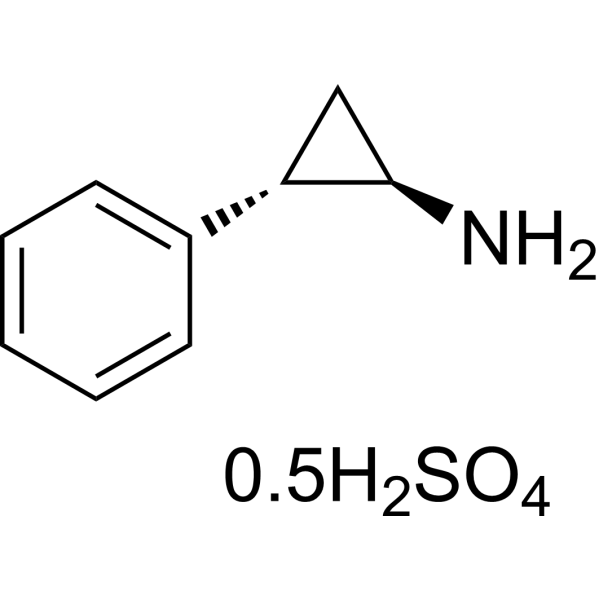
Tranylcypromine (SKF 385) hemisulfate is an irreversible, nonselective monoamine oxidase (MAO) inhibitor used in the treatment of depression. Tranylcypromine hemisulfate is also a lysine-specific demethylase 1 (LSD1) inhibitor, suppresses lesion growth and improves generalized hyperalgesia in mouse with induced endometriosis. Tranylcypromine has antidepressant effects .
|
-
- HY-17447SA
-
|
SKF 385-d5 hydrochloride
|
Monoamine Oxidase
Histone Demethylase
|
Neurological Disease
|
|
Tranylcypromine-d5 (hydrochloride) is a deuterium labeled (rel)-Tranylcypromine hydrochloride. Tranylcypromine hydrochloride is an irreversible, nonselective monoamine oxidase (MAO) inhibitor used in the treatment of depression. Tranylcypromine hydrochloride is also a lysine-specific demethylase 1 (LSD1) inhibitor, suppresses lesion growth and improves generalized hyperalgesia in mouse with induced endometriosis .
|
-
- HY-B0735A
-
|
Fenoldopam methanesulfonate; SKF-82526 mesylate
|
Dopamine Receptor
Apoptosis
|
Cardiovascular Disease
Cancer
|
|
Fenoldopam mesylate (SKF-82526) is a D1 receptor agonist and a novel lysine-specific demethylase 1 (LSD1) inhibitor (IC50=0.8974 μM). Fenoldopam mesylate shows anti-hypertensive effects, anti-cancer cell proliferation activity and can induce cells apoptosis .
|
-
- HY-16012
-
|
4SC-202
|
HDAC
Apoptosis
|
Cancer
|
|
Domatinostat tosylate (4SC-202) is a selective class I HDAC inhibitor with IC50 of 1.20 μM, 1.12 μM, and 0.57 μM for HDAC1, HDAC2, and HDAC3, respectively. It also displays inhibitory activity against Lysine specific demethylase 1 (LSD1).
|
-
- HY-122635
-
|
|
Histone Demethylase
|
Neurological Disease
|
|
T-448 free base is a specific, orally active, CNS-penetrant and irreversible inhibitor of lysine-specific demethylase 1 (LSD1, an H3K4 demethylase), with an IC50 of 22 nM. T-448 free base enhances H3K4 methylation in primary cultured rat neurons .
|
-
- HY-16012A
-
|
4SC-202 free base
|
HDAC
Apoptosis
|
Cancer
|
|
Domatinostat (4SC-202 free base) is a selective class I HDAC inhibitor with IC50 of 1.20 μM, 1.12 μM, and 0.57 μM for HDAC1, HDAC2, and HDAC3, respectively. It also displays inhibitory activity against Lysine specific demethylase 1 (LSD1).
|
-
- HY-W742532
-
|
N-Ethyl-nor-LSD
|
5-HT Receptor
Dopamine Receptor
|
Neurological Disease
|
|
ETH-LAD (N-Ethyl-nor-LSD) is an activator for 5-HT2A receptor with Ki of 5.1 nM. ETH-LAD exhibits affinity for dopamine receptor D1 and dopamine receptor D2 with Ki of 22.1 nM and 4.4 nM. ETH-LAD acts as psychoactive substance in rat model .
|
-
- HY-147976A
-
|
|
Glycosidase
|
Neurological Disease
|
|
Glucocerebrosidase-IN-1 (compound 11a) hydrochloride is a potent and selective GCase (glucocerebrosidase) inhibitor, with an IC50 of 29.3 μM and a Ki of 18.5 μM. Glucocerebrosidase-IN-1 hydrochloride can be used for the research of Gaucher disease (GD) and Parkinson’s disease (PD) .
|
-
- HY-147976
-
|
|
Glycosidase
|
Neurological Disease
Metabolic Disease
|
|
Glucocerebrosidase-IN-1 (compound 11a) is a potent and selective GCase (glucocerebrosidase) inhibitor, with an IC50 of 29.3 μM and a Ki of 18.5 μM. Glucocerebrosidase-IN-1 can be used for the research of Gaucher disease (GD) and Parkinson’s disease (PD) .
|
-
- HY-155526
-
|
|
Histone Demethylase
|
Cancer
|
|
FY-21 is a selective inhibitor of LSD1 (IC50=340 nM), with anti-proliferation and anti-colony formation activities. FY-21 enhances p53 expression, down-regulates HOXA9 and MEIS1 expression. FY-21 also induces leukemia cell differentiation to exhibts antitumor activity .
|
-
- HY-169791
-
|
|
5-HT Receptor
|
Neurological Disease
|
|
ECPLA, a lysergamide lysergic acid diethylamidean (LSD) analog, is a potent 5-HT2A agonist (EC50 of 14.6 nM) for Gq-mediated calcium flux. ECPLA has high affinity for most serotonin receptors, α2-adrenoceptors, and D2-like dopamine receptors .
|
-
- HY-109169B
-
|
IMG-7289 hydrochloride
|
Histone Demethylase
Apoptosis
|
Cancer
|
|
Bomedemstat (IMG-7289) hydrochloride is an orally active and irreversible lysine-specific demethylase 1 (LSD1) inhibitor. Bomedemstat hydrochloride can increase H3K4 and H3K9 methylation, and then alter gene expression. Bomedemstat hydrochloride shows anti-cancer activities, inhibits cancer cell proliferation and induces apoptosis .
|
-
- HY-109169C
-
|
IMG-7289 dihydrochloride
|
Histone Demethylase
Apoptosis
|
Cancer
|
|
Bomedemstat (IMG-7289) dihydrochloride is an orally active and irreversible lysine-specific demethylase 1 (LSD1) inhibitor. Bomedemstat dihydrochloride can increase H3K4 and H3K9 methylation, and then alter gene expression. Bomedemstat dihydrochloride shows anti-cancer activities, inhibits cancer cell proliferation and induces apoptosis .
|
-
- HY-109169
-
|
IMG-7289
|
Histone Demethylase
Apoptosis
|
Cancer
|
|
Bomedemstat (IMG-7289) is an orally active and irreversible lysine-specific demethylase 1 (LSD1) inhibitor. Bomedemstat can increase H3K4 and H3K9 methylation, and then alter gene expression. Bomedemstat shows anti-cancer activities, inhibits cancer cell proliferation and induces apoptosis .
|
-
- HY-179230
-
|
|
PROTAC-Linker Conjugates for PAC
|
Cancer
|
|
E3 Ligase Ligand-linker Conjugate 214 is an E3 ligase ligand-linker conjugate containing a Von Hippel-Lindau (VHL) ligand and a linker. E3 Ligase Ligand-linker Conjugate 214 can bind to a target protein ligand to form a PROTAC molecule, PROTAC LSD1 Degrader 1 (HY-179229) .
|
-
- HY-155825
-
|
|
|
Cancer
|
|
LPE-1 is a lysine-specific demethylase 1 (LSD1) inhibitor with an IC50 of 0.65 μM. LPE-1 inhibits the proliferation of gastric cancer, liver cancer and prostate cancer cells, and shows no activity against a subset of gastric cancer cells. LPE-1 is applicable for the research of gastric cancer, liver cancer and prostate cancer .
|
-
- HY-109169A
-
|
IMG-7289 ditosylate
|
Histone Demethylase
Apoptosis
|
Cancer
|
|
Bomedemstat (IMG-7289) ditosylate is an orally active and irreversible lysine-specific demethylase 1 (LSD1) inhibitor. Bomedemstat ditosylate can increase H3K4 and H3K9 methylation, and then alter gene expression. Bomedemstat ditosylate shows anti-cancer activities, inhibits cancer cell proliferation and induces apoptosis .
|
-
- HY-19333
-
OG-L002
2 Publications Verification
|
Histone Demethylase
Monoamine Oxidase
HSV
|
Infection
|
|
OG-L002 is a potent and highly selective LSD1 inhibitor with an IC50 of 0.02 μM. OG-L002 is a potent monoamine oxidases (MAO) inhibitor with IC50s of 1.38 μM and 0.72 μM for MAO-A and MAO-B, respectively. OG-L002 potently inhibits the expression of HSV IE genes .
|
-
- HY-103713
-
|
SP-2577
|
Histone Demethylase
|
Cancer
|
|
Seclidemstat is a potent noncompetitive and reversible KDM1A (LSD1) inhibitor (Ki=31 nM, IC50=13 nM). Seclidemstat promotes antitumor immunity in switch/sucrose nonfermentable (SWI/SNF) complex mutated ovarian cancer, as well as inhibit virus production, viral DNA replication, and late gene expression. Seclidemstat can be used for the research of Ewing Sarcoma .
|
-
- HY-19333A
-
|
|
Histone Demethylase
Monoamine Oxidase
HSV
|
Infection
|
|
OG-L002 hydrochloride is a potent and highly selective LSD1 inhibitor with an IC50 of 0.02 μM. OG-L002 hydrochloride is a potent monoamine oxidases (MAO) inhibitor with IC50s of 1.38 μM and 0.72 μM for MAO-A and MAO-B, respectively. OG-L002 hydrochloride potently inhibits the expression of HSV IE genes .
|
-
- HY-141677B
-
|
|
Histone Demethylase
|
Cancer
|
|
INCB059872 tosylate is a potent, orally active, selective and irreversible Lysine-Specific Demethylase 1 (LSD1) inhibitor that achieves inhibitory activity through the formation of covalent FAD-adducts. INCB059872 tosylate can inhibit cell proliferation and induce cell differentiation by upregulating the expression of myeloid differentiation markers CD86 and CD11b. INCB059872 tosylate can be used for the research of myeloid leukemia .
|
-
- HY-149946
-
|
|
HDAC
Apoptosis
Histone Demethylase
|
Cancer
|
|
HDAC-IN-57 is an orally active inhibitor of histone deacetylases (HDAC), with IC50s of 2.07 nM, 4.71 nM, 2.4 nM and 107 nM for HDAC1, HDAC2, HDAC6, HDAC8, respectively. HDAC-IN-57 can inhibits LSD1, with IC50 of 1.34 μΜ. HDAC-IN-57 induces apoptosis, and has anti-tumor activity .
|
-
- HY-141677
-
|
|
Histone Demethylase
|
Cancer
|
|
INCB059872 is a potent, orally active, selective and irreversible Lysine-Specific Demethylase 1 (LSD1) inhibitor that achieves inhibitory activity through the formation of covalent FAD-adducts. INCB059872 can inhibit cell proliferation and induce cell differentiation by upregulating the expression of myeloid differentiation markers CD86 and CD11b. INCB059872 can be used for the research of myeloid leukemia .
|
-
- HY-B0735AR
-
|
Fenoldopam methanesulfonate (Standard); SKF-82526 mesylate (Standard)
|
Reference Standards
Dopamine Receptor
Apoptosis
|
Cardiovascular Disease
Cancer
|
|
Fenoldopam (mesylate) (Standard) is the analytical standard of Fenoldopam (mesylate). This product is intended for research and analytical applications. Fenoldopam mesylate (SKF-82526) is a D1 receptor agonist and a novel lysine-specific demethylase 1 (LSD1) inhibitor (IC50=0.8974 μM). Fenoldopam mesylate shows anti-hypertensive effects, anti-cancer cell proliferation activity and can induce cells apoptosis .
|
-
- HY-141677A
-
|
|
Histone Demethylase
|
Cancer
|
|
INCB059872 dihydrochloride is a potent, orally active, selective and irreversible Lysine-Specific Demethylase 1 (LSD1) inhibitor that achieves inhibitory activity through the formation of covalent FAD-adducts. INCB059872 dihydrochloride can inhibit cell proliferation and induce cell differentiation by upregulating the expression of myeloid differentiation markers CD86 and CD11b. INCB059872 dihydrochloride can be used for the research of myeloid leukemia .
|
-
- HY-W743888
-
|
6-Allyl-6-nor-LSD
|
5-HT Receptor
Dopamine Receptor
|
Neurological Disease
|
|
AL-LAD (6-Allyl-6-nor-LSD) is an activator for 5-HT2A receptor with Ki of 3.4-8.1 nM. AL-LAD exhibits affinity for dopamine receptor D1 and dopamine receptor D2 with absolute affinitiesK0.5 of 189 nM and 12.3 nM. AL-LAD acts as psychoactive substance in mouse model .
|
-
- HY-B1496R
-
|
SKF 385 hemisulfate (Standard)
|
Reference Standards
Monoamine Oxidase
Histone Demethylase
|
Neurological Disease
|
|
Tranylcypromine (hemisulfate) (Standard) is the analytical standard of Tranylcypromine (hemisulfate). This product is intended for research and analytical applications. Tranylcypromine (SKF 385) hemisulfate is an irreversible, nonselective monoamine oxidase (MAO) inhibitor used in the treatment of depression. Tranylcypromine hemisulfate is also a lysine-specific demethylase 1 (LSD1) inhibitor, suppresses lesion growth and improves generalized hyperalgesia in mouse with induced endometriosis. Tranylcypromine has antidepressant effects .
|
-
- HY-103713A
-
|
SP-2577 mesylate
|
Histone Demethylase
|
Cancer
|
|
Seclidemstat (SP-2577) mesylate is a potent noncompetitive and reversible KDM1A (LSD1) inhibitor (Ki=31 nM, IC50=13 nM). Seclidemstat mesylate promotes antitumor immunity in switch/sucrose nonfermentable (SWI/SNF) complex mutated ovarian cancer, as well as inhibit virus production, viral DNA replication, and late gene expression. Seclidemstat mesylate can be used for the research of Ewing Sarcoma .
|
-
- HY-N18236
-
|
|
Histone Demethylase
|
Cancer
|
|
3β-Acetoxyl-atractylenolide I is a LSD1 inhibitor with an IC50 of 57 μM. 3β-Acetoxyl-atractylenolide I blocks tumor growth, metastasis and invasion. 3β-Acetoxyl-atractylenolide I is used in the research of various cancers including prostate cancer, breast cancer, neuroblastoma, gastric cancer, colon cancer, bladder cancer, esophageal cancer, acute myeloid leukemia and retinoblastoma .
|
-
- HY-141677C
-
|
|
Histone Demethylase
|
Cancer
|
|
INCB059872 TFA is a potent, orally active, selective and irreversible Lysine-Specific Demethylase 1 (LSD1) inhibitor that achieves inhibitory activity through the formation of covalent FAD-adducts. INCB059872 TFA can inhibit cell proliferation and induce cell differentiation by upregulating the expression of myeloid differentiation markers CD86 and CD11b. INCB059872 TFA can be used for the research of myeloid leukemia .
|
-
- HY-161470
-
|
|
Histone Demethylase
E1/E2/E3 Enzyme
DNA/RNA Synthesis
Caspase
Apoptosis
|
Cancer
|
|
WS-384 is a dual LSD1 and DCN1-UBC12 protein-protein interaction inhibitor with oral activity, with IC50 values of 338.79 nM and 14.81 nM, respectively. WS-384 possesses anticancer activity and can cause cell cycle arrest, DNA damage, and induce apoptosis. WS-384 can be used in the research of non-small cell lung cancer (NSCLC) .
|
-
- HY-168968S
-
|
|
EGFR
Histone Demethylase
|
Cancer
|
|
ZJY-54 is an orally active dual-target inhibitor of EGFR/LSD1, with IC50 values of 3.8 nM and 0.6 μM, respectively. ZJY-54 can inhibit the proliferation of non-small cell lung cancer cells, induce the accumulation of H3K4me2 and H3K9me2, and inhibit the phosphorylation of the EGFR signaling pathway. ZJY-54 has anti-tumor activity .
|
-
- HY-103713AR
-
|
SP-2577 mesylate (Standard)
|
Reference Standards
Histone Demethylase
|
Cancer
|
|
Seclidemstat mesylate (Standard) is the analytical standard of Seclidemstat mesylate (HY-103713A). This product is intended for research and analytical applications. Seclidemstat (SP-2577) mesylate is a potent noncompetitive and reversible KDM1A (LSD1) inhibitor (Ki=31 nM, IC50=13 nM). Seclidemstat mesylate promotes antitumor immunity in switch/sucrose nonfermentable (SWI/SNF) complex mutated ovarian cancer, as well as inhibit virus production, viral DNA replication, and late gene expression. Seclidemstat mesylate can be used for the research of Ewing Sarcoma .
|
-
- HY-103713R
-
|
SP-2577 (Standard)
|
Reference Standards
Histone Demethylase
|
Cancer
|
|
Seclidemstat (Standard) is the analytical standard of Seclidemstat (HY-103713). This product is intended for research and analytical applications. Seclidemstat is a potent noncompetitive and reversible KDM1A (LSD1) inhibitor (Ki=31 nM, IC50=13 nM). Seclidemstat promotes antitumor immunity in switch/sucrose nonfermentable (SWI/SNF) complex mutated ovarian cancer, as well as inhibit virus production, viral DNA replication, and late gene expression. Seclidemstat can be used for the research of Ewing Sarcoma .
|
-
- HY-156202
-
|
|
Histone Demethylase
PD-1/PD-L1
Apoptosis
|
Cancer
|
|
Geranylgeranoic acid (Compound 5) is inhibits lysine-specific demethylase 1 (LSD1) with an IC50 value of 46.97 µM. Geranylgeranoic acid induces apoptosis via loss of the mitochondrial membrane potential and activation of interleukin-1β-converting enzyme (ICE) and cysteine protease precursor 32 (CPP32) in Huh7 and PLC/PRF/5 human hepatoma cells and MLE-10 transformed mouse hepatocytes. Geranylgeranoic acid an isoprenoid with anticancer activity, which is found in S. chinensis .
|
-
- HY-138830A
-
|
|
Histone Demethylase
|
Neurological Disease
|
|
(S,S)-TAK-418 is a potent inhibitor of lysine-specific demethylase 1 (LSD1), demonstrating significant normalization of aberrant gene expression in neurodevelopmental disorders. (S,S)-TAK-418 also ameliorates ASD-like behaviors in rodent models affected by maternal exposure to valproate or poly I:C. (S,S)-TAK-418 modulates gene expression differently across various models and ages, indicating its potential as a therapeutic agent for conditions like autism spectrum disorder and schizophrenia.
|
-
- HY-136522
-
|
|
Histone Demethylase
Apoptosis
|
Cancer
|
|
S2116, a N-alkylated tranylcypromine (TCP) derivative, is a potent lysine-specific demethylase 1 (LSD1) inhibitor. S2116 increases H3K9 methylation and reciprocal H3K27 deacetylation at super-enhancer regions. S2116 induces apoptosis in TCP-resistant T-cell acute lymphoblastic leukemia (T-ALL) cells by repressing transcription of the NOTCH3 and TAL1 genes. S2116 significantly retardes the growth of T-ALL cells in xenotransplanted mice .
|
-
- HY-141866
-
|
|
Ceramidase
|
Neurological Disease
|
|
Acid Ceramidase-IN-1 is orally active and blood-brain barrier penetrant acid ceramidase (AC, ASAH-1) inhibitor (hAC IC50=0.166 μM). Acid Ceramidase-IN-1 reduces AC activity, accumulates ceramide species (Cer (d18:0/16:0), Cer (d18:1/16:0)), and decreases sphingosine levels. Acid Ceramidase-IN-1 can be used for the study of severe neurological lysosomal storage diseases (LSDs) such as Gaucher’s disease (GD) and Krabbe’s disease (KD) .
|
-
- HY-145259
-
|
|
HDAC
Histone Demethylase
|
Cancer
|
|
HDAC6-IN-3 (Compound 14), an antiprostate cancer agent, is a potent, orally active HDAC6 inhibitor with IC50s ranging from 0.02-1.54 μM for HDAC1/2/3/6/8/10. HDAC6-IN-3 is also an effective MAO-A (IC50=0.79 μM) and LSD1 inhibitor . HDAC6-IN-3 is a click chemistry reagent, it contains an Alkyne group and can undergo copper-catalyzed azide-alkyne cycloaddition (CuAAc) with molecules containing Azide groups.
|
-
- HY-136523
-
|
|
Histone Demethylase
Apoptosis
|
Cancer
|
|
S2157, a N-alkylated tranylcypromine (TCP) derivative, is a potent lysine-specific demethylase 1 (LSD1) inhibitor. S2157 increases H3K9 methylation and reciprocal H3K27 deacetylation at super-enhancer regions. S2157 induces apoptosis in TCP-resistant T-cell acute lymphoblastic leukemia (T-ALL) cells by repressing transcription of the NOTCH3 and TAL1 genes. S2157 efficiently pass through the blood-brain barrier and can almost completely eradicate CNS leukemia in mice transplanted with T-ALL cells .
|
-
- HY-169841
-
|
|
5-HT Receptor
Arrestin
|
Neurological Disease
|
|
IHCH-7086 is a blood-brain barrier-permeable, partial β-arrestin-biased agonist of 5-HT2AR with a Ki of 12.59 nM. IHCH-7086 blocks D-lysergic acid diethylamide-induced head-twitch response in mice and alleviates depression-like behaviors in mice subjected to acute restraint stress or injected with Corticosterone (HY-B1618). IHCH-7086 is applicable to research related to depression .
|
-
- HY-B1018A
-
|
|
Monoamine Oxidase
GABA Receptor
Histone Demethylase
|
Cardiovascular Disease
Neurological Disease
Metabolic Disease
Inflammation/Immunology
Cancer
|
|
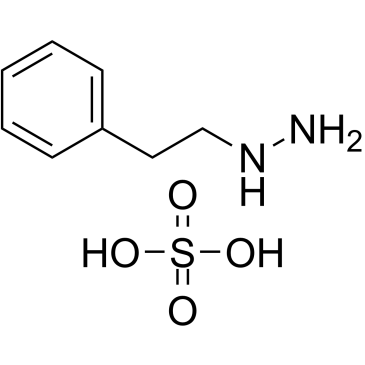
Phenelzine sulfate, an antidepressant agent, is an irreversible and orally active monoamine oxidase (MAO-A and MAO-B) inhibitor. Phenelzine sulfate inhibits GABA transaminase and primary amine oxidase (PrAO), and sequester reactive aldehydes. Phenelzine sulfate also inhibits LSD1 (Ki: 5.6 μM) and suppresses oxidative stress and lipogenesis. Phenelzine sulfate elevates neurotransmitters (serotonin, norepinephrine, dopamine). Phenelzine sulfate is studied in neurological, metabolic and cancer diseases for depression and anxiety disorders, stroke, spinal cord injury, traumatic brain injury, multiple sclerosis, Parkinson’s disease, Alzheimer’s disease, inflammatory pain, obesity and prostate cancer .
|
-
- HY-N2037A
-
|
Norcoclaurine hydrochloride
|
MAP3K
MDM-2/p53
ROS Kinase
Apoptosis
|
Infection
Cardiovascular Disease
Endocrinology
Cancer
|
|
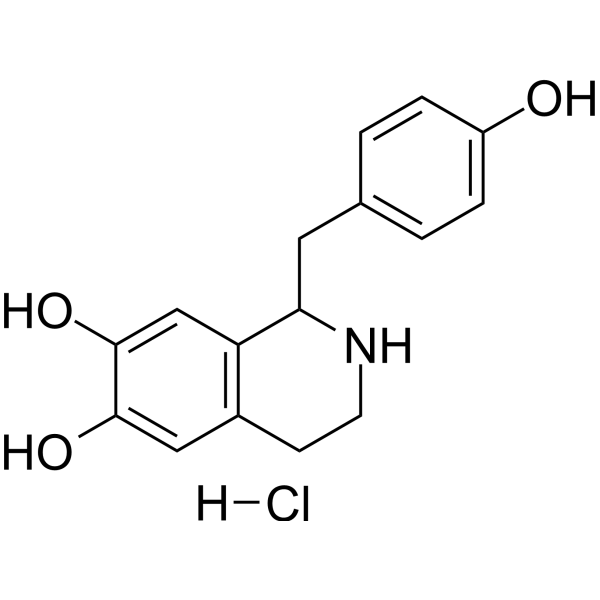
Higenamine hydrochloride is a selective LSD1 inhibitor (IC50=1.47 μM) that can be isolated from aconite. Higenamine hydrochloride has anti-inflammatory and antibacterial activity. Higenamine (Norcoclaurine) can attenuate IL-1β-induced Apoptosis through ROS-mediated PI3K/Akt signaling pathway. Higenamine hydrochloride protects brain cells from oxygen deprivation. Higenamine can promote bone formation in osteoporosis through the SMAD2/3 pathway. Higenamine hydrochloride can be used to study cancer, inflammation, cardiorenal syndrome and other diseases .
|
-
- HY-N2037AS1
-
|
Norcoclaurine-d4-1 hydrochloride; Demethyl-Coclaurine-d4-1 hydrochloride
|
Isotope-Labeled Compounds
MAP3K
MDM-2/p53
Apoptosis
ROS Kinase
|
Infection
Cardiovascular Disease
Endocrinology
Cancer
|
|
Higenamine-d4-1 (Norcoclaurine-d4-1) hydrochloride is deuterium labeled Higenamine (hydrochloride). Higenamine hydrochloride is a selective LSD1 inhibitor (IC50=1.47 μM) that can be isolated from aconite. Higenamine hydrochloride has anti-inflammatory and antibacterial activity. Higenamine (Norcoclaurine) can attenuate IL-1β-induced Apoptosis through ROS-mediated PI3K/Akt signaling pathway. Higenamine hydrochloride protects brain cells from oxygen deprivation. Higenamine can promote bone formation in osteoporosis through the SMAD2/3 pathway. Higenamine hydrochloride can be used to study cancer, inflammation, cardiorenal syndrome and other diseases .
|
-
- HY-B1018AS
-
|
|
Isotope-Labeled Compounds
Monoamine Oxidase
GABA Receptor
Histone Demethylase
|
Cardiovascular Disease
Neurological Disease
Metabolic Disease
Inflammation/Immunology
Cancer
|
|
Phenelzine-d5 sulfate is the deuterium labeled Phenelzine sulfate (HY-B1018A). Phenelzine sulfate, an antidepressant agent, is an irreversible and orally active monoamine oxidase (MAO-A and MAO-B) inhibitor. Phenelzine sulfate inhibits GABA transaminase and primary amine oxidase (PrAO), and sequester reactive aldehydes. Phenelzine sulfate also inhibits LSD1 (Ki: 5.6 μM) and suppresses oxidative stress and lipogenesis. Phenelzine sulfate elevates neurotransmitters (serotonin, norepinephrine, dopamine). Phenelzine sulfate is studied in neurological, metabolic and cancer diseases for depression and anxiety disorders, stroke, spinal cord injury, traumatic brain injury, multiple sclerosis, Parkinson’s disease, Alzheimer’s disease, inflammatory pain, obesity and prostate cancer .
|
-
- HY-N2037AR
-
|
Norcoclaurine hydrochloride (Standard)
|
MAP3K
Reference Standards
MDM-2/p53
ROS Kinase
Apoptosis
|
Infection
Cardiovascular Disease
Endocrinology
Cancer
|
|
Higenamine (hydrochloride) (Standard) is the analytical standard of Higenamine (hydrochloride). This product is intended for research and analytical applications. Higenamine hydrochloride is a selective LSD1 inhibitor (IC50=1.47 μM) that can be isolated from aconite. Higenamine hydrochloride has anti-inflammatory and antibacterial activity. Higenamine (Norcoclaurine) can attenuate IL-1β-induced Apoptosis through ROS-mediated PI3K/Akt signaling pathway. Higenamine hydrochloride protects brain cells from oxygen deprivation. Higenamine can promote bone formation in osteoporosis through the SMAD2/3 pathway. Higenamine hydrochloride can be used to study cancer, inflammation, cardiorenal syndrome and other diseases .
|
-
- HY-156208
-
|
AdaGalCer(d18:1/2:0); Admantanyl galactosylceramide (d18:1/2:0); Admantanyl galCer(d18:1/2:0)
|
Glycosidase
Glucosylceramide Synthase (GCS)
Glycosyltransferase
|
Metabolic Disease
|
|
C2 Adamantanyl galactosylceramide (AdaGalCer) (d18:1/2:0) is a bioactive sphingolipid. C2 Adamantanyl galactosylceramide (d18:1/2:0) stimulates glucocerebrosidase activity in vitro. C2 Adamantanyl galactosylceramide (d18:1/2:0) inhibits microsomal LacCer and Gb3 synthase, and inhibits cell sulfatide synthesis. C2 Adamantanyl galactosylceramide (d18:1/2:0) reduces glucosylceramide (GlcCer) levels in normal and lysosomal storage disease (LSD) cells. C2 Adamantanyl galactosylceramide (d18:1/2:0) acts as a substrate for A4GALT and is able to lower Gb3 levels with an IC50 concentration of 40 μM in fabry disease cells .
|
-
- HY-N2037
-
|
Norcoclaurine; Demethyl-Coclaurine
|
MAP3K
MDM-2/p53
Adrenergic Receptor
ROS Kinase
Apoptosis
|
Cardiovascular Disease
Endocrinology
|
|
Higenamine (Norcoclaurine), a β2-AR agonist with antioxidant capability, is a key component of the Chinese herb aconite root that prescribes for treating symptoms of heart failure in the oriental Asian countries. Higenamine is also a α1-adrenergic receptor antagonist with hypotensive effect. is a selective LSD1 inhibitor (IC50=1.47 μM) that can be isolated from aconite. Higenamine hydrochloride has anti-inflammatory and antibacterial activity. Higenamine protects myocyte Apoptosis and ischemia/reperfusion (I/R) injury through selective activation of beta2-adrenergic receptor (β2-AR). Higenamine also reduces I/R-induced myocardial infarction in mice. Higenamine can attenuate IL-1β-induced Apoptosis through ROS-mediated PI3K/Akt signaling pathway. Higenamine protects brain cells from oxygen deprivation. Higenamine can promote bone formation in osteoporosis through the SMAD2/3 pathway. Higenamine can be used to study cancer, inflammation, cardiorenal syndrome and other diseases .
|
-
- HY-N2037R
-
|
Norcoclaurine (Standard); Demethyl-Coclaurine (Standard)
|
Reference Standards
MAP3K
MDM-2/p53
Adrenergic Receptor
ROS Kinase
Apoptosis
|
Cardiovascular Disease
Endocrinology
|
|
Higenamine (Norcoclaurine), a β2-AR agonist with antioxidant capability, is a key component of the Chinese herb aconite root that prescribes for treating symptoms of heart failure in the oriental Asian countries. Higenamine is also a α1-adrenergic receptor antagonist with hypotensive effect. is a selective LSD1 inhibitor (IC50=1.47 μM) that can be isolated from aconite. Higenamine hydrochloride has anti-inflammatory and antibacterial activity. Higenamine protects myocyte Apoptosis and ischemia/reperfusion (I/R) injury through selective activation of beta2-adrenergic receptor (β2-AR). Higenamine also reduces I/R-induced myocardial infarction in mice. Higenamine can attenuate IL-1β-induced Apoptosis through ROS-mediated PI3K/Akt signaling pathway. Higenamine protects brain cells from oxygen deprivation. Higenamine can promote bone formation in osteoporosis through the SMAD2/3 pathway. Higenamine can be used to study cancer, inflammation, cardiorenal syndrome and other diseases .
|
-
| Cat. No. |
Product Name |
Target |
Research Area |
-
- HY-P4091
-
|
|
Biochemical Assay Reagents
|
Cancer
|
|
LSD is a peptide. LSD can specifically recognize the lymphatics of C8161 melanoma, but it does not bind to the lymphatics of normal tissues or tumor blood vessels. When conjugated with a proapoptotic peptide, LSD can reduce the number of tumor lymphatics. LSD can be used in the research of targeted therapy and diagnosis of tumor lymphatics .
|
-
- HY-P4091A
-
|
|
Biochemical Assay Reagents
|
Cancer
|
|
LSD acetate is a peptide. LSD acetate can specifically recognize the lymphatics of C8161 melanoma, but it does not bind to the lymphatics of normal tissues or tumor blood vessels. When conjugated with a proapoptotic peptide, LSD acetate can reduce the number of tumor lymphatics. LSD acetate can be used in the research of targeted therapy and diagnosis of tumor lymphatics .
|
-
- HY-P10819
-
|
|
Histone Demethylase
Apoptosis
|
Cancer
|
|
S9-CMC1 TFA is a covalent peptide lysine-specific demethylase 1 (LSD1) inhibitor with an IC50 value of 2.53 μM. S9-CMC1 TFA specifically recognizes Cys360 in the enzyme-active region. S9-CMC1 TFA inhibits LSD1 activity, increasing H3K4me1 and H3K4me2 levels, leading to G1 cell cycle arrest and apoptosis and inhibiting cell proliferation. S9-CMC1 TFA significantly inhibits tumor growth in A549 xenograft animal models .
|
| Cat. No. |
Product Name |
Category |
Target |
Chemical Structure |
| Cat. No. |
Product Name |
Chemical Structure |
-
- HY-W767767
-
|
|
|
2-Oxo-3-hydroxy-LSD-d10 is the deuterium labeled 2-Oxo-3-hydroxy-LSD (HY-137386). 2-Oxo-3-hydroxy-LSD is a metabolite of Lysergic acid diethylamide .
|
-
-
- HY-B1018AS
-
|
|
|
Phenelzine-d5 sulfate is the deuterium labeled Phenelzine sulfate (HY-B1018A). Phenelzine sulfate, an antidepressant agent, is an irreversible and orally active monoamine oxidase (MAO-A and MAO-B) inhibitor. Phenelzine sulfate inhibits GABA transaminase and primary amine oxidase (PrAO), and sequester reactive aldehydes. Phenelzine sulfate also inhibits LSD1 (Ki: 5.6 μM) and suppresses oxidative stress and lipogenesis. Phenelzine sulfate elevates neurotransmitters (serotonin, norepinephrine, dopamine). Phenelzine sulfate is studied in neurological, metabolic and cancer diseases for depression and anxiety disorders, stroke, spinal cord injury, traumatic brain injury, multiple sclerosis, Parkinson’s disease, Alzheimer’s disease, inflammatory pain, obesity and prostate cancer .
|
-
-
- HY-17447AS
-
|
|
|
(1S,2R)-Tranylcypromine-d5 (hydrochloride) is the deuterium labeled Tranylcypromine hydrochloride . Tranylcypromine hydrochloride (SKF 385 hydrochloride) is an irreversible inhibitor of lysine-specific demethylase 1 (LSD1/BHC110) and monoamine oxidase (MAO). Tranylcypromine hydrochloride inhibits LSD1, MAO A and MAO B with IC50s of 20.7, 2.3 and 0.95 μM, respectively. Tranylcypromine hydrochloride can be used for the research of depression .
|
-
-
- HY-17447SA
-
|
|
|
Tranylcypromine-d5 (hydrochloride) is a deuterium labeled (rel)-Tranylcypromine hydrochloride. Tranylcypromine hydrochloride is an irreversible, nonselective monoamine oxidase (MAO) inhibitor used in the treatment of depression. Tranylcypromine hydrochloride is also a lysine-specific demethylase 1 (LSD1) inhibitor, suppresses lesion growth and improves generalized hyperalgesia in mouse with induced endometriosis .
|
-
-
- HY-168968S
-
|
|
|
ZJY-54 is an orally active dual-target inhibitor of EGFR/LSD1, with IC50 values of 3.8 nM and 0.6 μM, respectively. ZJY-54 can inhibit the proliferation of non-small cell lung cancer cells, induce the accumulation of H3K4me2 and H3K9me2, and inhibit the phosphorylation of the EGFR signaling pathway. ZJY-54 has anti-tumor activity .
|
-
-
- HY-N2037AS1
-
|
|
|
Higenamine-d4-1 (Norcoclaurine-d4-1) hydrochloride is deuterium labeled Higenamine (hydrochloride). Higenamine hydrochloride is a selective LSD1 inhibitor (IC50=1.47 μM) that can be isolated from aconite. Higenamine hydrochloride has anti-inflammatory and antibacterial activity. Higenamine (Norcoclaurine) can attenuate IL-1β-induced Apoptosis through ROS-mediated PI3K/Akt signaling pathway. Higenamine hydrochloride protects brain cells from oxygen deprivation. Higenamine can promote bone formation in osteoporosis through the SMAD2/3 pathway. Higenamine hydrochloride can be used to study cancer, inflammation, cardiorenal syndrome and other diseases .
|
-
| Cat. No. |
Product Name |
|
Classification |
-
- HY-145259
-
|
|
|
Alkynes
|
|
HDAC6-IN-3 (Compound 14), an antiprostate cancer agent, is a potent, orally active HDAC6 inhibitor with IC50s ranging from 0.02-1.54 μM for HDAC1/2/3/6/8/10. HDAC6-IN-3 is also an effective MAO-A (IC50=0.79 μM) and LSD1 inhibitor . HDAC6-IN-3 is a click chemistry reagent, it contains an Alkyne group and can undergo copper-catalyzed azide-alkyne cycloaddition (CuAAc) with molecules containing Azide groups.
|
-
- HY-169098
-
|
|
|
Alkynes
|
|
HSP90/LSD1-IN-1 (compound 6) is a HSP90/LSD1 dual inhibitor. HSP90/LSD1-IN-1 inhibits the proliferation of prostate cancer cell lines PC-3 and DU145, with GI50 values of 0.24 and 0.30 μM, respectively .
|
-
- HY-175185
-
|
|
|
Alkynes
|
|
MC3935 is a LSD1 inhibitor with an IC50 of 0.52 μM for LSD1-CoREST enzymatic complex. MC3935 has significant antischistosomal activity against transformed schistosomula (NTS) and Schistosoma mansoni adult worms while showing a delayed onset of action towards juvenile forms. MC3935 has no significant toxicity to human cells. MC3935 can be used for schistosomiasis research .
|
Your information is safe with us. * Required Fields.
Inquiry Information
- Product Name:
- Cat. No.:
- Quantity:
- MCE Japan Authorized Agent:

