



2102933-95-7
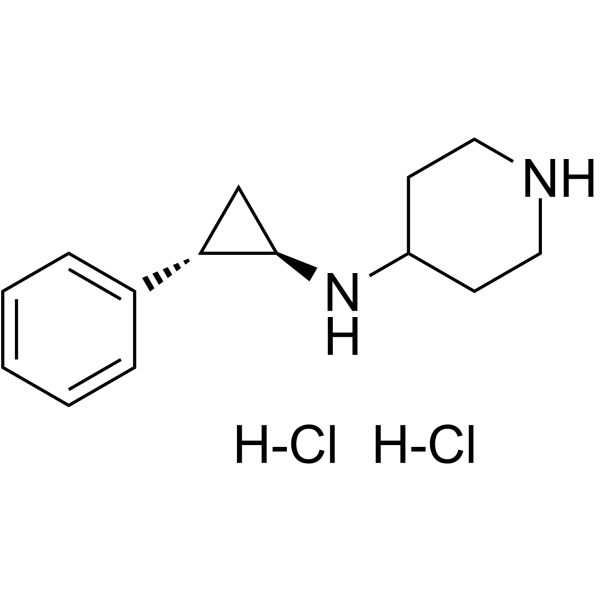
Chemical Structure
GSK-LSD1 dihydrochloride
- CAS No.: 2102933-95-7
- Formula:C14H22Cl2N2
- Molecular Weight:289.24
IUPAC Name: N-((1R,2S)-2-phenylcyclopropyl)piperidin-4-amine dihydrochloride
InChIKey: PJFZOGMSPBHPNS-WICJZZOFSA-N
SMILES: C1(N[C@H]2[C@H](C3=CC=CC=C3)C2)CCNCC1.Cl.Cl
Biological Activity: GSK-LSD1 dihydrochloride is a selective irreversible LSD1/KDM1A histone demethylase inhibitor with a Ki of 0.16 μM. GSK-LSD1 dihydrochloride decreases NF-κB p65 stability and pro-inflammatory cytokine expression/secretion. GSK-LSD1 dihydrochloride in combination with Ruxolitinib (HY-50856) or BCL2 inhibition reduces leukemia burden in ETP-ALL models. GSK-LSD1 dihydrochloride can be used in research on medulloblastoma, autism spectrum disorders, small cell lung cancer, glioblastoma, and obesity[1][2][3][4][5][6][7][8][9][10].
| Cat. No. | Product Name | Purity | Description | Pricing | |||||||||||||||||||
|---|---|---|---|---|---|---|---|---|---|---|---|---|---|---|---|---|---|---|---|---|---|---|---|
|
|
GSK-LSD1 dihydrochloride | 99.45% | GSK-LSD1 dihydrochloride is a selective irreversible LSD1/KDM1A histone demethylase inhibitor with a Ki of 0.16 μM. GSK-LSD1 dihydrochloride decreases NF-κB p65 stability and pro-inflammatory cytokine expression/secretion. GSK-LSD1 dihydrochloride in combination with Ruxolitinib (HY-50856) or BCL2 inhibition reduces leukemia burden in ETP-ALL models. GSK-LSD1 dihydrochloride can be used in research on medulloblastoma, autism spectrum disorders, small cell lung cancer, glioblastoma, and obesity. | ||||||||||||||||||||
|
loading...
/
|
|||||||||||||||||||||||
|
|
GSK-LSD1 dihydrochloride (Standard) | ≥98% | GSK-LSD1 dihydrochloride (Standard) is the analytical standard of GSK-LSD1 dihydrochloride (HY-100546A). This product is intended for research and analytical applications. GSK-LSD1 dihydrochloride is a selective irreversible LSD1/KDM1A histone demethylase inhibitor with a Ki of 0.16 μM. GSK-LSD1 dihydrochloride decreases NF-κB p65 stability and pro-inflammatory cytokine expression/secretion. GSK-LSD1 dihydrochloride in combination with Ruxolitinib (HY-50856) or BCL2 inhibition reduces leukemia burden in ETP-ALL models. GSK-LSD1 dihydrochloride can be used in research on medulloblastoma, autism spectrum disorders, small cell lung cancer, glioblastoma, and obesity. | ||||||||||||||||||||
|
loading...
/
|
|||||||||||||||||||||||
-
Similarity Score 0.96
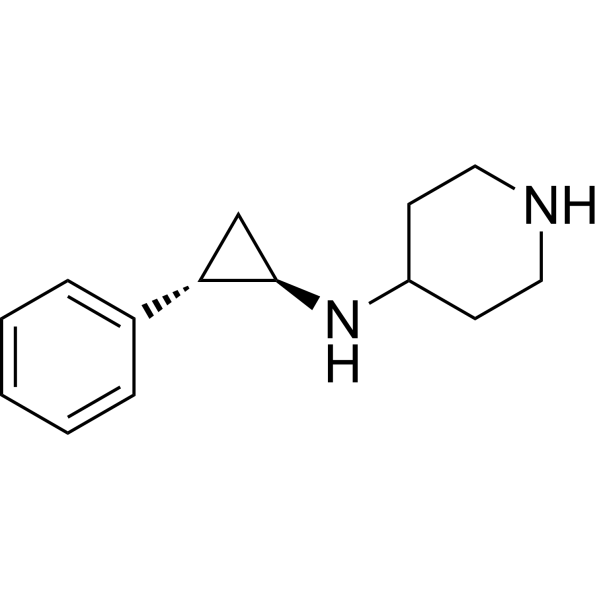 HY-100546GSK-LSD1
-
Similarity Score 0.84
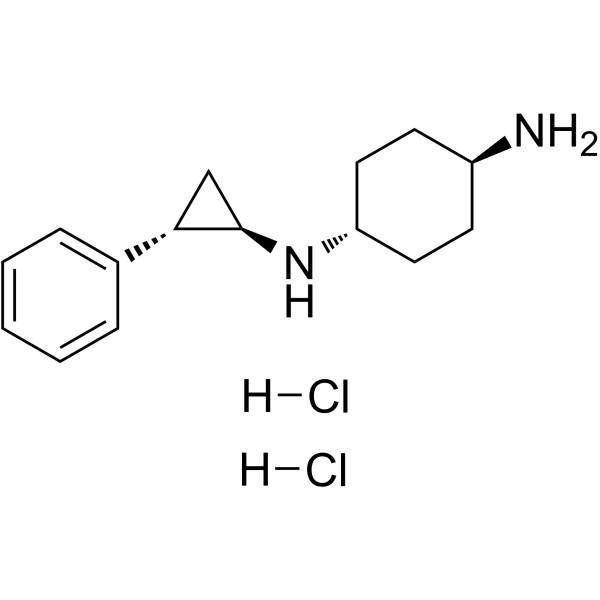 HY-12782TIadademstat dihydrochloride
-
Similarity Score 0.81
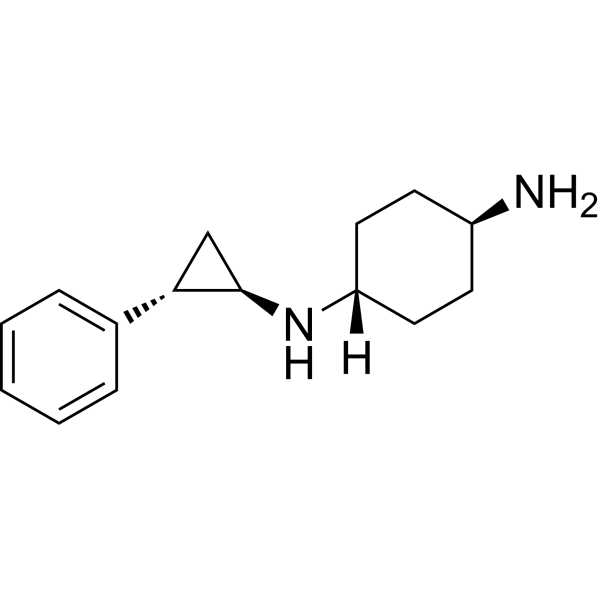 HY-109117Iadademstat
-
Similarity Score 0.70
 HY-121850Rolicyprine
-
Similarity Score 0.66
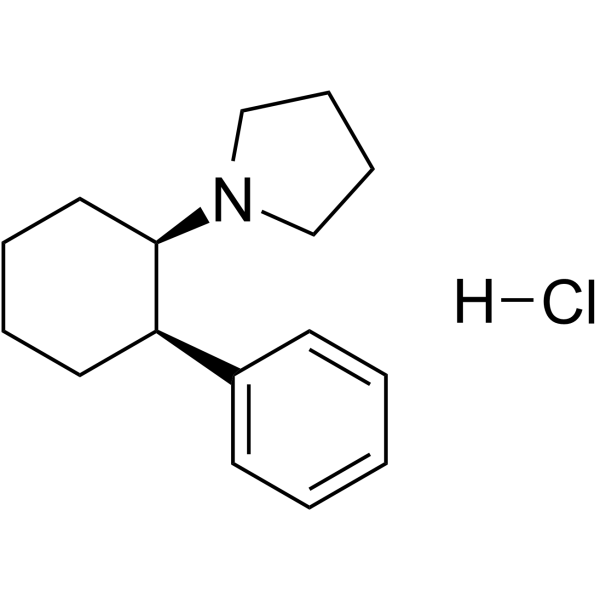 HY-124047RX 67668
-
Similarity Score 0.64
 HY-173590AW4
-
Similarity Score 0.62
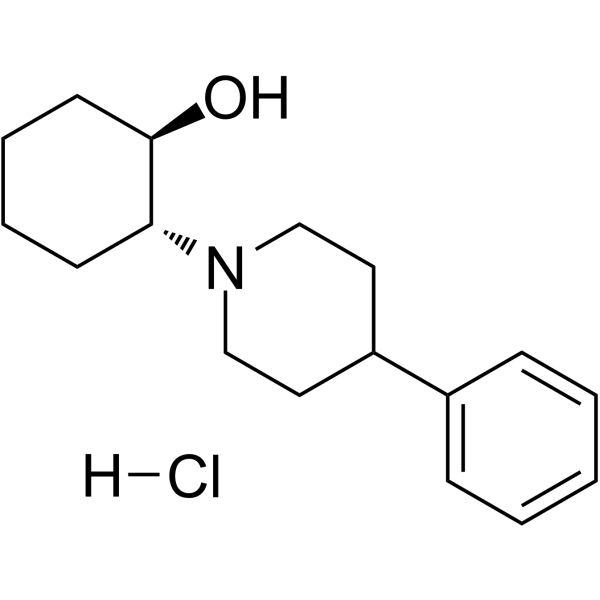 HY-B1813A(±)-Vesamicol hydrochloride
-
Similarity Score 0.62
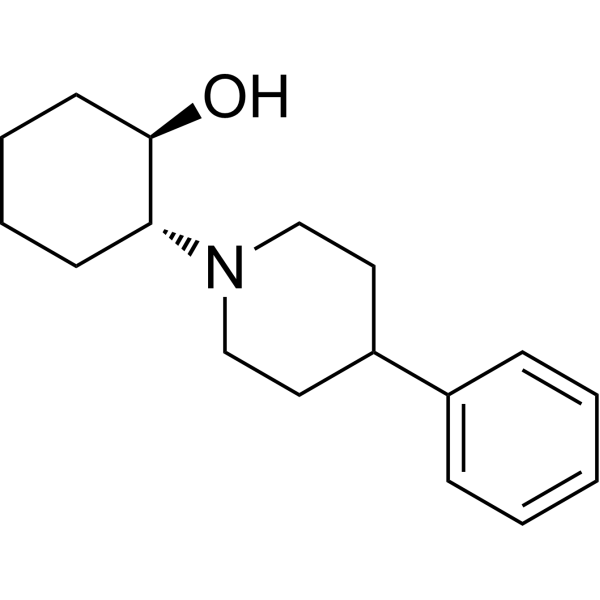 HY-113995(-)-Vesamicol
-
Similarity Score 0.62
 HY-113995Arel-(-)-Vesamicol
-

Explore the MedChemAI to find more analogs


References
- [1]. Lee C, et al. Lsd1 as a therapeutic target in Gfi1-activated medulloblastoma. Nature communications. 2019 Jan 18;10(1):332.
- [2]. Hong KS, et al. GSK-LSD1, an LSD1 inhibitor, quashes SARS-CoV-2-triggered cytokine release syndrome in-vitro. Signal Transduction and Targeted Therapy. 2020 Nov 17;5(1):267. [Content Brief]
- [3]. Benyoucef A, et al. JAK/BCL2 inhibition acts synergistically with LSD1 inhibitors to selectively target ETP-ALL. Leukemia. 2022 Dec;36(12):2802-16.
- [4]. Rapanelli M, et al. Targeting histone demethylase LSD1 for treatment of deficits in autism mouse models. Molecular psychiatry. 2022 Aug;27(8):3355-3366.
- [5]. Mohammad HP, et al. A DNA hypomethylation signature predicts antitumor activity of LSD1 inhibitors in SCLC. Cancer cell. 2015 Jul 13;28(1):57-69. [Content Brief]
- [6]. Zhao J, et al. Combination LSD1 and HOTAIR-EZH2 inhibition disrupts cell cycle processes and induces apoptosis in glioblastoma cells. Pharmacological research. 2021 Sep;171:105764.
- [7]. Hosseini A, et al. Perturbing LSD1 and WNT rewires transcription to synergistically induce AML differentiation. Nature. 2025 Jun 12;642(8067):508-18. [Content Brief]
- [8]. Liu Y, et al. LSD1 inhibition sustains T cell invigoration with a durable response to PD-1 blockade. Nature communications. 2021 Nov 24;12(1):6831. [Content Brief]
- [9]. Bailey CP, et al. Scaffolding LSD1 inhibitors impair NK cell metabolism and cytotoxic function through depletion of glutathione. Frontiers in immunology. 2020 Sep 17;11:2196.
- [10]. Ramms B, et al. Systemic LSD1 Inhibition Prevents Aberrant Remodeling of Metabolism in Obesity. Diabetes. 2022 Dec 01;71(12):2513-2529. [Content Brief]



