
1. Search Result
Search Result
Results for "

Ligand efficiency

" in MedChemExpress (MCE) Product Catalog:

22

Inhibitors & Agonists

2

Screening Libraries

3

Biochemical Assay Reagents

3

Peptides

4

Oligonucleotides

Cat. No. Product Name Target Research Areas Chemical Structure
  • HY-P5423

    Exosomes Liposome Cancer
    GALA is a pH-responsive amphipathic peptide consisting of 30 amino acids, which acts as a lung endothelium-targeting ligand. GALA undergoes a conformational transition from random coil to α-helix in an acidic environment at pH 5.0, thereby inducing endosomal membrane destabilization and fusion. GALA-modified liposomes traverse lung endothelial cells via clathrin-dependent endocytosis and transcytosis, and specifically accumulate in the lungs after intravenous injection. GALA significantly promotes the cytosolic release of cargos carried by exosomes, plasmids and liposomes, effectively enhances gene transfection efficiency, and drives gene knockdown of functional macromolecules (such as siRNA) in alveolar epithelial cells (with no significant cytotoxicity at effective concentrations). GALA serves as a critical tool for studies on lung cancer metastasis (e.g., melanoma lung metastasis) and lung-targeted drug delivery systems .
    GALA
  • HY-P10709

    Collagen Cardiovascular Disease Cancer
    CREKA peptide is a selective non-covalent binding agent targeting fibrin, type IV collagen, and fibronectin, often used as a targeting ligand to modify delivery carriers. CREKA peptide specifically recognizes fibrin, fibronectin, and type IV collagen that are excessively deposited in the tumor microenvironment or fibrotic tissue, mediating the targeted accumulation of the carrier at the lesion site and promoting drug internalization into target cells (such as cancer cells and activated hepatic stellate cells). CREKA peptide can enhance targeted delivery efficiency, increase drug concentration at the lesion site, and reduce systemic side effects .
    CREKA peptide
  • HY-112557
    PROTAC TBK1 degrader-2
    1 Publications Verification

    PROTACs IKK Cancer
    PROTAC TBK1 degrader-2 is a Ligands for Target Protein for PROTAC. PROTAC TBK1 degrader-2 is a potent degrader based on the serine/threonine kinase TANK-binding kinase 1 (TBK1) (DC50=15 nM; Kd=4.6 nM) with a maximum efficiency of 96%. PROTAC TBK1 degrader-2 also targets to IkB kinase IKKε (IC50=8.7 nM), with low selectivity over TBK1 (IC50=1.3 nM) .
    PROTAC TBK1 degrader-2
  • HY-112766

    Liposome Others
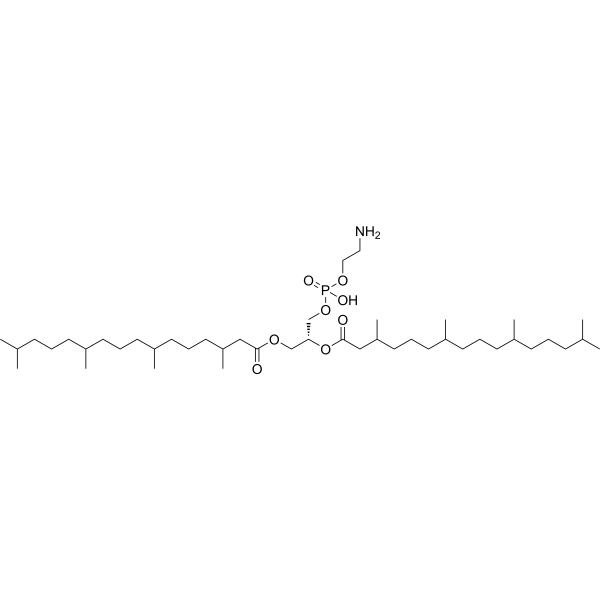
    DPyPE is a neutral phosphatidylethanolamine lipid composed of a polyisoprene alkyl chain with two pyridine-containing phosphine ligands. DPyPE is mainly used in liposome formulations and to enhance the efficiency of gene delivery in vitro and in vivo. For example, DPyPE can be mixed with cationic lipids such as VC1052 (HY-156616) (in a 1:1 ratio) to form the vaccine adjuvant Vaxfectin (HY-142998). DPyPE assists VC1052 in binding to negatively charged pDNA to form a uniform liposome complex by regulating the fluidity and stability of the liposome membrane .
    DPyPE
  • HY-P10489

    Kisspeptin Receptor Cancer
    Kisspeptin-14 human is a peptide hormone encoded by the KiSS-1 gene. Kisspeptin-14 human, along with several other similar peptide hormones, is produced from a common precursor protein by cleavage by different proteases. Kisspeptin-14 human is an endogenous ligand of KISS1R. Kisspeptin-14 human has the same receptor binding efficiency and potency as full-length kisspeptin. Kisspeptin-14 human binds to its receptor GPR54 and is able to activate this G protein-coupled receptor and activate multiple intracellular signaling pathways. Kisspeptin-14 human can be used to study reproductive development and tumor metastasis .
    Kisspeptin-14 human
  • HY-172699A

    Liposome Cancer
    DSPE-PEG3400-ANG is a PEG compound which composed of DSPE and a dual-targeting ligand (Angiopep-2, ANG). ANG exhibits high LRP1 binding efficiency and has been used for glioma-targeting delivery. DSPE-PEG3400-ANG can be used for drug delivery .
    DSPE-PEG3400-ANG
  • HY-147376

    Acetyl-CoA Carboxylase Metabolic Disease
    hACC2-IN-1 is a potent acetyl-CoA carboxylase 2 (ACC2) inhibitor, with an IC50 value of 2.5 μM (hACC2). hACC2-IN-1 could be used for obesity research .
    hACC2-IN-1
  • HY-149204

    SDCBP Cancer
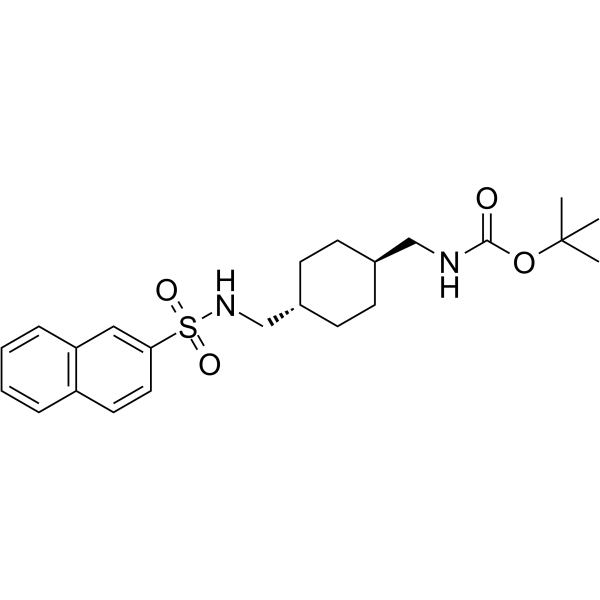
    SYNTi is a PDZ domain inhibitor targeting the syndecan/syntenin protein-protein Interaction. SYNTi exhibits an IC50 value of 400 nM and ligand efficiency (LE) value of 0.24. SYNTi can be used for breast cancer research .
    SYNTi
  • HY-176823

    PROTACs SGK Cancer
    PROTAC SGK3 degrader-2 is the cis epimer of PROTAC SGK3 degrader-1 (SGK3-PROTAC1) (HY-125878), with a cis hydroxyl group in its VH032 moiety, which is incapable of binding to the VHL E3 ligase. PROTAC SGK3 degrader-2 exhibits inhibitory activity against SGK3, SGK1, and S6K1 with IC50 values of 0.6 μM, 1.4 μM, and 1.7 μM, respectively, but shows no SGK3 degradation efficiency. PROTAC SGK3 degrader-2 can be used as a control compound to study the specific effects of SGK3-PROTAC1-mediated SGK3 degradation. (Pink: SGK3 ligand (HY-167701), Blue: VHL Ligand (HY-120217A), Black: Linker (HY-130618), SGK3 ligand-linker conjugate (HY-176824)) .
    PROTAC SGK3 degrader-2
  • HY-W023758

    4-(4-Bromo-1H-pyrazol-5-yl)pyridine

    DNA/RNA Synthesis Cancer
    HDGFRP2/PSIP1-IN-1 (compound BPP) is a dual inhibitor targeting the PWWP domain of hepatocarcinogenic growth factor-related protein 2 (HDGFRP2) and its homologous protein PSIP1, hinder the development and progression of diffuse intrinsic pontine glioma (DIPG). HDGFRP2/PSIP1-IN-1 binds to HDGFRP2 with a Kd value of 7 μM and a ligand efficiency of 0.47; it binds to the PSIP1 PWWP domain with a Kd value of 27 μM; meanwhile, it has a Kd value of 14 μM for HDGFRP3, indicating its effectiveness as an inhibitor of the HDGFRP2 PWWP subfamily .
    HDGFRP2/PSIP1-IN-1
  • HY-178282

    JAK Inflammation/Immunology
    JAK1-IN-19 (Compound 18) is a potent JAK1 inhibitor with IC50s of 0.02, 0.5, 91 and 0.2 nM against JAK1, JAK2, JAK3 and TYK2. JAK1-IN-19 exhibits improved rat and human intrinsic clearance. JAK1-IN-19 can be used for the studies of atopic dermatitis and other autoimmune diseases .
    JAK1-IN-19
  • HY-144456

    Xanthine Oxidase Metabolic Disease
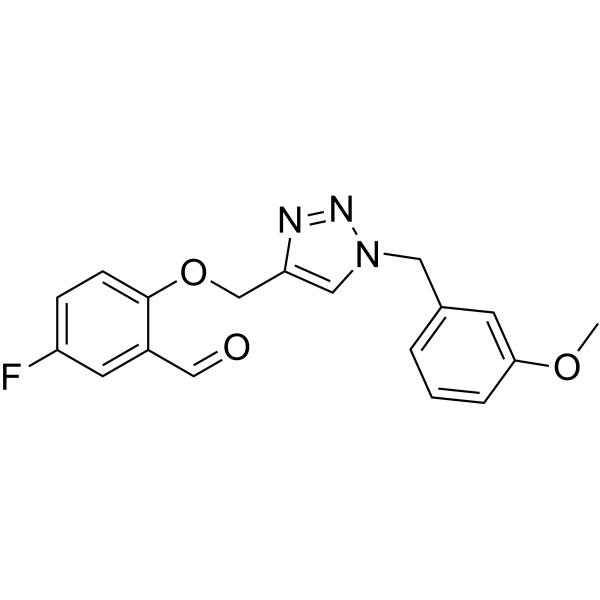
    Xanthine oxidase-IN-5 is an effective and orally active xanthine oxidase (XO) inhibitor with IC50 value of 0.70 μM. Xanthine oxidase-IN-5 displays favorable agent-like properties with ligand efficiency (LE) and lipophilic ligand efficiency (LLE) values of 0.33 and 3.41, respectively. Xanthine oxidase-IN-5 shows potent hypouricemic effects in hyperuricemic rat model .
    Xanthine oxidase-IN-5
  • HY-151387

    Adenosine Receptor Neurological Disease
    A2AAR antagonist 1 (compound 21a) is an A2AAR (adenosine A2A receptor) antagonist with a Ki value of 20 nM. A2AAR antagonist 1 shows high ligand efficiency, and it can be used for the research of neurodegenerative diseases .
    A2AAR antagonist 1
  • HY-143315

    Protease Activated Receptor (PAR) Cardiovascular Disease
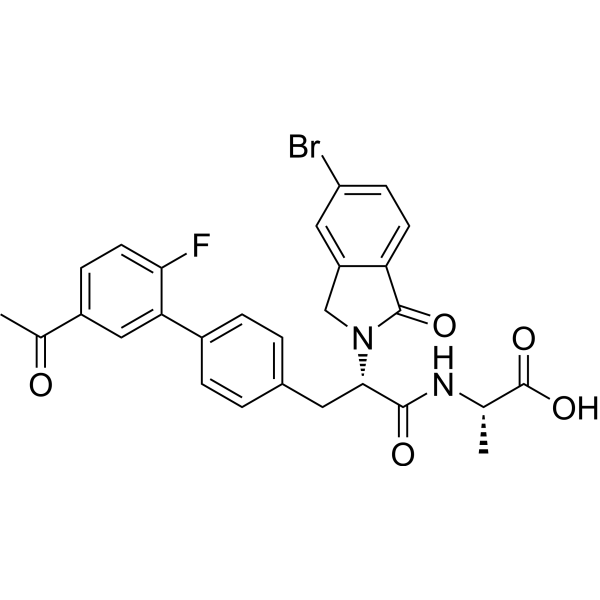
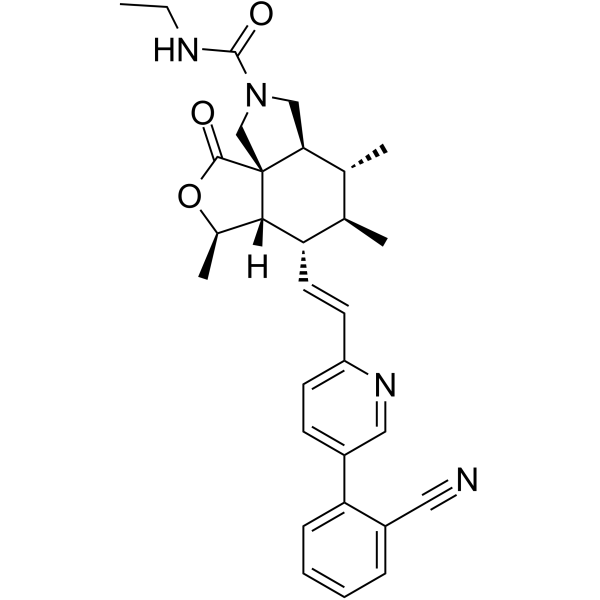
    Protease-Activated Receptor-1 antagonist 3 is a potent protease-activated receptor-1 antagonist with an IC50 value of 7 nM. Protease-Activated Receptor-1 antagonist 3 shows binding affinity for hERG K + channel with an IC50 value of 9 µM .
    Protease-Activated Receptor-1 antagonist 3
  • HY-14863

    CTA-018

    VD/VDR Cytochrome P450 Others Endocrinology
    Lunacalcipol (CTA-018), as a vitamin D analogue, has a dual role in the pathogenesis of Chronic Kidney Disease (CKD), as an agonist of vitamin D receptor and an antagonist of cytochrome P450 enzyme 24-hydroxylase. Lunacalcipol binds to VDR and regulates transcriptional activity of VDR by influencing ligand binding affinity, ligand-dependent coactivator recruitment or inhibitory factor dissociation, efficiency of ligand entry into target cells, tissue specificity and different metabolism of ligand. Lunacalcipol can be used in the study of CKD, especially Secondary Hyperparathyroidism (sHPT) .
    Lunacalcipol
  • HY-172700

    Liposome Cancer
    DSPE-PEG5000-ANG is a PEG compound which composed of DSPE and a dual-targeting ligand (Angiopep-2, ANG). ANG exhibits high LRP1 binding efficiency and has been used for glioma-targeting delivery. DSPE-PEG5000-ANG can be used for drug delivery .
    DSPE-PEG5000-ANG
  • HY-135711

    Phosphodiesterase (PDE) Metabolic Disease
    PDE8B-IN-1 is a selective inhibitor of phosphodiesterase 8B (PDE8B) with the activity of enhancing insulin secretion. PDE8B-IN-1 showed good efficacy in high-throughput screening and optimized its ligand efficiency through rapid deconstruction. PDE8B-IN-1 showed high target selectivity and good bioavailability in preclinical development, providing a basis for exploring its potential inhibitory use .
    PDE8B-IN-1
  • HY-W003471

    MAP4K Others
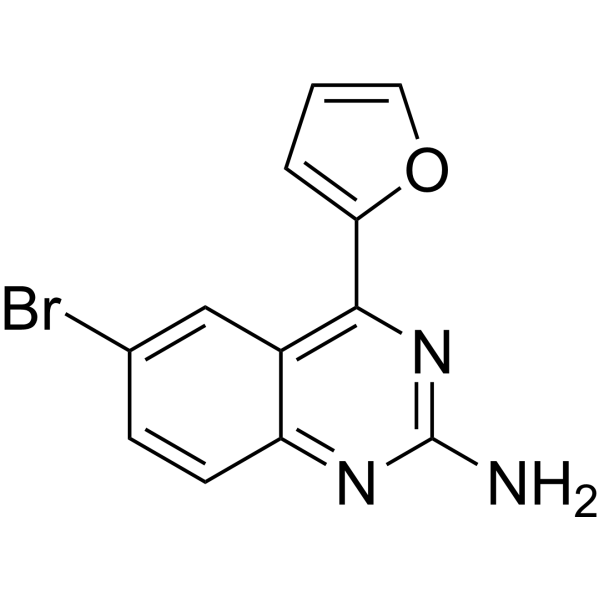
    Pyrrolo[2,1-f][1,2,4]triazin-4-amine is a MAP4K4 inhibitor with a surface plasmon resonance (SPR) Kd of 88 μM and a ligand efficiency of 0.56 .
    Pyrrolo[2,1-f][1,2,4]triazin-4-amine
  • HY-10654

    Ephrin Receptor Cancer
    EphB4-IN-2 (compound 66) is a tyrosine kinase inhibitor with an IC50 value of 1.6 nM against human EphB4, and exhibits selectivity toward kinases bearing threonine gatekeeper residues. EphB4-IN-2 also has high ligand efficiency .
    EphB4-IN-2
  • HY-172698

    Liposome Cancer
    DSPE-PEG1000-ANG is a PEG compound which composed of DSPE and a dual-targeting ligand (Angiopep-2, ANG). ANG exhibits high LRP1 binding efficiency and has been used for glioma-targeting delivery. DSPE-PEG1000-ANG can be used for drug delivery .
    DSPE-PEG1000-ANG
  • HY-180813

    ROR Interleukin Related Inflammation/Immunology
    RORγ-IN-3 (Compound 21) is a potent and highly selective RORγ inhibitor with an EC50 of 84 nM. RORγ-IN-3 can effectively inhibit the production of IL-17, with an IC₅₀ value of 1.0 μM. RORγ-IN-3 can be used for the study of autoimmune diseases .
    RORγ-IN-3
  • HY-W075745

    Others
    SK-J003-1n is a nickel catalyst with excellent cross-coupling reaction activity. SK-J003-1n can be used as a ligand in organic synthesis to improve the selectivity and efficiency of the reaction. SK-J003-1n can effectively catalyze the coupling reaction between different substrates, highlighting its important role in compound development and material science.
    SK-J003-1n

Inquiry Online

Your information is safe with us. * Required Fields.

Salutation


Country or Region *

Applicant Name *


Organization Name *

Department *


Email Address *


Product Name *

Cat. No.


Requested quantity *

Phone Number *


Remarks

Inquiry Online

Inquiry Information

Product Name:
Cat. No.:
Quantity:
MCE Japan Authorized Agent:

