




99 Results for "

MHC+Class+I

" in MedChemExpress (MCE) Product Catalog:
Products (99)

99 Results for "MHC+Class+I" in MCE Product Catalog:

4
4 Cited Publications
Cat. No.: HY-P99129

Research Areas:  

Inflammation/Immunology

Anti-Mouse CD8a Antibody (53-6.7) is an anti-mouse CD8a IgG2a antibody inhibitor derived from host Rat. Anti-Mouse CD8a Antibody (53-6.7) binds to CD8αβ stabilizes a conformation with a higher affinity for interaction with MHC class I. Anti-Mouse CD8a Antibody (53-6.7) induces the phosphorylation and activation of TCR proximal signaling pathway components Lck and ZAP70 in polyclonal memory T cells. Anti-Mouse CD8a Antibody (53-6.7) depletes CD8+ T cells and neutralizes cytokine in mice .
loading...
    loading...
4
4 Cited Publications
Cat. No.: HY-123941
CAS No.: 2064175-32-0
Purity:  98.78%
Synonyms: dTAG-7
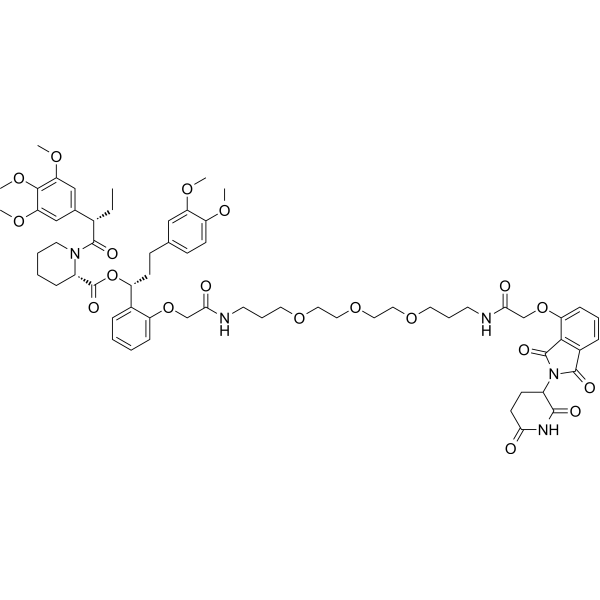
FKBP12 PROTAC dTAG-7 (dTAG-7) is a FKBP12 F36V PROTAC degrader. FKBP12 PROTAC dTAG-7 binds FKBP12 F36V and CRBN to form a complex, mediating degradation via the ubiquitin-proteasome system. FKBP12 PROTAC dTAG-7 mediates the degradation of FKBP12 F36V-tagged nuclear and cytoplasmic proteins, including BRD4, HDAC1, EZH2, MYC, PLK1, KRAS G12V, and antigen fusion proteins. FKBP12 PROTAC dTAG-7 enhances MHC class I antigen presentation. FKBP12 PROTAC dTAG-7 is applicable to leukemia-related research .
loading...
    loading...
3
3 Cited Publications
Cat. No.: HY-P1569
CAS No.: 151705-84-9
Synonyms: LCMV GP(33-41) M-peptide; gp33 epitope
Target:  

Arenavirus

Research Areas:  

Infection Inflammation/Immunology

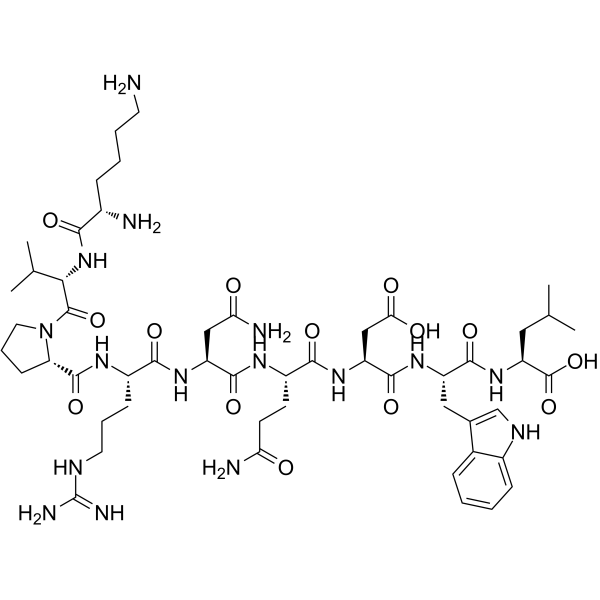
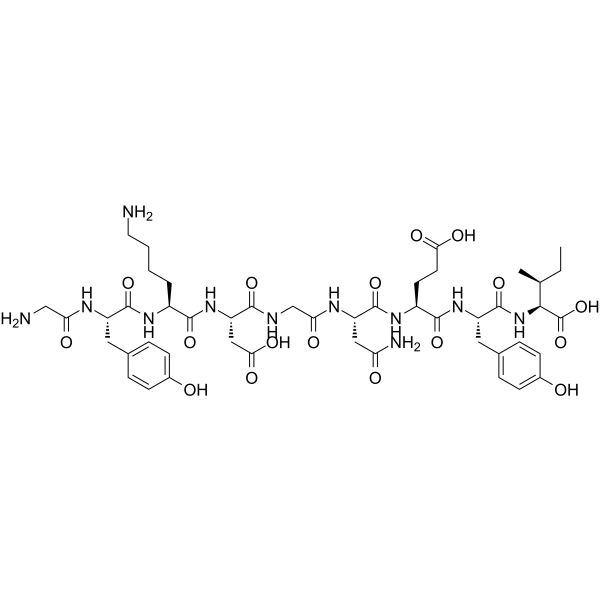
LCMV gp33-41, the carboxyl-extended 9-aa-long peptide, is an lymphocytic choriomeningitis virus sequence restricted by MHC class I H-2Db molecules and presented to cytotoxic T lymphocytes .
loading...
    loading...
3
3 Cited Publications
Cat. No.: HY-P1569A
Synonyms: LCMV GP(33-41) M-peptide TFA; gp33 epitope TFA
Target:  

Arenavirus

Research Areas:  

Inflammation/Immunology

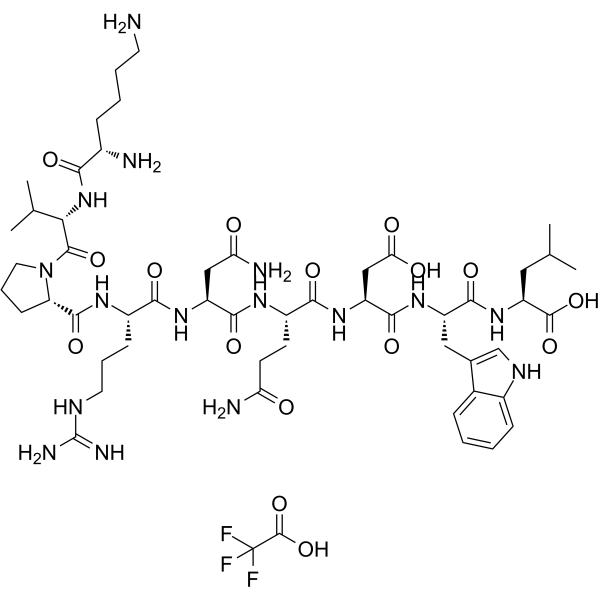
LCMV gp33-41 (TFA), the carboxyl-extended 9-aa-long peptide, is an lymphocytic choriomeningitis virus sequence restricted by MHC class I H-2Db molecules and presented to cytotoxic T lymphocytes .
loading...
    loading...
1
1 Cited Publications
Cat. No.: HY-126855
CAS No.: 60320-05-0
Purity:  99.92%
Synonyms: 7-Sulfocholic acid
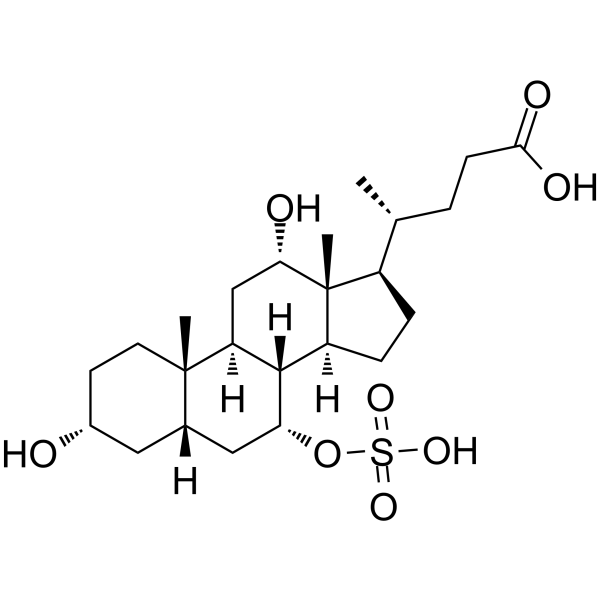
Cholic acid 7-sulfate (7-Sulfocholic acid) is a selective agonist targeting TGR5 (EC50=0.17 μM) and a ligand for MHC class I-related protein (MR1). As a gut-restricted TGR5 agonist, cholic acid 7-sulfate binds to TGR5 on enteroendocrine L cells, induces GLP-1 secretion, and improves glucose tolerance in a TGR5-dependent manner. Cholic acid 7-sulfate also acts as an endogenous ligand for MR1, promoting the survival of mucosal-associated invariant T cells MAIT and the expression of homeostatic gene signatures, affecting MAIT cell development and function. Cholic acid 7-sulfate is mainly used in the research of diabetes and MAIT cell-related immune regulation .
loading...
    loading...
1
1 Cited Publications
Cat. No.: HY-P5411
CAS No.: 148274-88-8
Synonyms: SIITFEKL, OVA (257-264) Variant
Target:  

MHC

Research Areas:  

Others

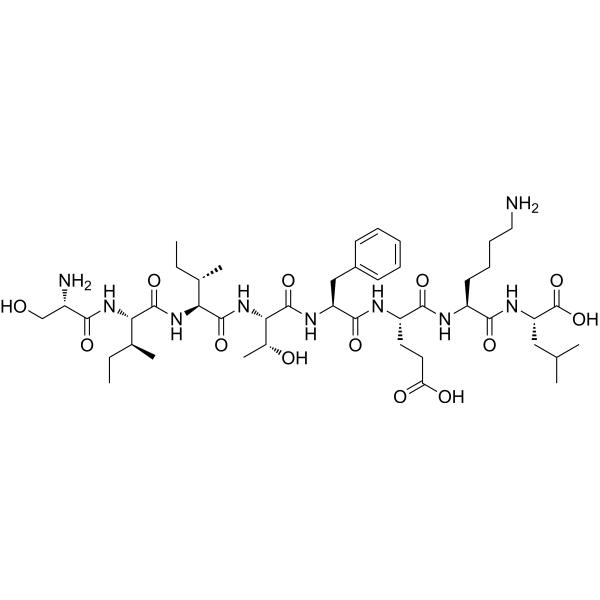
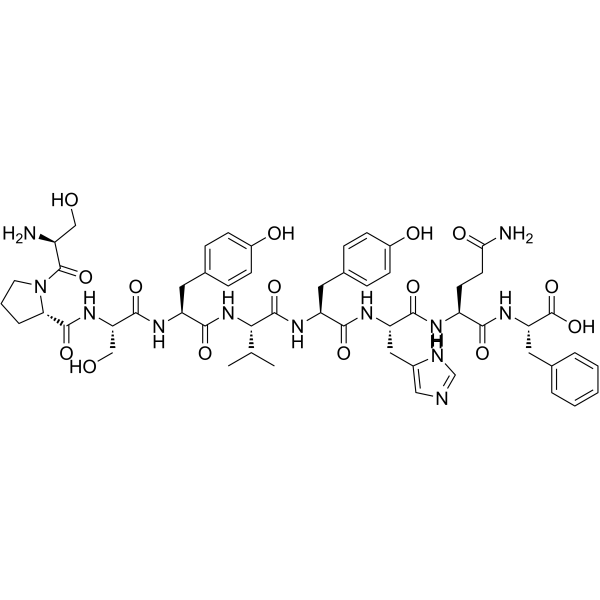
OVA-T4 Peptide (SIITFEKL, OVA (257-264) Variant) is a low-affinity variant of OVA (257-264) (SIINFEKL). OVA-T4 Peptide has similar binding to H-2Kb MHC class I molecules as OVA (257-264), but has a much lower affinity for the OT-I TCR25 .
loading...
    loading...
1
1 Cited Publications
Cat. No.: HY-P1585
CAS No.: 212370-40-6
Synonyms: Hgp100 (25-33)
Target:  

MHC

Research Areas:  

Cancer

Gp100 (25-33), human (Hgp100 (25-33)) is the amino acids 25-33 fragment of the human melanoma antigen. Gp100 (25-33), human is a 9-amino acid (AA) epitope restricted by MHC class I H-2D b and recognized by the T cells. Gp100 (25-33), human has immunogenicity and induces specific T cells. Gp100 (25-33), human can be used for the cancer research, such as melanoma .
loading...
    loading...
1
1 Cited Publications
Cat. No.: HY-P2494
CAS No.: 151992-56-2
Target:  

Peptides

Research Areas:  

Inflammation/Immunology

OVA 55-62 is a fragmented peptide of OVA (ovalbumin) antigen and can bind to the mouse MHC class I molecule, H2-Kb .
loading...
    loading...
1
1 Cited Publications
Cat. No.: HY-P1585A
Synonyms: Hgp100 (25-33) TFA
Target:  

MHC

Research Areas:  

Cancer

Gp100 (25-33), human TFA (Hgp100 (25-33) (TFA)) is the amino acids 25-33 fragment of the human melanoma antigen. Gp100 (25-33), human TFA is a 9-amino acid (AA) epitope restricted by MHC class I H-2D b and recognized by the T cells. Gp100 (25-33), human TFA has immunogenicity and induces specific T cells. Gp100 (25-33), human TFA can be used for the cancer research, such as melanoma .
loading...
    loading...
Cat. No.: HY-P990195

Target:  

MHC

Research Areas:  

Inflammation/Immunology

Anti-Mouse MHC Class I (H-2) Antibody (M1/42.3.9.8) is a rat-derived IgG2a κ type antibody inhibitor, targeting to mouse MHC Class I. Anti-Mouse MHC Class I (H-2) Antibody (M1/42.3.9.8) reacts with the mouse H-2 MHC class I alloantigen (all haplotypes). Anti-Mouse MHC Class I (H-2) Antibody (M1/42.3.9.8) can be used for the flow cytometry and immunofluorescence experiments .
loading...
    loading...
Cat. No.: HY-152830
CAS No.: 2394874-66-7
Purity:  99.51%
Synonyms: Q702
Target:  

c-Fms TAM Receptor MHC

Research Areas:  

Cancer

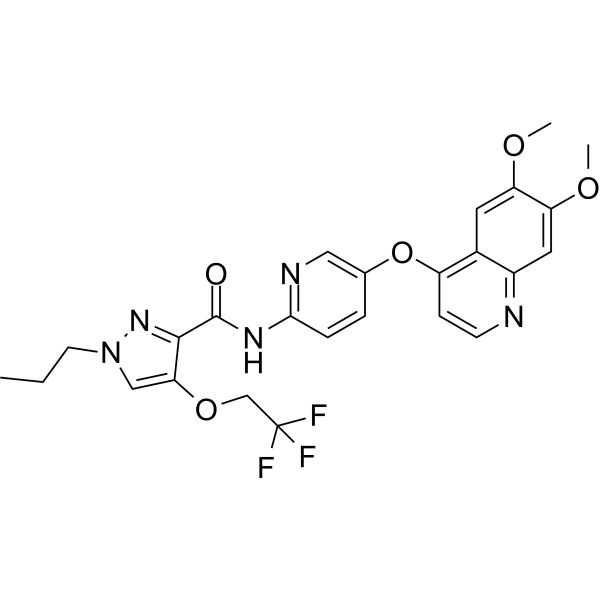
Adrixetinib (Q702) is an orally active triple inhibitor against CSF1R, Mer, and Axl, with Kd values of 8.7 nM, 0.8 nM, and 0.3 nM, respectively. Adrixetinib acts as a potent immune modulator that remodels the tumor microenvironment. Adrixetinib increases the abundance of M1 macrophages and CD8⁺ T cells, while decreasing the levels of M2 macrophages and myeloid-derived suppressor cells (MDSCs). Adrixetinib upregulates the expression of MHC class I and E-cadherin in tumor cells. Adrixetinib shows remarkable antitumor efficacy in syngeneic mouse tumor models. Adrixetinib is suitable for the research of breast cancer, renal adenocarcinoma, colon carcinoma, and melanoma .
loading...
    loading...
Cat. No.: HY-P4193
CAS No.: 181272-91-3
Target:  

MHC

Research Areas:  

Inflammation/Immunology Cancer

AH1 is an immunodominant MHC class I-restricted nonamer peptide recognized by CD8 + cytotoxic T lymphocytes. AH1 derives from the envelope protein (gp70) of an endogenous ecotropic murine leukemia virus and is presented by the MHC class I L d molecule. AH1 can be used for the research of colorectal carcinoma .
loading...
    loading...
Cat. No.: HY-P6312
CAS No.: 183273-40-7
Target:  

MHC

Research Areas:  

Inflammation/Immunology

ESAT6 Epitope is a ESAT6 CD4 + T cell epitope. ESAT6 Epitope binds to MHC class I molecules with an IC50 value of approximately 180 nM. ESAT6 Epitope has weak immunogenicity. ESAT6 Epitope can be used in studies related to pulmonary tuberculosis .
loading...
    loading...
Cat. No.: HY-P990832

Target:  

MHC

Research Areas:  

Inflammation/Immunology

Anti-MHC Class I Antibody (W6/32) is a kind of mouse IgG2a κ chimeric antibody inhibitor, targeting to human MHC Class I. Anti-MHC Class I Antibody (W6/32) reacts with the human major histocompatibility complex (MHC) class I, HLA-A, B, and C. Anti-MHC Class I Antibody (W6/32) increases adherence of monocytes to human endothelial cells. Anti-MHC Class I Antibody (W6/32) can be used for the research of immunology .
loading...
    loading...
Cat. No.: HY-P990193

Target:  

MHC

Research Areas:  

Inflammation/Immunology

Anti-Mouse MHC Class I (H-2Kd, H-2Dd) Antibody (34-1-2S) is an anti-mouse MHC Class I (H-2Kd, H-2Dd) IgG2a monoclonal antibody. Anti-Mouse MHC Class I (H-2Kd, H-2Dd) Antibody (34-1-2S) can block the interaction between Ly49 and MHC-I. Anti-Mouse MHC Class I (H-2Kd, H-2Dd) Antibody (34-1-2S) can be used for the construction of acute lung injury models .
loading...
    loading...
Cat. No.: HY-P2455
CAS No.: 137856-41-8
Synonyms: Listeriolysin O (91-99)
Target:  

Bacterial

Research Areas:  

Infection Inflammation/Immunology

LLO (91-99) (Listeriolysin O (91-99)) is an exotoxin and class I MHC-restricted T-cell epitope of listeriolysin (LLO). LLO (91-99) is processed by antigen-presenting cells, binds to MHC class I molecules and is presented to the cell surface. LLO (91-99) induces CTL responses and effectively eliminates Listeria from infected cells. LLO (91-99) can be used in the research of Listeria infections (e.g., listeriosis) .
loading...
    loading...
Cat. No.: HY-P2527
CAS No.: 187671-49-4
Target:  

Tyrosinase

Research Areas:  

Inflammation/Immunology

Tyrosinase-related Protein 2 (TRP-2) (181-188) is a tyrosinase-related protein 2 (TRP-2)-derived peptide, corresponding to residues 180-188. Tyrosinase-related Protein 2 (TRP-2) (181-188) is the major reactive epitope within TRP-2 recognized by anti-B16 CTLs. Tyrosinase-related Protein 2 (TRP-2) (181-188) is a peptide conforming to the MHC class I H2-Kb binding motif .
loading...
    loading...
Cat. No.: HY-P99135

Target:  

MHC

Research Areas:  

Inflammation/Immunology

Anti-Mouse MHC Class I (H-2Kb) Antibody (Y-3) is a mouse-derived IgG2b antibody inhibitor, targeting to mouse MHC Class I (H-2Kb). Anti-Mouse MHC Class I (H-2Kb) Antibody (Y-3) reacts with the mouse H-2Kb, H-2Kk, H-2Kq, H-2Kr, H-2ks MHC class I alloantigens and not H-2Kd. Anti-Mouse MHC Class I (H-2Kb) Antibody (Y-3) can block MHC Class I. Anti-Mouse MHC Class I (H-2Kb) Antibody (Y-3) can be used for immunology research .
loading...
    loading...
Cat. No.: HY-P1827
CAS No.: 219312-69-3
Target:  

Tyrosinase MHC

Research Areas:  

Cancer

mTRP-2 (180-188) is an MHC class I-restricted tumor-associated antigenic peptide derived from mouse tyrosinase-related protein 2 (TRP-2). mTRP-2 (180-188) binds to HLA-A*0201 with an ID50 of 36 nM. mTRP-2 (180-188) can be presented by H-2K b molecules and activate TRP-2-specific cytotoxic T lymphocytes (CTL). mTRP-2 (180-188) induces immune responses against B16 melanoma by promoting antigen-specific T cell proliferation, cytokine release, and CTL-mediated tumor cell killing. mTRP-2 (180-188) can be used in studies related to melanoma, glioma, and tumor immunology .
loading...
    loading...
Cat. No.: HY-P1837
CAS No.: 186302-15-8
Target:  

Influenza Virus HSV

Research Areas:  

Infection

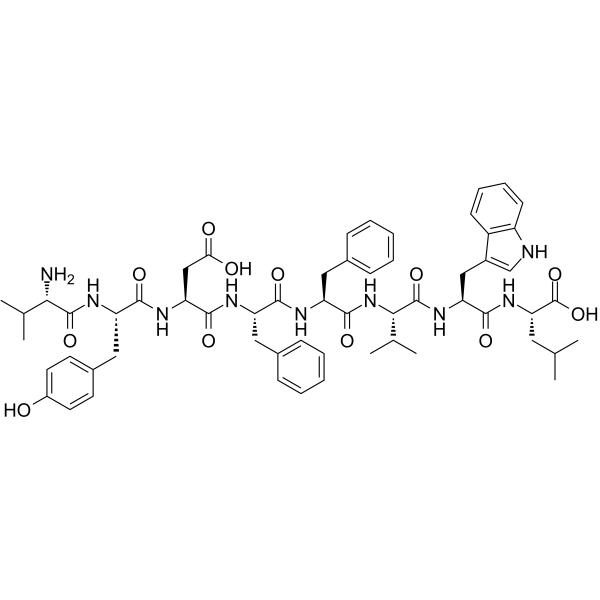
Influenza HA (518-526) is an H-2d-restricted CTL epitope derived from influenza virus hemagglutinin. Influenza HA (518-526) is highly conserved across various H5N1, some H9N2, and H1N1 strains. Influenza HA (518-526) binds to the mouse MHC class I allele K d to form a complex, which is then recognized by specific CD8 + T cells. Influenza HA (518-526) is an immunodominant epitope in influenza-infected BALB/c mice, and it stimulates CD8 + T cells to secrete IFN-γ to induce a robust immune response. Currently, Influenza HA (518-526) is widely used in research related to respiratory syncytial virus (RSV), influenza virus, and H5N1 influenza .
loading...
    loading...

