



Anti-Mouse MHC Class I (H-2Kd, H-2Dd) Antibody (34-1-2S)

Based on 1 Customer Validation
Anti-Mouse MHC Class I (H-2Kd, H-2Dd) Antibody (34-1-2S) is an anti-mouse MHC Class I (H-2Kd, H-2Dd) IgG2a monoclonal antibody. Anti-Mouse MHC Class I (H-2Kd, H-2Dd) Antibody (34-1-2S) can block the interaction between Ly49 and MHC-I. Anti-Mouse MHC Class I (H-2Kd, H-2Dd) Antibody (34-1-2S) can be used for the construction of acute lung injury models.
For research use only. We do not sell to patients.
- Purity : 95.00%
- Molecular Weight:150 kDa
-
Storage:
Please store the product under the recommended conditions in the Certificate of Analysis.

To place orders, for customer services and technical support, please contact: MedChemExpress USA
Tel: 609-228-6898 E-mail: [email protected] [email protected]


-
 Biological Activity
-
Chemical Information
- Protocols
- Purity & Documentation
- References
-
 Help & FAQs




Biological Activity
Description
Isotype
Mouse IgG2a kappa
Recommend Isotype Controls
Species Reactivity
Mouse
|
MHC I |
In Vitro
Anti-Mouse MHC Class I (H-2Kd, H-2Dd) Antibody (34-1-2S) can block the binding of Ly49 to MHC-I in splenocytes of mice[2].
Anti-Mouse MHC Class I (H-2Kd, H-2Dd) Antibody (34-1-2S) (50 μg/well, 1 h) can inhibit TCR mediated T cell proliferation[2].
MedChemExpress (MCE) has not independently confirmed the accuracy of these methods. They are for reference only. Further protocols information, click here.
-
Cell Line:Splenocytes of OT-I mice
-
Concentration:50 μg/well
-
Incubation Time:1 h
-
Result:Inhibited TCR mediated the cell proliferation.
In Vivo
MedChemExpress (MCE) has not independently confirmed the accuracy of these methods. They are for reference only.
-
Animal Model:Wild-type male C57BL/6 mice (8-10 weeks)[1]
-
Dosage:45 mg/kg, combined with MHC class I H-2Kb mAb (AF6-88.5.5.3) (4.5 mg/kg)
-
Administration:Intravenous injection (i.v.), single dose, 18 h after pre stimulation
-
Result:Caused pulmonary edema in the lungs of mice.
Led to the aggregation of polymorphonuclear neutrophils (PMNs) in the lungs.
Conjugated
Unconjugated
Reconsititution
The product can be reconstituted/diluted with sterile PBS or saline.
Format
-
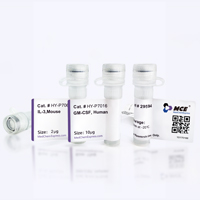
Product Image
Application
in vivo activation of APCs


Chemical Information
-
Appearance Liquid
-
Molecular Weight 150 kDa
-
Color Colorless to light yellow
-
SMILES
[Anti-Mouse MHC Class I (H-2Kd, H-2Dd) Antibody (34-1-2S)]
-
Formulation
Please refer to the lot-specific COA for specific buffer information.
-
Storage
Please store the product under the recommended conditions in the Certificate of Analysis.

Protocols
-
Inhalation Toxicity Study
Inhalation toxicity studies expose rodents to a controlled aerosol, vapor, gas, or smoke atmosphere and assess respiratory and systemic toxicity using exposure-atmosphere characterization, clinical observations, body and organ weights, bronchoalveolar lavage fluid, histopathology, blood chemistry, hematology, and, when included, molecular endpoints such as transcriptomics, proteomics, lipidomics, or tissue burden analysis. The primary biological readouts are airway irritation, pulmonary inflammation, cytotoxicity, altered surfactant or lipid homeostasis, impaired particle clearance, and tissue remodeling, reflected by BALF cell differentials, BALF protein, LDH, phosphatase activities, cytokines, lung weight, microscopic respiratory-tract lesions, and retained lung burden.


Purity & Documentation
-
Data Sheet (261 KB)
-
SDS (251 KB)
- English - EN (251 KB)
- Français - FR (251 KB)
- Deutsch - DE (251 KB)
- Norwegian - NO (251 KB)
- Español - ES (251 KB)
- Swedish - SV (251 KB)
- Italian - IT (251 KB)
- Korean - KR (251 KB)
- Portuguese - PT (251 KB)
-
Inhibitory Antibodies User Guide (603 KB)
References
[1]. Kapur R, et al. Osteopontin mediates murine transfusion-related acute lung injury via stimulation of pulmonary neutrophil accumulation. Blood. 2019 Jul 4;134(1):74-84. [Content Brief]
[2]. Panda AK, et al. Cutting Edge: Inhibition of the Interaction of NK Inhibitory Receptors with MHC Class I Augments Antiviral and Antitumor Immunity. J Immunol. 2020 Aug 1;205(3):567-572. [Content Brief]

Calculators
Concentration (start) × Volume (start) = Concentration (final) × Volume (final)


Anti-Mouse MHC Class I (H-2Kd, H-2Dd) Antibody (34-1-2S) Related Classifications
HY-P990193 Related Classifications
 Powered by Bioz