

526 Results for "

Methyl_2-

" in MedChemExpress (MCE) Product Catalog:
Products (526)

526 Results for "Methyl_2-" in MCE Product Catalog:

3
3 Cited Publications
Cat. No.: HY-W012078
CAS No.: 838-07-3
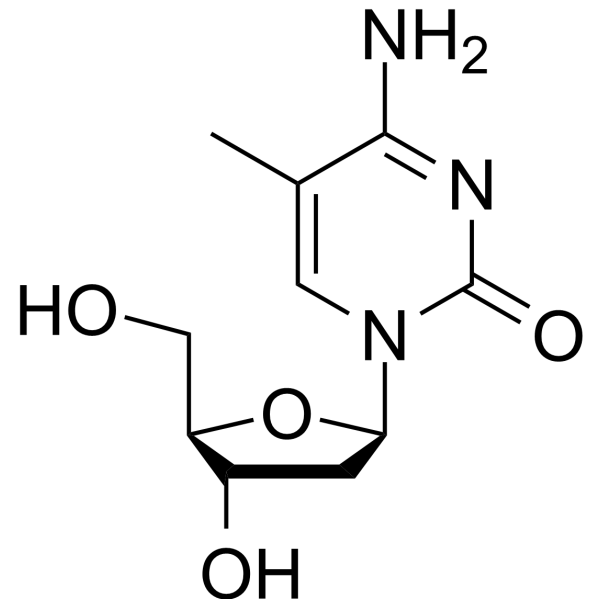
Synonyms: 5-Methyldeoxycytidine
5-Methyl-2'-deoxycytidine (5mdC) is an endogenous substrate of DNA methyltransferases (such as mammalian 5-C-MTase) and binds to DNA dependent on the formation of DNA stem-loop structures. 5-Methyl-2'-deoxycytidine guides de novo DNA methylation by acting as a methylation mark and activates the methylation of adjacent CpG sites in single-stranded DNA through cis action. 5-Methyl-2'-deoxycytidine regulates DNA methylation patterns by recruiting methyltransferases to specific chromatin regions, affecting chromatin condensation and gene expression. Its distribution in plant cells is related to cell proliferation and differentiation stages. The methylation level of 5-Methyl-2'-deoxycytidine is low in proliferating cells and high in differentiated cells [2] .
loading...
    loading...
3
3 Cited Publications
Cat. No.: HY-113063
CAS No.: 1460-34-0
Purity:  99.31%
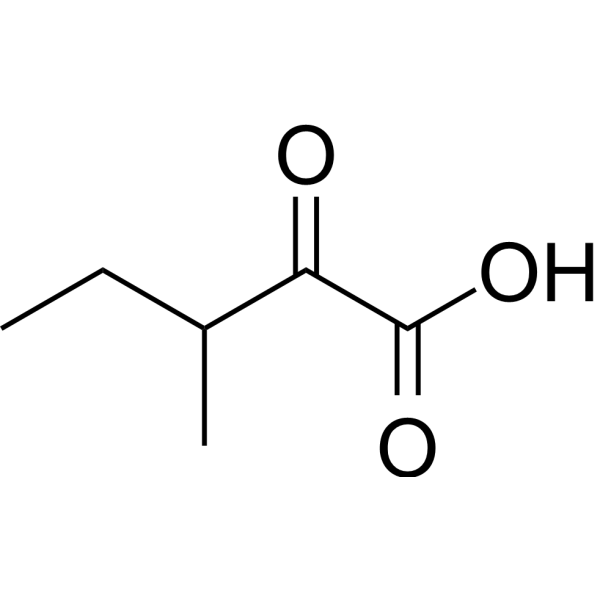
3-Methyl-2-oxovaleric acid is a degradation product from Isoleucine. 3-Methyl-2-oxovaleric acid is a biomarker of mustard airway diseases (MADs) and uric acid stone [2].
loading...
    loading...
3
3 Cited Publications
Cat. No.: HY-W017386
CAS No.: 3715-31-9
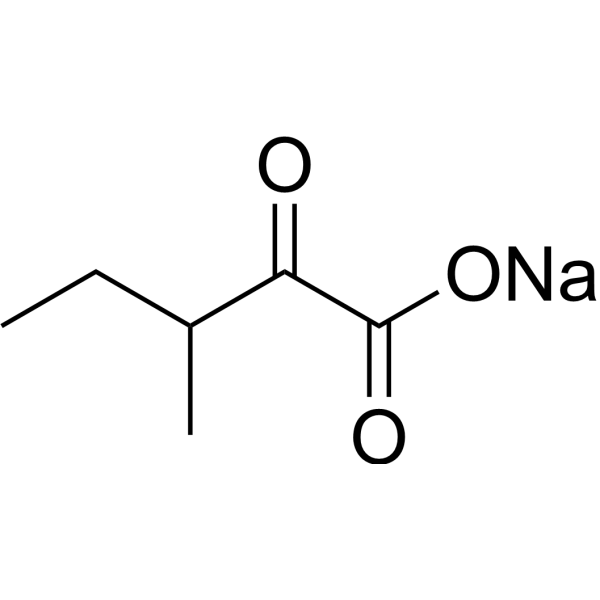
3-Methyl-2-oxovaleric acid sodium is a degradation product from Isoleucine. 3-Methyl-2-oxovaleric acid sodium is a biomarker of mustard airway diseases (MADs) and uric acid stone [2].
loading...
    loading...
2
2 Cited Publications
Cat. No.: HY-W012078R
CAS No.: 838-07-3
Synonyms: 5-Methyldeoxycytidine (Standard)
5-Methyl-2'-deoxycytidine (5mdC) is an endogenous substrate of DNA methyltransferases (such as mammalian 5-C-MTase) and binds to DNA dependent on the formation of DNA stem-loop structures. 5-Methyl-2'-deoxycytidine guides de novo DNA methylation by acting as a methylation mark and activates the methylation of adjacent CpG sites in single-stranded DNA through cis action. 5-Methyl-2'-deoxycytidine regulates DNA methylation patterns by recruiting methyltransferases to specific chromatin regions, affecting chromatin condensation and gene expression. Its distribution in plant cells is related to cell proliferation and differentiation stages. The methylation level of 5-Methyl-2'-deoxycytidine is low in proliferating cells and high in differentiated cells [2] .
loading...
    loading...
2
2 Cited Publications
Cat. No.: HY-W440039
CAS No.: 67828-42-6
Category:  

Plants

Target:  

Herbicide

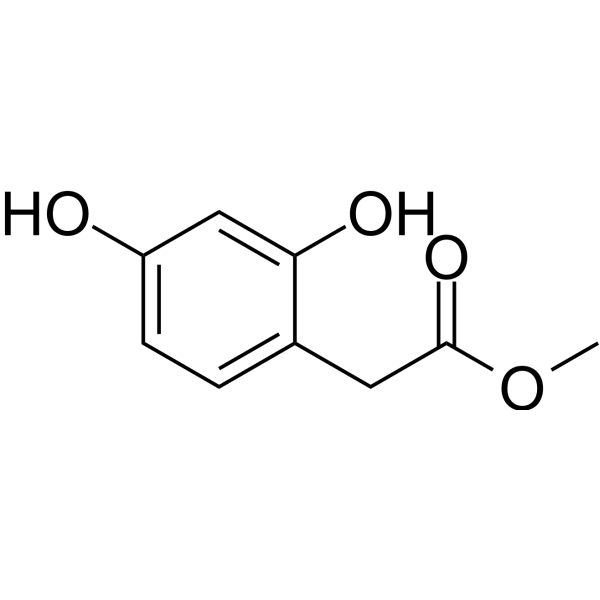
Methyl 2-(2,4-dihydroxyphenyl)acetate, a phenolic ester, is isolated from Nigella damascena seeds with selective phytotoxic effects .
loading...
    loading...
1
1 Cited Publications
Cat. No.: HY-W006057
CAS No.: 759-05-7
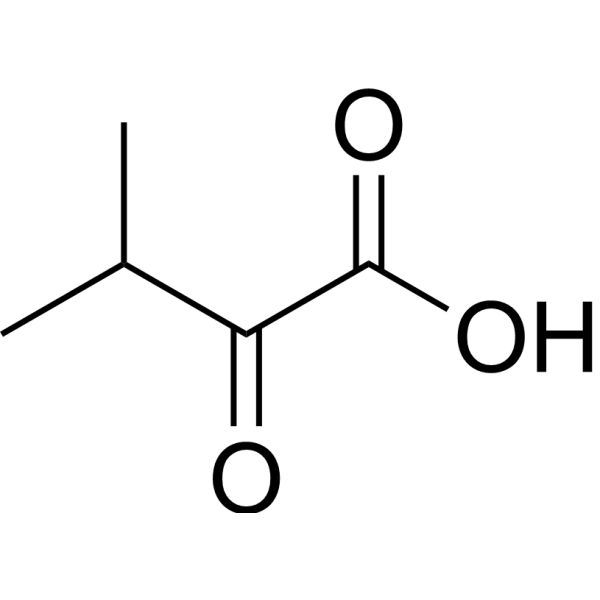
3-Methyl-2-oxobutanoic acid is a precursor of pantothenic acid in Escherichia coli.
loading...
    loading...
1
1 Cited Publications
Cat. No.: HY-W012722
CAS No.: 816-66-0
Synonyms: α-Ketoisocaproic acid
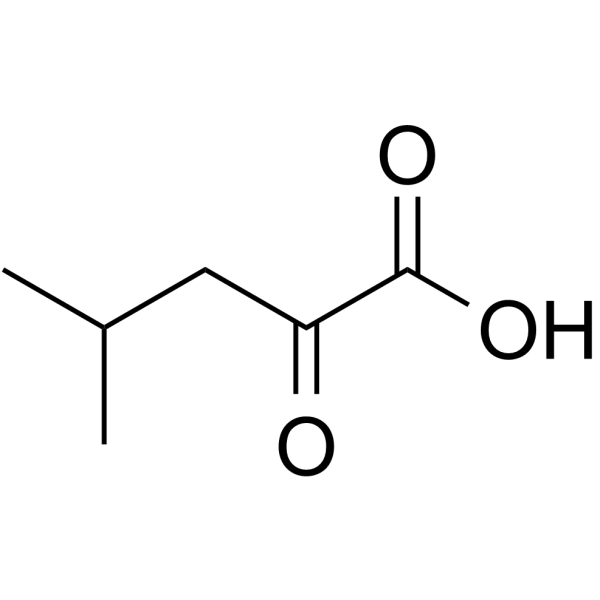
4-Methyl-2-oxopentanoic acid (α-Ketoisocaproic acid) is a metabolite of L-leucine and is involved in energy metabolism. 4-Methyl-2-oxopentanoic acid increases endoplasmic reticulum stress, promotes lipid accumulation in preadipocytes and insulin resistance by impairing mTOR and autophagy signaling pathways. 4-Methyl-2-oxopentanoic acid also causes oxidative damage, leading to cognitive deficits, inhibits α-ketoglutarate dehydrogenase activity, acts as an oxidative phosphorylation uncoupler and metabolic inhibitor. 4-Methyl-2-oxopentanoic acid acts as a nutrient signal and stimulates skeletal muscle protein synthesis. 4-Methyl-2-oxopentanoic acid can be used in the study of maple syrup urine disease [2] .
loading...
    loading...
1
1 Cited Publications
Cat. No.: HY-W006057A
CAS No.: 3715-29-5
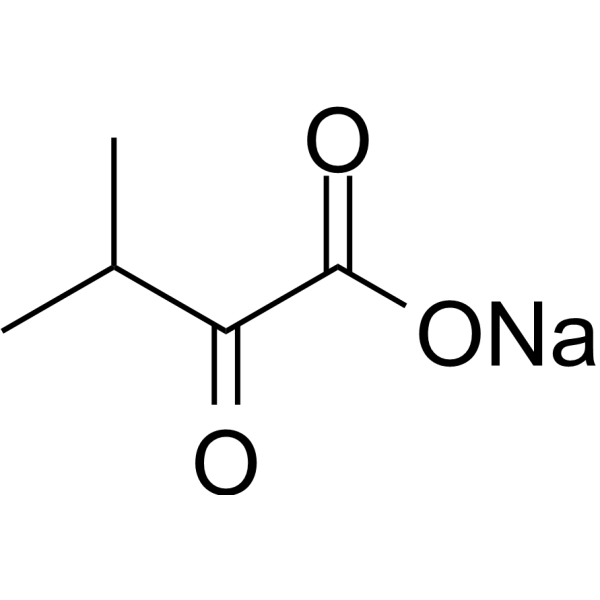
Sodium 3-methyl-2-oxobutanoate is a precursor of pantothenic acid in Escherichia coli [2] .
loading...
    loading...
1
1 Cited Publications
Cat. No.: HY-W007390
CAS No.: 52727-57-8
Research Areas:  

Infection

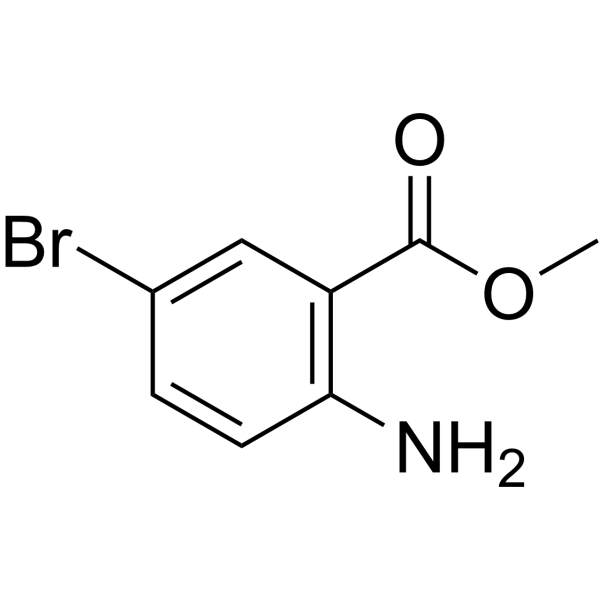
Methyl 2-amino-5-bromobenzoate (Compound 8/12) is a biochemical reagent. Methyl 2-amino-5-bromobenzoate can be used to synthesize 2-benzamidobenzoic acid, a known FabH inhibitor. Derivatives of methyl 2-amino-5-bromobenzoate also inhibit PqsD, the pqs quorum sensing (QS) system, of Pseudomonas aeruginosa .
loading...
    loading...
1
1 Cited Publications
Cat. No.: HY-Y0949
CAS No.: 611-13-2
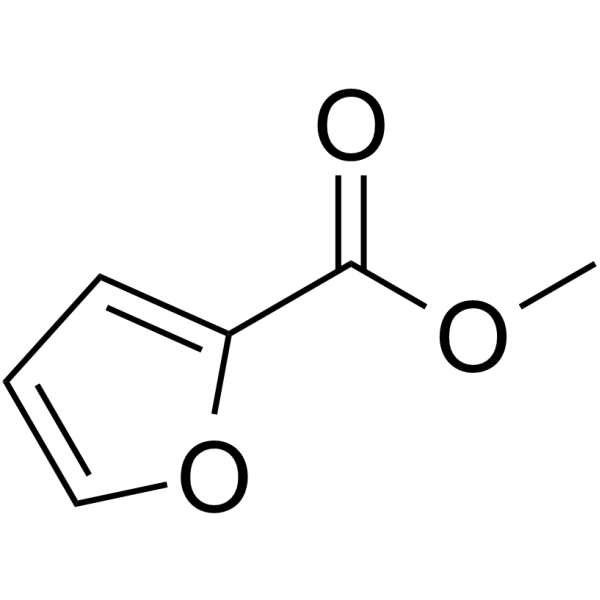
Synonyms: Methyl furan-2-carboxylate
Methyl 2-furoate (Methyl furan-2-carboxylate) can be used to synthesize cis-fused 5-oxofuro[2,3-b]furans. Methyl 2-furoate is also used in the preparation of sesquiterpene lactones .
loading...
    loading...
1
1 Cited Publications
Cat. No.: HY-152693
CAS No.: 13048-95-8
Research Areas:  

Others

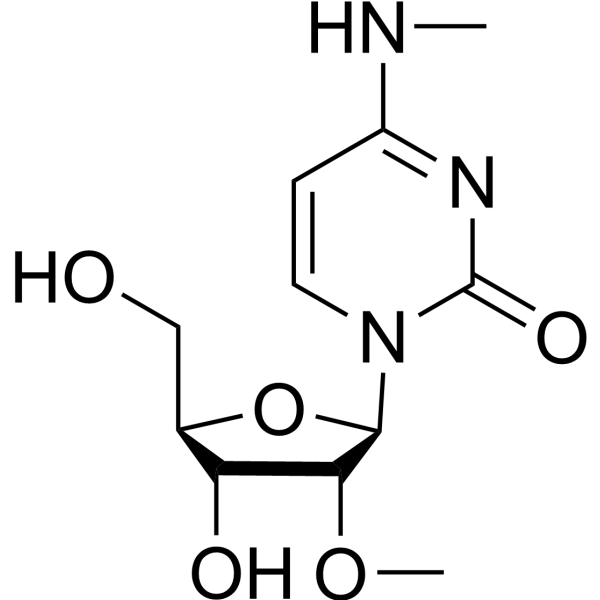
N4-Methyl-2’-O-methyl-cytidine is a purine nucleoside analogue. Purine nucleoside analogs have broad antitumor activity targeting indolent lymphoid malignancies. Anticancer mechanisms in this process rely on inhibition of DNA synthesis, induction of apoptosis, etc .
loading...
    loading...
1
1 Cited Publications
Cat. No.: HY-W016622
CAS No.: 28940-11-6
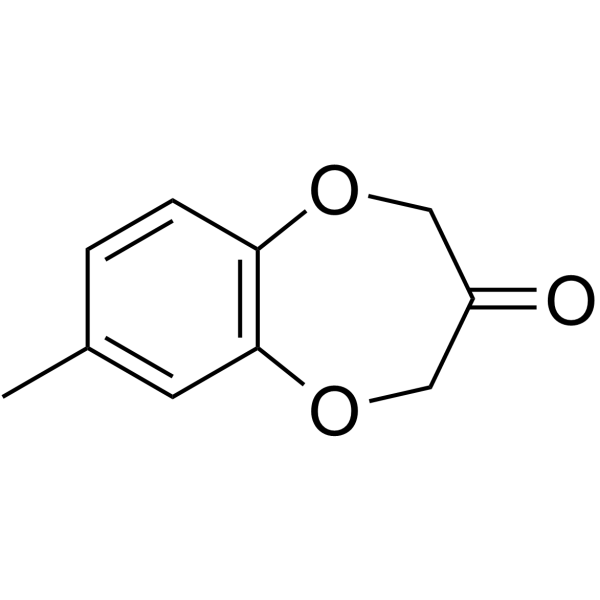
Synonyms: 7-Methyl-2H-1,5-benzodioxepin-3(4H)-one
Watermelon ketone (7-Methyl-2H-1,5-benzodioxepin-3(4H)-one) is a compound with a fresh marine scent .
loading...
    loading...
1
1 Cited Publications
Cat. No.: HY-W017387
CAS No.: 4502-00-5
Synonyms: Sodium 4-methyl-2-oxopentanoate; 2-Ketoisocaproic acid sodium salt
Sodium α-ketoisocaproate (Sodium 4-methyl-2-oxopentanoate) is an insulin secretagogue. Sodium α-ketoisocaproate undergoes transamination catalyzed by BCAT and BCATm to produce α-ketoglutarate and leucine; it also binds to the SUR1 site to inhibit KATP channel activity, but does not directly affect the Kir6.2 subunit. Sodium α-ketoisocaproate regulates Ca 2+ influx. Sodium α-ketoisocaproate exerts insulinotropic activity in pancreatic islets and intact mouse pancreata with sufficient BCATm expression. Sodium α-ketoisocaproate can be used in research related to type 2 diabetes [2] .
loading...
    loading...
1
1 Cited Publications
Cat. No.: HY-P1108
CAS No.: 681260-70-8
Target:  

CRFR

Astressin 2B is a blood-brain barrier-impermeable, highly selective CRFR2 antagonist (rCRFR2, IC50=0.57 nM). Astressin 2B blocks the protective effects mediated by CRFR2, thereby exacerbating indomethacin (HY-14397)-induced hemorrhagic intestinal injury in rats. Astressin 2B reverses the protective effects of Urocortin 1 against intestinal hypermotility, bacterial invasion and upregulation of inflammatory mediators. Astressin 2B also blocks the anxiogenic effect of Urocortin 2 and attenuates stress-induced anxiety-related behaviors. In the Clostridioides difficile toxin A (C. difficile toxin A)-mediated enteritis model, Astressin 2B mimics the phenotype of CRFR2-deficient mice, significantly exacerbating intestinal epithelial damage, edema, neutrophil migration and the expression of multiple proinflammatory cytokines. Astressin 2B is an important tool molecule for investigating the intestinal protective mechanisms of CRFR2 [2] .
loading...
    loading...
1
1 Cited Publications
Cat. No.: HY-P1108A
Target:  

CRFR

Astressin 2B TFA is a blood-brain barrier-impermeable, highly selective CRFR2 antagonist (rCRFR2, IC50=0.57 nM). Astressin 2B TFA blocks the protective effects mediated by CRFR2, thereby exacerbating indomethacin (HY-14397)-induced hemorrhagic intestinal injury in rats. Astressin 2B TFA reverses the protective effects of Urocortin 1 against intestinal hypermotility, bacterial invasion and upregulation of inflammatory mediators. Astressin 2B TFA also blocks the anxiogenic effect of Urocortin 2 and attenuates stress-induced anxiety-related behaviors. In the Clostridioides difficile toxin A (C. difficile toxin A)-mediated enteritis model, Astressin 2B TFA mimics the phenotype of CRFR2-deficient mice, significantly exacerbating intestinal epithelial damage, edema, neutrophil migration and the expression of multiple proinflammatory cytokines. Astressin 2B TFA is an important tool molecule for investigating the intestinal protective mechanisms of CRFR2 [2] .
loading...
    loading...
1
1 Cited Publications
Cat. No.: HY-A0248A
CAS No.: 4135-11-9
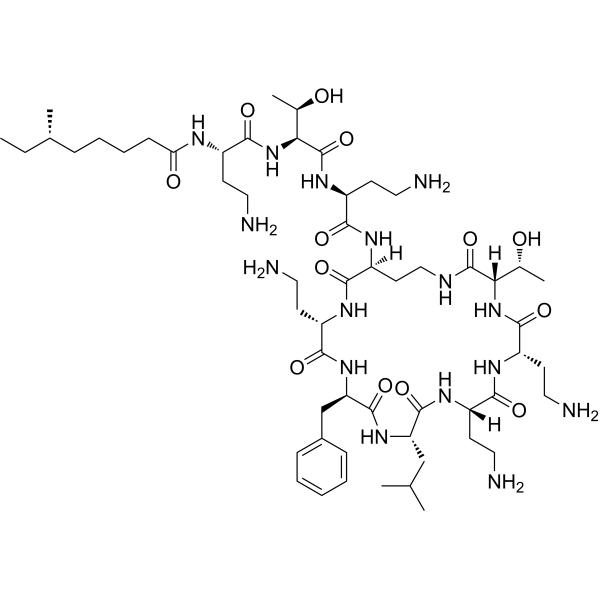
Polymyxin B1 is a potent antimicrobial lipopeptide first derived from Bacilus polymyxa. Polymyxin B1 is the major component in Polymyxin B (HY-A0248). Polymyxin B1 can induce lysis of bacterial cells through interaction with their membranes. Polymyxin B1 has the potential for multidrug-resistant Gram-negative bacterial infections treatment [2].
loading...
    loading...
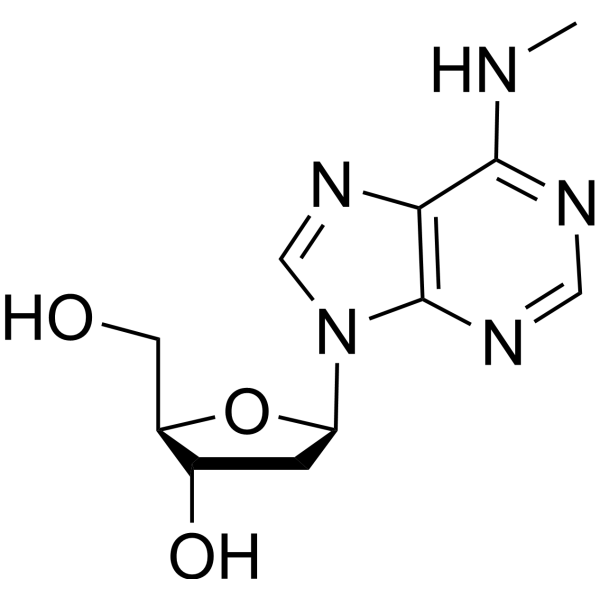
Cat. No.: HY-W011725
CAS No.: 2002-35-9
Synonyms: m6dA
N-6-Methyl-2-deoxyadenosine (m6dA) is an adenine nucleoside analogue. N-6-Methyl-2-deoxyadenosine targets nuclear processes and DNA replication machineries including WER, SATB1, TFAM, Jumu, SSBP1, DNA polymerase η and phage polymerase Gp90 exo . N-6-Methyl-2-deoxyadenosine acts as a multifunctional epigenetic regulator that modulates transcription, DNA damage response, cell cycle, transposon silencing, stress adaptation, epigenetic crosstalk, and nucleosome organization in both prokaryotes and eukaryotes. N-6-Methyl-2-deoxyadenosine regulates mitochondrial epigenetic inheritance and is required for fear extinction memory in mice. N-6-Methyl-2-deoxyadenosine exhibits dysregulated levels in cancers. N-6-Methyl-2-deoxyadenosine can be used for the research of glioblastoma, triple negative breast cancer, and conditioned fear (fear extinction impairment) [2].
loading...
    loading...
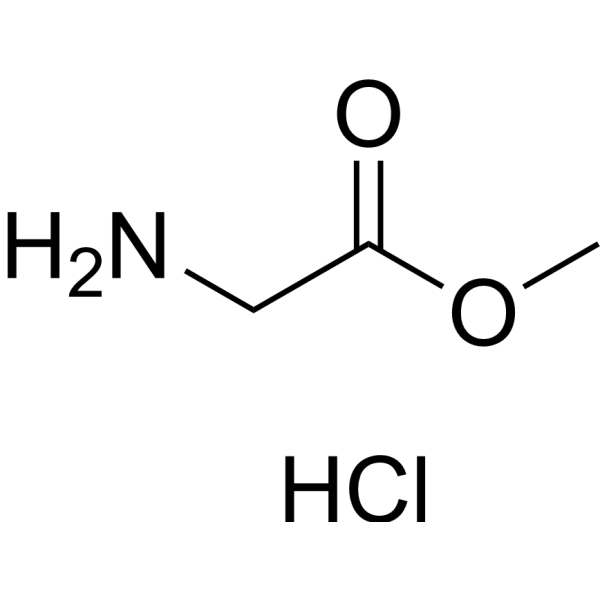
Cat. No.: HY-Y1789
CAS No.: 5680-79-5
Research Areas:  

Others

Methyl 2-aminoacetate hydrochloride is a Glycine (HY-Y0966) derivative .
loading...
    loading...
Cat. No.: HY-W006057R
CAS No.: 759-05-7
3-Methyl-2-oxobutanoic acid (Standard) is the analytical standard of 3-Methyl-2-oxobutanoic acid. This product is intended for research and analytical applications. 3-Methyl-2-oxobutanoic acid is a precursor of pantothenic acid in Escherichia coli.
loading...
    loading...
Cat. No.: HY-113063R
CAS No.: 1460-34-0
3-Methyl-2-oxovaleric acid (Standard) is the analytical standard of 3-Methyl-2-oxovaleric acid (HY-113063). This product is intended for research and analytical applications. 3-Methyl-2-oxovaleric acid is a degradation product from Isoleucine. 3-Methyl-2-oxovaleric acid is a biomarker of mustard airway diseases (MADs) and uric acid stone.
loading...
    loading...

