25 Results for "

Naloxone

" in MedChemExpress (MCE) Product Catalog:
Products (25)

25 Results for "Naloxone" in MCE Product Catalog:

8
8 Cited Publications
Cat. No.: HY-17417A
CAS No.: 465-65-6
Target:  

Opioid Receptor

Research Areas:  

Neurological Disease

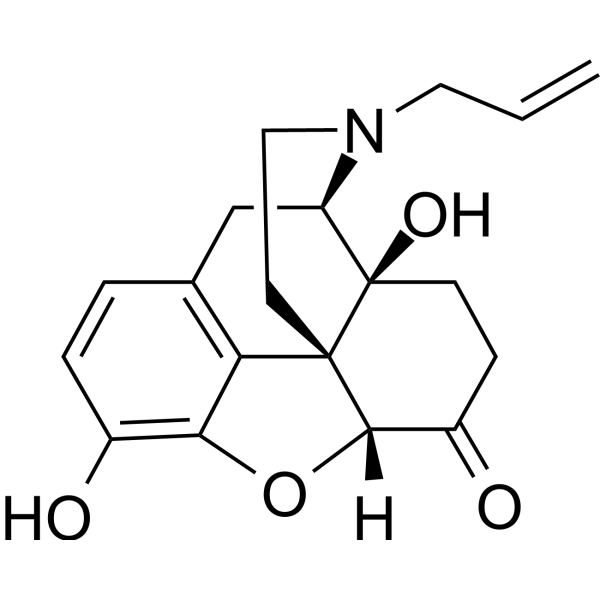
Naloxone hydrochloride is an orally active opioid receptor antagonist. Naloxone hydrochloride attenuates spinal cord stimulation‑associated anti‑hyperalgesic effects, antagonizes physiologic effects of endogenous opioid peptides linked to central nervous system injury sequelae, functions as a pressor agent to induce modest elevations in mean arterial blood pressure, exerts neuroprotective effects to improve post‑traumatic neurologic motor function, blocks opioid receptor‑mediated amnesic pathways, enhances memory consolidation, reverses Adrenocorticotropic hormone (ACTH) (HY-106373)‑ and epinephrine‑induced amnesia, and potentiates the memory‑facilitatory effects of ACTH and epinephrine .
loading...
    loading...
13
13 Publications Verification
Cat. No.: HY-156131
CAS No.: 53179-11-6
Synonyms: ADL 2-1294
Loperamide (ADL 2-1294) is selective and orally active μ opioid receptor agonist with Ki valuess of 3, 48 and 1156 nM against μ, δ and κ opioid receptor, respectively. Loperamide produces antinociception and antihyperalgesia. Loperamide exhibits peripheral selectivity, enhancing fluid, electrolyte, and glucose absorption, reversing PGE2 (HY-101952)- and Cholera toxin (HY-P1446)-induced intestinal secretion, and reducing intestinal motility. Loperamide can be used for the researches of inflammatory pain and protracted diarrhoea .
loading...
    loading...
8
8 Cited Publications
Cat. No.: HY-17417
CAS No.: 357-08-4
Target:  

Opioid Receptor

Research Areas:  

Neurological Disease

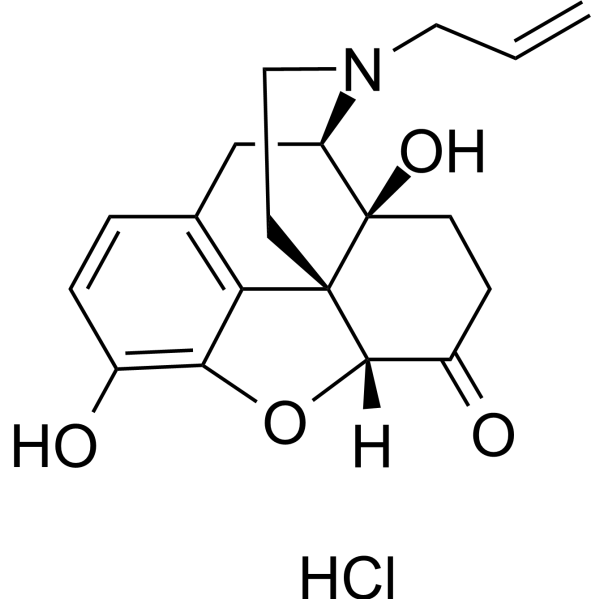
Naloxone hydrochloride is an orally active opioid receptor antagonist. Naloxone hydrochloride attenuates spinal cord stimulation‑associated anti‑hyperalgesic effects, antagonizes physiologic effects of endogenous opioid peptides linked to central nervous system injury sequelae, functions as a pressor agent to induce modest elevations in mean arterial blood pressure, exerts neuroprotective effects to improve post‑traumatic neurologic motor function, blocks opioid receptor‑mediated amnesic pathways, enhances memory consolidation, reverses Adrenocorticotropic hormone (ACTH) (HY-106373)- and epinephrine‑induced amnesia, and potentiates the memory‑facilitatory effects of ACTH and epinephrine .
loading...
    loading...
1
1 Cited Publications
Cat. No.: HY-137279
CAS No.: 93302-47-7
Purity:  99.7%
Target:  

Opioid Receptor

Research Areas:  

Inflammation/Immunology

Naloxone methiodide is a peripherally restricted, nonselective, and competitive opioid receptor antagonist. Naloxone methiodide does not penetrate the blood-brain barrier .
loading...
    loading...
Cat. No.: HY-D1387
CAS No.: 2080300-52-1
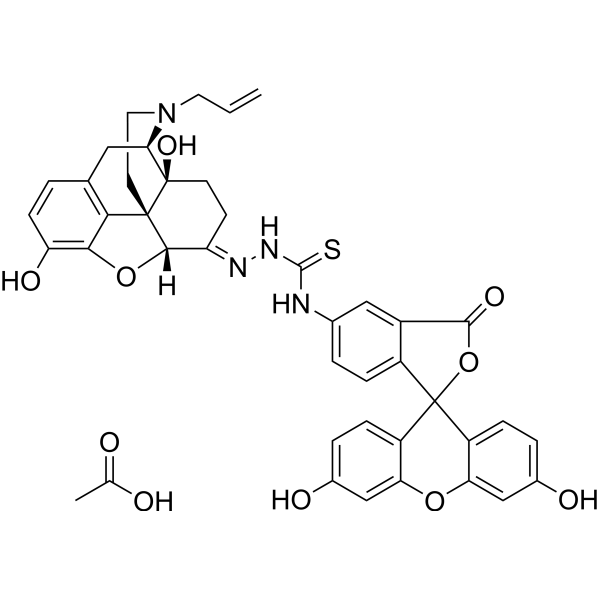
Naloxone fluorescein acetate is the fluorescent-derivative of Naloxone. Naloxone is an opioid antagonist. Naloxone is the antidote for reversing the effects of an opioid overdose .
loading...
    loading...
Cat. No.: HY-12392
CAS No.: 5560-72-5
Purity:  98.02%
Target:  

Opioid Receptor

Research Areas:  

Neurological Disease

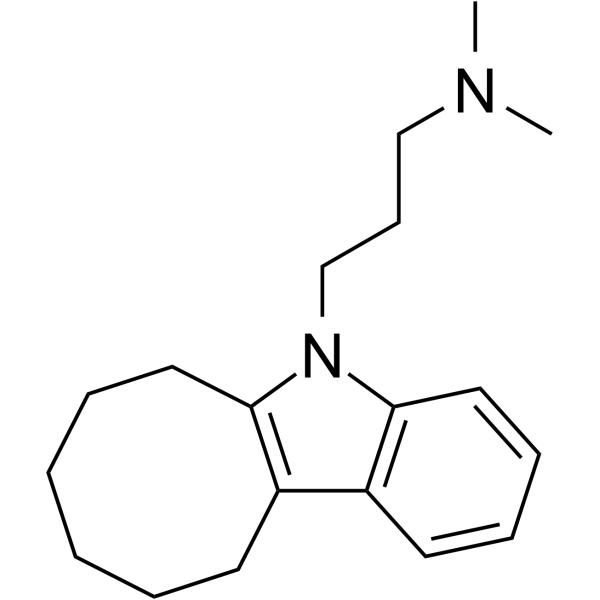
Iprindole, an opioid receptor agonist, is a tricyclic antidepressant. Iprindole shortens the immobility time in mice forced swimming test, which can be reversed by the opiate antagonist Naloxone (HY-17417A). Iprindole induces lamellar body formation but devoid of lamellar bodies. Iprindole can be used for the research of depression .
loading...
    loading...
Cat. No.: HY-17417R
CAS No.: 357-08-4
Research Areas:  

Neurological Disease

Naloxone (hydrochloride) (Standard) is the analytical standard of Naloxone (hydrochloride) (HY-17417). This product is intended for research and analytical applications. Naloxone hydrochloride is an orally active opioid receptor antagonist. Naloxone hydrochloride attenuates spinal cord stimulation‑associated anti‑hyperalgesic effects, antagonizes physiologic effects of endogenous opioid peptides linked to central nervous system injury sequelae, functions as a pressor agent to induce modest elevations in mean arterial blood pressure, exerts neuroprotective effects to improve post‑traumatic neurologic motor function, blocks opioid receptor‑mediated amnesic pathways, enhances memory consolidation, reverses Adrenocorticotropic hormone (ACTH) (HY-106373)‑ and epinephrine‑induced amnesia, and potentiates the memory‑facilitatory effects of ACTH and epinephrine .
loading...
    loading...
Cat. No.: HY-107743
CAS No.: 119630-94-3
Purity:  98.36%
Synonyms: NalBzoH
Target:  

Opioid Receptor

Research Areas:  

Neurological Disease

Naloxone benzoylhydrazone (NalBzoH) is a mixed agonist/antagonist. Naloxone benzoylhydrazone is a prototypic κ3-opioid receptor agonist, and a partial agonist at the cloned μ and δ opioid receptors, and an antagonist at opioid-like NOP receptors. Naloxone benzoylhydrazone has potently analgesia effect .
loading...
    loading...
Cat. No.: HY-17417AS
CAS No.: 1261079-38-2
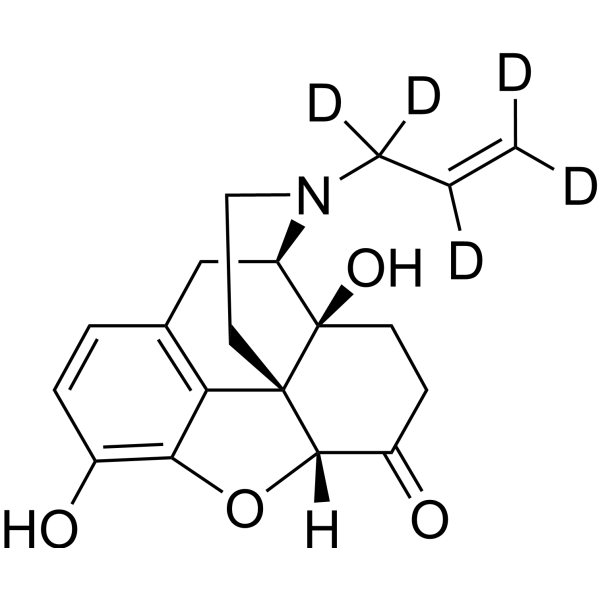
Naloxone-d5 is the deuterated-labeled Naloxone (HY-17417A). Naloxone is an orally active opioid receptor antagonist. Naloxone attenuates spinal cord stimulation‑associated anti‑hyperalgesic effects, antagonizes physiologic effects of endogenous opioid peptides linked to central nervous system injury sequelae, functions as a pressor agent to induce modest elevations in mean arterial blood pressure, exerts neuroprotective effects to improve post‑traumatic neurologic motor function, blocks opioid receptor‑mediated amnesic pathways, enhances memory consolidation, reverses Adrenocorticotropic hormone (ACTH) (HY-106373)‑ and epinephrine‑induced amnesia, and potentiates the memory‑facilitatory effects of ACTH and epinephrine .
loading...
    loading...
Cat. No.: HY-150332
CAS No.: 16145-71-4
Synonyms: N-Propionitrile chlorphine hydrochloride
Target:  

Opioid Receptor

Research Areas:  

Neurological Disease

Cychlorphine (N-Propionitrile Chlorphine) hydrochloride is a potent μ-opioid receptor (MOP) agonist. Cychlorphine hydrochloride produces analgesic effects. Cychlorphine hydrochloride induces respiratory depression and exhibits complex reversal kinetics with Naloxone (HY-17417A). Cychlorphine hydrochloride can be used for research on opioid overdose .
loading...
    loading...
Cat. No.: HY-168352
CAS No.: 59708-49-5
Target:  

Opioid Receptor

Research Areas:  

Neurological Disease

Orphine is an opioid compound. Orphine can enhance the antinociceptive effects in mice that are mitigated by Naloxone (HY-17417) .
loading...
    loading...
Cat. No.: HY-144607
CAS No.: 2773925-64-5
Target:  

Opioid Receptor

Research Areas:  

Neurological Disease

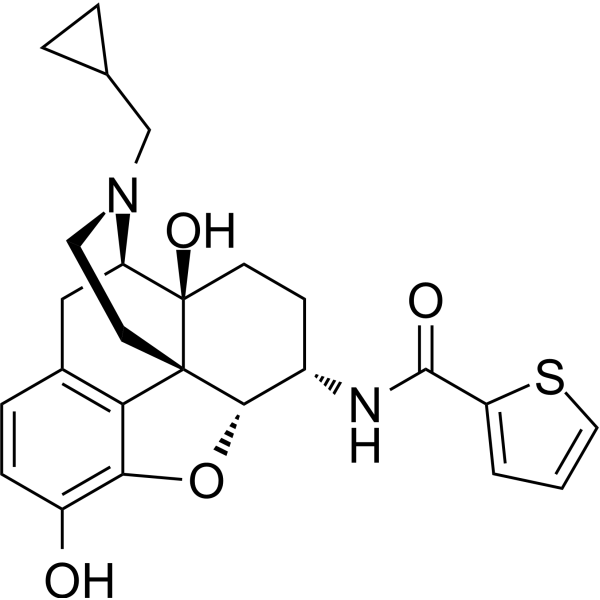
Mu opioid receptor antagonist 2 (compound 25) is a potent, selective and blood-brain barrier (BBB) penetrant μ opioid receptor (MOR) antagonist with a Ki of 0.37 nM and an EC50 of 0.44 nM. Mu opioid receptor antagonist 2 has remarkable CNS antagonism against morphine, and precipitated fewer withdrawal symptoms than Naloxone. Mu opioid receptor antagonist 2 can be used for researching opioid use disorders (OUD) .
loading...
    loading...
Cat. No.: HY-144609
CAS No.: 2773925-74-7
Target:  

Opioid Receptor

Research Areas:  

Neurological Disease

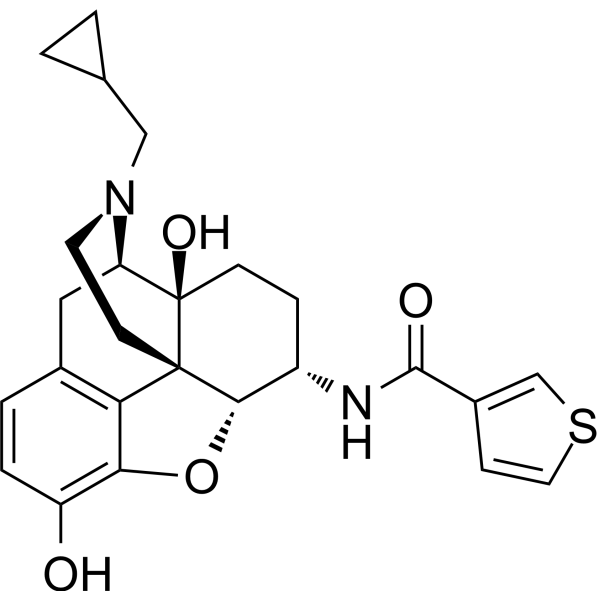
Mu opioid receptor antagonist 4 (compound 31) is a potent and selective μ opioid receptor (MOR) antagonist with a Ki of 0.38 nM and an EC50 of 1.07 nM. Mu opioid receptor antagonist 4 has remarkable CNS antagonism against morphine, and precipitated fewer withdrawal symptoms than Naloxone. Mu opioid receptor antagonist 4 Mu opioid receptor antagonist 4 can be used for researching opioid use disorders (OUD) .
loading...
    loading...
Cat. No.: HY-136634
CAS No.: 72293-40-4
Target:  

mAChR

Research Areas:  

Others

BTM-1042 is a newly synthesized compound with antispasmodic effects. It can inhibit the twitch reaction of the guinea pig ileum under electrical stimulation and is not affected by naloxone. It has similar effects to atropine and can block muscarinic receptors, but has less effect on other types of receptors. BTM-1042 also has an inhibitory effect on the ileal reaction caused by nicotine and 5-hydroxytryptamine. BTM-1042 showed a dose-dependent inhibitory effect on the spontaneous movement of the rabbit stomach. In general, BTM-1042 is a agent with a strong antispasmodic effect.
loading...
    loading...
Cat. No.: HY-17417AR
CAS No.: 465-65-6
Naloxone Standard is the analytical standard of Naloxone (HY-17417A). This product is intended for research and analytical applications. Naloxone is an opioid receptor antagonist. Naloxone attenuates spinal cord stimulation‑associated anti‑hyperalgesic effects, antagonizes physiologic effects of endogenous opioid peptides linked to central nervous system injury sequelae, functions as a pressor agent to induce modest elevations in mean arterial blood pressure, exerts neuroprotective effects to improve post‑traumatic neurologic motor function, blocks opioid receptor‑mediated amnesic pathways, enhances memory consolidation, reverses Adrenocorticotropic hormone (ACTH) (HY-106373)‑ and epinephrine‑induced amnesia, and potentiates the memory‑facilitatory effects of ACTH and epinephrine .
loading...
    loading...
Cat. No.: HY-P2579
CAS No.: 111846-43-6
Target:  

Opioid Receptor

Dafphedyn is an analogue of Dynorphin (1-13). Dafphedyn has diuretic and profound analgesia effects that can be antagonized by centrally administered Naltrexone (HY-76711) or Naloxone (HY-17417A) .
loading...
    loading...
Cat. No.: HY-12392R
CAS No.: 5560-72-5
Research Areas:  

Neurological Disease

Iprindole (Standard) is the analytical standard of Iprindole. This product is intended for research and analytical applications. Iprindole, an opioid receptor agonist, is a tricyclic antidepressant. Iprindole shortens the immobility time in mice forced swimming test, which can be reversed by the opiate antagonist Naloxone (HY-17417A). Iprindole induces lamellar body formation but devoid of lamellar bodies. Iprindole hydrochloride can be used for the research of depression .
loading...
    loading...
Cat. No.: HY-144608
CAS No.: 2773925-66-7
Target:  

Opioid Receptor

Research Areas:  

Neurological Disease

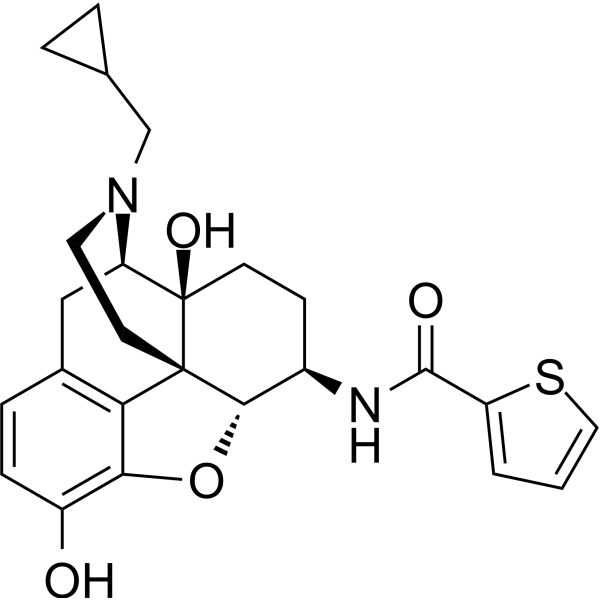
Mu opioid receptor antagonist 3 (compound 26) is a potent and selective μ opioid receptor (MOR) antagonist with a Ki of 0.24 nM and an EC50 of 0.54 nM. Mu opioid receptor antagonist 3 has remarkable CNS antagonism against morphine, and precipitated fewer withdrawal symptoms than Naloxone. Mu opioid receptor antagonist 3 can be used for researching opioid use disorders (OUD) .
loading...
    loading...
Cat. No.: HY-138232
CAS No.: 141365-20-0
Synonyms: LTNAM
Target:  

Aminopeptidase

Research Areas:  

Neurological Disease

Lys-psi(CH2NH)-Trp(Nps)-OMe is a lysine-tryptophan (Nps) pseudodipeptide analog. It is obtained by replacing the peptide bond in the Lys-Trp(Nps) molecule with an aminomethylene bond and has analgesic activity. Lys-psi(CH2NH)-Trp(Nps)-OMe induces a dose-dependent and naloxone-reversible analgesia after intracerebroventricular administration in mice, and its analgesic effect lasts longer than that of the original compound. It protects methionine enkephalin from degradation in rat striatal slices and binds to low-dose opioid peptides to produce analgesia. Lys-psi(CH2NH)-Trp(Nps)-OMe effectively inhibits brain aminopeptidase activity both in vitro and in vivo. The enhanced resistance of this pseudodipeptide to proteolysis may explain its prolonged analgesic activity.
loading...
    loading...
Cat. No.: HY-179705
CAS No.: 3085132-31-3
Target:  

Opioid Receptor

Research Areas:  

Neurological Disease

MOR agonist-5 is a selective and potent mu-opioid receptor (MOR) agonist with an EC50 of 0.25 nM. MOR agonist-5 shows an EC50 of 10 nM for DOR and >10000 nM for KOR and NOR. MOR agonist-5 exerts significant antinociceptive activity. MOR agonist-5 can be used for the research of pain .
loading...
    loading...

