



1. Search Result
Search Result
Results for "

Optical activity

" in MedChemExpress (MCE) Product Catalog:

30

Inhibitors & Agonists

4

Fluorescent Dye

1

Biochemical Assay Reagents

1

Peptides

8

Natural
Products

2

Isotope-Labeled Compounds

Cat. No. Product Name Target Research Areas Chemical Structure
  • HY-W017277

    D-Menthol

    Fungal Neurological Disease
    (+)-Menthol (D-Menthol) is one of the optical isomers of Menthol. (+)-Menthol can reduce the electrically evoked contractions of rat phrenic hemidiaphragm in vitro. Local anaesthetic activity. (+)-Menthol inhibits fungal growth and sporulation. (+)-Menthol can also inhibit the growth of Microcystis aeruginosa cells .
    (+)-Menthol
  • HY-W012669

    Phthaldialdehyde

    Environmental Pollutants Biochemical Assay Reagents Infection
    Phthalaldehyde reacts with proteins containing primary amines and blocked amino-terminal peptides of amino acids. Phthalaldehyde stabilizes bacterial outer membranes and cell walls, increases the optical density of bacterial cell suspensions, and inhibits bacterial lysis induced by ethylenediaminetetraacetic acid and sodium dodecyl sulfate. Phthalaldehyde exhibits bactericidal activity against Gram-negative vegetative bacteria .
    Phthalaldehyde
  • HY-Y0032
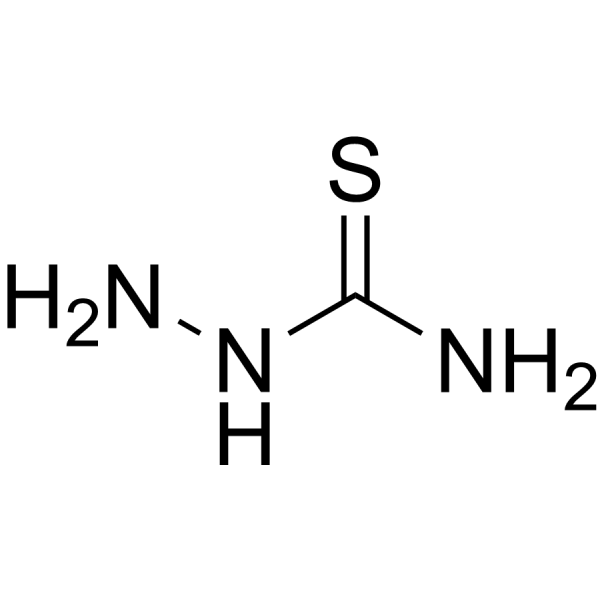
    Thiosemicarbazide
    1 Publications Verification

    Orthopoxvirus Infection Others Cancer
    Thiosemicarbazide is a vitamin B6 antagonist with anti-acne activity. Thiosemicarbazide is also a well-known source in the synthesis of heterocycles, and its derivatives have potential anticancer activity. Thiosemicarbazide (TSC: HL1) reacts with metal salts, urea (U), to prepare Co(II) and Cu(I) metal complexes. Thiosemicarbazide is also used in the fields of media communications and optical storage, and in the spectrophotometric detection of metals .
    Thiosemicarbazide
  • HY-D0947

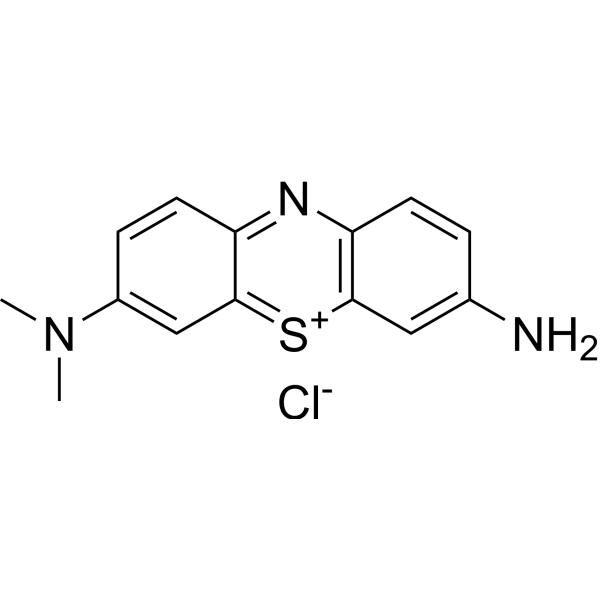
    DNA Stain Others
    Azure A chloride is a phenothiazine dye. Azure A chloride is an alternative DNA dye used for the separation of DNA and protein fragments in agarose gel electrophoresis and PAGE. Azure A chloride can be chemisorbed on the surface of mild steel according to the Langmuir adsorption isotherm to form a protective film. Azure A chloride binds to double-stranded DNA in a non-cooperative manner via weak intercalation, triggering molecular conformational disturbance, restricted rotational motion, and changes in optical activity .
    Azure A chloride
  • HY-D1435

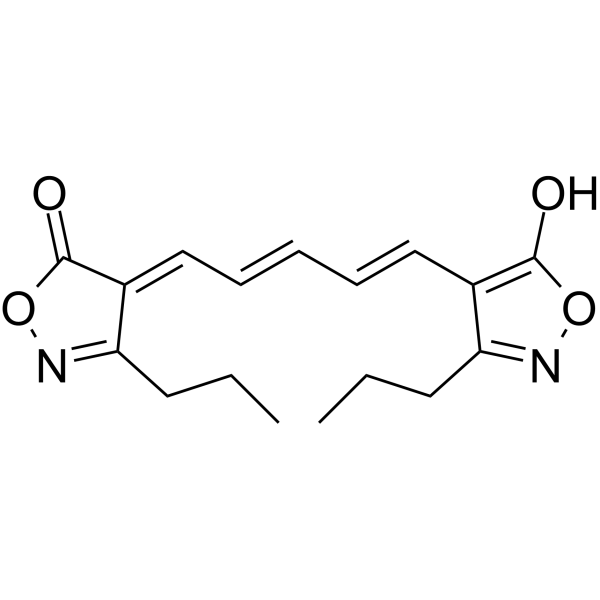
    Na+/K+ ATPase Fluorescent Dye Metabolic Disease
    Oxonol VI is an optical indicator of membrane potential in lipid vesicles (excitation/emission wavelengths: 614/646 nm). Oxonol VI can be used to detect changes in membrane potential associated with (Na + + K +)-ATPase activity in reconstituted vesicles .
    Oxonol VI
  • HY-N0443
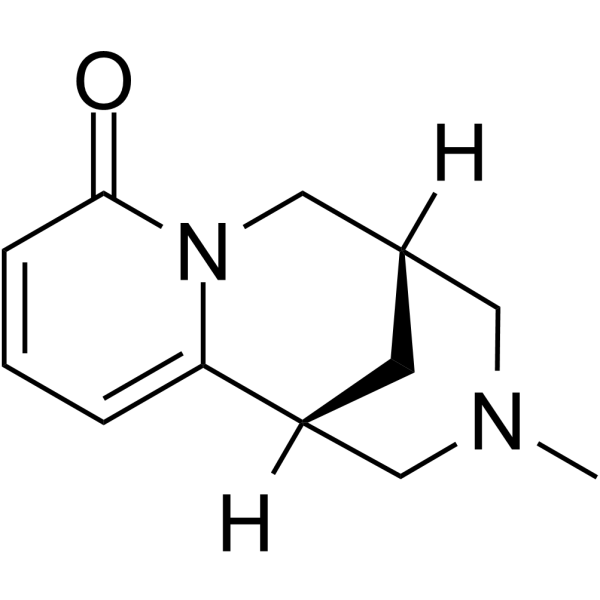
    N-Methylcytisine
    2 Publications Verification

    Caulophylline

    nAChR Inflammation/Immunology
    N-Methylcytisine (Caulophylline), a tricyclic quinolizidine alkaloid, exerts hypoglycaemic, analgesic and anti-inflammatory activities. N-methylcytisine is a selective ligand of nicotinic receptors of acetylcholine in the central nervous system and has a high affinity (Kd = 50 nM) to nicotinic acetylcholine receptors (nAChR) from squid optical ganglia .
    N-Methylcytisine
  • HY-103019B
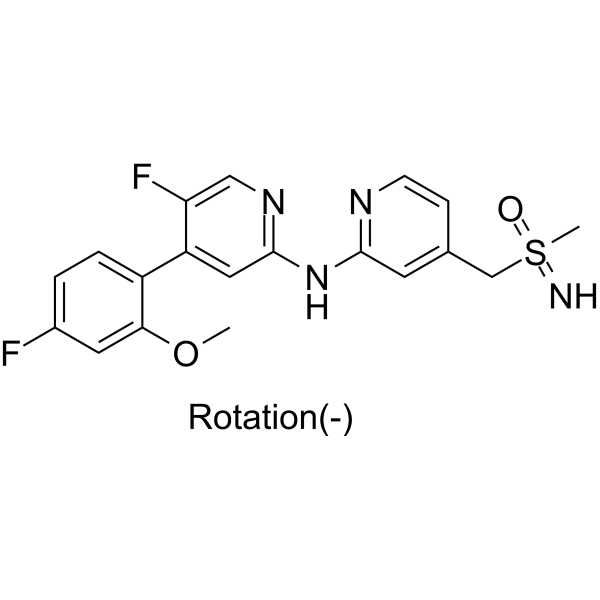
    (-)-Enitociclib
    2 Publications Verification

    (R)-Enitociclib; (-)-BAY-1251152; (-)-VIP152

    Drug Isomer CDK Apoptosis DNA/RNA Synthesis Cancer
    (-)-Enitociclib ((R)-Enitociclib) is an enantiomer of Enitociclib (HY-103019E) with an optical rotation of (-). Enitociclib is a selective CDK9 inhibitor and apoptosis inducer. Enitociclib inhibits CDK9 activity and reduces the phosphorylation of Ser2 in the carboxyl-terminal domain (CTD) of RNA polymerase Pol II, thereby downregulating the transcription of key oncogenes such as MYC and MCL1. Enitociclib has anti-proliferative activity targeting MYC + lymphoma and multiple myeloma (MM) cells, and has synergistic effects with Bortezomib (HY-10227) and Lenalidomide (HY-A0003), and can be used in the research of hematological malignancies .
    (-)-Enitociclib
  • HY-N7259B

    Others Others
    (±)-Isomenthone is a naturally active compound, a racemate of Isomenthone. (±)-Isomenthone has optical activity and is mainly used to measure the activity .
    (±)-Isomenthone
  • HY-W016568

    Endogenous Metabolite Others
    Isoxanthopterin is a heterocyclic compound belonging to the pteridine family and its activity is mainly reflected in its optical properties. Isoxanthopterin can form a reflective layer in the eyes of animals, enhancing visual function. The main regulatory mechanism of isoxanthopterin involves its ability to form a crystalline structure within organisms, which achieves a high refractive index through specific hydrogen bonding patterns and molecular arrangements. Isoxanthopterin can be used for research in materials science and optical engineering .
    Isoxanthopterin
  • HY-W142092

    Bacterial Endogenous Metabolite Others
    N-Acetyl-DL-serine is a hydrophobic amino acid that is synthesized in the body and can be found as a free form or as a salt with malonate, phosphate, or acetate. N-Acetyl-DL-serine has antimicrobial activity against Bacillus cereus and Staphylococcus aureus. N-Acetyl-DL-serine has also been used for the immobilization of DNA fragments on solid surfaces and can be used for protein synthesis and optical detection of DNA strands .
    N-Acetyl-DL-serine
  • HY-163445

    NAMPT Cancer
    NAMPT activator-6 is a NAMPT activator, a regulatory molecule for the optical control system of NAMPT and NAD+. NAMPT activator-6 can be used to design efficient photoswitchable proteolysis-targeting chimeras (PS-PROTACs) to achieve up-down reversible regulation of NAMPT and NAD+ in a light-dependent manner and reduce the toxicity associated with inhibitor-based PS-PROTACs. PS-PROTAC can be used to achieve antitumor activity, NAMPT, and NAD+ modulation in vivo via optical manipulation .
    NAMPT activator-6
  • HY-D1460

    Bacterial β-glucuronidase Infection
    Fluorescein Di-β-D-Glucuronide is an orally active fluorescent probe substrate and an indicator of β-glucuronidase (βG) activity in intestinal bacteria. Fluorescein Di-β-D-Glucuronide can be used for non-invasive time-lapse optical imaging of βG activity in intestinal bacteria in nude mice. Fluorescein Di-β-D-Glucuronide supports the quantitative analysis of bacterial βG enzyme activity and inhibition .
    Fluorescein Di-β-D-Glucuronide
  • HY-N4147

    Others Metabolic Disease Inflammation/Immunology
    Eleutheroside D is an active lignan isolated from the root of Eleutherococcus senticosus, has anti-inflammatory and hypoglycemic activities . Eleutheroside D is an optical isomer of Eleutheroside E (HY-N0272) .
    Eleutheroside D
  • HY-Y0032R

    Orthopoxvirus Reference Standards Infection Others Cancer
    Thiosemicarbazide is a vitamin B6 antagonist with anti-acne activity. Thiosemicarbazide is also a well-known source in the synthesis of heterocycles, and its derivatives have potential anticancer activity. Thiosemicarbazide (TSC: HL1) reacts with metal salts, urea (U), to prepare Co(II) and Cu(I) metal complexes. Thiosemicarbazide is also used in the fields of media communications and optical storage, and in the spectrophotometric detection of metals .
    Thiosemicarbazide (Standard)
  • HY-Z15823

    Dexverapamil

    Calcium Channel Potassium Channel Somatostatin Receptor Arrestin Apoptosis P-glycoprotein Metabolic Disease Inflammation/Immunology
    (R)-Verapamil (Dexverapamil) is an optically enantiomer of the oral-active Verapamil (HY-14275). (R)-Verapamil has a relatively low affinity for L-type calcium channels (Cav1.2) (IC50 > 300 μM), and its IC50 for sodium channels (sodium channel) is 3.19 μM. (R)-Verapamil exhibits SSTR2 agonistic activity, with an EC50 of 1.3 μM. (R)-Verapamil significantly downregulates the expression of TXNIP protein in diabetic mouse models and significantly inhibits β-cell apoptosis (apoptosis), effectively controlling blood sugar. (R)-Verapamil can be used as a PET tracer for the function of P-glycoprotein (P-gp) .
    (R)-Verapamil
  • HY-109854
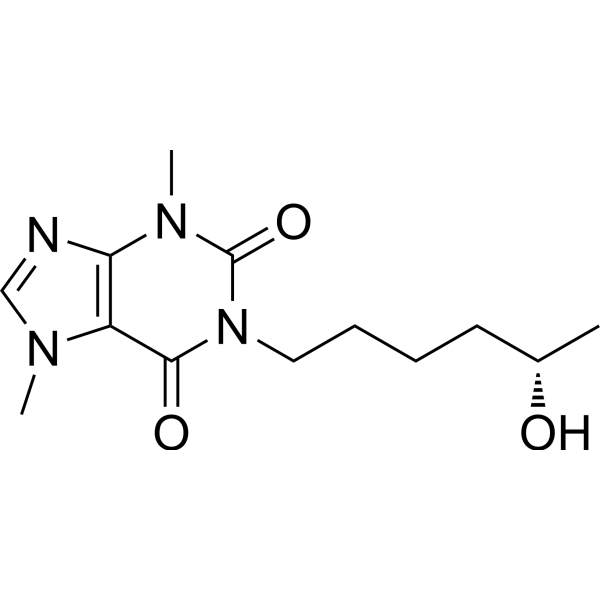
    (S)-Lisofylline
    1 Publications Verification

    (S)-Lisophylline

    Drug Isomer Inflammation/Immunology
    (S)-Lisofylline ((S)-Lisophylline)) is a kind of lisofline (LSF) enantiomer with optical activity. (S)-Lisofylline can interconversion with pentoxifylline .
    (S)-Lisofylline
  • HY-109854S

    (S)-Lisophylline-d5

    Isotope-Labeled Compounds Others
    (S)-Lisofylline-d5 ((S)-Lisophylline-d5) is the deuterium labeled (S)-Lisofylline (HY-109854). (S)-Lisofylline is a kind of Lisofline enantiomer with optical activity. (S)-Lisofylline can interconversion with pentoxifylline .
    (S)-Lisofylline-d5
  • HY-125700

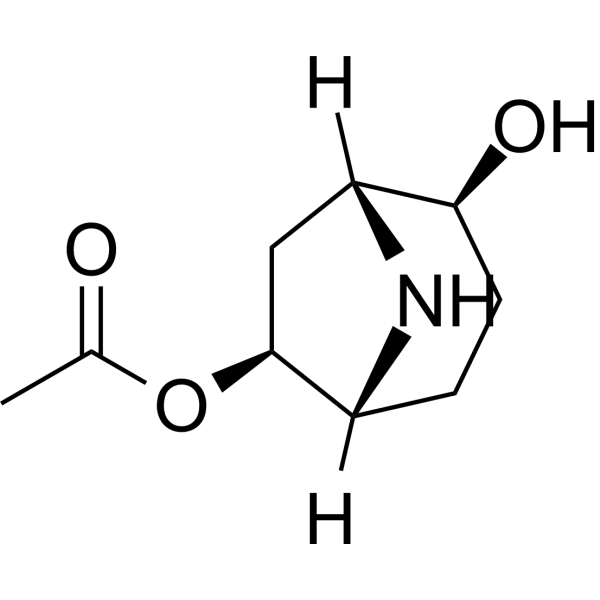
    (-)-Bao Gong Teng A

    mAChR Cardiovascular Disease Neurological Disease
    Baogongteng A ((-)-Bao Gong Teng A) is an optically active tropane alkaloid with hypotensive and miotic activity, and can be isolated from the Chinese herb Erycibe obtusifolia Benth. Baogongteng A is also a muscarinic agonist. Baogongteng A can be used for cardiovascular and glaucoma research .
    Baogongteng A
  • HY-171002

    Protein Arginine Deiminase Cancer
    PAD2-IN-2 (cis-isomer of 1) is a protein arginine deiminase 2 (PAD2) inhibitor. PAD2-IN-2 possess an azobenzene photoswitch to optically control PAD activity. PAD2-IN-2 inhibits histone H3-citrullination .
    PAD2-IN-2
  • HY-171002A

    Protein Arginine Deiminase Cancer
    PAD2-IN-2 (cis-isomer of 1) TFA is a protein arginine deiminase 2 (PAD2) inhibitor. PAD2-IN-2 TFA possess an azobenzene photoswitch to optically control PAD activity. PAD2-IN-2 TFA inhibits histone H3-citrullination .
    PAD2-IN-2 TFA
  • HY-W017277R

    D-Menthol (Standard)

    Fungal Reference Standards Infection Neurological Disease
    (+)-Menthol (Standard) is the analytical standard of (+)-Menthol. This product is intended for research and analytical applications. (+)-Menthol (D-Menthol) is one of the optical isomers of Menthol. (+)-Menthol can reduce the electrically evoked contractions of rat phrenic hemidiaphragm in vitro. Local anaesthetic activity. (+)-Menthol inhibits fungal growth and sporulation. (+)-Menthol can also inhibit the growth of Microcystis aeruginosa cells .
    (+)-Menthol (Standard)
  • HY-N0443R

    Caulophylline (Standard)

    Reference Standards nAChR Inflammation/Immunology
    N-Methylcytisine (Standard) is the analytical standard of N-Methylcytisine. This product is intended for research and analytical applications. N-Methylcytisine (Caulophylline), a tricyclic quinolizidine alkaloid, exerts hypoglycaemic, analgesic and anti-inflammatory activities. N-methylcytisine is a selective ligand of nicotinic receptors of acetylcholine in the central nervous system and has a high affinity (Kd = 50 nM) to nicotinic acetylcholine receptors (nAChR) from squid optical ganglia .
    N-Methylcytisine (Standard)
  • HY-163151

    PI3K Akt p38 MAPK Neurological Disease Inflammation/Immunology
    JE-133 is an optically active isochromane-2H-chromene conjugate. JE-133 exhibits antioxidant and anti-inflammatory activities. JE-133 is a neuroprotective agent that effectively inhibits neuronal oxidative damage associated with PI3K/Akt and MAPK signaling pathways. JE-133 can also inhibit lipopolysaccharide (LPS) (HY-D1056)-induced neuroinflammation by regulating JAK/STAT and Nrf2 signaling pathways .
    JE-133
  • HY-171977

    Drug Derivative Cancer
    UTKO1 (Compound 2) is a derivate of Moverastin.UTKO1 has optical activity and significant inhibitory activity against tumor cell migration by abrogating the binding of 14-3-3ζ/Tiam1. UTKO1 can be used for cancers like esophageal cancer and epidermoid carcinoma research .
    UTKO1
  • HY-129245

    Hoe 175

    Endogenous Metabolite Neurological Disease
    Razobazam (Hoe 175) is a benzodiazepine derivative with cognitive activity. Razobazam has been shown to improve learning performance in socially deprived rats. Razobazam increased avoidance scores by 18% after training. Razobazam caused significant changes in the optical density of certain areas of the rat brain, including a 22% decrease in the lateral habenula and a 25% increase in the ventral tegmental area. Razobazam also caused a 13% increase in optical density in the prefrontal cortex of rats .
    Razobazam
  • HY-W012669S

    Phthaldialdehyde-d4

    Isotope-Labeled Compounds Bacterial Infection
    Phthalaldehyde-d4 (Phthaldialdehyde-d4) is the deuterium labeled Phthalaldehyde (HY-W012669). Phthalaldehyde reacts with proteins containing primary amines and blocked amino-terminal peptides of amino acids. Phthalaldehyde stabilizes bacterial outer membranes and cell walls, increases the optical density of bacterial cell suspensions, and inhibits bacterial lysis induced by ethylenediaminetetraacetic acid and sodium dodecyl sulfate. Phthalaldehyde exhibits bactericidal activity against Gram-negative vegetative bacteria.
    Phthalaldehyde-d4
  • HY-103019BR

    (R)-Enitociclib (Standard); (-)-BAY-1251152 (Standard); (-)-VIP152 (Standard)

    Reference Standards Drug Isomer CDK Apoptosis DNA/RNA Synthesis Cancer
    (-)-Enitociclib (Standard) is the analytical standard of (-)-Enitociclib (HY-103019B). This product is intended for research and analytical applications. (-)-Enitociclib ((R)-Enitociclib) is an enantiomer of Enitociclib (HY-103019E) with an optical rotation of (-). Enitociclib is a selective CDK9 inhibitor and apoptosis inducer. Enitociclib inhibits CDK9 activity and reduces the phosphorylation of Ser2 in the carboxyl-terminal domain (CTD) of RNA polymerase Pol II, thereby downregulating the transcription of key oncogenes such as MYC and MCL1. Enitociclib has anti-proliferative activity targeting MYC+ lymphoma and multiple myeloma (MM) cells, and has synergistic effects with Bortezomib (HY-10227) and Lenalidomide (HY-A0003), and can be used in the research of hematological malignancies .
    (-)-Enitociclib (Standard)
  • HY-133240

    DNA Alkylator/Crosslinker Calcium Channel Potassium Channel Sodium Channel Infection
    trans-AzoTAB is a photoresponsive potassium/sodium/calcium channel modulator and DNA-binding agent. trans-AzoTAB undergoes trans-cis isomerization driven by light, with variable polarity and DNA affinity. trans-AzoTAB also enhances voltage-gated potassium currents and inhibits sodium and calcium currents in cardiomyocytes, thereby reducing spontaneous electrical activity and excitation conduction velocity. In addition, trans-AzoTAB induces compaction and frozen conformation of λ-phage DNA, and non-sequence-dependently inhibits transcription and translation processes in the dark; its activity can be reversed and restored by visible light after activation with ultraviolet irradiation. trans-AzoTAB can serve as a probe for two-photon optical regulation of myocardial excitability, and is used to construct photoresponsive interfacial polymer structures .
    trans-AzoTAB
  • HY-W441531

    Biochemical Assay Reagents
    2,3,7,8,12,13,17,18-Octaethyl-21H,23H-porphine manganese(III) chloride is a transition metal compound with excellent catalytic activity. 2,3,7,8,12,13,17,18-Octaethyl-21H,23H-porphine manganese(III) chloride is widely used in photocatalytic reactions to improve reaction efficiency. 2,3,7,8,12,13,17,18-Octaethyl-21H,23H-porphine manganese(III) chloride is also used in the preparation of optical materials, giving the materials excellent light absorption properties. The biological activity of 2,3,7,8,12,13,17,18-Octaethyl-21H,23H-porphine manganese(III) chloride has gradually attracted attention in the research of the medical field.
    2,3,7,8,12,13,17,18-Octaethyl-21H,23H-porphine manganese(III) chloride
  • HY-D3187

    Fluorescent Dye Glycosidase Infection Cancer
    HMRef-αMan is a substrate-based green fluorescent probe (Ex/Em=465 nm/515 nm) targeting MAN2C1 (α-mannosidase). HMRef-αMan can be specifically cleaved by MAN2C1 to generate a highly fluorescent product, which thus gets activated to produce green fluorescence in malignant breast tissues, benign lesions and living cancer cells. The signal intensity of HMRef-αMan is directly correlated with MAN2C1 activity, and it can effectively detect tiny breast cancer lesions with a diameter of less than 1 mm. When used in combination with the red-emitting γ-glutamyl transpeptidase (GGT) probe gGlu-2OMe SiR600 (HY-D3188), HMRef-αMan enables precise optical differentiation of breast tissue types via a dual-color imaging strategy. HMRef-αMan has been widely used in the research of breast diseases such as breast cancer, fibroadenoma, phyllodes tumor and various types of papilloma .
    HMRef-αMan

Inquiry Online

Your information is safe with us. * Required Fields.

Salutation


Country or Region *

Applicant Name *


Organization Name *

Department *


Email Address *


Product Name *

Cat. No.


Requested quantity *

Phone Number *


Remarks

Inquiry Online

Inquiry Information

Product Name:
Cat. No.:
Quantity:
MCE Japan Authorized Agent:

