17 Results for "

PD-L1 blockade

" in MedChemExpress (MCE) Product Catalog:
Products (17)

17 Results for "PD-L1 blockade" in MCE Product Catalog:

35
35 Publications Verification
Cat. No.: HY-P9902A
Synonyms: MK-3475 (anti-PD-1); Lambrolizumab (anti-PD-1)

Target:  

PD-1/PD-L1

Research Areas:  

Cancer

Pembrolizumab (anti-PD-1) is a humanized IgG4 antibody and PD-1 inhibitor. Pembrolizumab produces PD-1 blockade, preventing PD-L1 and PD-L2 from connecting to PD-1. This avoids the uncontrolled regulation of T cells on cells that normally express PD-1 .
loading...
    loading...
6
6 Cited Publications
Cat. No.: HY-16961
CAS No.: 1123837-84-2
Synonyms: MGCD516; MG-516
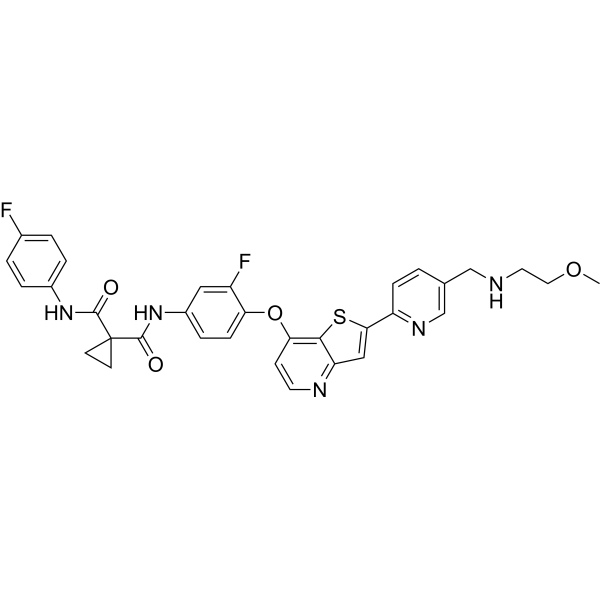
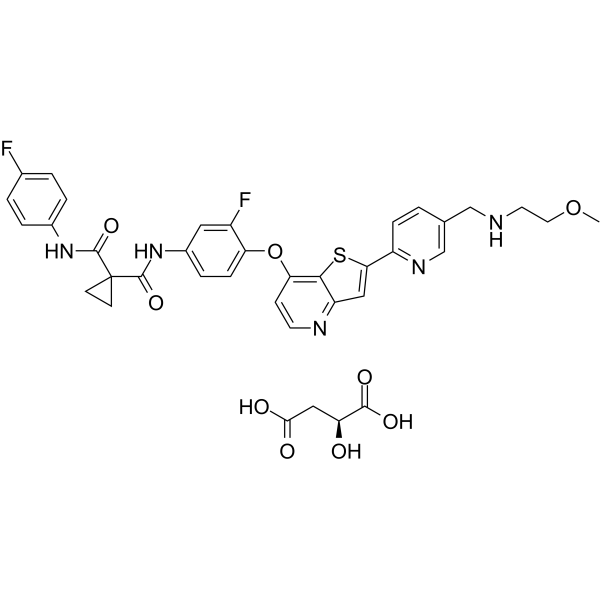
Sitravatinib (MGCD516) is an orally bioavailable receptor tyrosine kinase (RTK) inhibitor with IC50s of 1.5 nM, 2 nM, 2 nM, 5 nM, 6 nM, 6 nM, 8 nM, 0.5 nM, 29 nM, 5 nM, and 9 nM for Axl, MER, VEGFR3, VEGFR2, VEGFR1, KIT, FLT3, DDR2, DDR1, TRKA, TRKB, respectively . Sitravatinib shows potent single-agent antitumor efficacy and enhances the activity of PD-1 blockade through promoting an antitumor immune microenvironment .
loading...
    loading...
2
2 Cited Publications
Cat. No.: HY-128679
CAS No.: 1893397-65-3
Purity:  99.92%
Target:  

IKK

Research Areas:  

Cancer

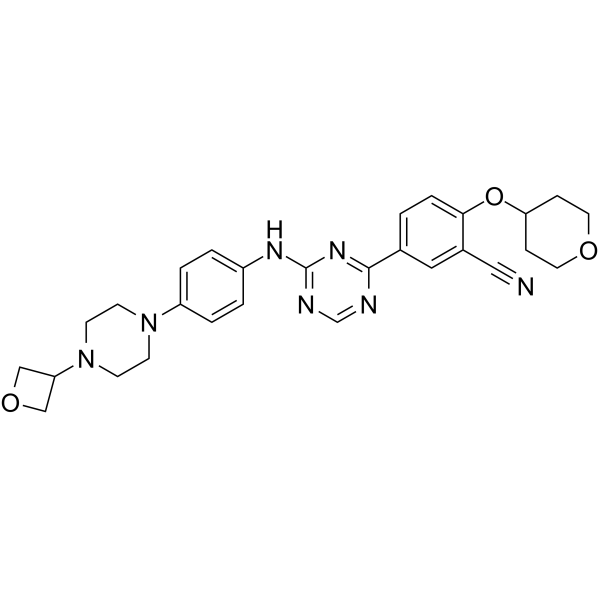
TBK1/IKKε-IN-5 (compound 1) is an orally active TBK1 and IKKε dual inhibitor, with IC50 values of 1 and 5.6 nM, respectively. TBK1/IKKε-IN-5 enhances the blockade response to PD-1 and induces immune memory in rats when combines with anti-PD-L1. TBK1/IKKε-IN-5 can be used in cancer research, especially in tumour immunity .
loading...
    loading...
Cat. No.: HY-P991740

Research Areas:  

Cancer

IBI-363 is a PD-1/IL-2 bispecific antibody with functions of blocking the PD-1/PD-L1 pathway and activating the IL-2 pathway. The IL-2 arm of IBI-363 retains affinity for IL-2Rα but attenuates binding ability to IL-2Rβ and IL-2Rγ to reduce toxicity. The PD-1 binding arm of IBI-363 enables PD-1 blockade and selective delivery of IL-2. IBI-363 can be used in cancer research, such as non-small cell lung cancer .
loading...
    loading...
Cat. No.: HY-P99916
CAS No.: 2449199-61-3
Synonyms: AMG-427

Target:  

FLT3 CD3 TNF Receptor

Research Areas:  

Inflammation/Immunology Cancer

Emirodatamab (AMG-427) is a bispecific T-cell engager (BiTE). Emirodatamab simultaneously binds FLT3 on the surface of acute myeloid leukemia (AML) cells and CD3 on the surface of T cells, thereby precisely recruiting immune effector cells to tumor sites. Emirodatamab potently induces T cell activation, secretion of proinflammatory cytokines (such as IFNγ, TNFα), and specific cytotoxicity, effectively lysing FLT3-positive tumor cells and inhibiting their growth. Emirodatamab not only significantly prolongs survival in mouse xenograft models and eliminates diseased cells in primates, but also exhibits a synergistic enhancement effect when combined with PD-1 blockade therapy. Emirodatamab is used in studies of acute myeloid leukemia, especially relapsed or refractory cases .
loading...
    loading...
Cat. No.: HY-144501
CAS No.: 2230218-36-5
Purity:  98.14%
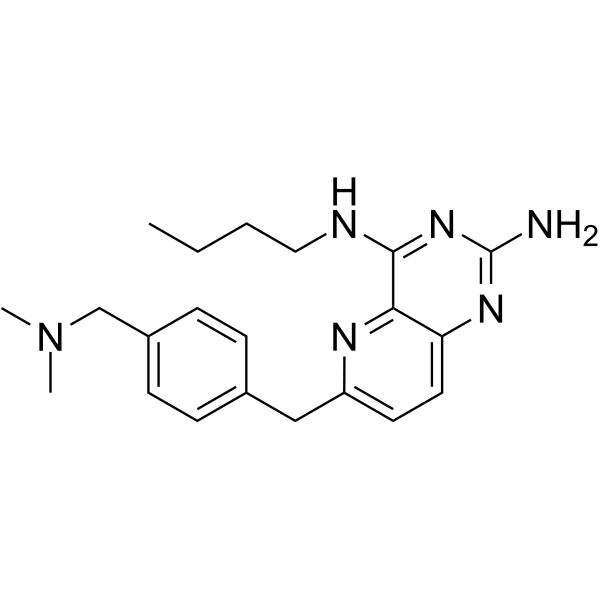
D18 is an immune modulator. D18 acts as a TLR7/8 dual agonist (EC50 = 24 nM for hTLR7 and 10 nM for hTLR8, respectively). D18 increases PD-L1 expression through epigenetic regulation, thus sensitizing tumors to PD-1/PD-L1 blockade. D18 is a ADC cytotoxin uesd for the systhesis of ADC HE-S2 (HY-144497). D18 has strong immune activation and anti-tumor activity. D18 commonly used in cancer research, such as colon cancer .
loading...
    loading...
Cat. No.: HY-P991193

Target:  

TNF Receptor

Research Areas:  

Cancer

NGM-438 is a humanized monoclonal antibody antagonist of LAIR1, with a Ka of 0.26 nM for human LAIR1 and 4.28 nM for cynomolgus monkey LAIR1. NGM-438 blocks the binding of LAIR1 to its Collagen ligand and antagonizes the Collagen-induced LAIR1 signaling pathway. NGM-438 reverses FcγR signaling inhibition in myeloid cells, induces dendritic cells to secrete TNFα, promotes T cell proliferation, and triggers myeloid inflammation and allogeneic T cell responses. NGM-438 sensitizes refractory mouse lung cancer to PD-1 blockade, increases the content of intratumoral CD8 + T cells and the expression of inflammatory genes. NGM-438 is applicable to research related to solid tumors, refractory solid tumors and non-small cell lung cancer .
loading...
    loading...
Cat. No.: HY-155847
CAS No.: 3052262-64-0
Purity:  99.80%
Target:  

Phosphatase PD-1/PD-L1

Research Areas:  

Inflammation/Immunology Cancer

LYP-IN-3 is a selective, orally active and reversible lymphoid-tyrosine phosphatase (LYP) inhibitor (IC50 = 2.55 μM, Ki = 0.93 μM). D34 exhibits high selectivity of PTP1B, PTPN12, PTPN5 and SSH2. LYP-IN-3 regulates the T-cell receptor (TCR) signaling by specifically inhibiting LYP. LYP-IN-3 does not significantly inhibit MC38 cell viability; its anti-tumor effect stems from immune regulation. LYP-IN-3 can significantly upregulate PD-L1 or PD-1 expression in different immune cells. LYP-IN-3 facilitates T-cell infiltration and enhances T-cell functions. LYP-IN-3 synergizes with PD-L1 blockade can significantly improve colorectal tumor regression. LYP-IN-3 can be used for the study of colorectal cancer .
loading...
    loading...
Cat. No.: HY-16961A
CAS No.: 2244864-88-6
Synonyms: MGCD516 malate; MG-516 malate
Sitravatinib malate (MGCD516 malate) is an orally bioavailable receptor tyrosine kinase (RTK) inhibitor with IC50s of 1.5 nM, 2 nM, 2 nM, 5 nM, 6 nM, 6 nM, 8 nM, 0.5 nM, 29 nM, 5 nM, and 9 nM for Axl, MER, VEGFR3, VEGFR2, VEGFR1, KIT, FLT3, DDR2, DDR1, TRKA, TRKB, respectively . Sitravatinib malate shows potent single-agent antitumor efficacy and enhances the activity of PD-1 blockade through promoting an antitumor immune microenvironment .
loading...
    loading...
Cat. No.: HY-169232
Target:  

PROTACs PD-1/PD-L1

Research Areas:  

Cancer

PCC16 chloride is a dual PROTAC degrader targeting DHHC3 and PD-L1, with a DC50 of 0.103 μM for PD-L1 degradation. PCC16 chloride induces DHHC3 degradation via the ubiquitin-proteasome pathway by recruiting the CRBN E3 ubiquitin ligase (E3 ubiquitin ligase). By targeting DHHC3-which is essential for PD-L1 palmitoylation and membrane stability-PCC16 chloride reduces PD-L1 levels, decreases PD-L1 membrane retention time, and impairs its immunosuppressive function. PCC16 chloride enhances anti-tumor immunity by disrupting PD-L1-mediated immunosuppression. PCC16 chloride can be used in the research of immune checkpoint blockade-resistant cancers .
loading...
    loading...
Cat. No.: HY-153543
CAS No.: 2649170-16-9
Purity:  98.69%
Research Areas:  

Cancer

TLR7/8 agonist 8 (compound 24m) is a potent toll-like receptor 7/8 (TLR7/8) dual agonist, with EC50s of 27 and 12 nM for hTLR7 and hTLR8, respectively. TLR7/8 agonist 8 can improve the antitumor activity of PD-1/PD-L1 blockade .
loading...
    loading...
Cat. No.: HY-163844
Target:  

PD-1/PD-L1

Research Areas:  

Inflammation/Immunology Cancer

PD-1/PD-L1-IN-49 (compound 1c) is a potent inhibitor of PD-1/PD-L1, with the IC50 of 77 nM. PD-1/PD-L1-IN-49 activates Jurkat T cells, reflecting successful blockade of the PD-1/PD-L1 immune checkpoint .
loading...
    loading...
Cat. No.: HY-161818
CAS No.: 3049369-11-8
Target:  

PD-1/PD-L1

Research Areas:  

Inflammation/Immunology

LLW-018 is a potent PD-1/PD-L1 inhibitor with an IC50 value of 2.61 nM. LLW-018 can interrupt PD-1/PD-L1 interaction with an IC50 value of 0.88 μM by cell-based PD-1/PD-L1 blockade bioassays. LLW-018 has the potential for immunotherapy research .
loading...
    loading...
Cat. No.: HY-153544
CAS No.: 2649170-17-0
Research Areas:  

Cancer

TLR7/8 agonist 9 (Compound 25a) is a TLR7/8 agonist, with EC50s of 40 nM and 23 nM for hTLR7/8. TLR7/8 agonist 9 has anti-tumor activity and improves the antitumor activity of PD-1/PD-L1 blockade. TLR7/8 agonist 9 can be used for research of cancer immunotherapy .
loading...
    loading...
Cat. No.: HY-183539
CAS No.: 3111036-70-2
Target:  

DGK Interleukin Related

Research Areas:  

Cancer

INCB191358 is a selective and orally active inhibitor of diacylglycerol kinase α/ζ/ι (DGKα/ζ/ι ) with IC50 values of 0.12, 0.36 and 0.36 nM. INCB191358 induces antigen-dependent T-cell activation, induces IL-2 production and enhances antitumor efficacy in combination with PD-1 blockade. INCB191358 can be used for the research of cancer, such as colon carcinoma .
loading...
    loading...
Cat. No.: HY-181932
CAS No.: 2953016-30-1
Target:  

MAP4K

Research Areas:  

Cancer

HDM2004 is a selective, orally active, blood-brain barrier-penetrant HPK1 inhibitor with an IC50 of 1.89 nM. HDM2004 exhibits anticancer activity against colon cancer. HDM2004 shows synergistic activity when combined with anti-PD-L1 in syngeneic mouse models. HDM2004 can be used for the research of colon cancer .
loading...
    loading...
Cat. No.: HY-184119
CAS No.: 3061276-55-6
Synonyms: IM502
Pabgraminone C (IM502) is a Fungal metabolite and PI3Kγ inhibitor with an IC50 of 61.7 nM against PI3Kγ. Pabgraminone C shifts the STAT signaling pathway in cells from an immunosuppressive STAT3/STAT6-dominant profile to an immunostimulatory STAT1/STAT2-dominant profile, driving cells toward a pro-inflammatory phenotype. Pabgraminone C reprograms cells from an immunosuppressive state to an immunostimulatory state, reversing their suppressive effect on anti-tumor immunity. Pabgraminone C inhibits established tumor growth and metastasis across multiple cancer types. Pabgraminone C overcomes resistance to PD-1 checkpoint blockade strategies. Pabgraminone C can be used in research related to liver cancer, melanoma, and colorectal cancer .
loading...
    loading...
  • 1

