
9 Results for "

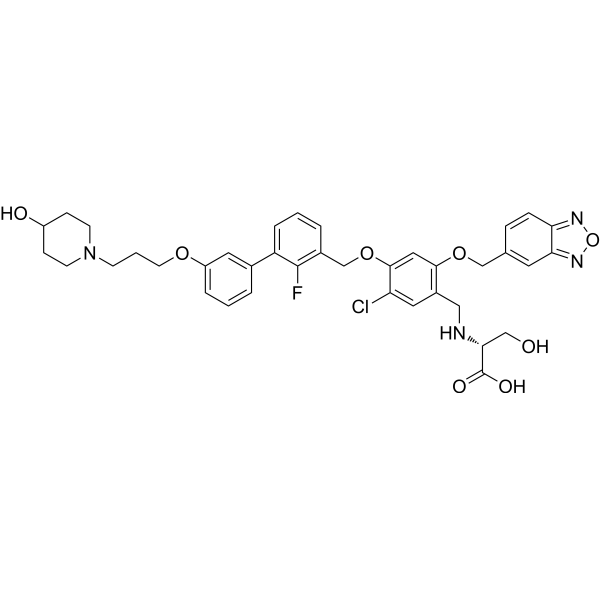
PD-L1-IN-4

" in MedChemExpress (MCE) Product Catalog:
Products (9)

9 Results for "PD-L1-IN-4" in MCE Product Catalog:

Cat. No.: HY-162356
CAS No.: 2597056-86-3
Target:  

PD-1/PD-L1

Research Areas:  

Cancer

PD-L1-IN-4 (Compound X18) is an orally active PD-L1 inhibitor that exhibits remarkable inhibitory activity against the PD-1/PD-L1 interaction (IC50 = 1.3 nM) and enhances PD-L1 inhibitory effect on T cells (EC50 = 152.8 nM). PD-L1-IN-4 can be used for the research of cancer .
loading...
    loading...
Cat. No.: HY-P99943
CAS No.: 2367013-69-0
Synonyms: KN-046

Target:  

PD-1/PD-L1 CTLA-4

Research Areas:  

Cancer

Erfonrilimab (KN-046) is a monoclonal antibody targeting PD-L1/CTLA-4. Erfonrilimab blocks the PD-L1 and CTLA-4 pathways, thereby regulating T cell function. Erfonrilimab enhances the secretion of IL-2 in superantigen-stimulated peripheral blood mononuclear cells. Erfonrilimab inhibits tumor growth in xenograft and double gene knock-in mouse models. Erfonrilimab can be used in research related to a variety of advanced solid tumors, including non-small cell lung cancer and nasopharyngeal carcinoma.
loading...
    loading...
Cat. No.: HY-P991209
CAS No.: 2694723-68-5
Synonyms: GNC-035

Target:  

ROR CD3 PD-1/PD-L1

Research Areas:  

Inflammation/Immunology Cancer

Nebratamig (GNC-035) is an anti-ROR1/anti-CD3/anti-PD-L1/anti-4-1BB tetra-specific antibody with potential immunostimulatory and antineoplastic activities .
loading...
    loading...
Cat. No.: HY-P9972
CAS No.: 1935694-88-4
Synonyms: PDR001

Target:  

PD-1/PD-L1 IFNAR

Research Areas:  

Cancer

Spartalizumab is a humanized PD-1 IgG4 monoclonal antibody, with a Kd of 0.83 nM for human PD-1 and a Kd of 0.93 nM for cynomolgus monkey PD-1. Spartalizumab binds to PD-1 and blocks its interaction with the ligands PD-L1 and PD-L2. Spartalizumab induces increased IFNγ release. Spartalizumab can be used in the research of anaplastic thyroid carcinoma (ATC) and neuroendocrine neoplasms (NENs) .
loading...
    loading...
Cat. No.: HY-149617
CAS No.: 3032391-34-4
Research Areas:  

Infection

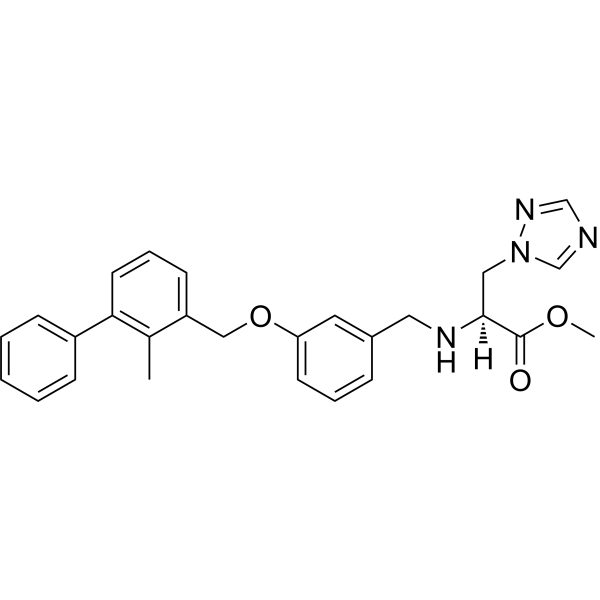
CYP51/PD-L1-IN-4 (compound 14a-2) is a potent dual-target (CYP51/PD-L1) inhibitor, with IC50 values of 0.17 and 0.021 μM, respectively. CYP51/PD-L1-IN-4 exhibits excellent antifungal and antidrug-resistant fungal activity in vitro. CYP51/PD-L1-IN-4 can be used for fungal infections research .
loading...
    loading...
Cat. No.: HY-169392
Target:  

PD-1/PD-L1

Research Areas:  

Cancer

D5B is a potent and selective PD-L1 inhibitor. D5B has been modified by DBCO. The EC50 of D5B degrading PD-L1 in 4T1 and B16-F10 tumor cells are 5.4 μM and 6.2 μM, respectively. D5B can block PD-L1/PD-1 interaction and has anti-tumor activity .
loading...
    loading...
Cat. No.: HY-159892
CAS No.: 1393644-68-2
Research Areas:  

Cancer

PD-1/PD-L1-IN-54 (Compound 6) is a moderately affinic PD-1/PD-L1 inhibitor (KD: PD-1, 55.8 μM; PD-L1, 46.4 μM; IC50: 88.6 μM). PD-1/PD-L1-IN-54 inhibits PD-1/PD-L1 interactions and shows anticancer activity by activating CD8 + T cells, upregulating PD-1 expression, and increasing secretion of IFN-γ and IL-2. PD-1/PD-L1-IN-54 inhibits cancer cell proliferation and promotes apoptosis. PD-1/PD-L1-IN-54 also regulates T cell immunity through the PI3K/Akt pathway correlated with PD-1/PD-L1 .
loading...
    loading...
Cat. No.: HY-P992511

Target:  

PD-1/PD-L1 CTLA-4 VEGFR

Research Areas:  

Cancer

CS2009 is a trispecific antibody targeting PD-1, CTLA-4 and VEGFA. CS2009 blocks the interactions of PD-1/PD-L1, CTLA-4/CD80 and VEGFA/VEGFR2, mediates checkpoint inhibition, and suppresses tumor angiogenesis. CS2009 reactivates PD-1/CTLA-4 double-positive tumor-infiltrating T lymphocytes, induces T cell activation, enhances tumor growth inhibition, promotes vascular normalization, improves T lymphocyte infiltration, and converts the immunosuppressive tumor microenvironment into an immunocompetent one. CS2009 can be used for the research of various advanced solid tumors .
loading...
    loading...
Cat. No.: HY-L184
1,181 compounds

Gastric Cancer (GC) is one of the most common malignant tumors in the world, ranking fourth in mortality rate globally. Because the early symptoms of stomach neoplasm are usually not obvious, are diagnosed with gastric cancer at terminal stage, and the relative survival rate within 5 years is very low. With the further understanding of the molecular characteristics of stomach neoplasm, many therapeutic targets for gastric cancer have been identified, and molecular targeted therapies such as CTLA-4, HER2 and immune checkpoint inhibitors have made rapid progress. Although survival rates for patients with gastric neoplasm have improved over the past few decades, the prognosis is still worrying. Therefore, there is an urgent need for new drugs to treat gastric cancer.

MCE designs a unique collection of 1,181 small molecules with definite or potential anti-gastric cancer activity, which is an important tool for studying the pathological mechanism of stomach neoplasm and developing drugs for stomach neoplasm.

