Search Result
Results for "
Photosystem II
" in MedChemExpress (MCE) Product Catalog:
2
Biochemical Assay Reagents
8
Isotope-Labeled Compounds
| Cat. No. |
Product Name |
Target |
Research Areas |
Chemical Structure |
-
- HY-B1776
-
|
|
Endogenous Metabolite
|
Metabolic Disease
|
|
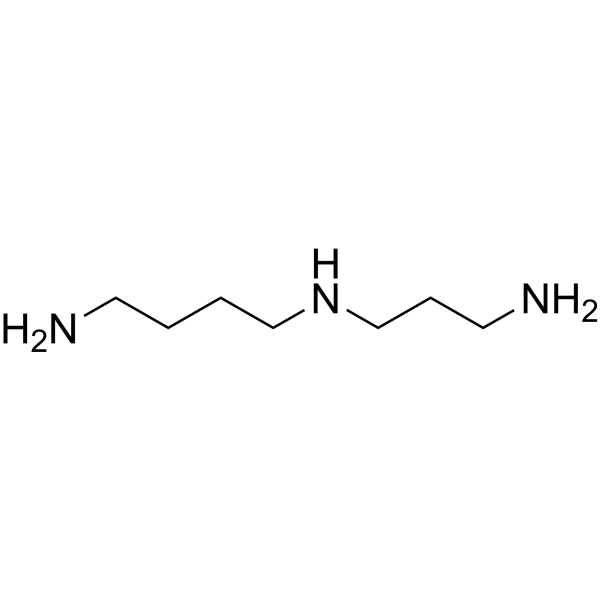
Spermidine maintains cell membrane stability, increases antioxidant enzymes activities, improving photosystem II (PSII), and relevant gene expression. Spermidine significantly decreases the H2O2 and O2 .- contents .
|
-
-
- HY-B1776A
-
|
|
Endogenous Metabolite
|
Metabolic Disease
|
|
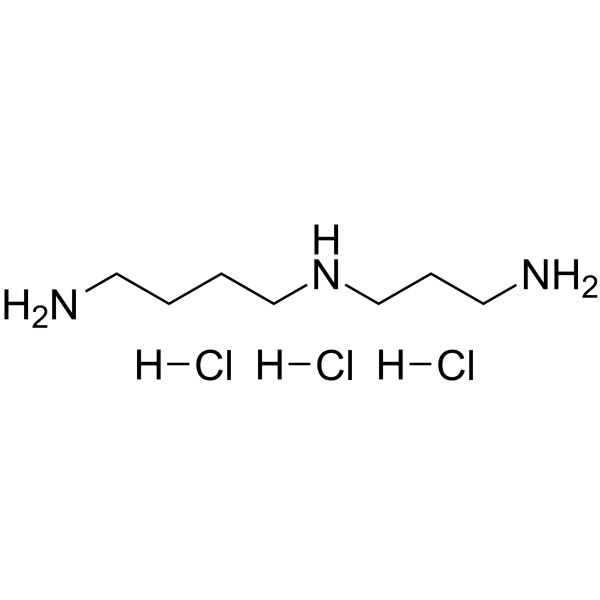
Spermidine hydrochloride maintains cell membrane stability, increases antioxidant enzymes activities, improving photosystem II (PSII), and relevant gene expression. Spermidine hydrochloride significantly decreases the H2O2 and O2 .- contents .
|
-
-
- HY-W127709
-
|
|
Environmental Pollutants
Biochemical Assay Reagents
|
Others
|
|
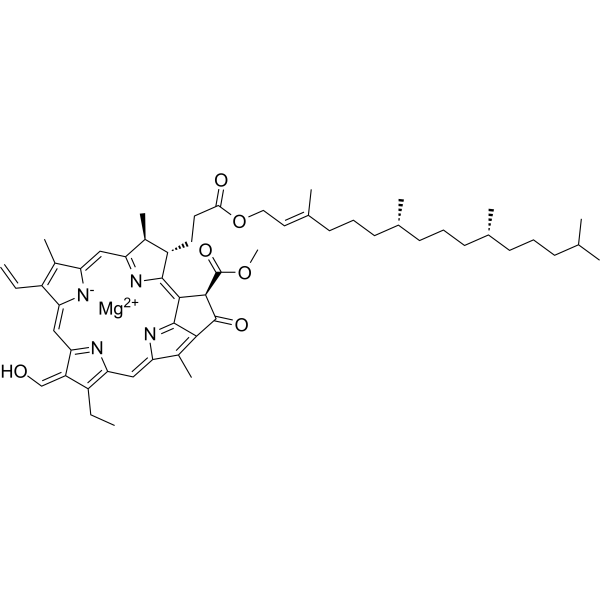
Chlorophyll b is an orally active tetrapyrrole derivative and pigment. Chlorophyll b can be obtained from photosynthetic organisms such as plants and algae. Chlorophyll b acts as a hydrogen donor and increases Glutathione levels. Chlorophyll b has antioxidant activity and functionally replaces chlorophyll a in photosystem II to participate in photosynthesis. Chlorophyll b reduces Cisplatin (HY-17394)-induced DNA damage, chromosome instability, and oxidative stress. Chlorophyll b is mainly used in the study of plant photosynthesis mechanism .
|
-
-
- HY-W015816
-
|
2,6-DMBQ
|
Photosystem II
|
Others
|
|
2,6-Dimethylbenzoquinone (2,6-DMBQ) is a benzoquinone derivative. 2,6-Dimethylbenzoquinone promotes Photosystem II-mediated photoelectrochemical water oxidation via electron transfer between spinach chloroplast Photosystem II membranes and carbon paste electrodes, and accepts electrons from Photosystem II during oxygen evolution assays. 2,6-Dimethylbenzoquinone undergoes direct photolysis in aqueous solution under 365 nm conditions, producing 2,6-dimethylhydroquinone and 3-hydroxy-2,6-dimethylbenzoquinone .
|
-
-
- HY-N6715
-
|
|
Influenza Virus
Bacterial
Enterovirus
Photosystem II
|
Infection
Cancer
|
|
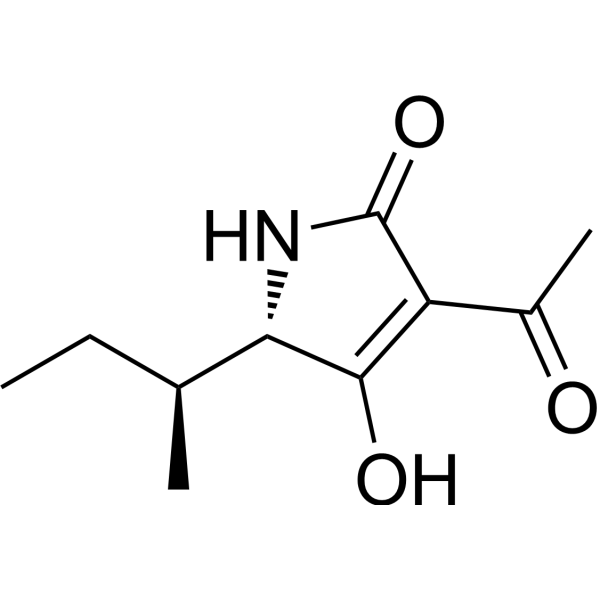
Tenuazonic acid is a nonhost-selective mycotoxin belonging to the tetramic acids family. Tenuazonic acid inhibits protein biosynthesis on ribosomes by suppressing the release of new protein. Tenuazonic acid is acutely toxic, and oral LD50 is set between 81-186 mg/kg in rats and mice. Tenuazonic acid blocks electron transport beyond the primary quinone receptor (QA) by interacting with the D1 protein and is a photosystem II (PSII) inhibitor. In addition, Tenuazonic acid has antiviral effects on measles virus, enterovirus, respiratory virus and so on. Tenuazonic acid has an inhibitory effect on skin cancer .
|
-
-
- HY-B1776R
-
|
|
Reference Standards
Endogenous Metabolite
|
Metabolic Disease
|
|
Spermidine (Standard) is the analytical standard of Spermidine. This product is intended for research and analytical applications. Spermidine maintains cell membrane stability, increases antioxidant enzymes activities, improving photosystem II (PSII), and relevant gene expression. Spermidine significantly decreases the H2O2 and O2.- contents .
|
-
-
- HY-B1847
-
-
-
- HY-116954
-
|
|
DNA/RNA Synthesis
|
Others
|
|
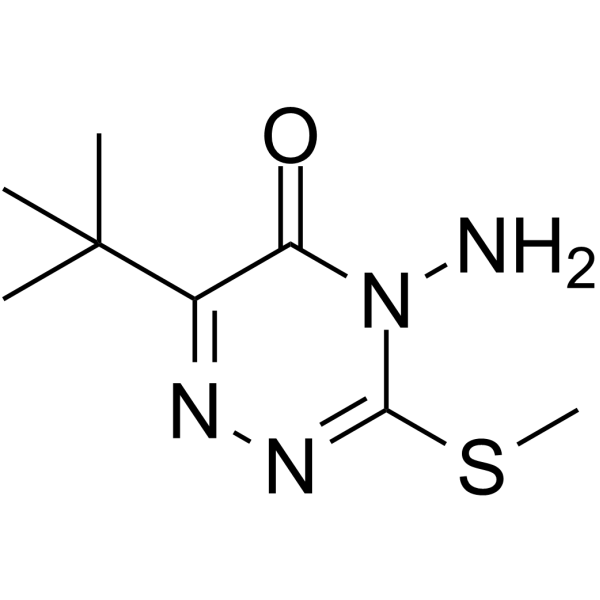
Metribuzin is a low-cost non-selective herbicide belonging to the chemical class of triazinones. Metribuzin inhibits plant DNA synthesis and acts on photosystem II, ultimately suppressing photosynthesis. Metribuzin provides excellent control of important annual grass and broadleaf weeds .
|
-
-
- HY-B1776AS1
-
|
|
Isotope-Labeled Compounds
Endogenous Metabolite
|
Metabolic Disease
|
|
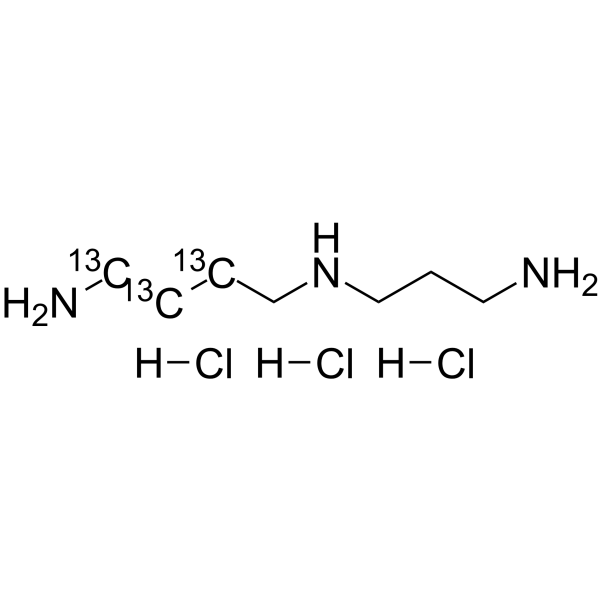
Spermidine- 13C4 (hydrochloride) is the 13C-labeled Spermidine trihydrochloride. Spermidine hydrochloride maintains cell membrane stability, increases antioxidant enzymes activities, improving photosystem II (PSII), and relevant gene expression. Spermidine hydrochloride significantly decreases the H2O2 and O2.- contents .
|
-
-
- HY-B1866
-
Linuron
1 Publications Verification
|
Environmental Pollutants
Androgen Receptor
Herbicide
|
Infection
Metabolic Disease
Cancer
|
|
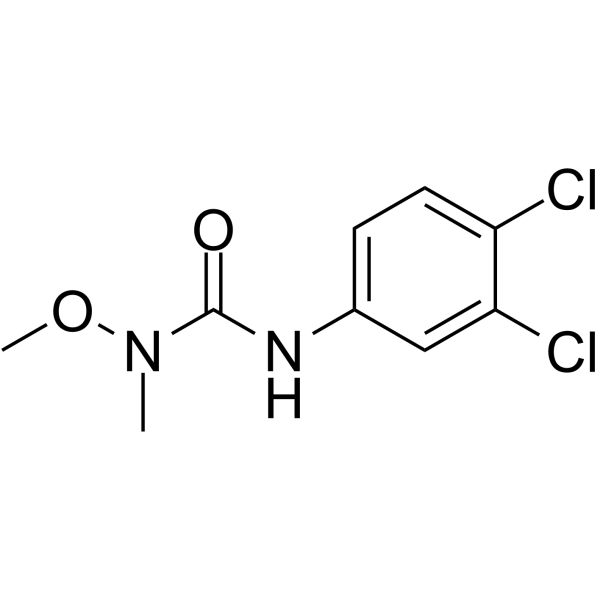
Linuron is a phenylurea herbicide widely used to control the growth of grasses and weeds in various crops and orchards. Linuron acts as a photosystem II inhibitor. It also functions as a competitive androgen receptor (AR) antagonist, with an EC50 of 200 μM and a Ki of 100 μM against rat AR, and an EC50 of 20 μM against human AR. Linuron exhibits reproductive toxicity in animals and acts as an endocrine disruptor .\n
|
-
-
- HY-B1991
-
|
|
Environmental Pollutants
Herbicide
|
Others
|
|
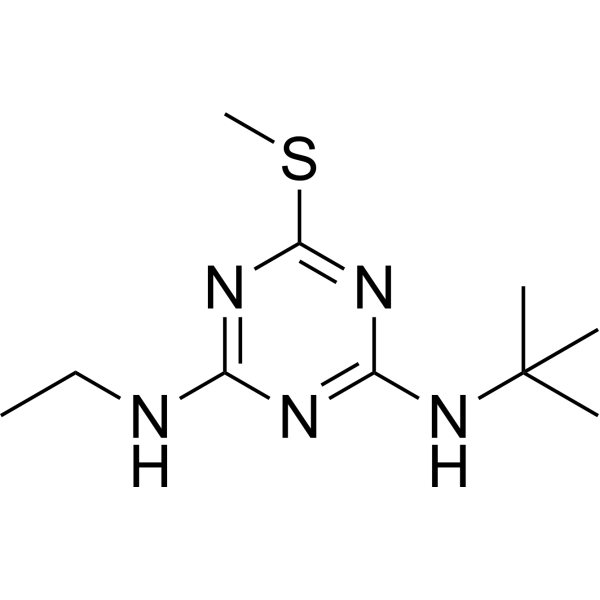
Terbutryn is a photosystem II inhibitor and aquatic toxicant. Terbutryn interferes with photosynthesis by inhibiting photosystem II. Terbutryn reduces the production of periphyton by acting directly on periphytic algae in artificial indoor streams. Terbutryn reduces the population growth of Lumbriculus variegatus in artificial indoor streams through indirect effects associated with the reduction of food sources for periphyton. The overall 50% dissipation time (DT50) of Terbutryn in the water of artificial indoor streams is 28 d .
|
-
-
- HY-17513
-
|
BAY314666; BAY-MKH 3586
|
Environmental Pollutants
Herbicide
|
Others
|
|
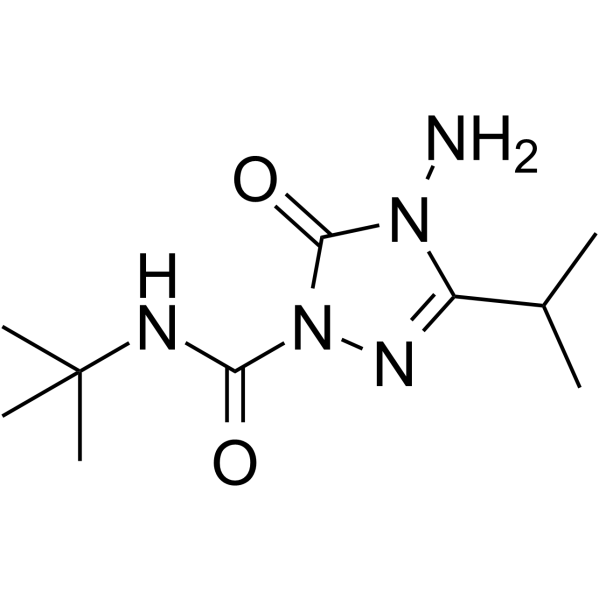
Amicarbazone (BAY-MKH3586; BAY314666) acts as a potent inhibitor of photosynthetic electron transport by binding to the Qb domain of photosystem II (PSII); it is a herbicide with broad-spectrum weed control activity .
|
-
-
- HY-B1853
-
|
|
Environmental Pollutants
Apoptosis
ERK
Herbicide
MEK
|
Cardiovascular Disease
|
|
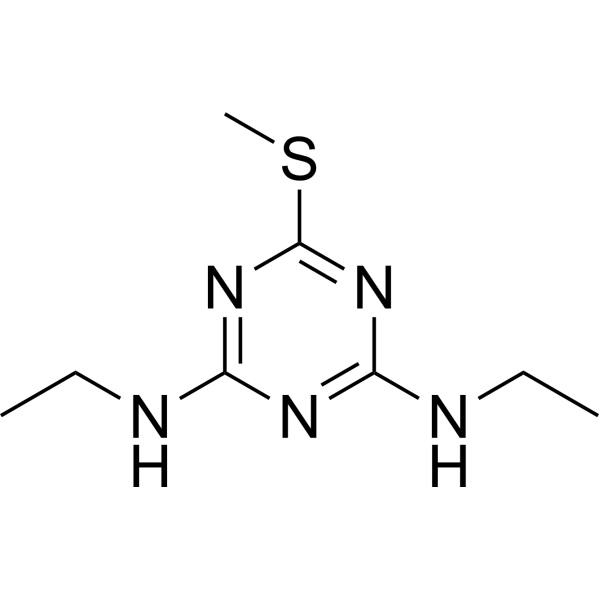
Simetryn is a triazine herbicide that exerts teratogenicity. Simetryn inhibits photosynthesis by blocking electron transfer in the chloroplast photosystem II and activates the MEK/Erk signaling pathway. Simetryn triggers vascular and developmental abnormalities in zebrafish and tadpoles, suppresses proliferation, enhances apoptosis, and induces malformations. Simetryn serves as a tool to establish a zebrafish model for studying arteriovenous malformations and related pathogenesis. Simetryn controls paddy weeds and can be used for research on developmental and vascular disorders .
|
-
-
- HY-B1776S
-
|
|
Endogenous Metabolite
|
Metabolic Disease
|
|
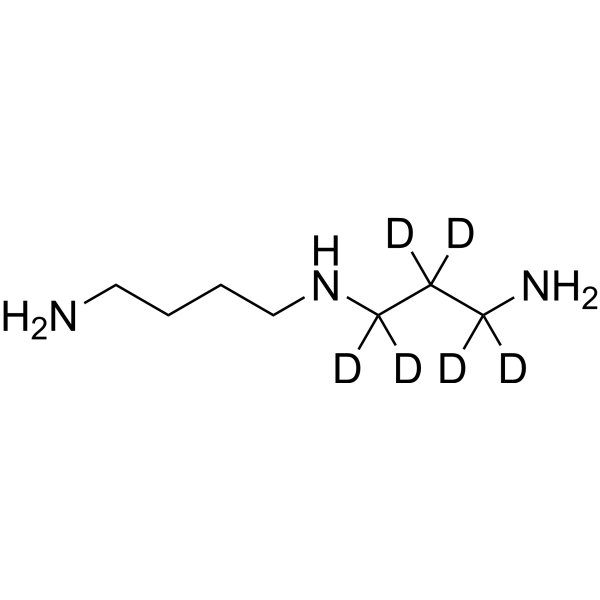
Spermidine-d6 is the deuterium labeled Spermidine . Spermidine maintains cell membrane stability, increases antioxidant enzymes activities, improving photosystem II (PSII), and relevant gene expression. Spermidine significantly decreases the H2O2 and O2.- contents .
|
-
-
- HY-B1848
-
-
-
- HY-148429
-
|
|
Parasite
|
Others
|
|
Antimalarial agent 17 is an antimalarial agent, also acts as a herbicide. Antimalarial agent 17 is photosystem II inhibitor, shows post-emergence herbicidal activity equal to commercial herbicides .
|
-
-
- HY-B1776AS
-
|
|
Isotope-Labeled Compounds
Endogenous Metabolite
|
Metabolic Disease
|
|
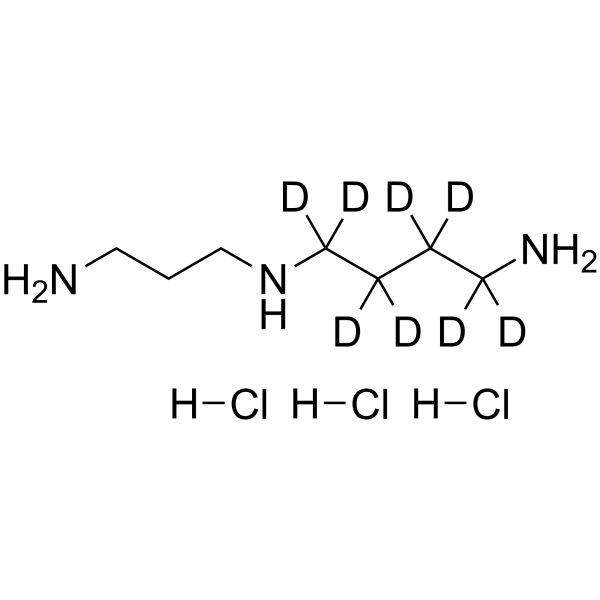
Spermidine-d8 (hydrochloride)e is the deuterium labeled Spermidine trihydrochloride. Spermidine hydrochloride maintains cell membrane stability, increases antioxidant enzymes activities, improving photosystem II (PSII), and relevant gene expression. Spermidine hydrochloride significantly decreases the H2O2 and O2.- contents .
|
-
-
- HY-NP026
-
|
C-phycocyaninfromporphyratenera
|
SOD
Integrin
|
Inflammation/Immunology
|
|
Spirulina C-phycocyanin, a component of the light-harvesting phycobilisome complex in photosystem II, is a highly dominant chromoprotein in Spirulina. Spirulina C-phycocyanin can be detected by Raman spectral measurement. Spirulina C-phycocyanin has antioxidant, anti-inflammatory, antiplatelet, liver-protective and cholesterol-lowering effects .
|
-
-
- HY-W653921
-
|
|
Isotope-Labeled Compounds
Enterovirus
Photosystem II
Influenza Virus
Bacterial
|
Infection
Cancer
|
|
Tenuazonic acid-d13 is deuterium labeled Tenuazonic acid. Tenuazonic acid is a nonhost-selective mycotoxin belonging to the tetramic acids family. Tenuazonic acid inhibits protein biosynthesis on ribosomes by suppressing the release of new protein. Tenuazonic acid is acutely toxic, and oral LD50 is set between 81-186 mg/kg in rats and mice. Tenuazonic acid blocks electron transport beyond the primary quinone receptor (QA) by interacting with the D1 protein and is a photosystem II (PSII) inhibitor. In addition, Tenuazonic acid has antiviral effects on measles virus, enterovirus, respiratory virus and so on. Tenuazonic acid has an inhibitory effect on skin cancer .
|
-
-
- HY-121242
-
|
VEL-5026
|
Photosystem II
|
Others
|
|
Buthidazole is a selective herbicide for weed control in corn. Buthidazole inhibits photosynthetic electron transport at two distinct sites in the photosynthetic electron transport chain. The major site of inhibition was on the reducing side of photosystem II. Another site of electron transport inhibition is on the oxidizing side of photosystem II. Buthidazole inhibits corn photosynthesis and prevents starch accumulation in bundle sheath chloroplasts and some ultrastructural disruption of mesophyl chloroplasts of corn plants .
|
-
-
- HY-W725574
-
|
BAS 29095
|
Photosystem II
|
Others
|
|
Dimidazon (BAS 29095) is a weak electron transport inhibitor targeting photosystem II (PSII). Dimidazon inhibits electron transfer from the primary electron acceptor Q in PSII to photosystem I. Dimidazon is promising for research of photosynthesis regulation and weed control .
|
-
-
- HY-N11913
-
|
|
Biochemical Assay Reagents
|
Others
|
|
Siderin is a Photosystem II inhibitor that effectively inhibits ATP synthesis and chloroplast electron transport during photosynthesis in isolated spinach. Siderin can be used in the study of plant photosynthesis .
|
-
-
- HY-B1866S
-
|
|
Androgen Receptor
Isotope-Labeled Compounds
|
Others
|
|
Linuron-d6 is the deuterium labeled Linuron (HY-B1866). Linuron is a phenylurea herbicide that is widely used to control the growth of grass and weeds in various agriculture crops and in orchards. Linuron is a photosystem II inhibitor. Linuron is also a competitive androgen receptor (AR) antagonist with a Ki of 100 μM. Linuron shows reproductive toxicity in animals that acts as an endocrine disruptor .
|
-
-
- HY-B1866R
-
|
|
Reference Standards
Androgen Receptor
|
Endocrinology
|
|
Linuron (Standard) is the analytical standard of Linuron. This product is intended for research and analytical applications. Linuron is a phenylurea herbicide that is widely used to control the growth of grass and weeds in various agriculture crops and in orchards. Linuron is a photosystem II inhibitor. Linuron is also a competitive androgen receptor (AR) antagonist with a Ki of 100 μM. Linuron shows reproductive toxicity in animals that acts as an endocrine disruptor .
|
-
-
- HY-157618
-
|
|
Bacterial
|
Others
|
|
18:0-18:1 PG sodium is a hydrogenated phospholipid that contributes to the stability of photosystem I and II protein complexes and plays a role in bacterial defense mechanisms, featuring two extra methylene groups in its saturated sn-1 chain, and is present in the thylakoid membranes of higher plants and cyanobacteria.
|
-
-
- HY-N6715R
-
|
|
Reference Standards
Influenza Virus
Bacterial
Enterovirus
Photosystem II
|
Infection
Cancer
|
|
Tenuazonic acid (Standard) is the analytical standard of Tenuazonic acid. This product is intended for research and analytical applications. Tenuazonic acid is a nonhost-selective mycotoxin belonging to the tetramic acids family. Tenuazonic acid inhibits protein biosynthesis on ribosomes by suppressing the release of new protein. Tenuazonic acid is acutely toxic, and oral LD50 is set between 81-186 mg/kg in rats and mice. Tenuazonic acid blocks electron transport beyond the primary quinone receptor (QA) by interacting with the D1 protein and is a photosystem II (PSII) inhibitor. In addition, Tenuazonic acid has antiviral effects on measles virus, enterovirus, respiratory virus and so on. Tenuazonic acid has an inhibitory effect on skin cancer .
|
-
-
- HY-N15688
-
|
|
Endogenous Metabolite
|
Others
|
|
Diatoxanthin is a cytochrome and phycoxanthin byproduct that can be extracted from the algae F. pinnata cells. Diatoxanthin can be used as a biomarker to evaluate the inhibitory effects of biocides on diatom photosystem II (PSII) .
|
-
-
- HY-116954R
-
|
|
Reference Standards
DNA/RNA Synthesis
|
Others
|
|
Metribuzin (Standard) is the analytical standard of Metribuzin. This product is intended for research and analytical applications. Metribuzin is a low-cost non-selective herbicide that belongs to the chemical class of triazinones. Metribuzin hinders DNA synthesis in treated plants and acts on photosystem II, ultimately inhibiting photosynthesis. Metribuzin provides good control of important annual grass and broad-leaf weeds .
|
-
-
- HY-B1849R
-
|
|
Reference Standards
Environmental Pollutants
Herbicide
|
Others
|
|
Hexazinone (Standard) is the analytical standard of Hexazinone. This product is intended for research and analytical applications. Hexazinone is a triazinone herbicide with high mobility and persistence in soil. Hexazinone is mainly degraded by soil microorganisms, and its degradation and mineralization processes are significantly affected by soil texture (faster in clay loam) and application method (mixed application can improve its bioavailability and mineralization rate). Hexazinone exhibits mild to moderate acute oral toxicity and has significant eye irritation .
|
-
-
- HY-N6715S
-
|
|
Influenza Virus
Bacterial
Isotope-Labeled Compounds
|
Infection
|
|
Tenuazonic acid- 13C10 is 13C labeled Tenuazonic acid (HY-N6715). Tenuazonic acid is a nonhost-selective mycotoxin belonging to the tetramic acids family. Tenuazonic acid inhibits protein biosynthesis on ribosomes by suppressing the release of new protein. Tenuazonic acid is acutely toxic, and oral LD50 is set between 81-186 mg/kg in rats and mice. Tenuazonic acid blocks electron transport beyond the primary quinone receptor (QA) by interacting with the D1 protein and is a photosystem II (PSII) inhibitor. In addition, Tenuazonic acid has antiviral effects on measles virus, enterovirus, respiratory virus and so on. Tenuazonic acid has an inhibitory effect on skin cancer .
|
-
-
- HY-118136
-
|
|
Calcium Channel
|
Others
|
|
CGP 28392 is an activator for calcium channel, and reactivates the oxygen evolution in calcium-deficient photosystem II (PS II) particles .
|
-
-
- HY-B1847S1
-
-
-
- HY-B1847R
-
|
|
Reference Standards
Herbicide
Acetolactate Synthase (ALS)
|
Others
|
|
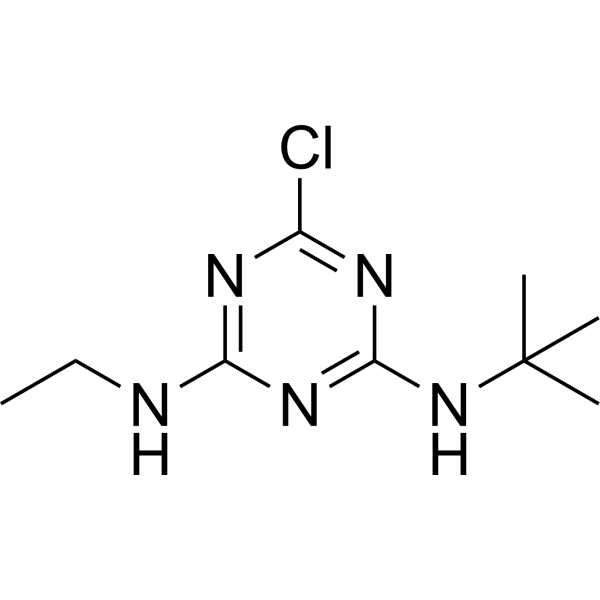
Terbuthylazine (Standard) is the analytical standard of Terbuthylazine (HY-B1847). This product is intended for research and analytical applications. Terbuthylazine is an inhibitor of acetolactate syntase (ALS), is a selective herbicide. Terbuthylazine blocks electron transport in photosystem II via interaction with the D1-protein.
|
-
-
- HY-B1776AR
-
|
|
Reference Standards
Endogenous Metabolite
|
Metabolic Disease
|
|
Spermidine (hydrochloride) (Standard) is the analytical standard of Spermidine (hydrochloride). This product is intended for research and analytical applications. Spermidine hydrochloride maintains cell membrane stability, increases antioxidant enzymes activities, improving photosystem II (PSII), and relevant gene expression. Spermidine hydrochloride significantly decreases the H2O2 and O2.- contents .
|
-
-
- HY-B1848R
-
|
|
Reference Standards
Insecticide
|
Others
|
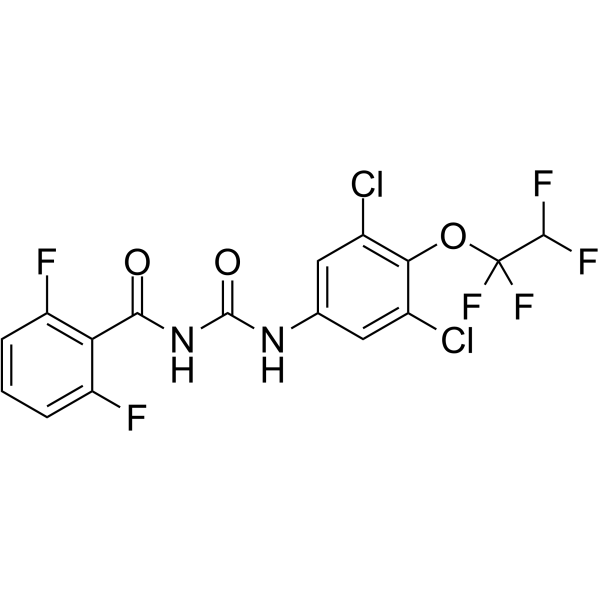
Hexaflumuron (Standard) is the analytical standard of Hexaflumuron. This product is intended for research and analytical applications. Hexaflumuron is an insect growth regulator (IGR) that inhibits chitin synthesis during insect molting .
|
-
-
- HY-B1853R
-
|
|
Herbicide
Reference Standards
ERK
MEK
Apoptosis
|
Cardiovascular Disease
|
|
Simetryn (Standard) is the analytical standard of Simetryn (HY-B1853). This product is intended for research and analytical applications. Simetryn is a triazine herbicide that exerts teratogenicity. Simetryn inhibits photosynthesis by blocking electron transfer in the chloroplast photosystem II and activates the MEK/Erk signaling pathway. Simetryn triggers vascular and developmental abnormalities in zebrafish and tadpoles, suppresses proliferation, enhances apoptosis, and induces malformations. Simetryn serves as a tool to establish a zebrafish model for studying arteriovenous malformations and related pathogenesis. Simetryn controls paddy weeds and can be used for research on developmental and vascular disorders .
|
-
-
- HY-150033
-
|
|
Photosystem II
Herbicide
|
Others
|
|
Sorgoleone is a photosystem II inhibitor found in sorghum. Sorgoleone binds to the QB niche of the D1 protein, inhibits photosynthetic electron transport, and does not affect photosystem I reactions. Sorgoleone reduces radicle elongation and stunts growth. Sorgoleone inhibits CO2-dependent oxygen evolution, photosynthetic O2 evolution, and mitochondrial respiration. Sorgoleone can be used as a herbicide .
|
-
-
- HY-W714182
-
|
|
Herbicide
|
Others
|
|
Dimethametryn is a methylthio-triazine herbicide mainly used for controlling broadleaf weeds in paddy fields. Dimethametryn blocks plant photosynthesis by inhibiting electron transport and non-cyclic photophosphorylation of photosystem II, ultimately causing chlorosis, necrosis and death of sensitive plants .
|
-
-
- HY-W714215
-
|
|
Herbicide
|
Others
|
|
Sebuthylazine is a herbicide. Sebuthylazine is selectively and systematically absorbed and migrated through plant roots. Sebuthylazine inhibits photosynthesis in photosystem II .
|
-
-
- HY-B1847S
-
-
-
- HY-N9677
-
|
|
Herbicide
|
Others
|
|
Digalactosyldiacylglycerol is a membrane structure stabilizer that selectively acts on photosystem II light-harvesting complex II (LHCII), serving as a natural bilayer-forming lipid in plant thylakoid membranes. Digalactosyldiacylglycerol constructs a lipid bilayer environment with monogalactosyldiacylglycerol (MGDG) in a 2:1 molar ratio, stabilizing the supramolecular structure of LHCII through interactions such as hydrogen bonding. Its core activity is maintaining thylakoid membrane stacking (grana formation) and supporting photosynthesis-related functions, while also possessing functions in light harvesting assistance and excitation energy quenching regulation under light stress. Digalactosyldiacylglycerol can be used in research on plant photosynthesis mechanisms, thylakoid membrane structure and function regulation, as well as in the construction of artificial photosynthetic systems and the development of plant photoprotection strategies .
|
-
-
- HY-W099725
-
|
|
Herbicide
Photosystem II
|
Cardiovascular Disease
Infection
|
|
Sarmentine is a broad-spectrum contact herbicide and PSII inhibitor, with an IC50 of 3.0 μM and a Ki of 1.5 μM against spinach, an IC50 of 1.72 μM against wild-type Amaranthus retroflexus, and an IC50 of 0.97 μM against triazine-resistant Amaranthus retroflexus. Sarmentine competitively binds to the QB binding site of plastoquinone on PSII, thereby blocking photosynthetic electron transport. Sarmentine inhibits enoyl-ACP reductase in Arabidopsis thaliana by targeting the early fatty acid synthesis process, with an IC50 of 18.3 μM. Sarmentine induces light-independent loss of plasma membrane integrity and electrolyte leakage. Sarmentine also exhibits antiplasmodial, antimycobacterial, antituberculous, and antiplatelet aggregation activities .
|
-
| Cat. No. |
Product Name |
Type |
-
- HY-W127709
-
|
|
Biochemical Assay Reagents
|
|
Chlorophyll b is an orally active tetrapyrrole derivative and pigment. Chlorophyll b can be obtained from photosynthetic organisms such as plants and algae. Chlorophyll b acts as a hydrogen donor and increases Glutathione levels. Chlorophyll b has antioxidant activity and functionally replaces chlorophyll a in photosystem II to participate in photosynthesis. Chlorophyll b reduces Cisplatin (HY-17394)-induced DNA damage, chromosome instability, and oxidative stress. Chlorophyll b is mainly used in the study of plant photosynthesis mechanism .
|
-
- HY-NP026
-
|
C-phycocyaninfromporphyratenera
|
Biochemical Assay Reagents
|
|
Spirulina C-phycocyanin, a component of the light-harvesting phycobilisome complex in photosystem II, is a highly dominant chromoprotein in Spirulina. Spirulina C-phycocyanin can be detected by Raman spectral measurement. Spirulina C-phycocyanin has antioxidant, anti-inflammatory, antiplatelet, liver-protective and cholesterol-lowering effects .
|
| Cat. No. |
Product Name |
Category |
Target |
Chemical Structure |
-
- HY-B1776
-
-
-
- HY-B1776A
-
-
-
- HY-N6715
-
-
-
- HY-B1776R
-
-
-
- HY-N11913
-
-
-
- HY-N6715R
-
|
|
Structural Classification
Microorganisms
Ketones, Aldehydes, Acids
Source Classification
|
Reference Standards
Influenza Virus
Bacterial
Enterovirus
Photosystem II
|
|
Tenuazonic acid (Standard) is the analytical standard of Tenuazonic acid. This product is intended for research and analytical applications. Tenuazonic acid is a nonhost-selective mycotoxin belonging to the tetramic acids family. Tenuazonic acid inhibits protein biosynthesis on ribosomes by suppressing the release of new protein. Tenuazonic acid is acutely toxic, and oral LD50 is set between 81-186 mg/kg in rats and mice. Tenuazonic acid blocks electron transport beyond the primary quinone receptor (QA) by interacting with the D1 protein and is a photosystem II (PSII) inhibitor. In addition, Tenuazonic acid has antiviral effects on measles virus, enterovirus, respiratory virus and so on. Tenuazonic acid has an inhibitory effect on skin cancer .
|
-
-
- HY-N15688
-
-
-
- HY-B1776AR
-
-
-
- HY-150033
-
-
-
- HY-N9677
-
|
|
Structural Classification
Natural Products
Amaranthaceae
Plants
Spinacia oleracea L.
Source Classification
|
Herbicide
|
|
Digalactosyldiacylglycerol is a membrane structure stabilizer that selectively acts on photosystem II light-harvesting complex II (LHCII), serving as a natural bilayer-forming lipid in plant thylakoid membranes. Digalactosyldiacylglycerol constructs a lipid bilayer environment with monogalactosyldiacylglycerol (MGDG) in a 2:1 molar ratio, stabilizing the supramolecular structure of LHCII through interactions such as hydrogen bonding. Its core activity is maintaining thylakoid membrane stacking (grana formation) and supporting photosynthesis-related functions, while also possessing functions in light harvesting assistance and excitation energy quenching regulation under light stress. Digalactosyldiacylglycerol can be used in research on plant photosynthesis mechanisms, thylakoid membrane structure and function regulation, as well as in the construction of artificial photosynthetic systems and the development of plant photoprotection strategies .
|
-
-
- HY-W099725
-
|
|
Piper longum Linn.
Structural Classification
Alkaloids
Pyrrole Alkaloids
Piperaceae
Plants
Source Classification
|
Herbicide
Photosystem II
|
|
Sarmentine is a broad-spectrum contact herbicide and PSII inhibitor, with an IC50 of 3.0 μM and a Ki of 1.5 μM against spinach, an IC50 of 1.72 μM against wild-type Amaranthus retroflexus, and an IC50 of 0.97 μM against triazine-resistant Amaranthus retroflexus. Sarmentine competitively binds to the QB binding site of plastoquinone on PSII, thereby blocking photosynthetic electron transport. Sarmentine inhibits enoyl-ACP reductase in Arabidopsis thaliana by targeting the early fatty acid synthesis process, with an IC50 of 18.3 μM. Sarmentine induces light-independent loss of plasma membrane integrity and electrolyte leakage. Sarmentine also exhibits antiplasmodial, antimycobacterial, antituberculous, and antiplatelet aggregation activities .
|
-
| Cat. No. |
Product Name |
Chemical Structure |
-
- HY-B1776AS1
-
1 Publications Verification
|
|
Spermidine- 13C4 (hydrochloride) is the 13C-labeled Spermidine trihydrochloride. Spermidine hydrochloride maintains cell membrane stability, increases antioxidant enzymes activities, improving photosystem II (PSII), and relevant gene expression. Spermidine hydrochloride significantly decreases the H2O2 and O2.- contents .
|
-
-
- HY-B1776S
-
1 Publications Verification
|
|
Spermidine-d6 is the deuterium labeled Spermidine . Spermidine maintains cell membrane stability, increases antioxidant enzymes activities, improving photosystem II (PSII), and relevant gene expression. Spermidine significantly decreases the H2O2 and O2.- contents .
|
-
-
- HY-B1776AS
-
|
|
|
Spermidine-d8 (hydrochloride)e is the deuterium labeled Spermidine trihydrochloride. Spermidine hydrochloride maintains cell membrane stability, increases antioxidant enzymes activities, improving photosystem II (PSII), and relevant gene expression. Spermidine hydrochloride significantly decreases the H2O2 and O2.- contents .
|
-
-
- HY-W653921
-
|
|
|
Tenuazonic acid-d13 is deuterium labeled Tenuazonic acid. Tenuazonic acid is a nonhost-selective mycotoxin belonging to the tetramic acids family. Tenuazonic acid inhibits protein biosynthesis on ribosomes by suppressing the release of new protein. Tenuazonic acid is acutely toxic, and oral LD50 is set between 81-186 mg/kg in rats and mice. Tenuazonic acid blocks electron transport beyond the primary quinone receptor (QA) by interacting with the D1 protein and is a photosystem II (PSII) inhibitor. In addition, Tenuazonic acid has antiviral effects on measles virus, enterovirus, respiratory virus and so on. Tenuazonic acid has an inhibitory effect on skin cancer .
|
-
-
- HY-B1866S
-
|
|
|
Linuron-d6 is the deuterium labeled Linuron (HY-B1866). Linuron is a phenylurea herbicide that is widely used to control the growth of grass and weeds in various agriculture crops and in orchards. Linuron is a photosystem II inhibitor. Linuron is also a competitive androgen receptor (AR) antagonist with a Ki of 100 μM. Linuron shows reproductive toxicity in animals that acts as an endocrine disruptor .
|
-
-
- HY-N6715S
-
|
|
|
Tenuazonic acid- 13C10 is 13C labeled Tenuazonic acid (HY-N6715). Tenuazonic acid is a nonhost-selective mycotoxin belonging to the tetramic acids family. Tenuazonic acid inhibits protein biosynthesis on ribosomes by suppressing the release of new protein. Tenuazonic acid is acutely toxic, and oral LD50 is set between 81-186 mg/kg in rats and mice. Tenuazonic acid blocks electron transport beyond the primary quinone receptor (QA) by interacting with the D1 protein and is a photosystem II (PSII) inhibitor. In addition, Tenuazonic acid has antiviral effects on measles virus, enterovirus, respiratory virus and so on. Tenuazonic acid has an inhibitory effect on skin cancer .
|
-
-
- HY-B1847S1
-
|
|
|
Terbuthylazine-d5 is the deuterium labeled Terbuthylazine (HY-B1847) . Terbuthylazine is an inhibitor of acetolactate syntase (ALS), is a selective herbicide. Terbuthylazine blocks electron transport in photosystem II via interaction with the D1-protein.
|
-
-
- HY-B1847S
-
|
|
|
Terbuthylazine-d9 is the deuterium labeled Terbuthylazine (HY-B1847). Terbuthylazine is an inhibitor of acetolactate syntase (ALS), is a selective herbicide. Terbuthylazine blocks electron transport in photosystem II via interaction with the D1-protein.
|
-
| Cat. No. |
Product Name |
|
Classification |
-
- HY-157618
-
|
|
|
Phospholipids
|
|
18:0-18:1 PG sodium is a hydrogenated phospholipid that contributes to the stability of photosystem I and II protein complexes and plays a role in bacterial defense mechanisms, featuring two extra methylene groups in its saturated sn-1 chain, and is present in the thylakoid membranes of higher plants and cyanobacteria.
|
Your information is safe with us. * Required Fields.
Inquiry Information
- Product Name:
- Cat. No.:
- Quantity:
- MCE Japan Authorized Agent:

