7 Results for "

Polycytidylic acid

" in MedChemExpress (MCE) Product Catalog:
Products (7)

7 Results for "Polycytidylic acid" in MCE Product Catalog:

71
71 Publications Verification
Cat. No.: HY-135748
CAS No.: 42424-50-0
Purity:  99.4%
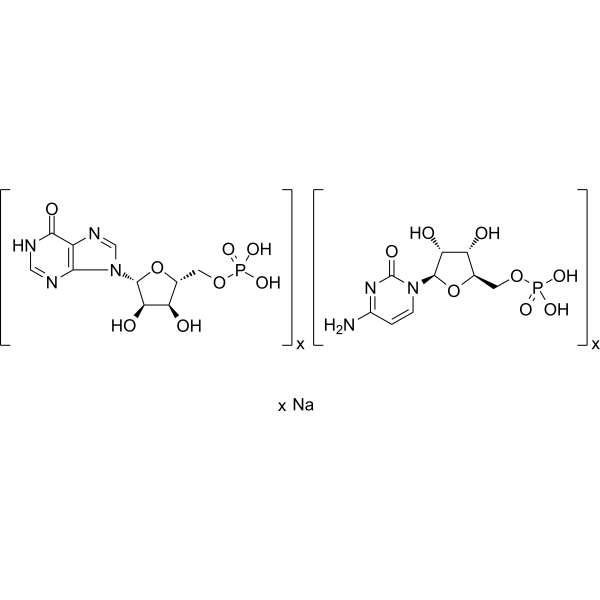
Synonyms: Poly(I:C) sodium
Polyinosinic-polycytidylic acid (Poly(I:C)) sodium is a synthetic analog of double-stranded RNA and an agonist of toll-like receptor 3 (TLR3) and retinoic acid inducible gene I (RIG-I)-like receptors (RIG-I and MDA5). Polyinosinic-polycytidylic acid sodium can be used as a vaccine adjuvant to enhance innate and adaptive immune responses, and to alter the tumor microenvironment. Polyinosinic-polycytidylic acid sodium can directly trigger cancer cells to undergo apoptosis .
loading...
    loading...
70
70 Cited Publications
Cat. No.: HY-107202
CAS No.: 24939-03-5
Purity:  99.40%
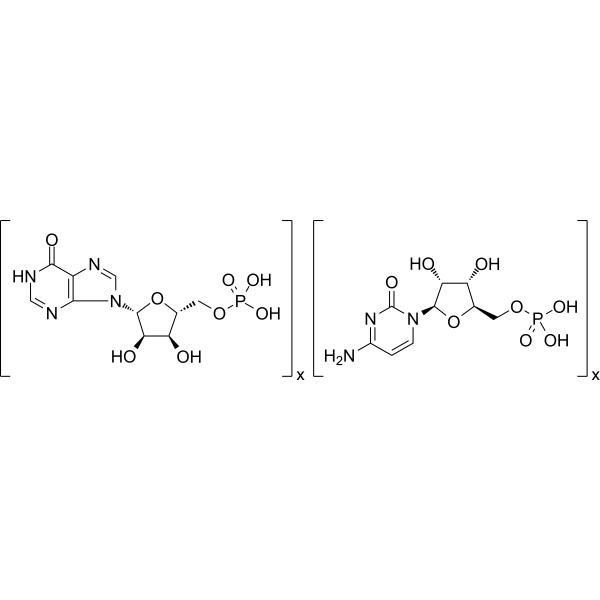
Synonyms: Poly(I:C)
Polyinosinic-polycytidylic acid (Poly(I:C)) is a synthetic analog of double-stranded RNA and an agonist of toll-like receptor 3 (TLR3) and retinoic acid inducible gene I (RIG-I)-like receptors (RIG-I and MDA5). Polyinosinic-polycytidylic acid can be used as a vaccine adjuvant to enhance innate and adaptive immune responses, and to alter the tumor microenvironment. Polyinosinic-polycytidylic acid can directly trigger cancer cells to undergo apoptosis .
loading...
    loading...
Cat. No.: HY-134958
CAS No.: 31852-29-6
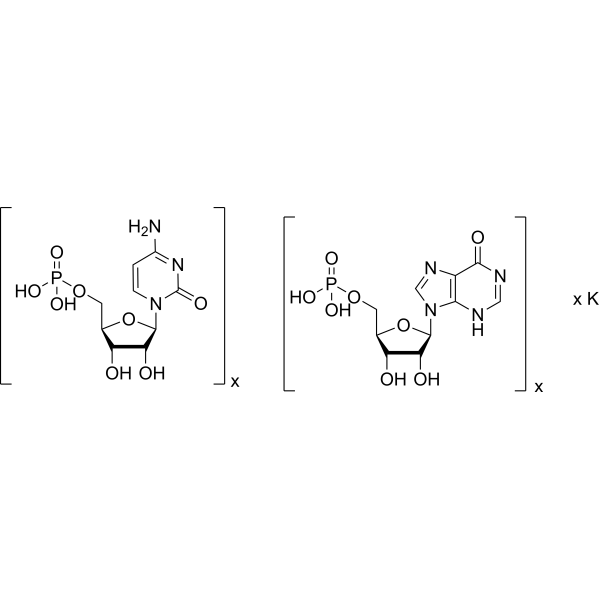
Synonyms: Poly(I:C) potassium
Polyinosinic-polycytidylic acid potassium (Poly(I:C) potassium) is a synthetic analog of double-stranded RNA and an agonist of toll-like receptor 3 (TLR3) and retinoic acid inducible gene I (RIG-I)-like receptors (RIG-I and MDA5). Polyinosinic-polycytidylic acid sodium can be used as a vaccine adjuvant to enhance innate and adaptive immune responses, and to alter the tumor microenvironment. Polyinosinic-polycytidylic acid potassium can directly trigger cancer cells to undergoApoptosis .
loading...
    loading...
Cat. No.: HY-W250152
CAS No.: 26936-40-3
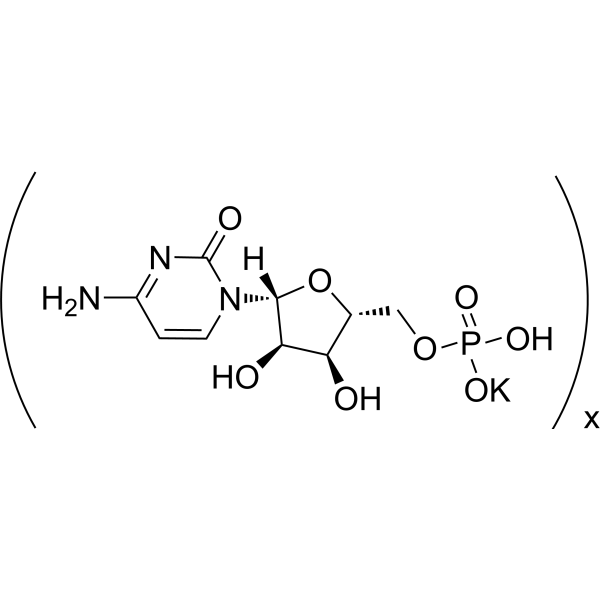
Polycytidylic acid potassium is an immunostimulant and synthetic double-stranded RNA. Polycytidylic acid potassium can be used experimentally to model viral infections in vivo. Polycytidylic acid potassium is a common tool in immune system research .
loading...
    loading...
Cat. No.: HY-107202GL
CAS No.: 24939-03-5
Synonyms: Poly(I:C) (GMP Like)
Polyinosinic-polycytidylic acid (Poly(I:C)) (GMP Like) is the GMP Like class Polyinosinic-polycytidylic acid (HY-107202), and can be used as pharmaceutical excipients. Polyinosinic-polycytidylic acid (Poly(I:C)) is a synthetic analog of double-stranded RNA and an agonist of toll-like receptor 3 (TLR3) and retinoic acid inducible gene I (RIG-I)-like receptors (RIG-I and MDA5). Polyinosinic-polycytidylic acid can be used as a vaccine adjuvant to enhance innate and adaptive immune responses, and to alter the tumor microenvironment. Polyinosinic-polycytidylic acid can directly trigger cancer cells to undergo apoptosis .
loading...
    loading...
Cat. No.: HY-W682115
CAS No.: 30811-80-4
Synonyms: Polycytidylic acid
Poly(C) (Polycytidylic acid) is a pleiotropic immunostimulant that specifically binds to TLR3, RIG-I and MDA5 receptors. Poly (C) recruits adaptor proteins to activate downstream signaling pathways and induce the production of type I interferons and inflammatory cytokines. Poly (C) triggers cancer cell apoptosis via the intrinsic or extrinsic caspase pathway, thereby exerting inhibitory effects on tumor growth and metastasis. Poly (C) acts as a vaccine adjuvant to modify the tumor microenvironment, regulate the expression of endothelial adhesion molecules and induce virus-like immune responses. Poly (C) can be applied to research related to melanoma, various solid tumors, hematological malignancies and autoimmune insulin-dependent diabetes mellitus .
loading...
    loading...
Cat. No.: HY-185721
CAS No.: 25191-14-4
Synonyms: Polyguanylic acid
Target:  

DNA/RNA Synthesis

Research Areas:  

Others

Poly (G) (Polyguanylic acid) is a high-molecular-weight synthetic ribopolynucleotide. In the presence of Na + or K + ions, Poly (G) undergoes time-dependent structural modification, gradually self-assembling from a single strand into large G-quadruplex aggregates. Poly (G) undergoes cooperative secondary structure dissociation under alkaline conditions, but its secondary structure can withstand high temperatures up to 100°C and is resistant to snake venom diesterase at low Na + concentrations. Poly (G) forms stable 1:1 complexes with polycytidylic acid or poly 5-bromocytidylic acid, but does not bind to polyinosinic acid or polyadenylic acid. Poly (G) can be applied to studies on the interactions between drugs and G-rich DNA fragments in electrochemical biosensors .
loading...
    loading...

